Front Line Defenders issues regularly urgent appeals on behalf of Human Rights Defenders. This case is just an example: on 29 May 2024 FLD called for action on behalf of woman human rights defender Jina Modares Gorji in Iran who was sentenced to twenty-one years in prison.
Please get your own Front Line Defenders Appeals. By subscribing to this list [https://www.frontlinedefenders.org/secure/act-now.php] you will receive information on all cases that Front Line Defenders takes up on behalf of human rights defenders at risk. You will receive an average of 4 to 8 emails per week.
On 24 May 2024, Jina Modares Gorji was notified that Branch 1 of the Sanandaj Revolutionary Court has sentenced her to a total of twenty-one years in prison. In the verdict of the revolutionary court, the woman human rights defender has been sentenced to ten years in prison on the charge of “forming groups and association with the intention of disturbing the national security,” ten years in prison for “collaboration with a hostile government,” and one year in prison on the charge of “propaganda activities against the state.”
Jina Modares Gorji is a woman human rights defender, book seller, and feminist podcaster and blogger in Sanandaj, in the Kurdistan province in Iran. Her human rights work includes advocating for women among the Kurdish community, girls’ rights, and socio-cultural rights via holding book clubs and writing blogs. She has been arrested several times since September 2022, following the death of Mahsa (Jina) Amini in the custody of the Iranian morality police …
On 9 April 2024, the last hearing occurred for the woman human rights defender. The aforementioned charges are related to her peaceful human rights activities, which includes speaking to media, participating in international conferences and organising activities to promote women’s rights in the Kurdistan province in Iran. The woman human rights defender was arrested on 10 April 2023 and was arbitrarily detained for almost three months in solitary condiment and in the public Womens Ward of Sanandaj prison. She was also denied access to a lawyer. In mid-February 2023, she was informed that “spreading disinformation” had been added to the previous charges of “forming groups and association with the intention of disturbing the national security”, and “propaganda activities against the state”. On 3 July 2023, the woman human rights defender was released on a bail of one billion IRR.
In April 2023, Branch 1 of the Sanandaj Public and Revolutionary Court dismissed the lawsuit that Jina Modares Gorji filed against the physical and verbal assault during her arbitrary arrest.
On 12 February 2023, Jina Modares Gorji appeared with her lawyer before Branch 1 of the Sanandaj Revolutionary Court, where she did not sign the pardon scheme as she stated this would constitute an acknowledgement that the charges against her human rights work were legitimate. This scheme was announced by the Iranian judiciary in February 2023 on the occasion of the 44th anniversary of the Islamic Revolution.
The woman human rights defender had previously been arrested on 21 September 2022 for her work and participation in the “Woman, Life, Freedom” protests, and charged with “gathering and collusion against the national security” and “propaganda activities against the state.” She was released on a bail of 10 billion IRR on 30 October 2022, after going on hunger strike for three days in protest against the physical assault and detention she endured in the Sanandaj Correctional Centre.
The prosecution of Jina Modares Gorji is part of a wide crackdown on human rights defenders in Iran where, hefty sentences issued against human rights defenders on the charge of “forming groups and association with the intention of disturbing the national security,” against groups of human rights rights defenders reported by Front Line Defenders in April and May 2024.
Front Line Defenders is particularly concerned with the sentencing of the woman human rights defender Jina Modares Gorji , as it believes the judicial action is in reprisal for her peaceful and legitimate human rights work.
Nina Alizadeh Marandi of HRW on 28 May 2024 said that German environmental activists are facing increasingly harsh rhetoric and legal action from authorities as they mobilize to confront the climate crisis.
Last week, on 21 May, Germany’s efforts to curb environmental activism took a disturbing turn when authorities used an offence typically reserved for prosecutorial pursuit of serious organized crime to indict Letzte Generation (Last Generation), a climate activist group known for disruptive protests such as roadblocks and other acts of civil disobedience, as a criminal organization. A conviction under federal law would pave the way for prosecuting anyone who participates in or supports Letzte Generation, including administratively or financially.
The investigation into Letzte Generation as a criminal organization has involved armed police conducting predawn raids, storming private apartments while the activists were still asleep, and granting warrants for police to surveil the group’s communications, including calls made with media.
Last year the group’s website was temporarily seized during a fundraising campaign, with a notice from the police falsely labeling Letzte Generation a criminal organization and stating any donation constitutes illegal support for crime. This move by the police, despite no judicial assessment of the charges having taken place, exposes a deeply worrying bias against the group and raises questions about whether authorities are respecting due process.
International law protects the right to public participation in environmental matters and recognizes peaceful, nonviolent civil disobedience as a legitimate form of assembly. Disruptions like traffic blockades, while inconvenient, generally do not constitute violence under international standards, although damage to or destruction of private or public property may.
While civil disobedience often involves breaking national laws, authorities are required to respond proportionately, giving due weight to the right to protest and the importance to the public interest of the issues at stake.
The government’s extreme response to Letzte Generation’s activism appears disproportionate, threatens the very right to protest, and smears climate activists when their cause has never been more urgent. Instead of intimidating environmental defenders, Germany should live up to its commitment to ambitious climate action and investigate the concerns that groups like Letzte Generation raise.
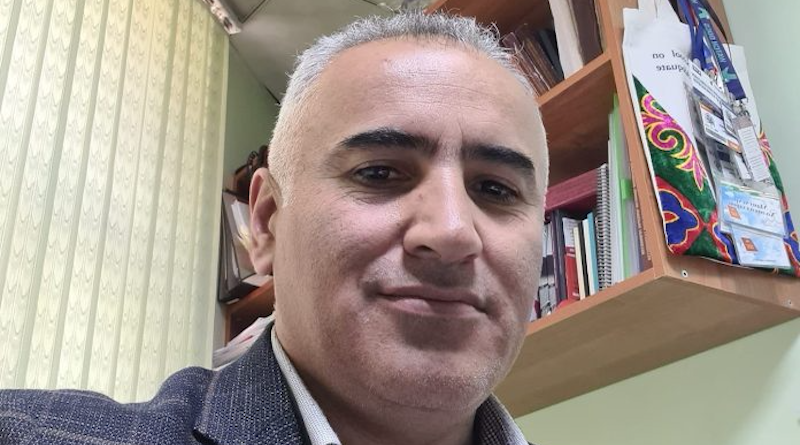
Manuchehr Kholiqnazarov. Photo from personal Facebook page
On 29 May 2024, IPHR (International Partnership for Human Rights – an independent, non-governmental organization founded in 2008 in Brussels) published an Op-ed about Human Rights Defender Manuchehr Kholiqnazarov.
Tuesday marked the sad anniversary of the arrest of lawyer and human rights defender Manuchehr Kholiqnazarov in Tajikistan. First arrested on 28 May 2022, he has now spent two years behind bars, serving a 16-year-long prison sentence in retaliation for his human rights work.
The organisations issuing this statement – International Partnership for Human Rights (IPHR), the Tajikistan Civil Society Coalition against Torture and Impunity, Helsinki Foundation for Human Rights (HFHR, Poland), Norwegian Helsinki Committee (NHC), as well as International Federation for Human Rights (FIDH) and World Organisation against Torture (OMCT) within the framework of the Observatory for the Protection of Human Rights Defenders – are increasingly worried about Manuchehr’s state of health and call again on the Tajikistani authorities to immediately and unconditionally release him.
“Manuchehr was arrested and imprisoned for no other reason than his tireless work to help the most vulnerable victims of human rights violations. We will not give up fighting against his unjust sentence until he is released and allowed to return home to his family,” said Brigitte Dufour, Director of IPHR.
On 9 December 2022 Tajikistan’s Supreme Court found Manuchehr guilty under articles 187, part 2 (participation in a criminal organisation) and 307 (3), part 2 (participating in the activities of a banned organisation due to its extremist activities) of the Criminal Code, sentencing him to 16 years’ imprisonment in a strict regime penal colony.
Manuchehr is the Director of the Lawyers Association of Pamir (LAP), one of the few civil society organisations in Tajikistan’s Gorno Badakhshan Autonomous Region (GBAO) that works to promote and protect human rights.
On 25-28 November 2021, mass protests erupted in Khorog, GBAO, over the extrajudicial killing of a young man, Gulbiddin Ziyobekov. After the protests settled, Manuchehr joined the “Commission 44”, consisting of representatives of local civil society and law enforcement agencies, to investigate the events. Given his professional experience, Manuchehr was included in the Joint Investigation Team headed by the Prosecutor General’s Office and helped secure lawyers for victims of indiscriminate violence during the November 2021 protests.
However, May 2022 saw a renewed crackdown on protests in Khorog and Rushan District of GBAO. On 28 May 2022, Manuchehr was arrested along with a dozen members of Commission 44 for alleged “participation in a criminal association” and “publicly calling for violent change of the constitutional order”. Their trial began on 20 September 2022, and was held behind closed doors at a detention facility of the State Committee for National Security (SCNS) in Dushanbe. Following his conviction, Manuchehr was transferred to a prison facility in the capital.
Manuchehr’s health has deteriorated significantly in detention. In particular, he suffers from back problems. The authorities should ensure that he has access to adequate medical assistance for these health problems and that his treatment complies fully with international standards as long as he remains behind bars.
In addition to human rights NGOs, the United Nations Special Rapporteur on Human Rights Defenders and other international human rights experts have repeatedly raised concerns about Manuchehr’s imprisonment and called for his release. The Tajikistani authorities should heed to these calls, promptly release him and allow him to reunite with his family.
On 28 May 2024 ACCESS NOW published its overview of grants in 2023: Through our Access Now Grantsprogram — now in its ninth year — we provide flexible, grantee-driven financial support to the grassroots and frontline organizations confronting these threats. We do this because we believe the people most directly impacted by attacks on human rights — from Palestine to Myanmar to Ukraine and beyond — are best placed to define solutions and implement them. Below is an overview of our grant-making in 2023, including a deep dive into the humanitarian response to the Gaza crisis, which was sparked that year.
AN OVERVIEW
In 2023, Access Now Grants awarded a total of just under $1.7 million USD, fortifying our collective efforts to defend and extend digital rights. We provided 66 grants to 63 organizations and individuals leading digital rights efforts in about 30 countries. [for details, see: https://www.accessnow.org/digital-rights-grants/]
We strive to support those who need it most. Currently, Access Now Grants reserves nearly all of our funding for people and organizations in Global Majority countries. In 2023, we awarded the highest number of grants (20) in Eastern Europe and Central Asia, followed by Asia Pacific (15), Africa (13), the Middle East and North Africa (10), Latin America and the Caribbean (7), and one grantee that works on the global level but supports journalists and human rights organizations operating in countries experiencing armed conflict and crisis.
Notably, 71% of our 2023 grants supported efforts in countries that Freedom House has classified as “not free” in its Freedom in the World reporting. We also extended funding to organizations and communities we had not previously supported, including in Libya, Iraq, Palestine, Thailand, and Senegal. In addition, 25% of our grants focused on defending gender and sexuality rights and supported people who identify as women, non-binary, or LGBTQ+.
In addition to ensuring we reach people with the funding they need, we work to provide the kind of longer-term support that can help organizations build momentum. In 2023, 60% of the grantees that received core, project, and discretionary grants were receiving their third or more year of consecutive funding.
SPOTLIGHT ON GAZA : It is impossible to remark on any human rights efforts in 2023 without acknowledging the genocide now unfolding in Palestine. After the Hamas attack on Israel on October 7, 2023, we have seen digital threats play a devastating role in deepening the crisis in Gaza: from the Israeli military’s reported use of AI technology to bomb and kill Palestinians, often with their family; to internet shutdowns that restrict Gazans’ access to life-saving information and ability to communicate; to communication platforms’ censorship of Palestinians and pro-Palestinian voices; to the documented increase in hate speech and incitement to violence against Palestinians online….
As we continue our grant-making in the year ahead, in Palestine and around the world, we remain committed to human rights organizations and activists who are fighting for justice, security, and dignity for their communities and for all of us. Their collective work is more necessary and urgent than ever.
ACCESS NOW gives a list of the grants awarded in 2023. Some grants are not included for security reasons. Others must be listed anonymously.
Sara Nabil is a human rights defender and artist from Afghanistan, forced into exile. She spoke to ISHR about her dream of one day seeing a ‘free democratic Afghanistan, where each human being [regardless of which] gender they are, man or woman, neutral or other genders, [would be] treated equally.’
‘Since the Taliban came to power, Afghanistan [has become] the only country where we see that women don’t have any kind of rights.’
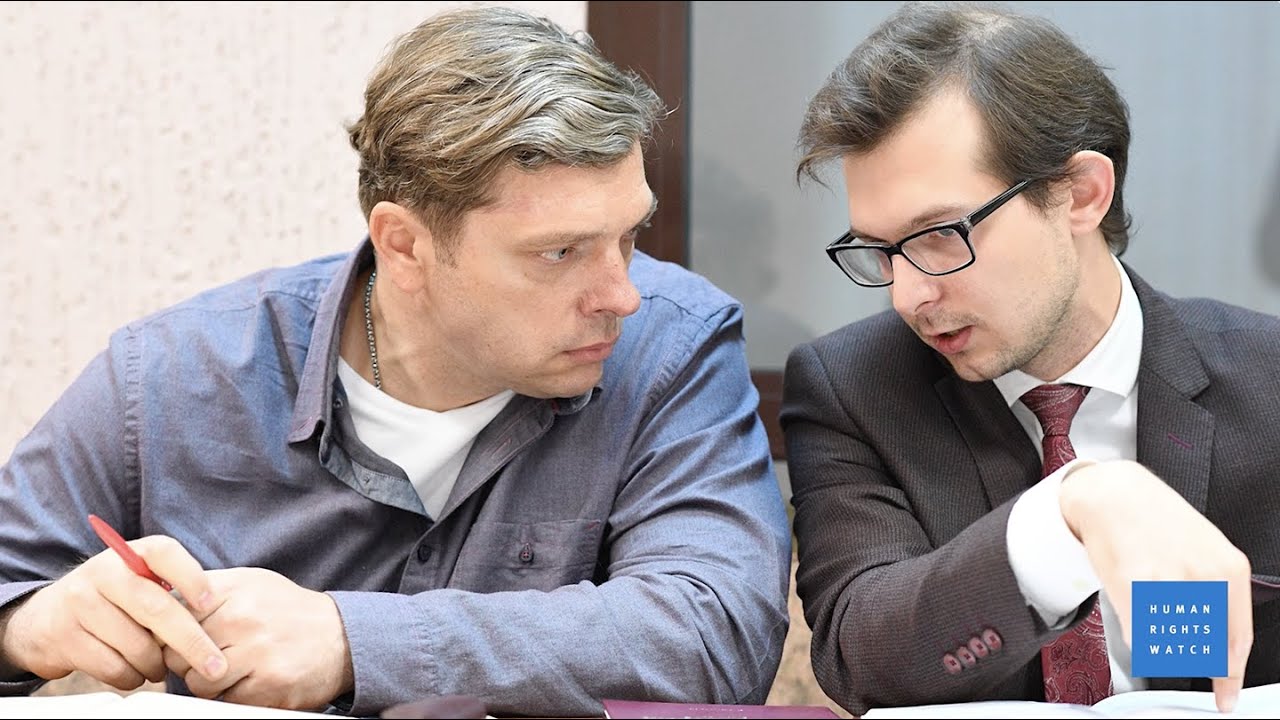
On 27 May 2024 Human Rights Watch published a major report on the politically motivated crackdown on Human Rights Lawyers in Belarus.
Summary: In August 2020, peaceful protests in Belarus began with hundreds of thousands of people gathering in the streets of Minsk and across Belarus following the contested electoral victory of Aliaksandr Lukashenka, who had already served as president for more than 26 years. Belarusian authorities responded with unprecedented brutality, using excessive force, arbitrarily detaining thousands of peaceful protesters, and subjecting them to ill-treatment and torture in detention before conveyor-belt administrative and criminal trials.
Since then, Belarusian authorities have unrolled widespread and systematic repression of any form of dissent. Government critics have been forced into exile or thrown behind bars on politically motivated charges. The number of political prisoners swelled and at time of publication exceeded 1300, according to Human Rights Center “Viasna,” the prominent Belarusian human rights organization. The term “political prisoner,” for the purpose of this report, includes anyone detained, imprisoned or otherwise deprived of their liberty by Belarusian authorities for peacefully exercising their rights and freedoms or defending human rights and fundamental freedoms.
In the face of these grave and widespread rights violations, some lawyers stepped up to represent clients in politically motivated cases. ..This report examines the Lukashenka government’s retribution against lawyers who represent government critics and its nearly complete takeover of the legal profession in Belarus. The authorities have subjected lawyers in politically motivated cases, as well as lawyers who criticize state abuses, to harassment, arbitrary revocation of their licenses, detention and administrative charges, and politically motivated criminal prosecution. Behind bars, lawyers along with other politically-targeted detainees and convicts, experience retaliatory ill-treatment. The authorities have left no space for earnest and efficient discharge of lawyers’ duties in politically motivated cases. At the time of writing, very few lawyers, if any, were willing to take on such cases, which has severely undermined the right to a fair trial, due process, and access to remedy in Belarus.
The report shows that while governmental crackdown on lawyers in times of political unrest in Belarus is not new, the scale and severity of this wave of repression is unprecedented. For the first time in the history of modern Belarus, lawyers have become political prisoners themselves for their work on behalf of clients.
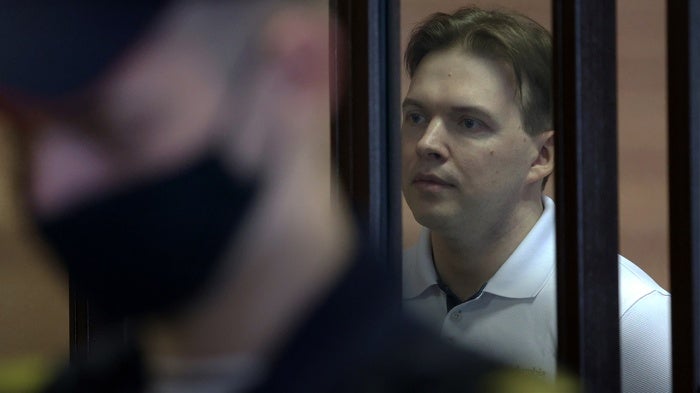
At the time of writing, six lawyers—Maksim Znak, Aliaksandr Danilevich, Vital Brahinets, Anastasiya Lazarenka, Yuliya Yurhilevich, and Aliaksei Barodka—were serving sentences on politically motivated charges ranging from six to ten years. Such charges included providing legal aid to political opposition figures and activists or giving interviews to and sharing information with independent media labelled “extremist” by the authorities. [see https://humanrightsdefenders.blog/2021/09/10/two-lawyers-from-belarus-share-lawyers-for-lawyers-award-2021/]
In addition to politically motivated prosecution, lawyers also have faced politically motivated disbarment. Since 2020, more than 140 lawyers have been disbarred by the regional bar associations or faced arbitrary license revocation by the Justice Ministry following decisions of its Qualification Commission because they supposedly breeched some regulations or were not sufficiently qualified to work as lawyers. These grounds are often easily exposed as flimsy pretexts: on average, those “unqualified” lawyers had more than 13.5 years of experience; many had successfully worked in the legal field for two to three decades, or more, and some of them were previously recognized by bar associations for their excellence…
The report also examines how the Belarusian government has established all-encompassing control over the legal profession in the country by controlling the admission of lawyers into the profession, regulating the way they discharge their duties, and exercising other broad controlling functions including but not limited to revoking lawyers’ licenses and essentially stripping lawyers’ self-governing bodies of independence.
In November 2021, a set of amendments into the Law on the Bar and Practice of Law in the Republic of Belarus (Law on the Bar) entered into force, which banned lawyers from working individually or opening law firms, requiring them to join legal consultation offices created and supervised by regional bar associations in coordination with the Justice Ministry. The amendments also significantly expanded the Justice Ministry’s control over the self-governing bodies of the bar and eased the conditions for obtaining a lawyer’s status for ex workers of law enforcement and judiciary….
The Belarusian Republican Bar Association (BRBA) and regional bar associations generally have failed to represent and protect the rights of their members and withheld support from lawyers facing obstacles in discharging their duties, which in recent years have come to include harassment, arbitrary detention, and criminal prosecution. Moreover, bar association executive bodies have become vehicles for the agenda of state officials, triggering sanctions against and disbarring lawyers deemed undesirable by the authorities. In light of the control exercised by the state over the formation of the Belarusian bar’s executive bodies and their work, these associations cannot be considered genuinely independent self-governing bodies representing the interests of all lawyers in Belarus.
Some lawyers described the current state of the Belarusian justice system and bar as a “total collapse of the legal system” and many felt “disarmed” in the face of systematic and widespread violations of due process, fair trial, and rule of law. Yet, lawyers noted, that it is their duty to discharge their functions to the highest professional standard, notwithstanding the political motivation of their clients’ cases and the unprecedented pressure from the state:
Recommendations
To the Belarusian Government
Immediately end the systematic detention and prosecution of anyone who peacefully exercises their rights and freedoms, release all political prisoners, provide effective remedies for victims and survivors of human rights abuses, and carry out prompt and impartial investigations into all alleged human rights violations;
Immediately end the ill-treatment of prisoners and ensure the protection of their rights and freedoms in confinement, including by ending the pervasive practice of incommunicado detention; grant lawyers and families unhindered access to detainees, and ensure all prisoners receive adequate medical assistance;
End all harassment of, attacks on, and interference with lawyers, particularly those representing clients in politically motivated cases and exercising their freedom of expression in line with international standards;
Ensure all courts adhere to fair trial standards. Allow lawyers to effectively perform their professional functions in accordance with the guarantees provided for in article 14 of the International Covenant on Civil and Political Rights (ICCPR) and the UN Basic Principles on the Role of Lawyers, including by instructing law enforcement and state agencies on the protected role and function of lawyers;
Repeal and amend national legislation to bring domestic law in compliance with international standards to ensure the independence and self-governance of the legal profession in Belarus;
Restore the licenses of all lawyers who have been disbarred or lost their licenses as a result of discharging their professional duties in accordance with international standards or for exercising their freedom of expression (including those lawyers who lost their license over arbitrary and state-controlled procedures at the Justice Ministry’s Qualification Commission);
Guarantee the independence of disciplinary proceedings against lawyers, which should be carried out by lawyers’ self-governing bodies in a fair and objective manner;
Curtail the Justice Ministry’s authority to interfere with independence of the legal profession, including the ministry’s authority to issue regulations on the work of lawyers, admit them into the profession, revoke licenses, carry out certification procedures, initiate disciplinary proceedings, and shape the selection of executive bodies of bar associations;
Void existing policies undermining the independence of legal profession and ensure separation of the bar from the state, including by abolishing the pervasive practice of forcing lawyers to express support for the government’s agenda and interests;
Respect the right to legal assistance, including by removing arbitrary obstacles to lawyers’ access to clients, safeguarding lawyer-client privilege, stopping the practice of making lawyers sign arbitrary and overly broad non-disclosure obligations, and ensuring fair and public trials and full equality of arms in courts of law;
Promptly comply with repeated requests by the UN special rapporteur on the human rights situation in Belarus to conduct a country visit.
To the Belarusian Republican Bar Association and Regional Bar Associations
Immediately end retaliation against members for carrying out professional duties or legitimately exercising their freedom of expression, and ensure lawyers targeted on such grounds have access to an effective remedy;
Repeal internal regulations that undermine the unhindered provision of legal assistance;
Advocate resolutely with the Belarusian government in support of the above recommendations and for Belarus’s adherence to international standards on the role of lawyers and the right to a fair trial;
Take measures to actively protect the interests of lawyers, defend the right of all accused to an effective defense regardless of the charges, and emphasize that lawyers cannot be identified with or punished for the alleged crimes of their clients;
Push back consistently and in principled fashion against the ongoing severe erosion of the bar’s professional autonomy and integrity, and the state’s overarching control of the bar;
Encourage regional bar associations to draw up rosters of lawyers to visit prisons to provide free legal advice and assistance to prisoners.
To United Nations Member States, Council of Europe, Organization for Security and Co-operation in Europe, and the European Union
Refrain from any cooperation with the Belarusian Republican Bar Association and regional bar associations until they become independent self-governing bodies representing the interests of Belarusian lawyers;
Call on the government of Belarus and the Belarusian bar to respect the rights of lawyers and to end arbitrary arrests, harassment, retaliation, and attacks against them;
Develop and fund programs to support lawyers who have faced retaliation for their professional activities or exercise of freedom of expression and examine ways of integrating Belarusian lawyers in exile into the legal profession in host countries;
Recognize Belarusian lawyers who have faced retaliation for their professional activities in defending clients in politically motivated cases as human rights defenders and afford them the requisite protection, including assistance with access to visas, funding and protection in exile and protection from transnational repression;
Consider imposing coordinated, targeted sanctions against the Justice Ministry officials and leaders of the Belarusian bar responsible for the systematic and widespread abuses against lawyers working on politically motivated cases and exercising their freedom of expression;
Recognize the Belarusian Association of Human Rights Lawyers as a key independent organization of Belarusian lawyers, and support its efforts to promote and protect the human rights of lawyers deprived of their right to exercise their profession in retaliation for discharging their duties and exercising their freedom of expression, and to improve the provision of legal aid in Belarus;
Express solidarity with and provide support to Belarusian human rights defenders working to deter politically motivated repression and document cases of grave rights violations for future accountability;
Support independent information sources providing independent coverage of events in Belarus and promoting universal human rights principles.
To Bar Associations and Lawyers’ Associations in Europe, Canada, and the US
Advocate for the above recommendations, in particular , for Belarusian authorities, and bar, to uphold international human rights standards, ending politically motivated persecution, ensuring independence and guarantees for legal profession.
Privately and publicly express concern at the interference of the government in the work of lawyers in Belarus;
Support Belarusian lawyers who have experienced or face retaliation for their legitimate professional activities, including by monitoring politically motivated cases against lawyers and, when relevant, providing third party interventions to courts and international agencies;
Refrain from any cooperation with the Belarusian Republican Bar Association and regional bar associations until they become independent self-governing bodies representing the interests of Belarusian lawyers.
Human Right Watch wrote to the Belarusian Justice Ministry and the Belarusian Republican Bar Association in April 2024 seeking their response to a summary of the report findings. At the time of writing no response had been received.
Iranian hip-hop artist Toomaj Salehi, Uyghur poet and activist Tahir Hamut Izgil, and Venezuelan pianist and recording artist Gabriela Montero.
On 22 May 2024) The Human Rights Foundation announced the recipients of the 2024 Václav Havel International Prize for Creative Dissent: Iranian hip-hop artist Toomaj Salehi, Uyghur poet and activist Tahir Hamut Izgil, and Venezuelan pianist and recording artist Gabriela Montero.
“Their work stands as a testament to extraordinary bravery and ingenuity,” HRF Founder Thor Halvorssen said. This year’s laureates will be recognized during a ceremony on Tuesday, June 4, at the 2024 Oslo Freedom Forum (OFF) in Oslo, Norway. Montero will be performing the European and Scandinavian premiere of “Canaima: A Quintet for Piano and Strings” at the Oslo Konserthus. The Havel Prize ceremony will also be broadcast live at oslofreedomforum.com.
Toomaj Salehi is an Iranian hip-hop artist known for lyrics protesting the Iranian regime and calling for human rights. In September 2022, at the height of the nationwide “Women, Life, Freedom” protests, Salehi released several songs supporting women’s rights. One song, “Divination,” with the lyrics, “Someone’s crime was that her hair was flowing in the wind. Someone’s crime is that he or she was brave and…outspoken,” grew in popularity and was sung throughout the protests. Salehi was first arrested in October 2022 and was released on bail in November 2023 after the Iranian Supreme Court overturned his charges of “corruption on Earth,” “propaganda against the system,” “collaboration with a hostile government,” “inciting people to murder and riot,” and “insulting the leadership.” On November 27, 2023, he posted a YouTube video describing the torture and forced confession he experienced during his detention. Three days later, armed plain-clothes agents abducted Salehi. He was subsequently charged in two trials. On April 24, the Isfahan Revolutionary Court sentenced him to death.
Tahir Hamut Izgil is a prominent Uyghur poet, filmmaker, and activist. He is known for his avant-garde poetry, written in Uyghur and influenced by Uyghur life. Originally from Kashgar, Izgil led the 1989 student movement at the Central Nationalities Institute in Beijing. In the late 1990s, he was arrested on charges related to the possession of sensitive literature, leading to a three-year sentence in forced labor camps. He is among the few Uyghur intellectuals who successfully escaped the region in 2017.Izgil’s new memoir, “Waiting to Be Arrested at Night: A Uyghur Poet’s Memoir of China’s Genocide,” documents his journey living in and escaping the Uyghur Region, sharing a rare testimony of the Uyghur genocide with the broader world. His book has been listed as one of the “50 notable works of nonfiction” by The Washington Post and as one of the “10 0 Must-Read Books of 2023” by Time Magazine
Gabriela Montero is a Grammy Award-winning Venezuelan pianist and recording artist. Celebrated for her exceptional musicality and ability to improvise, Montero has garnered critical acclaim and a devoted following on the world stage. Montero’s recent highlights include her first orchestral composition, “Ex Patria,” a tone poem that grew from the human rights struggle in Montero’s native Venezuela. The piece powerfully illustrates and protests Venezuela’s descent into lawlessness, corruption, and violence, winning her first Latin Grammy® for Best Classical Album.Montero is a committed human rights advocate, using her gifts of composition and improvisation as tools of creative dissent. In 2015, she was named an Honorary Consul by Amnesty International. Montero was awarded the 2012 Rockefeller Award for her contribution to the arts and was a featured performer at Barack Obama’s 2008 Presidential Inauguration. [see also: https://humanrightsdefenders.blog/2018/10/15/venezuelan-pianist-gabriela-montero-wins-the-2018-beethoven-prize/]
On 22 May 2024 Front Line Defenders launched its Global Analysis 2023/24 on the situation of human rights defenders (HRDs) at risk around the world, an in-depth annual publication detailing the variety of risks, threats and attacks faced by HRDs around the world.
The report also reveals statistics gathered and verified by the HRD Memorial initiative – which Front Line Defenders coordinates – documenting the killings of at least 300 HRDs in 28 countries in 2023. Almost a third of those killed (31%) were Indigenous people’s rights defenders. This brings the total documented killings of HRDs in the last decade to nearly 3,000.
“This appalling wave of attacks on human rights defenders is a direct result of an international human rights framework left in tatters and governments’ double standards when it comes to respecting human rights,” said Alan Glasgow, Executive Director of Front Line Defenders. “A quarter decade after the UN adopted a Declaration on human rights defenders, not enough progress has been made to ensure defenders are valued and protected. In this time, thousands of defenders have paid with their lives and many more face ongoing attacks and intimidation for their peaceful work. Urgent action is needed to change this.”
Wide-ranging risks to HRDs
Globally, the violation most commonly cited by HRDs was arbitrary arrest/detention (15%), followed by legal action (13%), continuing an ongoing trend of criminalisation as the most-reported risk. This was followed by death threats (10.2%), surveillance (9.8%) and physical attacks (8.5%). Trans and non gender-conforming HRDs reported slightly higher rates of physical attacks, and a much greater risk of smear campaigns. Globally, the five most targeted areas of human rights defence were: LGBTIQ+ rights (10.2%); Women’s rights (9.7%); Human rights movements (8.5%); Indigenous peoples’ rights (7.1%); and Human rights documentation (5.2%).
The statistics in the Global Analysis are derived from Front Line Defenders’ casework and approved grant applications between 1 January and 31 December 2023. The statistics are based on 1,538 reported violations in 105 countries. Front Line Defenders documents multiple violations per case or grant, as this is the reality of the situation for human rights defenders. For more details on how these and the HRD Memorial data are gathered, please refer to the Methodology section at the end of the report.
AI asked three older activists to reflect on their experiences, the changes they are campaigning for, and how being an older person gives them unique perspective and motivation.
Cecile de Ryckel, 78, Belgium
Cecile is a lifelong activist working on anti-racism and climate change.
Why did you become an activist?
After a homelessness crisis amongst migrants in Belgium in 2015, my husband and I hosted two people from Ethiopia who the authorities had left to sleep in a city park. They told us that in Ethiopia they were small-scale farmers and grew food for their families. However, it was raining less frequently, and growing food was becoming more difficult. That was when I realized that climate change was one of the most important issues in the world today, and that it would have far-reaching consequences. Soon after that I participated in a citizens assembly discussing how best to address climate change and reduce carbon emissions. We learned how to mobilize people and change behaviours. I joined an advocacy collective, Grandparents for the Climate, and started working actively on the issue.
We have a responsibility to future generations to address this challenge today. It already has wide-ranging impacts on people of all ages. I remember when I was a child that we would joke that an older person was someone who “wouldn’t make it through the winter”, but today due to rising temperatures we sadly have to ask whether some older people can “make it through the summer”.
I recently saw how a group of older women won a landmark court case that the Swiss government’s weak climate change policy had violated their rights. This will help advance the cause greatly, for people of all ages.
Amina Musa, 72, Nigeria
Amina is an activist on behalf of victims of the armed conflict in north-east Nigeria and their families, including those who have been unlawfully killed or detained.
Why did you become an activist?
I became an activist nine years ago when Boko Haram forced us to leave our homes, and we found ourselves living in camps controlled by the Nigerian government. The military made baseless accusations that our sons were associated with Boko Haram. Our sons were blindfolded and arrested and held in dehumanizing conditions. I had no choice but to start campaigning for their release. As mothers, we came together and started a movement to seek justice. We are demanding that all those detained unlawfully be released immediately and that the government investigate the gross violations we have experienced. Some of our sons have been in detention for more than 10 years. We have had enough, we want justice.
I tell other older people that they should continue with their activism and bear with the challenges, and that our activism can also inspire younger people. I know it is not easy, but these causes are important. Age should not and will not deter us from making our society free from injustice.
Juan Jacobo Hernández, 82, Mexico
Juan is an activist on social issues and LGBTQ+ liberation.
Why did you become an activist?
In the 1960s, I was part of Mexican student movements. Then Stonewall happened: I had a boyfriend at the time who lived in New York, and he told me that I had to come and see it for myself. I witnessed the first LGBTQ+ rebellion: the first time gay men, trans people, lesbians were standing up and confronting the police. Coming back to Mexico, we started the Frente de Liberación Homosexual (Gay Liberation Front). I had learned a lot about how to make protests visible and how to make our voices heard. Finally, there was a space where we could be active, where we could do something. When I started my activism, we didn’t use the term “human rights” – but that’s what it has always been about. We held large demonstrations against political repression, for the abolition of the death penalty, and to fight restrictions on social protest. Persecution by the government was very real and close to us at the time – gay men and trans women were persecuted, raided by the police, extorted and beaten up.
Whenever we were out in the street, we felt that something bad could happen. We were struggling for our lives, for our security, for our right to be in the street without being beaten up, robbed or killed.
My whole life, I have never stopped being an activist. The AIDS epidemic collapsed the first phase of gay liberation. So many activists died and [as I grew older], I recognised the need to transmit my experience, knowledge and values [to the younger generation]. Since 1981 I’ve been part of Collective Sol, where we work to build and strengthen the capacity of small, grassroots organizations that are working on the most pressing LGBTQ+ issues they see today.
My life as an activist means I can look back and say I have witnessed three great moments in LGBTQ+ liberation. The first was when we formed political organizations, coming out of the shadows and breaking the silence. The second was the HIV/AIDS epidemic, the way it created a connection between LGBTQ+ liberation and people living with HIV, irrespective of whether they were LGBTQ+. This connection was powerful and drove the movement forward.
Here Haris Azhar shares how and why he believes the law can be used as a powerful tool to deal with repression of democratic voices and their rights. Read more from our In My Own Words series here.
My name is Haris Azhar. I would say I’ve been working, in general terms, on human rights issues for the last 25 years. I work across the country in Indonesia on some human rights, issues or situations, and in some conflict areas such as in Papua.
I have been working for and dealing with some vulnerable groups such as labour groups, as well as the indigenous people and victims from the violence as well. These days I practise as a lawyer, I do pro bono and also professional for-profit work where I use the profits work to subsidise the pro bono and public interest legal work. I have also joined some organisations, and I was director for two human rights organisations. So that’s why I’ve been very human rights focused.
In early 2024 me and my friend Fatia were brought to court. We won, and we got a good decision from the court. But this is not the final one, because the attorney general has appealed to the Supreme Court. I think this whole process was meant to serve as an example.
The whole process, especially last year, was intended to be intimidation. The litigation or the pre-trial process was intended to intimidate me [and] not to not say more about the practice of business oligarchs in this country. But myself, lawyers, and groups here said, we would not say sorry. We would not stop speaking, and that those in power could continue their judicial harassment of us and that we would fight them.
And during the fight, a lot of things happened [such as] intimidations, negative accusations and campaigns. They accused us of hoax stories, but actually they did the hoax stories. They took over and intercepted my mobile phone as well. These are the lengths and practices of intimidation in place.
However, the process of the court for people like us, we pretty much don’t really care about the final decisions. We can see the shadow of the prisons, because what the government thinks is important for them is for us to not have democratic voices. There aremany cases by politicians and by business groups that aim to criminalise decent voices, and it has become a [common] practice. There are even consultants that can help you if you would like to know how to criminalise decent/democratic voices.
It’s become an industry against freedom of expression, to show that, “This is what happens if you are against us.” They wanted to show they could bring me to court so the warning was that anyone who becomes the client of Haris should be aware. It was symbolic, and that’s what I mean it is a message to intimidate and to intimidate vulnerable groups especially.
Widespread engagement on human rights, working through organisations, has developed not only my knowledge, my skill, but also my networks. This has also developed my interest in what some of the ways we (as a nation) would like to put on the table with regards to issues of human rights.
As a practising lawyer, we have always believed here that we can use the law [to achieve justice]. However the movement here is not like in South Africa, as an example, where at one point in South Africa there was no real equality. There was no legal institution that could be used to secure fairness. We don’t have that kind of situation here [in Indonesia], but we are still looking for the formalisation of equality and fairness.
We like to use the legal debate, space, and discourse as a way to combat evil, because the law provides the kind of tools or ammunition to attack evil. Those in power hide behind the law and therefore here in Indonesia, most of the battle and discourse always has an element of legality.
I believe that the law is one of the crucial things that need to be handled, in addition to other advocacy issues. Because we know that the law or legal mechanisms are [also] being used by the bad guys, by the oligarchs to justify and legalise their plans and to do their own business. Those in power always say that they have complied with the law, that they uphold the rule of law, but actually we know that the law they comply with is their own creation. It is their own definition. That’s why we [as legal practitioners] need to step in, even though it’s not the popular action to do so.
If those in, and adjacent to, power cannot be left to create what is good and not good within the framework of law. We need to bring in the voices from the ground. We need to bring the voices from the indigenous people. We need to bring the voices from the labour groups, from the students, from the women’s groups, and many other vulnerable groups who are connected to the issues.
This is instead of the politicians and the business groups alone making their own arguments and developing their own definitions. We cannot let them be, and let them take over in that kind of way. Rule of law and legislation, has to be accompanied and coloured by the vulnerable voices and interests. This is why we insist that a part of the campaign, part of the research, is that we take the legal action as well.
The gap between the haves and the political groups on the ground is huge. This has been happening year on year, and it is getting worse every year. The new regulations and legislations that we have here, which very much comply with the interests of the business groups which belong to some politicians, create more loose protection of rights of workers and women. For the youth and the students, they are getting fewer protections for their education and freedom.
There’s no freedom on campus for students anymore, [because of] intervention from the government and the police on campuses. It’s getting obvious these days. So I think we need at least two things. First, figuring out how to protect vulnerable groups, because why they were attacked or would be attacked is because they found irregularities, and problematic issues behind the policies of the government, or the law.
These issues have led to economic issues, social issues, business issues and so the vulnerable groups make a choice where they complain or protest, but they get attacked by police, government and intelligence. That is why we need more collaborations with vulnerable groups.
We also need more friends — lawyers, international advocates, researchers — coming down into the rural areas, and into the urban areas to capture what is happening and make a noise, to campaign. That’s why we need to have the first group that I mentioned before. We need not to deal with the substance of the problem, but with the second layer of the problem, [which is] the attacks of the participation, the effects to the participation. For this we need to have a lot of groups [working on] how to deal with this kind of shrinking space.
We just had the 2024 elections where we campaigned around the threat to our freedoms of speech and expression. Some of the candidates responded very well, but the one that was supported by the current regime didn’t have a strong resonance with what we are saying. In addition to the campaign, along with my criminalisation, myself, some friends and organisations submitted a complaint to the Constitutional Court.
Our complaint was regarding some legal articles which were being used against me and against some journalists. We won the case in the Constitutional Court earlier this year, and an article which had been used to criminalise a lot of people has now been dropped. But this win is very short [lived] because we have some articles within certain laws which allow the police to criminalise speech.
When I said we won, that’s regarding just one article in our criminal code. But in the next year and a half we will have a new criminal code implemented and new articles to criminalise speeches. We will need to challenge those articles in the next two years. It’s like Tom and Jerry, where we play hide and seek. It seems politicians and business need a shield to protect themselves from the public, hence these situations but we keep fighting them using the same law.
Legal institutions are not our institutions yet. They are still their institutions [meaning the powerful]. However to a certain degree, the legal space is an open stage for you to perform, to have a say. I think if we don’t fill the space, it will be filled by those who are not supportive of freedom of speech or freedom of expression.
These are the reasons why I think we have to join legal action. So as to not give space for evil to come in and occupy. Also, legal action is not the only type of work needed. It has to be one among others. For instance there is advocacy work too. But law cannot be neglected and that’s why this current situation (and the coming situations), require more than just focusing on the legal system. It has to be about a collaborative methodology and approach.







 Hans Thoolen on Human Rights Defenders and their awards