 published on 24 November 2017 this video interview Sonia Acabal from Guatemala about the situation in her country, the women’s network Rednovi and what it means to be a women’s rights defender.
share information on human rights defenders, with special focus on human rights awards and laureates
published on 24 November 2017 this video interview Sonia Acabal from Guatemala about the situation in her country, the women’s network Rednovi and what it means to be a women’s rights defender.

Invited by two NGOs – the UK-based Forest Peoples Program and Both Ends in Amsterdam – the lobbyists issued the call for action following a three-day forum in Amsterdam on sustainable trade, indigenous and human rights and deforestation. “Even the so-called legal industries are often linked to corruption, violation of communal land rights and impunity for environmental and human rights impacts, weakening local democratic institutions,” read the statement from a delegation made up of leaders and human rights defenders from Colombia, Peru, Paraguay, Guyana, Suriname, Argentina, Liberia, Cameroon, DRC, Malaysia and Indonesia.
In its recommendations, the delegation called on the EU to introduce legislation that would close legal loopholes and require companies to complete strengthened human and land rights due diligence. For example, it would like to see agri-business development proposals having to include indigenous and local communities and apply solid protection for their rights – giving forest populations a say in the fate of their lands and resources.
It singled out the soybean industry for falling short of its responsibilities to protect communities and forests impacted by its activities.
“Countries like the Netherlands are major importers of soybeans and soy products, yet industrial soybean farming in my country is linked to forced displacement of communities, mass fumigation of rural communities by soy farmers, illegal deforestation and damage to aquatic ecosystems,” said one of the delegates – Franco Segesso of the Land Workers Union in Argentina.
The soybean industry is no stranger to being criticized for unethical practices. Last May, not-for-profit Mighty Earth published a report linking companies like Cargill and Bunge to massive deforestation activities in Brazil’s Cerrado and Bolivia’s Amazon basin.
At the time, Mighty Earth said the revelations cast doubt on the sustainability commitments of Cargill and Bunge, and highlighted “once again, the need for them to establish an effective industry-wide mechanism to stop deforestation”.
In response to the accusations made this month by the 11 forest nations that the feed industry is in violation of its pledges, a Cargill spokesperson provided FeedNavigator with this statement: “Cargill does not condone violence or violations of human rights. We support the Voluntary Guidelines on the Responsible Governance of Tenure of Land, Fisheries and Forests to protect human rights and advance national food security. We also endorsed the New York Declaration on Forests to halt deforestation in our supply chains and are working diligently to meet our goal. We adhere to our Statement on Human Rights and we expect farmers, producers, manufacturers, and others to work with us according to our Supplier Code of Conduct– ethically and in compliance with applicable laws.”
The delegation arrived in Europe at a time when the EU faces stiff opposition from Malaysia and Indonesia to its proposal to ban palm oil for biofuel. The delegation made clear it supported the ban, and said that without it, meeting global demand would result in the loss of 45,000 sq km of forests – an area the size of the Netherlands – by 2030.
The ISHR on 28 February 2018 made the following statement which seem obvious to the readers of this blog but it cannot be stressed enough: Human rights defenders risk their freedom and sometimes their lives to advocate for the rights of fellow human beings. On the occasion of the Human Rights Council’s High-Level panel commemorating the 70th anniversary of the Universal Declaration on Human Rights (UDHR) and the 25th anniversary of the Vienna Declaration and Programme of Action, ISHR stressed that the realisation of the UDHR depends on the work of human rights defenders and that States who restrict the work of defenders are in turn violating their obligations under the UDHR.
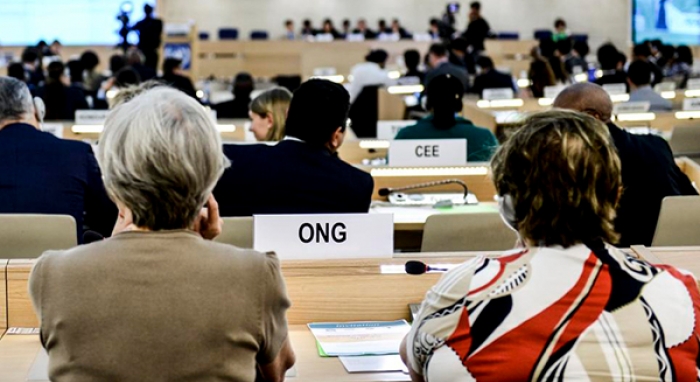
2018 is not only the 70th anniversary of the Universal Declaration of Human Rights (UDHR) and the 25th anniversary of the Vienna Declaration and Programme of Action (VDPA), it also marks the 20th anniversary of the Declaration on human rights defenders which was adopted by consensus by the General Assembly in 1998.
The rights enshrined in the UDHR cannot be guaranteed without a safe and enabling environment for the people exercising and fighting to defend those rights. States who commit to guarantee the UDHR cannot restrict the work of defenders, nor fail to act upon their obligation to protect them.
20 years after the adoption of the Declaration, human rights defenders have perhaps never been more under threat. They are subjected to judicial harassment, arbitrary arrest and detention, torture, enforced disappearance, physical violence and even murder.
Defenders are also attacked when they bring their voices to the international community. Last year, a report by the Secretary-General found evidence of a strategy on the part of some States to prevent the activities of individuals cooperating with the UN. The report also highlights that the incidence of reprisals is becoming broader and that the means used are increasingly blunt…
“The realisation of the UDHR depends on the work of defenders, who risk their lives and their freedom to advocate for the rights of others,” said Salma El Hosseiny, ISHR’s Human Rights Council Advocate. “It is alarming that States are increasingly shrinking civil society space on one hand, and professing their commitment to guarantee the UDHR on the other hand“. These unprecedented attacks against civil society and defenders amount to violations of the same rights to which they are advocating for.
States must translate their commitment to the UDHR by taking immediate and effective measures to ensure that defenders are able to carry out their legitimate human rights activities without any hindrance, to ensure accountability for all perpetrators, and access to remedies for victims.
The Human Rights Council plays an important role in contributing to the realisation of the UDHR on the ground. Accordingly, any proposals to strengthen or enhance the efficiency of the Council should be measured through the lens of increasing its impact, rather than the relatively insignificant time or money it may save. Finally, it is imperative that any legitimate process to strengthen the Council include the meaningful participation of civil society in all stages.
https://www.ishr.ch/news/hrc37-defenders-are-key-realise-universal-declaration-human-rights
see also: https://www.ishr.ch/news/hrc-consultation-civil-society-key-if-council-be-reformed-fit-purpose
On 13 February 2018 fourteen international and regional rights organizations stated that the Egyptian government has trampled over even the minimum requirements for free and fair presidential elections (planned 26-28 March). The government of President Abdel Fattah al-Sisi has relentlessly stifled basic freedoms and arrested potential candidates and rounded up their supporters. “Egypt’s allies should speak out publicly now to denounce these farcical elections, rather than continue with largely unquestioning support for a government presiding over the country’s worst human rights crisis in decades,” the groups said.
The authorities have successively eliminated key challengers who announced their intention to run for president….The current atmosphere of retaliation against dissenting voices and the increasing crackdown against human rights defenders and independent rights organizations have made effective monitoring of the elections extremely difficult for domestic and foreign organizations. Media reports have said that the number of organizations that were granted permission to monitor the elections was 44 percent fewer than in the last presidential election in 2014 and that the number of requests, in general, has gone down. Several opposition parties called for boycotting the elections. A day later al-Sisi threatened to use force, including the army, against those who undermine “Egypt’s stability and security.” On February 6, the Prosecutor-General’s Office ordered an investigation against 13 of the leading opposition figures who called for a boycott, accusing them of calling for “overthrowing the ruling regime.” “Seven years after Egypt’s 2011 uprising, the government has made a mockery of the basic rights for which protesters fought,” the groups said. “Egypt’s government claims to be in a ‘democratic transition’ but move further away with every election.”
So, the two side events that are coming up are extremely valuable as the national space for dissent is nihil:
In the same context there is the press release of Friday 2 February 2018 in which a number of organisations, under the umbrella Committee for Justice (CFJ), condemned Tuesday’s execution of Egyptian Tayseer Odeh Suleiman after he was convicted in Ismalia’s military court in what they said was a flawed trial inconsistent with international legal and human rights standards. Suleiman, 25, was hanged after the Supreme Military Court of Appeals rejected the defence put foward by his lawyer without explaining the reasons behind the rejection….CFJ confirmed that there had been an unprecedented increase in the implementation of death sentences in Egypt, based on illegal proceedings, with 26 people executed between the end of December last year and the present. CFJ further asserted that the reason for the death penalties “under the guise of combating terrorism” were misleading and in violation of basic standards of a fair trial indicating significant flaws in Egypt’s judicial process.
On only a few days ago (2 March 2018), responding to reports from his family and colleagues that Ezzat Ghonim – a prominent Egyptian human rights lawyer and director of the NGO, Egyptian Coordination for Rights and Freedoms – failed to return home from work yesterday, Najia Bounaim, Amnesty International’s North Africa Campaigns Director, said: “Given the highly-charged political climate in Egypt and the clampdown on dissent in the lead-up to the presidential elections, we are deeply concerned that Ezzat Ghonim may have been forcibly disappeared. ”
For some of my earlier posts on Egypt, see: https://humanrightsdefenders.blog/tag/egypt/
https://www.hrw.org/news/2018/02/13/egypt-planned-presidential-vote-neither-free-nor-fair
Among the many (written) NGO statements issued during the current session of the UN Council on Human Rights in Geneva, this one by the Asian Legal Resource Centre stands out by describing a whole government apparatus as standing against independent human rights defenders. It was dated 26 February 2018:
The Asian Legal Resource Centre (ALRC) wants to bring the situation of human rights defenders of Bangladesh to the attention of the United Nations Human Rights Council. The Government of Bangladesh stands against the human rights defenders with draconian legislations and various institutions and agencies of the State. Independent dissenting voices face systemic harassments. Given the circumstances, the human rights defenders have to work without any notion of protection while defending rights in the country. The threats against the human rights defenders are increasing as the 3rd Cycle of the Universal Periodic Review (UPR) is approaching.
The Government of Bangladesh has amended the existing laws and has adopted new laws with vague definitions and harsher provisions to stifle the human rights organisations and individual defenders along with other dissenting voices.
The incumbent government made the Foreign Donations (Voluntary Activities) Regulation Act 2016. This law not only intimidates the civil society actors but also prevents the expected outcome that the human rights organisations strive for achieving for the society. The law provides the NGO Affairs Bureau (NGOAB), a wing under the Office of Prime Minister, the power to review and cancel proposed projects by NGOs. A persons’ travelling out of Bangladesh in relation to the projects requires prior governmental approval. The NGO Affairs Bureau is authorised to scrutinise the activities through inspections and monthly coordination meetings by the representatives of the NGOAB while prior approval is also required for planned activities before receiving the grants. Without any judicial process the NGOAB is empowered to impose sanctions for alleged ‘non-compliance’ against any organisation or individual receiving foreign funds for voluntary activities. Such actions also include fines, disciplinary actions, and cancellation of registration of the NGO even for ‘derogatory’ remarks. The decisions of the NGOAB can only be brought before the Secretary of Office of the Prime Minister as an ‘appeal’. The law establishes the bureaucrats’ control over voluntary activities while Bangladesh’s bureaucracy has reputation for systemic corruption and abuse of power.
Bangladesh’s Cabinet has approved the Digital Security Bill-2018 on 29 January 2018. This Bill may be enacted in any day during the ongoing Session of the national parliament. This proposed law curtails both the freedom of press and the writ of human rights organisations. The police is authorised to arrest any person without a warrant of arrest issued by a Court of the country if the police officer believes that an offence is committed under this law. A person can be imprisoned for 14 years, with or without a fine of BDT 10 million for publishing any material online for ‘spreading negative propaganda against Liberation War or the Father of the Nation’ while there is no definition of ‘negative propaganda’ provided in the law. Publishing ‘false’ and ‘distorted’ information to tarnish the image of the State is punishable with three years’ imprisonment and with or without a penalty of BDT three hundred thousand. If a person is held for the second time for the same crime he or she will be imprisoned for five years with or without a penalty of BDT one million. Such provision will put the human rights defenders in grave danger, as they have to contest the official version of the State, which always denies allegation of human rights abuses and accuses the rights groups for ‘tarnishing the image of the State’. For example, the government and the law-enforcement agencies of Bangladesh deny every incident of enforced disappearances and each of extrajudicial executions while the human rights defenders and media explore and expose the truth.
Bangladesh Government, by default, protects the perpetrators of human rights abuses in a deeply rooted culture of impunity. The State prevents the basic institutions from functioning and serving the people with fairness. Instead, the incumbent government uses all the institutions, including the judiciary, as tools to secure its power at the cost of the lives and liberties of the ordinary people.
The participation of independent human rights organisations in the Universal Periodic Review (UPR) mechanism of the UN Human Rights Council makes them governmental targets for exposing the human rights realities. For example, Odhikar, a locally based human rights organisation, contributed to the UPR process during the first and second cycles in 2009 and in 2013. This rights group consistently documented the cases and pattern of extrajudicial executions, enforced disappearances, custodial torture, curtailing the freedom of expression and opinion, and denial of justice to the victims of gross human rights abuses in Bangladesh. The government started harassing this organisation for publishing a fact-finding report on a massive crackdown in May 2013. Its leaders were made the victims of the country’s first ever cyber crime case, which is still pending before a special tribunal incepted for holding trial of such cases. Their bank accounts are frozen and NGO registration’s renewal has been halted since mid 2014. The activists who are engaged in standing beside the victims of human rights violations remain under active surveillance by the intelligence and law-enforcement agencies.
Bangladesh is moving toward another general election by the end of 2018. The incidents of gross human rights abuses are also on the rise. The incumbent government is using the State’s law-enforcement agencies and judiciary to drive away the political opposition. The government has already started arresting the opposition activists arbitrarily as the main opposition leader is afraid to be convicted in controversial corruption cases. As days pass on more violation of human rights would deteriorate the situation requiring the human rights defenders to assist the victims. The activities of the rights groups would invite more reprisals against the human rights defenders, except those who directly or indirectly align with the incumbent government for their financial and political benefits.
Bangladesh’s system of governance is authoritarian and coercive by nature. The institutions – be it a constitutional body or a statutory entity – function according to the wish of the Prime Minister, as a supreme controller of everything. The universal normative principles of justice and good governance do not exist or work in this country. As a result, all the basic institutions constantly fail to act for the actual purpose of upholding the rule of law and facilitate functional democracy. The judiciary and the entire criminal justice apparatus, survive as mere facades. These facades facilitate the process of silencing the society’s vibrant voices.
The ALRC urges the Special Rapporteur on the Situation of Human Rights Defenders to request Bangladesh for sending invitation to the mandate for country visit. The Human Rights Council and the Office of the High Commissioner for Human Rights to focus on Bangladesh’s domestic human rights realities and intervene for the protection of victims from gross violation of rights.
For some of my other posts on Bangladesh see: https://humanrightsdefenders.blog/tag/bangladesh/
http://alrc.asia/bangladesh-government-stands-against-independent-human-rights-defenders/
[On 2 March 2016, Berta Cáceres, a courageous defender of the environment and Indigenous rights, was shot dead by gunmen in her home in Intibucá, Honduras. She campaigned against the Agua Zarca hydroelectric dam project and the impact it would have on the territory of the Indigenous Lenca People. see also: https://humanrightsdefenders.blog/2016/03/07/exceptional-response-from-ngo-world-on-killing-of-berta-caceres/]
A recent report from an independent team of international lawyers hired by the family of Berta Cáceres had exposed serious flaws in the official investigation. The report includes evidence that would implicate high-level business executives and state agents in the crime. The Honduran Attorney General’s office has arrested eight people in connection to Berta’s murder, including some individuals linked to Desarrollos Energéticos S.A. (DESA), the company building the Agua Zarca dam, and others with ties to the military, but COPINH (the NGO Berta worked for) is concerned that no high-ranking officials in the government or the company have been investigated for having allegedly ordered her murder. Ahead of the trial which is scheduled to begin in June, the lawyers of Berta’s family and COPINH have called on the prosecutor office and the judicial authorities to ensure that those responsible for ordering the killing of Berta are also investigated and brought to justice.
Then on the same day as the anniversary of her killing the Honduran authorities (AP reports) arrested Roberto David Castillo Mejia, who at the time of the slaying was executive president of DESA, calling him an intellectual author of the crime. It became the ninth arrest in the killing of Caceres. Two others have been arrested for allegedly impeding the investigation.
The Public Ministry alleges Castillo was “the person in charge of providing logistics and other resources to one of the material authors already being prosecuted for the crime.” In a statement, DESA defended Castillo and its employees as innocent, saying they were “totally unconnected” to the crime and calling the “unjust detention” the result of “international pressure and campaigns by diverse NGOs to discredit the company.”
DESA questioned the coincidence that the arrest came on the second anniversary of Caceres’ killing as her supporters held a protest in Honduran capital of Tegucigalpa. Caceres’ relatives said they were certain of Castillo’s guilt.
While all eyes are on the ongoing session of the UN Human Rights Council in Geneva, the Inter-American Commission on Human Rights (IACHR) – on 28 February – presented its report “Toward a Comprehensive Policy to Protect Human Rights Defenders,” in the context of the 167th session of the IACHR taking place in Colombia. The purpose of this report is to provide the States in the region with guidance in developing their domestic policies, programs, and protection mechanisms for human rights defenders, in keeping with inter-American human rights standards.
“The work of defending human rights in the countries of the Americas has become extremely dangerous,” said the President of the IACHR, Commissioner Margarette Macaulay. “The levels of violence against people who defend human rights in our region are alarming, and the rates of impunity for these types of crimes are very high. The focus of the IACHR’s concern is on the violent deaths of rights defenders, the impunity that tends to surround these types of crimes, and the remaining vulnerability of all persons and groups on whose behalf the defender had worked. This makes it essential and urgent for the States to adopt effective measures to put an end to this situation,” she added.
…….
“We are aware of and welcome the efforts made by some States to implement different mechanisms, laws, and policies to protect rights defenders, but unfortunately these have not been effective enough,” said the IACHR Rapporteur on Human Rights Defenders, Commissioner Francisco Eguiguren. “That is why the IACHR in this report has laid out the main components of a comprehensive protection policy, so that such a policy can be effective and so that we can manage to stop the killings and other attacks that are putting an end to the lives of rights defenders or preventing them from doing their work. The aim of the IACHR is to provide the States with a guide on developing domestic policies, programs, mechanisms, and practices for the effective protection of human rights defenders, in accordance with Inter-American human rights standards,” he indicated.
A comprehensive protection policy is based on a recognition of the State’s interrelated and interdependent obligations to enable rights defenders to freely and safely carry out their work of defending human rights. In this sense, a comprehensive protection policy refers to a broad, all-encompassing approach that requires extending protection beyond physical protection mechanisms or systems when defenders experience situations of risk. It requires implementing public policies and measures designed to respect the rights of defenders; prevent violations of their rights; diligently investigate acts of violence against them; and punish the perpetrators and masterminds of any attack on human rights defenders.
The report also analyzes the main steps forward and challenges in terms of the efforts underway in some States, such as the national protection mechanisms, legislation, and policies and programs that exist in some countries. It also makes recommendations to the States on how to ensure better implementation of prevention, protection, and investigation measures to achieve a comprehensive protection policy.
..Human rights defenders are an essential pillar for the strengthening and consolidation of democracies in the hemisphere. Acts of violence against human rights defenders not only infringe on the defenders’ own rights as human beings but also undermine the critical role they play in society and in upholding democratic standards.
http://www.oas.org/en/iachr/media_center/PReleases/2018/039.asp

A Vietnamese human rights defender and blogger – now under house arrest – says she will not travel outside the country to receive a human rights award in March, vowing instead to remain in Vietnam to work for change in the one-party communist state. Pham Doang Trang, author of a recently published book on political engagement that has angered Vietnamese authorities, wrote on Wednesday on her Facebook page that she will not attempt to go abroad to receive her prize, according to Radio Free Asia on 28 February 2018.
“I haven’t gone abroad and don’t plan to, not even for a few days to receive the Homo Homini Prize in the Czech Republic on March 5,” Trang said. “I will never leave Vietnam until Vietnam has changed.” “When one is like a fish that has been born in a dirty and polluted pond, one can either find one’s way to a nicer and cleaner pond nearby or to the vast ocean, or one can try to change one’s own pond to make it beautiful, breathable, and worth living in,” Trang said. “I choose this second option”.
[Trang received the 2017 Homo Homini Award from People in Need, an international human rights organization based in the Czech Republic. See : http://trueheroesfilms.org/thedigest/awards/homo-homini-award]
https://www.rfa.org/english/news/vietnam/change-02282018145831.html
Decisions directly affecting human rights activities were caught up in a powerful push – particularly by the US – for deep cuts to the proposed biennium budget. The approved UN regular budget for 2018 -2019 of $5.397 billion, is almost $200 million below what the Secretary General had sought, and 5% less than the budget approved for 2016-2017.
‘The percentage of the UN budget directed to support the human rights pillar is already tiny. To then carve off funding for posts already agreed as essential, makes no sense,’ she added. ‘The General Assembly ignores the fact that investing in human rights protection is a smart choice. ISHR’s Tess McEvoy said on 4 January 2018. (for more information on the budget cuts see https://www.ishr.ch/news/unga72-human-rights-funding-takes-hit-key-mandate-reaffirmed).
On 27 February 2018 the OHCHR announced that Norway has pledged to increase its funding for the UN Human Rights Office, giving some USD 18m dollars – a year over four years. Generally there is impressive support for human rights from Scandinavia (Denmark is doubling its funding for 2018 USD 10m, and in 2017, Sweden was the second biggest donor with some USD16m).
However, even with a record USD142.8m in voluntary contributions last year, the UN Office still fell short of the funds needed to respond to all requests for assistance. Therefore it has just launched appeal for extra-budgetary funding for 2018 – with as most ambitious target yet, amounting to USD278.3m.
The OHCHR hopes that the 70th anniversary of the Universal Declaration of Human Rights will encourage all UN Member States to make voluntary contributions. If you want to see how much individual States gave to the UN Human Rights Office in 2017, please see: http://www.ohchr.org/Documents/AboutUs/FundingBudget/VoluntaryContributions2017.pdf
http://www.ohchr.org/EN/NewsEvents/Pages/DisplayNews.aspx?NewsID=22715&LangID=E
 Hans Thoolen on Human Rights Defenders and their awards