Amnesty International UK runs a successful series of (national) media awards. Amnesty’s Media Awards, which have been running annually since 1992, celebrate excellence in human rights journalism and applaud the courage and determination of journalists who often put their lives on the line to report on vital human rights issues. Kate Allen, Director of Amnesty International UK, said at the 3 April 2019 ceremony: “Media work is vitally important for Amnesty and everything we do. This evening we’ve seen some brilliant journalism that has had enormous human rights impact…Without a free press, it’s extremely difficult to expose wrong-doing and hold leaders to account. But even here in the UK we’re seeing it being threatened – especially with the sinister arrest of Trevor Birney and Barry McCaffrey in Northern Ireland last year…That’s why our awards are about congratulating the achievements of the media and championing its role in creating a fairer, more open world.” The awards, hosted by Channel 4 News presenter Cathy Newman, held a moment of silence for the approximately 90 journalists imprisoned last year for doing their jobs. Canada and the USA are undertaking similar events.
The winners of the 2019 AI UK Media Awards include:
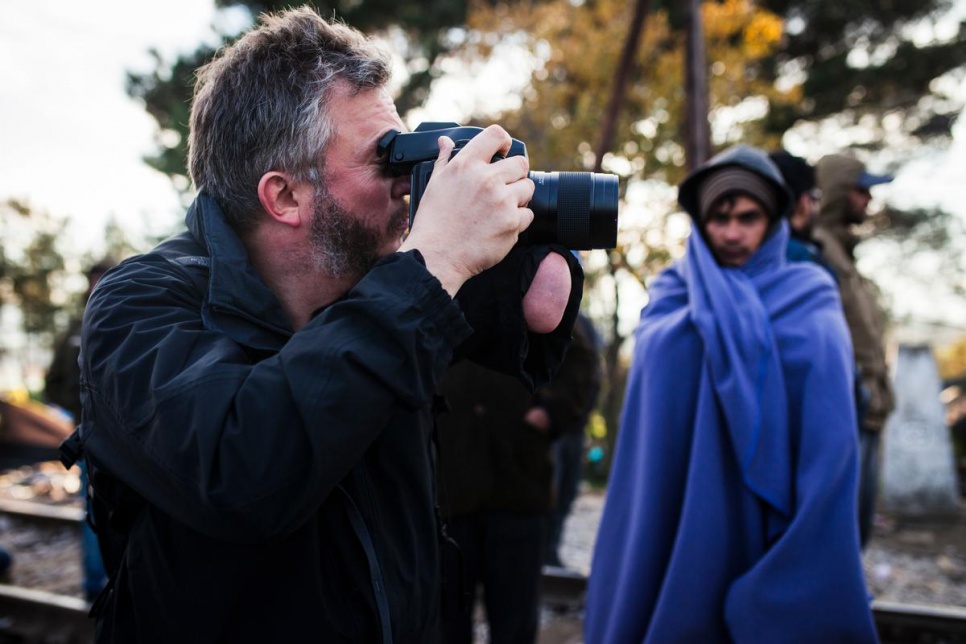
Humanitarian photographer Giles Duley won a Media Award for his powerful series depicting the plight and resilience of Congolese female refugees in Angola. His photo essay, “We Are Here Because We Are Strong”, was commissioned by UNHCR and published in Humanity magazine. The subjects of his project were forced to flee the Kasai region of Democratic Republic of the Congo after violence erupted in March 2017, triggering massive displacement.
The full Media Awards 2019 shortlist can be found here.
With this video Phil Lynch announces the launch of ISHR’s 2019 annual report.
Here a few examples of the major achievements:
We provided intensive training and strategic advocacy support to over 230 defenders from around the world, equipping them with the expertise and networks to use the international human rights system to achieve national-level change.
We strengthened national and international law and jurisprudence on the recognition and protection of defenders, including women human rights defenders and migrant rights defenders.
We focused attention on the situation of defenders in highly restrictive environments, such as China, Egypt and Saudi Arabia, increasing political pressure for the release of arbitrarily detained defenders, extracting a political cost for attacks and reprisals against them, and highlighting cases in the international and national press.
We met with the UN Secretary-General, the UN High Commissioner for Human Rights, heads of State and foreign ministers from across the world, pressing each of them to prioritise the recognition and protection of defenders.
We worked with powerful and influential multinational corporations to secure their high-level commitment to respect and protect defenders, even defenders who oppose and protest against their activities.
We partnered with national actors in a wide range of countries – from Guinea to Jamaica, from Colombia to Tunisia, and from Mali to Mongolia – to secure a safe and enabling environment for defender’s vital work.
Barbora Cernusakova (Amnesty International’s Poland researcher) posted in Euronews on 4 April 2019 a piece entitled “When Polish judges become human rights defenders”.
“There is a danger when politics enters the judiciary,” warned Judge Sławomir Jęksa in his summing up of his decision to accept the appeal of a woman who had been charged for using offensive language at a rally. She had, he reasoned, not only been entitled to express herself in the way that she did, especially since she was expressing genuine concerns about the encroachment on human rights in Poland. Days after his ruling, Judge Jęksa found himself at the receiving end of just the sort of political interference of which he had warned. The Disciplinary Prosecutor started proceedings against him on the grounds that his ruling was an “expression of political opinions” and “an offence against the dignity of the office of the judge.”
Judge Jęksa does not have much faith in the disciplinary procedure which will take place in the Disciplinary Chamber of the Supreme Court. The Disciplinary Chamber is a special body whose members were chosen by a body formed of politicians from the governing party. He is just one of several judges facing similar pressures. More than a dozen judges have faced disciplinary proceedings since last autumn. These may result in sanctions, including their dismissal from office.
Some of the more outspoken judges who publicly expressed their opposition to the government’s interference with the judiciary have even received death threats…..
This is all happening in the context of a wider smear campaign against judges that have upheld decisions in defence of human rights that began in 2017. Judges are constantly portrayed as “enemies of the people” who “damage the interests of Poland.” Pro-government media and social media accounts have gone as far as invading their privacy by regularly publishing their personal information, including details about their sick leave and their trips abroad.
Despite this, judges in Poland continue to organise and collectively resist the pressures from the government. “For the first time in our careers we have to stand our ground and show we are not just civil servants, but the authority that protects legal order,” Judge Dorota Zabłudowska told me.
But the ongoing struggle over the independence of the judiciary in Poland is not only about them. It is a fight for human rights that ultimately affects everyone in the country and indeed in Europe. In a significant move yesterday, the European Commission launched an infringement procedure to protect judges in Poland from political control. …The chilling effect of the abuse of this already flawed disciplinary system is real and this has now been called out by the Commission. Member states should back this step and call on Poland in the General Affairs Council next week to end the harassment and intimidation of judges.
This decision draws an important line in the sand and makes clear that interfering with the independence of the judiciary cannot and will not be tolerated. Allowing one member state to operate outside the rule of law would be to allow the entire system to be contaminated…
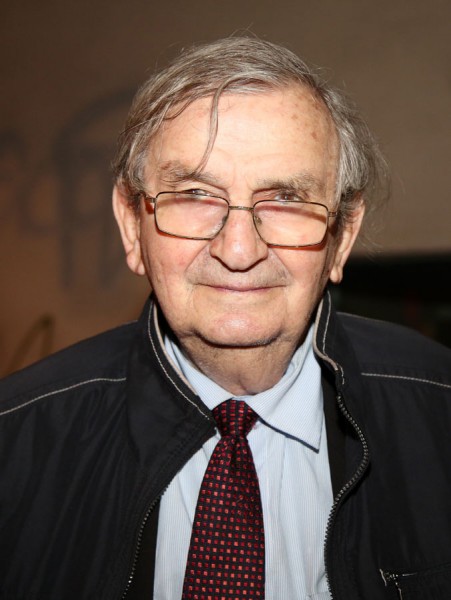
Silvana Meixner is the head of the ORF minority editorial office (Minderheitenredaktion) and presenter of the magazine “Heimat Fremde Heimat”. In the spirit of the late Ari Rath, she is honoured as a journalist who has rendered outstanding service in her work to critical reporting on flight, expulsion and asylum, committed to the protection of human rights. Silvana Meixner was born on March 16, 1958 in Split, Croatia; she lives in Vienna since 1986. After graduating from high school, she studied sociology and pedagogy in Zadar. Since 1988 she has been working for the Austrian Broadcasting Corporation (Österreichischer Rundfunk), where she was involved in setting up the minority editorial office. On 3 December 1993 Silvana Meixner, who moderated the television programme Heimat, fremde Heimat together with Lakis Iordanopoulos, was injured by a letter bomb from Franz Fuchs. She continued her journalistic work for refugees, ethnic minorities and human rights.
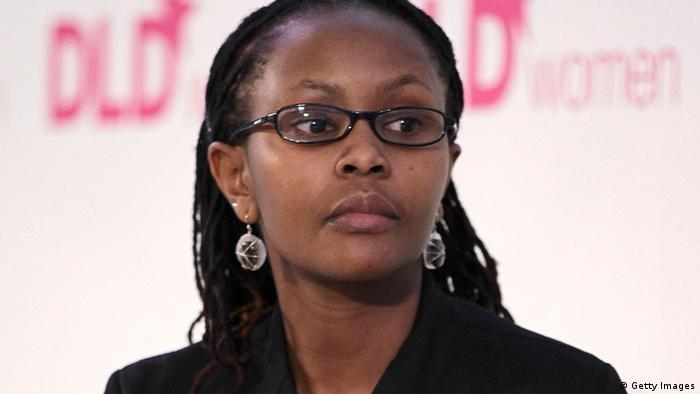
The winner of the 2019 German Africa Prize is Juliana Rotich, founder of software project Ushahidi, which was introduced to monitor violence in Kenya following the 2007 general elections.
Juliana Rotich became known in professional circles in 2007 as the co-founder of the open source platform Ushahidi (a Swahili word meaning ‘testimony’), which began in Kenya as an internet platform developed to map reports of post-election violence and which went on to revolutionize the international flow of data and information.
A 16-member independent jury selected Rotich from a list of 18 African nominees. The 42-year-old was informed at a meeting on Thursday 4 April 2019 at the German embassy in Nairobi, attended by Deputy Ambassador Michael Derus and the General Secretary of the German Africa Foundation, Ingo Badoreck. The award pays tribute to the Kenyan entrepreneur not only for her business achievements and technological innovations but also for her outstanding sense of social responsibility. For more on this another regional awards for Africa see: http://www.trueheroesfilms.org/thedigest/awards/german-africa-award]
In an interview with DW in 2013, Rotich explained the philosophy behind Ushahidi: “One of the things that we are doing is that we have a partnership with civil society organizations, peace networks and youth networks. And these are organizations that are doing peace work in terms of messaging and encouraging the population to be peaceful and to conduct themselves in a peaceful way. So in that respect we are part of a partnership. Ushahidi’s key role in this partnership is the technology. And this is the crowdsourcing technology that allows people to report but also provides a way for digital humanitarians to volunteer and help to sift through the information, categorize it and make it available on the website.“
Today Ushahidi is used in over 160 countries as a tool for crisis response and for independent election monitoring, for example in Nigeria and Afghanistan. It has also been used following natural disasters in Chile, Haiti and New Zealand. Juliana Rotich is regarded as one of the leading figures of the digital revolution in Africa and beyond.
From Ushahidi she went on to found BRCK, an innovative technology company which is now the biggest Wi-Fi provider in sub-Saharan Africa. The central product is a battery-operated modem which can function for up to eight hours without electrical power. It is used in 150 countries.
That there is still a lot that needs to be done in the world of sports and human rights is illustrated in the piece by Minky Worden (director of global initiatives at Human Rights Watch) in the Sydney Herald of 7 April 2019 (“Football leaders stand by as human rights abuses pile up”). Article 3 of the FIFA and AFC Statutes requires the AFC and its leaders “promote and protect
human rights”. [see also: https://humanrightsdefenders.blog/2018/12/03/fifas-second-report-on-human-rights-misses-sustainable-approach/]
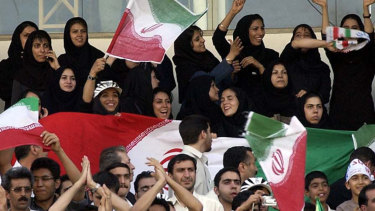
A too-rare sight … Iranian women cheer their national team in an Asian World Cup qualifying match against Bahrain in 2006. Now women resort to disguising themselves as men to enter stadiums.CREDIT:AP
..He is not the only high-level football official who may not be acting in accordance with the policy. In 2018, 20 members of Afghanistan’s women’s national team made detailed allegations to the Guardian and to FIFA of sexual and physical abuse they say they suffered at the hands of the president of the Afghan Football Federation, Keramuddin Karim, and other officials. FIFA suspended Karim for two 90-day periods and during this time he has reportedly threatened witnesses in the case. He stands accused of sexual assault, physical attacks and intimidation…. The federation general secretary, Sayed Ali Reza Aghazada of Afghanistan, was suspended, yet was also just elected to the AFC’s powerful governing body, the executive committee.
Finally, Iran’s Football Federation president, Mehdi Taj, was elevated to AFC vice-president……….On Friday, before the AFC election, Iranian women filed an unprecedented FIFA ethics complaint against Mehdi Taj, for his role in presiding over their exclusion from stadiums for years. FIFA has said clearly in its second Human Rights Advisory Board report that the stadium ban for women violates FIFA’s statutes, which say such discrimination is “punishable by suspension or expulsion”.
The AFC football leaders from Bahrain, Afghanistan and Iran are bound by the FIFA code of ethics, the FIFA statutes and the FIFA human rights policy. FIFA has made admirable progress in implementing its new policy , and could even raise the bar for other sports federations. But FIFA’s reform efforts risk derailment if the sport’s leaders in Asia refuse to uphold the new global standards. FIFA’s Gianni Infantino, up for re-election unopposed himself this year, needs to find his voice to call out football federation leaders who are undermining reforms. It is time to hold accountable those who are threatening the “beautiful game” with ugly human rights abuses.
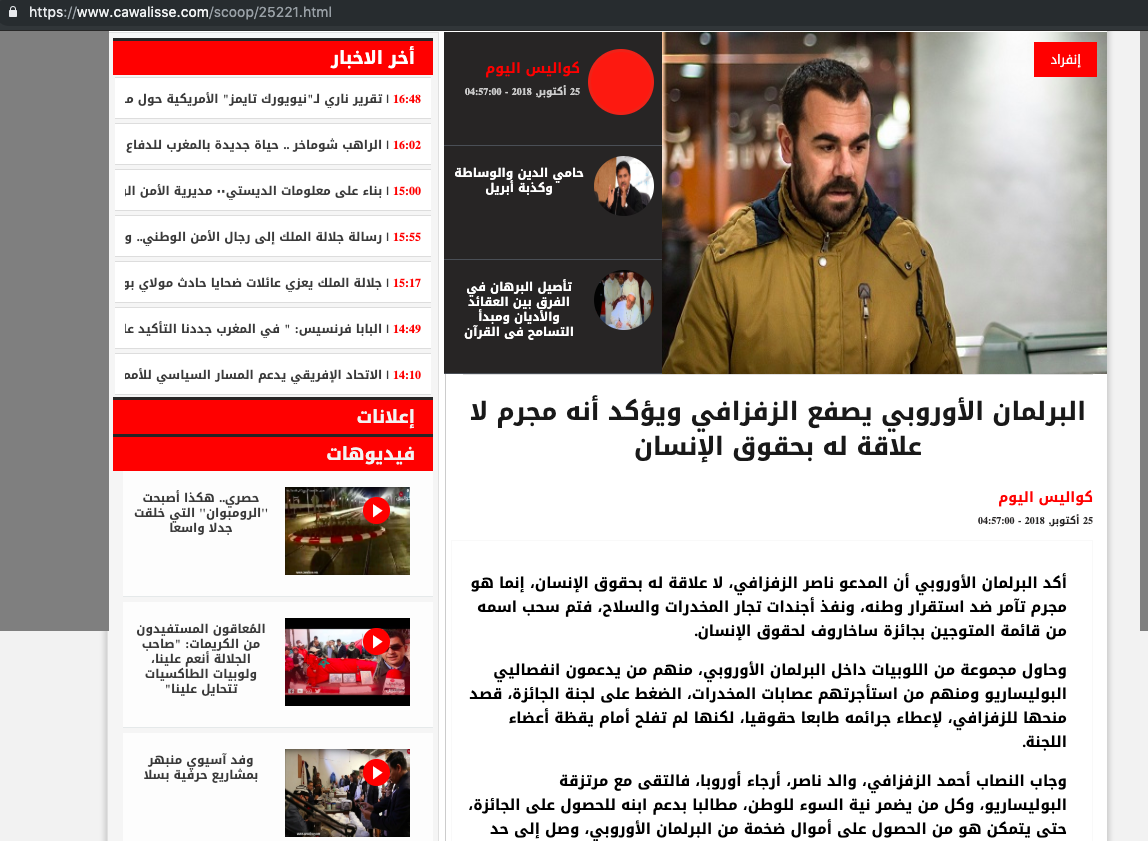
In the first of a two-part series on media repression and “fake news” in Morocco – written in collaboration with Access Now – Global Voices tells on 4 April 2019 how jailed human rights activist Nasser Zefzafi was smeared by Moroccan pro-government media.
Zefazfi is currently serving a 20-year prison term for his role as a leader in the Hirak protests. … Zefzafi made it to the list of three finalists for the Sakharov Prize, but did not win. It was instead awarded to Ukrainian film director and writer Oleg Sentsov. Following the announcement of the winner on 25 October, Moroccan news site Cawalisse published a fabricated story alleging that the European Parliament “withdrew Zefzafi’s name from the list of winners’’ because he is a “criminal who has no link to human rights.”
Screenshot of the fabricated Cawalisse story alleging that the European Parliament deemed Zefzafi a ”criminal’.
The article (which does not list an author!) states that “a group of lobbies from within the European Parliament, including those that support Polisario separatists and those hired by drug gangs, pressured the prize’s committee to award it to Zefzafi and give his crimes the label of protecting rights.” The story is completely false. It is based on fabricated facts and conspiracy theories. The European Parliament never maintained that Zefzafi was a criminal, nor did they withdraw his name “from the list of winners.” He was simply not chosen to win the prize. In fact, there was no “list of winners” in the first place, but only one winner, Oleg Sentsov…
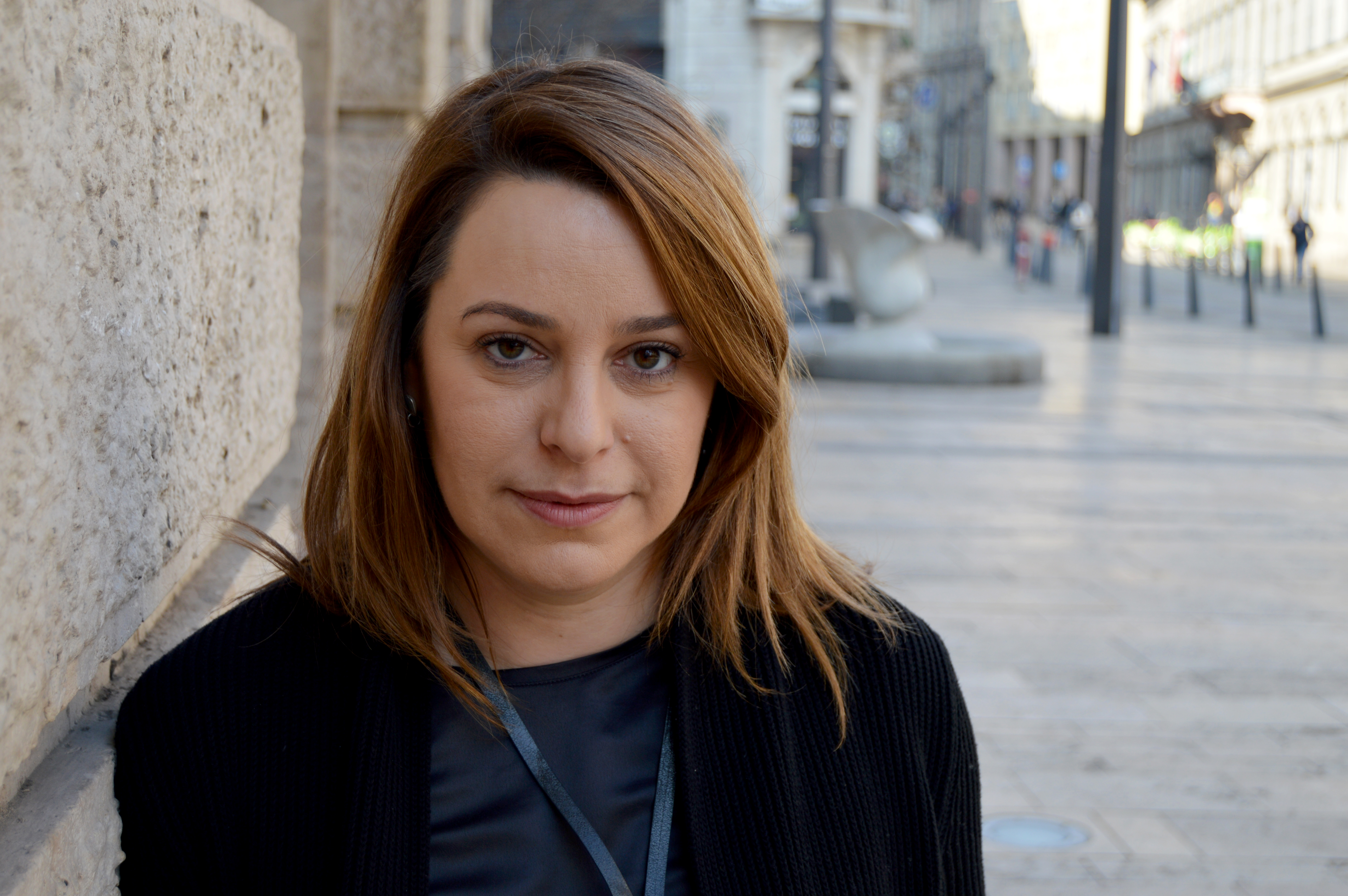
Hungarian human rights lawyer Márta Pardavi has been awarded the Civil Rights Defender of the Year Award 2019. As an outspoken critic of the Hungarian government and its policies, Márta is often smeared and her work discredited. The award is a recognition of her work of many years, fighting against the attempts to systematically dismantle democracy, normalisation of xenophobia and hate crimes in Hungary.
Márta Pardavi is the Co-chair of the Hungarian Helsinki Committee, one of Hungary’s leading human rights organisations. The Hungarian Helsinki Committee is a watchdog organisation that protects human dignity and the rule of law through legal and public advocacy methods. Being both vocal and successful in its activities, and particularly because of their work to support asylum seekers, the organisation has become a prime target of the government’s toxic campaigns.
“Democracy is under threat all over the world and now we see what authoritarians do when they get to power. They target critics, human rights defenders and treat marginalised groups as threats to society. We see this happening in Hungary, but also in other countries such as Poland. This award sends a very strong message, that our work is recognised, and that we as civil society organisations will continue to defend democratic values”, said Márta Pardavi.
Márta Pardavi, Civil Rights Defender of The Year 2019
“For many years, human rights lawyer Márta Pardavi has courageously defended civil and political rights in Hungary. She is leading the Hungarian Helsinki Committee’s work in the field of refugee protection, and with dignity and professionalism, confronts those who attempt to systematically dismantle civil society and normalise xenophobia and hate crimes. For her dedication and exceptional contribution to resist inhumane treatment of the most vulnerable, Márta is awarded the Civil Rights Defender of the Year 2019”, , said the Board of Civil Rights Defenders in its motivation.
During the first two decades of Hungary’s post-communist history, the country was a young but stable democracy, and a role-model of successful transition from authoritarianism to democracy. Today, Prime Minister Viktor Orbán has been in power almost a decade, a period during which Hungary has undergone dramatic changes. Too many posts in this blog have been devoted to this, see e.g.: https://humanrightsdefenders.blog/tag/hungary/.
….But despite this climate, human rights defenders and human rights organisations continue to challenge state policies and propaganda, and the public support for their activities is growing.
“Many civil society organisations are working to address this and while it was probably both unwanted and unintended, the Hungarian government’s pressure has made us better at working together, making us stronger. And the same is true for the government’s anti-NGO campaigns – we have seen that civil society support is growing as an unintended consequence of the state propaganda”, said Márta Pardavi.
On 4 April 2019, the head of the Greek National Commission for Human Rights (GNCHR), Giorgos Stavropoulos, resigned, accusing the (Syriza) government of attempting to alter the balance in the composition of the independent body’s committee. In his resignation, Stavropoulos criticized the government’s decision to add five members from the LGBTQI community and two more members from the Roma community to the body’s plenary, saying the decision violates “any principle of equality” in relation to the other members of the GNCHR who only have one vote in the committee. Stavropoulos said the body has already made “a decisive contribution” in highlighting the problems of the Roma and LGBTQI community.
“However, their excessively favorable treatment at the expense of all other defenders of human rights insults the latter, but also undermines the authority of the Commission itself, uncritically altering its composition and affecting its independence,” he added. GNCHR is an advisory body to the Greek State on matters pertaining to human rights protection.
Cruel and inhuman punishments such as death by stoning for same-sex sexual acts and amputation for robbery came into effect in Brunei Darussalam as Amnesty International feared. The proposed changes to Brunei’s penal code to incorporate punishments under a strict interpretation of Islamic law – including death by stoning – should be halted, the UN’s top human rights official, Michelle Bachelet, said on Monday 1 April 2019. Now some interesting new celebrity action is on the way:
A boycott of Brunei-owned luxury hotels was sparked last week in an opinion piece by actor George Clooney, who said a boycott of the high-end hotels — where rooms can start at $600 a night or more — is necessary to keep money from flowing “directly into the pockets of men who choose to stone and whip to death their own citizens for being gay or accused of adultery.” It is gaining support from celebrities including Ellen DeGeneres and Elton John as the country on Wednesday implemented what it called Islamic criminal laws including death by stoning for gay sex.
The nine hotels owned by Brunei are:
The Dorchester, London
45 Park Lane, London
Coworth Park, UK
The Beverly Hills Hotel, Beverly Hills
Hotel Bel-Air, Los Angeles
Le Meurice, Paris
Hotel Plaza Athenee, Paris
Hotel Eden, Rome
Hotel Principe di Savoia, Milan
..In his opinion piece last week, Clooney noted that he’s stayed at many of the hotels owned by Brunei, a small nation located on the island of Borneo, but said he was unaware of their ownership “because I hadn’t done my homework.” He acknowledged that a boycott is unlikely to change Brunei’s laws, but said consumers must decide whether they want their money to support laws that violate human rights. “Are we really going to help fund the murder of innocent citizens?” he wrote. “I’ve learned over years of dealing with murderous regimes that you can’t shame them. But you can shame the banks, the financiers and the institutions that do business with them and choose to look the other way.”




 Hans Thoolen on Human Rights Defenders and their awards
A boycott of Brunei-owned luxury hotels was sparked last week in an opinion piece by actor George Clooney, who said a boycott of the high-end hotels — where rooms can start at $600 a night or more — is necessary to keep money from flowing “directly into the pockets of men who choose to stone and whip to death their own citizens for being gay or accused of adultery.” It is gaining support from celebrities including Ellen DeGeneres and Elton John as the country on Wednesday implemented what it called Islamic criminal laws including death by stoning for gay sex.
The nine hotels owned by Brunei are:
..In his opinion piece last week, Clooney noted that he’s stayed at many of the hotels owned by Brunei, a small nation located on the island of Borneo, but said he was unaware of their ownership “because I hadn’t done my homework.” He acknowledged that a boycott is unlikely to change Brunei’s laws, but said consumers must decide whether they want their money to support laws that violate human rights. “Are we really going to help fund the murder of innocent citizens?” he wrote. “I’ve learned over years of dealing with murderous regimes that you can’t shame them. But you can shame the banks, the financiers and the institutions that do business with them and choose to look the other way.”