Author Archive

UN Rapporteurs intervene again for Palestinian human rights defender Issa Amro

April 11, 2019

Israel must fully honour and implement the rights and obligations contained in the UN’s Declaration on human rights defenders, and in particular end the use of criminal, legal and security tools to obstruct the legitimate work of human rights defenders, say two UN rapporteurs: Michael Lynk, the special rapporteur on the situation of human rights in the Palestinian Territory and Michel Forst, the special rapporteur on the situation of human rights defenders .

Their comments come on 11 April 2019 after the latest hearing on 7 April in the case of Issa Amro, a human rights defender and founder of Youth Against Settlements, a Hebron-based group which seeks to end settlement expansion through non-violent civil resistance. “Israel must provide for the protection of human rights defenders in the context of their work and ensure that, if charged with any offence, their right to a fair trial is respected,” said the Rapporteurs “The case of Issa Amro is emblematic of the sophisticated array of obstacles faced by Palestinian human rights defenders who engage in non-violent activities.

Cracking down on individuals whose work is essential to denouncing violations and creating safe and peaceful societies, sends a troubling message that the Israeli authorities make little effort to abide by international human rights standards, including the right to a fair trial.

We are very concerned that in January 2019 Israel did not renew the mandate of the Temporary International Presence in Hebron (TIPH), an international observer force that was instrumental in efforts to avoid violence – a decision which led to a group of human rights defenders, including Issa Amro, deciding to accompany children to school.”

The UN experts also expressed deep concern about the repressive working environment faced by Palestinian human rights organisations in recent years.

See also: https://humanrightsdefenders.blog/2013/08/14/five-un-experts-urge-israel-to-stop-harassment-of-human-rights-activist-issa-amro/ and https://www.frontlinedefenders.org/en/profile/issa-amro

http://www.scoop.co.nz/stories/WO1904/S00078/israel-must-ensure-protection-for-issa-amro.htm

Towards Criminal Liability of Corporations for Human Rights Violations: The Lundin Case in Sweden

April 11, 2019
Last October, the Public Prosecution Authority of Sweden served Alex Schneiter and Ian H. Lundin, CEO and Chairman of Lundin Petroleum, with suspicion of aiding and abetting international crimes. Also, the company was informed of the prosecution’s intention to seek forfeiture of $400 million in criminally obtained benefits in case of a conviction. The suspects and their company have been given until June 15th to study the case files and to request for additional investigation. The trial is expected to open in the Autumn and may take a year in first instance.

undefinedundefined

The case has the potential of becoming a landmark trial because of the novelty and complexity of the legal issues that the court will have to decide. In particular, with regard to the assessment of the individual criminal liability of the executives of Lundin, the determination of the applicable standards of proof, the question whether a lack of due diligence is sufficient for a finding of guilt, and the limits and overlap of individual criminal liability of corporate directors on the one hand and corporate criminal liability of organisations on the other. The Asser Institute intends to follow the trial closely, starting with the event  “Towards Criminal Liability of Corporations for Human Rights Violations: The Lundin Case in Sweden” on 23 May May 2019, when it will be hosting three subject experts to introduce the case itself, and to delve into the legal dimensions that are expected to make it a landmark war crimes case.

The meeting on 23 May starts at 16:00 at the T.M.C. Asser Instituut (R.J. Schimmelpennincklaan 20-22), The Hague. Netherlands.

The three speakers are:

  • Egbert Wesselink will provide an introduction to Sudan’s oil war, describe Lundin’s role in it, and examine the human rights responsibilities of the company and its shareholders.
  • Dr. Mark Taylor will discuss how the Lundin case sits in global developments regarding the criminal liability of corporations for human rights abuses in the context of conflicts.
  • Miriam Ingeson will give a Swedish perspective to the legal framework of the case and analyse the legal issues that it raises at the intersection between national and international law.
  • Moderator is Antoine Duval, Senior Researcher at the Asser Institute and the coördinator of the Doing Business Right project.

For some background material on the case and its wider context, see www.unpaiddebt.orgwww.lundinhistoryinsudan.com.

For full details, see https://www.ass…events/?id=3070<https://www.asser.nl/education-events/events/?id=3070> .


Important legal victory for land rights defenders in UK Court

April 11, 2019
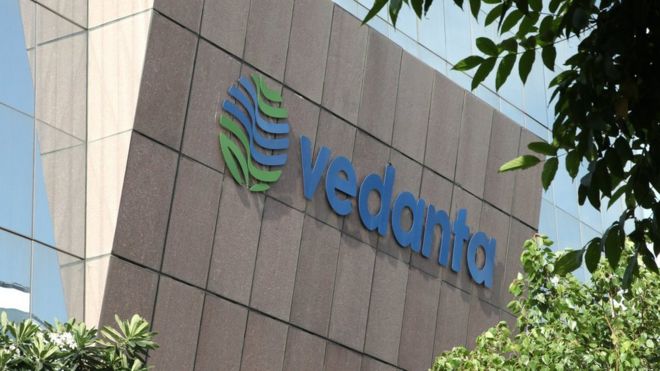
Vedanta building in India
Image copyright VEDANTA

On 10 April 2019, BBC and others reported on a landmark judgement in the UK that could have big implications for others cases in which human rights defenders seek compensation from multinationals. Nearly 2,000 Zambian villagers have won the right to sue mining giant Vedanta over alleged pollution, the UK Supreme Court has ruled. The landmark judgement means other communities in developing countries could seek similar redress in the UK.

Zambian villagers have been fighting for the right to seek compensation in British courts for several years. Vedanta had argued that the case should be heard in Zambia. The UK Supreme Court disagreed, saying that the case must proceed in the UK, due to “the problem of access to justice” in Zambia. The case relates to allegations by villagers living near the huge Nchanga Copper mine, owned by Konkola Copper Mines (KCM), a subsidiary of UK-based Vedanta. Vedanta said: “The judgment of the UK Supreme Court is a procedural one and relates only to the jurisdiction of the English court to hear these claims. It is not a judgment on the merits of the claims.

Martyn Day, senior partner at law firm Leigh Day, which is representing the Zambian villagers, said: “I hope this judgment will send a strong message to other large multinationals that their CSR [Corporate Social Responsibility]. policies should not just be seen as a polish for their reputation but as important commitments that they must put into action.

[In 2015, Zambian villagers accused Vedanta of poisoning their water sources and destroying farmland. Leaked documents seen by the BBC appeared to show that KCM had been spilling sulphuric acid and other toxic chemicals into the water sources. …In India’s Tamil Nadu state, a Vedanta-owned copper smelting plant was closed by authorities in May 2018.]

See also: https://humanrightsdefenders.blog/2019/03/23/human-rights-council-recognises-vital-role-of-environmental-human-rights-defenders/

MEA laureate Ahmed Mansoor on hunger strike in Emirates

April 10, 2019

Award-winning rights human rights defender Ahmed Mansoor, jailed in the UAE for “publishing false information”, has launched a in protest against prison conditions, International said Tuesday. Mansoor, whom says is a prisoner of conscience, has been on for over three weeks to protest detention conditions and his unfair trial in the UAE. the London-based group noted. For more on Mansoor see: https://humanrightsdefenders.blog/2019/01/02/happy-new-year-but-not-for-ahmed-mansoor-and-nabeel-rajab-in-the-gulf-monarchies/

https://www.business-standard.com/article/pti-stories/jailed-uae-activist-mansoor-on-hunger-strike-amnesty-119040901441_1.html

The ISHR launched a campaign in support: https://us1.campaign-archive.com/?u=97549cf8cb507607389fe76eb&id=229155ca04&e=d1945ebb90

Filippo Grandi in Security Council denounces ‘toxic language of politics’ aimed at refugees, migrants

April 10, 2019

Dissecting the term “refugee crisis” itself, Mr. Grandi asked the Security Council to consider to whom, exactly, that applied: “It is a crisis for a mother with her children fleeing gang violence; it is a crisis for a teenager who wants to flee from war, human rights violations, forced conscription; it is crisis for governments in countries with few resources that, every day, open their borders to thousands. For them, it is a crisis.

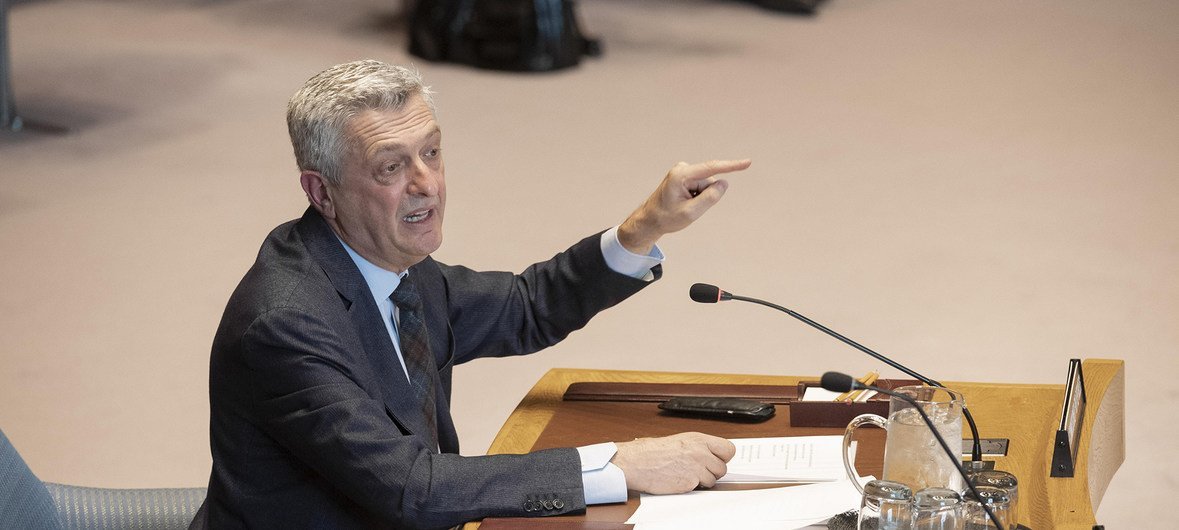
UN Photo/Evan Schneider. The United Nations High Commissioner for Refugees, Filippo Grandi, briefs the Security Council. (9 April 2019)

But it is wrong, he continued, to portray the situation as an unmanageable global crisis: with political will and improved responses, as enshrined by the Global Compact for Refugees, adopted last December, it can be addressed, and the Security Council has a critical role to play, particularly in terms of solving peace and security crises, supporting countries that are hosting refugees, and working to remove obstacles to solutions.

Conflicts, Mr. Grandi pointed out, are the main drivers of refugee flows: of the nearly 70 million people that are displaced, most are escaping deadly fighting. However, from the point of view of the UN High Commission for Refugees, approaches to peace-building are fragmented; addressing the symptoms, rather than the causes.

..[he goes into more detail on the Libyan situation]…

The UN refugee chief went on to exhort the Security council to step up support for the developing countries that host 85 per cent of the world’s refugees, to avoid leaving governments politically exposed, and refugees destitute. With regards to the return of refugees and migrants to their countries of origin, Mr. Grandi countered the misconception that UNHCR blocks returns: refugees have both a right to return, and also a right to not return, he said, in the absence of security and basic support. The informed choice of refugees must be respected, and returns must be dignified.

Mr. Grandi concluded by returning to the consequences of the toxic language surrounding refugees and migration, citing the example of the recent mosque shootings in Christchurch, New Zealand in March, which left 49 dead. The response of the New Zealand Government should, he said, be seen as an good example of effective leadership and how to respond to such toxicity, in a firm and organized manner, restating solidarity with refugees, and reaffirming the principle that our societies cannot be truly prosperous, stable and peaceful, if they do not include everyone.

https://news.un.org/en/story/2019/04/1036391

First ‘Prix Liberté of Normandy” for teen climate activist Greta Thunberg

April 10, 2019
Greta Thunberg
The activist is making waves globally (Photo: Anders Hellberg)

Teen climate activist Greta Thunberg – who is a vegan – has won the newly created Prix Liberté, launched last year by the Region of Normandy in France, reports  in Plantbasednews. Thunberg, 16, is the first recipient of this new award, which was designed to honor a young person ‘engaged in a fight for peace and freedom’. The award comes with prize money of  €25,000. [see: http://www.trueheroesfilms.org/thedigest/awards/prix-libert-normandy ] The campaigner has made global headlines through her efforts, which includes encouraging students to attend demonstrations demanding political action on climate change while ‘on strike’ from school. Her influence has spread beyond her native Sweden throughout Europe and beyond

“I am very grateful and honoured to have won the Prix Liberté!” Thunberg said in a post on social media. “The other final nominees have stood up for human rights in a way that I can’t even imagine. We must constantly be reminded of the sacrifices they have made. Lu Guang and Raif Badawi are true heroes of our time.”

Thunberg said she will be splitting all of the prize money between four organizations dedicated to climate justice: These include CARE, which helps women and girls in the global south to cope with the effects of rising temperatures and a changing climate, and  The Adaptation Fund – which helps vulnerable communities in developing countries adapt and build resilience to climate change, 350.org and Greenpeace International who in Thunberg’s words ‘both fight for climate justice, the environment, and to keep the fossil fuels in the ground’, will also receive donations. Thunberg will receive her award on June 4, 2019, at the Normandy International Forum for Peace.

See also my old post: https://humanrightsdefenders.blog/2013/03/11/link-between-protecting-the-environment-and-human-rights-asserted-by-un-expert-knox/

https://www.plantbasednews.org/post/vegan-climate-activist-greta-thunberg-wins-prix-liberte

Vikram Patel, promoter of global mental health, recognized with Dirk award

April 10, 2019
Ekaterina Pesheva reported on 2  Harvard Medical School researcher received the prestigious Canada Gairdner Award for transformational work in the fields of global health. Vikram Patel, the Pershing Square Professor of Global Health in the Blavatnik Institute at HMS and professor at the Harvard, will receive the 2019 John Dirks Canada Gairdner Global Health Award. Patel is being recognized for research that has transformed understanding of and attitudes toward the importance of mental health in a global context, for his contributions to international mental health policy, and for efforts to improve access to mental health services in areas of the world where mental health resources are acutely lacking.

Patel is among seven laureates who will each receive a $100,000 cash honorarium. The recipients will be formally honored Oct. 24 at the annual Canada Gairdner Awards gala in Toronto.

Patel has been instrumental in establishing the field of global mental health. He has dedicated his research to raising the global profile of mental health through epidemiological research that has demonstrated the burden of mental disorders in low- and middle-income countries as well as their impact on poverty, child growth and development, and risk for HIV infection, among other conditions. Patel’s work has demonstrated that mental health problems are universal forms of human suffering that fuel a vicious cycle with deprivation. The central theme of Patel’s work has been democratizing access to mental health care and making it a right for everyone, everywhere. Patel championed the concept of mental health care delivery by nonspecialists and lay health workers as a way to expand access to mental health services in underserved areas. His book “Where There Is No Psychiatrist: A Mental Health Care Manual” has become the definitive text for community health workers in developing countries. Patel’s research became the foundation for the design, delivery, and evaluation of psychosocial interventions provided by lay and community health workers, including the primary care treatment of depression, anxiety, and alcohol-use disorders, the community-based care of people with schizophrenia and autism, and the prevention and treatment of adolescent mental health problems through school-based interventions.

Much of Patel’s work has been done in partnership with Sangath, an Indian nongovernmental organization that he co-founded in 1996. Sangath, one of India’s leading community-based research organizations, received a 2008 MacArthur Foundation International Prize for Creative and Effective Institutions and a 2016 World Health Organization Public Health Champion of India prize. Patel co-founded the Centre for Global Mental Health and the Mental Health Innovation Network at the London School of Hygiene and Tropical Medicine and the Movement for Global Mental Health, the largest global network of individuals and organizations advocating for promoting services and human rights for people with mental health problems. In 2018, he co-founded the GlobalMentalHealth@Harvard Initiative, which is developing a suite of innovative, interdisciplinary programs aimed at implementing and generating knowledge to transform mental health globally.

https://news.harvard.edu/gazette/story/2019/04/two-harvard-scientists-receive-canadas-most-prestigious-medical-award/

Civil Society meets in Belgrade concerned by attacks on rights defenders and media

April 9, 2019

In the context of the International Civil Society Week (ICSW), sponsored by CIVICUS, which is taking place in Belgrade, from 8 – 12 April April 2019, a number of interesting contributions were made public [see also: https://humanrightsdefenders.blog/2019/04/09/belgrade-call-presses-governments-to-protect-rural-human-rights-defenders/]. This is one of them, mostly an interview with Mandeep Tiwana of CIVICUS:

Civil Society Leaders Meet Amid Protests, Attacks on Rights” bReprint

Under the theme, “The Power of Togetherness”, ICSW 2019 “seeks to generate deep conversations among civil society leaders, social justice advocates, development practitioners, members of the philanthropic community, diplomats and others on emerging global challenges and how civil society should be responding to these,” said Mandeep Tiwana, CIVICUS’ chief programmes officer.

Defence of democratic values, civic space and participation, along with citizen action, will be among the topics of discussion,” he told IPS in an email interview while en route to Belgrade. “Our message to governments is that the right to peaceful protest is a basic human right enshrined in constitutional and international law. Governments have an inherent responsibility to enable the right to peaceful protest as an integral element of the defence of democracy,” he added…

In country after country, democracy is under attack, with populist and right-wing movements gaining ground and democratic regression being witnessed even in countries historically considered bastions of democracy,” CIVICUS says.

“This year’s event in Serbia comes at a critical and opportune time for civil society and the world’s citizens to realise the power of unified, collective action to challenge a global trend that threatens our fundamental freedoms,” said Lysa John, CIVICUS’ Secretary General………


Media workers, in fact, often find themselves between a rock and a hard place, caught amongst the security forces and protestors as they try to report on turbulent events. CIVICUS said that the role of the media and their relationship with civil society will be a key topic of discussion at ICSW, alongside the focus on protecting rights campaigners.

CIVICUS is working in several ways to stop attacks on members of the media and civil society activists targeted for exposing rights violations or speaking truth to power,” Tiwana said. “We engage with a broad range of civil society organisations that support press freedom using several approaches ranging from in-depth participatory research and analysis to raising awareness of attacks on the media, strategic coalition building, and directly engaging decision-makers at the national and international levels.”

…..Ahead of the meeting, Serbia and four other countries have been added to a global watchlist of countries that have seen an “escalation in serious threats to fundamental freedoms in recent weeks and months”, according to CIVICUS Monitor, an online platform that tracks threats to civil society across the world. Citizens of all five countries (Afghanistan, Saudi Arabia, Sudan, and Venezuela are the others) are experiencing increasing rights violations that “include killings, attacks on protesters, media restrictions and arbitrary detentions of human rights defenders”.

http://www.ipsnews.net/2019/04/civil-society-leaders-meet-amid-protests-attacks-rights/

‘Belgrade Call” presses governments to protect rural human rights defenders

April 9, 2019

On 9 April 2019 the International coalition: ‘Belgrade Call to Action’ urges governments to address rural repression”

The “Belgrade Call to Action” presses governments and members states of the United Nations to act upon the deteriorating conditions for civil society and the growing human rights violations targeting human rights defenders in the context of achieving the Sustainable Development Goals (SDGs) of the 2030 Agenda. The Civil Society Partnership for Development Effectiveness (CPDE), CIVICUS, Action for Sustainable Development, Civic Initiatives and the Balkan Civil Society Development Network initiated the launching of the action agenda on 8 April 2019, while civil society organizations worldwide are gathered in Belgrade, Serbia for the 2019 International Civil Society Week.

The People’s Coalition on Food Sovereignty (PCFS) finds the Belgrade Call to Action timely and relevant especially to land rights defenders including farmers and Indigenous Peoples groups who brave repression for their opposition to state-sponsored and corporate-backed development ‘aggression’ projects.

According to Sylvia Mallari, global co-chairperson of PCFS, the Belgrade Call to Action lays down practical measures for UN member states and international organizations to address the shrinking space of and foster an enabling environment for civil society organizations and human rights defenders, which would significantly advance the Agenda 2030 and its SDGs.

We hope that the Belgrade Call to Action will push the governments of these countries to undertake appropriate measures that will put an end to the phenomenon of peasant killings and promote genuine agrarian reform to uplift farmers from their dire conditions,” Mallari stressed.

………

We hope that through the Belgrade Call to Action, rural repression will end and land conflicts will be addressed. We appeal to the member states of the UN and the international community to support and adhere to the Belgrade Call to Action,” Mallari said.

http://www.scoop.co.nz/stories/WO1904/S00064/belgrade-call-to-action-to-govts-on-rural-repression.htm

Council of Europe’s Dunja Mijatović presents her first annual report

April 9, 2019

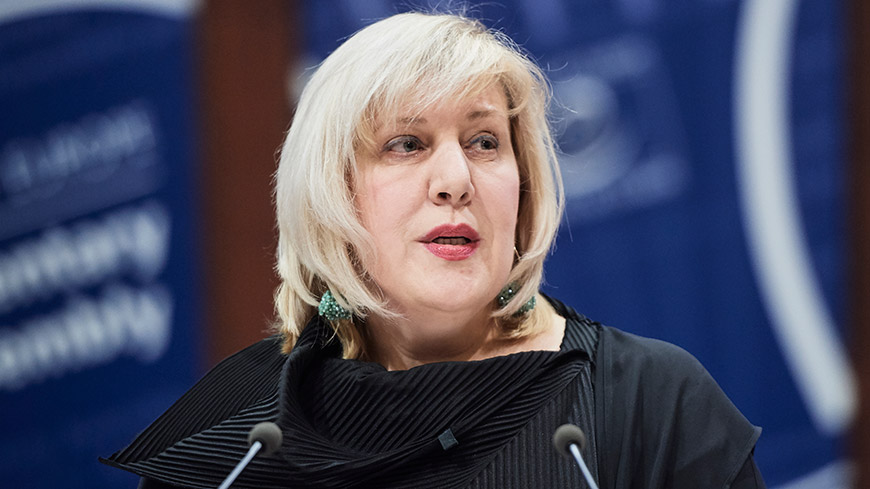
Dunja Mijatović

Dunja Mijatović

Today the Council of Europe Commissioner for Human Rights, Dunja Mijatović, presented her first annual activity in a debate before the Parliamentary Assembly of the organisation. [see also: https://humanrightsdefenders.blog/2018/04/03/dunja-mijatovic-starts-her-term-as-council-of-europe-commissioner-for-human-rights/]

While the report covers a variety of the most pressing human rights issues in the Council of Europe member states, the Commissioner highlights migration, women’s rights, human rights of persons with disability, the protection of human rights defenders and the safety of journalists as the most recurrent topics of her work.

Migration is among the most pressing human rights issues on my agenda”, she says. “National authorities should improve the treatment of immigrants, asylum seekers and refugees, and put human rights and the principle of responsibility sharing at the centre of their migration and asylum policies”.