Author Archive

Iranian human rights defender Narges Mohammadi released from jail, finally

October 8, 2020

Iranian opposition human rights activist, Narges Mohammadi, at the Defenders of Human Rights Center in Tehran (AFP/File photo) By MEE staff

Prominent Iranian human rights defender Narges Mohammadi has been released from prison, her husband confirmed on Thursday 8 October 2020. She had been serving a eight and a half years out of a10-year sentence for ‘forming and managing an illegal group’

Ismail Sadeghi Niaraki, prosecutor in Zanjan province, said a newly passed law reducing prison sentences included the activist and said she had been released on that basis, according to BBC Persian. Mohammadi, who was held in Zanjan Prison in northwestern Iran, was the spokeswoman for the Centre of Human Rights Defenders in Iran.

Originally serving a six-year sentence dating from 2011, she had been released on bail before being arrested again on new charges in 2015.

The mother of two was then sentenced to 16 years in prison for “forming and managing an illegal group” among other charges, with a minimum of 10 years having to be served. Coronavirus: Iran reports record high death numbers as it grapples with third wave

Her husband, Taghi Rahmani, confirmed the news on Twitter. “Narges was released from Zanjan prison at three in the morning,” he tweeted. “Wishing freedom for all prisoners.

UN rights experts in July called for Mohammadi’s release after she reportedly fell ill with Covid-19, warning her life was at stake.(see: https://www.ohchr.org/EN/NewsEvents/Pages/DisplayNews.aspx?NewsID=26118&LangID=E

“The Iranian authorities must act now before it is too late,” the 16 independent experts said in a statement.

Iran has released more than 100,000 prisoners since the coronavirus pandemic broke out in March, as a way of reducing infection.

See also: https://humanrightsdefenders.blog/2020/10/07/un-rights-chief-urges-iran-to-release-jailed-sotoudeh-and-other-human-rights-defenders-citing-covid-19-risk/

and https://humanrightsdefenders.blog/2020/08/06/exclusion-of-human-rights-defenders-from-covid-release-measures-is-the-norm/

https://www.middleeasteye.net/news/iran-narges-mohammadi-release-prison-human-rights

https://www.sfchronicle.com/news/article/Iran-frees-rights-activist-after-more-than-8-15630185.php

Human Rights First to Present Saudi Organization ALQST with William D. Zabel Human Rights Award

October 7, 2020

On 6 october 2020 Human Rights First announced that it will present Saudi human rights organization ALQST with its annual William D. Zabel Human Rights Award, in recognition of its unwavering commitment to human rights in Saudi Arabia and around the world. For more on this award, which was renamed in 2018: https://www.trueheroesfilms.org/thedigest/award/984CA015-FE02-4992-8AED-4EB1AEC7D0EE

Human Rights First has tremendous respect and admiration for the work of ALQST for Human Rights and its founder, Yahya Assiri,” said Michael Breen, president and CEO of Human Rights First. “Their work documenting human rights violations in the Kingdom of Saudi Arabia in the face of escalating pressure on human rights defenders couldn’t be more important, especially in an environment where information on these abuses is difficult to come by. In the present climate, where Saudi leaders can kill their critics with impunity, the work of Yahya Assiri and ALQST is critical.” [see also: https://humanrightsdefenders.blog/2019/03/28/3-saudi-women-human-rights-defenders-released-but-for-how-long-and-what-about-the-others/]

ALQST is one of the most active and trusted organizations that consistently monitors and documents human rights issues in Saudi Arabia, where escalating repression in recent years has decimated civil society and criminalized human rights activists. Through its extensive network of local sources, ALQST has unparalleled access to developments on the ground. Its analysis and reports are relied upon by international NGOs, media outlets and others amplifying the voices of Saudi human rights defenders and their messages among the international community. In the run-up to this year’s G20 summit in November, due to be hosted by Saudi Arabia, ALQST has been at the forefront of calls for governments and businesses not to turn a blind eye to the Saudi authorities’ egregious rights violations.

This award sends a message that all the heroes who have courageously defended human rights in the country, for which they have often paid the highest price, have not been forgotten. We take this occasion to reiterate our call for their immediate and unconditional release.”aid ALQST founder Yahya Assiri. [see also: /https://humanrightsdefenders.blog/tag/yahya-assiri/]

The award is typically presented to recipients at an in-person award dinner and ceremony in New York. However, given the ongoing COVID-19 pandemic, Human Rights First will instead host a virtual event on October 21 to honor ALQST. The event will showcase ALQST’s work and feature an interview between Mr. Assiri and CBS Evening News and 60 Minutes correspondent Scott Pelley.

https://www.humanrightsfirst.org/press-release/human-rights-first-present-saudi-organization-alqst-prestigious-william-d-zabel-human

UN rights chief urges Iran to release jailed Sotoudeh and other human rights defenders, citing COVID-19 risk

October 7, 2020
Home

According to the UN human rights office (OHCHR), conditions in Iranian prisons, suffering from chronic overcrowding and poor sanitary conditions, have worsened during the pandemic. Shortage of water and inadequate protective equipment, testing, isolation and treatment have led to a spread of coronavirus among detainees, reportedly resulting in a number of deaths. 

Michelle Bachelet, UN High Commissioner for Human Rights, underlined the responsibility of States to ensure health and well-being of all individuals under their care, including those in prisons. 

Under international human rights law, States are responsible for the well-being, as well as the physical and mental health, of everyone in their care, including everyone deprived of their liberty,” she said in a news release, on Tuesday 6 October 2020.  

People detained solely for their political views or other forms of activism in support of human rights should not be imprisoned at all, and such prisoners, should certainly not be treated more harshly or placed at greater risk,” she added. 

In February, the Iranian judiciary issued directives on temporary releases to reduce the prison population and avoid further spread of the virus, benefiting some 120,000 inmates, according to official figures, said OHCHR, adding that the measures appear to have been suspended, and prisoners have been required to return in large numbers.  

In addition, people sentenced to more than five years in prison for “national security” offences were excluded from the schemes. 

As a result, most of those who may have been arbitrarily detained – including human rights defenders, lawyers, dual and foreign nationals, conservationists, and others deprived of their liberty for expressing their views or exercising other rights – have been placed at a heightened risk of contracting the virus, added the Office. 

“I am disturbed to see how measures designed to mitigate the spread of COVID-19 have been used in a discriminatory way against this specific group of prisoners,” said High Commissioner Bachelet. 

One of the most emblematic cases is that of prominent lawyer and women’s rights defender, Nasrin Sotoudeh, who was given a combined prison sentence of over 30 years on charges related to her human rights work. Her life is believed to be at considerable risk as she suffers from a heart condition, and has been weakened by a long hunger strike.  

Once again, I urge the authorities to immediately release her, and grant her the possibility of recuperating at home before undergoing the medical treatment of her choice,” said Ms. Bachelet 

Over the years, she has been a persistent and courageous advocate for the rights of her fellow Iranians, and it is time for the Government to cease violating her own rights because of the efforts she has made on behalf of others.”  [see also: https://humanrightsdefenders.blog/2020/10/01/four-well-known-human-rights-defenders-are-the-2020-right-livelihood-laureates/]

The High Commissioner also voiced concerns over persistent and systematic targeting of individuals who express any dissenting view, and the criminalization of the exercise of fundamental rights. 

“It is disheartening to see the use of the criminal justice system as a tool to silence civil society,” said Ms. Bachelet. 

https://news.un.org/en/story/2020/10/1074722

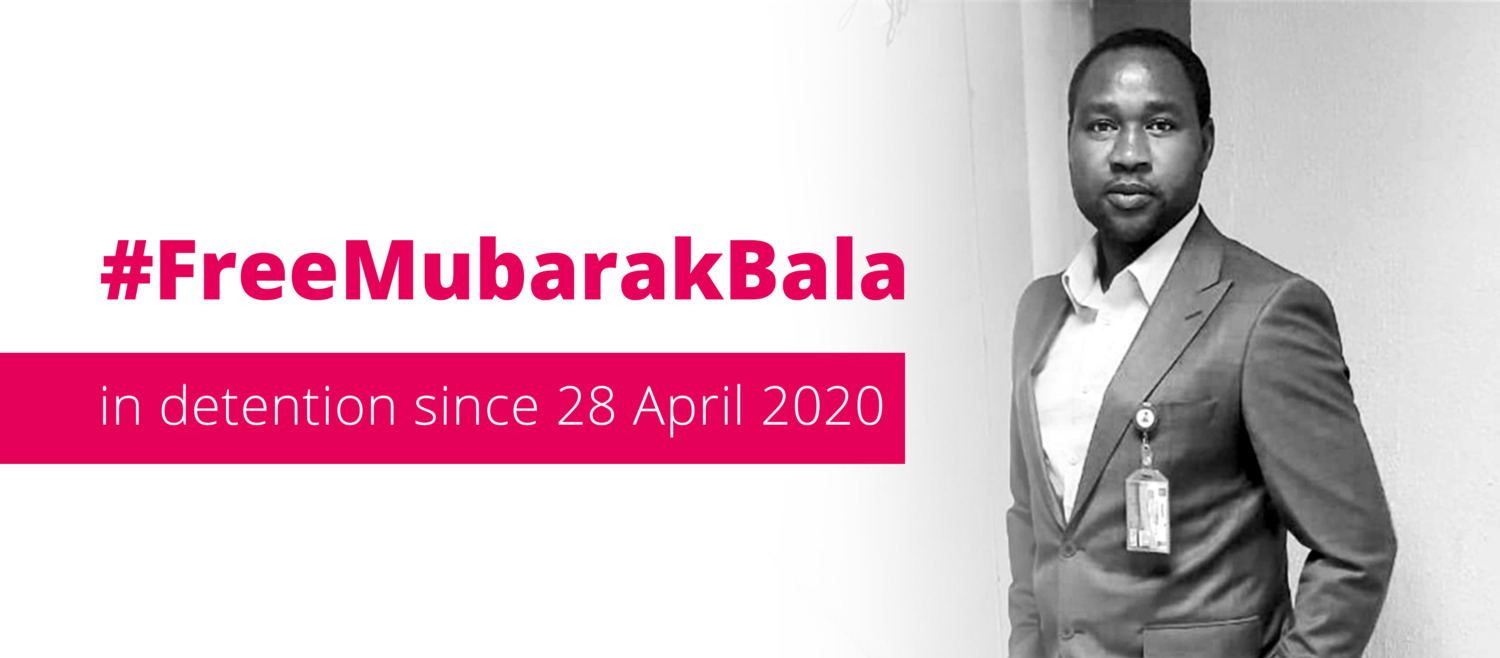
The clock of Mubarak is ticking….

October 6, 2020

Humanist International created an ingenious way to show how long Mubarak Bala is being held illegally in detention:

Mubarak Bala has been detained arbitrarily
without charge for
:

 161  DAYS :    13  HOURS :    37  MINUTES :    00  SECONDS

banner mb homepage take 4.png

Mubarak Bala is the president of the Humanist Association of Nigeria. He has beenheld in detention without access to a lawyer since his arrest on 28 April 2020 in connection with a Facebook post.

Humanists International believes that Mubarak Bala is being targeted for the peaceful exercise of his rights to freedom of expression and religion or belief, and calls for the case against him to be dropped, for Mubarak Bala to be released immediately and unconditionally, and for the Nigerian authorities to ensure his safety upon his release.

read the latest updates on mubarak bala

Sign the Statement

https://www.tickcounter.com/widget/countup/180906

https://freemubarakbala.org/

Tonight screening of “Boys State” by RFK Rights

October 6, 2020

Tonight 5 October 2020 you can participate in the virtual private screening of Boys State, which won this year’s Sundance Grand Jury Prize for documentary. This engaging film tells the story of 1,100 boys who come together to build a representative government from the ground up, and in the process examines our divided country and the health of the American democracy. Rolling Stone calls it “both sweeping and intimate” and “exhilarating.”   The screening will be followed by a Q&A session with the filmmakers and two of the film’s subjects, moderated by Kerry Kennedy.

Tonight at 7 p.m. EDT.    To RSVP to the event: email BoysStateRFK@a24films.com.   

https://mailchi.mp/rfkhumanrights/d7az6w232t-855714?e=99673fdc45

CIVICUS publishes “CIVIC FREEDOMS AND THE COVID-19 PANDEMIC: A SNAPSHOT OF RESTRICTIONS AND ATTACKS”

October 6, 2020

The CIVICUS Monitor has produced on Monday 5 October 2020 a new research brief on the state of civic freedoms amid the global pandemic. The brief provides a snapshot of restrictions facing activists, journalists and civil society organisations. There are over 35 country case studies and it is broken into five parts:

  • Protests in the time of COVID-19
  • Freedom of expression under threat
  • Restrictive laws under the pandemic
  • Excluded groups left further at risk
  • Bright spots during the pandemic.

Also worth flagging, is that at the end of November, the CIVICUS Monitor will be releasing its annual global index on the state of civic freedoms (see last version. This is the flagship data report which rates and measures the state of freedom of association, peaceful assembly, and free speech across 196 countries. The report will provide global statistics on areas such as, excessive force against protesters, the detention of protesters, the detention of journalists, acts of censorship, etc. This data will also be disaggregated at the regional level.

  • Civic activism continues during the COVID-19 pandemic and people have continued to mobilise to demand their rights.
  • Violations of protest rights have been documented: protesters are being detained, protests are being disrupted and excessive force is being used by states.
  • Restrictions on the freedom of expression and access to information continue.
  • States are enacting overly broad emergency legislation and legislation that limits human rights.

In April 2020, just one month after the World Health Organization (WHO) declared the COVID-19 outbreak a pandemic, we highlighted a series of alarming civic space violations by states. As noted in our previous brief, in many countries the emergency measures introduced to tackle the pandemic have had troubling impacts on human rights and the space for civil society. After more than six months of the pandemic, violations and restrictions on civic space continue.

Since 2016, the CIVICUS Monitor has documented and analysed the state of civic space in 196 countries. Civic space is the bedrock of any open and democratic society and is rooted in the fundamental freedoms of people to associate, peacefully assemble and freely express their views and opinions. This brief covers civic space developments in relation to COVID-19 between 11 April 2020 and 31 August 2020. It is compiled from data from our civic space updates by activists and partners on the ground.

International human rights law recognises that in the context of officially proclaimed public emergencies, including in public health, which threaten the life of a country, restrictions on some rights can be justified. As explained in our previous brief, those limitations need to comply with international standards. But while international law is clear, some states have gone beyond justifiable restrictions, with negative consequences on civic space and human rights while also creating additional barriers for already excluded groups.

Although states placed restrictions on large public gatherings during the pandemic, people have continued to mobilise through various forms of protest. However, a number of violations were documented during protests, including the detention of protesters, protest disruptions and the use of excessive force by law enforcement agencies. In addition, violations on the freedom of expression, which featured prominently in our first COVID-19 brief, have continued. These violations include censorship of free speech, targeting of media outlets and detentions of journalists. States have also continued to pass restrictive laws, such as overly broad emergency laws, under the guise of fighting the pandemic. Citizens, journalists and human rights defenders (HRDs) have experienced harassment and intimidation. During the pandemic, many excluded groups have faced additional risks and violations.

See also:

https://humanrightsdefenders.blog/2020/04/23/civicus-and-600-ngos-dont-violate-human-rights-while-responding-to-covid-19/

and

https://humanrightsdefenders.blog/2019/12/27/annual-reports-2019-civicus-global-report/

https://monitor.civicus.org/COVID19Oct2020/

UN SG Antonio Guterres rebukes Polisario for human rights violations

October 5, 2020

In a strong worded report, Guterres recalled that the Office of the High Commissioner for Human Rights (OHCHR) has pointed out in multiple reports this year to the surge of “harassment, arrests and ill-treatment of bloggers, doctors and nurses” by the Polisario militias.

The Polisario used the Covid-19 pandemic to crackdown on dissent in a new wave of repression to silence critical bloggers, journalists, activists and anyone who challenges the authoritarian status quo in the camps.

Repression did not spare the medical staff and human rights activists in the Camps who exposed the cover up by the Polisario of the real scale of Covid-19 outbreak.

Last May, the UN Working Group on Arbitrary Detention said in a response to a complaint submitted by polisario opponent El Fadel Breica against the Algerian State, following his abduction by the polisario, that Algeria is responsible for the violations committed in its territory.

Similarly, the Human Rights Committee reaffirmed in its findings, in March 2020, the full responsibility of Algeria in the abduction and enforced disappearance of the Polisario dissident, Khalil Ahmed, whose case was raised in the Secretary-General’s report of 2019.

International rights watchdogs, including Human Rights Watch and Amnesty International, have on multiple reports drew attention to the plight of the population held against their will in Tindouf where the Algerian state has relegated the destiny of thousands of Sahraouis to the mercy of a separatist militia that trades in their suffering.

From humanitarian aid embezzlement by the Polisario officials to slavery and forced disappearances in the Tindouf camps, Algeria has abdicated its responsibilities and forsaken a civilian population to the mercy of a separatist militia.

The UN Security Council has repeatedly called on Algeria to uphold its responsibility and allow a census of the population held in the camps to enable them to enjoy full refugee rights including having the choice to return to their homeland Morocco.

https://northafricapost.com/44289-antonio-guterres-rebukes-polisario-for-human-rights-violations.html

Interview with Sarah Bireete, executive director of the Center for Constitutional Governance Uganda

October 3, 2020
The Business and human rights resource Centre on 18 august 2020 published an interview with Sarah Bireete, executive director of the Center for Constitutional Governance (CCG), Uganda

Sarah Bireete – Personal Archive

Sarah Bireete is an energetic human rights defender from Uganda, who is currently busy setting up a working group on civic space research in the country, while also running the Center for Constitutional Governance (CCG), a constitutional watchdog. We sat down with her to explore her views on trust between business and civil society, and how multinational companies should respond to a growingly heavy-handed response to protests in the country.

Hi Sarah! Please tell us about you and your work!

I am a lawyer, a Human rights activist, and the executive director of the Center for Constitutional Governance (CCG), a constitutional watchdog in Uganda. I also have my own social media channel, Good Morning Uganda, followed by over 20000 followers.

How are businesses in Uganda affecting civic space and human rights in general? Are they cooperating well with civil society or is there something that could be improved?

The first thing is that international companies should observe the laws of the country in which they operate and the international law and best practice. But the practice is that most international companies that come from democratic countries, where they respect people’s rights, when they come to Uganda they tend to be blind to people’s rights, especially labour rights, people’s protection, especially in risky sectors like the flower farms. We have had experiences in the country where women worked with no protection against the pesticides, and they experienced health hazards, which made them unable to fend for families.

One of the most shocking experiences was from the flower sector, where one of the embassies was protecting an irresponsible investor from their country against the labour rights of local people. It was really amazing that ambassador called the HRD directly, and threatened them to keep quiet about labour rights of ordinary women working on flower farms.

Enno Schröder Flower farm around Kampala, Uganda

In the oil sector as well, most multinational companies are ignoring the basic human rights, the right to property, clean environment, fair and prompt compensation. Civil society believes that most of them are not helpful as they are not upholding practices that are respected in their own countries and are not following best practices established by international processes, such as the Extractive Industries Transparency Initiative. We are struggling with this, because we expect multinational companies to come in with an upper hand, and improve practice in oil governance in the country. What we expect is a partnership with developed countries, in line with international protocols governing diplomacy, and with companies based in this countries – this would help us improve the welfare of the people in the least developed countries. We don’t expect big companies to come in and negatively affect people and shrink space for civil society.

Is there trust between multinational companies and civil society in Uganda? Can multinational companies help civil society protect and expand civic space in some way?

Trust between civil society and multinationals gets eroded when we see them coming in to exploit the most vulnerable of our people.

Multinational companies come into the country and give work to mainly low wage workers – they have limited knowledge, they are vulnerable, they need to make a living for their families – and then they get exploited by people that we would expect would have higher protection standards. This erodes people’s trust because it appears as though they are just trying to exploit the situation, instead of trying to improve the welfare of society they’re coming into. But in the context of the business and human rights approach, we as civil society need to work a lot with these companies to show them that they shouldn’t lower standards – they should maintain the same standards as in their countries of origin.

Multinational companies should also work with civil society actors to help us push back against the government if it is shrinking civic space and to push the government to help improve the welfare of the people, as they make profit.

We have seen more attacks on journalists and opposition figures in Uganda in the past year, and more heavy-handed response to protests – how should have the business community reacted?

When there is unrest in the country, the companies will not be able to do their business they came to do. When people are not happy and are agitated, they will not deliver at their place of work. So these businesses need to come into the country, and make human rights a condition for them doing business in a country: that would ensure human rights are observed. In their conversations, they should tell the government that if they continue to violate human rights, they might suspend business there.

We expect multinationals to say to government ‘these are not the standards we expect to work in. They cannot make profit when country is not governable, so they should help improve the situation and tell government that they cannot violate human rights because it will make situation worse for everyone.

Nansen Refugee Award 2020 to Maye Vergara Pérez of Colombia

October 2, 2020

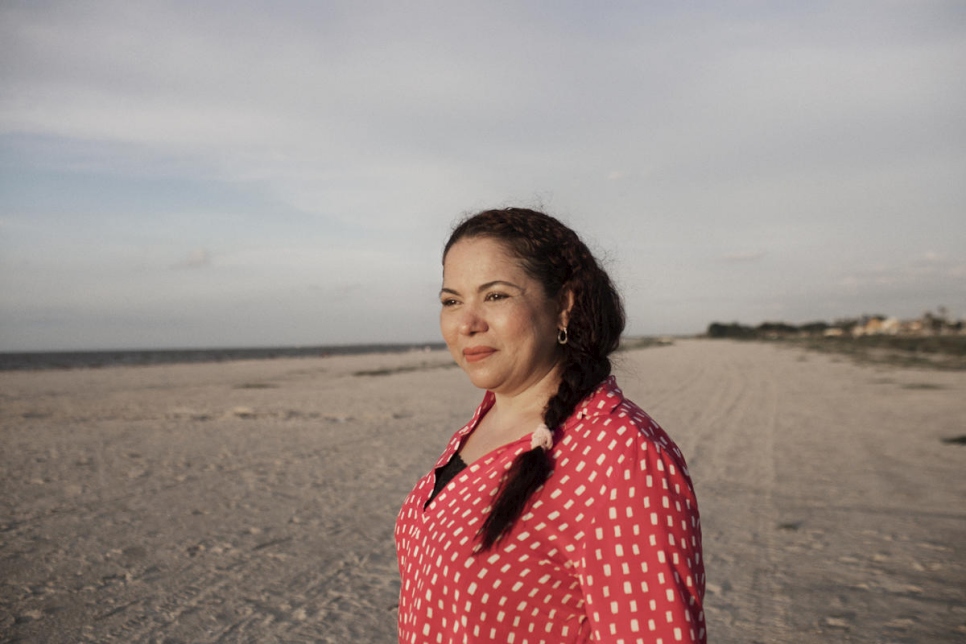
Committed to a better future, Maye is a fierce advocate for children and teens who have endured sexual exploitation.

UNHCR Nansen Refugee Award Laureate 2020, Mayerlin Vergara Perez, pictured on the beach in Riohacha, La Guajira, Colombia.  © UNHCR/Nicolo Filippo Rosso

The 2020 laureate of the Nansen Refugee Award is a Colombian educator who has spent more than 20 years rescuing sexually exploited and trafficked children, many of them refugees. Mayerlín Vergara Pérez, Maye, has dedicated her life to defending children. As the Caribbean Regional Coordinator for the Renacer Foundation she has devoted more than two decades to helping the Colombian non-profit reach its goal of eradicating sexual exploitation and abuse of children and adolescents. Founded 32 years ago, the organisation has assisted over 22,000 child and adolescent survivors of commercial sexual exploitation, and survivors of other types of sexual and gender-based violence.

People like Maye represent the best of us. Her bravery and selfless pursuit to rescue and protect some of the world’s most vulnerable children is nothing short of heroic,” said Filippo Grandi, UN High Commissioner for Refugees.  “She embodies the essence of this award. Her unwavering dedication has saved the lives of hundreds of refugee children and restored their hopes for a better future,” he added.

UNHCR’s Nansen Refugee Award honours outstanding service to people who have been forcibly displaced [for more on  this award, see; https://www.trueheroesfilms.org/thedigest/award/CC584D13-474F-4BB3-A585-B448A42BB673%5D

For over 20 years, Maye has gone to extraordinary lengths, often risking her own safety to rescue girls and boys who are victims of sexual exploitation and trafficking. On foot, she combs the streets of remote communities in north-east Colombia where human traffickers and smugglers operate. Maye leads a team of dedicated staff at the Renacer Foundation in close coordination with the Colombian Family Welfare Institute, a government body tasked with protecting children in the South American nation. By speaking out against the abuses she has witnessed, she has called on civil society, Colombian authorities, and the tourism sector – which is fertile ground for sexual exploitation and trafficking in the country – to ensure that children and adolescents are protected.

Sexual exploitation has a huge impact on children, emotionally, psychologically, physically and socially,” said Maye. “We see girls who don’t feel that their bodies belong to them. Their bodies have been so maltreated, so abused, so exploited that they feel alienated from those bodies, as if they don’t belong to them.”

In 2009, Maye’s relentless activism and advocacy helped usher in two landmark pieces of legislation. Law 1329 established a mandatory minimum sentence of at least 14 years in prison for those convicted of aiding and abetting the sexual exploitation of children and adolescents. While Law 1336 targeted the owners of establishments that allow the sexual exploitation of children on their premises.

Since 2015, the deteriorating situation in Venezuela has forced millions to flee. An estimated 1.7 million have sought shelter in neighbouring Colombia. Desperate to find safety and a better life, Venezuelans have resorted to any means possible to flee the country, with many falling prey to human trafficking networks, criminal gangs, and illegal armed groups that are often active along borders. Women and girls are often forced into sexual exploitation by smugglers to pay for their passage.

According to data provided by Colombian authorities, between 2015 to 2019, the number of victims of human trafficking there increased by 23 per cent. The rise is partly linked to the influx of Venezuelan refugees and migrants into the country.

Data from the Colombian government shows that in just the first four months of 2020, authorities had already identified a 20-per cent rise in trafficking involving foreign nationals over the previous year. In over half of cases, sexual exploitation was the ultimate goal of the trafficking.

See also: https://humanrightsdefenders.blog/2019/09/18/nansen-refugee-award-regional-winners-for-2019-are/

https://www.unhcr.org/news/press/2020/10/5f73260b4/colombian-child-rights-defender-wins-unhcrs-nansen-refugee-award.html

Four well-known human rights defenders are the 2020 Right Livelihood Laureates

October 1, 2020

On 1 October 2020 the Right Livelihood Foundation announced its 2020 Laureates.

The Right Livelihood Award has been honouring courageous changemakers since 1980. [For more on this award see: https://www.trueheroesfilms.org/thedigest/award/97238E26-A05A-4A7C-8A98-0D267FDDAD59]

The 2020 Laureates are receiving the Awards for the following:

This year’s Laureates are united in their fight for equality, democracy, justice and freedom,” said Ole von Uexkull, Executive Director of the Right Livelihood Foundation. “Defying unjust legal systems and dictatorial political regimes, they successfully strengthen human rights, empower civil societies and denounce institutional abuses. This year’s selection of recipients highlights the increasing threats to democracy globally. It is high time that all of us in favour of democracy around the world stand up and support each other.”

The four Laureates, selected by an international Jury, will each receive a prize money of 1 million SEK. As in previous years, the Laureates were nominated in an open process where anyone could submit individuals and organisations for consideration. The Laureates will be honoured during a virtual Award Presentation on December 3, 2020.

For last year see: https://humanrightsdefenders.blog/2019/09/26/right-livelihood-award-2019-lauds-practical-visionaries/

https://www.rightlivelihoodaward.org/