On 12 May 2021, Carleton University’s Department of Law and Legal Studies welcomed human rights advocate Rehana Hashmi as the inaugural Activist in Residence (AiR). Hashmi will teach students and provide them with access to her first-hand experience and an international perspective.
“Carleton is one of the first in Canada to start this type of program to help protect human rights defenders. They can come, rest, reflect, recharge and do their work without being silenced.”
Building on the department’s successful participation in the Scholars at Risk initiative, the new AiR program provides a home base for human rights activists within an academic setting, particularly for those at-risk. Students and faculty will have the opportunity to learn from someone with personal, lived experience fighting to protect human rights.
As part of the AiR program, Hashmi is working on a series of video interviews with human rights defenders from around the world. “When they are in exile, there should be mechanisms to protect them,” says Hashmi. “The Activist in Residence program is one way to do this.”
Hashmi also teaches a fourth-year seminar on patriarchy, human rights and informal justice. Students learn how traditional patriarchal attitudes operate towards women and minorities seeking legal justice.
“Students in the course get to learn from many human rights defenders,” says Hashmi. “Through online learning, we have been able to bring in experts from around the world. Recently, mothers from Palestine and Israel presented in a JurisTalk about how they lost their children, but are still doing reconciliation work.
“Activists bring knowledge from the field to help students get a firsthand experience on how advocacy works. This knowledge narrows the gap between the Global North and Global South. Faculty and students benefit from stories from the field, but it also helps activists at-risk.”
After being exiled from her home city for her activist work, Hashmi became even more involved with activism, giving shelter to women who were beaten or had acid thrown on them. Through Sisters Trust Pakistan, Hashmi helped victims of domestic violence and women and girls to break free of religious fundamentalism and forced marriages. This was just one step in her journey to support and protect the vulnerable.
The challenges in Pakistan are more difficult for women like Hashmi who are fighting to defend human rights. Offenders target women’s children and extended families. Women can’t always leave when they are at-risk. They may have many obstacles including limited mobility, family and societal restrictions to consider
On 11 May 2021 Czech Radio announced that the annual One World festival of human rights documentary films got underway on Monday evening under the motto Connection Lost. The festival, which has moved entirely online due to Covid-19 restrictions, started by presenting its annual Homo Homini prize for human rights advocacy.
During the virtual opening ceremony on Monday evening, the People in Need foundation presented this year’s Homo Homini prize to four members of the Belarusian human rights organization Viasna, who have been persecuted for tracking detained protestors, documenting human rights violations and helping victims of police violence.
For the first time in the 25-year history of Homo Homini Award, it was presented to the same organization. People in Need director Šimon Pánek explained the decision to Czech Television: “15 years ago Ales Bialatski, founder of Viasna, received the Homo Homini Award. He saw what was happening at the time and put together a group of people to defend the rights of detainees. In the end, he himself ended up in prison.
“He was presented the award by Václav Havel, who said he hoped Belarus would live to see its 1989, but unfortunately, it hasn’t happened yet.
“For a while it looked as if Belarus has resigned, but the new generation of young people have not accepted the situation and despite the brutality of the regime, they have repeatedly taken to the streets.”
The festival, which runs until May 19, will present over a hundred films in 15 thematic categories, the main one focusing on technology and its impact both on the society and individuals. Some of the screenings will also be accompanied by live discussions as part of the One World Live Programme.
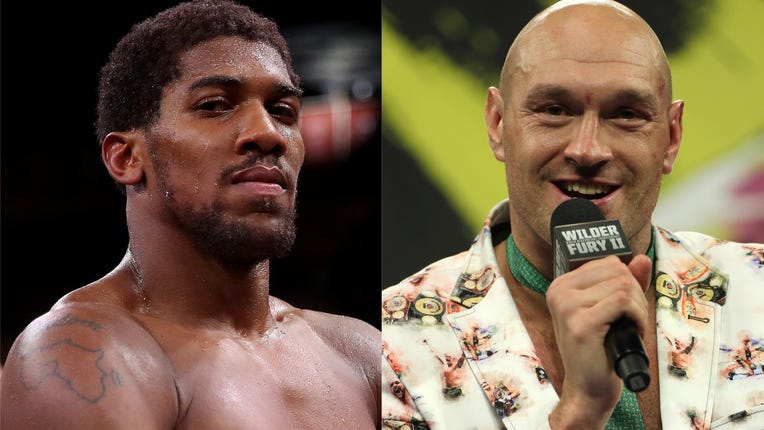
BT.com reports on 11 May 2021 that the all-British showdown between Anthony Joshua and Tyson Fury to determine the undisputed heavyweight champion is set to take place on one of the first two Saturdays in August in Saudi Arabia, according to promoter Eddie Hearn.)
“August 7, August 14,” Hearn said on Sky Sports when asked about a date for Joshua-Fury. “It’s a very bad secret that the fight is happening in Saudi Arabia. I don’t mind giving that information, Bob Arum’s already done it.
Responding to Hearn’s revelation that Joshua-Fury is on course to take place in Saudi Arabia, Kate Allen, director of Amnesty International UK, said in a statement to the PA news agency: “It comes as no surprise that Saudi Arabia is once again set to use a major sporting event as a means to sportswash its atrocious human rights record.
“By staging this high-profile fight, Saudi Arabia is yet again trying to shift the media spotlight away from its jailing of peaceful activists like Loujain al-Hathloul, its grisly state-sanctioned murder of Jamal Khashoggi and its indiscriminate bombing of civilians in neighbouring Yemen
“Simply put – Crown Prince Mohammed Bin Salman wants people around the world to be talking about sport in Saudi Arabia, not the dissidents being locking up after sham trials or the people being tortured in Saudi jails.
“When he fought in Saudi Arabia in 2019 it was disappointing that Anthony Joshua ducked the issue of human rights, and this time we hope he and his opponent can speak out in the build-up to the fight.
“A few well-chosen words about human rights from Joshua and Fury would mean a lot to Saudi Arabia’s beleaguered human rights defenders, helping to counteract the intended sportswashing effect of this boxing match.”
On 12 May 2021 the International Rescue Committee (IRC) and 25 other civil society organizations have issued a joint statement ahead of the May 25th UN Security Council Open Debate on the Protection of Civilians in Armed Conflict. The joint statement calls for the UN Secretary General, UN Security Council, Member States, and armed actors to take urgent and ambitious action to shift mindsets and invest in robust policies, strategies, and practices, to protect civilians caught in armed conflict.
Civil Society Statement on the Protection of Civilians in Armed Conflict (2021)
Over the past year, anniversaries of the conflicts in Syria, Libya, Yemen, and new outbreaks of violence elsewhere, have served as grim reminders of the international community’s lack of meaningful progress to uphold their commitments to protect civilians in armed conflict. The COVID-19 pandemic has interacted with new, ongoing, and protracted conflicts, exacerbating existing inequalities and protection concerns, and contributing to dramatically escalating humanitarian needs including displacement, famine and food insecurity, and desperate medical shortfalls. Civilians living in conflict-zones continue to experience the devastating impacts of conflict-related environmental damage and an increased vulnerability to climate and environmental risks with wide-ranging effects on health and human suffering.
Meanwhile, States continue to use the pandemic and other pretexts to shrink civic space. Dialogue essential to the development of policies, strategies, and plans for protection of civilians too often fails to be adequately representative and inclusive of civil society, despite their voices being essential. This is especially true for vulnerable or marginalized communities and for human rights defenders.
Parties to conflict continue to be blind to the gendered, age-specific, and intersectional vulnerabilities of civilians. In particular, conflicts continue to undermine the rights of women, children, persons with disabilities and minorities, especially when it comes to participating in decisions that impact their lives and communities. Conflict often leads to the widespread use of gender-based violence, undermining of women’s freedom of movement and access to education, health and livelihoods. The deliberate targeting and collateral impact of conflicts on women and girls continues to result in specific gendered harms that must be redressed, requiring the humanitarian system to ensure that there is gender equity in the decision-making structures at all levels. Attacks on educational institutions and their military use result in death, destruction, and loss of education, creating long-term negative consequences for whole communities.
Moreover, the absence of genuine political will to realize accountability for war crimes and other serious violations has deepened a culture of impunity. As a result, parties to conflict continue to directly violate international humanitarian law (IHL) or enable violations by others and fail to take meaningful practical steps to minimize and respond to civilian harm in conflict. Parties, including some States who profess to support the protection of civilians agenda are also fueling protection crises around the world, including through the supply of weapons and other forms of military and security assistance. Rather than enhancing the protection of civilians, millions have been forced to flee bombing and fighting and face hunger, starvation and disease as their access to life-saving humanitarian assistance is denied or otherwise impeded.
At the same time, protecting civilians has too often been understood through the prism of compliance with international humanitarian law. This is an incomplete view: compliance with the law is the bare minimum, but current patterns of harm and long-term effects of hostilities highlight the need for policies and practices to effectively prevent, minimize, and respond to civilian harm. The full protection of civilians must become a strategic imperative across scenarios from direct involvement in hostilities to support provided to parties to conflict, and through the full spectrum of UN and other international and regional peace operations. This should entail prioritizing the health and wellbeing of people, supporting political and social structures that ensure justice and dignity, and protecting the environment, and be understood as a wider goal of conflict prevention and response.
Ambitious action to shift mindsets and invest in robust policies, strategies and practices is urgently required to adequately protect civilians caught in armed conflict:
Member States, the UN System, and the international community must recommit to a United Nations of ‘We the Peoples’, and engage conflict-affected communities and local, national, and international civil society in a direct, robust, inclusive, and sustained dialogue on the protection of civilians and measures to minimize civilian harm. Effective protection of civilians can only be conceived and implemented through safe and inclusive dialogue with conflict-affected communities and civil society at all levels. Additionally, the UN, States, and other stakeholders should support nonviolent and community-based protection mechanisms where possible such as political mediation, early warning/early response activities, and unarmed civilian
The UN Security Council, Member States, and the UN System must fulfill their commitment to the full protection of civilians, including by promoting and implementing the relevant and applicable legal and policy frameworks. Member States should partner with civil society to develop national policy frameworks that include mechanisms to systematically record casualties, track, analyze, prevent, mitigate, and respond to civilian harm from the actions of their own and those of security partners, including the indirect and reverberating effects of hostilities on critical civilian objects, critical infrastructure and essential services, including health and education, and that ensure principled and sustained dialogue with humanitarian organizations in conflict contexts.
The UN Security Council, Member States and all parties to conflict must operate in a manner that preserves and protects space for principled humanitarian action, including by ensuring compliance with international humanitarian and human rights law, as a critical aspect of strengthening the protection of civilians. As conflicts are increasingly defined as protection crises, disproportionately affecting women, girls, and boys, and are compounded by the gendered and age-specific impacts of COVID-19, States must take actions to reinforce the rights of women, children, persons with disabilities and other marginalized groups, and the localization of principled humanitarian response. States and all other parties to conflict must facilitate unhindered access to affected populations, respecting humanitarian principles of humanity, impartiality, neutrality, and independence. Sanctions and counterterrorism measures must include effective humanitarian exceptions and not limit principled humanitarian action. All actors must redouble efforts to protect humanitarian, education and health workers, and cease attacks on them, particularly in light of COVID-19’s effects and vaccine rollout.
The UN Secretary-General, the Security Council, and Member States must redouble efforts to ensure accountability for violations, including by publicly condemning actors who violate international humanitarian law, international human rights law and other applicable legal frameworks. The UN Security Council and Member States must strengthen the implementation of accountability mechanisms. The Secretary-General should reinforce transparent mechanisms, including at the field level, to track, analyze, and publicly report on violations caused by parties to armed conflicts, and make practical recommendations to enhance the protection of civilians and prevent further violations. Critical mechanisms established to help strengthen accountability, such as the list of perpetrators of grave violations of children’s rights included in the Secretary-General’s Annual Report on Children and Armed Conflict, must be credible and accurate, free from politicization.
Member States should engage constructively in the process to develop a political declaration that would strengthen the protection of civilians from the use of explosive weapons with wide area effects. Such a declaration should commit States to avoid the use of explosive weapons with wide area effects in populated areas. It should include inclusive humanitarian provisions to assist victims and affected communities including from damage and destruction to infrastructure – including schools and hospitals – and the resulting reverberating effects. This should recognize the particular vulnerability of and specific impacts of explosive weapons on children, the gendered impacts, and particular impacts on persons with disabilities.
The UN Secretary-General must work together with the UN Security Council to ensure protection is at the heart of UN peace operations. Configurations and operations of UN peace operations must prioritize and be driven by analysis of threats against civilians, including threats of sexual and gender-based violence and threats of grave violations against children. The Secretary-General and Member States should ensure a coherent and adequately resourced approach to the protection of civilians, including that distinct capacities for protection, human rights, gender equality and the empowerment of women and girls, and child protection are defined and provided across the spectrum of peace operations and in UN Country Teams, and sustained throughout transitions. Peacekeeping operations should continue to strengthen implementation of the UN Department of Peace Operations PoC Policy, mitigate potential harm from their presence or operations, and incorporate local perspectives into protection strategies.
As civil society, we believe in the comprehensive protection of civilians: the protection of civilians from conflict, the protection of civilians during conflict, and the protection of civilians in the devastating and often long aftermath of conflict. Over the past year, the pandemic has further forced the world to confront the protection implications of a global health crisis. Especially in the context of conflict, States and the international community must meaningfully advance the protection of civilians, starting with a recommitment to the critical dictum of “do no harm.”
The DVB made on 10 May 2021 the following emergency statement :
Three senior DVB’s journalists and two activists, who escaped to Thailand after the military crackdown in Burma, were arrested by the police on Sunday, May 9th in Chiang Mai, Thailand. They were arrested during a random search by the police and charged for illegal entry into Thailand. DVB strongly urges the Thai authorities to not deport them back to Burma, as their life will be in serious danger if they were to return. They have been covering the demonstrations in Burma until March 8 – the day the military authority revoked DVB’s TV license and banned DVB from doing any kind of media work. We also appeal to the United Nations High Commissioner for Refugees in Bangkok to intervene to help guard their safety. We request the international community to help call the Thai authorities to waive their deportation. Thank you in name of all DVB journalists, Aye Chan Naing, Executive director and chief editor DVB
Alan Macleod in Mint-press News of 7 May 2021 studies in quite some detail the way in which the recently released Human Rights Watch (HRW) report has made waves around the world and the organised backlash that followed.
The 213-page study goes into detail about a range of racist laws and policies carried out by successive administrations, concluding that there is an “overarching Israeli government policy to maintain the domination by Jewish Israelis over Palestinians and grave abuses committed against Palestinians living in the occupied territory, including East Jerusalem.” The report accuses the state of Israel of widespread “institutional discrimination” and of “denying millions of Palestinians their fundamental rights…solely because they are Palestinian and not Jewish.” It further notes that, across Israel and the Occupied Palestinian Territories, it has “sought to maximize the land available for Jewish communities and to concentrate most Palestinians in dense population centers.”
“Prominent voices have warned for years that apartheid lurks just around the corner if the trajectory of Israel’s rule over Palestinians does not change,” said the organization’s executive director, Kenneth Roth. “This detailed study shows that Israeli authorities have already turned that corner and today are committing the crimes against humanity of apartheid and persecution.
Perhaps most importantly, Human Rights Watch is now openly calling for global action to end the repression. The report asks the International Criminal Court to investigate and prosecute those involved in Palestinian persecution. While not explicitly endorsing the Boycott, Divestment and Sactions (BDS) movement, Human Rights Watch directly advocates that “[s]tates should impose individual sanctions, including travel bans and asset freezes, against officials and individuals responsible for the continued commission of these serious crimes,” and for businesses to “cease business activities that directly contribute to the crimes of apartheid and persecution.”
A big splash
The report was widely covered across the world and has been heralded by Palestine solidarity activists, with experts seeing it as a potential turning point in the struggle for Palestinian sovereignty. “It was inevitable that Human Rights Watch would have to declare Israel an Apartheid state and, from what I hear, Amnesty International is going to be next to say it,” Asa Winstanley of the Electronic Intifada told MintPress. “It puts Israel’s backers in a difficult spot because Human Rights Watch is really part of the establishment so they cannot just dismiss it and it makes it impossible to ignore… It is harder for them to say Human Rights Watch is anti-Semitic, but they’re trying it anyway,” he added.
Trying indeed. Michigan Congresswoman Lisa McClain tweeted that “Human Rights Watch has shown again how they have an anti-Israel agenda,” suggesting they instead focus their attention on China or Iran’s repressive governments. “Hostility and hypocrisy are HRW’s hallmarks when it comes to Israel,” wrote the American Jewish Committee. The Jerusalem Post’s editorial board was equally condemnatory, denouncing what they saw as the “cynical appropriation of the suffering of the victims of the actual apartheid regime.” Other Israeli journalists described the report as “a disgrace to the memory of the millions who suffered under that policy [apartheid] in South Africa.” The news even made enough waves to force a response from the White House. Press Secretary Jen Psaki replied that “[a]s to the question of whether Israel’s actions constitute apartheid, that is not the view of this administration.”
Organized spontaneity
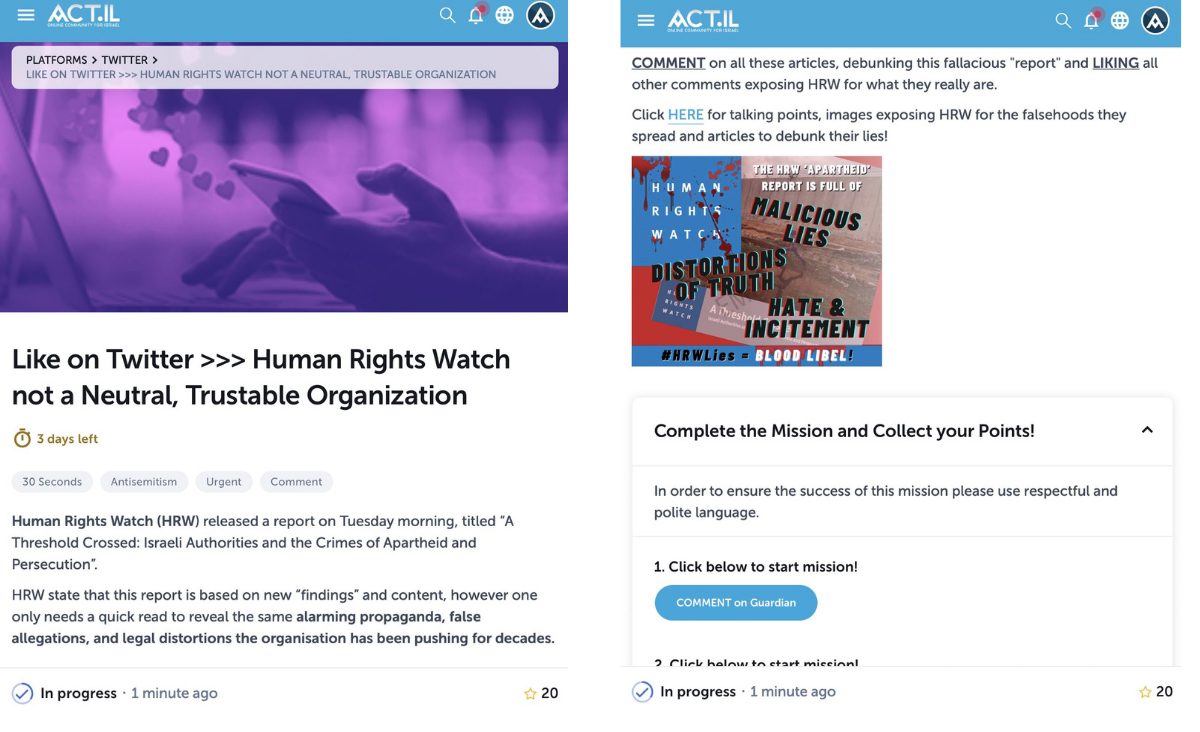
Yet much of the online anger at the report was actually manufactured by an Israeli government-sponsored app, Act.IL, which organized supporters of the Jewish state to act in sync to create an artificial groundswell of opposition to it. The app, which reportedly has a budget of over $1 million per year, instructed users to leave combative comments on Facebook, Twitter, and popular news outlets, and to like and promote others who did the same.
Human Rights Watch’s Facebook post announcing the report’s release has received over 1,400 comments, hundreds of them written in a similar, scathingly negative tone. One that the app directly told users to signal boost, for instance, described Palestinians as a people “indoctrinated with hate for Israel and Jews for over 100 years,” and claimed they were paid salaries to murder Israelis. It also presented the 1967 war and occupation as a humanitarian effort to bring electricity and other infrastructure to Arabs.
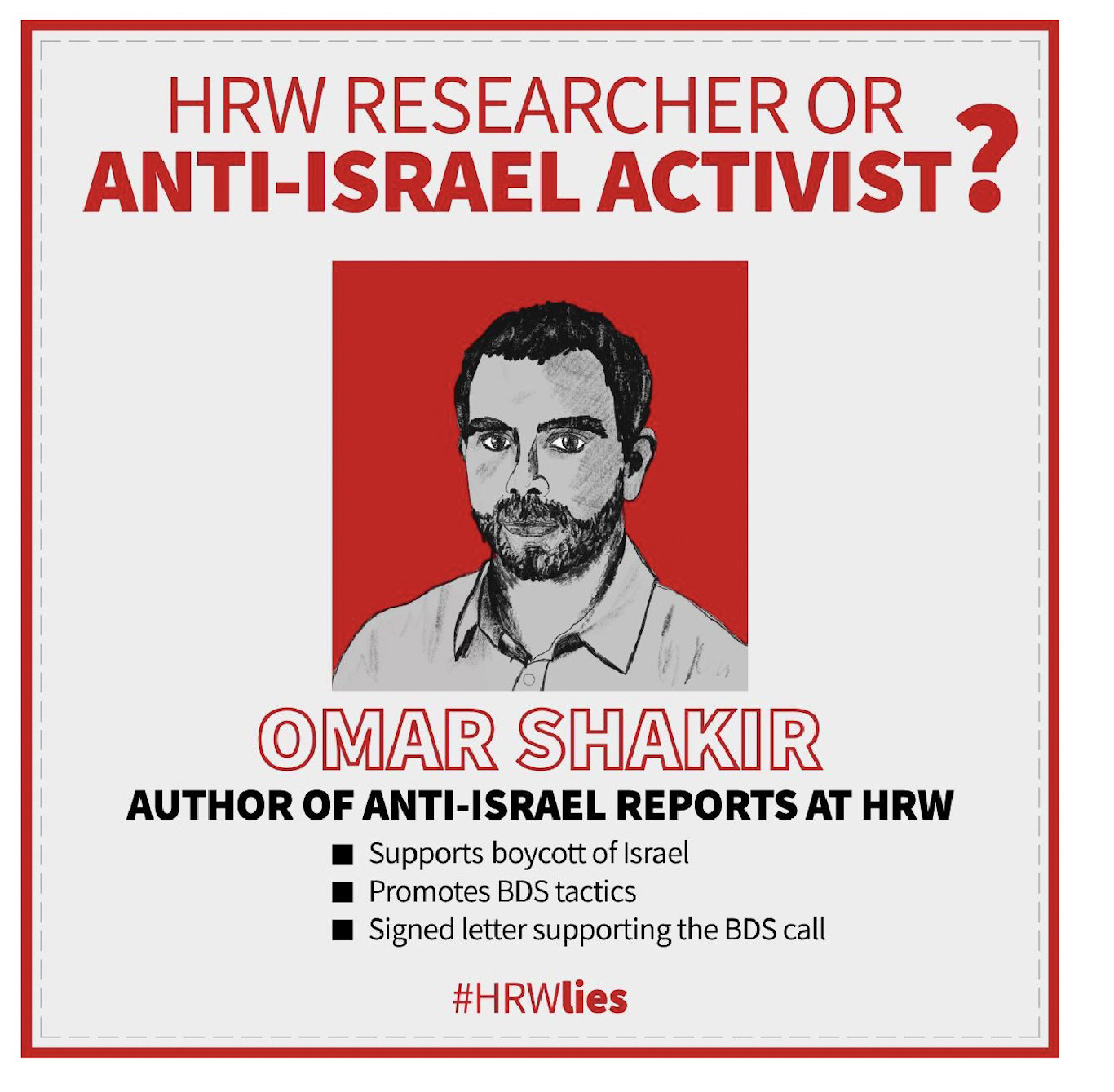
Another “mission” Act.IL gave its users was to promote a Facebook comment attacking the report as “nothing more than hate speech” and calling its lead author a “rabid anti-Zionist and Israel hater.”
One of the many images provided to Act.IL users for their astroturfing campaign against HRW
Act.IL is one of the chief tools in Israel’s online public relations enterprise. The app debuted in 2017 and is part of what Israeli Minister of Strategic Affairs Gilad Erdan called an “Iron Dome of Truth.” “Our cell phones are the number one weapon against us,” he explained, noting that public opinion in the U.S. was beginning to turn against them. While most of the app’s nearly 20,000 users are volunteers, a core of them are paid operatives, with many students receiving scholarships as a reward for their work.
The app has been designed to feel like a game, with points assigned for completing “missions” such as sharing pro-Israel videos, reporting anti-Israel content, signing petitions, or attending online seminars. Users can track their progress on leaderboards, earn badges and prizes, and chat with other members of the community. While it might feel like Animal Crossing or World of Warcraft for some, its creators see this very much as a new front in the war against Palestine. Israeli Justice Minister Ayelet Shaked categorizes BDS as “another branch of terrorism in the modern age,” and has been an important voice in taking the fight to a new front.
An Act.IL mission encouraging astroturfing of online discussions. Source | @AntiBDSApp
There is also an online toolkit full of folders of responses to typical questions and issues that arise. Users can, for instance, go to the BDS folder to find stock replies to their arguments. Or they can go to a specific folder to find articles, images and videos they can use to demonize Hamas.
The missions are organized by outlet, so users can, for instance, target only Facebook, Telegram, or other platforms they are most familiar with. At the time of writing, there are 10 missions each to complete on Facebook and YouTube, 30 on Instagram, 25 on Twitter.
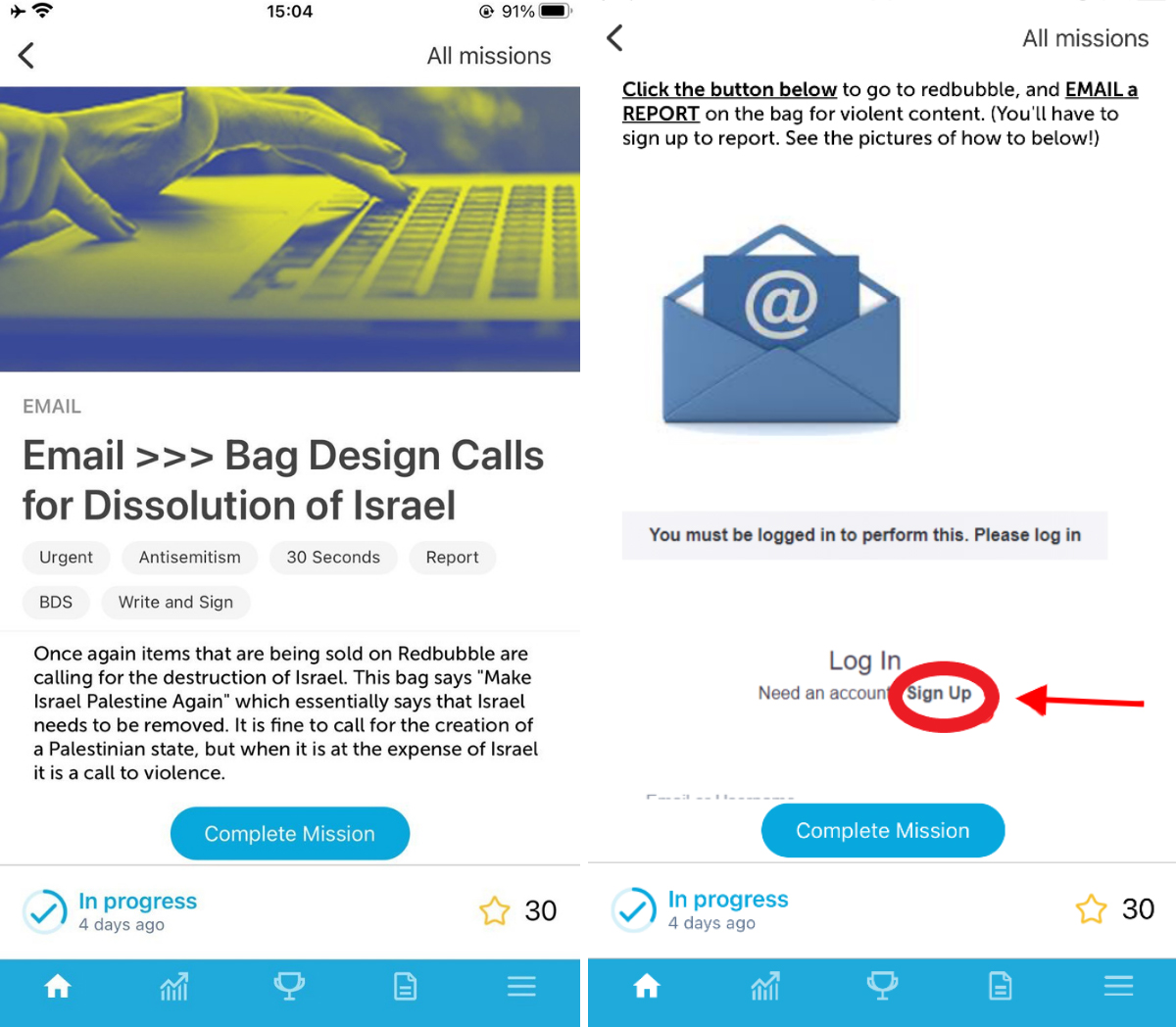
One current challenge is to upvote an answer to a question on Quora that asks about the validity and purpose of checkpoints in the West Bank. The answer claims they are purely about protection from terror attacks, and claims that Red Crescent ambulances are used to ferry bombs around the area. Other missions include pressuring an online store to remove a bag with a message stating “Make Israel Palestine Again.”
An Act.IL “mission” encouraging users to demand the removal of products with pro-Palestinian messaging
“It is quite astounding how openly they do it. But, of course, when you see a comment online, you wouldn’t necessarily think that it was coming from the Israeli government, but this is essentially what is happening,” Winstanley said. “Israel is not the only state to do this, but they do it fairly successfully.”
For all this, however, it is clear that Act.IL has a serious problem with user retention and lacks the volunteer numbers for it to be truly game changing.
Controlling the message
In a time of heightened awareness about foreign government interference online, it is particularly surprising that these operations can be openly carried out across virtually every major platform. Big tech companies like Twitter, YouTube and Facebook are constantly deleting tens of thousands of Russian, Chinese, Iranian and Cuban accounts belonging to what they claim are organized, state-sponsored disinformation campaigns.
In an effort to gauge the legality of its operations, MintPress reached out to Facebook, YouTube, Quora, and other big platforms used by Act.IL. We received no response from any of them. While this is particularly noteworthy — as these companies have teams of public relations representatives and are extremely forthright and timely with responses on other issues — it is perhaps not surprising. Facebook especially has long been working closely with the Israeli government in deciding which voices to censor. As far back as 2016, Ayelet Shaked boasted that Facebook removed 95% of the posts her office asked them to. Yet when Shaked herself called for a genocidal war against Palestine and its women, who give birth to “little snakes,” not only did the post remain online, it received thousands of likes and was widely circulated.
“The concern is that Facebook is adopting Israeli policy and terminology when it comes to defining what incitement is,” said Nadim Nashif, co-founder of 7amleh, the Arab Centre for the Advancement of Social Media. 7amleh was therefore dismayed when last year, Facebook appointed former Israeli Minister of Justice Emi Palmor to its Oversight Board, the council having the final say in the moderation of content on the platform used by 2.6 billion people worldwide. In her role as justice minister, Palmor was directly implicated in the persecution and subjugation of Palestinians.
Earlier this year, an Israeli Defense Forces soldier attempted to sue a Palestinian-American activist living in California over an allegedly slanderous Facebook post condemning her for participating in ethnic cleansing. Remarkably, the plaintiff attempted to convince a California judge to apply Israeli law to the incident, despite the fact that both she and the defendant are American citizens. https://cdn.iframe.ly/r7H7ueP?iframe=card-small&v=1&app=1
Inside the world of academia, professors critical of Israel have found themselves pushed out of the profession. In 2007, prominent critic of Israel Norman Finkelstein was denied tenure at DePaul University for political reasons. Seven years later, the University of Illinois “unhired” Steven Sailata for his comments denouncing Operation Protective Edge, the 2014 Israeli attack on Gaza. Emails showed that wealthy donors put significant pressure on the university to pull the plug on him. More recently, Cornel West was blocked from a tenured job at Harvard this year, despite having previously held tenure at Harvard, Princeton, and Yale. “Being the faculty advisor for the Palestinian student group was the one that probably went outside of the line for many Harvard staff,” West told Krystal Ball and Kyle Kulinski. “It’s a joke. It’s ridiculous. It’s ludicrous. It’s preposterous that it wouldn’t have something to do with politics.”
Top media figures have also paid the price for their support of BDS. CNN fired commentator Marc Lamont Hill after he made a speech at the United Nations calling for a free Palestine. Meanwhile, journalist Abby Martin was blocked from speaking at a conference at Georgia Southern University last year after she refused to sign a contract promising to renounce BDS. Georgia is one of dozens of U.S. states to have anti-BDS legislation, essentially forcing any would-be recipient of public contracts or funds, including government employees, to sign a pledge not to boycott Israel. Martin is currently suing the state of Georgia. MintCast Interviews Abby Martin About Her Anti-BDS Lawsuit & The Israel Lobby…
While Human Rights Watch’s report is new, the charge of apartheid is not. In 2017, a United Nations report “clearly and frankly concludes” that Israel is “a racist state that has established an apartheid system that persecutes the Palestinian people.” Earlier this year, Israeli human rights organization B’TSelem also used the word “apartheid,” claiming that Israel had established “a regime of Jewish supremacy from the Jordan River to the Mediterranean Sea.”…
Advocates for Palestine hailed Human Rights Watch’s study. Phyllis Bennis of the Institute for Policy Studies wrote:
There can be little doubt that much of HRW’s decision to issue this report now was based on the recognition that not only is it no longer political suicide to call Israeli apartheid what it is, but that we are now at a tipping point whereby failing to call out apartheid risks losing credibility for a human rights organization. It’s a huge victory for our movement.”
The battle, however, is far from won, and it is clear that the Israel lobby will continue to fight to hold back the tide until it is insurmountable.
After at first agreeing to accept the grand prize as “Cultural Personality of the Year” in the Sheikh Zayed Book Award, Juergen Habermas then decided to decline the honour. An interesting commentary by Reinhard Schulze sheds light on the wisdom of accepting such awards:
The rejection of the prize awarded by the United Arab Emirates has sparked quite a controversy and even been linked to the debate on “cancel culture”.
The first argument concerns the political context behind the Zayed Award. Some say that the UAE’s foreign, cultural and anti-Islamism policies betray signs of cautious reforms and opening in the principalities. This raises the question: who is honouring whom here? Does the prize honour the laureate, or does the laureate honour the sponsor’s reform policies by accepting?
The award in the context of neo-nationalist cultural policy
However, the Emirates’ cultural policy is clearly heading in a different direction. It combines the aspiration to make the Emirates the embodiment of a global culture on the one hand with a sentimental and nostalgic Arabism on the other. The Emirates want to give shape and expression to this Arabism and yet at the same time take on the status of patron of global culture. It is therefore no coincidence that the Zayed Award always selects as its “cultural personality of the year” someone who represents this global culture, this time in the form of Juergen Habermas, who was henceforward to be protected and promoted by the Emirates. See also: https://humanrightsdefenders.blog/2019/10/26/celebrity-endorsements-and-the-dubai-expo-on-the-one-hand-and-the-other/
The Emirates see as their greatest adversaries all organisations and groups that view Islam as a secular order, chief among them of course the Muslim Brotherhood. Such groups are ridiculed as relics of bygone times and at the same time furiously opposed. Promoted instead is an Islamic orthodoxy, provided it renounces any political pretensions. This Islamic orthodoxy is seen as part of the new nostalgic Arabism and reduced to the function of a symbolic cultural system of the Emirati “nation” represented by the princes.
Current policies in the Emirates thus largely rule out any opening up within society or social change. Only 10% of the population in the seven principalities are considered citizens, while 90% are foreigners or stateless persons (bidun). And only 7% are deemed to be Arab members of the titular nation.
The award and the weak legitimacy of the princes
Like most awards, the Zayed Award is also a mark of distinction for its sponsor. There is nothing inherently dishonourable about that. Things become problematic, however, when, as in Abu Dhabi, such self-adulation serves primarily to enhance the legitimacy of the ruling order through external recognition. Since only a very small minority of people in the country have any function at all as subjects that can legitimise the rule of the princes, a large portion of the population is politically and culturally functionless.
The legitimacy of the princes thus rests on very weak shoulders, which is why they strive to compensate for the lack of an internal basis of legitimacy through increased acknowledgement from the outside. And, as with the numerous principalities in the age of European absolutism, the princes on the Arabian Peninsula can also get ahead in the competition to secure legitimacy from the outside by obtaining prestigious objects. In Abu Dhabi, this includes the “Arab Louvre” and also the Zayed Award, which spotlights the “book” as the route to legitimacy.
Many have already been honoured with this award. In 2003, for example, the 8th President of FIFA, Sepp Blatter, received this highest state award in the Emirates. Zayed Award winners in the “cultural personality” category include the French-Lebanese writer Amin Maalouf (2016), Moroccan historian Abdallah Laroui (2017), Arabists Yaroslav and Suzanne Stetkevych (2019), and Palestinian author Salma Khadra Al Jayyusi (2020). Abu Dhabi is emerging from Saudi Arabia’s shadow: since the Arab Spring of 2011, the United Arab Emirates (UAE) have been pursuing an increasingly active foreign and security policy and have emerged as a leading regional power. The rise of the UAE to a regional power has made the country a more important and simultaneously a more problematic policy partner for Germany and Europe, argues Guido Steinberg in his study on “Regional Power United Arab Emirates”
Enlightened absolutism in the Gulf?
All of the award-winners to date have had a direct connection to the Arab world. With Juergen Habermas, however, a personality has been chosen for this year’s prize who has a pronounced legitimising function. To a certain extent, this has made the award more international, a move that corresponds quite closely to the efforts of the royal house of Abu Dhabi to gain the broadest possible worldwide recognition. Juergen Habermas’s oeuvre would seem to be ideally suited for this purpose. One might ask, though, why potentates would choose a personality whose work entails a radical critique of discourses of power, when their own actions as rulers run counter to precisely what the honouree has deemed necessary for the success of a society.
Do the princes want to show that they have now become advocates of an “enlightened absolutism”, endeavouring to reform the Leviathan of the state to such an extent that it becomes a beacon for Arab enlightenment? Are they trying to shift the weight of their project onto the shoulders of giants?
But an enlightened absolutism 2.0 would require broad legitimacy that goes far beyond a public sphere controlled by the royal court. This legitimacy, the princes realise, can only be obtained internationally. And if international recognition is tantamount to support for their foreign and security policy strategy, then that is certainly worth the prize money.
Refusing to condone such a strategy is by no means an expression of “cancel culture”. There are often good reasons for honourees to turn down awards. This was the case in 2008, for example, when literary critic Marcel Reich-Ranicki refused to accept the honorary prize of the German Television Award, and in 2011, when Juan Goytisolo from Spain refused to accept the Al-Gaddafi International Prize for Human Rights. Jean-Paul Sartre seems to have had less cogent reasons for turning down the Nobel Prize for Literature in 1964. But in any case, the reasons that lead someone to decline an award should be appreciated and respected. It harms no one, unless you regard the awardee as a sovereign subject of the prize sponsor. So let’s wait and see if Juergen Habermas takes the opportunity to explain his motives.
The argument that culture cannot be kept free of the double standards of politics, which is willing to prioritise economic interests over the demand for human rights, may seem disturbing. In the final analysis, this means that awards such as the aforementioned Al-Gaddafi Prize for Human Rights would also have to be recognised. I believe that the awards culture in particular poses a major challenge, as it can quickly be exploited in an almost extortionate manner to gain legitimacy and recognition. This was evident in some of the reactions to Juergen Habermas’s refusal of the award. The Catholic Bishop for the Apostolic Vicariate of Southern Arabia, Paul Hinder, described the rejection of the invitation to accept the prize as an “insult” to its sponsor. This makes one wonder whether, as an award winner, one automatically has some sort of obligation towards the donor?
It is precisely because international relations are so rife with double standards that it is necessary to create cultural and scientific realms in which the claim can be made to address human rights violations, freedom of the press and freedom of religion on an equal footing and based on an equal rationale. When someone like Juergen Habermas calls for this so urgently, relying on the power of words, then we can rightly expect that receiving an award will also be evaluated from this standpoint.
Not a case of arrogance
Therefore, it is not arrogance on the part of the West to reject this prize, if only because Juergen Habermas is not the West and the prize is not the Arab world. We should keep our feet firmly planted on the ground and not speak here of a new culture war. An honouree has exercised his right to ask who is honouring him and then decide whether to accept that honour.
His rejection of the award is in keeping with the work of Juergen Habermas. Social media reactions coming from Arab countries indicate that the majority welcomes Habermas’s decision; some have even expressed relief because the refusal to accept the award accomplishes two things at once: for one thing, the awards committee has recognised and manifested the prize-worthiness of Juergen Habermas’s work for the Arab world. Arabic editions of his works will surely become more widespread. Secondly, Habermas himself has shown that, despite the honour, he has stood by his critical principles and arrived at a decision that is consistent for him, and he has done so in a political environment where every honour is subject to the suspicion of being corrupt.
Janika Spannagel on 29 Apr 2021 announced the publication of this new report of the International Service for Human Rights (ISHR). A virtual event to launch ISHR’s new quantitative analysis of the scope and impact of UN action to combat intimidation and reprisals will take place later today at 16h00 Geneva time
The ability of the UN human rights system to function depends on the testimonies of thousands of human rights defenders and victims from across the world who engage with UN mechanisms every year. However, interactions with the UN often come with risks for activists – many face reprisals from their home countries, ranging from severe, violent retaliation to equally effective administrative hurdles to their work in human rights.
Some of these reprisal cases are raised by UN bodies with the responsible government and reported in annual reports by the UN Secretary-General. However, what becomes of the affected individuals’ cases after the UN’s involvement remains largely unclear.
This study aims to both establish a clear understanding of which reprisal cases are raised by UN communications, and to shed light on the question of their effectiveness in improving individuals’ situations.
The project was funded by the International Service for Human Rights (ISHR) and conducted jointly with their New York office between November 2020 and March 2021.
Differenceday.com of 5 May 2021 reports on how World Press Freedom Day was celebrated in Brussels as Difference Day
At a time when independent and free media reporting is more essential than ever, press freedom continues to be under threat. In a declaration ahead of World Press Freedom Day on Monday, EU High Representative Josep Borrell states that journalists continue to experience harsh working conditions with increasing financial and political pressure, surveillance, arbitrary prison sentences or violence for doing their work.
According to the UNESCO Observatory, 76 journalists were killed since 2020, while many more were arrested, harassed or threatened worldwide. Of particular concern is gender-based violence targeting women journalists.
“Press freedom is a fundamental value for the European Union underpinned by many recent initiatives. Media freedom and the safety of journalists are key priorities of the new Human Rights and Democracy Action Plan and of the European Democracy Action Plan.”
In 2020, more than 400 journalists benefited from the EU mechanism for protection of Human Rights Defenders, while the EU took important actions to support journalists, independent media and the fight against disinformation in the context of the pandemic in many regions.
The EU is determined to do more, in Europe and abroad, the declaration continues. The EU will continue coordinating with international organisations and mechanisms and pioneer new approaches. One example is the European Commission’s proposal for a Digital Services Act aimed at holding the major platforms accountable to make their systems fairer, safer and more transparent.
EU will also continue its action to counter disinformation and seek with all partners effective means to support sustainable business models for independent media.
“Press freedom means security for all,” the declaration concludes.
The World Press Freedom Day on 3 May was declared by United Nations General Assembly in 1993. The day raises awareness of the importance of freedom of the press and reminds governments of their duty to respect and uphold the right to freedom of expression enshrined under Article 19 of the 1948 Universal Declaration of Human Rights.
Freedom of expression implies the respect for opinions of others. In Brussels the day is commemorated annually as Difference Day because it recognises the difference in people and their convictions.
“To celebrate freedom of expression is to celebrate diversity,” the Free University of Brussels and other organisers of Difference Day in Brussels stated. In the past, investigative journalism has been in the focus of the event. This year the attention is drawn to women journalists behind the news and on the front line.
Regan Ralph on 2 May 2021, in Open Democracy, writes: “When authoritarians get a free pass, activists pay the price”. It is a rich piece.
Much ink has been spilled about US president Joe Biden’s non-response to the confirmation by US intelligence services that Saudi crown prince Mohammed bin Salman directed the gruesome murder of journalist Jamal Khashoggi in Turkey in 2018. Most of it, like Joseph S. Nye, Jr.’s recent article ‘Biden and Human Rights’, focuses on the political consequences.
The real price of authoritarian impunity, however, is paid by the victims. Pulled punches – like refusing to sanction the crown prince – endanger the lives of brave individuals standing up for democratic values. If the Biden administration is to deliver on its promise to “stand firm behind our commitments to human rights, democracy, [and] the rule of law”, it must make protecting the lives of activists a priority.
In 2020, 50 journalists were killed worldwide. For activists and advocates, the numbers are even grimmer – at least 331 human rights defenders in 25 countries were murdered. Countless others were detained, beaten, and threatened with worse. Women, especially, are singled out for sexualized violence and harassment. And the number of human rights activists killed, harassed, or thrown in jail is steadily rising. According to UN special rapporteur on human rights defenders Mary Lawlor, 1,300 peaceful activists were murdered between 2015 and 2019.
Like journalists, frontline activists are targeted by the powerful institutions they publicly criticize. Last month marked five years since the murder of Honduran environmental justice advocate Berta Caceres. She was gunned down in her home on the night of 2 March 2016, after a years-long campaign of harassment and intimidation. Caceres was killed because of her peaceful struggle against the Agua Zarca dam project, which threatens the land and livelihoods of indigenous Lenca communities in western Honduras. [see also: https://humanrightsdefenders.blog/tag/berta-caceres/]
Investigations into Caceres’s murder indicated an elaborate web of co-conspirators, including high-level government officials, former military personnel, and top executives at Desarrollos Energeticos SA (DESA)—the company building the dam. Seven men, hired by DESA executives, were convicted in 2018 for Caceres’s murder. DESA’s president, a former military intelligence officer, will stand trial next month. He is indicted as the “intellectual author” of the assassination.
These brutal murders are tragedies. They also reveal the costs incurred when we indulge authoritarians as they crack down on voices of dissent.
Not long ago, it seemed that the price of oppression was on the rise. There was a growing consensus that brutal, autocratic actions would isolate a country from the international community. Powerful actors on the world stage, including the US State Department, could and did support the right of independent voices to criticize abuses of power and call for accountability.
Then the new authoritarians came to power. In countries across the world, illiberal and autocratic strongmen granted each other the gift of impunity and permission to silence critics without consequence. Human rights advocates watched with grim resignation as former president Donald Trump’s administration excused gross rights violations and embraced abusive regimes.
Existential threats to human rights activism are not theoretical; they grow more concrete and specific every day
The now-defunct International Commission Against Impunity in Guatemala (CICIG), for example, was established in 2006 with political and financial support from the United States and the United Nations. It scored groundbreaking victories against corrupt and abusive political and military figures. In 2015, Joe Biden, then US vice-president, helped keep the CICIG alive while the then Guatemalan president Perez Molina – later imprisoned on corruption charges – tried to shut it down. But in 2019, when the Guatemalan government dismantled the CICIG, there was nary a peep from Washington.
Existential threats to human rights activism are not theoretical; they grow more concrete and specific every day. As the Trump administration turned a blind eye, the Egyptian government cracked down on critics, harassing or jailing thousands of activists and journalists. Local advocates say President Abdel Fattah el-Sisi has been emboldened by the lack of consequences over his government’s flagrant disregard for human rights.
Civil society activists are vulnerable wherever they live and travel. Khashoggi’s murder shows the lengths to which an unchecked authoritarian will go to silence critics. This is what happens when heavyweight governments like the United States abdicate their moral leadership—frontline advocates everywhere in the world pay the price. It is unfathomably cruel to valorize the bravery of human rights advocates on the one hand and refuse to hold their murderers accountable on the other.
US leadership should offer the kind of moral suasion that will effectively counter and curtail attacks on human rights defenders. Others, including Khashoggi’s own colleagues at The Washington Post, have outlined the immediate actions Biden can take to hold Saudi Arabia’s crown prince accountable. But beyond sanctions for egregious violations, the Biden administration must do more to proactively support the thousands of courageous individuals who risk their lives to promote democracy and justice.
First, the administration should consistently apply the human rights norms it espouses—at home and abroad. Second, it must lend political and, where appropriate, financial support to those building democratic movements and institutions, especially when their efforts are attacked. Last, it should explore the creation of a novel global security compact, following the collective protection model pioneered by local activists. The safety of human rights defenders anywhere is the concern of governments everywhere, and policymakers must take measures to ensure that all civil society actors can carry out their vital work in safety.
The schoolyard teaches us that bullies don’t back down when they get what they want; instead, they demand more. It’s time to stand up to autocratic bullies and hold them accountable for their actions. The lives of countless brave activists may depend on it.




 Hans Thoolen on Human Rights Defenders and their awards
