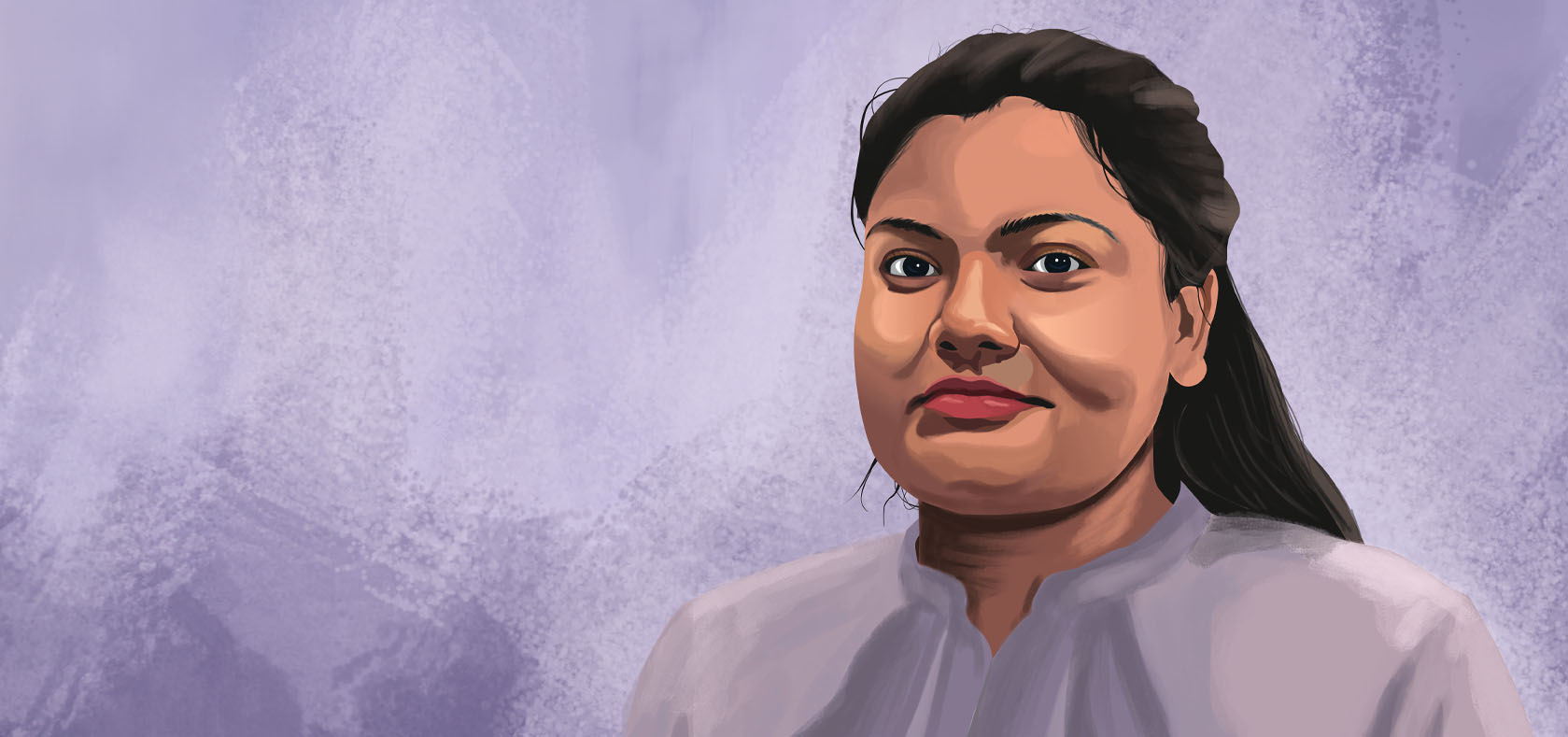
On 29 November 2024, OHCHR published this interview in the context of the International Day for Women Human Rights Defenders.

© Kirsty Teichert
Nonhlanhla Dlamini heads SWAGAA – the Swatini Action Group Against Abuse, a local Eswatini organisation whose primary focus is on ending gender-based violence in the country. Since 1990, SWAGAA has provided care, support, prevention, and access to justice for victims and survivors of gender-based violence, by working with community leaders, community members, and the Government, as well as providing counselling for GBV victims. For the International Day for Women Human Rights Defenders, Dlamini answers questions about GBV, her inspirations and why it was necessary for her to become one of the first women elected as a member of parliament in Eswatini.
1. What was that specific inspiring moment or experience that made you decide to focus on gender-based violence?
What actually motivated me was an incident where a relative of mine was raped at the age of six by a stranger. We didn’t find the person. SWAGAA already existed, but I didn’t know anything about them. Then in 1997, I saw an advertisement [for SWAGAA] in the newspaper. And when I learned about what they were doing, I asked myself why I didn’t know about the organization when I had this problem because I had no one to talk to. I had no one to support me. We reported the matter to the police, but nothing ever happened. We’re so frustrated. So, when I saw the position, I just knew this was my job. And my objective was, I want people to know about SWAGAA. I wanted SWAGAA to be a household name.
2. How do you stay motivated and have you ever questioned your journey?
I have several times, particularly when I get hurt, because, you know, sometimes this world can be very cruel. And I ask myself, how could people do such an evil thing? I do get depressed. And when I’m very depressed, I’m like, you know, out of all the jobs that I could be doing, why am I even doing this job? Then I get some motivation with some of the success stories. If I quit, who else is going to do it? I kind of feel I’m compelled to do it because there’s a whole lot of people that are looking up to me for help. So, I continue.
3. You were elected MP back in the early 2000s, the first woman ever for your constituency. What made you decide you had to run?
… The mistake that we make as advocates and women’s rights activists is that we’re always pushing for others to go and make the change that we want to see. So, I made a decision; I was going to stand for the next elections, which were in 2008. I realized that for years, I’ve been part of a vote for a woman campaign, pushing women to stand for elections. But I’ve never thought of myself one day running for elections. I ran the race to Parliament. I was nominated. I was widely supported. I won the primary elections. It was easy for the primary elections, but the secondary elections were not easy. And I was the only woman against seven men. It was very rough. It was very testing. But I pushed with everything that I had. And I won the elections, and I became a member of Parliament. And the first motion that I moved in Parliament, was that the Minister of Justice bring the sexual offenses and domestic violence bill within 30 days. And his response was no. I kept asking, and that is how the bill was finally seen by Parliament.
4. Let’s look to the future. If you could change one thing about the situation of gender-based violence in Eswatini, what would it be?
The most critical thing is prevention. Prevention, prevention, because once it happens, it’s difficult to pick up the pieces. …
5. Do you consider yourself a woman human rights defender? Why?
Of course I do, 100 percent. I consider myself a human rights defender because due to the nature of the work that I’m doing, I am continuously standing up for the rights of women and girls in Eswatini. And I have advocated for better legislation in the country. I have advocated for better services in the country, be it in the police, be it in the hospitals, be it in the justice system. I have done everything that I think needs to be done under the sun to make sure that I stand for the rights of the citizens of this country. And I’m saying this because I also know people believe in me. I’ve done all I possibly can to advocate for the rights of women and children in the country.