Posts Tagged ‘woman human rights defender’

18th edition of the International Women of Courage Awards

March 5, 2024

On Monday, 4 March 2024, Secretary of State Antony J. Blinken and First Lady Jill Biden hosted the annual International Women of Courage (IWOC) Awards ceremony at the White House. See: https://www.trueheroesfilms.org/thedigest/awards/A386E593-5BB7-12E8-0528-AAF11BE46695

Now in its 18th year, the Secretary of State’s IWOC Award recognizes women from around the globe who have demonstrated exceptional courage, strength, and leadership in advocating for peace, justice, human rights, gender equity and equality, and the empowerment of women and girls, in all their diversity – often at great personal risk and sacrifice.  The 2024 awardees and many earlier laureates can be found via the Digest link above.

USAID Administrator Samantha Power had the following to say: It has always taken bravery and stubbornness to stand up for human rights. But today the threats that human rights activists and defenders face – from threats to their families to legal retribution to imprisonment and outright violence at the hands of those who would prefer to see them silenced – those threats are grave, and sadly they are growing. In 2022, more than 400 human rights defenders were murdered, the highest number ever recorded in a single year. I am in awe of the women we are honouring today for their courage. 

They refuse to back down because of a shared conviction captured by Fatima Corazon, one of the women we are recognizing today. As she puts it, courage, even in the face of danger and fear is the driving force to achieve positive change. The women we are honoring live this conviction every minute of every day. They have been unjustly imprisoned, they have been driven from their homes or trapped inside their homes, they have seen their families and their colleagues attacked, or they have received death threats and been assaulted themselves. 

But they do not relent. They go on fighting, they fight for the rights of political prisoners, they organize movements to bring services to marginalized communities, they publish articles, they host rallies, and they call out injustice wherever they can. Even in the most dangerous places against all odds, they are continuing their work demonstrating incredible, inspiring courage and putting their lives on the line to defend human rights. 

Benafsha Yaqoobi has dedicated her life to defending the rights of women and girls in Afghanistan. A former attorney and member of the Afghanistan Independent Human Rights Commission, she has helped women escape violence and visually impaired children attend school. Today, she continues to fight for the future of Afghanistan – one that respects human rights and human dignity.

Born in Isla Luis Vargas Torres, one of the most violent enclaves within Esmeraldas, Ecuador, Fátima Corozo has put her life on the line to draw hundreds of young people away from rising gang violence and help them get the education and job opportunities they need to build the futures they want for themselves.

Martha Beatriz Roque Cabello was the only woman amongst 75 people imprisoned during the black spring, Cuba’s crackdown on dissidents two decades ago, Martha was jailed for her activism. After her release, she continued to fight for the rights of political prisoners documenting fraudulent court hearings and supporting activists and their families. Unfortunately, as the Secretary relayed, the Cuban government is preventing Ms. Roque Cabello from leaving the country. So she is not here to accept the award, but let us give her a heartfelt round of applause.

As a result of Fariba Balouch’s outspoken activism for the rights of women and systematically oppressed ethnic minorities in Iran’s poorest province of Sistan and Baluchestan, Iranian authorities have threatened her life. And after she escaped to London, they detained her son and brother in a further attempt to intimidate her. Yet, Ms. Balouch believes the only way forward is resistance, and she continues to advocate for marginalized communities in Iran refusing to be silenced.

https://www.miragenews.com/2024-intl-women-of-courage-awardees-unveiled-1185728

https://www.usaid.gov/news-information/speeches/mar-04-2024-administrator-samantha-powers-remarks-international-women-courage-awards-ceremony

Rising Attacks against Women Human Rights Defenders in Sudan

February 25, 2024

© MENA WHRD Coalition

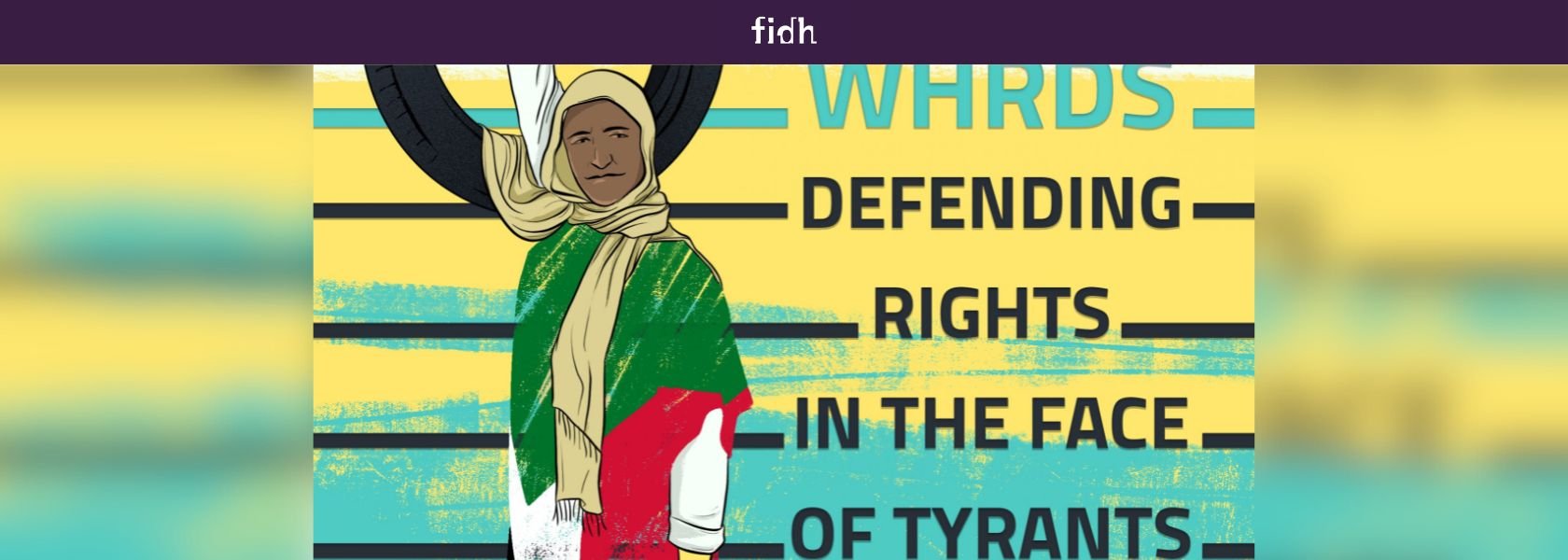
On 14 February 2024, eight organisations, including FIDH and OMCT within the framework of the Observatory for the Protection of Human Rights Defenders, expressed their grave concern over the closure of civic space, attacks on freedom of expression, rising militarisation and continuous disruption and shutdown of communication that threatens the work and safety of Women Human Rights Defenders (WHRDs) and Women’s Rights Groups in Sudan:

February 14, 2024. We the undersigned groups and organisations would like to express our grave concern and raise the alarm over ongoing reports about the closure of the civic space, attacks on freedom of expression, rising militarisation and continuous disruption and shutdown of communication that threatens the work and safety of Women Human Rights Defenders (WHRDs) and Women’s Rights Groups in Sudan.

Shutdown of Communications

On February 7th, 2024, Sudan witnessed a complete communications shutdown. Reasons behind this shutdown remain unknown in the absence of official statements from operating companies and the warring parties. This shutdown followed two days of the extensive interruption of communications at the end of January 2024. The interruption of communications and frequent shutdowns have life threatening implications and put the safety and security of WHRDs at risk. Without access to communications, WHRDs struggle to document and report on the mounting atrocities on the ground. The interruption of internet networks has also impeded women groups’ access to the mobile banking apps that facilitate money transfers to operate or secure protection for WHRDs at risk. The #KeepItOn coalition — a global network of over 300 human rights organisations from 105 countries working to end internet shutdowns — has raised concerns that “amid the ongoing brutal violence in Sudan, the continued weaponisation of internet shutdowns is a flagrant violation of international law.”

Attack on Wad Madani

Since the attack on Wad Madani, the capital of the central Al Jazirah state, in mid-December 2023, Women’s Rights groups and WHRDs have lost the resources collected since the start of the war. Dozens of WHRDs and Women’s Rights Groups were forcibly displaced for the second time, driven from the city that had been the humanitarian response hub for local and international NGOs. As WHRDs were forced to flee again, they faced enormous challenges searching for safe locations across states and neighbouring countries. Dozens of WHRDs were harassed, detained, summoned and threatened by both warring parties during the last few weeks.

Targeting of Activists

The Sudanese Armed Forces (SAF) launched an intensified attack on human rights defenders, humanitarian workers and volunteers, journalists, and peace activists in the last few months in the areas under their control. Aid groups and first responders faced rising restrictions of movement and supplies.

Rapid Support Forces (RSF) continued to arrest civilians, loot both public and private properties and perpetrate systemic sexual violence across the areas under their control. WHRDs and Women’s Rights Groups struggle to operate in these areas as the risks of sexual violence are growing.

At least five WHRDs and women first responders have been detained, summoned, harassed or threatened in the last few weeks. The attacks were reported in areas controlled by both warring parties. Since the war erupted, four WHRDs have been killed, two of whom were journalists. At least 11 women health workers were killed as well.

Closure of Civic Space and Restrictions on Freedom of Expression

In January 2024, Sudanese authorities in the relatively safer states in Northern and Eastern Sudan, including local governors, issued decrees to dissolve neighbourhood resistance committees. These grassroot groups were mobilizing and organising communities since the emergence of the protests movement in 2018. The governors of five states also banned publication of information and imposed heavy penalties on publishing information on social media or other newspapers regarding the security situation in their states. Journalists and activists were detained in three states and two women journalists were summoned and threatened by local authorities following these decrees. In the Blue Nile state, Red Sea and other states, meetings and other forms of peaceful civic activities are either banned or not authorized. Women’s Rights groups and other NGOs operating in these states are working in hostile and increasingly challenging environments. Civic space in Sudan is closed, with an increasing militarisation of the state and local communities.

Rising Militarisation

During the last three months, Sudanese authorities launched a mobilisation campaign to arm civilians in various states under SAF control. This campaign’s leaders attacked and threatened activists who criticized the armament of civilians, including women, girls and boys. Voices of peace activists are considered treasonous by SAF supporters. The widespread arms in the hands of civilians has led to unprecedented threats to women and peace and security, including gender-based violence (GBV) in the areas outside of the fighting zones.

We the undersigned groups call on:

The warring parties:

  • An immediate ceasefire and the prompt creation of safe corridors for humanitarian aid organisations and groups, and to guarantee the safety of their operations;
  • An immediate restoration of telecommunications across the country;
  • Cease attacks on health facilities, medical supplies, and health workers, and uphold obligations under international humanitarian law;

The international community:

  • States and international human rights, peace-building and feminist groups and organisations to work together to create an immediate long-term protection program for WHRDs (and their families) that addresses relocation needs (in several locations if needed), provides psychological support for post-traumatic stress caused by war and conflict, including due to GBV, and equips WHRDs’ with all the necessary means to continue their work in the defense of human rights;
  • States to provide support for the FFM and other international mechanisms mandated to document human rights violations in Sudan, including by ensuring that these entities have the necessary resources to carry out their work effectively;
  • States to support local initiatives providing humanitarian support to local communities as well as support services to victims, and to support civil society’s documentation and reporting efforts so that the evidence obtained can be used for future judicial proceedings, including for those related to SGBV crimes.
  • The international community to establish a mechanism for the disclosure of the whereabouts of the disappeared and the release of detainees, and to urgently address the issue of enforced disappearances and grave violations in detention centers, including GBV;
  • The international community to reinforce and protect medical staff in accordance with international humanitarian law;
  • The Fact Finding Mission (FFM) recently established by the UN Human Rights Council, to ensure accountability is pursued for GBV crimes committed by warring parties, to regularly and meaningfully engage with civil society in this process, and to ensure effective protection of witnesses and victims;
  • All other UN human rights mechanisms, including UN Special Procedures, to support the FFM’s work and to investigate GBV as a weapon of war, to call for the release of detainees and for the disclosure of the whereabouts of the disappeared, and to demand an investigation into violations in detention, including GBV;

https://www.fidh.org/en/region/Africa/sudan/sudan-rising-attacks-against-whrds-and-women-s-rights-groups

Cao Shunli, her legacy should not be silenced

February 16, 2024

Our impact may be large, may be small, and may be nothing. But we must try. It is our duty to the dispossessed and it is the right of civil society.’ Cao Shunli

Ten years ago, Chinese woman human rights defender Cao Shunli was a victim of deadly reprisals for engaging with the United Nations.

The International Service for Human Rights (ISHR) and partners invite you to attend a photo exhibition on 14 March 2024, at Place des Nations to honour her memory.

The photo exhibition will also display cases of Chinese, Tibetan, Uyghur, and Hong Kong human rights defenders who have been targeted for upholding the promise of the Universal Declaration of Human Rights. See: https://mailchi.mp/ishr/side-event-situation-guatemala-hrc55-7mar-34177?e=d1945ebb90

Who was Cao Shunli? 

Cao Shunli was a brave Chinese woman human rights defender and lawyer. She campaigned for the meaningful consultation and contribution of independent civil society to the Chinese government’s national reports for its first and second Universal Periodic Reviews (UPR). On 14 September 2013, one month before this review, while on her way to Geneva to attend a human rights training organised by ISHR and CHRD, she was detained and forcibly disappeared by Chinese authorities for five weeks. When she resurfaced in custody in October 2013, she had been charged with ‘picking quarrels and provoking trouble’, and  it was evident that she was experiencing serious medical issues in detention. Despite repeated international calls for her urgent release over months of being denied adequate medical treatment, Cao Shunli died of multiple organ failure on 14 March 2014, having been granted bail for medical reasons just days before her death. Cao Shunli was one of the finalists of the prestigious Martin Ennals Award for Human Rights Defenders in 2014. [see also: https://humanrightsdefenders.blog/tag/cao-shunli/ as well as https://www.martinennalsaward.org/hrd/cao-shunli/]

To this day, Chinese authorities have ignored appeals seeking accountability for Cao’s death, including repeated calls by UN Special Procedures experts in 2014 and 2019 for a full investigation into this ‘deadly reprisal’. Her case remains the longest-standing unresolved case in the UN Secretary-General’s annual reports on reprisals. March 2024 marks the 10th anniversary of Cao Shunli’s death. A decade ago, when ISHR and many other human rights groups sought to observe a moment of silence at the Human Rights Council in her memory, the Chinese delegation, together with other delegations, disrupted the session for an hour and a half. China is consistently one of the most frequent perpetrators of reprisals against individuals or groups engaging with the United Nations. Frequently mentioned alongside Saudi Arabia, it has the second highest number of reprisals cases and situations reported by the UN Secretary-General since 2010.

Cao Shunli’s story is a paradigmatic case of reprisals, not only because of her belief in the importance of civil society participation in UN mechanisms, but also due to the array of severe human rights abuses she endured because of this belief, ranging from being barred from exiting her own country, enforced disappearance, arbitrary detention, lack of due process, torture, ill-treatment, and denial of adequate medical care, to subsequent death in custody without any accountability for these abuses. 

https://ishr.ch/events/but-we-must-try-cao-shunli-the-unsilenceable-legacy

Venezuela closes UN human rights office

February 16, 2024

On 15 February 2024 AP carried the story that Venezuela’s government has ordered the local UN office on human rights to suspend operations, giving its staff 72 hours to leave, after accusing the office of promoting opposition to the South American country. The UN office was established in Caracas in September 2019.

The foreign affairs minister, Yván Gil, announced the decision at a news conference in Caracas on Thursday. Gil’s announcement came on the heels of the detention of the human rights attorney Rocío San Miguel, which set off a wave of criticism inside and outside Venezuela.

The South American country’s government said it had made a decision “to suspend the activities of the technical advisory office of the UN high commissioner for human rights and carry out a holistic revision of the technical cooperation terms”.

The government said the UN human rights office must rectify its “colonialist, abusive and violating attitude”, accusing it of playing an “inappropriate role” in the country and supporting impunity for people involved in attempts at assassination, coups, conspiracies and other plots.

The Venezuelan government regularly accuses members of the political opposition of plotting takeovers or the assassination of President Nicolas Maduro, all accusations vehemently denied by opposing parties and their members.

We regret this announcement and are evaluating the next steps. We continue to engage with the authorities and other stakeholders,” said UN human rights office spokesperson Ravina Shamdasani. “Our guiding principle has been and remains the promotion and protection of the human rights of the people of Venezuela.”

Venezuelan state television on Wednesday harshly criticized comments by the UN’s special rapporteur on the right to food, Michael Fakhri, who just concluded a visit to Venezuela. Fakhri had said in a statement the government food program does not tackle the root causes of hunger and is susceptible to political influences.

San Miguel was taken into custody on Friday at the airport near Caracas while she and her daughter awaited a flight to Miami. Authorities did not acknowledge her detention until Sunday, and as of Wednesday her attorney had not been allowed to meet with her.

The attorney general, Tarek William Saab, earlier in the week said she was being held at the Helicoide prison, an infamous institution for political prisoners.

San Miguel’s daughter, ex-husband, two brothers and former partner were also detained following her arrest. Of them, only her former partner remains in custody.

https://www.theguardian.com/world/2024/feb/15/venezuela-closes-un-human-rights-office

Investigative journalism in Arab states: the threats to journalists

February 12, 2024

The Gulf Centre for Human Rights (GCHR) is working with journalists in the Middle East and Northern Africa to investigate various violations affecting the safety of journalists and their ability to do their work.

Investigative journalism: Unveiling the threats to journalists in Arab States

Shutterstock

I find myself wishing there was more protection [for investigative journalists], a sense of safety and even simply just hope. I watch in awe as they investigate crimes that they unfortunately know they could well be victims of in the future, or in some cases already have been.“ Zaynab Al-Khawaja, GCHR’s Journalists Protection Coordinator, working with journalists conducting the investigations

Supported by the Global Media Defence Fund, GCHR’s project Investigating impunity for crimes against journalists in the Arab States, while providing protection has identified a range of threats journalists face, such as arbitrary detentions and gendered threats.

With a strong gender focus, the GCHR ensures that the majority of the investigations are carried out by women, empowering them and shedding light on cases involving women.

One investigation highlights the story of an anonymous woman journalist who quit her job and relocated due to sexual harassment. She writes:

A large proportion of society is aware of widespread harassment in the streets, resulting from an exacerbated hypermasculinity. However, statements by several Iraqi women journalists confirm that this phenomenon did not spare women in press and media outlets, forcing a considerable number of them to quit journalism for good.

The investigation also reported that 41% of women journalists in Iraq have been victims of harassment, forcing 15% to leave their jobs and 5% to quit their profession for good.

This data aligns with UNESCO’s Chilling report, revealing increasing offline and online attacks against women journalists, including stigmatization, sexist hate speech, trolling, physical assault, rape and murder.

Another investigation looked into the imprisonment and silencing of journalists, some facing fabricated allegations of sexual harassment. GCHR collaborates with the NGO Vigilance and 40 partners on a joint appeal to end the persecution and detention of journalists and human rights defenders exercising their right to freedom of expression. GCHR also supported a journalist in the Middle East investigating the case of a disappeared journalist in Syria. 

Since 2022, GCHR and UNESCO have joined forces to support investigative journalism, reducing impunity for crimes against journalists and enhancing their safety through the Global Media Defence Fund. Established in 2019, this fund has supported over 120 projects globally, directly benefiting over 5,000 journalists, 1,200 lawyers and 200 non-governmental organizations.

In 2022, UNESCO published recommendations on addressing violence against women journalists, based on The Chilling, a global research project by UNESCO and the International Center for Journalists (ICFJ). All reports related to this project are available here on UNESCO’s website.

see also: https://humanrightsdefenders.blog/tag/journalist/

https://www.unesco.org/en/articles/investigative-journalism-unveiling-threats-journalists-arab-states

Women Human Rights defenders in Myanmar

February 6, 2024

Naw Hser Hser and Maggi Quadrini wrote in the Diplomat of 31 January 2024 how 3 years after the Myanmar coup, women Human Rights Defenders remain at the forefront

Three years have passed since the military coup in Myanmar. Since then, the resistance movement has flourished into an inspired example of people’s power and the defiance of authoritarian forces. In the eyes of the military, the hijacking of the 2020 general election and subsequent coup attempt was an easy conquest. They thought that violence and their long-practiced orders of “shoot to kill” would silence the civil unrest that immediately followed. It soon became clear that the generals gravely underestimated the will of the country’s people, who refused to inherit another era of military rule. The people’s rejection of the junta has been widespread and notable for the prominent role played by women in the revolution against military rule.

While the political, social, and armed aspects of the revolution have shifted, what has remained constant is the unwavering participation and leadership of women who have defied patriarchal systems, including gender stereotypes, and set an unquestionable new standard of what is possible for women and girls in Myanmar.

Women human rights defenders are resisting the military dictatorship in different ways despite the many challenges they face. They remain resilient and unwavering in their quest to see the fall of the junta. During these difficult times, women and girls, especially those from ethnic areas, including the Rohingya as well as those who identify as LGBTQ, have faced more forms of violence, including domestic assaults, sexual violence, rape, being coerced into sex work, and human trafficking.

No reliable justice mechanisms exist in Myanmar that can bring perpetrators to court and ensure accountability. Facing a myriad of barriers that prevent and undermine women’s participation, women human rights activists have defied the patriarchal systems promoted by the Myanmar military, which have been used to influence a culture that does not see women as equals.

Rather than submit to the military junta and its patriarchal dictates, women have increased their participation in various facets of the pro-democracy movement. The women’s rights movement has also become more intersectional than ever. Women from urban and rural backgrounds, different ages, ethnic groups, and religions have united in their shared goal of defeating the Myanmar armed forces, quashing the patriarchy, and ensuring gender equality.

In the immediate aftermath of the coup, many women human rights defenders were forced into exile. Many fled to border areas, their names rapidly reaching the top of the lists of those wanted by the junta. This also put a target on their family members. The threat of unlawful arrest and the possibility of torture and death has taken an immense strain on women fighting the military. Yet they have continued to resist the junta’s tactics of intimidation and terror in pursuit of a gender-equal future for Myanmar that is free from military rule.

Women human rights defenders have refused to adhere to Myanmar’s patriarchal status quo in many ways. This was evident through their strong participation in the Civil Disobedience Movement (CDM), where many female majority professions, including garment workers, health care providers, teachers, engineers, police, and even those in the military, quit their jobs following the attempted coup and refused to work for the junta. The Gender Equality Network has estimated that women comprise over 60 percent of frontline protest leaders and roughly 70 to 80 percent of the CDM’s leaders…

Women have been actively involved in resolving the many struggles of this revolution, including in the political, social, and armed arenas. However, there is still a lack of funding support and a lack of recognition within the resistance of women’s roles. There is also a lack of women’s participation in decision-making.

Findings from a new report called “Triple Resistance,” released this month by the Women’s League of Burma (WLB), a community-based organization working on the rights of the country’s women, revealed that despite the risks facing women human rights defenders, including threats to their physical and digital security,  they have not been discouraged. On the contrary, they remain committed to seeing an end to military rule – something that is only possible through the participation of women. Of the women interviewed for WLB’s report, nearly 100 percent are involved in humanitarian work, and 50 percent have taken on new roles in the political arena, particularly as federalism becomes more established.

Women-led organizations are driving relief efforts on the ground, particularly in conflict-affected areas of Myanmar. These organizations provide services for victims of gender-based violence, counseling, food kits, and dignity kits, including menstrual care items and materials for expectant or new mothers. In Karenni State, where the capital city is being attacked relentlessly, the Karenni National Women’s Organization is continuing its operations to ensure displaced and vulnerable communities receive urgently needed humanitarian assistance and access to safe houses as gender-based violence rises.

Similarly, in Karen State, the Karen Women’s Organization works with its networks to ensure the swift and secure delivery of aid through cross-border channels effectively and efficiently to meet the needs of displaced groups, the majority of whom are women and children.

In addition, as local leadership across ethnic states and regions in Myanmar adopt federal bodies and institutions, women have participated in leadership capacities and have been central to forming a new federal Myanmar.  For example, in Karenni State, women occupy several positions in the Karenni State Consultative Council, the Ta’ang Political Consultative Council, and other locally-driven bodies, as well as in People’s Administration Teams and village administrations.

Women leaders bring decades of experience working with armed actors and rights groups to provide security and protection for their communities. Their leadership must be recognized, encouraged, and accelerated. Without women, there is no sustainable development and consideration of gender perspectives during operations, service provision, or other political developments.

At an international level, governments and donors must understand that knowledge and expertise on locally-led challenges and solutions come from lived experiences and trust, which women and ethnic people can speak to. Global actors must recognize the efforts of women human rights defenders who continue to defy the status quo to ensure that the fall of the military junta will also lead to substantial improvements in gender equality. To do so, they must reinforce their commitment to amplify civil society organizations, including women-led initiatives. This new political space must be supported in order to hold the military junta accountable, at the International Criminal Court, if not in Myanmar itself.

In short, support of gendered programs, and for women’s participation more generally, is an integral part of the struggle against the military junta. Whether on the frontline, in political positions, or the classroom, women make up the substance of the revolution and are gradually carving out a new, progressive Myanmar. They deserve the world’s support.

https://thediplomat.com/2024/01/three-years-after-the-myanmar-coup-women-human-rights-defenders-remain-at-the-forefront

see also:

https://www.hrw.org/news/2024/02/05/australias-myanmar-sanctions-step-forward

Meet Joey Siu, a Hong Kong activist

January 21, 2024

Meet Joey Siu, a Human Rights Foundation (HRF) Freedom Fellow and Hong Kong activist based in Washington, D.C.  Siu played a vital role in Hong Kong’s 2019 pro-democracy protests, co-founding a student advocacy coalition and organizing city-wide demonstrations. After fleeing Hong Kong in 2020, Siu served as an advisor to the Inter-Parliamentary Alliance on China and a policy advisor to Hong Kong Watch. Siu is currently an Asia Pacific coordinator for the World Liberty Congress, an advisor to the Athenai Institute, and oversees the Hong Kong program at the National Democratic Institute.

In exile, Siu remains a dedicated advocate for Hong Kongers, Tibetans, Uyghurs, and other communities oppressed by the Chinese Communist Party (CCP). Learn more about her activism in the exclusive interview below.

Q: Tell us a little bit about yourself and your current projects. 

A: I am a human rights activist from Hong Kong (HK). Back in 2019, when the pro-democracy movement in Hong Kong first started, I was one of the student leaders who led many of the on-campus activities and city-wide protests and demonstrations. In 2019, I also co-founded a student coalition with other student activists in HK to solidify international advocacy efforts for HK. I was forced to flee HK in late 2020 and settled in Washington, D.C. Since then, my efforts have been focused on international advocacy for HK’s democratic freedoms overseas.

I am establishing a regional activist network for women advocates to connect, amplify, and empower one another and to elevate women leaders in this space. Beyond that, I am very active in the HK diaspora community and working to foster cross-movement solidarity with other communities under the repression of the Chinese Communist Party (CCP).

Q: How do you feel about the bounty HK authorities placed on your head?

A: On Dec. 13, I woke up to the news that HK authorities issued an arrest warrant and a $1 million HK bounty on me. Ever since I fled, I knew this could happen given the Chinese and HK authorities’ efforts to silence dissent, not just from those in HK but from those in exile. But this bounty is like a death certification — I can really never go back. I was overwhelmed by the news and the actions I’ve had to take to step up my personal security. 

I — and the 12 others with bounties on their heads — saw this coming. They issued the bounty to threaten us, to deter us from continuing our advocacy, to scare us, and to really intimidate us. But that will not work on me. I will not stop; I will continue my advocacy until I can return to HK.

Q: What tactics does the Chinese regime employ to suppress activists like yourself?

A: The overseas communities have lobbied for international attention on China and HK and all of the human rights atrocities committed by the CCP. That is why the CCP is trying so hard to silence us. 

Over the past few years, the CCP and the HK authorities have stepped up their transnational repression. We’ve witnessed a wide variety of tactics employed by the CCP, from holding our loved ones back home as hostages to infiltrating our communities, setting up secret police stations all across the world, including in the United States, to coercing different stakeholders and industries to spy on their behalf. 

These tactics have not been used just against Chinese and Hong Kongers but also against Uyghurs and Tibetans. And we’ve seen other authoritarian regimes copying the CCP’s tactics, including Russia, Iran, and Belarus. In fact, these regimes are working hand-in-hand to silence dissent overseas.

Q: Should democracies be paying more attention?

A: I want to stress that the impact of transnational repression extends beyond the activists. Beyond spying on dissidents overseas, tactics include economic coercion, brainwashing, and education through Confucius institutes in American universities and colleges. Those tactics impact every individual living in a democracy.

Democracies all across the world should pay attention to this and take concrete steps to combat transnational repression on their soil and in other democracies. Securing the safety and security of dissidents like me is an essential step to allowing us to have the freedom to continue speaking up and to continue confronting authoritarianism. 

Q: How has the Freedom Fellowship supported you in your work?

A: The Fellowship allowed me to meet activists from communities I otherwise would not have been in touch with as actively or frequently. In my cohort, I met activists from Bolivia, Cuba, Myanmar, Morocco, Egypt, and more. I got to talk with them and learn the tactics they’ve used to overcome challenges and unite their communities. Fostering relationships and strategizing on campaigns together was the most valuable experience for me. 

Building that cross-community solidarity is essential. We see dictators working together and it is of the utmost importance that we, human rights activists, are working together. Democratic backsliding is not an issue faced by one community alone; it is an issue faced by all communities under oppression.

Q: What have you recently been doing? What do you hope to achieve in 2024?

A: After the news about the HK bounty broke, I had several meetings with US congressional offices. I met with the House Foreign Affairs Committee, Chairman Mike Gallagher of the House Select Committee on the Chinese Communist Party, and Sen. Jennifer Sullivan. Hopefully, these meetings will lead to legislation to combat transnational repression, but we require a coordinated and bipartisan effort in Congress. I hope to see something like the Transnational Repression Policy Act advanced and adopted in this Congress. 

With the ongoing reports of the bounty on me and other activists, Jimmy Lai’s case, and the upcoming sentencing of the 47 activists in HK, we can hopefully take advantage of the momentum. We can push the US government and other democracies to take action. 

Additionally, during the 2023 Freedom Fellowship retreat, I came up with the idea of the regional women’s network. In the upcoming months, I want to turn this idea into something concrete—start inviting people to be founding members and board members, start the registration process, and establish a financial foundation and fundraising plan.

https://mailchi.mp/hrf.org/meet-hrf-freedom-fellow-joey-siu?e=f80cec329e

Norwegian Human Rights Fund and Human Rights First mark 25th anniversary of United Nations Declaration on Human Rights Defenders

December 9, 2023

Today, 9 December, marks 25 years of the United Nations Declaration on Human Rights Defenders (HRDs). It provides for the support and protection of HRDs, and for many HRDs it’s been a useful marking in legitimizing and supporting their work.

The anniversary is a good time to reflect on what’s working and what isn’t for HRDs, and we discussed some of these issues on a Human Rights First webinar a couple of days ago.

In many ways it was a different world in 1998. Celine Dion and the Backstreet Boys were the big rock acts then. The internet, mobile phones, and digital surveillance of HRDs, were all in their infancy.

For HRDs, much has changed, and it’s possible to see 25 years of success as HRDs have achieved some great things. They’ve changed laws, won the release of people from prison, distributed humanitarian aid, exposed corruption, documented and publicized human rights violations.

For some HRDs just keeping going despite pressure and threats is success in itself. Hundreds are killed every year for their peaceful work on behalf of others, for embarrassing corrupt officials, for making good things happen.

But there is now a greater recognition of the value of the work of HRDs than there was in 1998, and a better understanding of who they are. The family of HRDs has expanded in the last 25 years – back then NGOs discussed whether those working on environmental rights, or those documenting corruption, or medics working in war zones, really counted as HRDs.  Now we know they do.

We better understand too the responsibilities of businesses to protect HRDs, and that defenders working on certain issues face specific threats, that those working on land rights, indigenous rights or environmental rights away from big cities are most likely to be murdered. We know too that many defenders are targeted not just for what they do but for who they are.

Women Human Rights Defenders experience added layers of harassment. They’ve always lived with pressure from society in terms of what they should get engaged in and not, pressure from their families on what a woman should do or not, and since 1998 there’s now added pressures in the digital sphere. They are targeted more than other HRDs with digital harassment, which we see very often leads to physical attacks offline.

Our organizations share a similar approach to working with HRDs. The NHRF supports HRDs working for NGOs outside big cities, often formed by people from the community that they work in. It supports organizations where women are in leaderships roles, and provides resources over the long term. For instance, the NHRF works with an NGO in Thailand originally formed by young women to organize their community in the face of a mining company. Most of these women are  now grandmothers, but still keep up their human rights work.

The NHRF also works with organizations of HRDs in Indonesia made up of family members of those killed and tortured in in the 1960s who are now seeking redress and working against impunity.

Human Rights First, meanwhile, continues its decades-long work on Northern Ireland, also working with bereaved families of those killed during the conflict in the 1970s, 1980s and 1990s who are also looking for redress and working against impunity.

For many HRDs achieving success is a long road, requiring perseverance and allies. International standards and rules aren’t protecting them enough. Their work needs to be better understood, and better funded.

The picture for HRDs since 1998 is mixed, and no doubt will be for the next 25 years. HRDs will achieve more successes, but unless governments find the political will to implement the protections of the HRD Declaration, more defenders will be attacked, jailed and murdered.

So, what do the next 25 years hold for HRDs? The future is hard to predict, but one thing we can say for sure is that HRDs will continue to be, as the UN Special Rapporteur for HRDs Mary Lawlor says, ordinary people doing extraordinary things.

In these times, when many people from Gaza to Ukraine question the power of the human rights framework to actually protect people’s rights, everyone with power must ensure that HRDs can be funded, protected and supported. We will all be better off for it.

See also: https://humanrightsdefenders.blog/tag/25th-anniversary-un-declaration-hrds/

Anushani Alagarajah: “As a human rights defender, you’re almost expected to be superhuman”

December 8, 2023
UN Women

Anushani Alagarajah, human rights defender and executive director at the Adayaalam Centre for Policy Research. Illustration: UN Women Sri Lanka/Dinuk Senapatiratne

Anushani Alagarajah is a human rights defender who has worked closely with conflict-affected communities in the North and East of Sri Lanka. She is the Executive Director at the Adayaalam Centre for Policy Research, a non-profit research think-tank that works on public policy issues in Sri Lanka. On the occasion of the International Day for Women Human Rights Defenders, Ms. Alagarajah spoke about her work in post-conflict Sri Lanka.

I don’t know if I ever consciously decided to become a human rights defender. But when I was seven, there was a gang rape of a girl from our school. Her classmates held a sit-in protest. I didn’t know what rape meant, but children living with conflict grow up fast. I wanted to protest too. If I see injustice, I want to speak up.

As a child, it was horrible to live in bunkers [during the conflict], to come out and see ashes. I’ve been in survival mode my entire life. Seeing what’s happening in other countries, I worry that children will spend their entire lives trying to make sense of it, trying to be okay.

Grief is not only for people, it’s also for a place you called home, that belonged to you. For me, it was always about the childhood I didn’t have. I will probably be grieving that for the rest of my life.

I left Sri Lanka in 2009 to study in Bangladesh. I never wanted to come back. But from the time I left, I knew I had to return. I came home every summer, to conduct workshops with orphanages and conflict-affected communities.

I couldn’t run away. Afterall, I am from this community.

I was displaced thrice. I couldn’t sleep peacefully knowing I could have done something, and I didn’t do it. I thought, “I can try to make things better.” So, I returned after finishing my studies in 2014. Since then, I have been living my purpose in the community.

Whether it is the economic crisis or a lack of opportunities, a lasting political solution requires the political will for change.

It’s difficult when you come from a history of violence, conflict and trauma. During the conflict, a range of violent acts were committed against women.

Women bear the brunt of any damage, and are also expected to be the ones to rebuild, protecting the family unit, community and culture. Yet, particularly in the global South, women are not afforded resources.

Patriarchy is the norm.

Men can take a job in different places, access resources, work with men, divorce, remarry. Women cannot. They must provide out of nothing. Even though they suffered tragic, unspeakable experiences, they are still shackled by stereotypical expectations.

My own work is considered unfitting. I’m expected to be a good woman and get married. We are very far from being inclusive.

In the early days, I would try to talk to older activists about mental health, saying “I’m not doing okay”. But as a human rights defender, you’re almost expected to be superhuman. I think being sensitive helps me do my job better because I look out for others.

For the last four years, when my office researches something difficult, we check in with everyone about how they feel. Whenever one of us needs support, the community will hold them, providing a safe space to be vulnerable or angry. It took a long time for me to find this community.

You cannot heal on your own.

With my colleagues, I run practical workshops to create the next generation of activists, training people in small communities and villages to advocate for their rights. We have participants pick an issue, ideate a solution and work with relevant stakeholders. For example, we have young participants who want to reclaim an occupied land in their village. They met the parliamentarian and the Divisional Secretary’s Office and are now drafting a lease. If they have the courage and knowledge to do that at 20 years old, there is so much we can do. I’m always looking for a few people to take our struggle forward.

Sometimes, it only takes one person.

A wise woman once told me: “You will not see the changes you work for in your lifetime.” This helps put things in perspective. We can only chip at the corners so that one day, hopefully, things will be different. Giving up is not an option. We can’t stop now.”

https://asiapacific.unwomen.org/en/stories/in-the-words-of/2023/11/anushani-alagarajah

Meet Cyrine Hammemi, a human rights defender from Tunisia

December 7, 2023

Cyrine Hammemi is a human rights defender and a project manager at the Association for the Promotion of the Right to Difference (ADD) in Tunisia. Her work focuses on the human rights of persons belonging to minority groups, through alerts on discriminatory situations and the violence they suffered.

Speaking to ISHR, Cyrine discussed her journey into activism and her vision for an inclusive future. She shared the personal triggers that led her to become an activist and emphasised her hopes for a world where every individual can fully enjoy their rights without discrimination based on identity, gender, religion, or sexual orientation.

https://ishr.ch/defender-stories/human-rights-defenders-story-cyrine-hammemi-from-tunisia/