Posts Tagged ‘training course’

Call for applications for Columbia University’s Human Rights Advocates Program 2026–2027

September 19, 2025

Columbia University has officially opened the application process for the 2026–2027 Human Rights Advocates Program (HRAP), a globally recognized initiative that supports human rights defenders from around the world.

The program provides a unique opportunity for experienced human rights advocates to enhance their knowledge, strengthen their networks, and build critical skills through academic and professional development in New York City.

A Legacy of Supporting Human Rights Defenders

Established in 1989, the Human Rights Advocates Program has a long-standing history of empowering frontline activists. Over the years, HRAP has become a vital platform for practitioners working in some of the most challenging and marginalized communities worldwide.

By leveraging the vast academic and institutional resources available at Columbia University and within New York City—home to a dense network of international organizations and non-governmental organizations (NGOs)—HRAP provides advocates with a transformative experience that amplifies their voices and accelerates the impact of their work.

Program Structure and Opportunities

Participants in HRAP engage in a comprehensive program that combines academic study, skill-building workshops, mentoring, and networking. The curriculum is designed to be both rigorous and practical, offering a space for reflection and growth.

Advocates attend seminars specifically tailored to the challenges and strategies of the human rights field. They also have the opportunity to enroll in courses across Columbia University’s schools and departments, further enriching their understanding of legal, political, social, and economic issues related to their advocacy work.

One of the key features of the program is the series of workshops led by staff from leading human rights organizations. These sessions cover topics such as advocacy strategies, digital security, media engagement, organizational development, and fundraising. Participants also attend meetings with policymakers, funders, academics, and fellow advocates, fostering long-term professional relationships and collaborative opportunities. Mentoring is another cornerstone of the program, offering one-on-one guidance from experienced professionals who help participants refine their goals and campaign strategies.

Since its inception, more than 350 human rights advocates from over 100 countries have completed the program.

Application Process and Deadline

Applicants interested in joining the 2026–2027 cohort are encouraged to visit the official HRAP Admissions page for detailed information on eligibility criteria, application requirements, and program expectations.

The selection process is competitive and seeks individuals with a strong track record of human rights advocacy, demonstrated leadership potential, and a clear vision for how participation in HRAP will advance their work.

The deadline to apply is Monday, December 1, 2025. Late applications will not be considered, so prospective participants are advised to begin the process early to ensure all required materials are submitted on time.

UN Youth Rights Academy 2025

July 31, 2025
United Nations logo

Participants of the Youth Rights Academy.

© Credit – OHCHR

“Knowing our rights empowers us to act. Change is not as far away as it often seems. Every one of us can drive change from where we are,” said Avril Murillo, a young digital feminist activist from Bolivia.

“No one understands the urgency of change like young people do, especially those who’ve grown up watching their futures shrink under injustice,” added Yara Al-Zinati, a youth advocate from Gaza. “That’s why youth must stand up for their rights, to lead and shape a future where communities can thrive.”

For Kenneth Mulinde, from Uganda, young people have a responsibility to advocate for accountability and human dignity for all.

And for Constance Luk, a mental health advocate from Malaysia, connecting youth has the power to build a world free of discrimination and where communities support and care for each other.

Murillo, Al-Zinati, Mulinde and Luk were among a group of 45 young human rights advocates from around the world who participated in a Youth Rights Academy in Geneva on 7-11 July.

The Youth Rights Academy is the result of a partnership between UN Human Rights and and Qatar’s global foundation, Education Above All (EAA), aimed at empowering and mobilizing young people, particularly those living in situations of conflict and insecurity, to stand up for their human rights.

The partnership, implemented since 2022, has previously resulted in the development of the Youth Advocacy Toolkit, which was launched in September 2023 as “YES: Youth Empowerment System”, and laid the foundation for the Youth Rights Academy.

Since its beginning, the project has been guided by a Youth Advisory Board (YAB), a group of young human rights advocates from diverse countries and regions who offer feedback on the project’s overall direction and focus. Members of the second cohort of the YAB attended the Youth Rights Academy as participants, and also helped to design and facilitate some of its sessions.

The Academy brought together experts, including UN bodies and mandate-holders, and civil society organizations to equip young rights advocates with the knowledge and tools to defend and promote human rights in their communities.

The program included workshops on international human rights law and international humanitarian law, the right to education, the climate crisis, political participation, social media advocacy, and the protection of human rights defenders, among other topics.

https://www.ohchr.org/en/stories/2025/07/youth-rights-academy-learning-skills-lead-change-0

16 defenders talk about ISHR’s Human Rights Defender Advocacy Programme

July 24, 2025

Sixteen activists completed the 2025 Human Rights Defender Advocacy Programme in Geneva to strengthen their advocacy skills. During the programme, they called for reforms to the UN human rights system, and helped secure the renewal of the expert mandate on sexual orientation and gender identity.

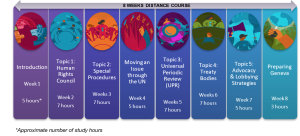
After two months of intensive online training, sixteen dedicated human rights defenders from across the globe came together to Geneva for the on-site part of ISHR’s 2025 Human Rights Defender Advocacy Programme (HRDAP25). Through learning, dialogue, and direct engagement with UN mechanisms, they strengthened their advocacy skills and built lasting connections with peers, UN experts, diplomats, and civil society allies. [see https://humanrightsdefenders.blog/2024/11/27/ishrs-training-for-human-rights-defenders-2025/]

Held from 9 to 20 June 2025, the on-site part of HRDAP25 took place during the 59th session of the UN Human Rights Council. The programme blended online learning with face-to-face sessions in Geneva. Defenders explored UN human rights mechanisms such as the Human Rights Council, Special Procedures, Universal Periodic Review, and Treaty Bodies. They practiced advocacy techniques, developed strategic roadmaps, and engaged directly with mechanisms to push for real change at home.

It was intensive but very good. The platform is so user friendly, everyone can learn and take time to revisit, consult, see examples, and ask questions. The possibility to have online sessions and work in groups was very useful for me. Elena Petrovska, LGBTI Equal Rights Association for Western Balkans and Turkey, North Macedonia

Participants came from a wide range of regions and contexts, including Colombia, Guatemala, Nigeria, Indonesia, Tunisia, Lebanon, Nepal, India, Uganda, Cameroon, Syria, North Macedonia, Tibet and Sierra Leone. Their work focuses on LGBTIQ+ rights, environmental justice, transitional justice, gender equality, protection of migrants, business and human rights, and the protection of communities at risk.

Each day was filled with learning opportunities, advocacy and reflection. In April and May, the group enjoyed online training and coaching sessions which were then built upon with a packed in-person programme that gave participants the background preparation needed to engage with the various mechanisms and relevant stakeholders while in Geneva. They applied and practiced the knowledge and skills gained in a few different ways, which included: an NGO breakfast with the High Commissioner for Human Rights, where participants could ask very detailed and pertinent questions about the current situation; a brown bag lunch with experts from the Committee on Civil and Political Rights, where the group received first person tips on how to submit information and engage with Treaty Bodies; and meetings with UN Special Procedures (Business and human rights, Climate Change, Enforced Disappearances, Extreme Poverty) and their staff, were participants could start personal relationships with those experts and share their advocacy journey and plans. 

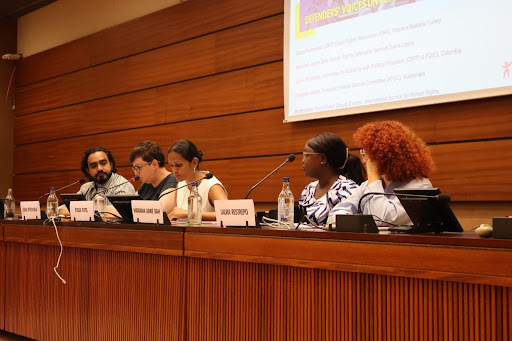
Photo: ISHR

Defenders also participated in a powerful public side event about the reform of the UN human rights system. They shared lived experiences and challenges with over 30 States, calling for deeper access, stronger accountability, and genuine inclusion in the ongoing UN80 reform process. Laura Restrepo from Colombia reflected: ‘The UN must look inward and acknowledge its own colonial legacies — in who speaks, who decides, and whose knowledge counts. It must shift power toward grassroots and frontline communities.’

Throughout the programme, defenders stood up for key causes. Several participants joined the global campaign to #RenewIESOGI, advocating for the continuation of the UN mandate on Sexual Orientation and Gender Identity. Their voices contributed to a successful outcome: the Human Rights Council renewed the mandate for three more years, reaffirming its importance as a tool to combat discrimination and protect LGBTIQ+ communities. 

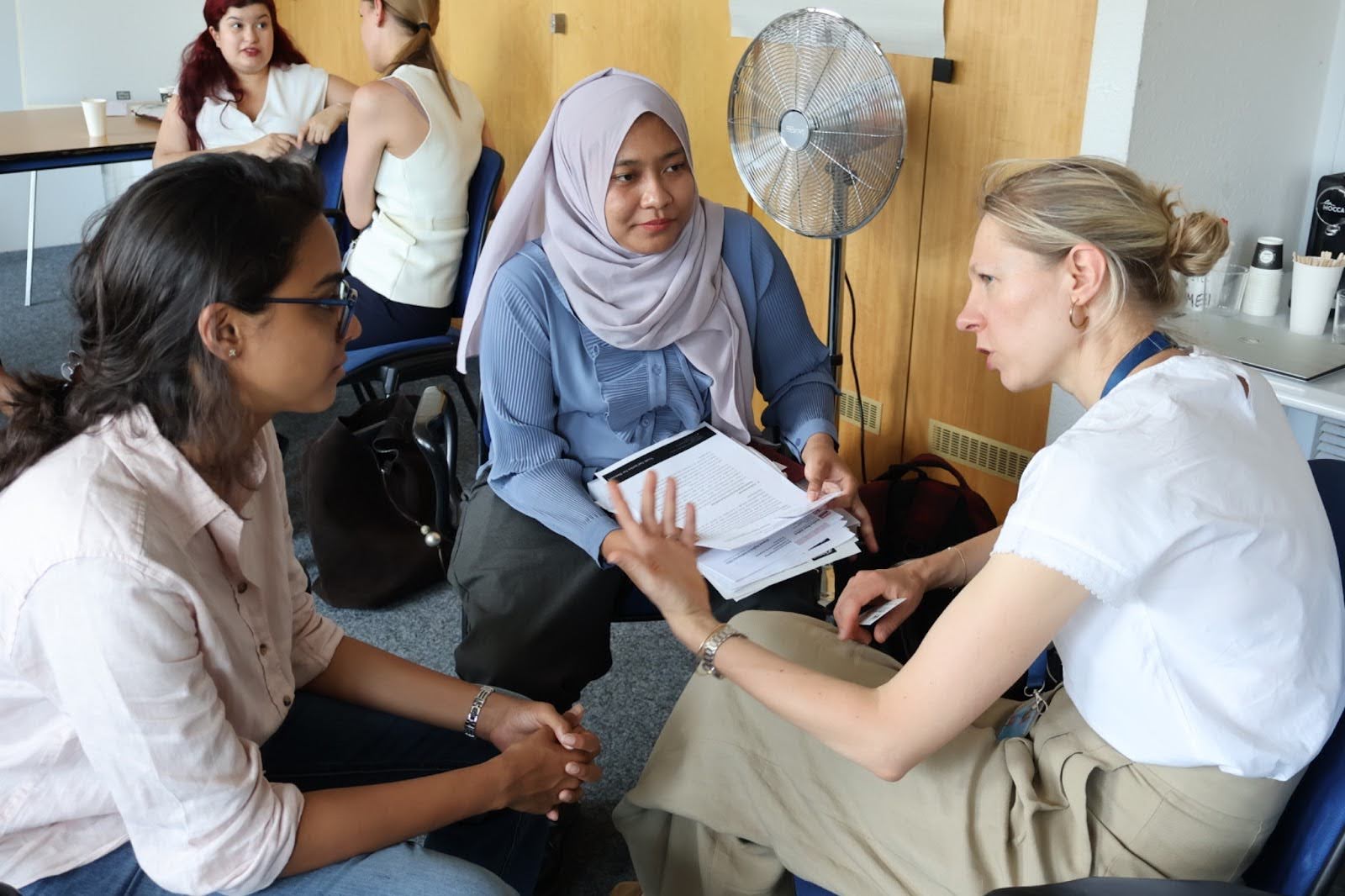
Photo: ISHR

The sense of care and community ran deep. HRDAP helped participants’ work grounded in the values of solidarity and justice, and built their confidence to keep advocating at all levels. HRDAP25 not only provided skills and relevant exposure but also created a space for collaboration and resilience. Speaking during the public side event on UN reform, Pooja Patel, ISHR’s Deputy Executive Director, reminded States: ‘Human rights defenders are not only on the front lines of crises, they are on the front lines of solutions.’

https://ishr.ch/latest-updates/16-defenders-participated-in-ishrs-flagship-training-to-advocate-influence-and-build-power-at-the-un

The 2026 Marianne Initiative for Human Rights Defenders open for applications

June 26, 2025
marianne-initiative-2023
Opportunities For Africans

Applications are now open for the 2026 Marianne Initiative for Human Rights Defenders. The Marianne Initiative for Human Rights Defenders aims to better help Human Rights Defenders in their fight


As part of the organization of the 9th World Congress against the Death Penalty in Paris in the summer of 2026, particular attention will be paid to applications relating to this theme. However, the other areas of human rights covered by this call for applications remain fully eligible.

You are committed to the promotion and defence of human rights in your country:

  • You are a human rights defender in the sense recognised by the United Nations, adult and of non-French nationality, regardless of your placeof residence;
  • You can provide document(s)/evidence, produced by others (recommendations, press articles, etc.), attesting to your commitment/action in favour of human rights;
  • You can justify that participation in the Marianne Initiative’s French aid programme will strengthen your capacity for human rights action in your country and internationally, and that it will enable you to create or develop existing or planned links or projects with French organisations;
  • You possess a valid passport (with a validity of at least six months) or you are willing to follow the procedures to obtain one;
  • You are not subject to any legal ban on leaving your territory;
  • You are willing to travel to France from February to June 2026.

Benefits

  • The program in France provides individual accommodation near Paris, a monthly grant to meet daily needs, a training program, individualized support and networking with human rights players for a period of 4 months (from February to June 2026). The program does not provide support beyond the 4-month period.

Application Deadline:  6th July 2025. You can apply online to be part of the 2026 class of the Marianne initiative through the link below:

Application form – Marianne Initiative for Human Rights Defenders – Class of 2026 (February-June)

Applications do not need to be sent to the Embassy, but should be submitted directly using the procedure indicated above. However, if you have any questions, you may send an email to: amelle.abdallahi@diplomatie.gouv.fr.

see also: https://humanrightsdefenders.blog/2024/06/04/the-marianne-initiative-for-human-rights-defenders/

Your application will include the documents listed in the application form. It will be in either French or English.

Visit the Official Webpage of the Marianne Initiative for Human Rights Defenders

Amnesty International Australia starts on-line course for Human Rights Defenders skills

June 4, 2025

👋 New to Activism? You’re in the Right Place. 

You don’t need experience to make a difference. You just need the belief that things can be better – and the courage to take that first step. At Amnesty, we’ll support you to get involved in a way that works for you. Whether you’ve got five minutes or a few hours a month, there’s a place for you in our movement. 

….

🌈 Ready to Take Action? Sign up Today. 

Once you sign up, we’ll guide you through a short online induction module that introduces you to who we are, what we do, and how you can help. From there, you’ll be connected with the right support to help you  

https://www.amnesty.org.au/skill-up-2/

Human Rights Defenders Protective Fellowship Programme in South Africa

April 29, 2025

The inaugural Fellowship at the University of the Western Cape is designed as a rest and respite for Human Rights Defenders (HRDs) working in stressful environments.

Our three-month, non-academic Fellowship Program provides Human Rights Defenders (HRDs) working in stressful environments a safe space to rest, recharge, reflect on their work, and take advantage of opportunities to acquire new skills and knowledge at the University of the Western Cape. HRDs often face difficulties, including fatigue, burnout, and persecution in the form of arrests, threats, and other traumatic experiences. This unique initiative is a response to the need to provide support and strengthen the capacity of HRDs to continue their work. 

While at our University, Fellows have opportunities to audit academic courses, present as guest speakers in lectures and other platforms, and attend writing and other workshops. By engaging in these various activities, Fellows share their knowledge, thereby enriching the teaching and learning experiences. The Fellows also have the space and resources to remain involved in activism in their home country or region. The Africa Hub collaborates with various actors within the UWC campus and in civil society to provide psychosocial support to its Fellows. Outside the university, they also tour and engage with South African democratic institutions and places of historical significance that symbolise human rights struggles. Other key aspects of the Fellowship are networking with civil society organisations in Cape Town and community visits for cultural exchange. 

The first cohort in 2024 had three HRDs from Mozambique, Uganda and Kenya. The Fellows’ programme is oriented towards rest and respite. The future Fellowships may have different emphases, depending on the participants’ needs and other factors. 

Selection process: The selection of fellows is based on a closed nominations system. 

Reach out at pugresearch@uwc.ac.za to add your organisation to our list of contacts for the fellowship programme call for nominations. 

https://pugresearch.org.za/africa-hub-fellowship-programme/

Venice School for Human Rights Defenders 2025

April 25, 2025

The Global Campus of Human Rights is accepting applications for the Venice School for Human Rights Defenders 2025. The School, organised in cooperation with the European Parliament, will take place in Venice, at the Global Campus Headquarters, from 15 to 21 June 2025.

The Venice School is devoted to developing human rights defenders’ advocacy skills and expertise and exploring today’s challenges in the field of human rights or other topical issues, allowing participants to examine their causes and possible solutions.

The programme hosts the 2025 selected Sakharov Fellows and will include lectures by Sakharov laureates and Right Livelihood laureates, internationally renowned academics, experts and activists coming from academia, international organisations, civil society and NGOs.

During the training programme, participants will be able to:

  • Share knowledge and expertise which human rights defenders can use to ensure their voice is central in international human rights decision-making processes
  • Develop strategies and techniques to increase the potential of human rights defenders’ national and regional advocacy work
  • Discuss best practices and ways forward through the mutual exchange of experiences
  • Develop networks among Sakharov fellows and other human rights defenders.

Fee information

€ 1,400 (VAT included) that includes:
Tuition fee
Welcome aperitif
Lunches and coffee breaks on class days
Reading material and access to the School’s online learning platform
Certificate of attendance upon completion of the programme
All expenses related to transportation, accommodation and subsistence and any additional cost not listed above must be arranged and covered by the participant.

How to register

Application deadline: 4 May 2025

To apply, fill in the form at this link: https://www.gchumanrights.org/training-and-courses/venice-school-for-human-rights-defenders/venice-school-for-human-rights-defenders-application-form/

Target audience: The training programme is addressed to human rights practitioners from all over the world as well as to graduate students from all academic backgrounds willing to deepen and improve their knowledge in human rights topics.

For more information, contact us at veniceschool@gchumanrights.org or visit https://www.gchumanrights.org/school.

https://reliefweb.int/training/4147334/venice-school-human-rights-defenders-2025

Training for human rights defenders on freedom of religion or belief

February 11, 2025
Free training for human rights defenders on freedom of religion or belief

The International Bar Association’s Human Rights Institute (IBAHRI) is offering a free online training course for human rights defenders working on cases relating to freedom of religion or belief (FoRB). 

Taking place from 17–27 February, the programme is divided into 16 sessions covering all the theoretical and practical knowledge required to promote and protect the fundamental right to FoRB.

The programme will be delivered by leading experts in the field of human rights and/or FoRB, including Dr Nazila Ghanea, United Nations Special Rapporteur on FoRB; Professor Fernand de Varennes, former UN Special Rapporteur on minority issues; the Honourable Hina Jilani, IBAHRI co-chair, member of The Elders and advocate of the Supreme Court of Pakistan; and Rangita de Silva de Alwis, IBAHRI vice chair and a member of the treaty body to the UN Convention on the Elimination of All Forms of Discrimination against Women.

The IBAHRI is delivering the training in collaboration with the Rule of Law Expertise UK (ROLE UK). ROLE UK is a programme of the Advocates for International Development (A4ID), funded by the Foreign, Commonwealth & Development Office. A4ID is a global charity working to strengthen the rule of law in developing countries by supporting partnerships to provide high-quality pro bono legal and judicial expertise.

Register here

https://www.scottishlegal.com/articles/free-training-for-human-rights-defenders-on-freedom-of-religion-or-belief

Amnesty Tech call for nominations for 3rd Digital Forensics Fellowship

January 6, 2025

On 2 January 2025 Amnesty Tech – a global collective of advocates, hackers, researchers, and technologists – announced the launch of the third Digital Forensics Fellowship (DFF).

This innovative Fellowship is an opportunity for 5 – 7 human rights defenders (HRDs), journalists, and/or technologists working in civil society organisations around the world to train with Amnesty Tech’s Security Lab to build skills and knowledge on advanced digital threats and forensic investigation techniques. This is a part-time Fellowship that will last 3-4 months and will come with a stipend.

Fellowship start and end date: The Fellowship is expected to run from April – July 2025.

Application Deadline, 23 January 2025 
Location: dependent upon the suitable applicant’s location.

Remuneration: Successful applicants will be given a stipend of £500/month for their time.

Background

Across the world, hard-won rights are being weakened and denied every day. Increasingly, much of the repression faced by HRDs and journalists begins online. Since 2017, Amnesty Tech’s investigations have exposed vast and well-orchestrated digital attacks against activists and journalists in countries such as Morocco, Egypt, Azerbaijan, Qatar, Serbia, Mexico and Pakistan.

Advanced technical capacity is needed in all world regions to tackle the mercenary spyware crisis. By fostering a more decentralised, global, and diverse network of well-trained incident responders and investigators, we can jointly contribute to more timely and effective protection of HRDs and journalists against unlawful surveillance.

The spyware landscape changes rapidly, and creativity and persistence are needed to research and identify new trends, tools, and tactics used to target civil society. The curriculum for the third edition of the DFF will be tailored to the cohort and will be future facing to prepare Fellows to work on current and future spyware threats. [see also: https://humanrightsdefenders.blog/2024/05/16/two-young-human-rights-defenders-raphael-mimoun-and-nikole-yanez-on-tech-for-human-rights/]

Objectives and deliverables

Participants in the Digital Forensics Fellowship will be expected to:

  • Attend an in-person, week-long convening where the majority of trainings will be conducted. This training will take place in June 2025, the exact location is set to be confirmed shortly.
  • Dedicate approximately 10 – 12 hours per month to the Fellowship, outside of the convening, by participating in remote training sessions and through independent work outside of scheduled sessions to deepen understanding of training topics.
  • Engage with the programme cohort and the Security Lab during the in-person and remote trainings, and in discussion groups on an ad-hoc basis.

Essential Requirements

  • An understanding of the technical threats, digital attacks and challenges faced by journalists, HRDs, and civil society organisations in their local contexts.
  • Demonstrated interest in conducting investigations to identify digital attacks against civil society, with the goal of building resilience among civil society actors in the face of surveillance after the Fellowship.
  • Familiarity using command line tools and basic knowledge of scripting languages like Bash and Python to analyse data.
  • An understanding of how internet infrastructure works, for example the role of IP addresses, TLS certificates, and DNS queries.
  • Technical familiarity with GNU/Linux operating systems, as well as Android and iPhone systems.
  • Engaging with the English language as the primary language throughout the Fellowship.
  • Application instructions:

To apply, applicants will be required to submit the following via our recruitment system eArcu – please upload all relevant documents to the CV section of the application portal.

  1. A copy of your most recent CV.
  2. A cover letter explaining your motivation and interest in the Fellowship and outlining how you meet the essential requirements outlined in the job description.

Applications must be in PDF, Word, PowerPoint or Excel format.

Application Process:

Shortlisted applicants will be invited to complete a record video interview week commencing 10th February, answering a series of pre-set questions via video, which allows us to learn more about you and your suitability for the Fellowship. Successful applicants from this process will be invited to a Microsoft Teams interview with the panel week commencing 3rd March.

How to apply;

Careers | Amnesty International

Amnesty International

The 7th Human Rights summit of Southern Defenders took place in November in Johannesburg – reports Puleng Motaug

December 23, 2024

ACTSA intern Puleng Motaung reports back on the 7th Human Rights summit of Southern Defenders

Being at the Southern Human Rights Defenders summit in Johannesburg was exceptional, I had a chance to meet with people who put others’ wellbeing before their own. People who sacrifice their lives for the benefit of others. The greatest part was hearing survivors tell their traumatic stories first hand, hearing about the challenges that civil societies face, and learning about Khenana community, in South Africa, the murders that take place there and the trauma that the kids are going through, seeing their parents killed in front of them.

I had an opportunity to network with people from different organisations and backgrounds, and the outstanding interaction was with a lady named Zanele from Eswatini who works for Swavisa a struggling organisation that focuses on helping the victims of the 2021 uprising who got injured and can’t afford medication to treat their injuries due to financial strains.

Across the Southern African region, the civic space continues to shrink as governments suppress and silence civil societies. Many defenders have been imprisoned, injured and even killed in the fight for equality and dignity. The issue of Israel was also raised and that all civil societies must stand in solidarity with Gaza.

I met Robson Chere, a teacher and trade unionist, and the Secretary General of the Amalgamated Rural Teachers Union (ARTUZ) in Zimbabwe, which advocates against teachers’ low wages, lack of electricity in rural schools and poor working conditions as well as unsafe learning conditions for students. Along with Namatai Kwekweza and Samuel Gwenzi, he was hauled off a plane by police on 31 July, then tortured and held without bail for 35 days by the Zimbabwe regime. Their release on bail only came after much international pressure.

When civil space is stifled, said Adriano Nuvunga, Chairperson of Southern Defenders, we lose the foundation of democracy. He continues that it is up to us to ensure that the elections across Southern Africa reflect true will of the people, fostering trust, inclusion and hope for a democratic future. “Together we must ensure that the future is one where justice, freedom and human rights prevail, where every voice is heard and every right is protected”.

Adriano Nuvunga’s statement had me wondering: what am I doing to better the future of the upcoming generation?

I learnt that being a Human Rights Defender (HRD) isn’t easy because of the traumatic experiences people go through, but Mary Lawlor, UN Special Rapporteur on the situation of Human Rights Defenders, said “don’t buy the narrative that it is the worst time ever to be a human rights defender”. The most important resources in civil space are networks, unity and trust. That gave me hope…

My takeaway as a young person is that I must stand up and lead the pack. It’s never been more necessary for people to band in solidarity with southern African Human Rights Defenders. We need to protect the civil space. It is about time we as young people go out and occupy spaces, because the youth are the heartbeat of the revolution.