Posts Tagged ‘Strategic Lawsuits Against Public Participation (SLAPPs)’

CESCR General Comment: States should protect environmental and Indigenous HRDs

October 17, 2025

The Committee on Economic, Social and Cultural Rights (CESCR) recently published its General Comment on the environmental dimension of sustainable development. In addition to recognising human rights defenders, the Comment clarifies State obligations towards marginalized communities and notes the importance of transitioning away from fossil fuels. It also outlines States’ extraterritorial obligations.

ISHR provided two written inputs to the draft of this General Comment earlier this year – a standalone submission regarding the recognition and protection of environmental human rights defenders (EHRDs) based on the Declaration+25, a supplement to the UN Declaration on Human Rights Defenders, and a joint submission in partnership with the Center for International Environmental Law, Earthjustice, FIAN International, the Global Initiative for Economic, Social and Cultural Rights, Human Rights Watch and Oxfam.

States parties should respect, protect, and promote the work of environmental and indigenous human rights defenders, as well as other civil society actors who support people in marginalized and disadvantaged situations in realizing their Covenant rights.’ States parties should take all necessary measures to ensure that environmental human rights defenders and journalists can carry out their work, without fear of harassment, intimidation or violence, including by protecting them from harm by third parties.

ISHR welcomes that priorities from the joint NGO submission to the CESCR are reflected in the General Comment, in particular Indigenous Peoples’ right to ‘free, prior and informed consent’ and the need to transition away from fossil fuels (including by reducing ineffective subsidies).

However, we regret that the Comment does not more explicitly acknowledge the critical role of EHRDs in promoting sustainable development or strategic lawsuits against public participation (SLAPPs) as an obstacle to their engagement. The CESCR has previously noted the risks faced by HRDs and provided guidance on their recognition and protection in the context of land issues in General Comment No. 26 and it should have extended this analysis to EHRDs in the context of sustainable development. The use of SLAPPs to silence HRDs has been acknowledged by other UN bodies, including in the most recent report of the Special Rapporteur on the Situation of Human Rights Defenders, Ms. Mary Lawlor, to the Third Committee of the General Assembly.  

 Some additional highlights from the General Comment are set out below. 

  • The Committee found that ‘[t]he full realization of Covenant rights demands a just transition towards a sustainable economy that centres human rights and the well-being of the planet’. 
  • States should supervise commercial activity, establish a legal obligation for businesses in respect of environment and human rights due diligence, and ensure that victims of human rights violations stemming from businesses have redress. 
  • States have obligations to conduct human rights and environmental impact assessments, which are to be undertaken with ‘meaningful public participation’.
  • States have an extraterritorial obligation to ensure that any activities within the State or in areas under its control do not substantially adversely affect the environment in another country. This also extends to preventing businesses in the State from causing such harm in another jurisdiction. Even though the CESCR does not expressly mention it in the Comment, this should also apply to cases of attacks against EHRDs. 
  • The CESCR also clarifies States’ obligations towards marginalized communities, spotlighting the concept of intersectionality. It also explicitly notes that equal exercise of economic, social and cultural rights by women and men is a prerequisite for sustainable development, encouraging States to redistribute the unpaid domestic work undertaken by women and girls.
  • Environment-related obligations have also been set out for States in the context of specific Covenant rights, for example, the right to self-determination , right to freely utilize natural resources , right to work , right to an adequate standard of living, right to the highest attainable standard of physical and mental health, right to education and other economic, social and cultural rights.
  • The General Comment recognises that certain communities are particularly vulnerable to the effects of environmental degradation – it calls on States to identify and protect those at risk. The CESCR focuses particularly on children (specifically calling for child rights defenders to be recognised and protected and for their participation in climate action to be facilitated), Indigenous Peoples, peasants, pastoralists, fishers and others in rural areas, and displaced persons.

‘Environmental degradation, including climate change, intensifies the vulnerabilities of individuals and groups who have historically experienced and/or experience marginalization. These vulnerabilities are shaped by intersecting factors such as socioeconomic status, race, ethnicity, gender, disability, age, migratory status, sexual orientation, and gender identity.’
https://ishr.ch/latest-updates/cescr-general-comment-states-should-protect-environmental-and-indigenous-hrds-work-in-the-context-of-sustainable-development

OSCE review shows Malta is still struggling to adequately protect human rights defenders

September 18, 2025

Malta is still struggling to adequately protect human rights defenders, including journalists, according to a new OSCE review published on 2 September 2025.

While some progress has been noted, the report warns that legal pressure, rhetoric used and a lack of meaningful reforms continue to erode fundamental freedoms. The assessment by the OSCE’s Office for Democratic Institutions and Human Rights (ODIHR) follows a fact-finding mission to Malta in March 2023.

ODIHR noted “concerning instances of disparaging rhetoric and smearing remarks used by political actors, including politicians and other persons of authority” in relation to activists in various areas and journalists  Those working on corruption, migration, environmental issues, and sexual and reproductive rights were identified as frequent targets. Interviewees described harassment, threats and intimidation, often extending to their families.

Women activists reported sexist abuse, including being spat on or confronted physically.

Interviewees told ODIHR that their work was often portrayed as partisan political activity. The assessment also noted attempts to damage reputations, harm employment prospects and label defenders as enemies, traitors or political opponents.

The report connects this hostile environment to the 2021 public inquiry into journalist Daphne Caruana Galizia’s assassination, which found that state inaction and vilification of journalists fostered a “climate of impunity.” Two years later, ODIHR says many recommendations remain unfulfilled, particularly on media freedom and journalist safety.

The OSCE heard accounts of online trolling, social media threats, spoofing campaigns, threatening phone calls, and verbal abuse of family members.

ODIHR also found that Maltese journalists continue to receive threatening letters from local and international law firms, sometimes prompting article removals due to fear of high legal costs.

Although defamation was decriminalised in 2018, gaps in the law remain, and proposed anti-SLAPP reforms have been criticised as inadequate.

Freedom of expression and access to information also face obstacles. Journalists spoke of costly and lengthy efforts to secure public records, while whistle-blower protections are seen as weak due to fears of reprisals.

The report calls for a public review of Malta’s Freedom of Information Act, the release of a government-commissioned evaluation, and new legislative proposals to improve transparency and accountability.

Civil society activists also described intimidation around protests, including court rulings against authorities for repeatedly removing banners and memorials related to Caruana Galizia.

ODIHR acknowledged political support for LGBTI rights, with NGOs in this sector receiving strong public backing and engagement from officials. Freedom of assembly was generally upheld, and some NGOs received benefits through tax incentives and secondments. Nonetheless, ODIHR concludes that Malta must urgently rebuild trust and ensure a safer environment for rights defenders.

Key recommendations include public recognition of their work, stronger police protection protocols, robust anti-SLAPP legislation, improved transparency measures, and genuine consultation on media reforms. “Baseless lawsuits, threats and smear campaigns not only endanger individuals but weaken democracy itself,” the report warns.

ODIHR said it is ready to support Malta in implementing reforms but emphasised that political commitment is vital.

https://www.independent.com.mt/articles/2025-09-02/local-news/New-report-highlights-ongoing-risks-for-rights-advocates-in-Malta-6736272807

https://www.maltatoday.com.mt/news/national/136819/report_flags_unimplemented_recommendations_from_daphne_caruana_galizia_inquiry

59th Session of the Human Rights Council: what NGOs thought of the session

August 4, 2025

At the 59th Human Rights Council session, civil society organisations share reflections on key outcomes and highlight gaps in addressing crucial issues and situations. Full written version below.

We join others who have expressed grave concern about the UN’s financial situation throughout the session. We deplore that we are in this position primarily due to the failure of some States to pay their assessed contributions in full and on time. We regret that this crisis is currently affecting the Council’s ability to deliver its mandate. Today, UN Member States are sending a clear message that human rights and their implementation are optional and not inalienable. We call on all States to pay their dues to the UN in full and without delay, both now and in future years, and strengthen the human rights pillar of the UN by substantially increasing its regular budget. [see: https://humanrightsdefenders.blog/tag/united-nations/]

We welcome the Council’s decision to renew, once more, the Mandate of the Independent Expert on protection against violence and discrimination based on sexual orientation and gender identity, following a call from more than 1,259 organisations from 157 countries and territories.  While the mandate was supported by the overwhelming majority of Council members, we regret that a mandate focusing on core human rights issues such as freedom from violence and discrimination was once again put for a vote.

We welcome the adoption of the resolution on civil society space. The resolution acknowledges important civil society initiatives such as Declaration +25 and addresses key and emerging trends such as strategic lawsuits against public participation (SLAPPs), the phenomenon of transnational repression, and foreign funding legislation, as well as other restrictive legislation including counter-terrorism legislation. We regret, however, that language on transnational repression has been weakened throughout the negotiations and does not take a step forward in terms of defining the phenomenon and its patterns. ..

We welcome the adoption of the resolution on human rights and climate change in relation to climate finance. As acknowledged by the resolution, climate finance is a tool for addressing climate change and it is also important for the enjoyment of human rights when finance prioritises equity, climate justice, social justice, inclusion and just transition processes. … We also regret that, notwithstanding the support expressed by numerous delegations, this resolution is blatantly silent in recognising the positive, important, legitimate and vital role that environmental human rights defenders (EHRDs) play in the promotion and protection of human rights and the environment, particularly in the context of climate change. As recognised by the HRC resolution 40/11, EHRDs are one of the most exposed and at risk around the world. The Inter-American Court on Human Rights has recently ruled in its Advisory Opinion on “Climate Emergency and Human Rights” that EHRDs play a fundamental role due to the urgency, gravity and complexity to address the climate emergency. We will not have climate justice without consulting, listening and including EHRDs in climate actions and initiatives, including this annual resolution.

We express our support for a new strong resolution on the safety of journalists, adopted by consensus and co-sponsored by over 70 countries from all world regions, signalling a renewed international commitment to prevent, protect and remedy all human rights violations against journalists. The resolution becomes the first across the UN to recommend a range of concrete, specific measures to

It is concerning that the Council could not find consensus on the resolution on access to medicines, vaccines and other health products. States should acknowledge that intellectual property rights can be a barrier for access to health products, especially in public health emergencies and should act with a view to finding human-rights compliant solutions. States should further ensure that the benefits of scientific progress is available, accessible, acceptable and of good quality to all people, without discrimination. 

We welcome the resolution on new and emerging digital technologies and human rights. The resolution reaffirms the need for human rights due diligence and impact assessments throughout the life cycle of new and emerging digital technologies, and crucially calls upon States to refrain from or cease the use of artificial intelligence applications that are impossible to operate in compliance with international human rights law. The resolution importantly mandates OHCHR to expand its work on UN system-wide promotion, coordination, and coherence on matters related to human rights in new and emerging digital technologies.

We welcome the rejection by the Council of an unprecedented, harmful draft resolution (L.1/Rev.1) presented in bad faith by Eritrea to discontinue the mandate of the Special Rapporteur. The voting result (25 against, 4 in favour) is clear and will deter similar initiatives to terminate mandates. The Pandora’s Box remains closed for now. We welcome the adoption of resolution L.7, which extends the mandate of the Special Rapporteur and enables continued scrutiny of Eritrea‘s dire human rights situation.

We welcome the adoption by consensus of the resolution on the situation of human rights of Rohingya Muslims and other minorities in Myanmar—a strong signal of the Council’s continued prioritization of their plight. As violence between the Myanmar military and Arakan Army escalates, Rohingya face renewed existential threats. We recognize the efforts made to align the resolution closer to the evolving situation on the ground, including its recognition of the role of Arakan Army along with the Myanmar military in perpetuating violence and targeting Rohingya. We also welcome the resolution’s acknowledgment of the worsening humanitarian crisis due to dwindling aid that is driving more Rohingya to risk dangerous journeys by sea. The call for protection of Rohingya across borders and respect for non-refoulement is vital. We support the resolution’s emphasis on accountability and reparations as prerequisites for safe, voluntary, and dignified return of Rohingya refugees. However, we regret its failure to call for an end to arms and jet fuel sale and transfers that continue to fuel ongoing violence.

We emphasize the vital role of investigative mechanisms and, in the context of the UN’s liquidity crisis, we urge all those involved, including the Secretary-General and the High Commissioner, to allocate sufficient resources for these mechanisms to operate. All UN Member States must pay their dues in full and on time. As the conflict in Sudan, now in its third year, shows no sign of abating, resulting in the world’s largest displacement crisis and egregious atrocities against civilians, the work of the Fact-Finding Mission (FFM) should continue. At HRC60, extending its mandate will be a priority. 

We continue to deplore this Council’s exceptionalism towards serious human rights violations in China, including crimes against humanity. In his global update to this Council session, High Commissioner Türk indicated he remains ‘concerned about lack of progress on much-needed legal reform to ensure compliance with international human rights law’ and ‘regret[s] that there has not yet been a resolution to the individual cases [the OHCHR has] raised]’. It is imperative that the Council take action commensurate with the gravity of UN findings, by establishing a monitoring and reporting mechanism on China as repeatedly urged by over 40 UN experts since 2020. We urge China to genuinely engage with the UN human rights system to enact meaningful reform, and ensure all individuals and peoples enjoy their human rights, on the basis of recommendations from the OHCHR Xinjiang report, UN Treaty Bodies, and UN Special Procedures.

This Council’s continued silence on the human rights crisis in Egypt remains of major concern.  The human rights situation in Egypt is worse than at any point in its modern history and continues to deteriorate.  During its UPR process, Egypt rejected or dismissed as “already implemented” recommendations related to serious human rights violations 134 times.  In particular, Egypt either rejected or dismissed recommendations to release political prisoners and end arbitrary arrests 12 times, to stop attacks against independent civil society and journalists 19 times, and to end torture and ill-treatment 6 times. The goverment also refused to ensure accountability for those who have committed torture and other human rights violations 7 times, and rejected or dismissed recommendations to halt violance and discrimination against women, minorities and members of the LGBT+ community 25 times, including repeatedly rejecting calls to criminalize marital rape, as well as forced virginity and anal exams.  In this context, action by the HRC to address these violations is as important as ever. 

Watch the video of the statement below: 

Signatories:

  1. African Centre for Democracy and Human Rights Studies (ACDHRS)
  2. Asian Forum for Human Rights and Development (FORUM-ASIA)
  3. Cairo Institute for Human Rights Studies (CIHRS)
  4. CIVICUS
  5. Egyptian Initiative for Personal Rights (EIPR)
  6. Franciscans International 
  7. International Federation for Human Rights (FIDH)
  8. International Service for Human Rights (ISHR)
  9. World Uyghur Congress (WUC)

https://ishr.ch/latest-updates/hrc59-civil-society-presents-key-takeaways-from-the-session/?mc_cid=561653a6d3&mc_eid=d1945ebb90

https://www.fidh.org/en/international-advocacy/united-nations/human-rights-council/key-outcomes-of-the-59th-human-rights-council-session-progress-and

https://www.civicus.org/index.php/fr/medias-ressources/112-news/7777-key-highlights-civicus-at-59th-session-of-the-un-human-rights-council

New report: Human rights defenders at risk in the renewable energy transition

May 27, 2025

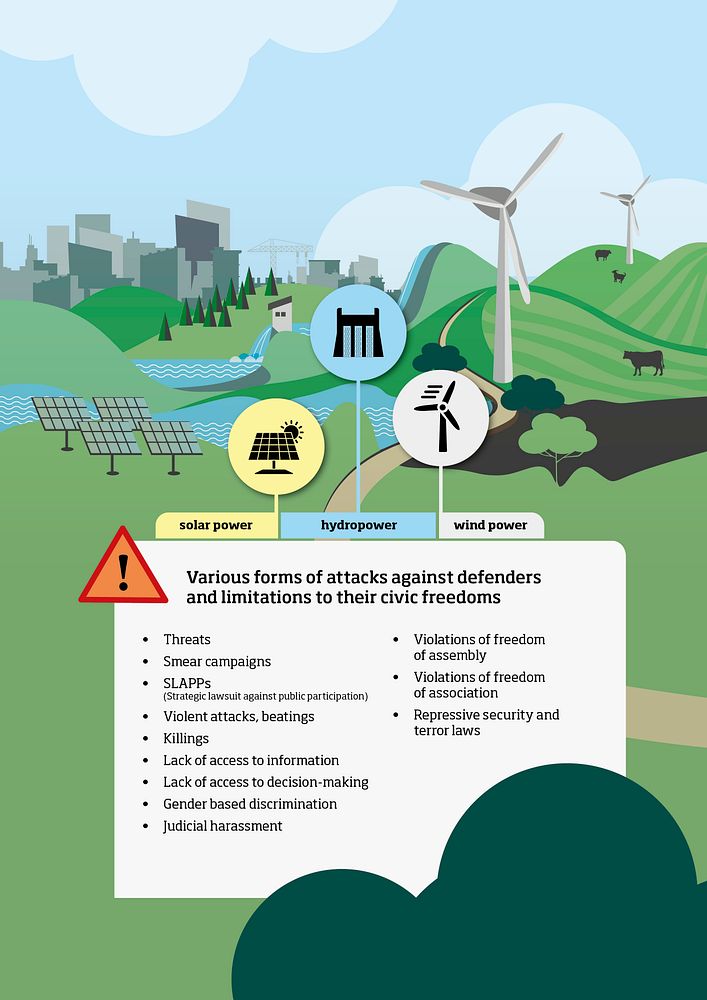
A new report by the research organization Swedwatch of 29 April 2025 highlights critical human rights risks associated with the global transition to renewable energy. The report reveals that human rights and environmental defenders face serious threats and reprisals in countries where renewable energy projects are being rapidly developed.

More than half of the world’s total prospective wind farm capacity, and more than two thirds of the prospective solar farm capacity, is estimated to take place in countries with obstructed, repressed or closed civic space.

While scaling up wind, solar, and hydropower is essential to limiting global warming to 1.5°C, this growth must not come at the expense of human rights.

We cannot build a green future on the backs of those who are silenced or displaced. The renewable energy transition must not come at the cost of human rights. Defenders are not obstacles – they are essential allies in ensuring that this is just, equitable, and sustainable, says Alice Blondel, Director Swedwatch.

Renewable energy projects require large land areas, often affecting local communities, ecosystems, and livelihoods. Swedwatch’s analysis shows that the renewable energy transition will largely take place in countries with restricted civic space and poor human rights protections, where defenders who raise concerns often face harassment, legal persecution and at times even deadly violence.

The report Renewables and Reprisals – Defenders at risk in the green energy transition in Brazil, Honduras, Mozambique, and the Philippines is based on a global mapping of such high-risk areas for defenders, where civic space is restricted and where renewable energy expansion is projected to accelerate. Additionally, the report presents four case studies from Mozambique, Honduras, Brazil, and the Philippines, where defenders and affected community members describe restrictions and reprisals of defenders linked to renewable energy projects.

The report is authored by Swedwatch with input from Terramar Institute (Instituto Terramar), Network of Women Human Rights Lawyers and Defenders (Red de Abogadas Defensoras de Derechos Humanos) and Jalaur River for the People’s Movement (JRPM).

-The report underscores the urgent need for stronger protections for defenders, transparent consultation processes, and corporate accountability. Without immediate action, the rapid expansion of renewables risk repeating the same human rights abuses seen in industries such as mining and agribusiness, rather than fostering a truly just energy transition, says Alice Blondel.

Expansion of renewables in countries with high risks for defenders
Swedwatch’s findings indicate that a large share of the expansion of renewable energy is taking place in countries where civic space is restricted, and defenders are at significant risk.

Case studies: Defenders under threat
In the four case studies, defenders from Mozambique, Honduras, Brazil and the Philippines described restrictions of basic civic freedoms and risks of verbal, legal or violent physical attacks when reporting about impacts of renewable energy projects.

Mozambique: According to interviews in the report, the planning of the Mphanda Nkuwa hydropower project has been marred by inadequate social and environmental impact assessments, lack of transparency, and suppression of civic engagement. Defenders reported threats, violation of freedom of assembly, and an overall disregard for their right to participate in decision-making processes.

Honduras: Human rights defenders have faced legal intimidation through SLAPPs (Strategic Lawsuits Against Public Participation) for their criticism of the Los Prados solar power project, according to a group of women human rights lawyers. Community members involved in protests have allegedly been surveilled and subjected to repressive actions by security forces. Defenders also reported smear campaigns in the media, further restricting their ability to voice concerns.

Brazil: In Brazil, the wind power project Bons Ventos failed to properly include impacted communities, including marginalized groups, traditional fishing, and quilombola communities, in consultations, according to interviews. Defenders decided to remain anonymous in the interviews out of fear of reprisals, citing increasing threats and violence against defenders in the past years.

The Philippines: Indigenous defenders from the Tumandok communities were allegedly threatened, harassed, and killed when the national police and the armed forces raided their communities after community leaders criticized the Jalaur River Multipurpose project, according to a CSO operating in the area. Defenders reporting on the dam project outlined persecution, surveillance and red-tagging – terror-labelling by the government accusing defenders of being communist insurgents, creating an environment of fear and impunity.

Swedwatch´s recommendations
As the world races to meet climate targets, a just transition must include the voices of those most affected by energy projects, and defenders are essential in ensuring that renewable energy projects respect human rights and the environment.

-Governments, businesses, and financial institutions must work together to ensure that human rights are protected, and that defenders can operate without fear of repression or violence. Engaging with defenders as valuable partners rather than as adversaries can help governments and businesses ensure renewable energy projects’ alignment with international human rights obligations, mitigate conflicts, and promote sustainable development, says Jessica Johansson.

Detailed recommendations to different actors can be found in the report, below the main ones are summarized:

Recommendations for governments:

  • Adopt legislation on mandatory human rights due diligence (HRDD) for companies, highlighting risks to defenders and meaningful consultation with defenders.
  • Adopt laws on company transparency laws and access to information.
  • Establish and enforce protections for defenders, ensuring they can operate without fear of retaliation, and provide effective legal remedies for those affected by violations.

Recommendations for companies and investors:

  • Strengthening their HRDD processes by integrating civic space risks and ensuring meaningful stakeholder engagement with defenders.
  • Adopt and enforce a zero-tolerance policy against reprisals targeting defenders (and affected communities).
  • Take appropriate action when business partners or third parties commit violations in relation to their business activities.


https://www.mynewsdesk.com/swedwatch/pressreleases/new-report-from-swedwatch-human-rights-defenders-at-risk-in-the-renewable-energy-transition-3382176?utm_source=rss&utm_medium=rss&utm_campaign=Alert&utm_content=pressrelease

Panayote Dimitras – a Greek migrants’ rights defender – suffers judicial harassment

August 22, 2024

August 14, 2024:The recent summons by the Athens Magistrate marks a new development in Mr Dimitras’ long history of judicial harassment, this time also prospecting the criminal prosecution of his wife, constituting a major violation of their right to defend human rights as well as of the recently adopted European Union (EU) anti-SLAPP Directive. The Observatory for the Protection of Human Rights Defenders (FIDH-OMCT) urges the Greek authorities to put an immediate end to this practice of harassment and to ensure that all human rights defenders in the country can carry out their legitimate activities without hindrance or fear of reprisals.

his earlier troubles

Panayote Dimitras is a Greek migrants’ rights defender and Spokesperson of the Greek Helsinki Monitor (GHM) who, over the past ten years, has faced continuous episodes of judicial harassment as well as vicious smear campaigns deliberately aimed at discrediting him and his work. In the latest development, Mr Dimitras and his wife – Nafsika Papanikolatou – were summoned on May 31, 2024, by an Athens Magistrate carrying out a preliminary criminal investigation into alleged breach of trust and money laundering (in violation of paragraph 1 of Article 390 of the Greek Criminal Code and paragraphs 1 b) and 1 c) of Article 39 of Law 4557/2018, respectively), following the opening of a criminal case by the Athens First Instance Prosecutor. Mr Dimitras and Ms Papanikolatou replied to the summons and their file is in the hands of the Athens First Instance Prosecutor since then.

Exactly one year earlier, on May 31, 2023, the Greek Anti-Money Laundering Authority had already ordered the freezing of Mr Dimitras’ and Ms Papanikolatou’s personal account, pending an investigation into alleged misuse of donations to the Communication and Political Research Society (ETEPE) – a non-profit research organisation co-founded in 1990 by Mr Dimitras that manages human rights NGOs like GHM and Minority Rights Group – Greece (MRG-G). The same day the order was issued, Greek media published apparently leaked and inaccurate information about the case, reporting that all Mr Dimitras’ personal assets as well as those of the NGOs headed by him had been frozen, and that the alleged money laundering concerned funding received mainly from the EU “to support human rights causes” that “was used for other purposes than those claimed.” In fact, only a joint personal account of Mr Dimitras and Ms Papanikolatou had been frozen, and Mr Dimitras was accused of misusing, between 2010 and 2015, private donations to ETEPE amounting to 178.666,80 Euros and not EU funding.

Mr Dimitras and Ms Papanikolatou received the official notification from the Anti-Money Laundering Authority only one month and a half after the decision to freeze their personal account was taken, thereby delaying their right to access a remedy. The account freeze was initially ordered for nine months and then renewed for another nine months in February 2024. At the time of publication of this statement, the freeze is still effective notwithstanding Mr Dimitras’ and Ms Papanikolatou’s repeated requests to terminate it.

In another court case, the Three-Member Misdemeanours Court of Athens acquitted, in April 2024, Panayote Dimitras after five years of judicial harassment. Mr Dimitras was prosecuted under criminal charges of “false accusation” and “aggravated defamation” (Articles 229 and 363 of the Criminal Code of Greece, respectively) for having denounced racist comments from a public official, Christos Kalyviotis, who in return filed a complaint against Mr Dimitras for defamation.

The Observatory recalled, already at that time, that the procedure initiated by Mr Kalyviotis was only one of many abusive cases brought against Mr Dimitras over the past few years and constitutive of strategic lawsuits against public participation (SLAPPs), abusive civil proceedings aimed at criminalising human rights defenders and journalists.

Notably, since November 2022 a criminal case is ongoing against Panayote Dimitras at the Kos Court of First Instance in which he is accused of “forming or joining for profit and by profession a criminal organisation with the purpose of facilitating the entry and stay of third country nationals into Greek territory” under several articles of Law 4251/2014 (Immigration and Social Integration Code), for having provided humanitarian assistance to asylum-seekers. On January 23, 2023, preventive measures were imposed pending trial. Mr Dimitras was banned from carrying out activities with the GHM, a measure which was subsequently lifted. He was also banned from leaving the country, subjected to the obligation to report to the police station of his place of residence every 15 days, and required to pay a bail of 10,000 Euros.

More than one-and-a-half year later, these last three measures are still in place, with the consequence that Mr Dimitras cannot travel abroad for GHM human rights activities. In August 2023, he requested that the travel ban be lifted so that he could attend international meetings, and to be allowed temporarily to report to the police station in Kelafonia, where he has a summer home. Both requests were rejected by the First Instance Court of Kos. The European Parliament expressed concern about these measures in its resolution of February 7, 2024, on the rule of law and media freedom in Greece (2024/2502(RSP)). The responses provided by the Supreme Court and the Greek government to the resolution are of particular concern and seem to constitute both smear campaigns against Mr Dimitras as well as violations to his right to a fair trial, as it was falsely claimed that he had been arrested and that he had contacted a human smuggler.

The Observatory recalls that the anti-SLAPP Directive adopted by the European Parliament entered into force on May 6, 2024. The Observatory encourages the Greek authorities to bring into force the laws, regulations and administrative provisions necessary to comply with this Directive and to ensure its effective implementation to protect human rights defenders from abusive proceedings.

The Observatory expresses concern about the continued judicial harassment against Mr Dimitras and its recent enlargement towards his wife. The Observatory urges the Greek authorities to put an immediate end to all acts of harassment against Panayote Dimitras and Nafsika Papanikolatou and to allow their free exercise of the right to defend human rights.

https://www.fidh.org/en/region/europe-central-asia/greece/greece-continued-judicial-harassment-of-migrants-rights-defender

https://www.fidh.org/en/issues/human-rights-defenders/greece-continued-judicial-harassment-against-migrants-rights-defender

UNDP report says Thai human rights defenders are targeted by businesses

February 23, 2024

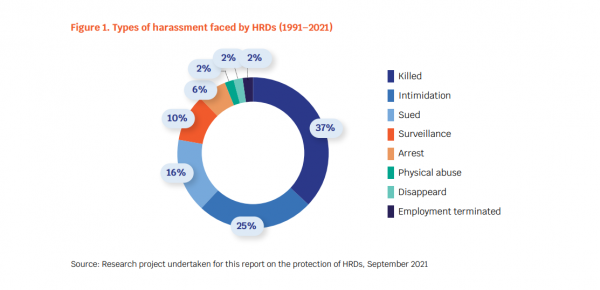
A new UN report claims that, between 2001 and 2021, 30% of outspoken Thai activists experienced violence resulting in a loss of life, by the businesses against which they had campaigned. Released by the United Nations Development Programme (UNDP), on 11 February 2024, the report says that businesses have used legal action, intimidation and violence to silence human rights defenders.

The categories of abuse faced by human rights defenders, per the report.

Activists, affected villagers and attorneys are among the groups considered to be human rights defenders in the report. Over the last 25 years, businesses filed 109 lawsuits against human rights defenders. 68.9% of these were by those with stakes in the mining, livestock and energy industries.

One anonymous interviewee said the lawsuits are used as strategic roadblocks and that they found themselves “going to court approximately once a month, incurring expenses and losing time.” Outside of the judicial system, human rights defenders were reportedly spied upon, or threatened with violence and job loss.

“After making a turn in my car, someone fired shots at me,” claims another anonymous interviewee, adding “I was in the orchard, a single home in the orchard. It was dark. Five shots were fired. I did not report the case, thinking it was an act of intimidation.”

4% of human rights defenders have died or been forcibly disappeared in the 25 years covered by the report, published on February 12th, the International Day for the Prevention of Violent Extremism.

In 2015, Thailand pledged to work towards the fulfilment of the UN’s 17 Sustainable Development Goals (SDGs), alongside other members of the organisation. SDG 16, one of the goals, asks countries to “uphold peace, justice and strong institutions,” and another, SDG 10, aims for “reduced inequalities”.

The report recommends that government and relevant agencies recognize the status and importance of human rights defenders and develop measures that protect them from violence and harassment.

https://www.undp.org/thailand/blog/human-rights-defenders-reports

https://www.thaipbsworld.com/undp-report-says-human-rights-defenders-are-targeted-by-businesses-30-are-victims-of-violence-resulting-in-loss-of-life

EU observes International Day to End Impunity for Crimes against Journalists:

November 2, 2023

Ahead of the International Day to End Impunity for Crimes against Journalists on 2 November, and in the year that marks the 75th anniversary of the Universal Declaration of Human Rights, High Representative Josep Borrell and Vice-President Věra Jourová issued the following statement:

“In these difficult times, marred by wars*, conflict and terrorist acts, we recall and praise the essential role played by journalists and media workers in fighting for the truth and for human rights. Journalists contribute to counter disinformation and hate speech and to keep checks and balances on governments and public institutions. They shed light on war crimes and human rights violations, sometimes at the risk of their own lives.

We firmly condemn the killings, physical attacks, arbitrary detentions, online and offline intimidation, harassment, and surveillance, that journalists at times face while exercising their profession. Media worldwide continue to be raided or closed, and journalists are increasingly targeted by legislation that curtails freedom of expression, and by abusive litigation, thus limiting pluralism, editorial independence, and infringing freedom of expression.

The EU remains committed to support independent journalists and media workers everywhere. We will continue to mobilise all the diplomatic tools at our disposal to raise attention to individual cases of journalists in detention or at risk. We have also established ProtectDefenders.eu to provide journalists at high risk with physical and digital protection, legal support, and relocation.

Under the Global Europe Human Rights and Democracy programme, the EU provides €185 million for support to independent media, harnessing digitalisation worldwide.

Protecting journalists means protecting our own rights. Democracy cannot work without free and independent media. This is why the EU is also taking unprecedented steps at home to protect journalists.

We call on Member States to implement the Commission Recommendation on the safety of journalists. The proposal for a Media Freedom Act aims to safeguard their independence and media pluralism. The Commission also took action to fight strategic lawsuits against public participation, which put pressure on journalists and want to silence them. These legislative proposals should be adopted swiftly to improve the environment in which journalists and media operate and to set global standards. See also: https://humanrightsdefenders.blog/2023/07/02/eu-directives-for-slapps-and-media-freedom-being-weakened-european-parliament-should-come-to-the-rescue/

The European Union stands with journalists around the world who, each and every day, exercise their freedom of expression for the benefit of us all.”

https://ec.europa.eu/commission/presscorner/detail/de/statement_23_5447

EU directives for SLAPPs and Media Freedom: a long journey

July 2, 2023
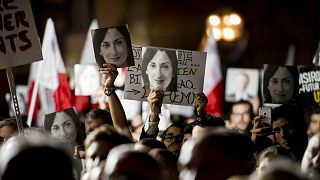
Protesters hold photos of slain journalist Daphne Caruana Galizia outside the office of the Prime Minister of Malta on Nov. 29, 2019

Maria Psara – writing for Euronews of 27June 2023 – says that European Union member States are trying to water down the directives for SLAPPs and Media Freedom…European lawmakers are accusing member states of trying to water down EU legislation aimed at strengthening protections for journalists and media freedom. 

The European Parliament’s Legal Affairs Committee (JURI) will on Tuesday vote on an anti-SLAPP directive first proposed by the Commission in April 2022 and that would enable judges to swiftly dismiss manifestly unfounded lawsuits against journalists and human rights defenders.  [see: https://humanrightsdefenders.blog/2022/04/28/eu-finally-moves-on-law-to-protect-media-from-legal-abuse-slapps/]

It would also establish several procedural safeguards and remedies, such as compensation for damages, and dissuasive penalties for launching abusive lawsuits. The JURI vote will form the basis of the Parliament’s position in negotiations with member states if it is also endorsed by the plenary in mid-July.

SLAPPs or Strategic lawsuits against public participation are a particular form of harassment used primarily against journalists and human rights defenders to prevent or penalise speaking up on issues of public interest. The Commission’s proposal has been dubbed as the ‘Daphne Law’ in honour of murdered Maltese journalist Daphne Caruana Galizia.

Member states, which together form the Council of the EU, have however sought to water down the text, drawing criticism for the Commission.

“I would like to express my regret concerning the weakening of the remedies against abusive court proceedings, in particular the deletion of the provision on compensation of damage and the weakening of the provision on award of costs,” Didier Reynders, Commissioner for Justice, said earlier this month after member states agreed on their negotiating position. 

Parliament is seeking to redress that with German MEP Tiemo Wölken (S&D), the rapporteur on the draft directive, telling Euronews: “We made it stronger and we also added other provisions such as a creation of an ‘one stop shop’ which the SLAPPs targets can contact to receive help by dedicated national networks of specialized lawyers, legal practitioners and psychologists.”

It is not the first time member states are accused of trying to water down a proposal on media freedom.  Earlier this month, a deal among the 27 member states on the European Media Freedom Act (EMFA) made a lot of eyebrows rise, because of a planned exemption to allow for the wiretapping of journalists. The regulation, first proposed by the Commission in September 2022, included safeguards against political interference in editorial decisions and against surveillance. The EU’s executive wanted to put focus on the independence and stable funding of public service media as well as on the transparency of media ownership and the allocation of state advertising.

“We have welcomed in particular as a political symbol the draft regulation for EMFA, as the Commission for the first time has adopted a legislative act dealing with all media, a traditionally sensitive subject dealt with at national level only,”  Renate Schroeder, director of the European Federation of Journalists (EFJ), told Euronews. Yet, the EPJ and other NGOs, still criticised the proposal as “not ambitious enough”.

“In particular we believed that Article 4 on the protection of journalists’ sources and protection from surveillance has not met Council of Europe standards. We also advocated for stronger binding rules on media transparency,” Schroeder added.

But member states are seeking to add an exemption to Article 4, introduced by France and opposed by Germany only, that would allow them to spy on journalists in the name of national security.

The original proposal sought to ensure that governments could not “detain, sanction, intercept, subject to surveillance or search and seizure” journalists in order to uncover their sources, unless “justified by an overriding requirement in the public interest” while the deployment of spyware was to be restricted only to “serious crimes”. 

The Council’s is hoping to broaden the number of offenses allowing such surveillance from 10 to 32.

“The text doesn’t protect journalists anymore and thereby makes the Act almost useless for journalists’ protection at least,” Schroeder said. 

“It still proposes useful tools when it comes to independence of public service media, transparency on state advertisement, some minimum rules on media ownership and on editorial independence. But yes, some member-states are afraid of journalism and thereby give hands to illiberal countries such as Hungary who oppose the Act. We hope the European Parliament will be firm, but we are not too optimistic,” underlined the director of EFJ.

However, on 12 July, with 498 votes to 33 and 105 abstentions, MEPs adopted their negotiating position on new rules to protect those working on matters of public interest like fundamental rights, the activities of public officials or corruption allegations.

On 27 February 2024, the European Parliament formally adopted that text, which has now been published. https://www.lexology.com/library/detail.aspx?g=105f78e8-27de-4fa3-99b1-6ed97c4d659f

See also: https://www.independent.com.mt/articles/2023-07-11/local-news/Protection-of-journalists-in-the-EU-MEPs-back-rules-to-stop-abusive-legal-cases-6736253272

for Latin America, see: https://www.article19.org/resources/inter-american-commission-on-human-rights-ensure-protection-against-slapps/

https://www.euronews.com/my-europe/2023/06/26/meps-accuse-eu-countries-of-undermining-attemps-to-protect-journalists

https://www.europarl.europa.eu/doceo/document/A-9-2023-0223_EN.html

https://www.euronews.com/my-europe/2023/08/23/record-number-of-abusive-slapp-lawsuits-filed-in-europe-in-2022-report

and then on 30 November 2023: https://www.consilium.europa.eu/en/press/press-releases/2023/11/30/council-and-eu-parliament-reach-provisional-agreement-on-eu-law-protecting-journalists-and-human-rights-defenders/

and on 29 April 2024 the UN came with: https://www.ohchr.org/en/documents/brochures-and-leaflets/impact-slapps-human-rights-and-how-respond

Finally:

https://commission.europa.eu/news/new-eu-rules-protect-against-strategic-lawsuits-against-public-participation-enter-force-2024-05-03_en

https://www.hrw.org/news/2024/05/07/joint-statement-civil-society-reaction-adoption-eu-directive-combating-violence

HRW asks to drop charges against Human Rights Defenders in Thailand

March 20, 2023
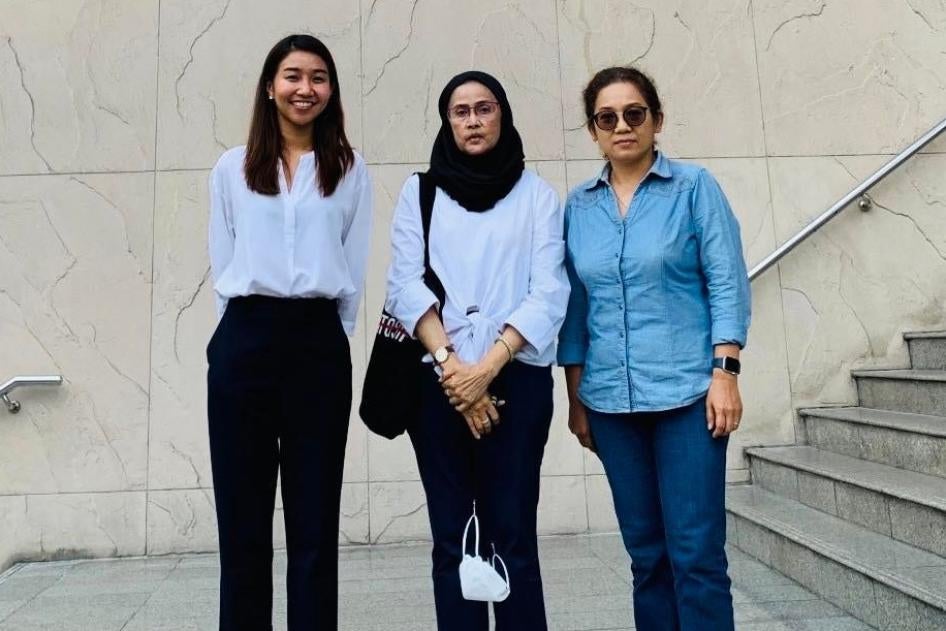
Three Thai human rights defenders—Angkhana Neelapaijit, Puttanee Kangkun, and Thanaporn Saleephol—face criminal defamation charges for reporting abuses.
Three Thai human rights defenders—Angkhana Neelapaijit, Puttanee Kangkun, and Thanaporn Saleephol—face criminal defamation charges for reporting abuses. © 2022 Prachatai

Prosecutors in Thailand should immediately withdraw the criminal defamation cases brought by Thammakaset Company Ltd. against three prominent human rights defenders for their support of other activists facing criminal charges, Human Rights Watch said on 16 March 2023. The Thai government should act to repeal criminal defamation provisions and introduce strong safeguards to prevent the use of frivolous, vexatious, or malicious legal actions that would have chilling effects on free speech.

On March 14, 2023, the Bangkok South Criminal Court began the trial that involves 28 counts of alleged criminal defamation under Thailand’s Criminal Code sections 326 and 328. The charges stem from posts or re-posts on social media by Angkhana Neelapaijit, Puttanee Kangkun, and Thanaporn Saleephol expressing solidarity with other human rights defenders already facing lawsuits brought by Thammakaset for alleging labor rights abuses at the company’s chicken farm in Lopburi Province. The company has filed at least 37 civil and criminal cases against rights defenders, journalists, and workers since 2016.

See also: https://humanrightsdefenders.blog/2022/03/03/fortify-rights-calls-on-thailand-to-drop-charges-against-human-rights-defender-angkhana-neelapaijit/

The Thai authorities should not help companies use criminal defamation or other legal avenues to silence workers from filing complaints about their working conditions or human rights defenders or journalists for reporting about alleged abuses at the company,” said Elaine Pearson, Asia director at Human Rights Watch. “The charges against Angkhana, Puttanee, and Thanaporn should be immediately dropped, and Thai authorities should act to prevent similar cases from being filed in the future.”

The United Nations Human Rights Committee has stated in its General Comment No. 34 on freedom of expression that governments “should put in place effective measures to protect against attacks aimed at silencing those exercising their right to freedom of expression, including persons who engage in the gathering and analysis of information on the human rights situation who publish human rights-related reports.”

On December 16, 2022, the UN Working Group on Business and Human Rights urged Thai authorities to take action to stop the Strategic Litigation Against Public Participation (SLAPP) lawsuits increasingly used by Thai companies to intimidate reporters and human rights advocates.

The Working Group specifically mentioned Thammakaset, stating that: “The cases filed by companies, such as Thammakaset Company Limited, against human rights defenders are a clear example of businesses abusing the legal system in order to censor, intimidate, and silence criticism through SLAPPs as a method of judicial harassment.” See also: https://humanrightsdefenders.blog/2022/04/28/eu-finally-moves-on-law-to-protect-media-from-legal-abuse-slapps/

Thai Prime Minister Prayut Chan-ocha has repeatedly emphasized the importance of companies respecting human rights in their operations and upholding the UN Guiding Principles on Business and Human Rights. In October 2019, Thailand was the first country in Asia to announce a National Action Plan on Business and Human Rights, committing to protect human rights defenders and prevent judicial harassment. But the charges against Angkhana, Puttanee, and Thanaporn, as well as the failure to assist those still facing many of the other civil and criminal cases filed by Thammakaset, stand in stark contradiction to the Thai government’s pledges to take action to protect rights, Human Rights Watch said.

In 2018, the National Assembly amended the Criminal Procedure Code to prevent the misuse of criminal cases. While that is a useful step, the Thai government should repeal all criminal defamation provisions. Neither prosecutors nor courts in Thailand have actually carried out, much less considered, amended section 161/1, which allows judges to dismiss and forbid the refiling of a criminal complaint by a private individual if the complaint is filed “in bad faith or with misrepresentation of facts to harass or take advantage of a defendant.” Furthermore, section 165/2 allows the presentation of evidence to show that the complaint “lacks merit.”

These reform provisions of the Criminal Procedure Code remain unused and untested, though. It is also crucial to provide prosecutors with adequate resources and support to exercise their powers under section 21 of the 2010 Public Prosecutor Organ and Public Prosecutors Act to screen out frivolous cases.

Human Rights Watch, along with an increasing number of governments and international agencies, has consistently called for the repeal of criminal defamation laws because they are an inherently disproportionate punishment for expressions of speech judged to damage reputations. Civil defamation laws, when supplemented by strong anti-SLAPP safeguards, balance the need for fair reporting in the public interest with concerns about reputational harm to private actors. In addition, as the charges against Angkhana, Puttanee, and Thanaporn show, criminal defamation laws in Thailand are easily abused and can have adverse impacts on free expression in the public interest.

Thailand should enact comprehensive anti-SLAPP legislation to strengthen safeguards to protect freedom of speech and expression and prevent retaliation against workers, human rights defenders, and journalists, Human Rights Watch said.

The UN special rapporteur on rights of freedom of peaceful assembly and association recommended that “States should protect and facilitate the rights to freedom of expression, assembly and association to ensure that these rights are enjoyed by everyone” including by “enacting anti-SLAPPs legislation, allowing an early dismissal (with an award of costs) of such suits and the use of measures to penalize abuse.”See also: https://humanrightsdefenders.blog/tag/strategic-lawsuits-against-public-participation-slapps/

“The UN and governments from around the world should share with Thailand their reform efforts to strengthen anti-SLAPP protections and point out that criminal defamation laws coupled with the absence of strong anti-SLAPP protections impede the ability of businesses to conduct essential human rights and environmental due diligence,” Pearson said. “Unless the Thai government moves now to protect Angkhana, Puttanee, and Thanaporn from retaliation, the promises that Thai officials made on business and human rights will ring hollow.”

https://www.hrw.org/news/2023/03/16/thailand-drop-charges-against-rights-defenders

EU finally moves on law to protect media from legal abuse (SLAPPs)

April 28, 2022

I have devoted posts to this important issue before [see: https://humanrightsdefenders.blog/tag/strategic-lawsuits-against-public-participation-slapps/]. Let us not forget that Daphne Caruana Galizia was facing 40 lawsuits when she was murdered. See: https://www.trueheroesfilms.org/thedigest/laureates/70b0bee4-9af2-40c6-a11e-5b9ad159b96f

Andrew Rettman writing in the EUObserver of 27 April 2022

Independent media should have less to fear in future from malicious lawsuits, after the EU Commission put forward a new law to shield them.

Billionaires, big corporations, and autocrats have, in recent years, resorted ever more frequently to so-called strategic lawsuits against public participation (SLAPPs) in order to try to gag adversaries.

But if EU states and MEPs back the commission’s proposed anti-SLAPP directive, then judges will soon get a fresh mandate to throw out bogus cases — and compensate their victims.

With these measures we are helping to protect those who take risks and speak up when the public interest is at stake,” EU values commissioner Věra Jourová said in Brussels.

We promised to defend better journalists and human rights defenders,” she said. “The new law does that,” Jourová said.

The directive lists criteria which individual judges can, using their discretion on a case-by-case basis, use to decide whether litigation is genuine or abusive.

These include seeking disproportionately huge financial damages or launching multiple cases at the same time, for instance.

The anti-SLAPP law applies to non-EU or “third” countries, giving European judges leeway to annul vexatious judgments against EU nationals if they are doled out in London, for example.

It is delimited to civil cases “with cross-border implication”. This is because EU competences do not cover national and criminal media laws in member states under the terms of Europe’s treaties. It means a Polish journalist or LGBTI rights activist, for example, who is sued by a Polish entity would normally not be covered.

But the “cross-border” element has been drafted by Jourová’s lawyers in a canny way so that if their case arguably had relevance beyond their national borders then the EU law would kick in.

EUobserver has faced three lawsuits in the past three years that were designated as SLAPPs by leading pro-free media NGOs.

The first saw a Luxembourg-based firm sue us in Belgium about an article on disinformation in Malta — an archetypal example of a “cross-border” lawsuit falling under the directive.

The second saw a Belgian firm sue EUobserver in Belgium, but as the story covered VIP-jet leasing security for EU and Nato heads of state from all over Europe this would also be covered under the cross-border clause.

The final one, which is ongoing, involves a Belarusian firm suing EUobserver in Belgium over an article about alleged money-laundering in Cyprus, but this would also likely fall under both the “third-country” and “cross-border” provisions, NGO experts told this website Wednesday in a flash analysis.

The commission “did the best it could do”, given its jurisdiction, Julie Majerczak, from the Paris-based NGO Reporters Without Borders, said. “It’s not perfect, but it’s a big step forward — two years ago we were nowhere on this,” she added…

There were at least 438 SLAPP cases in 24 member states in 2021 targeting 978 people or entities, the commission noted. Journalists in Bulgaria, Croatia, Poland, and Slovenia were being routinely targeted, Reporters Without Borders said. Journalists in Italy and environmental activists in France and Spain were also notable victims, it added.

https://euobserver.com/rule-of-law/154815

https://www.maltatoday.com.mt/news/europe/116496/brussels_unveils_groundbreaking_proposal_to_prevent_and_penalise_slapp_lawsuits_#.Ymqx_5LP1TZ

https://eutoday.net/news/human-rights/2022/slapps-european-commission-seeks-to-tackle-abusive-lawsuits-against-journalists-and-human-rights-defenders