Posts Tagged ‘security’

Q&A: Transnational Repression

June 14, 2024

On 12 June 2024, Human Rights Watch published a useful, short “questions-and-answers” document which outlines key questions on the global trend of transnational repression. 
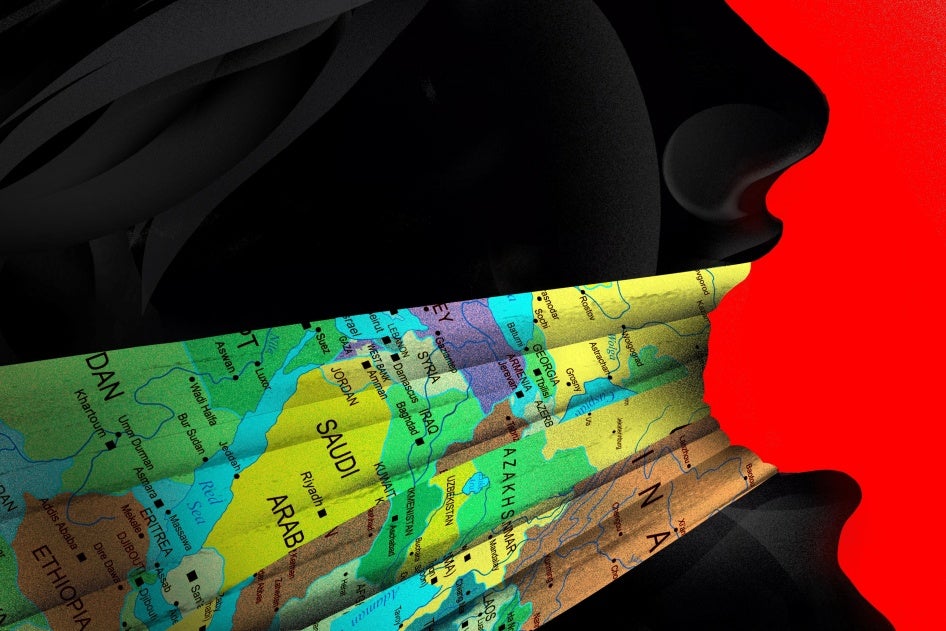
Illustration of a map being used to bind someone's mouth
© 2024 Brian Stauffer for Human Rights Watch
  1. What is transnational repression?
  2. What tactics are used?
  3. Is transnational repression a new phenomenon?  
  4. Where is transnational repression happening? 
  5. Do only “repressive” states commit transnational repression?
  6. Are steps being taken to recognize and address transnational repression? 
  7. What should be done? 

What is transnational repression?

The term “transnational repression” is increasingly used to refer to state actors reaching beyond their borders to suppress or stifle dissent by targeting human rights defenders, journalists, government critics and opposition activists, academics and others, in violation of their human rights. Particularly vulnerable are nationals or former nationals, members of diaspora communities and those living in exile. Many are asylum seekers or refugees in their place of exile, while others may be at risk of extradition or forced return. Back home, a person’s family members and friends may also be targeted, by way of retribution and with the aim of silencing a relative in exile or forcing their return.

Transnational repression can have far-reaching consequences, including a chilling effect on the rights to freedom of expression and association. While there is no formal legal definition, the framing of transnational repression, which encompasses a wide range of rights abuses, allows us to better understand it and propose victim-centered responses.

What tactics are used?

Documented tactics of transnational repression include killings, abductions, enforced disappearances, unlawful removals, online harassment, the use of digital surveillance including spyware, targeting of relatives, and the abuse of consular services.  Interpol’s Red Notice system has also been used as a tool of transnational repression, to facilitate unlawful extraditions. Interpol has made advances in improving its vetting systems, yet governments continue to abuse the Red Notice system by publishing unlawful notices seeking citizens who have fled abroad on spurious charges. This leaves targets vulnerable to arrest and return to their country of origin to be mistreated, even after they have fled to seek safety abroad.

Is transnational repression a new phenomenon?

No, the practice of governments violating human rights beyond their borders is not new. Civil society organizations have been documenting such abuses for decades. What is new, however, is the growing recognition of transnational repression as more than a collection of grave incidents, but also as an increasing phenomenon of global concern, requiring global responses. What is also new is the increasing access to and use of sophisticated technology to harass, threaten, surveil and track people no matter where they are. This makes the reach of transnational repression even more pervasive. 

Where is transnational repression happening? 

Transnational repression is a global phenomenon. Cases have been documented in countries and regions around the world. The use of technology such as spyware increases the reach of transnational repression, essentially turning an infected device, such as a mobile phone, into a portable surveillance tool, allowing targeted individuals to be spied on and tracked around the world. 

Do only “repressive” states commit transnational repression?

While many authoritarian states resort to repressive tactics beyond their own borders, any government that seeks to silence dissent by targeting critics abroad is committing transnational repression. Democratic governments have also contributed to cases of transnational repression, for example through the provision of spyware, collaborating with repressive governments to deny visas or facilitate returns, or relying upon flawed Interpol Red Notices that expose targeted individuals to risk.

Are steps being taken to recognize and address transnational repression? 

Increasingly, human rights organizations, UN experts and states are documenting and taking steps to address transnational repression.

For example, Freedom House has published several reports on transnational repression and maintains an online resource documenting incidents globally. Human Rights Watch has published reports, including one outlining cases of transnational repression globally and another focusing on Southeast Asia. Amnesty International has published a report on transnational repression in Europe. Many other nongovernmental organizations are increasingly producing research and reports on the issue. In her report on journalists in exile, the UN Special Rapporteur on freedom of expression dedicated a chapter to transnational repression. The UN High Commissioner for Human Rights used the term in a June 2024 statement.

Certain governments are increasingly aware of the harms posed by transnational repression. Some are passing legislation to address the problem, while others are signing joint statements or raising transnational repression in international forums. However, government responses are often piecemeal, and a more cohesive and coordinated approach is needed. 

What should be done? 

Governments should speak out and condemn all cases of transnational repression, including by their friends and allies. They should take tangible steps to address transnational repression, including by adopting rights-respecting legal frameworks and policies to address it. Governments should put victims at the forefront of their response to these forms of repression. They should be particularly mindful of the risks and fears experienced by refugee and asylum communities. They should investigate and appropriately prosecute those responsible. Interpol should continue to improve vetting process by subjecting governments with a poor human rights record to more scrutiny when they submit Red Notices. Interpol should be transparent on which governments are continually abusing the Red Notice system, and limit their access to the database.  

At the international level, more can be done to integrate transnational repression within existing human rights reporting, and to mandate dedicated reporting on cases of transnational repression, trends, and steps needed to address it.

see also: https://humanrightsdefenders.blog/2024/03/19/transnational-repression-human-rights-watch-and-other-reports/

https://www.hrw.org/news/2024/06/12/qa-transnational-repression

Abuse of counter-terrorism laws threaten human rights globally, warns UN expert

March 13, 2024

On 12 March 2024 the recently appointed UN Special Rapporteur on the promotion and protection of human rights while countering terrorism, Ben Saul, warned that two decades of prolific global efforts to counter terrorism have not been matched by an equally robust commitment to human rights.

In his first report to the Human Rights Council, the Special Rapporteur painted a counter-terrorism landscape strewn with human rights violations, including unlawful killings, arbitrary detention, torture, unfair trials, privacy infringements from mass surveillance, and the criminalisation of freedoms of expression, assembly, association and political participation. For earlier posts on this topic, see: https://humanrightsdefenders.blog/tag/anti-terrorism-legislation/

The misuse of counter-terrorism measures not only violates the rights of suspected criminals but can also jeopardise the freedoms of the innocent,” Saul said.

He condemned the rampant weaponisation of overly-broad terrorism offences against civil society, including political opponents, activists, human rights defenders, journalists, minorities, and students. Unjustified and protracted states of emergency continue to undermine human rights, the expert warned.

Excessive military violence in response to terrorism also destroys fundamental rights, including through violations of international humanitarian law and international criminal law,” Saul said. “Cross-border military violence is increasingly used by states even when it is not justified under the international law of self-defence.

“Many states have also failed to address the root causes of terrorism, including state violations of human rights – while impunity for those violations is endemic,” he said.

Saul said regrettably, the UN has been part of the problem, by encouraging authoritarian regimes to strengthen counter-terrorism laws in the absence of a rule of law culture or human rights safeguards. “The UN must also do better to meaningfully consult civil society on counter-terrorism,” he said.

Announcing his priorities for his three-year term, the Special Rapporteur said his focus would include ensuring regional organisations respect human rights when countering terrorism; all coercive administrative measures used to prevent terrorism comply with human rights; and States are held accountable for large-scale violations of human rights resulting from counter terrorism – and victims receive full and effective remedies.

Saul will also continue the efforts of his predecessor on preventing the abuse of counter-terrorism measures against civil society; protecting the 70,000 people arbitrarily detained in north-east Syria in the conflict against ISIL; protecting detainees and transferees from the detention facility at Guantánamo Bay, Cuba; ensuring that the UN safeguards human rights in its counter-terrorism work, regulating new technologies used in counter-terrorism; and protecting the victims of terrorism.

Human rights in counter-terrorism are at increased risk because of rising authoritarianism, surging domestic polarisation and extremism, geopolitical competition, dysfunction in the Security Council and new tools, including social media, for fuelling dehumanisation, vilification, incitement and misinformation,” the Special Rapporteur warned.

Double standards and selectivity by major powers in the enforcement of human rights is also eroding public confidence in the credibility of the international human rights system,” he said. “States must move beyond rhetorical commitment to human rights and instead place human rights at the heart of all counter-terrorism measures.

Statements Statement of the mandate of the United Nations Special Rapporteur on the promotion and protection of human rights while countering terrorism

Statements Human Rights Council discusses the protection of human rights while countering terrorism

Statements UN Office of Counter-Terrorism Town Hall meeting, Statement by Michelle Bachelet, UN High Commissioner for Human Rights

https://www.ohchr.org/en/press-releases/2024/03/rampant-abuse-counter-terrorism-laws-threaten-human-rights-globally-warns-un

Alex, a Romanian activist, works at the intersection of human rights, technology and public policy.

January 24, 2024
Amnesty International Logotype

On 22 January 2024, Amnesty International published an interesting piece by Alex, a 31-year-old Romanian activist working at the intersection of human rights, technology and public policy.

Seeking to use her experience and knowledge of tech for political change, Alex applied and was accepted onto the Digital Forensics Fellowship led by the Security Lab at Amnesty Tech. The Digital Forensics Fellowship (DFF) is an opportunity for human rights defenders (HRDs) working at the nexus of human rights and technology and expand their learning.

Here, Alex shares her activism journey and insight into how like-minded human rights defenders can join the fight against spyware:

In the summer of 2022, I watched a recording of Claudio Guarnieri, former Head of the Amnesty Tech Security Lab, presenting about Security Without Borders at the 2016 Chaos Communication Congress. After following the investigations of the Pegasus Project and other projects centring on spyware being used on journalists and human rights defenders, his call to action at the end — “Find a cause and assist others” — resonated with me long after I watched the talk.

Becoming a tech activist

A few days later, Amnesty Tech announced the launch of the Digital Forensics Fellowship (DFF). It was serendipity, and I didn’t question it. At that point, I had already pushed myself to seek out a more political, more involved way to share my knowledge. Not tech for the sake of tech, but tech activism to ensure political change.

Portrait of a young woman with dark hair looking downwards in a thoughtful manner
Alex is a 31-year-old Romanian activist, working at the intersection of human rights, technology and public policy.

I followed an atypical path for a technologist. Prior to university, I dreamt of being a published fiction author, only to switch to studying industrial automation in college. I spent five years as a developer in the IT industry and two as Chief Technology Officer for an NGO, where I finally found myself using my tech knowledge to support journalists and activists.

My approach to technology, like my approach to art, is informed by political struggles, as well as the questioning of how one can lead a good life. My advocacy for digital rights follows this thread. For me, technology is merely one of many tools at the disposal of humanity, and it should never be a barrier to decent living, nor an oppressive tool for anyone.

Technology is merely one of many tools at the disposal of humanity. It should never be a barrier to decent living, nor an oppressive tool for anyone.

The opportunity offered by the DFF matched my interests and the direction I wanted to take my activism. During the year-long training programme from 2022-2023, the things I learned turned out to be valuable for my advocacy work.

In 2022, the Child Sexual Abuse Regulation was proposed in the EU. I focused on conducting advocacy to make it as clear as possible that losing encrypted communication would make life decidedly worse for everyone in the EU. We ran a campaign to raise awareness of the importance of end-to-end encryption for journalists, activists and people in general. Our communication unfolded under the banner of “you don’t realize how precious encryption is until you’ve lost it”. Apti.ro, the Romanian non-profit organisation that I work with, also participated in the EU-wide campaign, as part of the EDRi coalition. To add fuel to the fire, spyware scandals erupted across the EU. My home country, Romania, borders countries where spyware has been proven to have been used to invade the personal lives of journalists, political opponents of the government and human rights defenders.

The meaning of being a Fellow

The Security Lab provided us with theoretical and practical sessions on digital forensics, while the cohort was a safe, vibrant space to discuss challenges we were facing. We debugged together and discussed awful surveillance technology at length, contributing our own local perspective.

The importance of building cross-border networks of cooperation and solidarity became clear to me during the DFF. I heard stories of struggles from people involved in large and small organizations alike. I am convinced our struggles are intertwined, and we should join forces whenever possible.

Now when I’m working with other activists, I try not to talk of “forensics”. Instead, I talk about keeping ourselves safe, and our conversations private. Often, discussions we have as activists are about caring for a particular part of our lives – our safety when protesting, our confidentiality when organizing, our privacy when convening online. Our devices and data are part of this process, as is our physical body. At the end of the day, digital forensics are just another form of caring for ourselves.

I try to shape discussions about people’s devices similarly to how doctors discuss the symptoms of an illness. The person whose device is at the centre of the discussion is the best judge of the symptoms, and it’s important to never minimize their apprehension. It’s also important to go through the steps of the forensics in a way that allows them to understand what is happening and what the purpose of the procedure is.

I never use a one-size-fits-all approach because the situation of the person who owns a device informs the ways it might be targeted or infected.

The human approach to technology

My work is human-centred and technology-focused and requires care and concentration to achieve meaningful results. For activists interested in working on digital forensics, start by digging deep into the threats you see in your local context. If numerous phishing campaigns are unfolding, dig into network forensics and map out the owners of the domains and the infrastructure.

Secondly, get to know the person you are working with. If they are interested in secure communications, help them gain a better understanding of mobile network-based attacks, as well as suggesting instant messaging apps that preserve the privacy and the security of their users. In time, they will be able to spot “empty words” used to market messaging apps that are not end-to-end encrypted.

Finally, to stay true to the part of me that loves a well-told story, read not only reports of ongoing spyware campaigns, but narrative explorations from people involved. “Pegasus: The Story of the World’s Most Dangerous Spyware” by Laurent Richard and Sandrine Rigaud is a good example that documents both the human and the technical aspects. The Shoot the Messenger podcast, by PRX and Exile Content Studio, is also great as it focuses on Pegasus, starting from the brutal murder of Jamal Khashoggi to the recent infection of the device of journalist and founder of Meduza, Galina Timchenko.

We must continue to do this research, however difficult it may be, and to tell the stories of those impacted by these invasive espionage tactics. Without this work we wouldn’t be making the political progress we’ve seen to stem the development and use of this atrocious technology.

https://www.amnesty.org/en/search/Alex/

Shelter City Netherlands: Call for Applications for September 2021

April 29, 2021

Justice and Peace Netherlands is launching a new call for applications for at risk human rights defenders to participate in Shelter City. The deadline for applications is 14 May 2021 at 23:59 CEST (Central European Time). Please be aware that special conditions apply because of the COVID-19 situation (see conditions below).

Shelter City provides temporary safe and inspiring spaces for human rights defenders at risk where they re-energise, receive tailor-made support and engage with allies. The term human rights defender is intended to refer to the broad range of activists, journalists and independent media professionals, scholars, writers, artists, lawyers, civil and political rights defenders, civil society members, and others working to advance human rights and democracy around the world in a peaceful manner.

From September 2021 onwards, several cities in the Netherlands will receive human rights defenders for a period of three months. At the end of their stay in the Netherlands, participants are expected to return with new tools and energy to carry out their work at home.

Journalists’ Safe Haven Initiative

Justice and Peace aims to promote the safety of journalists, and in particular women journalists, worldwide so that they can build new strategies and continue their important work for freedom of expression in their country of origin. With the support of the Dutch Ministry of Foreign Affairs, Justice and Peace will be able to provide two additional temporary safe spaces per year in The Hague for journalists at risk and provide them with tailor-made support.

Shelter City and COVID-19

Please note that the current situation of the coronavirus (COVID-19) may pose certain challenges to the stay of human rights defenders in the Netherlands in 2021. These challenges can include:

  • Limitations and/or changes in the programme that we can offer human rights defenders during their stay in the Netherlands;
  • New measures and restrictions (including a lockdown) taken by the Dutch government;
  • Cancellation of flights to/from the Netherlands;
  • Postponement of return to the home country after 3 months because of travel restrictions;
  • Participants might be requested to self-quarantine for 5-10 days upon arrival in the Netherlands (the Shelter City programme will be adapted accordingly) and to take other preventive measures due to COVID-19 (including a COVID-19 test before travelling to the Netherlands).

Please consider these potential challenges carefully before applying to the programme.

Applicants must fulfil the following conditions:

In order to be eligible to the Shelter City programme, applicants must meet the following conditions:

  1. They implement a non-violent approach in their work;
  2. They are threatened or otherwise under pressure due to their work;
  3. They can be relocated for a maximum period of 3 months. Limited spots are available for people who are not able to stay for the full 3 months;
  4. They are willing and able to return to their country of origin after 3 months;
  5. They are willing to speak publicly about their experience or about human rights in their country to the extent that their security situation allows;
  6. They have a conversational level* of English (limited spots are available for French or Spanish speaking HRDs);
  7. They are willing and able to come to The Netherlands without the accompaniment of family members;
  8. They have a valid passport (with no less than six months of validity) or be willing to carry out the procedures for its issuance. Justice and Peace covers the costs of issuing a passport and/or visa (if applicable);
  9. They are not subjected to any measure or judicial prohibition to leaving the country;
  10. They are willing to begin their stay in The Netherlands around September 2021.

Note that additional factors will be taken into consideration in the final round of selection, such as the added value of a stay in the Netherlands as well as gender, geographic, and thematic balance. Please note that we can only accept human rights defenders currently residing in a third country under exceptional circumstances.

To apply or submit the application of a human rights defender, please fill in the form by clicking ‘Apply Now’ below. Application forms must be completed by 14 May 2021, at 23:59 CEST (Central European Summer Time). An independent commission will select the participants.

Note that the selected human rights defenders will not automatically participate in Shelter City as Justice and Peace is not in control of issuing the required visas to enter the Netherlands.

For last year’s call see: https://humanrightsdefenders.blog/2020/11/24/new-call-for-applications-for-human-rights-defenders-at-risk-to-participate-in-shelter-city-netherlands/

Apply now for Shelter City 2021

For more information, please contact us at sheltercity[at]justiceandpeace.nl.

Michel Forst about the security risks faced by Human Rights Defenders

July 7, 2020

Human rights defenders reconnect us to what makes the essence of humanity” says Michel Forst, the former UN Special Rapporteur in his foreword to the updated Guidelines on security and protection for grantees by the Norwegian Human Rights Fund (NHRF).

Jalila, Mohamadou, Paulo and Lita are all human rights defenders who work in difficult areas. In forgotten places, where the State does not operate anymore or where conflicts rage on. They provide support to women victims of sexual violence; they advocate for transitional justice; they visit peaceful protesters who have been arbitrarily detained. They bring human rights to the darkest, most isolated places. They are the voices for those whose voices have been stolen. Each and every day these ordinary women and men brave countless risks to be close to those they defend. Because they defend human rights they are targeted by those who benefit from human rights violations. Each day they must reinvent themselves and their most trivial routines. Jalila turns her phone off while having discussions with other defenders; Lita makes sure she travels back home while the sun is still high; and Paulo frequently changes the passwords to his social media accounts. When traveling outside his village, Mohamadou leaves instructions for his family as preparation for the possibility of being arrested and taken to jail.

Each day these four defenders feel in their own minds and bodies what it means to defend human rights in complex settings and thousands of other human rights defenders face the same situation on the ground. They cannot depend on protection from the State or constant protection from their own communities, so they bear the heavy responsibility of protecting themselves, staying safe alone. Some are fortunate to have the support of their organizations and movements but must still practice self-protection. Sometimes this individual responsibility feels like a burden and can have lasting and severe consequences on their psychological, physical and social well-being.

Former Special Rapporteur on the situation of HRDs, Michel Forst, with human rights defenders during a consultation on the situation in the MENA region (Photo: NHRF’s grantee partner, Gulf Centre for Human Rights).

In recent years, a number of initiatives across the globe have contributed to support defenders and to provide them with a set of concrete tools to mitigate risks. Defenders have been building solidarity networks and strategic alliances, they have developed risks analysis and digital security trainings. Women human rights defenders and indigenous communities have helped understand the necessity to develop collective and holistic approaches to security. Some States have developed laws and mechanisms to better protect defenders as a response to the current deterioration of the situation of HRDs. Over the past five years, I have heard and learnt about many good practices on protection, and I am pleased with the efforts of the NHRF to provide these guidelines as a resource to help identify and navigate these initiatives.

….Defenders often represent the last remaining hopes for those whose are left behind, who are excluded and despised by their societies. … it is imperative that we strengthen our support to these heroes. It is not only a matter of justice, it is for the sake of our common future, for our humanity. We must defend and stand and act in solidarity with these selfless, indomitable people.

Main photo: Mónica Orjuela/NHRF.

https://nhrf.no/article/2020/human-rights-defenders-reconnect-us-to-what-makes-the-essence-of-humanity-michel-forst

See also: https://humanrightsdefenders.blog/2018/01/17/protection-internationals-next-e-learning-course-on-security-starts-19-february/

Shelter City Netherlands: call for temporary relocation in 2020

November 15, 2019

Justice and Peace Netherlands is launching a new call for human rights defenders at risk to participate in the Shelter City initiative around March 2020. The deadline to apply is 29 November 2019.   Shelter City offers human rights defenders (HRDs) at risk a possibility for rest and respite by letting them escape temporarily from a threatening situation. The initiative can benefit human rights defenders that are threatened or under intense pressure due to their work. Shelter City is an initiative coordinated by Justice and Peace Netherlands together with  municipalities in the Netherlands, local partners, and the Dutch Ministry of Foreign Affairs.

How does Shelter City work? Through temporary relocation, human rights defenders will be offered a shelter for 3 months in one of the Shelter Cities in the Netherlands, during which they can rest, continue their work in safety, build up capacity (including compulsory training on holistic security), extend their network and raise awareness about the situation in their country. Activities can include meetings with NGOs and public officials, public lectures, rest or leisure, treatment for work-related problems, continuing working remotely on human rights in their country, raising awareness of human rights with the Dutch public or participating in local initiatives organised by the municipality and/or the host organisation. At the end of the programme, participants are expected to return with new tools and energy to continue their work at home. A monthly stipend sufficient to cover costs of living, accommodation, health insurance, visa and return flight tickets to the Netherlands are provided. In addition, participants receive personal accompaniment throughout their stay in the Netherlands.
Who can apply for Shelter City?
For the purposes of Shelter City, the term HRD is intended to refer to the broad range of activists, journalists, scholars, writers, artists, lawyers, civil rights defenders, independent media professionals, civil society members, and others working to peacefully advance human rights and democracy around the world.

In order to be eligible to the Shelter City programme, HRDs must meet the following conditions:

  1. They implement a non-violent approach in their work;
  2. They are threatened or otherwise under pressure due to their work;
  3. They should be able to be relocated for a period of maximum 3 months. Limited spots are available for people who are not able to stay for the full 3 months;
  4. They are willing and able to return to their country of origin after 3 months;
  5. They are willing to speak publicly about their experience or about human rights in their country to the extent that their security situation allows;
  6. They have a conversational level of English (limited spots are available for French or Spanish speaking HRDs);
  7. They are willing and able to come to The Netherlands without accompaniment of family members;
  8. They have a valid passport (with no less than six months of validity) or be willing to carry out the procedures for its issuance. Justice and Peace covers the costs of issuing a passport and / or visa (if applicable);
  9. They are not subjected to any measure or judicial prohibition of leaving the country;
  10. They are willing to begin their stay in The Netherlands around March 2020. .

Note that additional factors will be taken into consideration in the final round of selection, such as the added value of a stay in The Netherlands as well as gender, geographic, and thematic balance. Please note that we can only accept HRDs currently residing in a third country under exceptional circumstances. To apply or submit the application of a human rights defender, please fill in the form by clicking ‘Apply Now’ below.. An independent commission will select the participants.

Apply Shelter City 2020 <https://form.jotformeu.com/93072618843361>

Note that the selected human rights defenders will not be automatically allowed into the Shelter City programme as Justice and Peace is not in control of issuing the required visas to enter the Netherlands.

For previous call, see: https://humanrightsdefenders.blog/tag/shelter-city-netherlands/
For more information, please contact us at sheltercity@justiceandpeace.nl

Protection International’s next e-learning course on Security starts 19 February

January 17, 2018

Protection International announced its next e-learning course starting on 19 February 2018. There are limited places available and the deadline for registration is 26 January 2018(contact: e-learning@protectioninternational.org). 

The topic is: SECURITY AND PROTECTION MANAGEMENT FOR HUMAN RIGHTS DEFENDERS AND SOCIAL ORGANISATIONS

The course will help human rights defenders to:

  • Acquire tools and skills to assess risks and improve their security and protection
  • Contribute to the security and protection of those whose rights HRDs are defending
  • To improve HRDs security and protection strategies when protecting human rights defenders

The training is done  by human rights protection experts with extensive experience. 3. 5 hours per week (60 hours over 12 weeks). Tailored feedback on assignments given as well as direct tutorship.

For last year’s: https://humanrightsdefenders.blog/2016/04/09/on-line-training-course-for-better-protection-of-human-rights-defenders/

Justice and Peace NL increasingly active for human rights defenders

June 8, 2017

The Hague Training Course on Security
https://en.justiceandpeace.nl/agenda/the-hague-training-course-on-security-3
From 21 June to 30 June 2017, Justice and Peace Netherlands organises the 7th edition of the ‘The Hague Training Course on Human Rights Defenders and Security’ (THTC).[see https://humanrightsdefenders.blog/2015/03/30/2nd-the-hague-training-course-for-human-rights-defenders-security-now-open-for-application/ and also https://humanrightsdefenders.blog/2016/12/02/the-hague-defenders-days-from-5-to-10-december-2016/]

Shelter City, Call for applications
https://sheltercity.nl/new-call-for-shelter-city/
Justice and Peace is launching a new call for Human Rights Defenders to participate in the Shelter City Initiative. <http://en.justiceandpeace.nl/human-rights-defenders-and-security/shelter-city-initiative> The Shelter City Initiative offers human rights defenders a possibility for rest and respite by letting them escape temporarily from a threatening situation. Shelter City offer a safe space to human rights defenders at a moment where they are particularly vulnerable and their security can no longer be guaranteed at home.  Meant for human rights defenders who might be helped with a short relocation programme, because they are threatened or under intense pressure due to their work.

Applicants must fulfil the following conditions:

  1. The applicant must be a human rights defender (HRD) in the broad sense of the word (lawyers, members of NGOs, poets or artists can all apply, as long as their work promotes Human Rights or he/she fights against human rights violations)
  2. The HRD is threatened or otherwise under intense pressure and can be helped by a short period of time abroad
  3. The HRD should be able and willing to return to the country of origin after 3 months
  4. The HRD should be willing to speak out in public and speak basic English (limited spots are available for French or Spanish speaking HRDs)
  5. The HRD should be willing/able to come alone
  6. The HRD has to be willing to come to the Netherlands around September 2017

Note that additional factors will be taken into consideration in the final round of selection, such as the added value of a stay in The Netherlands (giving priority to those working at grass-roots level), the possibility for the HRD to make use of the new contacts and knowledge after they return, and gender and geographical balance. HRDs who are already relocated in a third country will only be accepted under exceptional circumstances.

To apply or submit the application of a human rights defender, please e-mail sheltercity@justiceandpeace.nl. You will then receive an application form. Application forms must be returned before 25 June 2017. An independent commission will select the participants. Note that the selected human rights defenders will not be automatically allowed into the shelter programme as Justice and Peace is not in control of issuing the required visas to enter The Netherlands. For more information, please contact us at sheltercity@justiceandpeace.nl.

Campaign: Are we all human rights defenders? Join us
https://en.justiceandpeace.nl/news/are-we-all-human-rights-defenders
Every individual can make a change. No matter your age, gender, beliefs, education, profession, social situation or background. It doesn’t matter at what scale. You are a potential change maker, willing to help others. We are all human rights defenders.


Security and self-care must become part of the culture of human rights defenders

May 10, 2017

HOLLY DAVIS and MAGDA ADAMOWICZ published in Open Democracy of 10 May 2017 an important piece entitled “Security and well-being: two sides of the same coin“.  It states inter alia that by not paying enough attention to self-care, activists are compromising their own security—and that of their organizations. [It is a contribution to the debate on mental health and well-being.]

The authors rightly make the point that.. “in addition to threats against their personal safety and security, defenders face exhaustion and trauma and struggle with burnout.”


Flickr/ CDIH (Some rights reserved) Following the hearing on the human rights situation in Bajo Aguán held on April 5, 2016, a vigil was held by Berta Cáceres, an environmental activist who was murdered on March 3, 2016 in Honduras.

By including and addressing well-being, trainers have a critical role to play in expanding defenders’ understanding of security and increasing their capacity to adopt new habits. These changes can happen only by integrating security and self-care into the everyday work and culture of human rights defenders and organizations.

Each organization and individual will have different needs. They may include:

  • •Allowing time and dedicated funding for staff retreats, peer support groups, psychological or supervision support, or other individual practices.

  • •Creating space to discuss people’s well-being at the team or organizational level.

  • •Connecting activists with peers from other organizations so they can find solidarity and support.

  • •Designing an organizational self-care plan with clear goals, expectations, and boundaries that are transparent and to which teams are accountable. Such a plan might include expectations for work hours and off-hours availability, the option to work from home, time for a true break during the workday, offering activities like stretching and meditation, or simply scheduling a block of quiet time without meetings.

  • •Consistently implementing an organizational self-care plan, with staff supporting each other, and regularly checking-in with each other through meetings that include a well-being status update.

  • •Challenging what is truly a crisis requiring immediate action, breaking a cycle of stress where people feel like they cannot afford to stop working.

Above all, human rights organizations and funders need to remember that prioritizing the safety and health of defenders, preventing burnout, and treating trauma are not self-indulgences. Rather, they are best practices. Individual and organizational attitudes and behavior must evolve. This means mainstreaming security and moving towards organizational cultures in which self-care is inherently understood to be critical to success. The old refrain of “toughen up or leave” is obsolete.

Source: Security and well-being: two sides of the same coin | openDemocracy

Trump Administration would like to delegate security checks to dictators?

February 11, 2017
Trump’s executive order may be stalled in the courts for the moment but at some point in time a more restrictive policy towards refugees will come into being. One feature that is worrisome is that the administration expects to make more use of vetting by the very governments the refugees are trying to flee: “we look at how well these various countries can vet people.”  That is what B. Shaw Drake of Human Rights First points out in his piece “Under Trump’s “Extreme Vetting,” Should Dictators Vet the Refugees they Create?“(10 February 2017):HRF logo

Read the rest of this entry »