Posts Tagged ‘Saudi Arabia’

Update on ISHR anti-reprisals campaign 2025

October 31, 2025

On 25 September 2025, 11 States raised individual cases of intimidation and reprisal in 15 different countries and territories at the Human Rights Council‘s 60th session. The cases of Kadar Abdi Ibrahim (Djibouti) and Loujain Al-Hathloul (Saudi Arabia) were cited by States. Cases from ISHR’s 2022 and 2024 campaigns were also among the cases mentioned, as well as the case of Basma Mostafa (Egypt) facing transnational repression.

On 16 October 2025, at the Third Committee of the General Assembly‘s 80th session, specific cases and situations of intimidation and reprisal were raised again by Belgium, the Netherlands and Luxembourg during this dialogue with the Assistant Secretary-General. They raised the cases of Human Rights Center Viasna (Belarus), Chow Hang Tung (Hong Kong) and Pham Doan Trang (Viet Nam)

Additionally, 70 States joined the cross-regional statement on reprisals led by Ireland and Uruguay, delivered at the General Discussion on the promotion and protection of human rights (item 71) at the General Assembly’s Third Committee.


Travel bans, what does this mean in practice? 

A travel ban may be less visible than a prison cell, but its impact is deeply damaging. It restricts defenders from attending UN meetings, carrying out their work, reuniting with family or seeking international protection.  As reprisals evolve, what started as detention can turn into surveillance, harassment, or restrictions on movement.  [https://humanrightsdefenders.blog/2025/09/15/tomorrow-16-9-25-in-geneva-packed-with-courage-stories-of-human-rights-defenders-banned-from-travelling/]

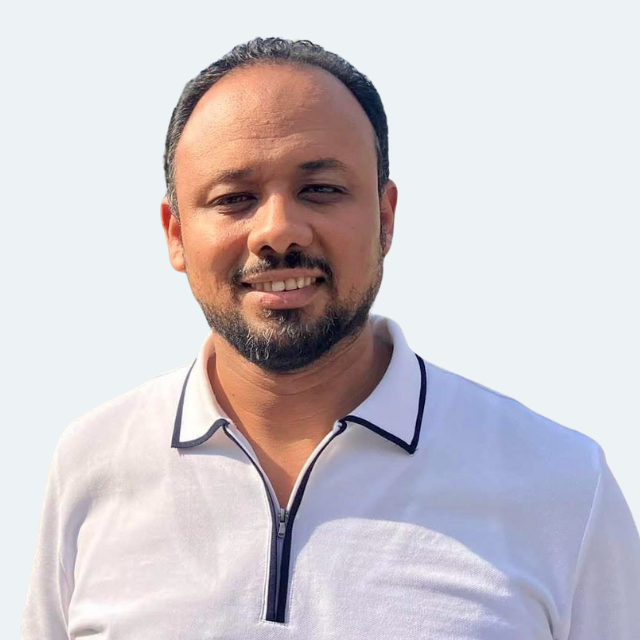
This is what happened to Loujain and Mohamed, prominent human rights defenders from Saudi Arabia and Egypt respectively.

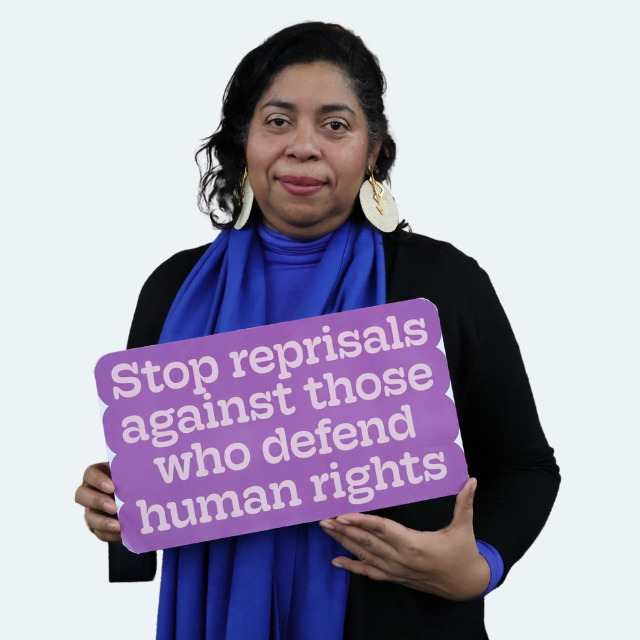
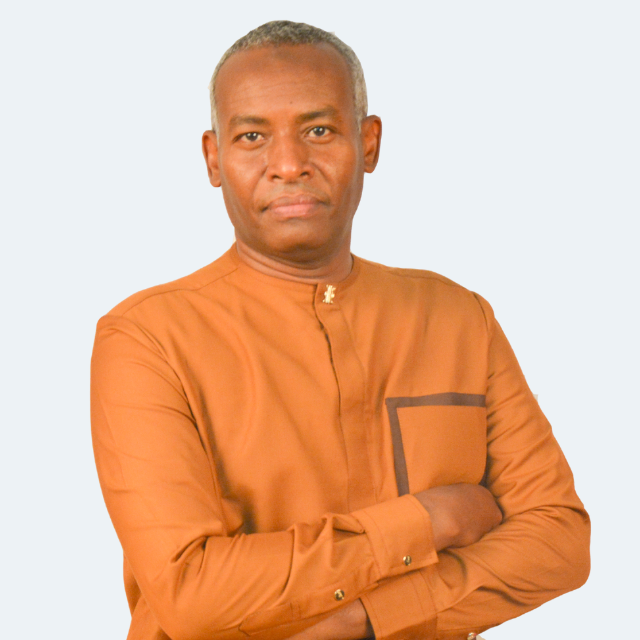
Meanwhile, Anexa, an Indigenous human rights defender, is unable to return to her home country of Nicaragua, and Kadar from Djibouti had his passport confiscated since 2018, preventing him from leaving the country and doing his work.  

IThrough this campaign, we share their stories. These are not just cases of reprisals — they are real lives disrupted, silenced, and confined. But they are also stories of resilience and perseverance for social change. 

Loujain Al-Hathloul

Loujain is an iconic figure in Saudi Arabia’s women’s rights movement. She has actively campaigned for women’s rights in the country and against the driving ban imposed on women. She has also publicly and consistently called for the dismantlement of the male guardianship system.  

Mohamed El-Baqer is a human rights lawyer from Egypt. He is the director of the Adalah Center for Rights and Freedoms, founded in 2014. It is a non-governmental, independent legal and human rights organisation with a focus on four Programmes: 1) Criminal Justice 2) Student Rights and Academic Freedoms; 3) Refugees; 4) and Minorities. All these Programmes are implemented through legal support and strategic litigation, research, monitoring and documentation, advocacy activities and capacity-building. [https://www.trueheroesfilms.org/thedigest/laureates/a845697d-4b51-4e7f-b7d0-219c1e18ecd3]

Anexa Alfred Cunningham is a Miskitu Indigenous leader, woman human rights defender, lawyer and expert on Indigenous Peoples’ rights from Nicaragua. She defends the ancestral land and natural resources of Indigenous and Afro-descendant Peoples of the Caribbean Coast of Nicaragua. She has also worked with Indigenous and Afro-descendant communities to investigate the many abuses they suffer and denounce them to the United Nations. These Peoples face attacks by armed groups who seek to take away their ancestral territory with the State’s approval. 

Kadar Abdi Ibrahim is a human rights defender and journalist from Djibouti. He has drawn inspiration from historic figures in the human rights movement in the hopes of building a solid and lasting democracy in his country.  From 2015, Kadar was the co-director and chief editor of L’Aurore, Djibouti’s only privately-owned media outlet. In 2016, the newspaper was banned following the publication of a story on one of the victims of the Buldhuqo massacre, crackdown by Djibouti security forces on a religious celebration and a meeting of the opposition on 21 December 2015 that left at least 27 people dead. Kadar is also the president of the political party Movement for Democracy and Freedom (MoDEL) since December 2021. Over the years, Kadar has been arrested several times by the police in an attempt to silence him. 

#EndReprisals

Join our campaign by writing a letter to State representatives so they publicly raise the cases of Kadar, Anexa, Loujain and Mohamed at the General Assembly’s Third Committee in New York.

ISHR’s #EndReprisals database

In order to assist stakeholders with research, analysis and action on cases of reprisals and intimidation, ISHR launched an online database compiling cases or situations of intimidation and reprisals documented by the United Nations (UN) Secretary-General between 2010 and 2024.

https://ishr.ch/campaigns/endreprisals2025

NGOs Call for the Immediate Release of Saudi Human Rights Defender Mohammed al-Bejad

August 12, 2025

408a97e1-ef4d-47ff-aa24-7db77f73988f

We, the undersigned organizations, express deep concern over the continued arbitrary detention of the Saudi human rights defender Mohammed al-Bejadi more than two years beyond his sentence. His continuing detention, along with countless others, demonstrates that despite a recent spate of prisoner releases, the Saudi authorities’ severe repression of rights activists and critics remains. We call for his immediate release, along with all others arbitrarily detained in the kingdom for peacefully exercising their fundamental freedoms.

Al-Bejadi, a founding member in 2009 of the now-banned Saudi Civil and Political Rights Association (ACPRA), has been arrested and imprisoned three times for his peaceful human rights activism, most recently on 24 May 2018 during a crackdown on women’s rights defenders. He was subsequently sentenced to an egregious 10-year prison term, with five years suspended, which expired in April 2023.

More than two years later, he remains in Buraydah Prison, where he has been denied access to legal representation. According to ALQST, an independent Saudi human rights group, he has also experienced torture and other ill-treatment, including physical abuse and prolonged incommunicado detention.

The UN Special Rapporteur on human rights defenders, Mary Lawlor, highlighted al-Bejadi’s case in April 2025 to draw attention to a worrying trend in Saudi Arabia, in which the authorities continue to hold prisoners past their completed sentences, in violation of basic international standards and Saudi Arabia’s own laws.

Two other prominent human rights defenders, Mohammed al-Qahtani – another ACPRA co-founder –and Essa al-Nukheifi, were held arbitrarily for more than two years beyond their prison terms before being conditionally released in January 2025.

In other instances, when political prisoners have neared the end of their prison terms Saudi authorities have retried them and increased their sentences. Besides inflicting further injustice on these people after years of arbitrary imprisonment, the failure to release prisoners whose sentences have concluded creates fear that they too may be retried.

Saudi authorities have released dozens of people imprisoned for peacefully exercising their rights in recent months, yet continue to arbitrarily hold many more. Released prisoners continue to face heavy restrictions, such as arbitrary travel bans and having to wear an ankle monitor.

Meanwhile, the Saudi authorities’ record of rights violations continues to deteriorate, notably with their escalating use of the death penalty, including the recent execution of a prominent Saudi journalist Turki al-Jasser, and a notable surge in executions of foreign nationals for non-violent drug-related offences.

Al-Bejadi is one of several people arbitrarily imprisoned whose activism stretches back for decades. He spent four months in prison without charge or trial from September 2007 to January 2008, and was again jailed for more than five years, from March 2011 to April 2016, after taking part in a protest outside the Ministry of Interior. During that protest he said: “I do not have a family member in detention, but we must defend not only our own family but our whole country and all those who are oppressed. All prisoners of conscience are my family.”

The undersigned organizations call on the Saudi authorities to immediately and unconditionally release Mohammed al-Bejadi, all others detained beyond the completion of their prison sentences, and all individuals who are imprisoned for the peaceful exercise of their fundamental rights and freedoms.

Signatories:

  1. ALQST for Human Rights
  2. DAWN
  3. European Saudi Organisation for Human Rights (ESOHR)
  4. FairSquare
  5. Freedom House
  6. Gulf Centre for Human Rights (GCHR)
  7. Human Rights Watch
  8. HuMENA for Human Rights and Civic Engagement
  9. International Federation for Human Rights (FIDH), within the framework of the Observatory for the Protection of Human Rights Defenders
  10. MENA Rights Group
  11. Middle East Democracy Center (MEDC)
  12. World Organisation Against Torture (OMCT), within the framework of the Observatory for the Protection of Human Rights Defenders

https://www.hrw.org/news/2025/08/07/ngos-call-for-the-immediate-release-of-saudi-human-rights-defender-mohammed-al

Strange case of inter-arab feud by using HRDs in Geneva

April 3, 2025

Watan News on 30 March 2025 came with a rather remarkable story about the UAE’s covert efforts to damage Qatar and Saudi Arabia’s reputations through paid campaigns using African NGOs Human rights sources in Geneva. Whether this is all true or not I cannot say, but it is worth reporting on.

Watan writes that “human rights circles in Geneva’ have revealed the United Arab Emirates’ involvement in leading coordinated incitement campaigns against its adversaries, using African organizations in exchange for financial bribes to attack Abu Dhabi’s opponents and whitewash its own dire human rights record. According to the source, Abu Dhabi’s campaign aims to bring in so-called “victims,” such as migrant workers, to testify before the UN Human Rights Council in an effort to damage Qatar’s international reputation.

Reliable reports indicate that the UAE has continuously funded this campaign over the past three years. Several human rights organizations and active institutions in Geneva have reportedly received large sums of money to support anti-Qatar activities. The funds are reportedly channeled through the UAE Embassy in Geneva and a key intermediary, Issa Al-Arabi, a Bahraini national who acts as a liaison for the UAE in supporting various rights groups at the UN.

According to the source, the campaign is being executed by the Rencontre Africaine pour la Défense des Droits de l’Homme (African Meeting for the Defense of Human Rights) under the leadership of Nishkarsh Singh, along with the Tomoko Development and Cultural Union (TACUDU) led by Fazal-ur-Rehman, and the International Network for Human Rights (INHR).

Another UN source said that the UAE’s campaign is coordinated by key figures within the diplomatic and human rights community in Geneva and Washington, primarily operating within the INHR network.

This organization plays a major role in organizing human rights events at the UN, with a team of participating legal and diplomatic experts.

Notable individuals involved include:

  • Biro Diawara – A veteran human rights activist in Geneva for over 20 years, representing African civil society including journalists, parliamentarians, religious leaders, and human rights defenders. He has strong ties to African delegations in New York, Geneva, and the continent, with a focus on Sudan, West Africa, and his native Guinea.
  • Clément N. Voule – Former UN Special Rapporteur on the Rights to Freedom of Peaceful Assembly and of Association. After completing his term in the summer of 2024, he joined the Geneva Human Rights Institute in September. A Togolese international lawyer, he specializes in human rights and security sector reform and holds multiple roles within Geneva’s human rights community.
  • Jane Galvão – Director of Resource Mobilization at INHR and Global Health Advisor. With over 20 years of experience managing health programs, she has worked on infectious diseases and women’s and children’s health, managing over $750 million in funding for organizations like UNITAID and WHO.
  • Eric N. Richardson – Founding President of INHR. A former U.S. diplomat and attorney, he led the U.S. team at the UN Human Rights Council in Geneva from 2013 to 2016. With experience in countries like China, North Korea, Libya, Tunisia, New Zealand, and Israel, he now focuses on mediation efforts with Amnesty International and teaches law at the University of Michigan and UC Berkeley.
  • John Shyamana – Expert in Social and Economic Rights, New York. With over 30 years of experience, he specializes in child policy, labor rights, and social welfare, having worked with the U.S. Congress and state legislatures on legislative and advocacy efforts.
  • Kumar – Senior Human Rights Advisor, Washington D.C. Former Advocacy Director for Amnesty International USA. With more than two decades of experience, he has championed human rights and humanitarian causes worldwide, particularly in Asia, Afghanistan, and Myanmar.
  • Jeff Landsman – Managing Director and Treasurer at INHR. A certified financial planner and seasoned international buyer, he oversees the institute’s financial operations and strategic planning.
  • Asel Alimbayeva – Program Officer and Director, INHR Geneva. Fluent in English, French, Russian, and Kazakh. She has worked at the UN Office in Geneva and Kazakhstan’s Permanent Mission, leading social media and HR operations at the institute.
  • Pedro Cherinos Terrones – Legal Advisor, Lima. A Peruvian lawyer specializing in international trade, business law, human rights, and compliance with international law.
  • Sean Wessing – AI and Innovation Specialist, Bologna. Holds dual Master’s degrees from SAIS–Johns Hopkins and Bologna Business School. Leads fundraising and AI governance projects at INHR.
  • Zaf Haseem – Videographer and Reconciliation Specialist, Asia. A conflict mediator who has worked in Sri Lanka, Burma, Indonesia, and the Central African Republic, using film as a training tool for peacebuilding.

UAE’s Smear Campaign Targeting Qatar and Saudi Arabia

Diplomatic sources indicate that the UAE is recruiting African civil society organizations to conduct media and human rights attacks against Qatar. These efforts are expected to intensify during the UN Human Rights Council sessions in June and September 2025, with a major campaign planned for the September session. Additionally, the UAE is reportedly preparing similar activities within the African Union Commission, targeting both Qatar and Saudi Arabia as part of its escalating geopolitical rivalry in Africa.

These developments underscore rising regional tensions in Africa, where the UAE is leveraging human rights tools and diplomatic influence to advance its political agenda.

They also raise serious concerns about the independence of some Geneva-based human rights organizations, which are increasingly being used as instruments of political influence rather than neutral advocacy.

https://www.watanserb.com/en/2025/03/30/uae-accused-of-funding-smear-campaigns-through-african-ngos/?amp=1

Results of the 57th session of the Human Rights Council

October 19, 2024

At the 57th Human Rights Council session, civil society organisations share reflections on key outcomes and highlight gaps in addressing crucial issues and situations. Full written version below:

States continue to fail to meet their obligations under international law to put an end to decades of Israeli crimes committed against the Palestinian people, including the genocide in Gaza, and most recently Israel’s war on Lebanon. States that continue to provide military, economic and political support to Israel, while suppressing fundamental freedoms such as expression and assembly, as well as attacking independent courts and experts, and defunding humanitarian aid (UNRWA), are complicit in the commission of crimes. We urge the Council to address the root causes of the situation as identified by experts and the ICJ, including settler-colonialism and apartheid, and to address the obligations of third States in the context of the ICJ’s provisional measures stressing the plausible risk of genocide in Gaza and the ICJ advisory opinion recognising that ‘Israel’s legislation and measures constitute a breach of Article 3 of CERD’ pertaining to racial segregation and apartheid. The General Assembly adopted the resolution titled “The Crime of Genocide” in December 1946, which articulates that the denial of existence of entire human groups shocks the conscience of mankind. We remind you of our collective duty and moral responsibility to stop genocide.

States have an obligation to pay UN membership dues in full and in time. The failure of many States to do so, often for politically motivated reasons, is causing a financial liquidity crisis, meaning that resolutions and mandates of the Human Rights Council cannot be implemented. Pay your dues! The visa denials to civil society by host countries is a recurring obstacle to accessing the UN; and acts of intimidation and reprisals are fundamental attacks against the UN system itself. The right to access and communicate with international bodies is firmly grounded in international law and pivotal to the advancement of human rights. In this regard, we welcome the action taken by 11 States to call for investigation and accountability for reprisals against individually named human rights defenders. This sends an important message of solidarity to defenders, many of whom are arbitrarily detained for contributing to the work of the UN, as well as increasing the political costs for perpetrators of such acts. We welcome progress in Indigenous Peoples’ participation in the work of this Council as it is the first time that they could register on their own for specific dialogues.

We welcome the adoption of the resolution that renews the mandate of the Special Rapporteur on the promotion and protection of human rights in the context of climate change by consensus. 

We also welcome the adoption of the resolution on biodiversity sending a clear call to take more ambitious commitments at the sixteenth meeting of the Conference of the Parties to the Convention on Biological Diversity  and acknowledging the negative impact that the loss of biodiversity can have on the enjoyment of all human rights, including the right to a clean, healthy and sustainable environment. We welcome that these two resolutions recognize the critical and positive role that Environmental Human Right Defenders play. We also welcome the adoption by consensus of the resolutions on the rights on safe drinking water and sanitation; and the resolution on human rights and Indigenous Peoples. 

We welcome the adoption of the resolution on equal participation in political and public affairs which for the first time includes language on children and recognises their right to participation as well as the transformative role of civic education in supporting their participation. We also welcome the recognition that hate speech has a restrictive effect on children’s full, meaningful, inclusive and safe participation in political and public affairs.

We welcome the adoption of the resolution from rhetoric to reality: a global call for concrete action against racism, racial discrimination, xenophobia and related intolerance. The resolution contains important language on the implementation of the Durban Declaration and Programme of Action as well as the proclamation by the General Assembly of a second International Decade for People of African Descent commencing in 2025. We welcome the inclusion of a call to States to dispense reparatory justice, including finding ways to remedy historical racial injustices. This involves ensuring that the structures in society that perpetuate past injustices are transformed, including law enforcement and the administration of justice. 

We welcome the adoption of a new resolution on human rights on the internet, which recognises that universal and meaningful connectivity is essential for the enjoyment of human rights. The resolution takes a progressive step forward in specifically recommending diverse and human right-based technological solutions to advance connectivity, including through governments creating an enabling and inclusive regulatory environment for small, non-profit and community internet operators. These solutions are particularly essential in ensuring connectivity for remote or rural communities. The resolution also  unequivocally condemns internet shutdowns, online censorship, surveillance, and other measures that impede universal and meaningful connectivity. We now call on all Sates to fully implement the commitments in the resolution and ensure the same rights that people have offline are also protected online. 

Whilst we welcome the attention in the resolution on the human rights of migrants to dehumanising, harmful and racist narratives about migration, we are disappointed that the resolution falls short of the calls from civil society, supported by the Special Rapporteur on Human Rights of Migrants, for the Human Rights Council to set up an independent and international monitoring mechanism to address deaths, torture and other grave human rights violations at borders. Such a mechanism would not only support prevention and accountability – it would provide a platform for the people at the heart of these human rights violations and abuses to be heard. The study and intersessional mandated in this resolution must be used to enhance independent monitoring and increase access to justice.

We welcome the adoption of the resolution on Afghanistan renewing and strengthening the mandate of the Special Rapporteur. Crucially, the resolution recognises the need to ensure accountability in Afghanistan through “comprehensive, multidimensional, gender-responsive and victim-centred” processes applying a “comprehensive approach to transitional justice.” However, we are disappointed that the resolution once again failed to establish an independent accountability mechanism that can undertake comprehensive investigations and collect and preserve evidence and information of violations and abuses in line with these principles to assist future and ongoing accountability processes. This not only represents a failure by the Council to respond to the demands of many Afghan and international civil society organisations, but also a failure to fulfil its own mandate to ensure prompt, independent and impartial investigations which this and all previous resolutions have recognised as urgent.

We welcome the renewal of the Special Rapporteur on Burundi

We welcome the renewal of the Special Rapporteur’s mandate on the human rights situation in the Russian Federation. The human rights situation in Russia continues to deteriorate, with the alarming expansion of anti-extremism legislation now also targeting LGBT+ and Indigenous organisations being just the latest example of this trend. The Special Rapporteur has highlighted how such repression against civil society within Russia over many years has facilitated its external aggression. The mandate itself remains a vital lifeline for Russian civil society, connecting it with the Human Rights Council and the broader international community, despite the Russian authorities’ efforts to isolate their people.

We welcome the resolution on promoting reconciliation, accountability and human rights in Sri Lanka renewing for one year the mandate of the OHCHR Sri Lanka Accountability Project and of the High Commissioner to monitor and report on the situation. Its consensual adoption represents the broad recognition by the Council of the crucial need for continued international action to promote accountability and reconciliation in Sri Lanka and keeps the hopes of tens of thousands of victims, their families and survivors who, more than 15 years after the end of the war, continue to wait for justice and accountability. However, the resolution falls short in adequately responding to the calls by civil society. It fails to extend these mandates for two years which would have ensured that the Sri Lanka Accountability Project has the resources, capacity and stability to fulfill its mandate. 

We welcome the renewal of the Fact Fin­ding Mission on Sudan with broader support (23 votes in favor in comparison to 19 votes last year, and 12 votes against in comparison to 16 votes last year). This responds to the calls by 80 Sudanese, African, and other international NGOs for an extension of the man­date of the FFM for Sudan. We further reiterate our urgent calls for an immediate ceasefire and the prompt creation of safe corridors for humanitarian aid organisations and groups, and to guarantee the safety of their operations, as well as our call on the UN Security Council to extend the arms embargo on Darfur to all of Sudan and create effective monitoring and reporting mechanisms to ensure the implementation of the embargo. 

We welcome the renewal of the mandates of the Fact-Finding Mission on Venezuela (FFM) and of OHCHR for two more years. The deepening repression at the hands of government forces following the fraudulent Presidential elections in July has made evident the vital importance of continued independent documenting, monitoring and reporting by the FFM and its role in early warning of further human rights deterioration. We are pleased that OHCHR is mandated to provide an oral update (with an ID) at the end of this year. This will be key ahead of the end of the term of the current presidency on 10 January 2025. This resolution is an important recognition of and contribution to the demands of victims and civil society for accountability.  

We regret that the Council failed to take action on Bangladesh. We welcome Bangladesh’s cooperation with the Office of the High Commissioner for Human Rights including by inviting the Office to undertake investigations into allegations of serious violations and abuses in the context of youth-led protests in July and August, as well as positive steps by the interim government. However, we believe that a Council mandate would provide much needed support, stability and legitimacy to these positive initiatives at a time of serious political uncertainty in the country.

The Council’s persistent inaction and indifference in the face of Yemen’s escalating human rights crisis is deeply troubling. Since the dissolution of the Group of Eminent Experts, and despite years of mounting atrocities, we have yet to see the type of robust, independent international investigation that is desperately needed. Instead, the Council’s approach has been marked by half-measures and complacency, allowing widespread violations to continue unchecked. Despite the precarious humanitarian situation, the recent campaign of enforced disappearances and arbitrary detention by the de facto Houthi authorities and recent Israeli bombardments, Yemen has increasingly become a forgotten crisis. The current resolution on Yemen represents this failure. Technical assistance without reporting or discussion is an insufficient response. The decision to forgo an interactive dialogue on implementing this assistance is an oversight, undermining the principles of accountability and transparency. We welcome the inclusion of language in the resolution recognizing the vital role of NGO workers and humanitarian staff who the Houthis have arbitrarily detained. We call for the immediate and unconditional release of those who continue to be detained for nothing more than attempting to ensure the rule of law is respected and victims are protected. We urge this Council to act decisively, prioritize the creation of an independent international accountability mechanism, and place civilian protection at the forefront of its deliberations on Yemen. 

We continue to deplore this Council’s exceptionalism towards serious human rights violations in China committed by the government. On 17 August, the OHCHR stressed that ‘many problematic laws and policies’ documented in its Xinjiang report remain in place, that abuses remain to be investigated, and that reprisals and lack of information hinder human rights monitoring. We welcome the statement by the Xinjiang Core Group on the second anniversary of the OHCHR’s Xinjiang report, regretting the government’s lack of meaningful cooperation with UN bodies, the rejection of UPR recommendations, and urging China to engage meaningfully to implement the OHCHR’s recommendations, including releasing all those arbitrarily detained, clarifying the whereabouts of those disappeared, and facilitating family reunion. It is imperative that the Human Rights Council take action commensurate to the gravity of UN findings, such as by establishing a monitoring and reporting mechanism on China as repeatedly urged by over 40 UN experts since 2020. We urge China to genuinely engage with the UN human rights system to enact meaningful reform, and ensure all individuals and peoples enjoy their human rights. Recommendations from the OHCHR Xinjiang report, UN Treaty Bodies, and UN Special Procedures chart the way for this desperately needed change.

Finally, we welcome the outcome of elections to the Human Rights Council at the General Assembly. States that are responsible for atrocity crimes, the widespread repression of civil society, and patterns of reprisals are not qualified to be elected to this Council. The outcomes of the election demonstrate the importance of all regions fielding competitive slates that are comprised of appropriately qualified candidates.  

Signatories:

  1. International Service for Human Rights (ISHR)
  2. Asian Forum for Human Rights and Development (FORUM-ASIA)
  3. CIVICUS: World Alliance for Citizen Participation 
  4. FIDH 
  5. Cairo Institute for Human Rights Studies

https://ishr.ch/latest-updates/hrc57-civil-society-presents-key-takeaways-from-the-session

https://www.fidh.org/fr/plaidoyer-international/nations-unies/united-nations-human-rights-council-57th-session

see:

https://www.theguardian.com/commentisfree/2024/oct/11/us-un-human-rights-israel

https://www.theguardian.com/global-development/2024/oct/08/rights-activists-urge-un-reject-abusive-bid-saudi-arabia-bid-join-human-rights-council

Following a concerted campaign led by ISHR together with other civil society partners, Saudi Arabia was just defeated in its bid to be elected to the UN Human Rights Council!

Call for applications to create art for AI’s Write for Rights Campaign!

August 5, 2024

Are you an artist passionate about human rights and social justice? We’re looking for talented creators to develop original art pieces for our 2024 Write for Rights campaign. This is your chance to use your creative skills to fight injustice and show your solidarity with people who are advocating for change. 

What We’re Looking For

We are looking for a wide range of artistic expressions, including but not limited to: 

  • Graphic design artwork  
  • Videos of spoken-word art  
  • Musical pieces (vocal, instrumental…etc.)  
  • Videos of dances, skits  
  • Animations  
  • Paintings 
  • Comic Illustrations 

Project Details

Objective: Create an original art piece representing a specific Write for Rights case. 
Compensation: TBD
Timeline: September 15, 2024 – October 15, 2024
Submission Deadline: August 30th, 2024 

How to Apply

Submit your application including: 

  • A brief introduction of yourself, your artistic background and your interest in social justice  
  • A short proposal outlining:
    • Two Write for Rights cases you are interested in working on and why  
    • A short description of your artistic vision for the piece  
  • A portfolio or samples of your previous work

Send your applications to writeforrights@amnesty.ca by August 30th, 2024. 

Don’t miss this chance to make a global impact with your art. Join us in advocating for human rights through powerful, creative expression. 


Write for Rights Cases

Manahel al-Otaibi (Saudi Arabia) 

Manahel al-Otaibi is a fitness instructor and a brave outspoken advocate for women’s rights in Saudi Arabia. In November 2022, she was arrested after posting to Snapchat photos of herself at a shopping mall. In the photos, she was not wearing the traditional long-sleeved loose robe known as an abaya. Manahel has been sentenced to 11 years in prison.

Wet’suwet’en Nation Land Defenders (Canada)  

The Wetʼsuwetʼen Nation are deeply connected to their ancestral lands, but this is threatened by the construction of a fossil fuel pipeline through their territory. Their Hereditary Chiefs did not consent to this construction. Land defenders have been charged for blocking pipeline construction sites, even though these sites are on their ancestral lands. They could face prison and a criminal record. 

Maryia Kalesnikava (Belarus) 

Political activist Maryia Kalesnikava dared to challenge the repressive Belarus government. On 7 September 2020, Maryia was abducted by the Belarus authorities. She was taken to the border where she resisted deportation by tearing up her passport. She was detained and later sentenced to 11 years in prison on false charges. Maryia’s family haven’t heard from her for more than a year. 

Floraine Irangabiye (Burundi) 

Floriane Irangabiye is a mother, journalist, and human rights defender from Burundi. In 2010 she relocated to Rwanda where she co-founded a radio station for exiled Burundian voices. In August 2022 she was arrested while visiting family in Burundi. In January 2023 she was sentenced to 10 years in prison for “undermining the integrity of the national territory”, all for criticizing Burundi’s human rights record.

Kyung Seok Park (South Korea) 

Kyung Seok Park is a dedicated disability rights activist. Holding peaceful protests on Seoul’s public transport systems, Kyung Seok Park has drawn attention to how hard it is for people with disabilities to easily access trains and subways safely – denying them the ability to travel to work, school, or to live independently. Kyung Seok Park’s activism has been met with police abuse, public smear campaigns and punitive litigation.   

https://amnesty.ca/activism-guide/appy-now-w4rs-art/

FIFA must secure binding human rights safeguards from 2030 and 2034 World Cup hosts

June 8, 2024

In a new report of 6 June 2024, the Amnesty International insists the world governing body “must terminate any agreement to host the tournament if human rights are jeopardised or violated“.

Last year Fifa confirmed Spain, Portugal and Morocco will be co-hosts in 2030, with the opening three matches taking place in Uruguay, Argentina and Paraguay. Saudi Arabia is the sole bidder for the 2034 tournament. Amnesty says the Gulf kingdom has an “appalling human rights record and its bid carries a broad range of very serious risks”.

But it also warns the 2030 tournament “carries human rights risks primarily related to labour rights, discrimination, freedom of expression and assembly, policing, privacy and housing”. It adds that greenhouse gas emissions generated by travel related to the expanded 48-team tournament across three continents “are likely to be significant, despite Fifa’s stated commitment on climate change to halve carbon emissions by 2030 and be ‘net-zero’ by 2040”.

Amnesty claims Fifa has not responded to its requests to speak to consultants involved in human rights-based assessments of the bids.

Fifa has been approached for comment. It is set to formally confirm the hosts of the two tournaments later this year at a meeting of its congress. When unveiling its choices for hosting the World Cups, it said it was “fully committed” to ensuring the competitions were held to “sustainable event management standards and practices, safeguarding principles for the protection of children and adults at risk and to respecting internationally-recognised human rights in accordance with the United Nations Guiding Principles on Business and Human Rights”.

It has also said it will “conduct a targeted dialogue with bidders, to ensure complete, comprehensive bids are received and evaluated against the minimum hosting requirements….[It] will focus on the defined priority areas of the event vision and key metrics, infrastructure, services, commercial, and sustainability and human rights.”

Steve Cockburn, Amnesty’s Head of Labour Rights and Sports, said: “With only a single bid to host each tournament and major human rights concerns surrounding both, there are huge questions about Fifa’s willingness to stand by the pledges and reforms it has made in recent years, including exercising its right to reject any bid which does not meet its stated human rights requirements.

“History shows that the World Cup can be a source of dignity or exploitation, inclusion or discrimination, freedom or repression, making Fifa’s award of the hosting rights for the 2030 and 2034 tournaments among the most consequential decisions ever taken by a sporting organisation.”

Assessing the human rights risks related to the respective bids, Amnesty claims that in Spain, Morocco and Portugal “migrant workers are at risk of exploitation”, “excessive use of police forces is a proven risk” and “racial discrimination is an issue in all three countries”. It says an independent Fifa evaluation of Morocco’s previous bid – to host the 2026 World Cup – “noted its criminalisation of same-sex acts was particularly problematic” and that the country “restricts freedom of expression”.

Amnesty says Saudi Arabia has invested in sport “to distract from its abysmal track record of abuses”, and that the building programme required for the 2034 tournament is “heightening risks surrounding forced evictions [and] serious risk of labour abuses”. [see also: https://humanrightsdefenders.blog/2023/01/10/sports-washing-autocracies-can-afford-more-big-events/]

It adds that “discrimination is deeply embedded in legislation and practices, and could impact fans, workers, players and journalists… women fans face the risk of unfair and disproportionate prosecution… and there have been sweeping arrests and imprisonment of journalists, human rights defenders, political activists.” Amnesty says reforms to prevent human rights violations related to the World Cup in Saudi Arabia would need “sweeping changes to labour laws to protect workers, and the release of activists and human rights defenders who’ve been unjustly imprisoned”.

Last year the Saudi Sports Minister rejected claims of ‘sportswashing’ and defended the country’s right to host the 2034 tournament, telling the BBC: “We’ve hosted more than 85 global events and we’ve delivered on the highest level. We want to attract the world through sports. Hopefully, by 2034, people will have an extraordinary World Cup.”

https://www.amnesty.org.uk/press-releases/fifa-must-secure-binding-human-rights-safeguards-2030-and-2034-world-cup-hosts-new

https://www.bbc.com/sport/football/articles/ckrrylej30zo

March 8, 2024 was again International Women’s Day

March 8, 2024

Like every year, many organisations used the occasion to focus on the role of women human rights defenders. Here a selection of this year’s actions [for earlier posts see: https://humanrightsdefenders.blog/tag/international-womens-day/]:

Global Voices has released a special coverage called Empowering voices: Women in politics, which explores the state of women’s political participation around the world. 

Human Rights First referred to a new report reveals that WHRDs face increasing harassment and threats from a global movement against gender equality and LGBTQI+ rights. The Kvinna till Kvinna Foundation, a leading feminist women’s rights organization, released Hope and Resistance Go Together: The State of Women Human Rights Defenders 2023,  a report that found discouraging growth in harassment of WHRDs.  The foundation surveyed 458 women’s and queer rights activists and interviewed 25 activists representing WHRDs from 67 countries affected by violence or conflict.

They found that 75% reported facing harassment for their activism, a 15% increase from two years ago, and 25% of respondents have received death threats. Most harassment comes from government authorities, but increased harassment from far-right groups and anti-gender equality actors is also driving these startling statistics. Human Rights Defenders (HRDs) across the world face resistance and violence. In 2022, at least 401 HRDs were killed for their peaceful work. But some of the obstacles facing WHRDs are distinct. https://humanrightsfirst.org/library/recognizing-women-human-rights-defenders-on-international-womens-day/

Human Rights Watch on 7 March carried a piece by Macarena Sáez who says inter alia:

On this International Women’s Day, we march for the one in three women who experience physical or sexual violence in their lifetime. We cheer for countries like Argentina, Colombia, and Ireland that value our autonomy to choose to be pregnant and have legalized access to safe abortion, while protesting that abortion is still or again illegal in many places, including US states like Alabama and Texas. At the same time, we march to honor the women who marched before us, like the Mexican women who organized the first feminist congress in 1916 to push for family law reforms and their right to vote, and the Nigerians who waged their “Women’s War” against colonization and patriarchal laws in 1929. Their struggles sadly mirror the reality of many women around the world today – especially women who belong to historically marginalized groups – who continue to rally against violence and abuse.

Fearing the power of women’s solidarity and collective actions, governments have  stifled women’s speech through restrictions on movement, censorship, smear campaigns, and criminal prosecutions. In highly repressive contexts, like Afghanistan and Iran, women suffer arbitrary detention, and even enforced disappearance and torture, for their activism. Meanwhile, social media companies have not done enough to protect women from online violence, chilling women’s freedom of expression on and offline.    These barriers make it hard for women’s equality to become reality. Gender justice requires an enabling environment in which women can express themselves, speak and spread their political views, and participate in political and public life. Instead of repressing or tolerating the repression of women, governments should recognize our collective actions – and consequent power – and enshrine our rights in laws, policies, and practice. [https://www.hrw.org/news/2024/03/07/womens-voices-have-power-drive-change]

Amnesty International on 8 March highlighted three prominent women who reveal why sexual and reproductive rights are a major human rights issue : Charlotte Bunch, USA Leila Hessini, Algeria Marge Berer, UK [https://www.amnesty.org/en/latest/campaigns/2024/03/three-prominent-women-reveal-why-sexual-and-reproductive-rights-are-a-major-human-rights-issue/]

On 8 March 8, 2024 Almyra Luna Kamilla and Rosalind Ratana 
opined in IMHO on “Navigating the storms of repression: The resilience of young women rights defenders in Asia

[OPINION] Navigating the storms of repression: The resilience of young women rights defenders in Asia

In recent years, Asia has been witnessing rising authoritarianism and shrinking civic space. Among those in the frontlines of resistance are young women human rights defenders. As we celebrate International Women’s Day, let us demand for an enabling world where women human rights defenders can continue their noble pursuits without fear of reprisals.

In Thailand, the royal defamation law is being excessively used to silence criticisms against the monarchy. Meanwhile in Sri Lanka, economic and political mismanagement has sparked peaceful protests that are met with violence and intimidation. The fate of Asia’s political climate hangs by a thread as elections are held across many countries, including Bangladesh, Indonesia, India, South Korea, and Pakistan. Now more than ever, governments across the region are finding ways to solidify their power, putting an even tighter grip on civil society to the detriment of democracy and people’s fundamental rights and freedoms.

Despite such challenges, many are courageously speaking out and taking collective action to reclaim power for the people. This includes young women human rights defenders – or Youth WHRDs – who are claiming space to call out human rights violations and to demand accountability from oppressive governments. [https://www.rappler.com/voices/imho/young-women-rights-defenders-asia/]

The Alliance for Human Rights in Afghanistan (a coalition of 9 major NGOs) urgently appealed to the international community to significantly bolster its support and actively safeguard the human rights of Afghan women and girls, including Afghan women human rights defenders who face persecution for their peaceful campaigns for rights and basic freedoms.

In 2023, the Taliban further intensified its oppressive policies toward women, girls, the LGBTIQ+ community, and religious minorities. Afghan women and girls have seen their rights and prospects increasingly curtailed, from greater enforcement of restrictions on education – including a ban on girls attending secondary schools and universities – to intensifying exclusion of women from political and public life. Women have been banned from a growing list of forms of paid employment, and economic barriers, such as the ban on women registering organisations and undergoing vocational training, have contributed to a sharp decline in women’s participation in the labour market, impeding their right to make a living. This exacerbates financial insecurity, widens gender disparities, and further confines women to the private sphere. Lesbian, bisexual, and transgender women face severe threats, including torture, sexual violence, forced marriage, and death. Victims of gender violence, including those who identify as such, lack minimal legal and practical support. Obstacles to healthcare and education have exacerbated poverty and vulnerability among women and girls. In 2023, new discriminatory restrictions imposed by the Taliban included the closure of all beauty salons, blocking women from overseas travel for study, mandating female health workers in some areas to have a male chaperone while travelling or at work, and prohibiting women from entering a famous national park.

The oppressive environment extends to female activists, NGO leaders and journalists. Notable cases include the arrests of women’s rights activists Neda Parwani and Zholia Parsi, the enforced disappearance and subsequent discovery of Manizha Seddiqi in Taliban custody to date, the arrest of Matiullah Wesa, founder of an NGO advocating for girls’ education rights, and the arbitrary detainment of Ahmad Fahim Azimi and Seddiqullah Afghan—both dedicated girls’ education activists, among many others. Journalists reporting on the Taliban, facing arrests and threats, equally illustrate the difficulties encountered by the media, particularly women, when covering crimes against women or advocating for women’s rights. Collectively, these cases underscore the near-total denial of freedom of expression, gender equality, or any other internationally recognized right in Afghanistan under the Taliban.

Amid this growing oppression, segregation and fear, Afghan women human rights defenders have urged the international community to exert greater pressure on the Taliban. They call on international bodies to involve Afghan women in all negotiations with the Taliban and to facilitate direct meetings between women and the de facto authorities to address their concerns. Afghan women have also stressed the importance of advocacy for women’s rights by external actors based on the voices and realities of women inside Afghanistan. They call for coordinated efforts between organisations inside and outside the country to defend the rights of Afghan women and girls.

https://www.omct.org/en/resources/statements/afghanistan-lifting-afghan-women-from-the-shadows-into-the-light-in-the-face-of-the-taliban

The UN Special Rapporteur on the situation of human rights in Afghanistan, Richard Bennett, called on the Taliban to release women human rights defenders as the world marks International Women’s Day.

I reiterate my appeal to the Taliban to respect all the human rights of women and girls in Afghanistan, including to education, work, freedom of movement and expression, and their cultural rights, and I urge the meaningful and equal participation of Afghan women and girls in all aspects of public life. I call on the Taliban to immediately and unconditionally release all those who have been arbitrarily detained for defending human rights, especially the rights of women and girls.”

https://www.ohchr.org/en/statements/2024/03/afghanistan-un-expert-calls-taliban-release-women-human-rights-defenders

On 8 March, Civil Rights Defenders presented 4 woman human rights defenders and asked them to share their message to women around the world.


On International Women’s Day, the a group of NGOs (ALQST for Human Rights, Amnesty International, CIVICUS, European Saudi Organization for Human Rights (ESOHR), Front Line Defenders, Gulf Centre for Human Rights (GCHR), HuMENA for Human Rights and Civic Engagement, International Service for Human Rights (ISHR),MENA Rights Group, Salam for Democracy and Human Rights) renewed their call on Saudi Arabian authorities to release all women human rights defenders (WHRDs), women’s rights activists and their supporters who are detained in contravention of international human rights standards. The organisations further call on Saudi authorities to lift travel bans imposed on WHRDs and their relatives, and to abolish the male guardianship system. [https://ishr.ch/latest-updates/civil-society-reiterates-their-call-on-saudi-authorities-to-release-jailed-womens-rights-activists/]

The President of Georgia awarded severl with mesla of honor: co-founder of “Safari” organization Babutsa Pataraia, human rights defender Ana Arganashvili, founders of “National Network for Protection from Violence”: Eliso Amirejibi and Nato Shavlakadze and founder of “Vedzeb” organization Tamar Museridze.

https://www.interpressnews.ge/en/article/130159-in-connection-with-the-international-womens-day-the-president-awarded-five-female-human-rights-defenders-with-medals-of-honor

a few more addtions:

https://www.un.org/sg/en/content/sg/statement/2024-03-08/secretary-generals-remarks-the-observance-of-international-womens-day-delivered

https://www.eeas.europa.eu/delegations/indonesia/launch-women-human-rights-defenders-network-indonesia_en

https://www.unwomen.org/en/news-stories/speech/2024/03/speech-be-the-light-that-brings-hope-and-that-accelerates-progress-towards-an-equal-sustainable-and-peaceful-future

https://iucn.org/es/node/40738 [IUCN President and Director General’s Statement on International Women’s Day]

https://havanatimes.org/features/march-8-womens-day-with-less-rights-in-nicaragua/amp

https://bnnbreaking.com/breaking-news/human/global-women-human-rights-defenders-lead-the-charge-for-equality-and-justice

FIFA Broke Human Rights Rules: Saudi Arabia Shouldn’t be Rewarded for Its Repression

November 6, 2023

On 27 October, 2023 Human Rights Watch stated that FIFA has broken its own human rights rules in announcing a plan for hosting the next two men’s World Cups that effectively eliminates bidding and human rights due diligence.

Within hours after FIFA published its arrangements for the 2030World Cup, Saudi Arabia announced its ambitions to host the 2034 World Cup.  

Barely a year after the human rights catastrophes of the 2022 Qatar World Cup, FIFA has failed to learn the lesson that awarding multi-billion dollar events without due diligence and transparency can risk corruption and major human rights abuses,” said Minky Worden, director of global initiatives at Human Rights Watch “The possibility that FIFA could award Saudi Arabia the 2034 World Cup despite its appalling human rights record and closed door to any monitoring exposes FIFA’s commitments to human rights as a sham.” 

In February 2023, Human Rights Watch contacted FIFA to request details on its due diligence and stakeholder consultation for selection of future World Cup hosts and awarding commercial sponsorship contracts. FIFA has not responded.

Because of regional rotation requirements, the six-country 2030 World Cup means that FIFA will only accept bids from Asia or Oceania for 2034, opening the way for Saudi Arabia to be the host. FIFA instead needs to keep open bidding for the 2034 World Cup and apply the same human rights benchmarks to all bidders in advance of selection, Human Rights Watch said.

FIFA’s Human Rights Policy, adopted in 2017, outlines its responsibility to identify and address adverse human rights impacts of its operations, including taking adequate measures to prevent and mitigate human rights abuses. Article 7 of FIFA’s Human Rights Policy states that “FIFA will constructively engage with relevant authorities and other stakeholders and make every effort to uphold its international human rights responsibilities.” This should include consulting a wide range of stakeholders, including potentially affected groups, domestic human rights monitors, athletes, fans, migrant laborers, and unions, before making major hosting decisions. [see also: https://humanrightsdefenders.blog/2022/04/17/fifa-world-cup-the-human-rights-plans-of-host-cities/]

Under FIFA’s human rights policies, countries bidding to host games must commit to strict human rights and labor standards. In the introduction to FIFA’s “Key Principles of the Reformed Bidding Process,” FIFA President Gianni Infantino writes: “Whoever ends up hosting the FIFA World Cup must …formally commit to conducting their activities based on sustainable event management principles and to respecting international human rights and labour standards according to the United Nations’ Guiding Principles.” 

FIFA has so far failed to apply these principles in the award of the 2030 and 2034 World Cups. 

In June, FIFA cancelled its planned announcement about the bidding process for the 2030 World Cup, instead announcing that:

in line with the principle of confederation rotation and of securing the best possible hosting conditions for the tournaments, the bidding processes for both the 2030 and 2034 editions would be conducted concurrently, with FIFA member associations from the territories of the Asian Football Confederations and the Oceania Football Confederation invited to bid to host the FIFA World Cup 2034

FIFA’s Overview of the Bidding Processes document sets a deadline for any member associations to confirm bidding by October 31, 2023, an unreasonably tight deadline for the 2034 World Cup 11 years away that should include national stakeholder consultation and could ultimately cost billions of dollars. Saudi Arabia’s appalling human rights record has deteriorated under Crown Prince Mohammed Bin Salman’s rule, including mass executions, continued repression of women’s rights under its male guardianship system, and the killing of hundreds of migrants at the Saudi-Yemen border. Torture and imprisonment of peaceful critics of the government continues, and courts imposed decades-long imprisonment on Saudi women for tweets. Sex outside marriage, including same-sex relations, is a crime, with punishments including death. Lesbian, gay, bisexual and transgender (LGBT) people in Saudi Arabia practice extreme self-censorship to survive their daily lives. LGBT players and fans visiting Saudi Arabia could face censorship, stigma, and discrimination on the basis on their sexual orientation and gender identity. See e.g.: https://humanrightsdefenders.blog/tag/saudi-arabia/]

Independent human rights monitors, journalists, women’s rights activists, and other peaceful critics are jailed, under house arrest, and cannot safely work in Saudi Arabia. Saudi Arabia has severe restrictions on journalists and free expression, a basic requirement for World Cup hosts, Human Rights watch said. In October 2018, Saudi agents murdered and dismembered the Washington Post columnist Jamal Khashoggi, who had been critical of the Saudi government, an assassination apparently approved by the crown prince himself.

In Saudi Arabia, independent human rights monitoring is not possible due to government repression. This makes it effectively impossible for FIFA to carry out the ongoing monitoring and inspection of human rights its human rights policy requires,” Worden said. 

While welcoming the Saudi bid to host the World Cup in 2034, FIFA has not said anything about how it proposes to assess its human rights conditions.

“With Saudi Arabia’s estimated 13.4 million migrant workers, inadequate labor and heat protections and no unions, no independent human rights monitors, and no press freedom, there is every reason to fear for the lives of those who would build and service stadiums, transit, hotels, and other hosting infrastructure in Saudi Arabia,” Worden said.

“FIFA is failing in its responsibility to the world of football to conduct World Cup bidding and selection procedures in an ethical, transparent, objective, and unbiased way,” Worden said. “If there’s to be any integrity in what remains of this process, FIFA needs to immediately delay and open the bidding process for the 2034 World Cup, make public its labor, human rights, and environment policies, and then make sure protections are fully carried out.”

https://www.hrw.org/news/2023/10/27/fifa-broke-own-human-rights-rules-world-cup-hosts

https://www.forbes.com/sites/minkyworden/2023/11/02/rights-at-risk-as-saudi-arabia-sole-bidder-to-host-2034-world-cup/?sh=394e4fb123de

https://www.ft.com/content/7f86882f-6cc6-4259-9520-6fa07e9669be?segmentId=3f81fe28-ba5d-8a93-616e-4859191fabd8

Human Rights Defenders at the 54th session of the UN Human Rights Council

September 11, 2023

On 6 September 2023 the ISHR published its formidable overview of key issues at the upcoming, 54th session of the UN Human Rights Council (from 11 September – 13 October). I have extracted from it – as ussual [for 53rd see: https://humanrightsdefenders.blog/2023/06/20/human-rights-defenders-issues-at-the-53rd-session-of-the-un-human-rights-council/], the issues most direclty affecting Human Rights defenders

To stay up-to-date: Follow @ISHRglobal and #HRC54 on Twitter/X, and look out for their Human Rights Council Monitor.

Thematic areas of interest

Reprisals

During the 54th session, Ghana, Fiji, Hungary, Ireland and Uruguay will present a draft resolution on cooperation with the UN. ISHR urges all States to support the adoption of a HRC resolution that strengthens the UN’s responses to reprisals.

On 28 September, the Assistant Secretary General for Human Rights, Ilze Brands Kehris, will present the Secretary General’s annual Reprisals Report to the Council in her capacity as UN senior official on reprisals. States raising cases is an important aspect of seeking accountability and ending impunity for acts of reprisal and intimidation against defenders engaging with the UN. It can also send a powerful message of solidarity to defenders, supporting and sustaining their work in repressive environments.

This year, ISHR launched a campaign regarding five cases. ISHR urges States to raise these cases in their statements:

  • Anexa Alfred Cunningham (Nicaragua), a Miskitu Indigenous leader, woman human rights defender, lawyer and expert on Indigenous peoples rights from Nicaragua, who has been denied entry back into her country since July 2022, when she participated in a session of a group of United Nations experts on the rights of Indigenous Peoples. States should demand that Anexa be permitted to return to her country, community and family and enabled to continue her work safely and without restriction.
  • Vanessa Mendoza (Andorra), a psychologist and the president of Associació Stop Violències, which focuses on gender-based violence, sexual and reproductive rights, and advocates for safe and legal abortion in Andorra. After engaging with CEDAW in 2019, Vanessa was charged with ‘slander with publicity’, ‘slander against the co-princes’ and ‘crimes against the prestige of the institutions’. She has been indicted for the alleged “crimes against the prestige of the institutions” involving a potentially heavy fine (up to 30,000 euros) and a criminal record if convicted. States should demand that the authorities in Andorra unconditionally drop all charges against Vanessa and amend laws which violate the rights to freedom of expression and association.
  • Kadar Abdi Ibrahim (Djibouti) is a human rights defender and journalist from Djibouti. He is also the Secretary-General of the political party Movement for Democracy and Freedom (MoDEL). Days after returning from Geneva, where Kadar carried out advocacy activities ahead of Djibouti’s Universal Periodic Review (UPR), intelligence service agents raided his house and confiscated his passport. He has thus been banned from travel for five years. States should call on the authorities in Djibouti to lift the travel ban and return Kadar’s passport immediately and unconditionally.
  • Hong Kong civil society (Hong Kong): Until 2020, civil society in Hong Kong was vibrant and had engaged consistently and constructively with the UN. This engagement came to a screeching halt after the imposition by Beijing of the National Security Law for Hong Kong (NSL), which entered into force on 1 July 2020. States should urge the Hong Kong authorities to repeal the offensive National Security Law and desist from criminalizing cooperation with the UN and other work to defend human rights.
  • Maryam al-Balushi and Amina al-Abduli (United Arab Emirates), Amina Al-Abdouli used to work as a school teacher. She was advocating for the Arab Spring and the Syrian uprising. She is a mother of five. Maryam Al Balushi was a student at the College of Technology. They were arrested for their human rights work, and held in incommunicado detention, tortured and forced into self-incriminatory confessions. After the UN Special Procedures mandate holders sent a letter to the UAE authorities raising concerns about their torture and ill treatment in detention in 2019, the UAE charged Amina and Maryam with three additional crimes. The UN Working Group on Arbitrary Detention found their detention arbitrary and a clear case of reprisals for communicating with Special Procedures. In April 2021, a court sentenced them to three additional years of prison for “publishing false information that disturbs the public order”. States should demand that authorities in the UAE immediately and unconditionally release Maryam and Amina and provide them with reparations for their arbitrary detention and ill-treatment.

Other thematic debates

At this 54th session, the Council will discuss a range of civil, political, economic, social and cultural rights and issues through dedicated debates with the:

  1. Special Rapporteur on truth, justice, reparation and guarantees of non-recurrence
  2. Special Rapporteur on contemporary forms of slavery, including its causes and consequences
  3. Working Group on Arbitrary Detention
  4. Working Group on Enforced or Involuntary Disappearances
  5. Special Rapporteur on the implications for human rights of the environmentally sound management and disposal of hazardous substances and waste
  6. ID on HC oral update on drivers, root causes and human rights impacts of religious hatred constituting incitement to discrimination, hostility or violence

In addition, the Council will hold dedicated debates on the rights of specific groups including with the:

  1. Independent Expert on the enjoyment of all human rights by older persons
  2. Special Rapporteur on the rights of Indigenous Peoples and the Expert Mechanism on the Rights of Indigenous Peoples

Country-specific developments

Afghanistan

The Council will hold an Interactive Dialogue with the Special Rapporteur on Afghanistan on 11 September, and on the OHCHR report on Afghanistan on 12 September, and will consider a resolution on the human rights situation in Afghanistan at this session.

ISHR supports the call of Afghan human rights defenders to the Council to renew the mandate of the Special Rapporteur on the situation of human rights in Afghanistan. We also support the call to establish a parallel independent investigative mechanism in the upcoming September session and to ensure meaningful follow up to the joint report of the Special Rapporteur and the Working Group on discrimination against women and girls, as well as continuation of a dedicated discussion at the Council on the situation of women and girls in Afghanistan. Accountability for widespread human rights violations, including gender apartheid and other crimes against humanity, is imperative to securing sustainable peace and development in the country.

Algeria

We urge States to demand that Algeria, a Council member, end its crackdown on human rights defenders and civil society organisations, amend laws aimed at silencing peaceful dissent and stifling civil society, and immediately and unconditionally release arbitrarily detained human rights defenders and activists, including in the interactive dialogue with the Working Group on arbitrary detention. Since the beginning of the Hirak pro-democracy movement, the Working Group has issued at least 6 decisions of arbitrary detention, highlighting Algerian legislation that is inconsistent with international law, violations of due process and the right to a fair trial, as well as violations to the right to freedom of expression, discrimination based on language, ethnicity and religion. They have also condemned Algeria’s abuse of counter-terrorism legislation. States should call on Algeria to implement the recommendations of the working group.

We also urge States to address the case of reprisals against HRDs Kaddour Chouicha and Jamila Loukil, members of the Algerian League for the Defence of Human Rights (LADDH) before its dissolution by the Algerian authorities. They were prevented from traveling to attend the pre-session organized by UPR-info, a clear case of reprisals against human rights defenders attempting to cooperate with the UPR. Chouicha, Loukil and other HRDs are charged in a criminal case, which includes ‘enrollment in a terrorist or subversive organization active abroad or in Algeria’. They are still awaiting trial as the authorities postponed their court session on 15 June 2023. If convicted of these charges, they face up to twenty years imprisonment.

Bahrain

Civil society organisations, including ISHR, have requested States to urge Bahraini authorities to unconditionally release all those sentenced for their political opinions, including human rights defenders Abdulhadi Al-Khawaja and Abduljalil Al-Singace, and in the meantime, to ensure that they are provided with life-saving medical care to prevent an imminent tragedy. [see also: https://humanrightsdefenders.blog/2023/08/20/500-bahraini-prisoners-on-hunger-strike-over-conditions/]

Burundi

The Council will hold an Interactive Dialogue with the Special Rapporteur on Burundi on 22 September. As serious human rights violations persist in Burundi and the Government has failed to hold per­petrators accountable or take the concerns raised by Burundian and international actors seriously, the Coun­cil should not relax its scrutiny. The Council should extend the Special Rapporteur’s mandate for a further year.

China

31 August marked one year since the release of the groundbreaking OHCHR report finding possible crimes against humanity committed by the Chinese government in Xinjiang. This Council session also marks one year since the failure of the Council, and most of its Council Members, to stand by principle against Beijing’s coercion and promote a dialogue on the human rights of Uyghurs. Since that time, the recommendations of the OHCHR’s report have been echoed by the CERD in its Urgent Action decision on Xinjiang, by the CESCR and CEDAW in their respective Concluding Observations, and by 15 Special Procedures mandates in their seven benchmarks on Xinjiang. Yet, in a surprise visit to the region in August, President Xi Jinping reiterated its hardline policy and called for further efforts to ensure ‘social stability’ and ‘control illegal religious activities’. States should take collective action to urge China to implement key recommendations from the OHCHR Xinjiang report, and from relevant UN Treaty Bodies and Special Procedures, with a focus on root causes of violations that commonly affect Uyghurs, Tibetans, Hong Kongers and mainland Chinese human rights defenders, including the abuse of national security laws and measures.

States should further ask for the prompt release of human rights defenders targeted by the Chinese government’s renewed crackdown on human rights lawyers, including lawyer Lu Siwei at risk of refoulement from Laos, activists Chang Weiping, Ding Jiaxi and Xu Zhiyong, recently convicted to lengthy prison sentences, as well as Yu Wensheng and Xu Yan, detained en route to meet with EU diplomats in Beijing. Ten years after the detention, and subsequent death in custody, of woman human rights defender Cao Shunli on her way to attend China’s UPR in Geneva, the Council must also pierce the veil of impunity for egregious cases of reprisals, and call on China to acknowledge its responsibility, bring perpetrators to justice and provide adequate remedy. [see also: https://humanrightsdefenders.blog/2023/09/05/human-rights-lawyer-gao-zhisheng-and-the-practice-of-enforced-disappearances-joint-letter/]

Egypt

Recent arrests and arbitrary detention of several media figures, dissidents and their family members in Egypt are indicative of the ongoing crackdown on basic freedoms and liberties in the country, and reflect a lack of genuine political will to improve the human rights situation by the Egyptian government. In the last ten years, Egyptian human rights organisations have recorded the enforced disappearance of no less than 3,000 citizens for varying periods of time, death by mistreatment and medical negligence of at least 1,200 people in detention centers, the sexual assault of at least 655 people and their family members, and the extrajudicial killing of more than 750 people. The continued silence on Egypt by States at the Council will only encourage further violations. NGOs continue to urge States to ensure appropriate action on Egypt at the Council though the establishment of a monitoring and reporting mechanisms on the human rights crises in the country. As an immediate step, States should deliver a follow-up joint statement condemning the human rights situation in the country and calling on the Egyptian government to refrain from continuing to carry out wide-spread human rights violations.

Israel/OPT

While Israel rejected all the recommendations on the right of the Palestinian people to self-determination and refugee return made by states during its UPR review, States should reiterate their commitment to putting an end to 75 years of denial of the Palestinian’s people inalienable rights to return and self-determination.

During HRC 53, civil society welcomed the resolution put forward by the OIC to ensure the full implementation of the United Nations database of businesses involved in Israeli’s settlement enterprise in the occupied Palestinian territory. States must ensure that the mandate is implemented in full as it represents a question of credibility to the Council, including by ensuring that the budget adopted in the fifth committee of the General Assembly later this year is in line with the programme budget implications (PBI). 

Russia

The Council will hold an Interactive Dialogue with the Special Rapporteur on the Russian Federation on 21 September. The Council will also be called upon to renew the mandate of the Special Rapporteur (HRC Resolution 51/25). ISHR strongly supports the renewal of the mandate and urges States to oppose Russia’s candidacy to the Human Rights Council.

The human rights situation in Russia continues to deteriorate, while Russia also continues to perpetrate atrocity crimes in Ukraine In recent months, Russia has enacted laws providing immunity against war crimes and crimes against humanity committed in the ‘State’s interests’, intensified its assault against LGBT persons, adopted further measures to repress civil society and silence independent journalists, and continued to arbitrarily imprison human rights defenders. Of further and direct relevance to the Council, Russia adopted a new law on 28 April 2023 which criminalises assistance, cooperation or confidential communications with international bodies, which may include the HRC and its mechanisms. These regressive developments, and the lack of any improvement in the human rights situation in the country, clearly warrant the extension of the mandate of the Special Rapporteur.

With respect to Russia’s candidacy for the Council, ISHR only campaigns against countries based on strict and objective criteria. Russia manifestly fulfils all of these criteria, being a country: (1) responsible for a pattern of reprisals against those who cooperate with the UN; (2) responsible for the repression of civil society (Russia is ranked as ‘closed’ (scoring 17/100 in the Civicus Monitor); and (3) directly responsible for war crimes and crimes against humanity in Ukraine according to the HRC-mandated CoI. On ISHR’s HRC candidate scorecards, Russia scores just 1/20 on objective criteria.

Saudi Arabia

In light of the ongoing diplomatic rehabilitation of crown prince and de facto ruler Mohammed bin Salman, the Saudi authorities’ brazen repression continues to intensify. Some notable recent trends as documented by ALQST include, but are not limited to: the further harsh sentencing against individuals for peaceful social media use, including a death sentence issued against a man for tweets, the prosecution of women such as Manahel al-Otaibi over her choice of clothing and support for women’s rights, the ongoing forcible disappearance of prisoners of conscience including Mohammed al-Qahtani [see: https://www.trueheroesfilms.org/thedigest/laureates/78383825-0b3f-4bca-883a-b81e1baecd09]and Essa al-Nukheifi beyond the expiry of their sentences, and; regressive developments in relation to the death penalty, including a surge in executions (95 individuals were executed in 2023 so far), and several young men at imminent risk of execution for crimes they allegedly committed as minors. Human Rights Watch has documented the brutal massacre of migrants at the Yemen border, in what may amount to further crimes against humanity. ISHR continues to call for States at the Council to adopt a resolution mandating an independent international monitoring and investigative mechanism on massive human rights violations perpetrated in and by Saudi Arabia.

Sudan

On 12 September, the Council will hold Interactive Dialogue on the High Commissioner’s oral update on Sudan.

Sudanese Women Rights Action published a report “laying an overview of the conditions of women’s rights and gender equality in Sudan as an extended crisis started on October 25th, 2021, when the military took over the power in Sudan, ending the transitional period on a bloody note…the report presents verified information about the crises scope, context, and responses from a gender perspective based on the needs on the grounds, the challenges, and the recommended interventions according to local actors and women activists.” ISHR urges the implementation of  the recommendations identified by women activists including to “Pressure both fighting parties to commit to sustainable Ceasefire; Pressure the fighting parties to open humanitarian corridors; Provide urgent funding to the humanitarian aid interventions; Ensure protection and evacuation of women and WHRDs from fighting areas”. Ahead of HRC54, ISHR joined over 110 NGOs in reiterating a call on the Council to establish an independent investigative mechanism on Sudan with a mandate to investigate human rights violations and abuses in Sudan, collect and preserve evidence, and identify those responsible.

Tunisia

We regret that the Council failed to exercise its prevention mandate and address the deteriorating human rights situation in Tunisia during HRC 53, during which the High Commissioner and UN Special Procedures raised alarm at the escalating pattern of human rights violations and the rapidly worsening situation in Tunisia following President Kais Saied’s power grab on 25 July 2021. In the last two years in Tunisia there has been a significant erosion of the rule of law, attacks on the independence of the judiciary, reprisals against independent judges and lawyers and judges associations, a crackdown on peaceful political opposition and abusive use of “counter-terrorism” law in politicised prosecutions, as well as attacks on freedom of expression and threats to freedom of association.

In an open letter against the “Memorandum of Understanding on a Strategic and Comprehensive Partnership between the European Union (EU) and Tunisia” and against the EU’s border externalisation policies, 379 researchers and members of civil society decried the use of vulnerable populations as scapegoats to mask the failures of public policy in Tunisia. While Tunisian authorities were persecuting Black African foreign nationals, including migrants, asylum seekers and refugees – deporting at least 1,200 sub-Saharan nationals to the borders with Libya and Algeria, in inaccessible and militarised desert zones, leaving them abandoned without water and food – the signing of the Memorandum effectively gave Tunisia “a blank check, following a strategy that is all the more irresponsible given its inefficacy”. Unless States tackle “the structural socio-economic causes of so-called irregular migration”, and radically rethink access to mobility, “this security approach to border management will only make crossings more deadly and strengthen smugglers”. Addressing these grave violations cannot be done without also urgently addressing the rule of law crisis in the country.

Venezuela

The UN’s fact-finding mission on Venezuela (FFM) will report to the Council on 25 and 26 September. The Mission will focus on the situation for human rights defenders in the country – an essential focus given the existing and proposed legislation adversely affecting civic space, and the threats and attacks HRDs face. The recent sentencing of 6 union leaders, denounced by UN Special Rapporteurs, is a clear example of the criminalisation of HRDs, as is the continued detention of the HRD Javier Tarazona, since July 2021, and that of many other real or perceived opposition figures. The continuing impunity in regard to the killing of defender Virgilio Trujillo Arana a year ago is an example of how little will exists to prevent attacks against HRDs.

In its first report in 2020, the FFM stated that it had reasonable grounds to believe that crimes against humanity had been carried out in Venezuela, with the principal targets of violations including social activists and political leaders at the forefront of protests. The recommendations made by the FFM at that time have not been implemented. We recall that Venezuela continues to refuse to engage with the FFM or allow it to enter the country.

States must participate in the interactive dialogue with the FFM to highlight the essential role of HRDs; express utmost concern at the ongoing, systematic threats, attacks and restrictions against civic space, and urge the Venezuelan authorities to take immediate steps to implement the recommendations issued by the UN human rights system. States must speak out forcefully in support of the FFM and its work, and encourage other states to do the same. This vital accountability mandate must be supported and its recommendations echoed, so that victims of violations in the country can believe that one day justice will be done.

Other country situations:

The High Commissioner will provide an oral update to the Council on 11 September 2023. The Council will consider updates, reports and is expected to consider resolutions addressing a range of country situations, in some instances involving the renewal of the relevant expert mandates. These include:

  • Interactive Dialogue on the report of the Independent Investigative Mechanism for Myanmar and Interactive Dialogue on the OHCHR report on Myanmar
  • Interactive Dialogue on the report of the High Commissioner on Nicaragua and oral update by the Group of Experts on Nicaragua
  • Interactive Dialogue on the report of the OHCHR on Sri Lanka
  • Interactive Dialogue with the Commission of Human Rights Experts on Ethiopia
  • Interactive Dialogue with the Commission of Inquiry on the Syrian Arab Republic
  • Interactive Dialogue on the interim oral update of the High Commissioner on the situation of human rights in Belarus
  • Interactive Dialogue with the Commission of Inquiry on Ukraine and Interactive Dialogue on the High Commissioner oral update on Ukraine
  • Enhanced Interactive Dialogue on the report of the High Commissioner and experts on the Democratic Republic of Congo
  • Interactive Dialogue on the oral update of OHCHR on technical assistance and capacity-building for South Sudan
  • Interactive Dialogue with the Special Rapporteur on Cambodia and presentation of the Secretary-General’s report
  • Interactive Dialogue with the Independent Expert on Somalia
  • Interactive Dialogue with the Independent Expert on the Central African Republic
  • Interactive Dialogue with the High Commissioner on the interim report on Haiti
  • Presentation of the High Commissioner’s report on cooperation with Georgia
  • Presentation of the High Commissioner’s report on cooperation with Yemen

Council programme, appointments and resolutions

Appointment of mandate holders

The President of the Human Rights Council has proposed candidates for the following mandates:

  1. Special Rapporteur on minority issues
  2. Special Rapporteur on the human rights of migrants
  3. Special Rapporteur on the promotion and protection of human rights and fundamental freedoms while countering terrorism
  4. Independent Expert on protection against violence and discrimination based on sexual orientation and gender identity
  5. Working Group on discrimination against women and girls, several members

Resolutions to be presented to the Council’s 54th session

At the organisational meeting on 28 August resolutions were announced (States leading the resolution in brackets):

  1. From rhetoric to reality: a global call for concrete action against racism, racial discrimination, xenophobia and related intolerance (Africa Group)
  2. Technical assistance and capacity-building in the field of human rights in the Democratic Republic of the Congo (Africa Group)
  3. Question of the death penalty (Benin, Belgium, Costa Rica, France, Mexico, Mongolia, Republic of Moldova, Switzerland)
  4. Special Rapporteur on truth, justice, reparation and guarantees of non-recurrence – mandate renewal (Argentina, Morocco, Switzerland)
  5. Human rights and Indigenous Peoples (Guatemala, Mexico)
  6. Special Rapporteur on the situation of human rights in Afghanistan – mandate renewal (EU)   
  7. Special Rapporteur on the situation of human rights in Burundi – mandate renewal (EU)
  8. Working Group on enforced or involuntary disappearances – mandate renewal (Argentina, France, Japan, Morocco)
  9. Implementation of the UN declaration on the rights of peasants and other people working in rural areas (Bolivia)
  10. Technical assistance and capacity-building for Yemen in the field of human rights (Lebanon on behalf of the Arab Group)
  11. Special Rapporteur on Russia – mandate renewal (Luxembourg on behalf of 26 EU countries)
  12. Right to privacy in the digital age (Austria, Brazil, Germany, Liechtenstein, Mexico)
  13. A world of sports free from racism, racial discrimination, xenophobia and related intolerance (Brazil and Africa Group)
  14. Cooperation with the United Nations, its representatives and mechanisms in the field of human rights (Fiji, Ghana, Hungary, Ireland, Uruguay)

The core group on Sudan (Germany, Norway, UK, US) announced that they are considering presenting a resolution on Sudan at this session. The core group on Syria (Germany, France, Italy, Jordan, Netherlands, Qatar, Turkiye, UK, USA) also announced that they are considering presenting a resolution on the human rights situation in Syria.

Read here the three year programme of work of the Council with supplementary information.

Read here ISHR’s recommendations on the key issues that are or should be on the agenda of the UN Human Rights Council in 2023.

https://ishr.ch/latest-updates/hrc54-key-issues-on-agenda-of-september-2023-session/
Human Rights Defenders issues at the 53rd Session of the UN Human Rights Council

June 20, 2023

The 53rd session of the UN Human Rights Council started 19 June (to end on 14 July 2023). Thanks to the – as usual – excellent documentation prepared by the International Service for Human Rights (ISHR) I will highlight the themes mostly affecting HRDs.

To stay up-to-date you can follow @ISHRglobal and #HRC53 on Twitter, and look out for its Human Rights Council Monitor. During the session, follow the live-updated programme of work on Sched.

See also: https://humanrightsdefenders.blog/2023/05/09/hrc52-civil-society-presents-key-takeaways-from-human-rights-council/

Here are some highlights of the session’s thematic discussions

Human rights of migrants

The Council will consider a resolution on the human rights of migrants this session, where a big problem is the criminalisation of the provision of solidarity and support, including rescues at sea, by migrant rights defenders.

Reprisals

..States raising cases is an important aspect of seeking accountability and ending impunity for acts of reprisal and intimidation against defenders engaging with the UN. It can also send a powerful message of solidarity to defenders, supporting and sustaining their work in repressive environments.

This month ISHR launched a new campaign regarding five cases. ISHR urges States to raise these cases in their statements:

  • Anexa Alfred Cunningham (Nicaragua), a Miskitu Indigenous leader, woman human rights defender, lawyer and expert on Indigenous peoples rights from Nicaragua, who has been denied entry back into her country since July 2022, when she participated in a session of a group of United Nations experts on the rights of Indigenous Peoples. States should demand that Anexa be permitted to return to her country, community and family and enabled to continue her work safely and without restriction.
  • Vanessa Mendoza (Andorra), a psychologist and the president of Associació Stop Violències, which focuses on gender-based violence, sexual and reproductive rights, and advocates for safe and legal abortion in Andorra. After engaging with CEDAW in 2019, Vanessa was charged with ‘slander with publicity’, ‘slander against the co-princes’ and ‘crimes against the prestige of the institutions’. She has been indicted for the alleged “crimes against the prestige of the institutions” involving a potentially heavy fine (up to 30,000 euros) and a criminal record if convicted. States should demand that the authorities in Andorra unconditionally drop all charges against Vanessa and amend laws which violate the rights to freedom of expression and association.
  • Kadar Abdi Ibrahim (Djibouti) is a human rights defender and journalist from Djibouti. He is also the Secretary-General of the political party Movement for Democracy and Freedom (MoDEL). Days after returning from Geneva, where Kadar carried out advocacy activities ahead of Djibouti’s Universal Periodic Review (UPR), intelligence service agents raided his house and confiscated his passport. He has thus been banned from travel for five years. States should call on the authorities in Djibouti to lift the travel ban and return Kadar’s passport immediately and unconditionally.
  • Hong Kong civil society (Hong Kong): Until 2020, civil society in Hong Kong was vibrant and had engaged consistently and constructively with the UN. This engagement came to a screeching halt after the imposition by Beijing of the National Security Law for Hong Kong (NSL), which entered into force on 1 July 2020. States should urge the Hong Kong authorities to repeal the offensive National Security Law and desist from criminalizing cooperation with the UN and other work to defend human rights.
  • Maryam al-Balushi and Amina al-Abduli (United Arab Emirates), Amina Al-Abdouli used to work as a school teacher. She was advocating for the Arab Spring and the Syrian uprising. She is a mother of five. Maryam Al Balushi was a student at the College of Technology. They were arrested for their human rights work, and held in incommunicado detention, tortured and forced into self-incriminatory confessions. After the UN Special Procedures mandate holders sent a letter to the UAE authorities raising concerns about their torture and ill treatment in detention in 2019, the UAE charged Amina and Maryam with three additional crimes. The UN Working Group on Arbitrary Detention found their detention arbitrary and a clear case of reprisals for communicating with Special Procedures. In April 2021, a court sentenced them to three additional years of prison for “publishing false information that disturbs the public order”. States should demand that authorities in the UAE immediately and unconditionally release Maryam and Amina and provide them with reparations for their arbitrary detention and ill-treatment.

Other thematic reports

At this 53rd session, the Council will discuss a range of civil, political, economic, social and cultural rights through dedicated debates with the mandate holders and the High Commissioner, including:

  • The Special Rapporteur on the rights to freedom of peaceful assembly and of association
  • The Independent Expert on protection against violence and discrimination based on sexual orientation and gender identity
  • The Special Rapporteur on the right to freedom of expression
  • The Special Rapporteur on the right to health
  • The Special Rapporteur on extrajudicial, summary of arbitrary executions
  • The Special Rapporteur on promotion and protection of human rights in the context of climate change
  • The Special Rapporteur on contemporary forms of racism, racial discrimination, xenophobia and related intolerance
  • The Working Group on the issue of human rights and transnational corporations and other business enterprises
  • The High Commissioner on the importance of casualty recording for the promotion and protection of human rights
  • The Special Adviser to the Secretary-General on the Prevention of Genocide

In addition, the Council will hold dedicated debates on the rights of specific groups including:

  • The Working Group on discrimination against women and girls
  • The Special Rapporteur on violence against women and girls, its causes and consequences
  • The Special Rapporteur on the human rights of migrants
  • The Special Rapporteur on trafficking in persons, especially women and children
  • The Special Rapporteur on independence of judges and lawyers

#HRC53 | Country-specific developments

Afghanistan

The Human Rights Council will hold its Enhanced Interactive Dialogue on Afghanistan, with the Special Rapporteur on the situation in Afghanistan and the Working Group on Discrimination against Women in Law and Practice. The joint report of the two mandates follows up from an urgent debate held last year on the situation of women and girls in the country. Their visit to the country concluded that there exist manifestations of systemic discrimination violating human rights and fundamental freedoms in both public and private lives. ISHR has joined many around the world to argue that the situation amounts to gender apartheid, and welcomes the call of the two mandate holders to develop normative standards and tools to address this as “an institutionalised system of discrimination, segregation, humiliation and exclusion of women and girls”. The gravity and severity is urgent, and requires that States act on the ongoing calls by Afghan civil society to establish an accountability mechanism for crimes against humanity.

Algeria

On 15 June, fifteen activists and peaceful protesters will face trial in Algiers on the basis of unfounded charges which include ‘enrolment in a terrorist or subversive organisation active abroad or in Algeria’ and ‘propaganda likely to harm the national interest, of foreign origin or inspiration’. The activists were arrested between 23 and 27 April 2021, and arbitrarily prosecuted within one criminal case. If convicted of these charges, they face a prison sentence of up to twenty years. This case includes HRDs Kaddour Chouicha, Jamila Loukil and Said Boudour who were members of the LADDH before its dissolution by the Administrative Court of Algiers following a complaint filed by the Interior Ministry on 29 June 2022.  We urge States to monitor the prosecution closely, including by attending the trial. We also urge States to demand that Algeria, a HRC member, end its crackdown on human rights defenders and civil society organisations, amend laws used to silence peaceful dissent and stifle civil society, and immediately and unconditionally release arbitrarily detained human rights defenders.

China

The recent findings of the Committee on Economic, Social and Cultural Rights in March, the Committee on the Elimination of Discrimination against Women in May, and the seven key benchmarks on Xinjiang by 15 Special Rapporteurs add up to wide range of UN expert voices that have collectively raised profound concern at the Chinese government’s treatment of Uyghurs, Tibetans, Hong Kongers and HRDs in mainland China. Seldom has the gap between the breadth of UN documentation on crimes against humanity and other grave violations and the lack of action by the Human Rights Council in response to such overwhelming evidence been so flagrant: the Council’s credibility is at stake. ISHR calls on the Council to promptly adopt a resolution requesting updated information on the human rights situation in Xinjiang, and a dialogue among all stakeholders on the matter. Governments from all regions should avoid selectivity, put an end to China’s exceptionalism, and provide a meaningful response to atrocity crimes on the basis of impartial UN-corroborated information.

The recent convictions of prominent rights defenders Ding Jiaxi and Xu Zhiyong to 12 and 14 years in jail respectively, and the recent detention of 2022 Martin Ennals awardee Yu Wensheng and his wife Xu Yan for ‘subversion of State power’ a year after his release, point to the need for sustained attention to the fate of HRDs in China. States should address in a joint statement the abuse of national security and other root causes of violations that commonly affect Uyghurs, Tibetans, Hong Kongers and mainland Chinese HRDs. States should also ask for the prompt release of human rights defenders, including human rights lawyers Chang Weiping, Yu Wensheng and Ding Jiaxi, legal scholar Xu Zhiyong, feminist activists Huang Xueqin and Li Qiaochu, Uyghur doctor Gulshan Abbas, Hong Kong lawyer Chow Hang-tung, and Tibetan climate activist A-nya Sengdra.

Egypt

Since the joint statement delivered by States in March 2021 at the HRC, there has been no significant improvement in the human rights situation in Egypt despite the launching of the national human rights strategy and the national dialogue. The Egyptian government has failed to address, adequately or at all, the repeated serious concerns expressed by several UN Special Procedures over the broad and expansive definition of “terrorism”, which enables the conflation of civil disobedience and peaceful criticism with “terrorism”. The Human Rights Committee raised its concerns “that these laws are used, in combination with restrictive legislation on fundamental freedoms, to silence actual or perceived critics of the Government, including peaceful protesters, lawyers, journalists, political opponents and human rights defenders”. Egyptian and international civil society organisations have been calling on the HRC to establish a monitoring and reporting mechanism on the human rights situation in Egypt, applying objective criteria and in light of the Egyptian government’s absolute lack of genuine will to acknowledge, let alone address, the country’s deep-rooted human rights crisis.

Israel and OPT

Civil society continues to call on the OHCHR to implement, in full, the mandate provided by HRC resolution 31/36 of March 2016 with regards to the UN database of businesses involved in Israel’s illegal settlement industry. The resolution mandated the release of a report containing the names of the companies involved in Israel’s settlement enterprise, to be annually updated. The initial report containing a list of 112 companies was released by the OHCHR in February 2020, three years after the mandated release date and despite undue political pressure. Since then, the UN database has not been updated. UN member states should continue to call on the OHCHR to implement the mandate in full and publish an annual update, as this represents a question of credibility of the Office of the High Commissioner and the Council.

The Commission of Inquiry on the Occupied Palestinian Territory, including East Jerusalem, and Israel will present its second report to the Council on 20 June. Member states should continue to support the work of the CoI to investigate the root causes of the situation in line with its mandate with a view to putting an end to 75 years of denial of the Palestinian’s people inalienable rights to self-determination and return. As the Palestinian people commemorate 75 years of Nakba (the destruction of Palestinian homeland and society), the CoI needs to address the root causes of the situation, including by investigating the ongoing denial of the Palestinian people’s right to self-determination and the return of refugees, as well as the ongoing forcible displacement of Palestinians on both sides of the Green Line in the context of Israel’s imposition of a system of colonial apartheid.

In addition, on 10 July, the Council will hold an interactive dialogue with the Special Rapporteur on the situation of human rights in the Palestinian territories occupied since 1967.

Saudi Arabia

In light of the ongoing diplomatic rehabilitation of crown prince and de facto ruler Mohammed bin Salman, the Saudi authorities’ brazen repression continues to intensify, as ALQST has documented. Some notable recent trends include, but are not limited to: the further harsh sentencing of activists for peaceful social media use, such as women activists Salma al-Shehab (27 years), Fatima al-Shawarbi (30 years and six months) and Sukaynah al-Aithan (40 years); the ongoing detention of prisoners of conscience beyond the expiry of their sentences, some of whom continue to be held incommunicado such as human rights defenders Mohammed al-Qahtani and Essa al-Nukheifi, and; regressive developments in relation to the death penalty, including a wave of new death sentences passed and a surge in executions (47 individuals were executed from March-May 2023), raising concerns for those currently on death row, including several young men at risk for crimes they allegedly committed as minors. We call on the HRC to respond to the calls of NGOs from around the world to create a monitoring and reporting mechanism on the ever-deteriorating human rights situation in Saudi Arabia.

Nicaragua

Continued attention should be paid by States at the HRC to the steadily worsening situation in Nicaragua. On 2 June, the spokesperson for the UN High Commissioner for Human Rights raised ‘growing concerns that the authorities in Nicaragua are actively silencing any critical or dissenting voices in the country and are using the justice system to this end’. The OHCHR reports 63 individuals arbitrarily detained in May alone, with 55 charged with ‘conspiracy to undermine national integrity’ and ‘spreading false news’ within one single night, without access to a lawyer of their choosing. States should express support for the monitoring and investigation work of the OHCHR and the Group of Human Rights Experts on Nicaragua (GHREN), and call on the Nicaraguan government to release the remaining 46 political prisoners, revoke its decision to strip deported political prisoners off their nationality, and take meaningful measures to prevent, address and investigate violence by armed settlers against Indigenous Peoples and Afro-descendants.

Russia

Russia’s war of aggression against Ukraine has also been accompanied by a domestic war of repression against human rights defenders, independent journalists and political dissent. Most recently, Russia has adopted a sweeping new law criminalising assistance to or cooperation with a range of international bodies, including the International Criminal Court, ad hoc tribunals, foreign courts and arguably even the UN Human Rights Council itself. This law is manifestly incompatible with the right to communicate and cooperate with international bodies, and a flagrant and institutionalised case of reprisal. With Russian authorities having been found by a UN-mandated Commission of Inquiry to be possibly responsible for crimes against humanity and war crimes, and having a closed and highly repressive environment for civil society (ranking 17/100 in the CIVICUS Monitor), Russia is plainly unfit to be elected to the UN Human Rights Council and should be regarded as an illegitimate candidate. States should support and cooperate with the mandate of the new Special Rapporteur on the human rights situation in Russia, as well as with the Commission of Inquiry into human rights violations and abuses associated with Russia’s illegal war of aggression against Ukraine.

Sudan

Since the beginning of the war in Sudan on 15 April 2023, increasing numbers of Sudanese WHRDs are receiving threats and subject to grave danger. WHRDs are facing challenges in evacuating from Sudan and face further protection risks in neighboring countries. Sudanese women groups and WHRDs are risking their lives to provide support, solidarity, and report on the rising numbers of sexual and gender-based violence crimes. Many survivors are trapped in fighting areas unable to access support, and the occupation of hospitals by RSF is hindering women’s access to health services. The Council must urgently establish an international investigation in Sudan with sufficient resources, including to investigate the threats and reprisals against WHRDs for their work, and to document sexual and gender-based violence. During the debate with the High Commissioner and designated expert on Sudan on 19 June, we urge States to condemn sexual and gender-based violence (SGBV). States should highlight the impacts of the war on women and girls, including sexual and reproductive health as well as lack of support services for survivors of SGBV. States should reaffirm the importance of participation of women and their demands, and amplify the critical work of WHRDs on the ground despite the imminent risks to their lives and safety. States should also condemn the increasing threats against WHRDs and demand their effective protection.

Venezuela

On 5 July, the High Commissioner will present his report on the human rights situation in Venezuela, which will include an assessment of the level of implementation of UN recommendations already made to the State. The Council focus on Venezuela remains critical at a time when some States’ efforts to normalize relations with Venezuela risk erasing human rights from key agendas. Council members and observers should actively engage in the interactive dialogue with the High Commissioner to make evident that the human rights situation in the country remains at the heart of their concerns. The human rights and humanitarian situation in the country remains grave. Human rights defenders face ongoing and potentially increasing restrictions. We urge States to:

  • Express concern about the NGO bill, sitting with the Venezuelan National Assembly, and call for it to be withdrawn. The potential implications of this bill are to drastically shrink civic space, including by criminalising the work of human rights defenders;
  • Call for the release of all those detained arbitrarily – including defender Javier Tarazona who has been held since July 2021 and whose state of health is deteriorating;
  • Call for the rights of human rights defenders and journalists to be respected including during electoral periods, with a mind to Presidential elections next year; and
  • Call on Venezuela to engage fully with all UN agencies and mechanisms, including OHCHR, and develop a clear plan for the implementation of UN human rights recommendations made to it.

Tunisia

Civil society organisations have raised alarm at the escalating pattern of human rights violations and the rapidly worsening situation in Tunisia following President Kais Saied’s power grab on 25 July 2021 leading to the erosion of the rule of law, attacks on the independence of the judiciary, a crackdown on peaceful political opposition and abusive use of “counter-terrorism” law, as well as attacks on freedom of expression. The High Commissioner has addressed the deteriorating situation in the three latest global updates to the HRC. Special Procedures issued at least 8 communications in less than one year addressing attacks against the independence of the judiciary, as well as attacks against freedom of expression and assembly. Despite the fact that in 2011 Tunisia extended a standing invitation to all UN Special Procedures, and received 16 visits by UN Special Procedures since, Tunisia’s recent postponement of the visit of the Special Rapporteur on the independence of judges and lawyers, is another sign of Tunisia disengaging from international human rights mechanisms and declining levels of cooperation. The upcoming session provides a window of opportunity for the Council to exercise its prevention mandate and address the situation before the imminent risk of closure of civic space in Tunisia and regress in Tunisia’s engagement with the HRC and its mechanisms is complete.  

Syria

On 5 July, the Council will hold an interactive dialogue with the Commission of Inquiry on Syria. In a report to the Human Rights Council in 2021, the Commission of Inquiry on Syria called for the establishment of a mechanism to reveal the fate of the missing and disappeared. On 28 March 2023, during the 77th session of the UN General Assembly, the Secretary-General and UN High Commissioner for Human Rights briefed UN Member States on the situation of the missing in Syria, and the findings of the study conducted by the Secretary-General as mandated by Resolution UNGA 76/228. The study concluded that in order to address the situation of the missing in Syria and its impact on families’ lives, it is necessary to create an institution to reveal the fate and whereabouts of the disappeared and to provide support to their families. As discussions are taking place in the UNGA to adopt a resolution establishing a humanitarian institution to reveal the fate and whereabouts of the disappeared, civil society, led by the Truth and Justice Charter, urges States to support the families of the missing to know the truth about the fate and whereabouts of their loved ones by voting in favour of the resolution at the UNGA.

Other country situations

The High Commissioner will present the annual report on 19 June. The Council will hold an interactive dialogue on the High Commissioner’s annual report on 20 June 2023. The Council will hold debates on and is expected to consider resolutions addressing a range of country situations, in some instances involving the renewal of the relevant expert mandates. These include:

  • Interactive Dialogue with the Special Rapporteur on Eritrea
  • Interactive Dialogues with the High Commissioner and the Special Rapporteur on Myanmar
  • Interactive Dialogue with the Special Rapporteur on Burundi
  • Interactive Dialogue with the High Commissioner on Ukraine
  • Interactive Dialogue with the Special Rapporteur on Belarus
  • Interactive Dialogue with the Fact-Finding Mission on Iran
  • Interactive Dialogue with the Independent Expert on Central African Republic

Appointment of mandate holders

The President of the Human Rights Council has proposed candidates for the following mandates:

  1. Special Rapporteur on minority issues (Mr Nicolas Levrat, Switzerland)
  2. Special Rapporteur on the human rights of migrants (Ms Anna Triandafyllidou, Greece)
  3. Special Rapporteur on the promotion and protection of human rights and fundamental freedoms while countering terrorism (Mr Ben Saul, Australia).

Resolutions to be presented to the Council’s 53rd session

At the organisational meeting on 5 June the following resolutions (selected) were announced (States leading the resolution in brackets):

  1. Human rights situation in Syria (Germany, France, Italy, Jordan, Netherlands, Qatar, Turkey, USA, UK)
  2. New and emerging digital technologies and human rights (Austria, Brazil, Denmark, South Korea, Morocco, Singapore)
  3. Civil society space (Chile, Ireland, Japan, Sierra Leone, Tunisia)
  4. Independence and impartiality of the judiciary, jurors and assessors, and the independence of lawyers – mandate renewal (Australia, Botswana, Hungary, Maldives, Mexico, Thailand)
  5. Human rights of migrants (Mexico)
  6. Mandate of the Special Rapporteur on the situation of human rights in Belarus mandate renewal (EU)
  7. Mandate of the Special Rapporteur on the human rights situation in Eritrea mandate renewal (EU)
  8. Business and human rights – mandate renewal (Russian Federation, Ghana, Argentina and Switzerland)
  9. Extrajudicial, summary or arbitrary executions mandate renewal (Finland, Sweden)
  10. Situation of human rights of Rohiynga muslims and other minorities in Myanmar (Pakistan on behalf of OIC)

Adoption of Universal Periodic Review (UPR) reports

During this session, the Council will adopt the UPR working group reports on Argentina, Benin, Czechia, Gabon, Ghana, Guatemala, Japan, Pakistan, Peru, Republic of Korea, Sri Lanka, Switzerland and Zambia.

Panel discussions

During each Council session, panel discussions are held to provide member States and NGOs with opportunities to hear from subject-matter experts and raise questions. 5 panel discussions are scheduled for this upcoming session:

  1. Panel discussion on the measures necessary to find durable solutions to the Rohingya crisis and to end all forms of human rights violations and abuses against Rohingya Muslims and other minorities in Myanmar
  2. Annual full-day discussion on the human rights of women [accessible panel]. Theme: Gender-based violence against women and girls in public and political life
  3. Annual full-day discussion on the human rights of women [accessible panel]. Theme: Social protection: women’s participation and leadership
  4. Annual panel discussion on the adverse impacts of climate change on human rights [accessible panel]. Theme: Adverse impact of climate change on the full realisation of the right to food
  5. Panel discussion on the role of digital, media and information literacy in the promotion and enjoyment of the right to freedom of opinion and expression [accessible panel]

https://ishr.ch/latest-updates/hrc53-key-issues-on-agenda-of-june-2023-session-of-the-human-rights-council/

https://www.reuters.com/world/asia-pacific/un-rights-chief-seeks-establish-presence-china-india-2023-06-19/