Posts Tagged ‘refugees’
April 19, 2016
Who will be the next secretary-general? The field is still wide open but thanks in part to the 1 for 7 Billion campaign, campaigning for the job is – for the first time in UN history – mostly public, even if the decision is ultimately made by General Assembly upon the recommendation of the Security Council. There are strong arguments in favor of a woman (first time ever, see link below) and someone from Eastern Europe (‘their turn’ in the informally agreed regional rotation). Of the nine candidates currently in the running, UN insiders and others close to the process see UNESCO head Irina Bokova, UNDP Administrator Helen Clark, former High Commissioner for Refugees António Guterres and former Slovenian President Danilo Türk as the frontrunners (if the bookmakers are right).
Last week, for the first time ever, nine candidates presented their visions for the UN to the General Assembly in New York Read the rest of this entry »
Posted in human rights, UN | Leave a Comment »
Tags: Candidate, Eastern Europe, global leadership, international human rights and humanitarian law, IRIN, Irina Bokova, mass atrocities, New York, prevention, refugees, Secretary-General of the United Nations, UN, women
April 18, 2016
The UN Refugee Agency is inviting further nominations for the Nansen Refugee Award 2016 until 25 April 2016. For more information on this humanitarian award for an individual or group who has gone beyond the call of duty to assist refugees, internally displaced or stateless persons, see: http://www.brandsaviors.com/thedigest/award/nansen-medal.
Nominations made during this additional period will join nominations from the previous round which closed on 8 February 2016. The winner will be announced in September 2016. Anyone can submit a candidate for the Nansen Refugee Award at www.unhcr.org/nansen.
Source: UNHCR – UNHCR reopens Nansen Refugee Award nominations for 2016
for last year see: https://thoolen.wordpress.com/2015/10/06/nansen-refugee-award-to-afghan-refugee-teacher/
Posted in awards, human rights, Human Rights Defenders | Leave a Comment »
Tags: awards, call for nominations, digest of human rights awards, Nansen medal, Nansen Refugee Award, refugees, UNHCR, United Nations High Commissioner for Refugees
March 3, 2016
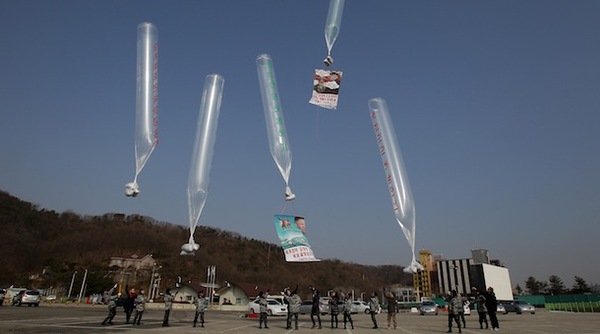
On 2 March 2016) South Korea’s legislature passed the North Korean Human Rights Act. The new law mandates the promotion of freedom in North Korea by funding North Korean defector and and refugee organizations, creating a North Korean human rights foundation, and establishing an archive of human rights violations perpetrated against the North Korean people by the Kim regime. The US-based Human Rights Foundation welcomed the Act as the NGO has advocated for such an action and in 2015 established the Global Coalition for the North Korean Human Rights Act.
“This is an astonishing moment. The Republic of Korea has taken its head out of the sand and has finally confronted the cruelty and horror of the North Korean dictatorship. It is a victory for all who support human rights and human dignity,” said HRF chairman Garry Kasparov. “We in the Global Coalition are delighted that the South Korean government will—for the first time ever—finance the defector organizations that send films, e-books, radio broadcasts, and educational materials to the North Korean people.”
The North Korean Human Rights Act also establishes a public campaign to raise awareness about North Korea’s human rights violations and takes steps to ensure that South Korean humanitarian aid is not misused by the Kim regime. The goal of establishing the human rights archive, inspired by the post-war German model, is to monitor and document the crimes of the North Korean dictatorship. It is vital to note that no such archive or record has ever existed in South Korea.
The law’s passage comes at a time when the rest of the world unanimously agrees on the extent and gravity of the crimes of the North Korean dictatorship. Earlier today, the U.N. Security Council voted 15-0 to toughen sanctions on the regime. “People inside the North will know about the law’s enactment and it will put considerable pressure on the political elite in Pyongyang,” said South Korean politician Kim Moon-soo, who first drafted the law in 2005.
For more information contact: Noemi Gonzalo-Bilbao, (212) 246-8486, noemi@hrf.org
Source: North Korea: HRF Celebrates Overdue South Korean Law Promoting Human Rights
See also: https://thoolen.wordpress.com/2015/05/29/north-korean-defector-ji-seong-ho-in-video-talk/
Posted in human rights, Human Rights Defenders, Human Rights Foundation | Leave a Comment »
Tags: defectors, documentation, freedom of information, Garry Kasparov, Human Rights Defenders, Human Rights Foundation, Ji Seong-ho, North Korean Human Rights Act, refugees
February 29, 2016
The Statement of the UN High Commissioner for Human Rights, Zeid Ra’ad Al Hussein, at the 31st session of the Human Rights Council in Geneva, on 29 February 2016 is worth reading (as usual). Some of the highlights are: 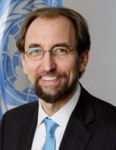
Today we meet against a backdrop of accumulating departures from that body of institutions and laws which States built to codify their behaviour. Gross violations of international human rights law – which clearly will lead to disastrous outcomes – are being greeted with indifference. More and more States appear to believe that the legal architecture of the international system is a menu from which they can pick and choose – trashing what appears to be inconvenient in the short term.
Read the rest of this entry »
Posted in human rights, Human Rights Council, Human Rights Defenders | Leave a Comment »
Tags: conflict, Human Rights Up Front, humanitarian law, migration, nationalism, racism, refugees, statement, UN High Commissioner for Human Rights Zeid, UN Human Rights Council, Zeid Ra'ad Al Hussein
February 17, 2016
The Sergio Vieira de Mello Foundation, dedicated to promoting dialogue for the peaceful resolution of conflict, organizes its annual debate on 7 March 2016, from 18h30 to 20h00, together with the Graduate Institute of Geneva. The subject is: “Mass migration: how can we ensure people’s safety and dignity?“. I takes place in the Auditorium Ivan Pictet, Maison de la Paix, Geneva. The speakers are:

Peter Maurer, President, International Committee of the Red Cross

Filippo Grandi, United Nations High Commissioner for Refugees
see also: https://thoolen.wordpress.com/2015/11/12/filippo-grandi-new-united-nations-high-commissioner-for-refugees/ Read the rest of this entry »
Posted in human rights, UN | Leave a Comment »
Tags: debate, Filippo Grandi, Geneva, Graduate Institute of International and Development Studies, ICRC, migration, Peter Maurer, refugees, Sergio Vieira de Mello Debate, United Nations High Commissioner for Refugees
November 12, 2015
On 11 November 2015 the Secretary-General of the United Nations, following consultations with the regional groups, announced that Filippo Grandi of Italy is to be the new United Nations High Commissioner for Refugees (UNHCR). 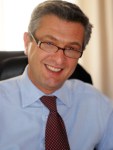
This is good news for the organization and the millions of refugees as Filippo brings enormous humanitarian experience with him: He was Commissioner-General of the United Nations Relief and Works Agency for Palestine Refugees in the Near East (UNRWA) from 2010 to 2014 and it’s Deputy Commissioner-General from 2005 until 2010. He served as the Secretary-General’s Deputy Special Representative with the United Nations Assistance Mission in Afghanistan (UNAMA) and has a long-standing career with UNHCR (1988-2004), notably as Chief of Mission in Afghanistan and Chief of Staff in the High Commissioner’s Executive Office. His vast field experience includes various positions in Sudan, Syria, Turkey and Iraq, having also led emergency operations in Kenya, Benin, Ghana, Liberia, the Great Lakes region of Central Africa, Democratic Republic of Congo and Yemen.
Filippo Grandi was born in Milan in 1957. He has a bachelor’s degree in philosophy from the State Universities of Venice and Milan, and from the Gregorian University in Rome.
Source: Secretary-General Nominates Filippo Grandi of Italy United Nations High Commissioner for Refugees | Meetings Coverage and Press Releases
Posted in human rights, UN | 1 Comment »
Tags: Filippo Grandi, Italy, Nomination, refugees, UN, UNHCR, United Nations High Commissioner for Refugees, UNRWA
October 6, 2015
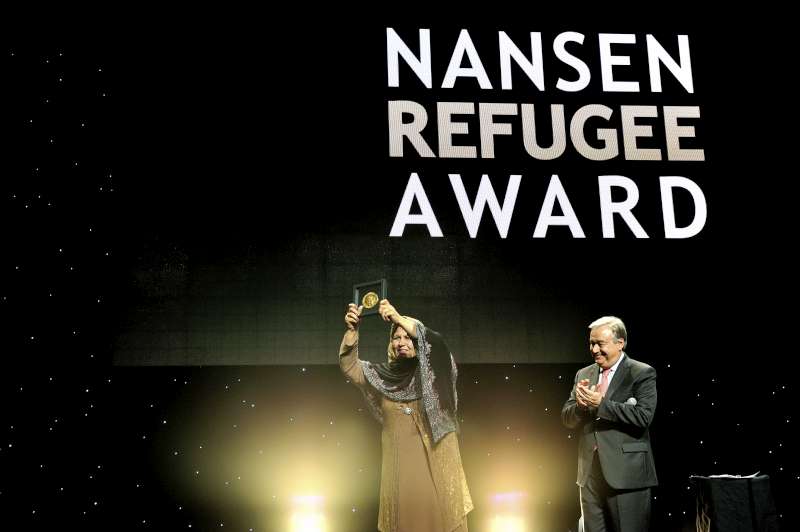
October seems to be very much the season of awards. Tonight is the MEA announcement and yesterday UNHCR presented the 2015 Nansen Refugee Award to Afghan refugee teacher Aqeela Asifi:

© UNHCR/M Henley
Aqeela Asifi made it her mission over more than 20 years in exile to bring education to refugee girls in a remote community in Pakistan. Asifi has been recognised for her tireless dedication to education for Afghan refugee girls in the Kot Chandana refugee village in Mianwali, Pakistan – while herself overcoming the struggles of life in exile. Despite minimal resources and significant cultural challenges, Asifi has guided a thousand refugee girls through their primary education.
“When I first set up my school I was not very optimistic. This success is beyond my expectations. Let the dove of peace be our messenger, let us shun the culture of war and weapons and let us promote the culture of pen and education. That’s the only way, my dear brothers and sisters, that we can bring peace and prosperity to our country.” Asifi said.
The Award ceremony, in Geneva’s Bâtiment des Forces Motrices, featured performances from UNICEF Goodwill Ambassador and two-time Grammy winner, Angelique Kidjo, and UNHCR Honorary Lifetime Goodwill Ambassador, Barbara Hendricks.
More about the Nansen award: http://www.brandsaviors.com/thedigest/award/nansen-medal
To learn more about Aqeela’s story: here
Source: UNHCR – UNHCR presents Nansen Refugee Award to Afghan refugee teacher
Posted in awards, human rights, UN | 1 Comment »
Tags: Afghanistan, Aqeela Asifi, awards, Barbara Hendricks, digest of human rights awards, Education, Geneva, Nansen medal, Nansen Refugee Award, Pakistan, refugees
June 17, 2015
For World Refugee Day 2015 (20 June) the United Nations High Commissioner for Refugees [UNHCR] has released several films featuring celebrity supporters that tell the human side of the refugee plight. This years’ campaign aims to bring the public closer to the story, showing refugees as ordinary people living in extraordinary circumstances. World Refugee Day 2015 is marked against a backdrop of multiple conflicts, growing numbers of forcibly displaced people and a rising tide of intolerance and xenophobia in many parts of the world.
The films feature UNHCR Goodwill Ambassador and best-selling author, Khaled Hosseini, photographer and supermodel Helena Christensen, singer/songwriter Maher Zain and actor Jung Woo-Sung . The films were recorded during recent field visits. Each supporter introduces an individual refugee and their story. These films and other refugee stories can be found on UNHCR’s Campaign website: www.refugeeday.org.
UNHCR offices in some 120 countries are planning various events including the film première of Salam Neighbor in Washington D.C.
The site www.refugeeday.org features stories from refugees who describe in their own words their own passions and interests; cooking, music, poetry, or sports. Through their testimonials UNHCR aims to show that these are ordinary people living through extraordinary times.
via UNHCR – UNHCR launches its 2015 World Refugee Day Campaign.
Posted in films, human rights, UN | 1 Comment »
Tags: celebrities, film portraits, films, Helena Christensen, Jung Woo-Sung, Khaled Hosseini, Maher Zain, public service announcements, refugees, Salam Neighbor, UNHCR, UNHCR Goodwill Ambassador, United Nations High Commissioner for Refugees, world refugee day
January 26, 2015
On 16 February 2015, the York Press carried a feature story by Stephen Lewis about 5 human rights defenders in the temporary shelter programme at York University. The aim of the placements is to give those fighting for human rights around the world a breather, as well as the chance to forge contacts with other human rights workers and organisations around the world.
In York, Hikma can wear jeans – something she’d never be able to do in her own country. “Sudan is a very patriarchal society,” the 33-year-old human rights lawyer says. “Women cannot wear trousers, and I cannot go out in public without a scarf on my head. I want to wear my trousers.“
Born in North Darfur, she graduated with a law degree from Elnileen University in Khartoum in 2002, then started work as a protection officer at a refugee camp in South Darfur for civil war victims. In 2009, her organisation was closed down by the government.

Hikma Rabih
Undeterred, in 2011 she set up a legal aid centre in Khartoum, the Sudanese capital. Her organisation provides legal aid and representation for women who would otherwise have no chance of getting justice. Because of strict adultery laws, women who have sex outside marriage face 100 lashes, she says: married women who commit adultery can be stoned. If a woman is raped, but fails to prove it in court, she can be given 100 lashes as an adulteress. “The men always go free,” Hikma says.
5 human rights defenders in York tell their incredible stories (From York Press).
Posted in Human Rights Defenders | Leave a Comment »
Tags: Centre for Applied Human Rights at York University, Darfur, Hikma Rabih, human rights lawyer, islamic fundamentalists, legal aid, refugees, rights of women, Sudan, woman human rights defender, York Press
December 12, 2014
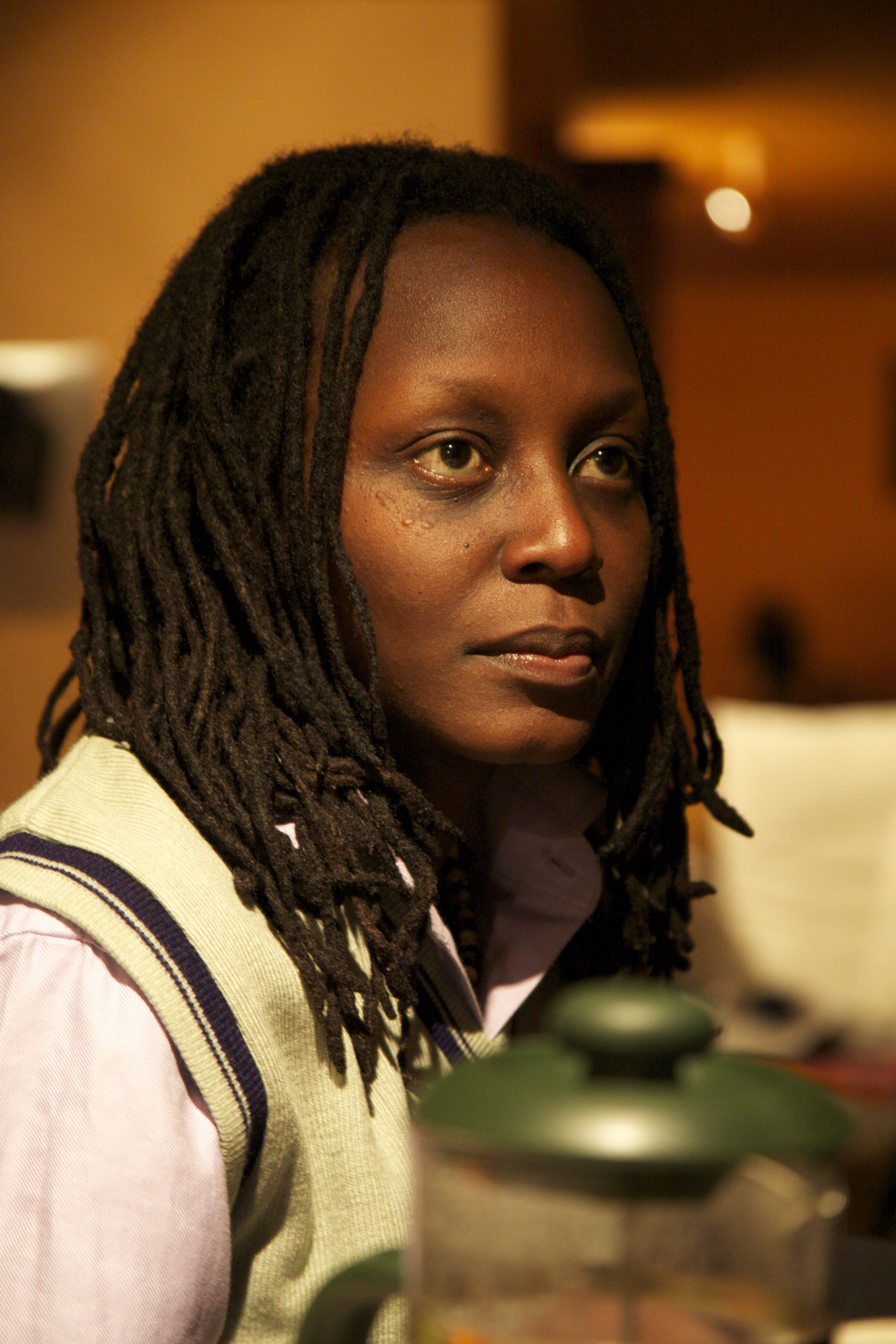
Under the title “FAMED UGANDAN ACTIVIST URGES UK HOME OFFICE NOT TO DEPORT LESBIAN” Melanie Nathan reports in her post of 11 December 2014 on O-blog-dee-o-blog-da that Kasha Jacqueline Nabagesera, the MEA laureate of 2011 has intervened strongly with the UK not to force Judith Twikiriz back to Uganda. “The UK has been very supportive of the Uganda Gay rights movement and it will be an embarrassment that your office doesn’t live up to its expectations in protecting those that need the protection most from persecution” Kasha writes in her letter. She would be sent back to the country where she already experienced torture and where she now faces likely persecution. The letter contains detailed arguments against deportation.
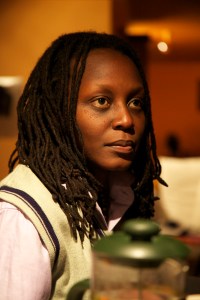
COPY OF THE LETTER to be found in the original post:
via Famed Ugandan Activist Urges UK Home Office Not to Deport Lesbian | O-blog-dee-o-blog-da.
Posted in awards, human rights, Human Rights Defenders | Leave a Comment »
Tags: Civil society, deportation, gay rights, Home Office, Kasha, Kasha Jacqueline Nabagesera, lesbian, LGBTI, MEA laureate 2011, Melanie Nathan, O-blog-dee-o-blog-da, persecution, refugee status determination, refugees, Uganda Gay rights movement, UK, woman human rights defender
 Hans Thoolen on Human Rights Defenders and their awards