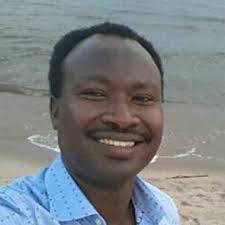
On 24 September 2021 the Middle East Monitor reported that the ALQST and the Prisoners of Conscience Twitter account quoted sources as saying that Al-Shamiri was released “following the expiry of his sentence.”
Al-Shamiri is a retired Saudi academic who worked at Umm Al-Qura University, he was also a consultant in the kingdom’s Shura Council for years.
He was arrested in 2007, and sentenced to a 15-year prison term on charges including “disobeying the ruler”.
In December 2003, Al-Shamiri was one of the signatories of a reform document sent to the Saudi monarch at the time, King Abdullah Bin Abdulaziz, demanding Saudis be allowed to participate in the political system. The document was followed by others, including one which demanded the release of three rights defenders, including the late Abdullah Al-Hamid.
’I have been prosecuted many times and jailed for my thoughts. I’m still here. I’m not going anywhere’ – Eren Keskin tweeted after she was sentenced.
Amnesty International has condemned the sentencing of four Turkish human rights defenders on “terrorism-related” in a case involving Özgür Gündem – a daily newspaper that was closed down in 2016. Eren Keskin, a prominent human rights defender and lawyer in Turkey – was sentenced to six years in jail for supposed “membership of an armed terrorist organisation”. See: https://www.trueheroesfilms.org/thedigest/laureates/BFDBB222-0FE0-32BF-ADD6-4D342A315C22
Zana Kaya, the newspaper’s editor-in-chief was sentenced to one year and 13 months in prison for “making propaganda for a terrorist organisation.” Özgür Gündem’s former publisher, Kemal Sancılı and the newspaper’s managing editor İnan Kızılkaya have been sentenced to six years and three months in prison for “being a member of an armed terrorist organisation” – the same sentence as Eren Keskin’s.
All four remain at liberty pending their appeals. This case is latest where anti-terrorism laws used to criminalise legitimate and peaceful activity in Turkey. Milena Buyum, Turkey Campaigner at Amnesty International said: “Today a human rights lawyer who has spoken out against injustice for more than three decades, has become the victim of injustice herself.
A journalist jailed for his coverage of mass protests in Algeria must be released, United Nations independent experts said on Wednesday. Khaled Drareniwas jailed for two years on Tuesday as a crackdown on dissent intensifies after a year of anti-government demonstrations. He was jailed for his coverage of the protest movement that toppled the North African country’s longtime president Abdelaziz Bouteflika last year. Drareni was initially handed three years but his sentence was reduced by a year on appeal. However, his lawyers were shocked that he was not handed a more lenient judgment or an acquittal.
“We condemn in the strongest possible terms this two-year prison sentence imposed on a journalist who was simply doing his job, and call on the Algerian authorities to reverse it and set Mr Drareni free,” the experts said. The experts do not speak for the UN but report their findings to it. Although his sentence was reduced, “it is still grossly inappropriate because the charges brought against him are a blatant violation of freedom of expression, peaceful assembly and of association”, they said.
The eight signatories included the special rapporteurs on peaceful assembly, freedom of opinion and human rights defenders, along with members of the UN working group on arbitrary detention. They said they were alarmed that the Algerian authorities were increasingly using national security laws to prosecute people who were exercising their rights. “Drareni, and all the others currently in prison, or awaiting trial simply for doing their job and defending human rights must be immediately released and protected,” they said.
Members of the pro-democracy Civic party carry portraits of Gui Minhai and Lee Bo during a protest in Hong Kong. Photograph: Bobby Yip/Reuters
Lily Kuo reported for the Guardian on A Chinese court has sentenced the Swedish bookseller to 10 years in prison for “providing intelligence” overseas, deepening diplomatic tensions as Sweden demanded that China release him.
A court in Ningbo said on Tuesday that Gui had been found guilty and would be stripped of political rights for five years in addition to his prison term. The brief statement said Gui had pleaded guilty and would not be appealing against his case. The Swedish foreign minister, Ann Linde, told Radio Sweden: “We have always been clear that we demand that Gui Minhai be released so he is able to reunite with his daughter, his family and that demand remains…We demand immediate access to our Swedish citizen in order to give him all consular support that he is entitled to.”
“Gui appears to have been tried and convicted in secret, denying him any chance of a fair trial,” said Patrick Poon, a China researcher at Amnesty International, calling the verdict “deplorable” and based on unsubstantiated charges.
Teodora Vasquez is photographed during an interview with AFP in San Salvador on September 12, 2019
Teodora Vasquez spent 10 years in jail for murder in El Salvador. Her crime? Giving birth to a dead baby. Now a new film tells her story and highlights the plight of 16 women still serving long sentences, as pressure grows for legislative change. Vasquez, who served more than one-third of her 30-year sentence, will present the 90-minute documentary “Fly So Far” at a festival in Sweden on 23 September. “After being locked up for so long, you can fly, you can go far,” Vasquez told AFP in an interview, explaining the film’s title. Vasquez, who will be in Stockholm to launch the film has become an outspoken human rights defender.
Sixteen women are currently in prison in El Salvador for what human rights groups describe as obstetric emergencies. Under Salvadoran law however, they were convicted of having abortions. “Even if those 16 women regain their freedom, we will continue the fight because we don’t want future generations to end up in jail because of the kind of obstetric problem that happened us,” said Vasquez.
The film by Swiss-Salvadoran director Celina Escher hopes to highlight their plight on the world stage. The film focuses on Maria Teresa Rivera, who was given political asylum in Sweden after being jailed in El Salvador. It portrays her life inside as well as after her release, showing the difficulties experienced by these women integrating back into society, particularly given the stigma of the crime for which they were convicted.
Vasquez currently directs a project that provides ex-prisoners with the chance of a fresh start — offering healthcare, psychological help, employment assistance and legal advice. “We have the problem that when we recover our freedom we leave with a criminal record, and having a criminal record, prevents us from getting any job.“
He had been found guilty of intentionally leaking state secrets to foreigners. The statement, from Mianyang Intermediate People’s Court, added Mr Huang would be deprived of his political rights for four years and had also been fined $2,900. Huang has kidney and heart disease and high blood pressure. And supporters have voiced concern about the consequences of the 56-year-old remaining imprisoned.
“This decision is equivalent to a death sentence, considering Huang Qi’s health has already deteriorated from a decade spent in harsh confinement,” said Christophe Deloire, the secretary-general of Reporters Without Borders. The press-freedom campaign group has previously awarded Huang its Cyberfreedom Prize. It has now called on President Xi Jinping to “show mercy” and issue a pardon.
Amnesty International has called the sentence “harsh and unjust”. “The authorities are using his case to scare other human rights defenders who do similar work exposing abuses, especially those using online platforms,” said the group’s China researcher Patrick Poon.
And in December 2018, a group of the United Nations’ leading human rights experts also pressed for Huang to be set free and be paid compensation. According to Reporters Without Borders, China currently holds more than 114 journalists in prison.
On 21 May, at the final hearing of the Özgür Gündem “Editors-in-Chief on Watch” campaign trial, woman human rights defender and co-chair of the Human Rights Association-Insan Hakları Dernerği (IHD), Eren Keskin, was sentenced to 3 years and 9 months prison term for “propaganda for a terrorist organisation” and “openly inciting to commit crime”.
As deeply concerning as this sentencing is, it is far from an isolated case: across Turkey, civil society activists struggling to ensure basic human rights and fundamental freedoms are targeted by the judiciary, acting as an extension of the legislative power, for legitimately and peacefully exercising their constitutional rights. EuroMed Rights strongly condemns the judicial harassment against Ms Keskin and her fellow activists.
EuroMed Rights calls on the Turkish authorities to respect their obligations under international human rights treaties, the European Convention on Human Rights and the Turkish constitution, end the crackdown on critics and halt the persecution of human rights defenders. and release all those detained for peacefully expressing their opinions.
Note The Editors-in-Chief on Watch campaign of Özgür Gündem daily began on May 3, 2016 and ended on August 7, 2016. Daily was closed through the Statutory Decree No. 675 issued under the State of Emergency. At the end of March, Ms. Keskin has been sentenced to 7 years and a half on charges of “insulting the President and State institutions” over three reports published in the newspaper in 2015. On 3 July, she will again stand trial in front of 23th High Criminal Court in Istanbul for the “ Özgür Gündem main trial”.
On 27 March 2019, 21 international and Burundian human rights organisations condemn new irregularities in the case of Germain Rukukiin a Joint statement:
Almost four months after his appeal hearing at the Bujumbura Court of Appeal on 26 November 2018, the judicial case file of Burundian human rights defender, Germain Rukuki, has gone missing. In December 2018, the Government of Burundi decided to divide the Bujumbura Court of Appeal into three separate appeal courts, and the file apparently went missing during the reorganization.
Germain is appealing against his wrongful conviction by the Ntahangwa High Court and 32-year prison sentence, the longest prison sentence imposed on a human rights defender in Burundi. He is still awaiting the Court’s decision, which was initially expected within 30-days of the appeal hearing.
The loss of his case file further violates Germain Rukuki’s right to a fair trial, in addition to the multiple irregularities and undue delays that have characterized the legal proceedings since his arrest in July 2017.
We, the undersigned non-governmental organisations, strongly condemn this blatant miscarriage of justice and insist that Germain’s conviction is unlawful and part of a pattern of systematic attacks against human rights defenders and dissent voices since 2015, as echoed by the international human rights community, international and national civil society, as well as the United Nations and the Commission of Inquiry on Burundi in its reportreleased in September 2018.
We, the undersigned organisations, call on Burundian authorities to:
Release Germain Rukuki immediately and unconditionally, and quash his conviction and sentence;
Comply with international and regional human rights standards, notably the rights to freedom of expression, association and peaceful assembly, and the right to a fair trial;
Until he is released, ensure Germain Rukuki and his lawyer have timely and adequate access to his case file;
Launch an immediate, effective, impartial and transparent investigation into the circumstances of and responsibility for the loss of Germain Rukuki’s file;
Recognise the legitimacy of human rights work in Burundi and ensure a safe and enabling environment in which it is possible to defend and promote human rights without fear of punishment, reprisal or intimidation…..
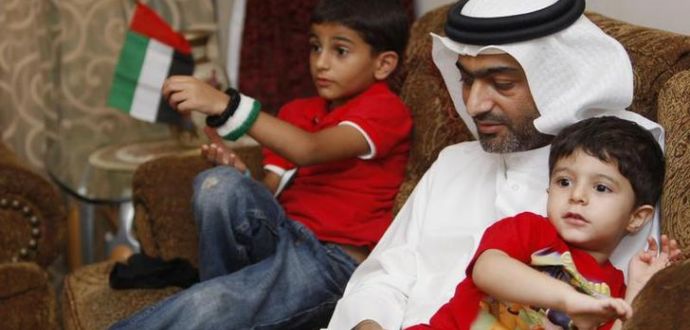
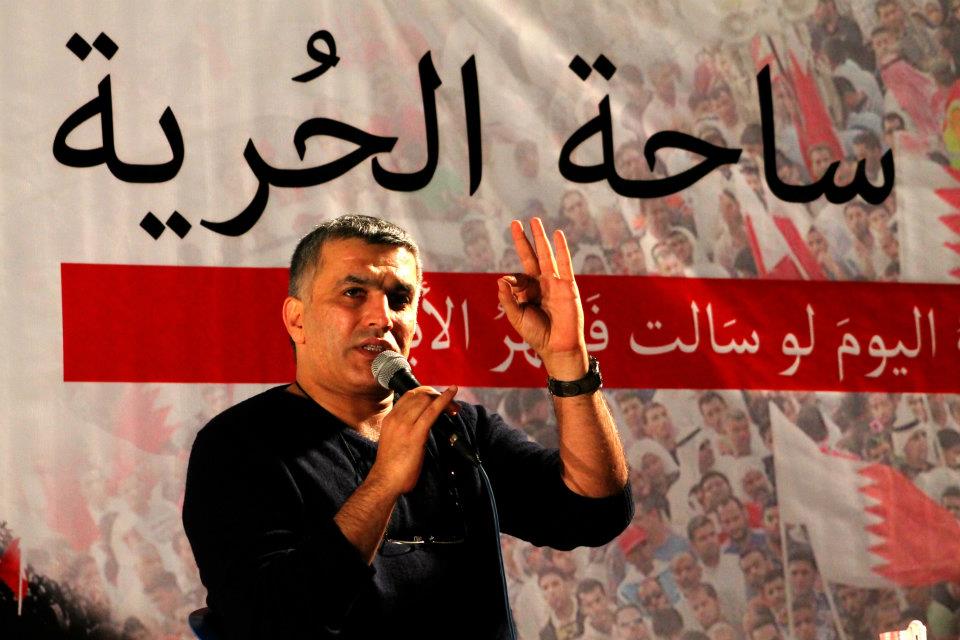
First of all I wish my readers a happy 2019. Unfortunately this year augurs badly for two human rights defenders who have figured frequently in this blog: Ahmed Mansoor [https://humanrightsdefenders.blog/tag/ahmed-mansoor/] and Nabeel Rajab [https://humanrightsdefenders.blog/2015/01/20/video-statement-of-troublemaker-nabeel-rajab-who-is-on-trial-today/]. Courts in the United Arab Emirates and Bahrain on Monday upheld the convictions of these two prominent human rights defenders serving lengthy prison terms for expressing anti-government dissent on social media. They have no right to further appeal. On 4 January 2019 there UN joined the critics of these sentences.
During an electoral campaign dominated by anti-migrant rhetoric, a Hungarian court has upheld a shocking verdict of terrorism against a Syrian citizen (Ahmed H.) and the symbolism is lost on no one [https://humanrightsdefenders.blog/2018/02/28/un-high-commissioner-for-human-rights-in-last-council-statement-does-not-mince-words/]. On 19 March 2018, Maxim Edwards (a journalist writing on Central and Eastern Europe and the post-Soviet space – currently assistant editor at OCCRP in Sarajevo) published a fascinating insight into how ill-defined terrorism laws and anti-immigrant hype (in Hungary in this case) can lead to upholding a verdict of terrorism against a Syrian refugee.
Ahmed H. in the courtroom during the second-instance trial. Photo courtesy of Amnesty International / Anna Viktória Pál.
“For Hungary to achieve anything in the next four years, we must not let in a single migrant” began Viktor Orbán in a speech earlier this month. ..
For Budapest, migration means terrorism — a commonsensical link reinforced daily by pro-government media and initiatives such as the state’s Public Consultation on Immigration and Terrorism. Leaflets for the May 2015 referendum on acceptance of refugees featured maps of “no go areas” across western Europe and shocking statistics about “murder by migrant.”
And now, the government has its very own case study. Last Wednesday, a Hungarian court upheld a verdict against a Syrian citizen accused of a terrorist act carried out at the Serbian border in 2015. After already spending two and a half years behind bars, Ahmed H. has been sentenced to seven years’ imprisonment and a ten year ban on entering Hungary.
.
……
This was due to the elastic definition of terrorist acts in the Hungarian criminal code. Article 314A defines terrorism as, among other things, “coercing a government agency, state, or international body to do or not to do something”. Consequently, Ahmed’s alleged demand by megaphone that the Hungarian border police open the gates was enough to convict him of an act of terrorism.
(Ahmed was also charged with illegal entry into Hungary as part of a mass riot, an administrative violation which carries a minimum sentence of five years. He did not contest the charge that he threw objects at the police, which alone cannot constitute a terrorist threat even in the most elastic of interpretations.)
…. In a final twist to this story, Ahmed’s other relatives made it to an EU country, where they now live in safety. Ahmed H. himself, probably one of the only people in the crowd at Röszke who could legally enter Hungary, had succeeded in his errand — at the cost of over ten years of his life.
![Abdul Rahman Al-Shamiri [m3takl/Twitter]](https://i1.wp.com/www.middleeastmonitor.com/wp-content/uploads/2021/09/saudi.jpg?resize=1199%2C800&quality=85&strip=all&zoom=1&ssl=1) Abdul Rahman Al-Shamiri
Abdul Rahman Al-Shamiri





 Hans Thoolen on Human Rights Defenders and their awards