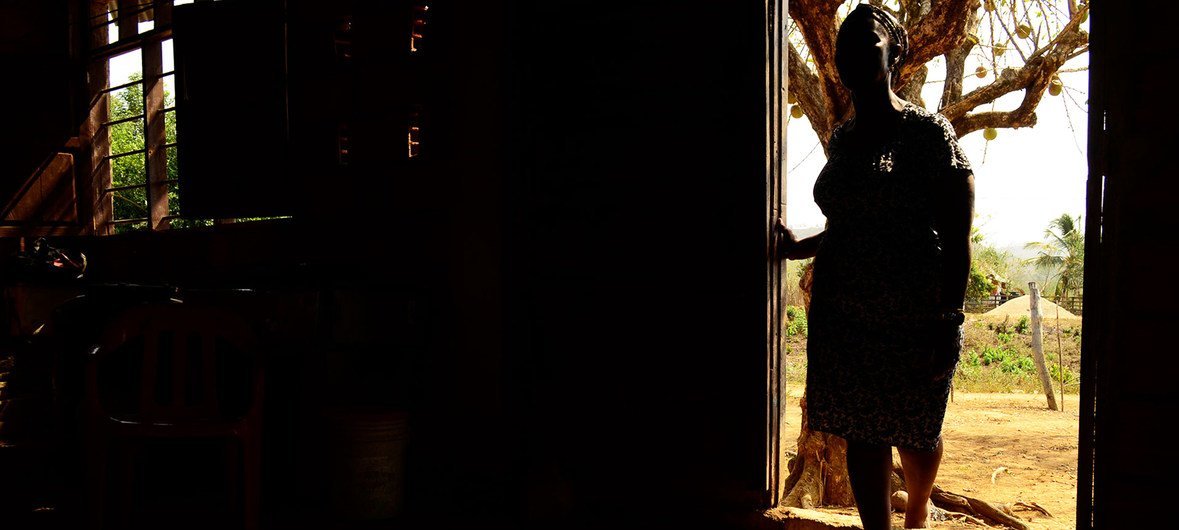
Chadema party MPs Halima Mdee, Ester Matiko and Ester Bulaya attend a press conference after being released from Segerea prison in Dar es Salaam, Tanzania, on March 12. PHOTO | AFP
According to BOB KARASHANI in the East African of 4 April 2020 Tanzania‘s Foreign Affairs ministry has hit out at the United Nations Human Rights Office for criticising the country’s human rights record as it heads to the October general election. According to the ministry’s Permanent Secretary Col Wilbert Ibuge, the statement issued by the Geneva-based UN agency on March 17, was biased, with unsubstantiated allegations, and an attempt to both malign Tanzania’s international reputation and intrude on its sovereignty. Col Ibuge said that before going public, the agency should have first raised its concerns with the government for clarification “which would have been duly and graciously provided.”
The UN recently called the sentencing of several opposition leaders on charges including sedition and unlawful assembly “further troubling evidence” of a crackdown on dissent and stifling of public freedoms in the country. It accused the government of using the country’s criminal justice system to target its critics, and called on Tanzania to “immediately lift” a four-year ban on political rallies ahead of the October election. “The democratic and civic space has shrunk to almost nothing in Tanzania,” the agency said.
UN Colombia – A wide range of human rights activists have been targeted in Colombia, especially those living in rural areas. Human and environmental rights campaigners are one focus of a new UNEP/OHCHR agreement.
On 16 August 2019 the UN environment agency (UNEP) and the UN human rights office (OHCHR) signed a landmark new agreement aimed at better protecting vulnerable human and environmental rights defenders and their families, while increasing protection for people and the places where they live, across the world. The UN Environment Programme (UNEP) will strengthen cooperation with OHCHR, as threats to individuals and communities defending their environmental and land rights intensify. Reports suggest that an average of more than three rights defenders were killed every week last year.
“A healthy environment is vital to fulfilling our aspiration to ensure people everywhere live a life of dignity”, said UNEP Executive Director, Inger Andersen. “We must curb the emerging trend of intimidation and criminalisation of land and environmental defenders, and the use of anti-protest and anti-terrorism laws to criminalise the exercise of rights that should be constitutionally protected.” “UNEP and the UN Human Rights Office are committed to bringing environmental protection closer to the people by assisting state and non-state actors to promote, protect and respect environmental and human rights. In doing so, we will move towards a more sustainable and just planet,” she added.
UN High Commissioner for Human Rights, Michelle Bachelet, said: “Our planet is being recklessly destroyed, and we urgently need stronger global partnerships to take action to save it…We call on leaders and governments to recognise that climate change and environmental degradation severely undermine the human rights of their people, particularly those in vulnerable situations – including the generations of tomorrow.”
A key part of the new protection agreement is to monitor threats to environmental human rights defenders more closely, develop better defenders’ networks, urge more effective accountability for perpetrators of violence and intimidation, and promote “meaningful and informed participation by defenders and civil society, in environmental decision-making.
Ms. Bachelet said every State needed to be encouraged “to develop and enforce national legal frameworks which uphold the clear linkages between a healthy environment and the ability to enjoy all other human rights, including the rights to health, water, food – and even the right to life…We also strongly encourage greater recognition that the actions and advocacy of environmental human rights defenders are deeply beneficial to all societies.”
In UN Dispatch of 20 February 2019 Mark Leon Goldberg described “..How the UN Is Impacted By The Budget Deal Between President Trump and Congress”.
The United States averted another government shutdown last week .. the budget also has big implications for US foreign policy in general — and for the United Nations in particular. The United States is the single largest funder of the United Nations, so decisions in Congress have outsized influence over how the United Nations and its many agencies operate.
Here is what you need to know about how the budget deal between President Trump and Congress will impact the United Nations.
UN Peacekeeping is underfunded.
The budget deal includes$1.551 billion for the “Contributions to International Peacekeeping Activities” account. This is the budget line that funds most of America’s contributions to United Nations peacekeeping operations, including key missions in Mali, the Democratic Republic of Congo, Lebanon and more. The $1.551 billion appropriated by Congress falls short of this rate by nearly 3%. At issue is an arbitrary “cap” of 25% that Congress imposes on US dues to UN peacekeeping, despite the fact that at the UN, the US had agreed to pay 27.9%. The gap between what is assessed and what is paid by the United States results in an underfunding of UN peacekeeping operations and the accumulation of arrears by the United States, now to the tune of $750 million.
This underfunding of UN peacekeeping is contributing to a major cash crisis for UN Peacekeeping operations. Last month, the UN Secretary General sent a letter to every UN ambassador, warning them that a $2 billion shortfall means the UN only has a few months of cash on hand to sustain its peacekeeping operations. This budget passed by congress only adds to the these uncertainties facing UN Peacekeeping.
The UN regular budget is properly funded
The “Contributions to International Organizations” account funds the regular budget of the United Nations and also the core budgets of some UN agencies, like the International Atomic Energy Agency and the World Health Organization. The Congressional deal includes over $1.3 billion for this account, which represents a funding level commensurate with the rates the United States is assessed as a dues paying member of the UN. In other words, it is the proper funding level.
The caveat here is that the Trump administration may still try to withhold, or slow walk, the disbursement of these funds in an attempt to punish the Office of the High Commissioner for Human Rights. Last year, the White House sought to withhold $27 million in payments to the UN, which it calculated was roughly the amount that the UN would spend to fund the Office of the High Commissioner for Human Rights and also the UN Human Rights Council. ..
The Budget Deal Thwarts the Trump Administration’s Attempt to Kill UNICEF
In its budget request last year, the White House sought to completely eliminate an account known as “International Organizations and Programs.” (UNICEF is also funded through this account)…
Congress did not agree to these gratuitous cuts, and maintained a funding level for this account consistent with previous budgets, to the tune of $340 million. The budget also includes consistent funding levels for global health programs like the Global Alliance for Vaccines and Immunizations and the Global Fund to Fight AIDS, Tuberculosis and Malaria. Additionally, the budget includes consistent levels of funding for refugee related programs, including the UN Refugee Agency and the UN Relief and Works Agency, which supports Palestinian refugees. (Alas, it is likely that the administration will nonetheless withhold the disbursement for UNRWA for political reasons.)
In sum, with the exception of UN Peacekeeping, American commitments to the United Nations remained consistent with America’s traditional role as the indispensable member state of the UN.
In a year that deep cuts were made to UN budgets, resourcing for human rights also activities took a big hit. The UN General Assembly’s approved approximately 50% less funding for some human rights posts than requested. Funds to support the work of treaty bodies were cut, but the need to adequately fund treaty bodies was reaffirmed, establishing a mandate for future resource requests.
Decisions directly affecting human rights activities were caught up in a powerful push – particularly by the US – for deep cuts to the proposed biennium budget. The approved UN regular budget for 2018 -2019 of $5.397 billion, is almost $200 million below what the Secretary General had sought, and 5% less than the budget approved for 2016-2017.
‘The percentage of the UN budget directed to support the human rights pillar is already tiny. To then carve off funding for posts already agreed as essential, makes no sense,’ she added. ‘The General Assembly ignores the fact that investing in human rights protection is a smart choice. ISHR’s Tess McEvoy said on 4 January 2018. (for more information on the budget cuts see https://www.ishr.ch/news/unga72-human-rights-funding-takes-hit-key-mandate-reaffirmed).
On27 February 2018 the OHCHR announced that Norway has pledged to increase its funding for the UN Human Rights Office, giving some USD 18m dollars – a year over four years. Generally there is impressive support for human rights from Scandinavia (Denmark is doubling its funding for 2018 USD 10m, and in 2017, Sweden was the second biggest donor with some USD16m).
However, even with a record USD142.8m in voluntary contributions last year, the UN Office still fell short of the funds needed to respond to all requests for assistance. Therefore it has just launched appeal for extra-budgetary funding for 2018 – with as most ambitious target yet, amounting to USD278.3m.
The OHCHR hopes that the 70th anniversary of the Universal Declaration of Human Rights will encourage all UN Member States to make voluntary contributions. If you want to see how much individual States gave to the UN Human Rights Office in 2017, please see: http://www.ohchr.org/Documents/AboutUs/FundingBudget/VoluntaryContributions2017.pdf
Anneliese Mcauliffein Al Jazeera on 6 December 2015 reported that two Chinese human rights defenders recognised as UN refugees were forcibly deported from Thailand to China last month and have appeared on Chinese state-run television and confessed to human-trafficking offenses. CCTV reported that Jiang Yefei was arrested for “assisting others to illegally cross the national border”, and Dong Guangping was charged with using a trafficking network to flee China while awaiting trial on sedition charges. It was the first time the two men were seen since being taken from a detention centre in the Thai capital Bangkok in November and deported to China.
The High Commissioner for Human Rights is putting together a report of practical recommendations on how to create and maintain the space for civil societyto work freely and independently. The freedom of expression, association, peaceful assembly etc are at the heart of civic activity and good laws and rules to guarantee public freedoms, as well as ways to monitor and protect them are of course a necessary condition. But also needed are:
a political and public environment that values civil society’s contributions
free flow of information
long-term support and resources
space for dialogue and collaboration
The OHCHR is interested to hear from you about your experience. Please share:
your examples and illustrations of these and other ways to maintain space to work
if there are limitations, how do you continue to carry out your activities
useful links, tools, resources, guides (whatever the language)
And forward this Note to others who should know about it!!
Please send information before 30 June 2015 by email to: civilsociety@ohchr.org, with in the subject heading “Civil Society Space Report – Input”.
Just a quick note to alert those (few?) who do not know it that you can easily subscribe (and unsubscribe) to the “Weekly Updates” from the Civil Society Section of the Office of the UN High Commissioner for Human Rights. Mail: civilsociety@ohchr.org. Telephone: +41 22 917 9656
It may not be news to the readers of this blog but it is good to heart the Office of the Un High Commissioner for G+Human Rights say it: “Movies are powerful” said Elena Ippoliti, Human Rights Officer for the UN Human Rights Office. “Sometimes, young people can open their eyes more through an eight-minute film, than through a two-hour lecture.”
For a decade the Office has partnered with the International Film Festival and Forum on Human Rights (FIFDH) in carrying out an educational programme, which takes place during the annual film festival. It provides screenings and discussions of a selection of human rights films for students mainly attending the secondary schools in Geneva. The festival was getting good audiences, but films were being seen by people who were already familiar with the issues. He said reaching out to schools seemed a natural fit.
Ippoliti said the education programme is also a chance for the Office to work at a local level in the headquarters host city of Geneva: “We, OHCHR Geneva, work at the global level. But by working with schools here, we also reach out to the local level,”.