Purpose:To inform the High Commissioner’s report pursuant to the Human Rights Council resolution 59/10.
In its resolution 59/10, the Human Rights Council requested the United Nations High Commissioner for Human Rights to “prepare a thematic report in follow-up to the report containing practical recommendations for the creation and maintenance of a safe and enabling environment for civil society, based on good practices and lessons learned, submitted to the Human Rights Council at its thirty-second session, to review progress against the recommendations contained therein, to identify new and emerging trends concerning civil society space, including through an analysis of the specific contribution and risks faced by underrepresented parts of civil society, and to provide an updated set of recommendations in the light of those trends, and to present the report to the Council at its sixty-third session.”
OHCHR invites States to respond to this online survey and share good practices and measures to protect and promote civic space in their countries, with a focus on the five areas outlined in the previous report (A/HRC/32/20) – as reflected below – on “practical recommendations for the creation and maintenance of a safe and enabling environment for civil society, based on good practices and lessons learned.” Please take the online survey here: English – French – Spanish
OHCHR also invites civil society, non-governmental organizations, national human rights institutions, United Nations entities and other relevant stakeholders, to respond to this online survey. If you are an organization working in a specific country, please provide information related to that country or context. If you represent a global and regional organization, please consider providing information for as many regions and/or countries as appropriate. Please take the online survey here: English– French– Spanish
The top awards for the 2024 International Contest for Minority Artists were presented to five award winners — Bianca Broxton, Joel Pérez Hernández, Francis Estrada, Laowu Kuang and youth laureate Jayatu Chakma — during a special ceremony in Geneva, Switzerland.
UN Human Rights partnered with civil society organizations, Freemuse, Minority Rights Group International, the City of Geneva, the Centre des Arts of the International School of Geneva, and with the support of the Loterie Romande. The theme, Memory in the Present, celebrates the creativity and cultural expression of minority artists whose artwork explores themes relating to memory and memorialization around the globe.
“Naturally, such collective identities will largely be grounded in a collective memory of events, generating or perpetuating values or traditions that shape the way persons belonging to a minority feel bound together by common experiences,” said Nicolas Levrat, United Nations Special Rapporteur on Minority Issues. “Such memories often define how and why these past experiences shared by persons belonging to a given minority (or by previous generations) make them singular, different from other groups.”
The contest serves as a platform for minority artists human rights defenders who play a key role worldwide to build bridges of understanding, dialogue and empathy through creative and artistic means. It celebrates minority artists who have made significant contributions to raise awareness, inspire action, and foster deeper understanding of human rights across diverse communities.
Bianca Broxton is an American interdisciplinary artist who focuses on raising awareness of health inequalities among minority women in the United States. She frames historical narratives and memories around the marginalized voices using sculptures and collages to portray minorities with dignity and a focus on restorative justice.
“My experience as a Black woman drives me to tell the histories of those who have faced systemic oppression and to portray them positively. I refuse to have my subjects seen only as victims of systemic injustice,” she said.
Laowu Kuang is a visual artist belonging to the Tibetan minority in China. Through a vivid interplay of colors and textures displayed on large canvases, his artwork navigates themes of memory and memorialization in contemporary China, through traditional Tibetan symbols and motifs.
“In contrast to Western painting, with its excessive color scale, and Han Chinese painting, with its muted and elegant concept of applying colors, Tibetan painting has a strong and intense contrast of colors,” he said. “The stone carvings of Tibetan folk art are a perfect combination of religion and nature, which is a communication and dialogue between human beings and gods, between heaven and earth.”
Joel Pérez Hernández is a visual and plastic artist from the Maya Tseltal people, born in the Lacandón jungle of Chiapas, Mexico. Hernández has dedicated years to studying traditional techniques and motifs with elder artisans and creators of his community.
“Much knowledge is asleep in our mountains, voices are trapped in the rivers, colors sleep under the stones, and in our collective memory, as well,” he said. “My people nourish me and motivate me to awaken all that; that is what I include in my works. I find no need to sign my pieces, because my people, my family, my friends make up the essence of each one of them.”
Born in the Philippines, Francis Estrada is a visual artist and educator, currently residing in the United States. Estrada’s artwork focuses on culture, history, and perception, and questions the influence of historical photographs, mass media, political propaganda, and personal archives on social narratives and collective memory.
“My art is a tool through which I confront how our understandings of culture are mediated, and the methods through which history and memory are created and perpetuated,” he said. “I think of my work as partial narratives for the viewers to complete based on their own experiences and associations.”
Youth laureate Jayatu Chakma is an artist belonging to the Chakma Indigenous community of the Chittagong Hill Tracts region in Bangladesh. His artwork features ink, acrylic, watercolor, and natural elements like mud and colors from leaves, as a way to reflect on the life of his community in relation with forced displacement and the loss of their lands.
“Chittagong Hill Tracts is a part of Bangladesh which represents a culture of variation in terms of people and landscape,” he said. “But there are stories hidden behind the decorated valleys of Chittagong Hill Tracts: my artworks are influenced by the stories of being displaced, losing belongings and relatives. I want to create artworks that show a different side of Chittagong Hill Tracts, besides its natural beauty and cultural diversity that we see on TV.”
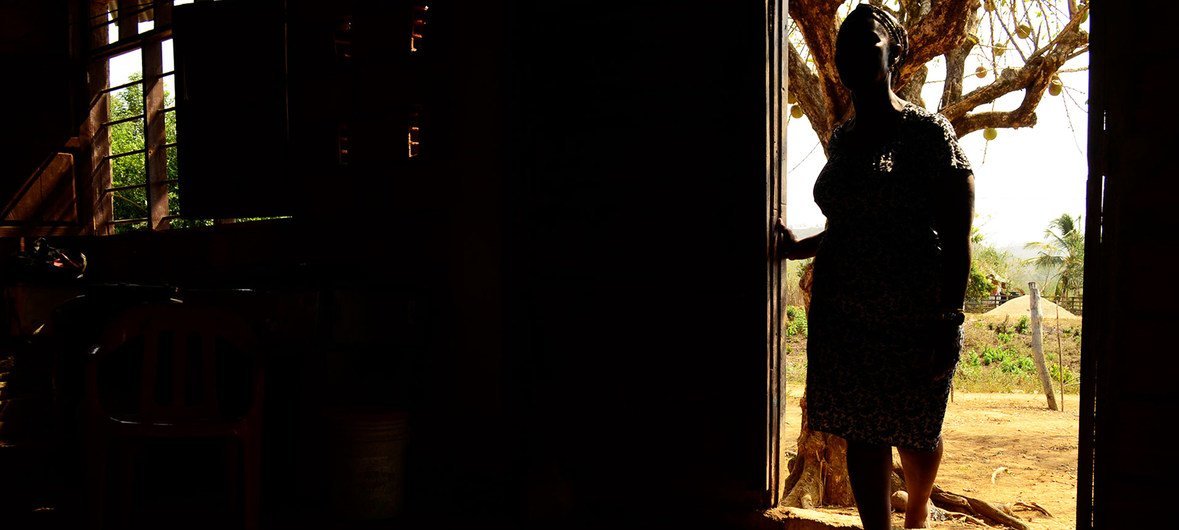
Nonhlanhla Dlamini heads SWAGAA – the Swatini Action Group Against Abuse, a local Eswatini organisation whose primary focus is on ending gender-based violence in the country. Since 1990, SWAGAA has provided care, support, prevention, and access to justice for victims and survivors of gender-based violence, by working with community leaders, community members, and the Government, as well as providing counselling for GBV victims. For the International Day for Women Human Rights Defenders, Dlamini answers questions about GBV, her inspirations and why it was necessary for her to become one of the first women elected as a member of parliament in Eswatini.
1. What was that specific inspiring moment or experience that made you decide to focus on gender-based violence?
What actually motivated me was an incident where a relative of mine was raped at the age of six by a stranger. We didn’t find the person. SWAGAA already existed, but I didn’t know anything about them. Then in 1997, I saw an advertisement [for SWAGAA] in the newspaper. And when I learned about what they were doing, I asked myself why I didn’t know about the organization when I had this problem because I had no one to talk to. I had no one to support me. We reported the matter to the police, but nothing ever happened. We’re so frustrated. So, when I saw the position, I just knew this was my job. And my objective was, I want people to know about SWAGAA. I wanted SWAGAA to be a household name.
2. How do you stay motivated and have you ever questioned your journey?
I have several times, particularly when I get hurt, because, you know, sometimes this world can be very cruel. And I ask myself, how could people do such an evil thing? I do get depressed. And when I’m very depressed, I’m like, you know, out of all the jobs that I could be doing, why am I even doing this job? Then I get some motivation with some of the success stories. If I quit, who else is going to do it? I kind of feel I’m compelled to do it because there’s a whole lot of people that are looking up to me for help. So, I continue.
3. You were elected MP back in the early 2000s, the first woman ever for your constituency. What made you decide you had to run?
… The mistake that we make as advocates and women’s rights activists is that we’re always pushing for others to go and make the change that we want to see. So, I made a decision; I was going to stand for the next elections, which were in 2008. I realized that for years, I’ve been part of a vote for a woman campaign, pushing women to stand for elections. But I’ve never thought of myself one day running for elections. I ran the race to Parliament. I was nominated. I was widely supported. I won the primary elections. It was easy for the primary elections, but the secondary elections were not easy. And I was the only woman against seven men. It was very rough. It was very testing. But I pushed with everything that I had. And I won the elections, and I became a member of Parliament. And the first motion that I moved in Parliament, was that the Minister of Justice bring the sexual offenses and domestic violence bill within 30 days. And his response was no. I kept asking, and that is how the bill was finally seen by Parliament.
4. Let’s look to the future. If you could change one thing about the situation of gender-based violence in Eswatini, what would it be?
The most critical thing is prevention. Prevention, prevention, because once it happens, it’s difficult to pick up the pieces. …
5. Do you consider yourself a woman human rights defender? Why?
Of course I do, 100 percent. I consider myself a human rights defender because due to the nature of the work that I’m doing, I am continuously standing up for the rights of women and girls in Eswatini. And I have advocated for better legislation in the country. I have advocated for better services in the country, be it in the police, be it in the hospitals, be it in the justice system. I have done everything that I think needs to be done under the sun to make sure that I stand for the rights of the citizens of this country. And I’m saying this because I also know people believe in me. I’ve done all I possibly can to advocate for the rights of women and children in the country.
The Special Rapporteur on the situation of human rights defenders is seeking input for her upcoming report to the Human Rights Council, which will focus on human rights defenders working in remote and rural areas. The report, to be presented in March 2025, will explore the unique challenges faced by these human rights defenders, such as geographic isolation, limited access to resources, and lack of meaningful consultation. Despite these challenges, human rights defenders in these regions play a critical role in defending human rights, maintaining public institutions, and ensuring the rule of law.
This call for input invites contributions from a range of stakeholders, including States, businesses, civil society organizations, and human rights defenders themselves. The aim is to assess the nature of threats, obstacles, and opportunities for human rights defenders in these remote regions. Submissions should focus on topics like gender-specific challenges, protection strategies, successes achieved, and examples of good practices. These inputs will help shape practical recommendations on improving safety, access to resources, and support for defenders in rural areas.
The collected inputs will inform the report and be published on the OHCHR website to foster dialogue and improve protection measures for human rights defenders in these challenging environments.
Chadema party MPs Halima Mdee, Ester Matiko and Ester Bulaya attend a press conference after being released from Segerea prison in Dar es Salaam, Tanzania, on March 12. PHOTO | AFP
According to BOB KARASHANI in the East African of 4 April 2020 Tanzania‘s Foreign Affairs ministry has hit out at the United Nations Human Rights Office for criticising the country’s human rights record as it heads to the October general election. According to the ministry’s Permanent Secretary Col Wilbert Ibuge, the statement issued by the Geneva-based UN agency on March 17, was biased, with unsubstantiated allegations, and an attempt to both malign Tanzania’s international reputation and intrude on its sovereignty. Col Ibuge said that before going public, the agency should have first raised its concerns with the government for clarification “which would have been duly and graciously provided.”
The UN recently called the sentencing of several opposition leaders on charges including sedition and unlawful assembly “further troubling evidence” of a crackdown on dissent and stifling of public freedoms in the country. It accused the government of using the country’s criminal justice system to target its critics, and called on Tanzania to “immediately lift” a four-year ban on political rallies ahead of the October election. “The democratic and civic space has shrunk to almost nothing in Tanzania,” the agency said.
UN Colombia – A wide range of human rights activists have been targeted in Colombia, especially those living in rural areas. Human and environmental rights campaigners are one focus of a new UNEP/OHCHR agreement.
On 16 August 2019 the UN environment agency (UNEP) and the UN human rights office (OHCHR) signed a landmark new agreement aimed at better protecting vulnerable human and environmental rights defenders and their families, while increasing protection for people and the places where they live, across the world. The UN Environment Programme (UNEP) will strengthen cooperation with OHCHR, as threats to individuals and communities defending their environmental and land rights intensify. Reports suggest that an average of more than three rights defenders were killed every week last year.
“A healthy environment is vital to fulfilling our aspiration to ensure people everywhere live a life of dignity”, said UNEP Executive Director, Inger Andersen. “We must curb the emerging trend of intimidation and criminalisation of land and environmental defenders, and the use of anti-protest and anti-terrorism laws to criminalise the exercise of rights that should be constitutionally protected.” “UNEP and the UN Human Rights Office are committed to bringing environmental protection closer to the people by assisting state and non-state actors to promote, protect and respect environmental and human rights. In doing so, we will move towards a more sustainable and just planet,” she added.
UN High Commissioner for Human Rights, Michelle Bachelet, said: “Our planet is being recklessly destroyed, and we urgently need stronger global partnerships to take action to save it…We call on leaders and governments to recognise that climate change and environmental degradation severely undermine the human rights of their people, particularly those in vulnerable situations – including the generations of tomorrow.”
A key part of the new protection agreement is to monitor threats to environmental human rights defenders more closely, develop better defenders’ networks, urge more effective accountability for perpetrators of violence and intimidation, and promote “meaningful and informed participation by defenders and civil society, in environmental decision-making.
Ms. Bachelet said every State needed to be encouraged “to develop and enforce national legal frameworks which uphold the clear linkages between a healthy environment and the ability to enjoy all other human rights, including the rights to health, water, food – and even the right to life…We also strongly encourage greater recognition that the actions and advocacy of environmental human rights defenders are deeply beneficial to all societies.”
In UN Dispatch of 20 February 2019 Mark Leon Goldberg described “..How the UN Is Impacted By The Budget Deal Between President Trump and Congress”.
The United States averted another government shutdown last week .. the budget also has big implications for US foreign policy in general — and for the United Nations in particular. The United States is the single largest funder of the United Nations, so decisions in Congress have outsized influence over how the United Nations and its many agencies operate.
Here is what you need to know about how the budget deal between President Trump and Congress will impact the United Nations.
UN Peacekeeping is underfunded.
The budget deal includes$1.551 billion for the “Contributions to International Peacekeeping Activities” account. This is the budget line that funds most of America’s contributions to United Nations peacekeeping operations, including key missions in Mali, the Democratic Republic of Congo, Lebanon and more. The $1.551 billion appropriated by Congress falls short of this rate by nearly 3%. At issue is an arbitrary “cap” of 25% that Congress imposes on US dues to UN peacekeeping, despite the fact that at the UN, the US had agreed to pay 27.9%. The gap between what is assessed and what is paid by the United States results in an underfunding of UN peacekeeping operations and the accumulation of arrears by the United States, now to the tune of $750 million.
This underfunding of UN peacekeeping is contributing to a major cash crisis for UN Peacekeeping operations. Last month, the UN Secretary General sent a letter to every UN ambassador, warning them that a $2 billion shortfall means the UN only has a few months of cash on hand to sustain its peacekeeping operations. This budget passed by congress only adds to the these uncertainties facing UN Peacekeeping.
The UN regular budget is properly funded
The “Contributions to International Organizations” account funds the regular budget of the United Nations and also the core budgets of some UN agencies, like the International Atomic Energy Agency and the World Health Organization. The Congressional deal includes over $1.3 billion for this account, which represents a funding level commensurate with the rates the United States is assessed as a dues paying member of the UN. In other words, it is the proper funding level.
The caveat here is that the Trump administration may still try to withhold, or slow walk, the disbursement of these funds in an attempt to punish the Office of the High Commissioner for Human Rights. Last year, the White House sought to withhold $27 million in payments to the UN, which it calculated was roughly the amount that the UN would spend to fund the Office of the High Commissioner for Human Rights and also the UN Human Rights Council. ..
The Budget Deal Thwarts the Trump Administration’s Attempt to Kill UNICEF
In its budget request last year, the White House sought to completely eliminate an account known as “International Organizations and Programs.” (UNICEF is also funded through this account)…
Congress did not agree to these gratuitous cuts, and maintained a funding level for this account consistent with previous budgets, to the tune of $340 million. The budget also includes consistent funding levels for global health programs like the Global Alliance for Vaccines and Immunizations and the Global Fund to Fight AIDS, Tuberculosis and Malaria. Additionally, the budget includes consistent levels of funding for refugee related programs, including the UN Refugee Agency and the UN Relief and Works Agency, which supports Palestinian refugees. (Alas, it is likely that the administration will nonetheless withhold the disbursement for UNRWA for political reasons.)
In sum, with the exception of UN Peacekeeping, American commitments to the United Nations remained consistent with America’s traditional role as the indispensable member state of the UN.
In a year that deep cuts were made to UN budgets, resourcing for human rights also activities took a big hit. The UN General Assembly’s approved approximately 50% less funding for some human rights posts than requested. Funds to support the work of treaty bodies were cut, but the need to adequately fund treaty bodies was reaffirmed, establishing a mandate for future resource requests.
Decisions directly affecting human rights activities were caught up in a powerful push – particularly by the US – for deep cuts to the proposed biennium budget. The approved UN regular budget for 2018 -2019 of $5.397 billion, is almost $200 million below what the Secretary General had sought, and 5% less than the budget approved for 2016-2017.
‘The percentage of the UN budget directed to support the human rights pillar is already tiny. To then carve off funding for posts already agreed as essential, makes no sense,’ she added. ‘The General Assembly ignores the fact that investing in human rights protection is a smart choice. ISHR’s Tess McEvoy said on 4 January 2018. (for more information on the budget cuts see https://www.ishr.ch/news/unga72-human-rights-funding-takes-hit-key-mandate-reaffirmed).
On27 February 2018 the OHCHR announced that Norway has pledged to increase its funding for the UN Human Rights Office, giving some USD 18m dollars – a year over four years. Generally there is impressive support for human rights from Scandinavia (Denmark is doubling its funding for 2018 USD 10m, and in 2017, Sweden was the second biggest donor with some USD16m).
However, even with a record USD142.8m in voluntary contributions last year, the UN Office still fell short of the funds needed to respond to all requests for assistance. Therefore it has just launched appeal for extra-budgetary funding for 2018 – with as most ambitious target yet, amounting to USD278.3m.
The OHCHR hopes that the 70th anniversary of the Universal Declaration of Human Rights will encourage all UN Member States to make voluntary contributions. If you want to see how much individual States gave to the UN Human Rights Office in 2017, please see: http://www.ohchr.org/Documents/AboutUs/FundingBudget/VoluntaryContributions2017.pdf
![Mga Nalimutan [The Forgotten], inspired by a photography taken by Joe Galvez New York City, United States, 2017.](https://www.ohchr.org/sites/default/files/styles/hero_5_image_desktop/public/2024-11/minority-artists-award-memory-in-present-2024-972x700.jpg?itok=oQgPdm-9)



 Hans Thoolen on Human Rights Defenders and their awards