Posts Tagged ‘Observatory for the Protection of HRDs’
April 19, 2013
Intervening at the 53rd ordinary session of African Commission on Human and Peoples Rights, on 18 April 2013, the FIDH and the OMCT, in the framework of their Observatory for the Protection of Human Rights Defenders, expressed their grave concern about the situation of human rights defenders in Africa, which they stated had not observed an improvement. Violations of human rights targeting defenders have continued, notably in Algeria, Cameroon, Chad, Democratic Republic of Congo DRC, Djibouti, Egypt, Gambia, Sudan and Zimbabwe. Judicial harassment based on false accusations, accompanied by arbitrary arrests and detentions, remains the most common harassment technique, especially in Algeria and Zimbabwe, but also in Cameroon, Djibouti, Egypt, The Gambia and Sudan. In several countries, including The Gambia and DRC, defenders have also been subjected to threats and smear campaigns. In late December 2012 / early January 2013, the presence in Goma in the Kivu region of non-State armed groups notably led to increased threats against local defenders, forcing many of them to hide or flee into exile. The targeted defenders are, inter alia, members of NGOs and lawyers in Chad, DRC, Zimbabwe, journalists in Djibouti, trade unionists fighting against impunity in Algeria, Djibouti, DRC, Zimbabwe or defending land rights and the right to a healthy environment in Cameroon; defenders of the right to work in Algeria and the right to health care in Sudan; advocates for the abolition of the death penalty in The Gambia, women’s rights in DRC, The Gambia, and free and fair elections in Zimbabwe; and activists campaigning against arbitrary detention in Egypt. Some excerpts follow but the reference to the full report is below:

Read the rest of this entry »
Posted in FIDH, human rights, Human Rights Defenders, OMCT | Leave a Comment »
Tags: Africa, African Commission on Human and Peoples' Rights, Algeria, Arab region, Arab spring, Burundi, congo drc, Djibouti, DRC, Ethiopia, FIDH, funding, Gambia, human rights, Human rights defender, Human Rights Defenders, impunity, International Federation for Human Rights, judicial harassment, Non-governmental organization, Observatory for the Protection of HRDs, OMCT, regulation, Sudan, threats, World Organisation Against Torture, Zimbabwe
April 11, 2013
Interesting example of how NGO pressure can have effect on the EU: last December, FIDH organised a round of advocacy with its Vice-President and Laureate of the MEA 2006, Arnold Tsunga, to convey to the European Union its concerns around the ongoing risks for human rights defenders in the context of political deadlock and pre-electoral period [“Zimbabwe: Ongoing risks for human rights defenders in the context of political deadlock and pre-electoral period”, report of the Observatory for the protection of human rights defenders published in November 2012.] FIDH’s objective was to gear up the EU’s attention to ensure early warning and appropriate reaction in case of human rights violations taking place in the electoral cycle staring with the upcoming referendum on the new Constitution before the holding of Presidential elections in the summer of this year. FIDH’s advocacy was reflected in the European Parliament’s prompt reaction to the arrest of Okay Machisa, National Executive Director of ZimRights, and two other ZimRights members Leo Chamahwinya, Dorcas Shereni through an urgent resolution adopted on 7 February, which also relays the Observatory report recommendations. In addition, the EU Delegation and Heads of Missions in Harare issued a Statement on 22 February to indicate the EU’s particular concern around the pattern of incidents of harassment against civil society organisations and to call on the authorities to demonstrate impartiality in their relation to civil society. 
via Zimbabwe : UE pays particular attention to the situation of … – FIDH.
Posted in FIDH, human rights, Human Rights Defenders, MEA, OMCT | Leave a Comment »
Tags: Arnold Tsunga, civil society organisations, election violence, EU, European Parliament, European Union, FIDH, Harare, Human right, human rights, Human rights defender, International Federation for Human Rights, MEA, NGO, Observatory, Observatory for the Protection of HRDs, OMCT, World Organisation Against Torture, Zimbabwe
March 26, 2013
I have reported extensively over the last days on the question of growing judicial and administrative harassment of NGOs and human rights defenders, including the adoption of a resolution last week by the UN Human Rights Council recalling that “domestic law and administrative provisions […] should facilitate the work of human rights defenders, including by avoiding any criminalization, stigmatization, impediments, obstructions or restrictions thereof contrary to international human rights law”. Still, this is exactly what the Russian Federation is doing at the moment according to a statement by the Observatory for the Protection of Human Rights Defenders: Hundreds of NGOs are being subjected to inspections by Government officials across the Russian Federation. This follows the adoption in 2012 of several laws contradicting the right to freedom of association, peaceful assembly and expression. …Since the end of February until today, dozens of inspections of NGOs have been launched in at least 13 regions of the Russian Federation, including Krasnodar, Moscow, Orenburg, Penza, Perm and Altai territories, St. Petersburg, Primorsky, Saratov and Rostov provinces. In St. Petersburg, the Spokesperson for the Office of the Prosecutor declared on March 19, 2013 that over the month some 5,000 inspections would be conducted to check compliance with the laws on terrorism, extremism as well as other offences. After this date, dozens of NGOs were inspected in St. Petersburg, including LGBT, human rights and environmental NGOs. Across the country, these operations have been conducted by prosecutors, together with, in some cases, officials from the Ministry of Justice, the Ministry of Internal Affairs, the Federal Security Service FSB, the Ministry of Emergencies, the Federal Service for Supervision of Protection of Consumer Rights and Human Well-Being, the Tax Inspectorate, the Centre E, a unit specialised in anti-extremism, and even the fire service. According to the information received, inspections have particularly targeted groups that supposedly receive foreign funding and conduct monitoring or advocacy work. The scope of the inspections appears to be far-ranging, though inspectors have particularly insisted on the issue of funding. The massive character as well as methods used during inspections disproportionately interfere with the right to freedom of association: the number of inspections is massive, most inspections are unannounced, NGOs have been given short deadlines to provide a huge amount of documents and vague and non-exhaustive lists of requirements. In the case of prominent NGO Human Rights Centre “Memorial”, a pro-government TV crew was informed and present during the inspection. The news report entitled “Memorial hides its income from the Prosecutors Office” was broadcast the same day before the end of the inspection, in flagrant violation of the presumption of innocence. “Information on NGOs sources of funding are public. Read the rest of this entry »
Posted in FIDH, human rights, Human Rights Defenders, OMCT | 1 Comment »
Tags: Civil society, FIDH, freedom of association, funding, Human right, Human rights defender, Human Rights Defenders, International Federation for Human Rights, Justice Ministry, legal restrictions, NGOs, Non-governmental organization, Observatory for the Protection of HRDs, OMCT, Russia, Souhayr Belhassen, UN Declaration, UN Resolution, United Nations Human Rights Council, World Organisation Against Torture
March 16, 2013
I reported earlier that on 28 February the International Federation for Human Rights (FIDH) and the World Organisation Against Torture (OMCT), in the framework of their joint programme the Observatory for the Protection of Human Rights Defenders, organised a meeting on (legal) restrictions increasingly imposed on human rights defenders. This was followed up on 11 March with an oral intervention at the UN Human Rights Council. 
The statement referred to the recently published Annual Report 2013 of the Observatory, which states that NGOs’ access to funding, in particular foreign funding, is increasingly being hindered by governments around the world. Restrictive laws combined with unfounded criticism, smear campaigns and judicial harassment directed against human rights defenders because of the source of their funding create a hostile environment towards their activities as a way to silence them. Belarusian law now prohibits any possibility for an NGO to hold a bank account in an institution based abroad, and criminalises the use of so-called unauthorised funds. These new provisions were adopted as FIDH Vice-President and “Viasna” President Ales Bialiatski was sentenced to 4.5 years’ imprisonment after he made use of foreign funds to finance human rights activities in his country. Read the rest of this entry »
Posted in FIDH, human rights, OMCT | 3 Comments »
Tags: Bahrain, Bangladesh, Belarus, Egypt, Ethiopia, FIDH, funding, Geneva, Human right, human rights, Human rights defender, Human Rights Defenders, India, International Federation for Human Rights, judicial harassment, legal restrictions, Non-governmental organization, Observatory for the Protection of HRDs, OMCT, Russia, United Nations, United Nations Human Rights Council, World Organisation Against Torture
February 17, 2013
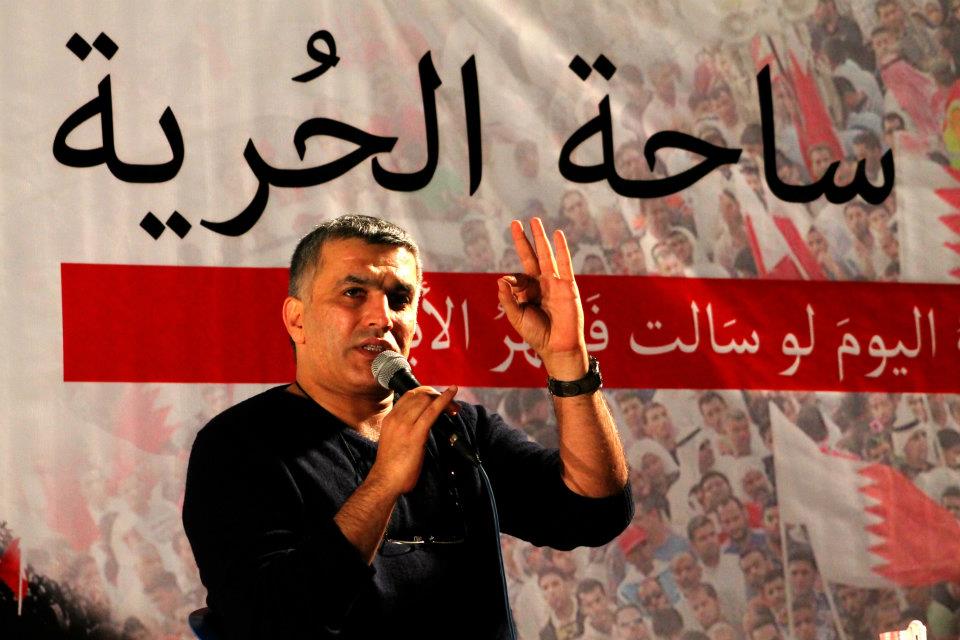
 The Observatory for the Protection of Human Rights Defenders, a joint programme of the International Federation for Human Rights (FIDH) and the World Organisation Against Torture (OMCT), published on 14 February 2013 a report, which presents the findings of a judicial observation mission conducted on the trial in appeal of prominent human rights defender Nabeel Rajab. The report concludes that a series of violations of the right to fair trial marred the judicial process and that Nabeel Rajab is suffering judicial harassment (and was sentenced to 2 years imprisonment) for merely advocating for and exercising the right to peaceful assembly in Bahrain. The report is available in English and Arabic.
Nabeel Rajab is President of the Bahrain Centre for Human Rights (BCHR) and Director of the Gulf Centre for Human Rights (GCHR), Deputy Secretary General of FIDH, and the BCHR was 2012 nominee for the MEA. Read the rest of this entry »
Posted in FIDH, human rights, Human Rights Defenders, OMCT | 6 Comments »
Tags: Bahrain, Bahrain Centre for Human Rights, Bahrain Independent Commission of Inquiry, Gerald Staberock, human rights, International Federation for Human Rights, Manama, MEA 2012, Middle East, Nabeel Rajab, Observatory for the Protection of HRDs, religion, Souhayr Belhassen, trial observation, World Organisation Against Torture
January 8, 2013
Somewhat different from the Observatory’s report on Zimbabwe I referred to in my post of 26 November 2012, this report by a broad coalition of local NGOs (listed at the end of the document) paints a more mixed picture. The report of the Zimbabwe NGO Human Rights Forum covers the period September to december 2012.
After reflecting on the deadlock in the constitution making process, the report documents the continuing harassment of civil society and political activists that charac terised the period. The operating environment for NGO’s continued to be very challenging. Police arrested and ill-treated peaceful protesters, especially the Women of Zimbabwe Arise activists. Other organisations that faced raids and arrests included the Gays and Lesbians of Zimbabwe, the Counselling Services Unit and many other civil society organisations offering vital services to vulnerable Zimbabweans. Human Rights lawyers were hampered at every turn as they tried to carry out their professional duties and protect Human Rights Defenders.
Fears of the same levels of political violence that characterised the 2008 election period were re-ignited when President Mugabe announced to the UN General Assembly that there would be a constitutional referendum in November 2012 and harmonised elections in March 2013. The news was greeted with great concern. In September 2012, the Zimbabwe Election Support Network stated that it would be logistically impossible to hold a referendum in November and elections in March. They cited disputes in finalising the new constitution, continuing political intimidation and gross inaccuracies in voters’ lists that still name ‘ghost’ electors who have long been dead. The organisation called for a number of important issues to be dealt with first. These include resourcing the Zimbabwe Electoral Commission, revision of the outdated Referendum Act and effecting technical changes to the Electoral Bill as well as updating and cleaning the voter’s roll. This led to the passing into law of the Zimbabwe Human Rights Commission and the Electoral Amendment acts.
Sadly as 2012 drew to a close the Annual ZANU PF Congress rang a warning bell against NGO’s and, as if nothing had ever changed, within days, the police began wantonly raiding and arresting human rights organisations all over again.
Despite the setbacks narrated above, it is our view that Zimbabwe is in a better place today than it was 2008. All the credit is due to the Human Rights Defenders who have tirelessly worked on the ground as well as our regional and international partners and without whose input the country could have descended into lawlessness. The attainment of democracy is a process not an event and indeed Zimbabwe is currently in transition although that transition is fraught with unnecessary detours and compromises. However such compromises, disappointing as they may be in the short run, may aid the transitional process in the long run. A case in point is the limited temporal jurisdiction of the Zimbabwe Human Rights Commission and Zimbabwe’s failure to ratify the Rome Statute.
Ironically a focus on ratification of the Rome Statute for some countries in transition can impede the chances of a peaceful transition. In other words whilst Zimbabwean civil society is absolutely committed to ratification, that long-term necessity should also not derail the process of transition, and this indeed calls for a judicious balancing act. ‘In other words it was important not to allow perfection to become the enemy of the good.’
 Download PDF (340.68 KB)
Posted in human rights, Human Rights Defenders | Leave a Comment »
Tags: Africa, arrest, elections, harassment, Human Rights Defenders, Observatory for the Protection of HRDs, Robert Mugabe, Rome statute, transition, Women of Zimbabwe Arise, Zimbabwe, Zimbabwe Electoral Commission, Zimbabwe NGO Human Rights Forum
January 4, 2013
The Observatory for the Protection of Human Rights Defenders, a joint programme of the International Federation for Human Rights (FIDH) and the World Organisation Against Torture (OMCT), reports the arbitrary detention of Mr. Le Quoc Quan, a human rights lawyer and blogger.
On December 27, 2012, Mr. Le Quoc Quan was arrested by the police in Hanoi while dropping off his daughter at school. The police also searched his office and home and confiscated some documents. The police told his family that he would be charged under Article 161 of the Criminal Code, which relates to tax evasion. If condemned, he risks three years in prison and a heavy fine. Mr. Le Quoc Quan, who began a hunger strike on December 28, is currently detained incommunicado in Hoa Lo Prison No. 1. Neither his lawyer nor his family have been able to visit him to date.
Mr. Le Quoc Quan’s arrest follows a recent order by Prime Minister Nguyen Tan Dung that authorities renew the fight against anyone using the Internet to “defame and spread propaganda against the State”.Mr. Le Quoc Quan has been harassed constantly since 2007 by the Vietnamese authorities because of his human rights activities. On October 3, 2012, some 50 security police and plain-clothed militia forced entry into the head office of VietNam Credit in Hanoi and its branch office in Saigon. The firm belongs to Mr. Le Quoc Quan and his two brothers. Police seized files and documents belonging to the firm, assaulted the staff and detained the brothers for interrogation. In addition, on August 18, 2012, Mr. Le Quoc Quan was brutally beaten by two unidentified men with iron bars outside his home in Hanoi.
The Observatory recalls that allegations of tax evasion have previously been levelled against human rights defenders. Blogger Nguyen Van Hai, alias Dieu Cay, founding member of the Club of Free Journalists, was initially jailed for tax evasion but then sentenced in September 2012 to 12 years in jail for spreading anti-State propaganda under Article 88 of the Criminal Code, along with two other bloggers and members of the Club of Free Journalists.
via Viet Nam: Arbitrary detention of Mr. Le Quoc Quan / January 4, 2013 / Urgent Interventions / Human rights defenders / OMCT.
Posted in human rights, Human Rights Defenders | Leave a Comment »
Tags: blogger, FIDH, harassment, Human Rights Defenders, illegal detention, lawyer, Le Quoc Quan, Observatory for the Protection of HRDs, OMCT, Viet Nam, Vietnam
December 13, 2012
Two lawmakers are pushing for a law (House Bill 5379), ‘the Human Rights Defenders Act’, which aims to guarantee the rights of human rights defenders. The provisions are:
1 Right to promote and protect human rights
2 Right to information about human rights
3 Right to develop and advocate human rights ideas
4 Right to participate in public affairs
5 Right to access to human rights violations victims and, if necessary, provide legal assistance or facilitate the provision of the same
6 Right to unhindered access to communication with human rights bodies.
7 Right to refuse to violate human rights
8 Right to participate in activities against human rights violations
9 Right to solicit, receive and utilize resources
10 Right to establish a sanctuary to human rights victims
11 Right to file an action involving human rights violations – human rights organizations as complainants and, finally
12 Right to access documents of government units and personnel, paramilitary units and personnel, and military affiliate and government assets.
While some of the language is specifically cut towards the situation in the Philippines, the list is an interesting blueprint for other situations.
This proposal comes in the context of a recent (preliminary) report by the Observatory for the Protection of Human Rights Defenders which concluded: “There is compelling evidence that human rights defenders, in particular those advocating for land and environmental rights, are under serious threat, are constantly vilified, intimidated and ‘terrorized.”
via Passing of law protecting rights defenders urged – Bulatlat.
Posted in books, human rights, Human Rights Defenders | 1 Comment »
Tags: Advocacy Organizations, harassment, HRDs, human rights, Human Rights and Liberties, Human Rights Defenders, human rights violations, intimidation, legislation, NGOs, Observatory for the Protection of HRDs, Parliament, Philippines
December 7, 2012
Bangladesh is not always high on the agenda of the international human community, so it is interesting to read the preliminary findings of the report below:
The Observatory for the Protection of Human Rights Defenders, a joint programme of the International Federation for Human Rights FIDH and the World Organisation Against Torture OMCT, expresses concerns about the restrictive environment for human rights defenders in Bangladesh, after it completed a fact-finding mission in the country on November 22, 2012.
“With the existing polarised political context and increasing tensions ahead of the upcoming 2013 general elections, human rights defenders are put at further risk of human rights violations”, the mission concludes. “While laws have become a tool used by the State to hinder the work of and suppress dissident voices through judicial harassment, a lack of proper judicial safeguards and remedies has allowed for the culture of impunity to continue”.
via Bangladesh: Restrictive environment for human rights defenders ahead of the 2013 elections – Preliminary findings of a fact-finding mission / December 7, 2012 / Urgent Interventions / Human rights defenders / OMCT.
Posted in Human Rights Defenders | Leave a Comment »
Tags: Bangladesh, dissidents, elections, FIDH, Human Rights Defenders, judicial harassment, Observatory for the Protection of HRDs, OMCT
November 21, 2012
In various parts of the world human rights defenders brave legal harassment, arbitrary detention, ill treatment, torture and sometimes death, in seeking to secure freedom and dignity for all. In challenging serious abuses of State power, many such defenders find themselves behind bars;

FIDH works endlessly to secure the release of these (and other) human rights defenders, mainly through the Observatory for the Protection of Human Rights Defenders – its joint programme with OMCT.A recent summing up by FIDH of their (local affiliate) in
Bahrain,
Belarus,
Iran,
Turkey and
Uzbekistan makes sobering reading:
Check out the steps that led to their detention:
The Bahrain Centre or Human Rights is one the 2012 nominees of the Martin Ennals Award.
- In BELARUS :Ales Bialiatski, President of the Viasna Human Rights Centre and FIDH Vice President
Since his election in 1994, Belarusian President Alexander Lukashenko, has installed an authoritarian regime that represses freedom of expression, assembly and association. The human rights situation in Belarus markedly deteriorated on 19 December 2010 when riot police brutally dispersed demonstrators protesting against the unfair handling of the presidential election. This event marked the beginning of an unprecedented wave of repression, which continues to this day. Prominent human rights defender, Ales Bialiatski was arrested in Minsk on 4 August 2011 and sentenced to four-and-a-half years in prison on trumped up tax evasion charges. He remains in prison to this day.
- In IRAN :Mohammad Ali Dadkhah, founding member of Defenders of Human Rights Centre (DHRC) and human rights lawyer
Abdolfattah Soltani, founding member of DHRC and human rights lawyer
Mohammad Seifzadeh, member of the DHRC and human rights lawyer
Nasrin Sotoudeh, member of DHRC and prominent human rights lawyer known for defending juveniles facing death penalty, prisoners of conscience, human rights activists and child victims of abuse; she is lso a 2012 MEA nominee
- In TURKEY :Muharrem Erbey, IHD Vice Chairperson and former Chairperson of Diyarbakır branch
Arslan Özdemir, Executive, IHD Diyarbakır branch
Şerif Süren, Executive, IHD Aydın branch
Orhan Çiçek, Executive, IHD Aydın branch
Reşit Teymur, Executive, IHD Siirt branch
Abdulkadir Çurğatay, Executive, IHD Mardin branch
Veysi Parıltı, Executive, IHD Mardin branch
Şaziye Önder, representative IHD Doğubeyazıt (Ağrı)
Mensur Işık, former Chairperson, IHD Muş branch
Hikmet Tapancı, Executive, IHD Malatya branch
Ali Tanrıverdi, Chairperson IHD Mersin branch
Osman İşçi, IHD General Headquarters (Ankara) former worker and member of IHD
Hanim Koçygit, Executive, IHD Sakarya branch
Bekir Gürbüz, former Chairperson, IHD Adıyaman branch
FIDH notes in this respect: Despite Turkey’s considerable human rights progress since 2000, those expressing ideas on “sensitive” human rights related issues continue to be targeted and criminalised by the public authorities. So-called “sensitive” questions include the promotion of alternative identities to the Turkish mainstream (e.g. asserting the rights of ethnic and religious minorities, especially Kurds, as well as the rights of sexual minorities). It also encompasses any criticism of the State and its institutions, including institutional functioning, judicial independence, and impunity for human rights violations. Members of NGOs, lawyers, trade unionists, journalists, intellectuals, academics, conscientious objectors, the families of victims of serious human rights violations, and others have been targeted by State policies that consider their expression of their views to be a threat. Fourteen members of the Human Rights Association (IHD), a Turkish FIDH member organisation, are currently being held in preventive detention under an anti-terrorism law that criminalises legitimate expression of opinion.
- In UZBEKISTAN :Zafar Rakhimov, member of the Human Rights Society of Uzbekistan (HRSU) Kashkadarya regional branch
Nasim Isakov, member of the HRSU Djizak regional branch
Yuldosh Rasulov, member of the HRSU Kashkadarya regional branch
Azam Formonov, Head of the Sirdarya regional branch of the HRSU
Gaybullo Jalilov, member of the HRSU Karshi regional branch
Uzbekistan has the highest number of human rights defenders serving lengthy prison sentences in Eastern Europe/Central Asia. These sentences are usually served in penal colonies where the regime is extremely strict. Harsh conditions and ill treatment have caused the health of incarcerated defenders to deteriorate quickly. These inhumane and degrading conditions are currently the reality of several members of FIDH member organisation, the Human Rights Society of Uzbekistan.
Posted in FIDH, Human Rights Defenders | Leave a Comment »
Tags: Bahrain, Belarus, detention, FIDH, harassment, human rights, Human rights defender, International Federation for Human Rights, Iran, MEA, Observatory for the Protection of HRDs, OMCT, Turkey, Uzbekistan


 Hans Thoolen on Human Rights Defenders and their awards