Posts Tagged ‘Non-governmental organization’

Urgent Appeals in theory and practice by the Asian Human Rights Commission; with examples from India and Pakistan

February 2, 2013

Under the title “Urgent Appeals, theory and practice“, the NGO ‘Asian Human Rights Commission‘ reflects on the need and increasing practicality (especially thanks to IT) of conducting urgent appeals. The AHRC Urgent Appeals system was created to give a voice to those affected by human rights violations and it now concludes that “Patterns start to emerge as violations are documented across the continent, allowing us to take a more authoritative, systemic response, and to pinpoint the systems within each country that are breaking down. This way we are able to discover and explain why and how violations take place, and how they can most effectively be addressed. On this path, larger audiences have opened up to us and become involved: international NGOs and think tanks, national human rights commissions and United Nations bodies.  The program and its coordinators have become a well-used tool for the international media and for human rights education programs. All this helps pave the way for radical reforms to improve, protect and to promote human rights in the region”.

for the full text of the reflection go to: http://www.humanrights.asia/news/urgent-appeals

To illustrate the point the AHRC comes at the same time with a call for action against what it calls a “witch hunt” by the Indian authorities against human rights defender Madhuri Krishnaswami of the Jagrat Dalit Adivasi Sangthan. In the most recent attack, the District Magistrate has written a letter to the Divisional Commissioner that found its way to Chief Secretary accusing the organisation to have links with Maoists and have demanded an inquiry into the issue. The attack is not a stray one but comes high on heels of an externment notice served on her by the same district administration in May, 2012 and subsequent attack on a JADS rally by the local goon with the administration looking away. Interestingly, the charge has been refuted by the police with the Inspector General of Police, categorically denying the presence of any Maoists activities in the reason.[The administration, evidently, is working on the behest of deeply entrenched vested interests whose corruption Madhuri and the organisation have continuously been exposing. The current attack, too, is an attempt to divert attention from the massive scam in the implementation of the Mahatma Gandhi National Rural Employment Guarantee Act in the area tipped to be worth more than 150 crore INR.]

A more elaborate case narrative can be found on: http://www.humanrights.asia/news/urgent-appeals/AHRC-UAC-009-2013/?searchterm=None

At the same time the AHCR expresses great concern over the abduction of 4 human rights defenders in Pakistan by (probably) members of an outlawed religious organization. The unknown armed persons abducted six workers of a NGO including, two lady workers. However, after some time they threw the two women out of the vehicle. It is feared that the abducted workers would be assassinated as has happened in the past. Many health workers and human rights defenders have been killed after their abduction by such ‘religious groups’. The NGO, ‘HAND’, works under the UN programme. The abducted persons and female workers who were working in the Noor Mohammad Village Goth, Mauripur, Karachi, where they have been distributing medicines and rations to the residents for some time. The male abductees were Engineer Amjad Ali Siyal, Mohammad Ashfaq, dispenser, Khurram Ahmad Abbas, dispenser and driver Humayun Ahmad, driver. The released women, Miss. Shakila and Miss. Rashida told police that the kidnappers had taken the four abducted workers in a car towards Balochistan. The police claim that they were abducted by one of the banned Muslim extremist groups who are opposed to the polio vaccination programme and this incident due to the campaign against NGO volunteers. It is believed that the abductors are convinced that they are working for the interests of America or the West.

Brazil: NGO community comes out to support HRD Alexandre Anderson de Souza

January 29, 2013

On 28 January 2013, a number of Brazilian civil society organisations and social movements addressed an open letter to the Coordinator of the National Programme for the Protection of Human Rights Defenders (NPPHRD) and the Presidency regarding the security situation for human rights defender Alexandre Anderson de Souza.

Alexandre Anderson de Souza is head of the Associação dos Homens do Mar – AHOMAR (Association of Seamen), an organisation set up to defend the rights of the fisherfolk working in Rio de Janeiro, and particularly those affected by the construction of a gas pipeline for Petrobras. AHOMAR argues that there are reports of environmental permit irregularities in the construction of the pipeline and it will have a negative impact on local flora and fauna as well as on the livelihood of those who fish in those waters in the Guanabara Bay.

Alexandre Anderson de Souza has suffered a number of threats to his life and has been under the NPPHRD since 2009, but the federal government has delegated the responsibility to authorities in the state of Rio de Janeiro, where he and his family live. However, the human rights defender and a number of Brazilian civil society organisations and social movements that support him, have been repeatedly expressing their discontent with the protection offered by the state programme and the conditions in which Alexandre Anderson de Souza, his wife Ms Daize Menezes and their children have been forced to live. As the situation has worsened the human rights defender and his family have had to relocate to different hotels in the city of Rio de Janeiro but the locations were highly insecure. The buildings did not have 24-hour reception personnel and the rooms they were accommodated in had no telephone. The protection programme has been unable to ensure Alexandre and his family’s return to their residence in Magé, and as a result the human rights defender remains unable to resume his work at AHOMAR. Four members of AHOMAR have been killed to date.

Another point of discontent with the state protection programme has been the unsatisfactory level of legal support provided to the human rights defender by the non-governmental organisation (NGO) Projeto Legal (Legal Project). Projeto Legal has signed an agreement with the government of the state of Rio de Janeiro, in the context of the state protection programme, to provide legal support and advice to the human rights defenders included in the programme. After repeated complaints about the NGO’s inaction in several instances, Alexandre Anderson de Souza received information from a reliable source that one of Projeto Legal’s main funders is Petrobras, the same oil company whose actions the human rights defender and his organisation AHOMAR have been trying to hold accountable for environmental damages. The information was confirmed on the websites of both Petrobras and the NGO, but neither they, nor the government of the state of Rio de Janeiro, have clarified the terms of the agreement, raising doubts over the impartiality of the organisation and a conflict of interests.

The open letter signed by several civil society organisation addressed the main concerns of Alexandre Anderson de Souza and other NGOs working with human rights defenders in the country. While welcoming the formal establishment of the state of Rio de Janeiro’s protection programme for human rights defenders through the Decree 44.038 signed on 18 January 2013, the letter asks for Alexandre and his wife Daize, as well as other human rights defenders who are currently under the protection of the state, to have their security ensured by the National Protection Programme until the state protection programme is fully operating and able to fully ensure the safety of human rights defenders in the territory of the state of Rio de Janeiro.

Front Line Defenders is gravely concerned following reports of the vulnerable security situation of human rights defender Alexandre Anderson de Souza and his family, and of other human rights defenders under the protection of the state of Rio de Janeiro. Frontline NEWlogos-1 condensed version - cropped

http://racismoambiental.net.br/2013/01/carta-aberta-ao-coordenador-nacional-do-programa-de-protecao-aos-defensores-de-direitos-humanos-sr-igo-martini/#more-85964


Ugandan Human Rights Defenders of TLC: from the frying pan into the fire

January 25, 2013

In January 2013, detained human rights defenders and Twerwaneho Listeners Club (TLC) members Messrs Gerald Kankya, Simon Amanyire and Gilbert Kayondo were released on bail following a decision by the Public Prosecutor that no evidence existed of defamatory statements made by the individuals against Uganda’s First Family.  However,  the human rights defenders immediately faced new charges and are scheduled to report to the Fort Portal Police Station on 30 January 2013 for interrogation. The charges include inciting violence, disseminating harmful propaganda, while other charges relate to funding and the operation of programmes of the organisation. TLC is a non-governmental organisation based in Fort Portal that carries out human rights advocacy and monitoring work, including through radio programmes, with a view to holding public leaders more accountable.

On the afternoon of 22 January 2013, police conducted searches of the offices of TLC and of the residences of Gerald Kankya and Simon Amanyire. Two computers were confiscated from the TLC offices, while during the search of Gerald Kankya’s residence, police barricaded the gate of the residence with their vehicle, blocking Gerald Kankya’s wife from gaining access to her home.  While searching Simon Amanyire’s residence, police confiscated a number of documents.

Frontline NEWlogos-1 condensed version - cropped

For more information on this case, see Front Line Defenders’ appeal http://www.frontlinedefenders.org/node/21363  issued on 23 January 2013, as well as previous urgent appeals and updates documenting instances of harassment of TLC members.

Call for Nominations for the Robert Kennedy Human Rights Award

January 25, 2013
English: Photo by R. W. Rynerson, May 1968. Ro...

1968 Robert  Kennedy  (credit: Wikipedia)

After the call for nominations for the Nansen Award and Lawyers for Lawyers Award this week, here comes the one for the US-based Robert F. Kennedy Human Rights Award. Founded in 1968, the Robert F. Kennedy Center for Justice & Human Rights (RFK Center) has honored 44 human rights defenders working in 26 countries since 1984. The Robert F. Kennedy Human Rights Award Laureates are individuals who stand up to oppression at grave personal risk in the non-violent pursuit of human rights. The Award recognizes the work of outstanding individuals and provides support for the work of the Laureate through litigation; public awareness campaigns; advocacy to governments, the United Nations, regional bodies, other international entities and non-governmental organizations; and by generating domestic and international support for their cause.

The public is allowed to nominate outstanding human rights defenders.  The deadline is March 1, 2013. Only nominations in English are accepted. Click here for the nominations form:

https://rfkcenter-hra.myreviewroom.com/

UN Watch: simply anti UN and anti Pillay – NGOs should Watch Out

January 23, 2013

Today’s post, praising the Office of the High commissioner for Human Rights, lead a reader to draw my attention to the continuing attacks by UN Watch. In a recent post (9 January this year) I had already urged Human Rights Watch to take more and more publicly distance from this other NGO, but reading the website of UN Watch I realize that in fact all human rights organizations should take distance instead of being lured into signing up for an ad-hoc critical statement that suits them at that moment.

As an example I refer to the statement by UN Watch in May 2012 criticizing the extension of Mrs Pillay’s mandate. In an effort to make it sound as if a whole range of NGOs share UN Watch’s horror of this excellent High Commissioner it makes the assertion that “UN Watch is among more than 38 human rights groups that have “questioned Pillay’s record in taking on the most powerful blocs and repressive regimes“. In fact the questioning was done by a group of mostly unknown groups and – worse – the criticism only related to the High Commissioner’s (admittedly disappointing) decision not to attend the reception in Oslo for Nobel laureate Liu Xiaobo back in 2010. I have severe doubts that all of the NGOs agreed with the sweeping statement regarding Pillay’s record!

To get an idea of who the groups in question are I have reproduced the far from impressive the list below. If any feel that they do not want to be associated with this rabid and manipulating anti-UN NGO they should stand up and be counted! The prevalence of pro-Israel and anti-Cuba groups is remarkable in itself.

Hillel C. Neuer
Executive Director
United Nations Watch
Switzerland

Art Kaufman
Director
World Movement for Democracy
United States

Tashi Albertini
President
Associazone TicinoTibet
Switzerland

Abdurashid Abdulle Abikar
Chairman
Center for Youth and Democracy
Somalia

Nguyên Lê Nhân Quyên
Vietnamese League for Human Rights in Switzerland

Ted Brooks
Executive Director
Committee for Peace and Development Advocacy
Liberia

Benjamin Abtan
SOS Racisme

Bernard Schalscha
Secrétaire général
Collectif Urgence Darfour

Ulrich Delius
Asia Desk
Society for Threatened Peoples
Germany

Shomik Chaudhuri
Vice President
Institute of International Social Development
India

Carlos E. Tinoco
Consorcio Desarrollo y Justicia, A.C.
Venezuela

Peter Hesse
Director, Fondation Peter Hesse (www.solidarity.org)
Germany

Logan Maurer
Regional manager
International Christian Concern (www.persecution.org)
United States

Dr. Theodor Rathgeber
Forum Human Rights
Germany

Rene Wadlow
Representative to the UN, Geneva
Association of World Citizens
Switzerland

Natalia Taubina
Director
Public Verdict Foundation
Russia

Sylvia G. Iriondo
President
Mothers and Women against Repression (MAR por Cuba)

Nataliya Gourjii
Executive Director
Charitable Foundation ROKADA
Ukraine

Elena Bevilacqua
Director of Headquarters
International Union of Notaries (U.I.N.L.)

John Suarez
International Secretary
Directorio Democratico Cubano

Omar Lopez
Human Rights Director
The Cuban American National Foundation
United States

Klaus Netter
Main Representative, UN Office in Geneva
Coordinating Board of Jewish Organizations
Switzerland

Volodymyr Yavorskyy
Executive Director
Ukrainian Helsinki Human Rights Union

Jean Stoner
NGO Representative
Sisters of Notre Dame de Namur
United States

Zohra Yusuf
Council Member
Human Rights Commission of Pakistan

Heng-Hao (Leo) Chang
Secretary General
International Federation of Medical Students’ Associations

Sharon Gustafson
President
International Council of Jewish Women

Dr. Yael Danieli
Senior Representative to the United Nations
International Society for Traumatic Stress Studies

Thomas Leys
President
International Federation of Liberal Youth

Do Hoang Diem
Chairman
Viet Tan
Vietnam

Alim A. Seytoff
Vice-President
Uyghur American Association

Bhawani Shanker Kusum
Secretary and Executive Director
Gram Bharati Samiti
India

Francois Garaï
Representative
World Union of Progressive Judaism

Mamadi Kaba
President
RADDHO
Guinee

Dieudonné Zognong
Fondation Humanus
Cameroon

Dickson Ntwiga
Executive Director
Solidarity House International

Amina Bouayach
President
Moroccan Organization for Human Rights (OMDH)

Amaya Valcarcel
International Advocacy Coordinator
Jesuit Refugee Service
Italy

The website of UN Watch – quite smart, well-organised and with plenty of videos – is there for all to see:  http://blog.unwatch.org/index.php/category/navi-pillay/

EMHRN Training Guide and Toolkit on EU Advocacy

January 21, 2013

Chris Collier has written a very practical Training Guide for human rights NGOs and activists to help you through the complex maze of EU and its obscure machinery. It is jam-packed with useful tips and brings to you every EU tool available. It helps to spot the most appropriate actors for different types of action. This guide comes with a toolkit that provides you with a compilation of good practices showcasing how other NGOs have achieved the desired impact.

http://www.euromedrights.org/eng/2013/01/15/emhrn-training-guide-and-toolkit-on-eu-advocacy/


Sayed Yousif Al-Muhafda temporarily freed in Bahrain

January 21, 2013

In an earlier post of 18 December I reported that  Sayed Yousif Al-Muhafda was detained (again). After the arrest of most leaders, he was one of the few left to continue the work of the courageous group, the Bahrain Centre for Human Rights, and came to Geneva in October last year to represent the NGO as 2012 nominee of the Martin Ennals Award for Human Rights Defenders.newlogo MEA

A court in Bahrain on Thursday released him on bail pending trial for charges of spreading false news to harm security, according to Amnesty International. Al-Muhafda is scheduled to appear in court on January 29 2013 when witnesses are expected to testify. In view of earlier experience with HRDs on trial in Bahrain one should not expect too much.

Oman: arbitrary arrest of Said Jaddad

January 16, 2013

One does near much about Oman and the impression could be that it is doing relatively well (the position of women is acknowledged to be good; there is a governmental Human Rights Commission and limited democracy) but after reports in 2012 by AI, HRW and Freedom House amongst others, Frontline now, 14 January 2013, reports the arbitrary arrest of human rights defender and blogger Said Jaddad by the Special Division of Muscat Police Station, where he is currently being detained. Said Jaddad’s work includes the documenting of human rights violations as well as writing critical blog posts about human rights violations in Oman.Frontline NEWlogos-1 condensed version - cropped

On 14 January, Said Jaddad received a call from the Special Division of Muscat Police Station, requesting that he present himself to the Station. No legal basis was provided for this request. Upon his arrival, the HRD was detained. He has been denied visitation rights and access to a lawyer, while no formal charges have yet been presented. Furthermore, Said Jaddad, who reportedly suffers from heart problems, has not been provided with medical attention. He has previously been subjected to interrogation by police, on each occasion he was requested to sign an undertaking to cease working in the field of human rights, which he rejected. In February 2011, the human rights defender was threatened if he did not cease his contact with international non-governmental organisations. Said Jaddad has also been officially banned from publishing in the Omani media, including in newspapers, such as Al Zaman and Ru’aya.

Front Line Defenders expresses serious concern at the arbitrary detention of Said Jaddad, and at his physical and psychological integrity, in particular given his reported medical condition. Front Line Defenders believes Said Jaddad’s detention to be solely motivated by his human rights work and views this act as part of an ongoing crackdown on human rights defenders in Oman, including continued acts of judicial harassment. For further information on this situation, please see Front Line Defenders’ appeal dated 15 June 2012 http://www.frontlinedefenders.org/node/18650 .

About the growing importance of images in the human rights world and the big challenges it poses

January 16, 2013

Yvette Alberdingk Thijm, executive director of the US-based NGO Witness, wrote a post in the Huffington Post of 15 January about this fascinating topic on the occasion of Witness’ 20th anniversary. Here are some quotes before making a more critical comment:

Twenty years ago, WITNESS was created because a world with many cameras — a world “where the eyes of the world are opened to human rights” — did not yet exist, a big bold vision at the time. Today, building on two decades of experience in creating tangible human rights change by exposing the truth through video, we are envisioning the next frontier: a world where video is not only ubiquitous, but has given millions the power to hold human rights abusers accountable, to deliver justice and to transform the human rights landscape.”….”So in 2013 and beyond, we are committed to building “video-for-change” communities, supporting networks of human rights defenders, from communities fighting forced evictions in Brazil to youth in the U.S. campaigning to protect the environment.”

In 2012, Witness launched the Human Rights Channel in partnership with YouTube and Storyful to ensure that important human rights stories are seen and contextualized. “We are committing in 2013 and beyond to take on the systems. The technology companies that run the platforms must create more human rights friendly spaces for all of us. And we decided to focus on the international legal systems to improve the understanding of how to authenticate citizen media to hold perpetrators of abuse accountable. We are working to achieve this vision by partnering and sharing in order to meet the challenge in front of us. We’ll join forces with technology mavens and mobile developers, with courageous human rights defenders worldwide, with brave bloggers, with witnessing citizens, with peer networks and effective organizations.”

Witness has indeed greatly advanced the use of images in the struggle for human rights and its future plans are daunting. What is missing – understandably in a piece that celebrates the achievement of a group’s anniversary – is the wider picture of what the human rights movement is doing with images. From the visualization of human rights defenders (the Martin Ennals Award, Front Line Defenders, Rights Livelihood Awards, Tulip Award, Civil Rights Defenders, HRF to mention just some who regularly make film portraits and/or stream their proceedings), the production of films on HRDs (e.g. True Heroes foundation),  the systematization of access to images (e.g. by HURIDOCS) and the showing of films by a myriad of human rights film festivals (HRW, AI, Movies that Matter, and some 30 others). This modest blog alone has made some 60 references to the use of film images for human rights, many by Witness and the organizations mentioned above.

I mentioning this not because of ‘fairness’ in the sense that others need to be mentioned also, but because the full scope of the challenges ahead needs to be seen and addressed. Human rights images face the same problems as documentation: (1) information overload; (2) finding the most relevant information (even more daunting for images as searching directly on images is still far away); (3) authenticity and veracity; (4) ensuring quantity and quality  of dissemination (what goes ‘viral’ is not necessarily what serves human rights) and (5) protecting of sources and participants (have the persons in the film given informed consent?). And I am sure there are quite a few other important issues.

So when the executive director of Witness states that it excites her “that we, together with so many allies, are taking the challenge for the future head on“, one must hope that it includes all those who can contribute to her vision of a world ” where many, many more citizens and human rights defenders have access to knowledge, skills and tools enabling them to create compelling, trustable videos and to make sure that their video is acted upon and human rights change happens.”

http://www.huffingtonpost.com/witness/human-rights-2013_b_2475221.html

Follow Witness on Twitter: www.twitter.com/witnessorg  see its annual report:  annual report

HRD Eloísa Barrios In Venezuela under threat following the killing of another member of her family

January 12, 2013

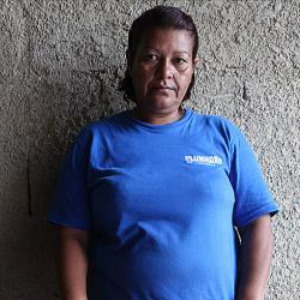
Following the killing, on 15 December 2012, of the ninth member of her family since 1998, the NGO Front Line Defenders is extremely concerned for the safety of human rights defender Eloísa Barrios and her family. Eloísa Barrios has previously submitted petitions to the Inter-American Commission (IACHR) and Court of Human Rights (IACtHR), on 16 March 2004 and 30 December 2005, requesting protection measures for the family as a result of persecution, allegedly by members of the Police of Aragua State.eloisa_barrios_cropped_0

Eloísa Barrios,together with local NGOs, has publicly denounced human rights violations in Aragua State. She has also actively promoted the committees of victims and families of victims in Aragua, and in particular has mobilised mothers of those extrajudicially killed by the state police and accompanied them through the process of filing complaints, the court process and speaking out in social media. Eloísa Barrios has been vocal in speaking out about the Venezuelan State’s failure to effectively protect her family from extrajudicial killings and other human rights violations and has reported an increase in the threats made against her and her family after she denounced the killings before the Inter-American system. She has been threatened by state police officials in retaliation for the constant complaints to the 20th Prosecutor’s Office of the Public Ministry in Aragua concerning her son’s detention on three occasions and ill-treatment in custody. In January 2012 the human rights defender moved from her home as a result of the intimidation.

Since 1998 nine members of the Barrios family have been murdered and several others have been detained and subjected to illegal and arbitrary searches of their homes, suffered threats against their lives and personal integrity, and been forced to move from their place of residence.

The IACHR and the IACtHR have followed the case through all available mechanisms after concluding that Venezuela has violated the rights to life, physical integrity and freedom of several members of the Barrios family, including some minors, however the State has failed to comply with the recommendations of either institution and the Barrios family continue to be at risk.Frontline NEWlogos-1 condensed version - cropped