Posts Tagged ‘NGOs’

About Access Now’s Digital Security Helpline

April 30, 2024

On 25 April 2024 Access Now published a piece about “Visualizing the Digital Security Helpline’s recent impact”

Access Now’s Digital Security Helpline works to support civil society members at risk, so they can safely and securely continue their work to uphold democracy and human rights. Here are a few highlights of the Helpline’s work in 2023. [see also: https://humanrightsdefenders.blog/2021/06/29/joint-statement-by-u-n-rapporteurs-emphasizes-digital-rights-as-top-priority-to-rebuild-civic-space/]

Last year, the Helpline received a total of 3,709 requests for digital security assistance. 

To put this in perspective, the Helpline received 10,000 requests in total between 2014 and 2021, but more than double that number in the three years that followed. 

Helpline Cases

Most (82%) of the cases we dealt with in 2023 were reactive in nature, meaning they related to unfolding incidents or emergencies that required beneficiaries to take rapid measures to strengthen their digital security. The remaining 18% were preventative, whereby beneficiaries preemptively sought out digital security advice, tools, and solutions.

In recent years, the Helpline has been investing in our ability to operate 24/7, 365 days a year, and to deliver more substantial and engaged forms of support. For instance, we’ve been conducting analysis of advanced threats and producing collaborative research in places such as Armenia, Serbia, and Jordan

In 2023, the regional distribution of cases was as follows:

Helpline Case distribution by region

Our work supports a wide spectrum of civil society stakeholders; from individual activists, human rights defenders, and members of marginalized communities, to journalists and media workers. For it to be as impactful as possible, we work closely with the wider digital security community, through networks like CiviCERT. This allows us to deliver adequate support to each of our beneficiary groups, which were distributed as follows in 2023:

Helpline Beneficiaries by category

In 2024, the Helpline will continue improving and increasing how we collaborate with activist groups around the world, as well as working to meet the evolving needs of the global rapid response community. If you are a member of civil society in need of digital security assistance, you can find details about how to get in touch on our website page

Civil society view of the 55th session of the UN Human Rights Council

April 12, 2024

At the 55th Human Rights Council session, 22 civil society organisations share reflections on key outcomes and highlight gaps in addressing crucial issues and situations [see: https://humanrightsdefenders.blog/2024/02/26/human-rights-defenders-issues-at-the-55th-session-of-the-human-rights-council/]:

The failure of States to pay their membership dues to the United Nations in full and in time, and the practice of conditioning funding on unilateral political goals is causing a financial liquidity crisis for the organisation, the impacts of which are felt by victims and survivors of human rights violations and abuses. … Without the resources needed, the outcomes of this session can’t be implemented. The credibility of HRC is at stake. 

We welcome the adoption of three resolutions calling for the implementation of effective accountability measures to ensure justice for atrocity crimes committed in the context of Israel‘s decades long colonial apartheid imposed over the Palestinian people, and for the realisation of the Palestinian people’s right to self-determination. Special Procedures expressed their profound concern about “the support of certain governments for Israel’s strategy of warfare against the besieged population of Gaza, and the failure of the international system to mobilise to prevent genocide” and called on States to implement an “arms embargo on Israel, heightened by the International Court of Justice’s ruling […] that there is a plausible risk of genocide in Gaza […].”   This session, the Special Rapporteur on the OPT concluded that the actions of Israel in Gaza meet the legal qualifications of genocide. 

We deplore the double standards in applying international law and the failure of certain States to vote in favor of ending impunity. This undermines the integrity of the UN human rights framework, the legitimacy of this institution, and the credibility of those States. From Palestine, to Ukraine, to Myanmar, to Sudan, to Sri Lanka, resolving grave human rights violations requires States to address root causes, applying human rights norms in a principled and consistent way. The Council has a prevention mandate and UN Member States have a legal and moral duty to prevent and ensure accountability and non-recurrence for atrocity crimes, wherever they occur.

We want to highlight and specifically welcome the adoption of the first ever resolution on combating discrimination, violence and harmful practices intersex persons. The resolution builds on growing support in the Council on this topic and responds to several calls by the global coalition of intersex-led organisations. The resolution takes important steps in recognising that discrimination, violence and harmful practices based on innate variations of sex characteristics, such as medically unnecessary interventions, takes place in all regions of the world. We welcome that the resolution calls for States to take measures to protect the human rights of this population and calls for an OHCHR report and a panel discussion to address challenges and discuss good practices in protecting the human rights of intersex persons.

We welcome the renewal of the mandate of the Independent Expert on the enjoyment of human rights by persons with albinism. As attested by human rights defenders with albinism, the mandate played an invaluable role by shedding light on human rights violations against persons with albinism through ground breaking research, country visits, and human rights training, and ensuring that defenders with albinism are consulted and take part in the decision-making. The organisations also welcomed the inclusion of language reflecting the important role played by “organizations of persons with albinism and their families”, and the reference to the role of States in collaboration with the World Health Organization, “to take effective measures to address the health-related effects of climate change on persons with albinism with a view to realizing their right to the enjoyment of the highest attainable standard of physical and mental health, particularly regarding the alarming incidence of skin cancer in this population, and to implement the recommendations of the report of the Independent Expert in this regard”.

We welcome the adoption of the resolution on the renewal of the mandate of the Special Rapporteur on the human right to a clean, healthy and sustainable environment. We also welcome the update of the title of the mandate acknowledging the recognition of this right by the Human Rights Council in its resolution 48/13 on 8 October 2021 and the General Assembly resolution 76/300 on 28 July 2022. We also welcome the inclusion of gender-specific language in the text, and we call on the Special Rapporteur to devote a careful attention to the protection of environmental human rights defenders for their strong contribution to the realisation of the right to a clean, healthy, and sustainable environment, as called for by several States. We also welcome that the Council appointed for the first time a woman from the global south to fulfill this mandate, and we welcome the nomination of another woman as Special Rapporteur on the promotion and protection of human rights in the context of climate change. 

We welcome the resolution on countering disinformation, which addresses new issues whilst once again rejecting censorship and reaffirming the ‘essential role’ that the right to freedom of expression plays in countering disinformation. We welcome the specific focus on girls – besides women – as well as risks associated with artificial intelligence, gender-based violence, and electoral processes. We urge States to follow the approach of the resolution and to combat disinformation through holistic, positive measures, including by ensuring a diverse, free and independent media environment, protecting journalists and media workers, and implementing comprehensive right to information laws. Importantly, we also urge States to ensure that they do not conduct their own disinformation campaigns. At the same time, social media companies have an essential role to play and should take heed of the resolution by reforming their business models which allow disinformation to flourish on their platforms. The resolution also mandates the Advisory Committee to produce a new report on disinformation, and it is absolutely essential that this report mirrors and reinforces existing standards on this topic, especially the various reports of the Special Rapporteur on freedom of opinion and expression.

Whilst we welcome the technical renewal of the resolution on freedom of religion or belief, we regret that the parallel resolution on combating intolerance (widely known by its original name Resolution 16/18) was not tabled at the session. Since 2011, these duel resolutions have been renewed each year, representing a consensual and universal framework to address the root causes of hate based on religion or belief in law, policy, and practice. We call on the OIC to once again renew Resolution 16/18 in a future session, while ensuring no substantive changes are made to this consensual framework. We also urge all States to reaffirm their commitment to Resolution 16/18 and the Rabat Plan of Action and adopt comprehensive and evidence-based national implementation plans, with the full and effective participation of diverse stakeholders.

We welcome the adoption of the resolution on prevention of genocide and its focus on impunity, risks and early warnings, as well as the paragraph reaffirming that starvation of civilians as a method to combat is prohibited under international humanitarian law; however, we regret that the resolution fails to adequately reflect and address serious concerns relating to current political contexts and related risks of genocide. 

We welcome the adoption of the resolution on the rights of the child: realising the rights of the child and inclusive social protection, strengthening the implementation of child rights-compliant inclusive social protection systems that benefit all children. We also welcome the addition of a new section on child rights mainstreaming, enhancing the capacity of OHCHR to advance child rights mainstreaming, particularly in areas such as meaningful and ethical child participation and child safeguarding.  We remain concerned by persisted attempts to weaken the text, especially to shift the focus away from children as individual right-holders, to curtail child participation and remove the inclusion of a gender perspective.

We welcome the adoption of the resolution on torture and other cruel, inhuman or degrading treatment or punishment which addresses effective national legislative, administrative, judicial or other measures to prevent acts of torture. We welcome the new paragraph urging States concerned to comply with binding orders of the International Court of Justice related to their obligations under the Convention Against Torture.

We welcome the adoption of a new resolution on the human rights situation in Belarus. The Belarusian authorities continue their widespread and systematic politically-motivated repression, targeting not only dissent inside the country, but also Belarusians outside the country who were forced to flee for fear of persecution. Today, almost 1,500 prisoners jailed following politically-motivated charges in Belarus face discriminatory treatment, severe restriction of their rights, and ill-treatment including torture. The resolution rightly creates a new standalone independent investigative mechanism, that will inherit the work of the OHCHR Examination, to collect and preserve evidence of potential international crimes beyond the 2020 elections period, with a view to advancing accountability. It also ensures the renewal of the mandate of the Special Rapporteur who remains an essential ‘lifeline’ to Belarusian civil society.

We welcome the resolution on technical assistance and capacity building in regard to the human rights situation in Haiti and emphasis on the role civil society plays in the promotion and protection of human rights and the importance of creating and maintaining an enabling environment in which civil society can operate independently and free from insecurity. We similarly welcome the call on the Haitian authorities to step up their efforts to support national human rights institutions and to pursue an inclusive dialogue between all Haitian actors concerned in order to find a lasting solution to the multidimensional crisis, which severely impacts civil society. We welcome the renewal of the mandate of the designated expert and reference to women and children in regard to the monitoring of human rights situation and abuses developments, as well as encouragement of progress on the question of the establishment of an office of the Office of the High Commissioner in Haiti. We nonetheless regret that the resolution does not address the multifaceted challenges civil society faces amidst escalating violence, fails to further address the link between the circulation of firearms and the human rights violations and abuses, and does not identify concrete avenues for the protection of civilians and solidarity action to ensure the safety, dignity and rights of civilians are upheld.

We welcome the adoption of the resolution on Iran, renewing the mandate of the Special Rapporteur on human rights in Iran and extending for another year the mandate of the Independent International Fact-Finding Mission on Iran. The continuation of these two distinct and complementary mandates is essential for the Council to fulfill its mandate of promotion and protection of human rights in Iran. However, given the severity of the human rights crisis in the country, we regret that this important resolution remains purely procedural and fails to reflect the dire situation of human rights in Iran, including the sharp spike in executions, often following grossly unfair trials. It also fails to address the increased levels of police and judicial harassment against women and girls appearing in public without compulsory headscarves, human rights defenders, lawyers, journalists and families of victims seeking truth and justice, and the continued pervasive discrimination and violence faced by women and girls, LGBTI+ persons and persons belonging to ethnic and religious minorities in the country.  

We welcome the adoption by consensus of the resolution on Myanmar, which is a clear indication of the global concern for the deepening human rights and humanitarian crisis in the country as a result of the military’s over three-year long brutal war against the people resisting its attempted coup. We further welcome the Council’s unreserved support for Myanmar peoples’ aspirations for human rights, democracy, and justice as well as the recognition of serious human rights implications of the continuing sale of arms and jet fuel to Myanmar.

We welcome the resolution on the situation of human rights in Ukraine stemming from the Russian aggression. The latest report of the Independent International Commission of Inquiry (COI) reveals disturbing evidence of war crimes, including civilian targeting, torture, sexual violence, and the unlawful transfer of children. These findings underscore the conflict’s brutality, particularly highlighted by the siege of Mariupol, where indiscriminate attacks led to massive civilian casualties and infrastructure destruction. The report also details the widespread and systematic torture and sexual violence against both civilians and prisoners of war. Moreover, the illegal deportation of children emerges as a significant issue, as part of a broader strategy of terror and cultural erasure. The COI’s mandate extension is crucial for ongoing investigations and ensuring justice for victims. 

By adopting a resolution entitled ‘advancing human rights in South Sudan,’ the Council ensured that international scrutiny of South Sudan’s human rights situation will cover the country’s first-ever national elections, which are set to take place in De­cember 2024. With this resolution, the UN’s top human rights body extended the mandate of its Com­mis­sion on Human Rights in South Sudan.

We welcome the resolution on the human rights situation in Syria and the extension of the mandate of the Independent International Commission of Inquiry (COI), which will continue to report on violations from all sides of the conflict in an impartial and victim-centered manner. Syria continues to commit systematic and widespread attacks against civilians, in detention centers through torture, arbitrary detention and enforced disappearance and through indiscriminate attacks against the population in Idlib. We welcome that the resolution supports the mandate of the Independent Institution of the Missing People and calls for compliance with the recent order on Provisional Measures by the ICJ – both initiatives can play a significant role in fulfilling victims’ rights to truth and justice and should receive support by all UN Member States. In a context of ongoing normalisation, the CoI’s mandate to investigate and report on human rights abuses occurring in Syria is of paramount importance.

We continue to deplore this Council’s exceptionalism towards serious human rights violations committed by the Chinese government. At a time when double-standards are enabling ongoing atrocity crimes to be committed in Palestine, sustained failure by Council Members, in particular OIC countries, to promote accountability for crimes against humanity against Uyghurs and Muslim peoples in China severely undermines the Council’s integrity, and its ability to prevent and put an end to atrocity crimes globally. Findings by the OHCHR, the UN Treaty Bodies, the ILO and over 100 letters by UN Special Procedures since 2018 have provided overwhelming evidence pointing to systematic and widespread human rights violations across the People’s Republic of China. We reiterate our pressing call for all Council Members to support the adoption of a resolution establishing a UN mandate to monitor and report on the human rights situation in China, as repeatedly urged by UN Special Procedures. We further echo Special Procedures’ call for prompt and impartial investigations into the unlawful death of Cao Shunli, and all cases of reprisals for cooperation with the UN.

We regret the Council’s silence on the situation in India despite the clear and compounding early warning signs of further deterioration that necessitate preventive action by the Council based on the objective criteria. The latest of these early warning signals include the recent notification of rules to implement the highly discriminatory Citizenship Amendment Act by the Bharatiya Janata Party-led government just weeks before the election, along with recent intercommunal violence in Manipur and ongoing violence against Muslims in various parts of India amid increasing restrictions on civic space, criminalisation of dissent and erosion of the rule of law with political interference.

We further regret that this Council is increasingly failing to protect victims of human rights violations throughout the Middle East and North Africa, including in Algeria, Bahrain, Egypt, Libya, Saudi Arabia, and Yemen. The people of Yemen and Libya continue to endure massive ‘man-made’ humanitarian catastrophes caused in large part by ongoing impunity for war crimes, crimes against humanity and other grave violations of international law. In Algeria, Egypt, Bahrain, Saudi Arabia and in other MENA countries, citizens are routinely subjected to brutal, wide-spread human rights violations intended to silence dissent, eradicate independent civil society and quash democratic social movements. Countless citizens from the MENA region continue to hope and strive for a more dignified life – often at the cost of their own lives and freedom. We call on this Council and UN member States to rise above narrow political agendas and begin to take steps to address the increasing selectivity that frequently characterises this Council’s approach to human rights protection and promotion. 

We regret that once more, civil society representatives faced numerous obstacles to accessing the Palais and engaging in discussions, both in person and remotely, during this session. The UN human rights system in Geneva has always and continues to rely on the smooth and unhindered access of civil society to carry out its mandate. We remind UN Member States, as well as UNOG, that the Council’s mandate, as set out in HRC Res 5/1, requires that arrangements be made, and practices observed to ensure ‘the most effective contribution’ of NGOs. Undermining civil society access and engagement not only undermines the capacities and effectiveness of civil society but also of the UN itself.

Signatories:

  1. All Human Rights for All in Iran
  2. Asian Forum for Human Rights and Development (FORUM-ASIA)
  3. Association Arc pour la defense des droits de l’homme et des revendication democratique/culturelles du peuple Azerbaidjanais Iran -”ArcDH”
  4. Balochistan Human Rights Group
  5. Cairo Institute for Human Rights Studies
  6. Child Rights Connect (CRCnt)
  7. CIVICUS
  8. Commonwealth Human Rights Initiative (CHRI)
  9. Egyptian initiative for Personal Rights (EIPR)
  10. Ensemble contre la Peine de Mort
  11. Franciscans International
  12. Gulf Center for Human Rights
  13. Impact Iran
  14. International Bar Association’s Human Rights Institute (IBAHRI)
  15. International Federation for Human Rights (FIDH)
  16. International Lesbian and Gay Association (ILGA)
  17. International Service for Human Rights (ISHR)
  18. Kurdistan Human Rights Network
  19. Kurdpa Human Rights Organization
  20. PEN America
  21. The Syrian Legal Development Programme (SLDP)
  22. United 4 Iran

see also: https://www.eeas.europa.eu/delegations/un-geneva/eu-human-rights-council_en

https://www.fidh.org/en/international-advocacy/united-nations/human-rights-council/55th-human-rights-council-session-israel-palestine-belarus-iran

‘Foreign Agent’ Laws Spread, now also Georgia ?

April 8, 2024

Iskra Kirova, Advocacy Director, Europe and Central Asia Division of HRW, wrote on 4 April 2024: ‘Foreign Agent’ Laws Spread as EU Dithers to Support Civil Society

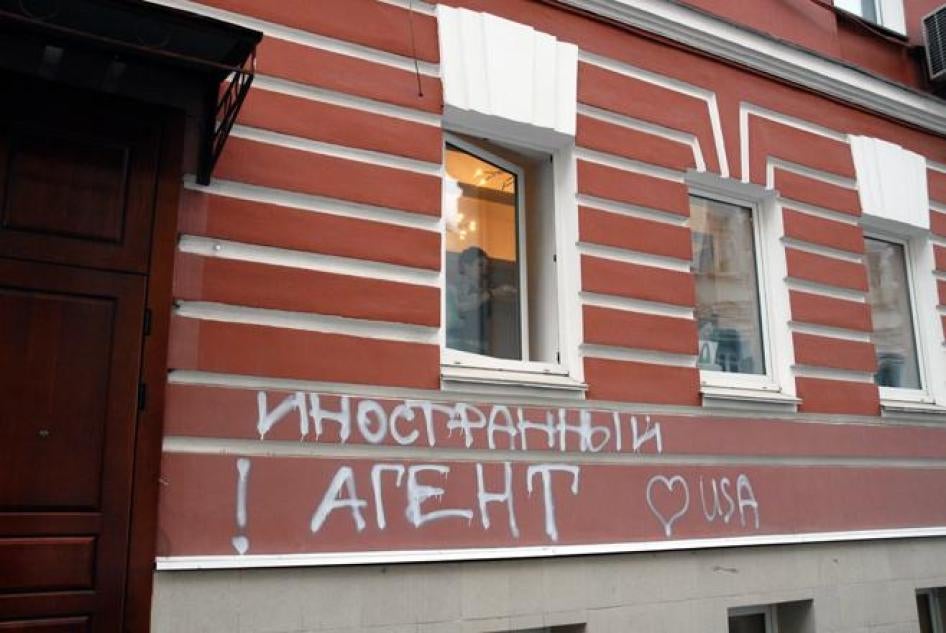
On the night before the infamous “foreign agents” law came into force back in 2012, unknown individuals sprayed graffiti reading, “Foreign Agent! ♥ USA” on the buildings hosting the offices of three prominent NGOs in Moscow, including Memorial. 
On the night before the infamous “foreign agents” law came into force back in 2012, unknown individuals sprayed graffiti reading, “Foreign Agent! ♥ USA” on the buildings hosting the offices of three prominent NGOs in Moscow, including Memorial.  © 2012 Yulia Klimova/Memorial

Georgia’s ruling party plans to reintroduce highly controversial Russia-style “foreign agent” legislation aimed at incapacitating civil society and independent media. If adopted, the laws, which were withdrawn last year in the face of massive protests, would require foreign-funded nongovernmental organizations and media to register as “agents of foreign influence”. That would make them subject to additional scrutiny and sanctions, including administrative penalties up to 25,000 GEL (about 8,600 Euro). Authorities claim the laws promote “transparency”, but their statements make it clear the laws will be used to stigmatize and punish critical voices.

Georgia was granted EU candidate status in December 2023 on the understanding it would improve conditions for civil society. This move risks derailing its EU integration even if the EU has until now been willing to move the country forward in the accession process despite limited progress on EU reform priorities. Georgia’s defiance of the EU on its civil society commitments isn’t so surprising when seen in the regional context. See also: https://humanrightsdefenders.blog/2024/03/24/kyrgyzstan-on-its-way-to-emulate-russia-with-a-draft-law-on-foreign-representatives-agents/

The day before Georgia’s announcement, Kyrgyzstan’s president signed an abusive “foreign representatives” law. Copied almost entirely from the Russian equivalent, the law would apply the stigmatizing designation of “foreign representative” to any nongovernmental organization that receives foreign funding and engages in vaguely defined “political activity”. The bill had been widely criticized after its initial submission in November 2022, including in a urgency resolution by the European Parliament.

The EU had ample opportunity to press the authorities to reject this bill. Kyrgyzstan benefits from privileged access to the EU internal market tied to respect for international human rights conventions: conventions this law clearly contravenes. The country is poised to sign an enhanced partnership agreement with the EU that centers democracy and fundamental rights. The EU has been silent on whether these deals would be imperiled by the bill’s adoption, despite the fact the European Commission’s own assessment highlighted Kyrgyzstan’s dire environment for civil society and the country’s breach of its obligations.

The latest spate of curbs on civil society comes in the wake of the European Commission’s December 2023 legislative proposal for an EU Directive on “transparency of interest representation” that would create a register of organizations which receive foreign funding. European civil society vehemently opposes the proposal because it risks shrinking space for independent organizations at home and diminishing the EU’s credibility in opposing such laws abroad. Yet the Commission forged ahead. On the same day the proposal was adopted, Hungary’s parliament approved a law that gives a government-controlled body broad powers to target civil society and independent media.

With civil society organizations under threat throughout Europe and Central Asia, we need an EU that in words and actions protects civic space and sets the right standards.

https://www.hrw.org/news/2024/04/04/foreign-agent-laws-spread-eu-dithers-support-civil-society

https://www.ohchr.org/en/press-briefing-notes/2024/04/kyrgyzstan-new-law-risks-undermining-work-ngos

https://news.un.org/en/story/2024/05/1149776

https://www.ohchr.org/en/press-releases/2024/05/georgia-un-experts-condemn-adoption-law-transparency-foreign-influence

and see this! https://oc-media.org/georgian-foreign-agent-law-protester-lazare-grigoriadis-found-guilty/

Kyrgyzstan (and Slovakia) on their way to emulate Russia with draft law on ‘foreign representatives (agents)’

March 24, 2024

On 21 March 2024, Nikkei Asia carried the story on Kyrgyzstan taking a page from Russia in pushing for a ‘foreign agents’ law

Kyrgyzstan: Veto the draft law on ‘foreign representatives’ - Civic Space

Kyrgyz President Sadyr Japarov faces a high-stakes decision on whether to sign new legislation that critics warn will significantly impair how human rights defenders and independent media, among others, can work in his mountainous Central Asian state. On March 14, Kyrgyzstan’s parliament voted overwhelmingly in favor of a “foreign agents” bill that mirrors legislation adopted in Russia over a decade ago. The law is designed to control the activities of nonprofit and nongovernmental organizations that receive funding from abroad by compelling them to register as “foreign representatives,” leading to closer scrutiny of their activities by the authorities.

Japarov has a month from that date to sign it into law. Many observers have been vocal in their opposition and are urging the president to veto the bill. Syinat Sultanalieva, Central Asia researcher at Human Rights Watch, told Nikkei Asia that this law “would see the further and sharper shrinking of civil society,” a sector that has been under attack in Kyrgyzstan for more than a decade. BUT see: https://www.aol.com/kyrgyzstan-adopts-law-targeting-foreign-100124498.html

In the meantime the Prague based NGO, People in Need, speaks out against the Slovakian government’s proposed measures to curb critical media and NGOs, which would mirror tactics employed by autocrats and dictators in places ranging from Russia to Latin America, It has raised concerns about the erosion of civil liberties and the stifling of dissent. In a move reminiscent of authoritarian regimes, officials seek to designate these entities as “foreign agents,” a term often utilised to suppress opposition voices. The Fico government has already taken steps to cut NGO funding, raising further alarms about the independence of civil society activities. Additionally, Culture Minister Martina Šimkovičová and Justice Minister Boris Susko have initiated cuts to subsidy programmes, redirecting funds away from NGOs to other areas, citing concerns about transparency and favouritism in grant allocation. The government’s actions have prompted backlash from NGOs, with 90 organisations signing a petition against the minister’s decisions. 

As an organisation with roots steeped in the freedom and civic movements of post-Cold-War Czechoslovakia, we are appalled to see the illiberal turn taken by the Slovak government. The Fico government’s proposal to impose a Russian-style foreign agents’ law is anathema to the shared goals of the Czech and Slovak people who fought to end the Russian subjugation of our homelands. This is of great concern and sadness to us at People in Need.  

https://www.peopleinneed.net/slovak-government-targets-ngos-with-proposed-foreign-agents-act-11299gp

On 21 March 2024, a large group of civil society organisations jointly called on the president of Kyrgyzstan, Sadyr Japarov, to veto the amendments to the Law on Non-commercial Organisations, known as the law on ‘foreign representatives’ which clearly violates the country’s international human rights obligations and would be a devastating blow the civil society. [see also: https://humanrightsdefenders.blog/tag/foreign-agent-law/]

We are writing to you on behalf of the undersigned civil society organisations from different countries to express support for Kyrgyzstan’s civil society and urge you to veto the amendments to the Law on Non-commercial Organisations, known as the law on ‘foreign representatives’, which parliament adopted on third reading on 14 March 2024. The proposed amendments fall seriously short of Kyrgyzstan’s international human rights obligations and risk delivering a devastating blow to its vibrant civil society. The amendments will impair civil society’s ability to carry out its important and legitimate work to the benefit of the people of Kyrgyzstan, and to promote public participation, transparency, accountability and good governance, thereby eroding democratic and human rights progress made by Kyrgyzstan with negative implications for its international reputation. Further, the proposed amendments will endanger international development and economic assistance programmes in the country, which will also undermine prospects for the achievement of sustainable development goals contrary to your government’s ambitious agenda in this area. Thus, we urge you to veto the amendments for the benefit of Kyrgyzstan and its people.

Both national and international human rights experts have concluded that the draft law on ‘foreign representatives’ clearly violates Kyrgyzstan’s international human rights obligations. For example, such conclusions were presented in a joint communication addressed to your government by three UN Special Rapporteurs, appointed by the UN Human Rights Council, of which Kyrgyzstan currently is a member. The three rapporteurs stated: ‘many provisions in the proposed law would be contrary to the international human rights obligations of the Kyrgyz Republic, including the right to the freedom of association, the right to freedom of opinion and expression, the right to non-discrimination and the right to privacy. If passed, this draft law could have a chilling effect on the operation of all associations in the Kyrgyz Republic, limiting their ability to advocate for human rights, provide social services, and contribute to the development of a robust and inclusive society.’

In an earlier legal assessment prepared at the request of Kyrgyzstan’s Ombudsperson, the OSCE Office for Democratic Institutions and Human Rights (ODIHR) found that the proposed provisions lack legitimate justification and do not meet the requirements of international human rights law for acceptable restrictions on the right to freedom of association. ODIHR also stressed that the key concepts of ‘foreign representatives’ and ‘political activities’ used in the draft law are inconsistent with the principle of legal certainty and predictability and ‘would allow unfettered discretion on the part of the implementing authorities’. ODIHR further found that the proposed provisions are contrary to the principle of non-discrimination and risk stigmatising organisations carrying out legitimate work and triggering mistrust, fear and hostility against them.

The draft law on ‘foreign representatives’ does not only violate your country’s international obligations but also contradicts provisions of the Constitution of the Kyrgyz Republic (including articles 36, 32, 24 and 29), which protect the right to freedom of association and other fundamental rights. In this way, the draft law challenges the legitimacy of the current Constitution, which was initiated by you and endorsed by citizens in a national referendum in 2021.

The proponents of the draft law on ‘foreign representatives’ have argued that it is aimed at ensuring the transparency of civil society organisations (CSOs). However, while transparency is an important issue, it is not a legitimate reason under international human rights law for imposing invasive, discriminatory, and stigmatising restrictions on CSOs. On the contrary, transparency can be ensured in ways that do not contradict international law nor hamper the work of CSOs. Moreover, all non-commercial organisations in Kyrgyzstan, including those that receive foreign funding, are already subjected to extensive state control and regularly report about their activities and finances to various state bodies, which ensures transparency of their work. In particular, amendments to the Law on Non-commercial Organisations, adopted in 2021, oblige non-commercial organisations to annually provide detailed information on their sources of funding, use of funds and assets for publication on the Tax Service’s website. This information is thus already publicly accessible.

Rather than increasing the transparency of non-commercial organisations, the draft law risks undermining civil society’s crucial role in assisting public bodies with the provision of support to vulnerable groups of the population, and also in promoting public sector transparency and accountability. Watchdog organisations have already warned of a significant decline in government transparency in Kyrgyzstan, preventing the exposure of wrongdoing and increasing the risk of corruption. This impairs foreign investments as well as economic growth and well-being in the country.

Kyrgyzstan’s international partners have warned that the adoption of the law on ‘foreign representatives’ would negatively affect development assistance programmes in the country. For example, in a joint statement issued on 14 March 2024, the Delegation of the EU to the Kyrgyz Republic and the Embassies of Canada, France, Germany, the United Kingdom, and the United States stated that the proposed provisions would ‘jeopardise our ability to provide assistance that improves the lives of the citizens and residents of the Kyrgyz Republic’. They stated that, if signed in its current form, the law ‘has the potential to hurt the most vulnerable who rely on the essential services – such as food, healthcare, and education – that non-profits and NGOs [non-governmental organisations] provide’. The UN Resident Coordinator in the Kyrgyz Republic pointed out that enacting the law would threaten civil society engagement in development initiatives and the achievement of UN Sustainable Development Goals (SDGs). Thus, the law contradicts the government’s aim of being among the top 30 countries in the realisation of SDGs by 2030.

The World Bank and the European Bank for Reconstruction and Development have also stressed the importance that they attach to CSO engagement for the success of their in-country operations, when commenting on NGO concerns about the draft law’s potential impact on the activities of international financial institutions in Kyrgyzstan.

As you know, as a beneficiary of the General Scheme of Preferences Plus (GSP+), the Kyrgyz Republic is required to effectively implement international human rights conventions, including the International Covenant on Civil and Political Rights (ICCPR) in return for trade benefits afforded by the EU. Thus, the adoption and enforcement of the law on ‘foreign representatives’ is likely to negatively affect these benefits. The European Commission’s recent GSP+ monitoring report on the Kyrgyz Republic highlighted shrinking space for civil society as a key area of concern and called for swift measures to reverse this negative trend in the light of the country’s ICCPR obligations. Moreover, in its resolution adopted in July 2023, the European Parliament called for a reassessment of Kyrgyzstan’s GSP+ benefits in view of recent developments, in particular draft legislation that runs counter to the country’s international human rights obligations.

We are aware that proponents of the draft law on ‘foreign representatives’ have argued that it is similar to the US Foreign Agent Registration Act (FARA). However, FARA differs from the proposed legislation in Kyrgyzstan in crucial respects. In particular, FARA is not targeted at non-commercial organisations that receive foreign funding. Instead, FARA requires persons who conduct certain activities ‘at the order’ or ‘under the direction or control’ of a foreign government or other foreign entity to register as an ‘agent of a foreign principal’ and periodically file supplementary information about their activities in this capacity. The purpose of FARA is to ensure the public disclosure of such information rather than to subject those registered under it to ongoing, invasive state control.

President Japarov, when you consider whether or not to sign the draft law on ‘foreign representatives’, you are deciding the fate of civil society in Kyrgyzstan. Will you opt for the path taken by authoritarian countries, where similar legislation has been used in campaigns to systematically dismantle independent civil society, with negative implications for the reputation, prosperity and well-being of these countries? Or for a more forward-looking, inclusive, and democratically-oriented approach under which CSOs are treated as important, respected partners who can work together with state bodies in addressing societal problems, and international partners retain their confidence in Kyrgyzstan’s commitment to sustainable development?

For the reasons outlined above, we urge you to refrain from signing the draft law on ‘foreign representatives’ and ensure that any new legislation impacting non-commercial organisations reflects Kyrgyzstan’s international human rights obligations and undergoes thorough and inclusive consultations with civil society, as well as national and international experts. When elaborating this type of legislation, it is crucial to take the opinions of CSOs directly affected by it into account.

Signed by the following organisations (listed in the order of signature):

International Partnership for Human Rights (IPHR), Belgium

IDP Women Association Consent, Georgia

Norwegian Helsinki Committee

Hungarian Helsinki Committee, Hungary

Legal Policy Research Centre, Kazakhstan

Public Association “Dignity”, Kazakhstan

Netherlands Helsinki Committee

Civil Rights Defenders, Sweden

Protection of Rights without Borders NGO, Armenia

Swedish OSCE-network

Helsinki Citizens’ Assembly – Vanadzor, Armenia

Center for Civil Liberties, Ukraine

Public Verdict, Russia

Turkmen Helsinki Foundation, Bulgaria

Crude Accountability, USA

Freedom Files, Poland

Human Rights Center “Viasna”, Belarus

Center for Participation and Development, Georgia

Human Rights Defence Center Memorial, Russia

Civic Assistance Committee, Russia

Austrian Helsinki Association

Bulgarian Helsinki Committee

Human Rights Center (HRC), Georgia

Macedonian Helsinki Committee

Sova Research Center, Russia

Promo LEX Association, Moldova

Helsinki Foundation for Human Rights, Poland

ARTICLE 19 Europe

FIDH (International Federation for Human Rights), within the framework of the Observatory for the Protection of Human Rights Defenders

World Organisation Against Torture (OMCT), within the framework of the Observatory for the Protection of Human Rights Defenders

Amnesty International

https://asia.nikkei.com/Politics/Kyrgyzstan-takes-page-from-Russia-in-pushing-foreign-agents-law
China tries but fails to disrupt a tribute at UN to Cao Shunli

March 23, 2024

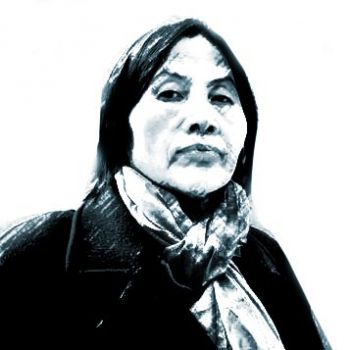
Despite protests from China and its allies, human rights organisations paid a public tribute to the late activist Cao Shunli during a debate at the UN Human Rights Council, ten years after her death. A victim of ‘deadly reprisals’ against her activism, Cao died in March 2014 after months of arbitrary detention in China. [see also: https://humanrightsdefenders.blog/2024/03/15/joint-statement-on-the-10-year-anniversary-of-deadly-reprisals-against-chinese-activist-cao-shunli/]

NGOs and activists paid tribute to the late Chinese human rights defender Cao Shunli by holding a moment of silence and applauding her name during their speaking time at the Human Rights Council.

Delivering a joint statement before the Council plenary on behalf of ISHR and 16 organisations accredited to the UN as well as 20 NGOs without consultative status, a human rights defender from the Chinese mainland concluded her intervention with a short silence and a call to States and NGOs to mirror the courage of human rights defenders and always stand in solidarity with them.

After the intervention, in a sign of respect to Cao Shunli, the room was filled with applause from NGOs and a handful of governments in honour of Cao and in solidarity with victims of reprisals for cooperation with the UN.

‘It is unacceptable to normalise reprisals,’ the human rights defender from the Chinese mainland said. ‘Cao’s courage inspires defenders globally, so let her legacy and name resonate in this room until there is accountability for all victims of reprisals,’ she emphasised.

In an attempt to silence the activist, the Chinese delegation raised a point of order protesting against the statement. This mirrored their 2014 response to ISHR and other NGO’s attempt to hold a moment of silence at the Council after Cao’s death, during which Chinese diplomats disrupted the session for over an hour. This time, Cuba, Venezuela, the Democratic People’s Republic of Korea and Russia supported China in their attempt to silence activists’ right to speak at the United Nations. 

In response to China’s attacks, Belgium on behalf of the 27 states of the European Union, supported by the United States of America, Canada and the United Kingdom, took the floor to defend NGOs’ right to speak freely.  

‘We cannot allow Cao’s story and her work to be forgotten,’ said Raphaël Viana David, China Programme Manager for ISHR. ‘Ten years on, no one has been held to account for this emblematic case of tragic State reprisals. UN experts called for an inquiry in 2014, 2019 and once again last week. Governments cannot let Beijing off the hook: they must push for accountability for Cao’s fate and for that of all activists who have been persecuted for cooperating with the UN in standing up for human rights.’

ISHR and its civil society partners urge the international community to hold the individuals and institutions responsible for Cao’s death to account and to end all acts of reprisals and repressive measures seeking to restrict civil society space and prevent activists from engaging with the UN.

https://ishr.ch/latest-updates/china-fails-in-disrupting-tribute-at-un-to-cao-shunli-ten-years-after-her-death-in-custody

Joint statement on the 10-year anniversary of ‘deadly reprisals’ against Chinese activist Cao Shunli 

March 15, 2024

On 14 March 2024, a large number of leading NGOs paid tribute to Cao Shunli, and all human rights defenders targeted by the Chinese government for their commitment to uphold the promise of the Universal Declaration of Human Rights.  [see also: https://humanrightsdefenders.blog/tag/cao-shunli/]:

Cao Shunli was a brave Chinese woman human rights defender and lawyer. Working with fellow activists, Cao documented abuses, including the now-abolished ‘Re-education through Labour’ extrajudicial detention system, which she was also subjected to as a result of her human rights work. She campaigned for independent civil society to be meaningfully consulted and to be able to contribute to the Chinese government’s national reports to its first and second Universal Periodic Reviews (UPR). In an attempt to speak with government officials about the UPR, Cao courageously organised peaceful sit-ins with other concerned citizens outside the Ministry of Foreign Affairs despite great risks. She also submitted information on extralegal detention and torture in China to the UN and expressed the hope that ‘if we could get even 100 words’ into a UN report, ‘many of our problems could start to get addressed.’

On 14 September 2013, Chinese authorities detained Cao at the Beijing Capital International Airport as she was traveling to Geneva to participate in a human rights training, one month before China’s second UPR. Cao was forcibly disappeared for five weeks, until she resurfaced in criminal detention and was charged with ‘picking quarrels and provoking trouble’. By October 2013, it was clear that Cao Shunli was experiencing serious medical issues while in detention. After months of denial of adequate medical treatment, rejected appeals by her lawyers for bail on humanitarian grounds, and despite multiple calls from the international community for her urgent release, Cao died of multiple organ failure on 14 March 2014 in a hospital under heavy police guard to keep out her lawyers and friends.

Cao was one of the 2014 finalists of the prestigious Martin Ennals Award for Human Rights Defenders.

To this day, there has been no accountability for Cao Shunli’s death. The Chinese government refuses to admit wrongdoing, despite repeated calls in 2014 and 2019 by UN Special Procedures experts for a full investigation into this ‘deadly reprisal’. 

Her case is one of the longest-standing unresolved cases in the UN Secretary-General’s annual reports on reprisals against civil society actors for engaging with the United Nations. China is one of the most consistent perpetrators of reprisals over time, and one of the most egregious perpetrators in terms of the sheer number of individuals targeted. 

Cao is not alone: her courage, but also the abuses she endured, are unfortunately those of other human rights defenders who paid a high cost for cooperating with the UN. Her close colleague, Chen Jianfang was forcibly disappeared under Residential Surveillance at a Designated Location (RSDL) from 19-20 March 2019 after paying tribute to Cao Shunli on the 5th anniversary of her death. Chen was sentenced to four years and six months in jail for ‘inciting subversion of State power’ and left prison on 21 October 2023, after which authorities subjected her to strict surveillance. UN experts have raised with the Chinese government acts of reprisals against Chen Jianfang, but also Jiang Tianyong, Li Qiaochu, Dolkun Isa, Li Wenzu and Wang Qiaoling, among others. The recent instances of intimidation and harassment against NGO participants in China’s 4th UPR in January 2024 further highlight the gravity of the situation.

Li Qiaochu, Xu Zhiyong, Ding Jiaxi, Yu Wensheng, Xu Yan, Huang Xueqin, Li Yuhan, Chang Weiping: many other Chinese human rights defenders are today detained, disappeared, and at grave risk, for upholding the promise of the Universal Declaration of Human Rights.

These documented acts do not account for the even greater self-censorship and refusal to engage with the United Nation as a result of a generalised climate of fear

Ten years ago, when ISHR and many other human rights groups sought to observe a moment of silence at the Human Rights Council in her memory, the Chinese delegation, together with other delegations, disrupted the session for an hour and half.

Cao Shunli is a paradigmatic case of reprisals, not only because of her prominence, but also due to the array of severe human rights violations against her, committed in total impunity. These range from Chinese authorities blocking her exit from her own country, enforced disappearance, arbitrary detention, lack of due process, torture or ill-treatment and denial of adequate medical care, to subsequent death in custody, and the lack of accountability for these abuses. The lack of any progress in achieving accountability underscores the urgent need for continued international attention and pressure on the Chinese government to ensure justice for Cao and all human rights defenders who face persecution for their work.

Cao Shunli said before her death: ‘Our impact may be large, may be small, and may be nothing. But we must try. It is our duty to the dispossessed and it is the right of civil society.’

Today, we pay tribute to Cao Shunli’s legacy, one that has inspired countless human rights defenders in China and abroad. We urge UN Member States to call for a full, independent, impartial investigation into her death. We reaffirm that no perpetrator of reprisals, no matter how powerful, is above scrutiny, and that reprisals are fundamentally incompatible with the values of the United Nations and of the Universal Declaration of Human Rights. 

see also: https://ishr.ch/latest-updates/in-major-win-geneva-to-host-permanent-cao-shunli-monument

Signatories: 

  1. Art for Human Rights
  2. ARTICLE 19
  3. Asian Forum for Human Rights and Development (FORUM-ASIA)
  4. Asian Lawyers Network (ALN)
  5. Campaign for Uyghurs
  6. CIVICUS: World Alliance for Citizen Participation
  7. CSW (Christian Solidarity Worldwide)
  8. Front Line Defenders
  9. HK Labour Rights Monitor
  10. Hong Kong Centre for Human Rights
  11. Hong Kong Democracy Council (HKDC)
  12. Hong Kong Watch
  13. Human Rights in China
  14. Humanitarian China
  15. Humanitarian China
  16. International Bar Association’s Human Rights Institute (IBAHRI)
  17. International Campaign for Tibet
  18. International Federation for Human Rights (FIDH), within the framework of the Observatory for the Protection of Human Rights Defenders
  19. International Service for Human Rights
  20. International Tibet Network
  21. Lawyers’ Rights Watch Canada
  22. Martin Ennals Foundation
  23. Network of Chinese Human Rights Defenders (CHRD)
  24. PEN International
  25. Safeguard Defenders
  26. The 29 Principles
  27. The Rights Practice
  28. Tibet Justice Center
  29. Uyghur Human Rights Project
  30. World Organisation Against Torture (OMCT), within the framework of the Observatory for the Protection of Human Rights Defenders
  31. World Uyghur Congress

On 14 March also a group of UN Special Rapporteurs issued a joint call: “We regret that no action appears to have been taken over the last five years, since the last call for an independent, impartial and comprehensive investigation into Ms. Shunli’s death,” [https://www.ohchr.org/en/press-releases/2024/03/china-un-experts-renew-calls-accountability-cao-shunlis-death]

https://www.frontlinedefenders.org/en/statement-report/joint-statement-10-year-anniversary-deadly-reprisals-against-chinese-activist-cao

https://ishr.ch/latest-updates/in-tribute-to-cao-shunli-rights-groups-call-on-geneva-to-install-permanent-monument-for-her

March 8, 2024 was again International Women’s Day

March 8, 2024

Like every year, many organisations used the occasion to focus on the role of women human rights defenders. Here a selection of this year’s actions [for earlier posts see: https://humanrightsdefenders.blog/tag/international-womens-day/]:

Global Voices has released a special coverage called Empowering voices: Women in politics, which explores the state of women’s political participation around the world. 

Human Rights First referred to a new report reveals that WHRDs face increasing harassment and threats from a global movement against gender equality and LGBTQI+ rights. The Kvinna till Kvinna Foundation, a leading feminist women’s rights organization, released Hope and Resistance Go Together: The State of Women Human Rights Defenders 2023,  a report that found discouraging growth in harassment of WHRDs.  The foundation surveyed 458 women’s and queer rights activists and interviewed 25 activists representing WHRDs from 67 countries affected by violence or conflict.

They found that 75% reported facing harassment for their activism, a 15% increase from two years ago, and 25% of respondents have received death threats. Most harassment comes from government authorities, but increased harassment from far-right groups and anti-gender equality actors is also driving these startling statistics. Human Rights Defenders (HRDs) across the world face resistance and violence. In 2022, at least 401 HRDs were killed for their peaceful work. But some of the obstacles facing WHRDs are distinct. https://humanrightsfirst.org/library/recognizing-women-human-rights-defenders-on-international-womens-day/

Human Rights Watch on 7 March carried a piece by Macarena Sáez who says inter alia:

On this International Women’s Day, we march for the one in three women who experience physical or sexual violence in their lifetime. We cheer for countries like Argentina, Colombia, and Ireland that value our autonomy to choose to be pregnant and have legalized access to safe abortion, while protesting that abortion is still or again illegal in many places, including US states like Alabama and Texas. At the same time, we march to honor the women who marched before us, like the Mexican women who organized the first feminist congress in 1916 to push for family law reforms and their right to vote, and the Nigerians who waged their “Women’s War” against colonization and patriarchal laws in 1929. Their struggles sadly mirror the reality of many women around the world today – especially women who belong to historically marginalized groups – who continue to rally against violence and abuse.

Fearing the power of women’s solidarity and collective actions, governments have  stifled women’s speech through restrictions on movement, censorship, smear campaigns, and criminal prosecutions. In highly repressive contexts, like Afghanistan and Iran, women suffer arbitrary detention, and even enforced disappearance and torture, for their activism. Meanwhile, social media companies have not done enough to protect women from online violence, chilling women’s freedom of expression on and offline.    These barriers make it hard for women’s equality to become reality. Gender justice requires an enabling environment in which women can express themselves, speak and spread their political views, and participate in political and public life. Instead of repressing or tolerating the repression of women, governments should recognize our collective actions – and consequent power – and enshrine our rights in laws, policies, and practice. [https://www.hrw.org/news/2024/03/07/womens-voices-have-power-drive-change]

Amnesty International on 8 March highlighted three prominent women who reveal why sexual and reproductive rights are a major human rights issue : Charlotte Bunch, USA Leila Hessini, Algeria Marge Berer, UK [https://www.amnesty.org/en/latest/campaigns/2024/03/three-prominent-women-reveal-why-sexual-and-reproductive-rights-are-a-major-human-rights-issue/]

On 8 March 8, 2024 Almyra Luna Kamilla and Rosalind Ratana 
opined in IMHO on “Navigating the storms of repression: The resilience of young women rights defenders in Asia

[OPINION] Navigating the storms of repression: The resilience of young women rights defenders in Asia

In recent years, Asia has been witnessing rising authoritarianism and shrinking civic space. Among those in the frontlines of resistance are young women human rights defenders. As we celebrate International Women’s Day, let us demand for an enabling world where women human rights defenders can continue their noble pursuits without fear of reprisals.

In Thailand, the royal defamation law is being excessively used to silence criticisms against the monarchy. Meanwhile in Sri Lanka, economic and political mismanagement has sparked peaceful protests that are met with violence and intimidation. The fate of Asia’s political climate hangs by a thread as elections are held across many countries, including Bangladesh, Indonesia, India, South Korea, and Pakistan. Now more than ever, governments across the region are finding ways to solidify their power, putting an even tighter grip on civil society to the detriment of democracy and people’s fundamental rights and freedoms.

Despite such challenges, many are courageously speaking out and taking collective action to reclaim power for the people. This includes young women human rights defenders – or Youth WHRDs – who are claiming space to call out human rights violations and to demand accountability from oppressive governments. [https://www.rappler.com/voices/imho/young-women-rights-defenders-asia/]

The Alliance for Human Rights in Afghanistan (a coalition of 9 major NGOs) urgently appealed to the international community to significantly bolster its support and actively safeguard the human rights of Afghan women and girls, including Afghan women human rights defenders who face persecution for their peaceful campaigns for rights and basic freedoms.

In 2023, the Taliban further intensified its oppressive policies toward women, girls, the LGBTIQ+ community, and religious minorities. Afghan women and girls have seen their rights and prospects increasingly curtailed, from greater enforcement of restrictions on education – including a ban on girls attending secondary schools and universities – to intensifying exclusion of women from political and public life. Women have been banned from a growing list of forms of paid employment, and economic barriers, such as the ban on women registering organisations and undergoing vocational training, have contributed to a sharp decline in women’s participation in the labour market, impeding their right to make a living. This exacerbates financial insecurity, widens gender disparities, and further confines women to the private sphere. Lesbian, bisexual, and transgender women face severe threats, including torture, sexual violence, forced marriage, and death. Victims of gender violence, including those who identify as such, lack minimal legal and practical support. Obstacles to healthcare and education have exacerbated poverty and vulnerability among women and girls. In 2023, new discriminatory restrictions imposed by the Taliban included the closure of all beauty salons, blocking women from overseas travel for study, mandating female health workers in some areas to have a male chaperone while travelling or at work, and prohibiting women from entering a famous national park.

The oppressive environment extends to female activists, NGO leaders and journalists. Notable cases include the arrests of women’s rights activists Neda Parwani and Zholia Parsi, the enforced disappearance and subsequent discovery of Manizha Seddiqi in Taliban custody to date, the arrest of Matiullah Wesa, founder of an NGO advocating for girls’ education rights, and the arbitrary detainment of Ahmad Fahim Azimi and Seddiqullah Afghan—both dedicated girls’ education activists, among many others. Journalists reporting on the Taliban, facing arrests and threats, equally illustrate the difficulties encountered by the media, particularly women, when covering crimes against women or advocating for women’s rights. Collectively, these cases underscore the near-total denial of freedom of expression, gender equality, or any other internationally recognized right in Afghanistan under the Taliban.

Amid this growing oppression, segregation and fear, Afghan women human rights defenders have urged the international community to exert greater pressure on the Taliban. They call on international bodies to involve Afghan women in all negotiations with the Taliban and to facilitate direct meetings between women and the de facto authorities to address their concerns. Afghan women have also stressed the importance of advocacy for women’s rights by external actors based on the voices and realities of women inside Afghanistan. They call for coordinated efforts between organisations inside and outside the country to defend the rights of Afghan women and girls.

https://www.omct.org/en/resources/statements/afghanistan-lifting-afghan-women-from-the-shadows-into-the-light-in-the-face-of-the-taliban

The UN Special Rapporteur on the situation of human rights in Afghanistan, Richard Bennett, called on the Taliban to release women human rights defenders as the world marks International Women’s Day.

I reiterate my appeal to the Taliban to respect all the human rights of women and girls in Afghanistan, including to education, work, freedom of movement and expression, and their cultural rights, and I urge the meaningful and equal participation of Afghan women and girls in all aspects of public life. I call on the Taliban to immediately and unconditionally release all those who have been arbitrarily detained for defending human rights, especially the rights of women and girls.”

https://www.ohchr.org/en/statements/2024/03/afghanistan-un-expert-calls-taliban-release-women-human-rights-defenders

On 8 March, Civil Rights Defenders presented 4 woman human rights defenders and asked them to share their message to women around the world.


On International Women’s Day, the a group of NGOs (ALQST for Human Rights, Amnesty International, CIVICUS, European Saudi Organization for Human Rights (ESOHR), Front Line Defenders, Gulf Centre for Human Rights (GCHR), HuMENA for Human Rights and Civic Engagement, International Service for Human Rights (ISHR),MENA Rights Group, Salam for Democracy and Human Rights) renewed their call on Saudi Arabian authorities to release all women human rights defenders (WHRDs), women’s rights activists and their supporters who are detained in contravention of international human rights standards. The organisations further call on Saudi authorities to lift travel bans imposed on WHRDs and their relatives, and to abolish the male guardianship system. [https://ishr.ch/latest-updates/civil-society-reiterates-their-call-on-saudi-authorities-to-release-jailed-womens-rights-activists/]

The President of Georgia awarded severl with mesla of honor: co-founder of “Safari” organization Babutsa Pataraia, human rights defender Ana Arganashvili, founders of “National Network for Protection from Violence”: Eliso Amirejibi and Nato Shavlakadze and founder of “Vedzeb” organization Tamar Museridze.

https://www.interpressnews.ge/en/article/130159-in-connection-with-the-international-womens-day-the-president-awarded-five-female-human-rights-defenders-with-medals-of-honor

a few more addtions:

https://www.un.org/sg/en/content/sg/statement/2024-03-08/secretary-generals-remarks-the-observance-of-international-womens-day-delivered

https://www.eeas.europa.eu/delegations/indonesia/launch-women-human-rights-defenders-network-indonesia_en

https://www.unwomen.org/en/news-stories/speech/2024/03/speech-be-the-light-that-brings-hope-and-that-accelerates-progress-towards-an-equal-sustainable-and-peaceful-future

https://iucn.org/es/node/40738 [IUCN President and Director General’s Statement on International Women’s Day]

https://havanatimes.org/features/march-8-womens-day-with-less-rights-in-nicaragua/amp

https://bnnbreaking.com/breaking-news/human/global-women-human-rights-defenders-lead-the-charge-for-equality-and-justice

Phil Lynch talks about Human rights defenders as the lifeblood of the UDHR

December 22, 2023

On 21 November, ISHR celebrated the vital work of human rights defenders at a conference on ‘The Universal Declaration of Human Rights Seventy-Five Years On: Achievements and Current Challenges.’ A slightly shortened version of Phil Lynch’s (Executive Director of the International Service for Human Rights) speech is reproduced below.

Former High Commissioner for Human Rights, Navi Pillay, once called defenders the lifeblood of human rights. ‘They are the promoters of change,’ she said. ‘The people who ring the alarm bell about abuse’. She is right in at least two ways.

Firstly, because, even as most States take a selective and inconsistent approach to human rights principles and situations, defenders reaffirm that all human rights are universal and inalienable; that they are indivisible, interdependent and interrelated.

Defenders are also the lifeblood of human rights because defending and advocating for human rights is integral to realising them, particularly the rights of individuals and groups who have been subject to various and intersecting forms of discrimination and oppression.

The right to defend rights

We all have the right – and the responsibility – to defend human rights. This was the revolutionary idea behind the Declaration on Human Rights Defenders, adopted by the General Assembly exactly 50 years after that same body adopted the Universal Declaration of Human Rights (UDHR). [see also: https://humanrightsdefenders.blog/2023/12/14/some-thoughts-on-the-25th-anniversary-of-the-un-declaration-on-human-rights-defenders/ and https://humanrightsdefenders.blog/2023/12/14/universal-declaration-of-human-rights-at-75-still-relevant/]

This right is now firmly established in jurisprudence. UN Treaty Bodies and Special Procedures recognise that the work of defenders is so integral to the realisation of all human rights, that threats or attacks against them may amount to violations of the very rights for which they advocate…

 The Declaration also went further than enshrining the fundamental right to defend rights. It elaborated existing binding international human rights law as it applies to defenders. This includes the right of defenders and their organisations to access resources, including from so-called ‘foreign sources’, as well as the right to communicate and cooperate with international bodies, free from any form of intimidation or reprisal.

Government action to implement the Declaration

 25 years after its adoption, a number of States have enacted the Declaration at the domestic level with specific national law and mechanisms for the protection of defenders. Côte d’Ivoire, Burkina Faso, Mali, Niger, the DRC, Mongolia and Mexico are among the States that have taken this positive step.

Other States, including Norway, Finland, Switzerland, Ireland and Canada, among others, have adopted human rights defender guidelines heavily inspired by the Declaration, providing guidance to their embassies and diplomats about the protection of at-risk human rights defenders abroad.

Threats facing defenders

But much remains to be done.

Despite their vital work for gender justice and equality, women human rights defenders like Neda Parwan and Zholia Parsi in Afghanistan and Narges Mohammadi in Iran face systemic discrimination and arbitrary detention.

Despite their vital work for racial justice and non-discrimination, anti-racism activists like Assa Traoré in France or Marielle Franco in Brazil face judicial harassment and even death in the case of Marielle.

Despite their vital work for political justice and freedom of expression, pro-democracy activists like Abdulhadi Al Khawaja in Bahrain and Ahmed Mansoor, Maryam al-Balushi and Amina al-Abduli in the UAE all face unfair detention, torture and ill-treatment.

Despite their vital work for reproductive justice and women’s rights, defenders like Vanessa Mendoza in Andorra and Justyna Wydrzyńska in Poland face spurious legal charges and criminalisation.

And despite their vital work for environmental justice, environmental and land rights defenders like Sukhgerel Dugersuren in Mongolia and Trinh Ba Phuong in Vietnam face persecution and worse.

State pledges to recognise and protect defenders

Together with a coalition of 16 NGOs, ISHR is calling on States to make 5 key pledges on the recognition and protection of defenders.

First, States should publicly recognise the vital role of human rights defenders. Authorities should actively promote the work and achievements of defenders, so that we know them not just for the threats they face but also and foremost for their invaluable contributions to freedom, justice, equality and accountability.

Second, States should recognise and address the intersecting forms of discrimination and oppression that many defenders face. They should ensure defenders are protected and able to meaningfully participate in all relevant policy and decision-making processes.

Third, in genuine partnership with independent civil society actors, States should develop and implement specific national laws, policies and mechanisms for the protection of human rights defenders. They should also repeal or amend laws and policies which restrict and even criminalise defenders.

Fourth, States should refrain from any form of intimidation or reprisals against defenders who engage with the UN and other regional mechanisms. They should take a clear and public position against intimidation and reprisals, including by calling out and holding other States which commit such acts to account.

Fifth and finally, States should ensure that all threats and attacks against human rights defenders are the subject of prompt, impartial and independent investigations. Perpetrators must be held accountable, and effective remedies provided both to address the harms to the individual and to address any systemic or structural factors contributing to such threats or attacks.

 Conclusion

Human rights defenders are essential agents of progress and positive change. Their work is vital for gender justice, racial justice, environmental justice, political justice and economic justice. Their work confronts and challenges power, privilege and prejudice. For this, they are frequently exposed to threats and attacks from governments, corporations and other unscrupulous actors. Their work contributes to good governance and accountability at the local, national and international levels.

To defend human rights is an act of bravery and solidarity and, above all, an act of hope and resolve. Hope for a future in which all peoples and communities enjoy freedom, dignity, justice and peace on a healthy planet, in line with the Universal Declaration. And resolve to work, individually and collectively, to realise that still magnificent vision.

https://ishr.ch/latest-updates/human-rights-defenders-are-the-lifeblood-of-the-universal-declaration-of-human-rights/

Mary Lawlor returns from Algeria visit

December 7, 2023

On 5 December 2023, Mary Lawlor, the UN Special Rapporteur on the situation of human rights defenders concluded her visit to Algeria with the observation: “While I welcome the evident reforms which have taken place over the past four years and the new emphasis on public consultation, I regret that some human rights defenders who work on sensitive issues face continued restrictions”.

The UN expert observed four main patterns of violations used to suppress human rights defenders: ongoing judicial harassment, dissolution of key human rights organisations, limitations on freedom of movement and intimidation and surveillance leading to severely negative impacts on their mental health and that of their families.

I was saddened that a handful of human rights defenders who attempted to travel to Tizi Ouzou, where I was holding meetings, were prevented from doing so and detained for 10 hours,” Lawlor said.

“Given Algeria’s recent history, robust laws relating to terrorism are clearly necessary,” the expert said. “However, it is disappointing that laws designed to prevent terrorism are instilling terror in human rights defenders through overly broad and vague definitions of what constitutes terrorism in the Penal Code.”

The Special Rapporteur noted that Article 87 bis of the Penal Code was one of the most frequently cited laws used to prosecute human rights defenders.

Despite this, the expert said there were many people working to protect and promote human rights with the full support of the government and the newly created consultative bodies in areas including women’s rights, children’s rights, healthcare, poverty relief and political participation. Based on this collaboration and experience, the Special Rapporteur believes the government is now better equipped to reach out to human rights defenders working on sensitive issues.

Lawlor welcomed the acquittal of three human rights defenders, Jamila Loukil, Kaddour Chouicha and Said Boudour, of terrorism charges in Dar El Baida court on Sunday. 

“I hope this acquittal will kickstart a review process of Article 87 bis, and I stand ready to assist the Algerian government in any way I can in this regard,” she said.

11 human rights NGOs had publicly expressed their wish that this visit be an opportunity to free imprisoned activists and for reforms to see the light of day.

On 6 December, following the public report of this visit, NGOs support the main measures recommended by the Special Rapporteur, namely that:
• The Algerian government must view Human Rights Defenders as allies and opportunities within society, not as threats. The signatories call for the repeal of all repressive laws and legislative provisions relating to the rights to freedom of association and peaceful assembly, and the adoption, on the basis of broad consultation with Algerian society, a regulatory framework complies with international standards notably respect for human rights in Algeria.
• Many civil society organizations are in danger of disappearing. This is already the case of the Algerian League for the Defense of Human Rights (LADDH) and the Rassemblement Actions Jeunesse (RAJ). Civil society organizations must have the freedom to adequately play their role.
• Several articles of law must also be reformed in accordance with international standards. This is the case of articles 79 and 87 bis of the Penal Code, relating to the attack on the integrity of the national territory and the fight against terrorism which are abusively used to imprison activists. The same goes for the Ban on Exiting the National Territory (ISTN) which is today used in a punitive manner to restrict the movement of human rights defenders in Algeria.

The signatories finally call on the Algerian government to release all prisoners of conscience and human rights defenders currently in prison

https://www.ohchr.org/en/press-releases/2023/12/algeria-continued-restrictions-human-rights-defenders-undermine-social

https://www.fidh.org/en/region/north-africa-middle-east/algeria/algeria-reactions-following-the-visit-of-the-special-rapporteur-on

Celebrating 25 years of the UN Declaration on human rights defenders: take action

December 5, 2023
Human rights defenders world illustration

25 years ago, the United Nations adopted the Declaration on Human Rights Defenders. The declaration has been essential to protect those who defend human rights. It’s time to celebrate the Declaration, human rights defenders and all the contributions they have brought to our societies.

The Declaration is a landmark document that sets out the rights and responsibilities of States, human rights defenders, and all actors in society in ensuring a safe environment where defenders are recognised, valued, and encouraged to work for the promotion and protection of human rights.

As part of this celebration, Amnesty International, CIVICUS, Defend Defenders, FIDH, Forum Asia, Front line Defenders, Gulf Centre for Human Rights, ICNL, ILGA World, IM Defensoras, ISHR, MENA WHRD Coalition, OMCT, Peace Brigades International , Protect Defenders, Protection International and RFK Human Rights launched a collaborative project to analyse the contributions of the Declaration to defenders’ lives and work, as well as progress in international human rights law on the protection of defenders. 

What do we want to achieve? 

This project seeks to enhance the awareness of the Declaration and encourage greater dialogue on the protection needs of defenders

One of the outcomes of the project will be the creation of a supplement to the Declaration that will be a civil society-led document taking into account developments in international and regional jurisprudence relating to defenders over the past 25 years and evolutions of human rights movements, addressing key gaps and limitations in the Declaration, and reflecting defenders’ lived experiences and needs.

This supplement will guide change on the ground in the next 25 years, and beyond!

We need the input and voices from human rights defenders everywhere!

What can you do?

We are consulting online and offline with human rights defenders across the globe on changes in national, regional and global contexts in which they work, evolutions of human rights movements and activism, and defenders’ lived experiences and protection needs. We are also reviewing how international and regional jurisprudence in relation to human rights defenders has developed over the last 25 years. 

1. Add your voice

By sharing your experiences, insights, and recommendations, you can help shape the future of human rights and contribute to the protection and promotion of defenders’ rights.

Are you a human rights defender and want to contribute to the project?

Are you a human rights defender and want to contribute to the project?

Take the survey

2. Spread the word

Help us raise awareness about the UN Declaration on human rights defenders. Join the #Right2DefendRights social media campaign. 

Join the social media campaign!

Join the social media campaign!

Discover our #Right2DefendRights social media kit and post the content on your networks. Download the kit

3. Learn more about the Declaration

Learn more about the Declaration on Human Rights Defenders, its importance, content and application. Visit our online e-learning platform and take our 30 minutes course.

Take the e-course

Take the e-course

Visit our online e-learning platform and learn more about the Declaration.Learn more

4. Get in touch!

Let us know if there are convening of HRDs happening anywhere that we could do consultations around. Drop an email to Tess Mcevoy: t.mcevoy@ishr.ch

—————

And on Monday 11 December (10:00 – 12:00 EST) there will be an event “UDHR75 + HRDS25 = 100% HUMAN RIGHTS” at Ford Foundation Center for Social Justice, New York with HRDs speaking about their lived experiences, with:
Sukhgerel Dugersuren, OT Watch, Mongolia
Karina Sánchez, IM Defensoras, Mesoamerican Intiative of Women Human Rights Defenders, LAC
Sirley Muñoz, Somos Defensores, Colombia
Brenda Kugonza, Women Human Rights Defenders Network Uganda
Edita Burgos, Karapatan, Philippines
Moderation: Tess McEvoy, International Service for Human Rights

See also: https://humanrightsdefenders.blog/2023/06/20/side-event-on-the-25th-anniversary-of-the-un-declaration-on-human-rights-defenders/

https://docs.google.com/forms/d/e/1FAIpQLSfL3XYx_otZ2-iwL7YqGZJj5z5dzlOhNlyiifP5CYzGPtsISA/viewform

https://ishr.ch/25-years-un-declaration-on-human-rights-defenders/