After the Trump administration attacks on the ICC [see https://humanrightsdefenders.blog/2020/06/12/trump-issues-new-sanctions-on-the-icc-and-human-rights-defenders/], the question is now how the Biden administration will change course:
On 17 February 2021, more than 70 Non-Governmental Organizations, Faith-Based Groups and Academic Institutions called for the Biden Administration to Repeal ICC Sanctions:
The undersigned organizations urge the Biden Administration to engage constructively with the International Criminal Court (ICC). The U.S. government’s support for the ICC could help secure justice for victims in situations from Myanmar to Darfur, just as it helped facilitate the February 4 historic conviction of a former leader of an armed rebel group for war crimes and crimes against humanity in northern Uganda.There is an immediate need to act to reset U.S. policy regarding the ICC. Most urgently, we are alarmed by recent calls for the U.S. government to maintain or even expand the sanctions put into place by the Trump administration in June 2020 currently targeting the court’s work.These actions were an unprecedented attack on the court’s mandate to deliver justice and the rule of law globally, an abuse of the U.S. government’s financial powers, and a betrayal of the U.S. legacy in establishing institutions of international justice. They were also an attack on those who engage with the court, including human rights defenders and victims. These extraordinary measures have put the U.S. at odds with many of its closest allies. They also have been challenged on constitutional grounds domestically. Keeping in place the executive order authorizing sanctions would be inconsistent with the new administration’s laudable commitments to respecting the rule of law and pursuing multilateral cooperation in support of U.S. interests. It would also transform a shameful but temporary action into a standing license for other governments to attack multilateral institutions when they disagreewith those bodies’ actions. We call upon the U.S. government to rescind Executive Order 13928 and all sanctions measures against ICC officials at the earliest possible opportunity. We appeal for constructive engagement with the ICC and we urge the Biden administration and members of Congress to support that approach.
This statement was coordinated by the Washington Working Group for the International Criminal Court (WICC), an informal and nonpartisan coalition of diverse NGOs, including human rights organizations, faith based groups, professional associations, and others.
The Advocates for Human Rights, Allard K. Lowenstein International Human Rights Clinic, Yale Law School, American Civil Liberties Union (ACLU), American Jewish World Service (AJWS), Amnesty International USA, Anti-Torture Initiative, American University Washington College of Law, Associazione Luca Coscioni, Center for Civilians in Conflict (CIVIC), Center for Constitutional Rights (CCR)Center for Justice and Accountability Center for the Study of Law & Genocide, Loyola Law School, Center for Victims of Torture (CVT) Congregation of Our Lady of Charity of the Good Shepherd, US, Provinces Darfur Women, Action Group Democracy for the Arab World Now (DAWN), Eumans European Center for Constitutional and Human Rights, Fortify Rights, Global Centre for the Responsibility to Protect, Global Justice Center, Global Justice Clinic, New York University School of Law, Guernica 37, Chambers and Centre for International Justice, Human Rights and Gender Justice Clinic, City University of New York School of Law, Human Rights FirstHuman Rights Institute, Georgetown University Law Center, Human Rights Watch, Institute for Policy Studies, Drug Policy Project, Institute for Policy Studies, New Internationalism Project, International Association of Democratic Lawyers, International Center for Transitional Justice (ICTJ). International Commission of Jurists (ICJ), International Criminal Court Alliance (ICCA), International Federation for Human Rights (FIDH), International Human Rights Clinic, Boston University School of Law, International Human Rights Clinic, Harvard Law School, InterReligious Task Force on Central AmericaJ . StreetJustice for Muslims Collective. Leitner Center for International Law and Justice, National Advocacy Center of the Sisters of the Good Shepherd. Never Again Coalition, No Peace Without Justice, Open Society Foundations, Operation Broken Silence, Parliamentarians for Global Action (PGA), Partners in Justice International, Pax Christi USA, Physicians for Human Rights, Presbyterian Church (USA), Office of Public Witness, Project Blueprint,The Promise Institute for Human Rights, UCLA School of Law REDRESS, The Rendition Project

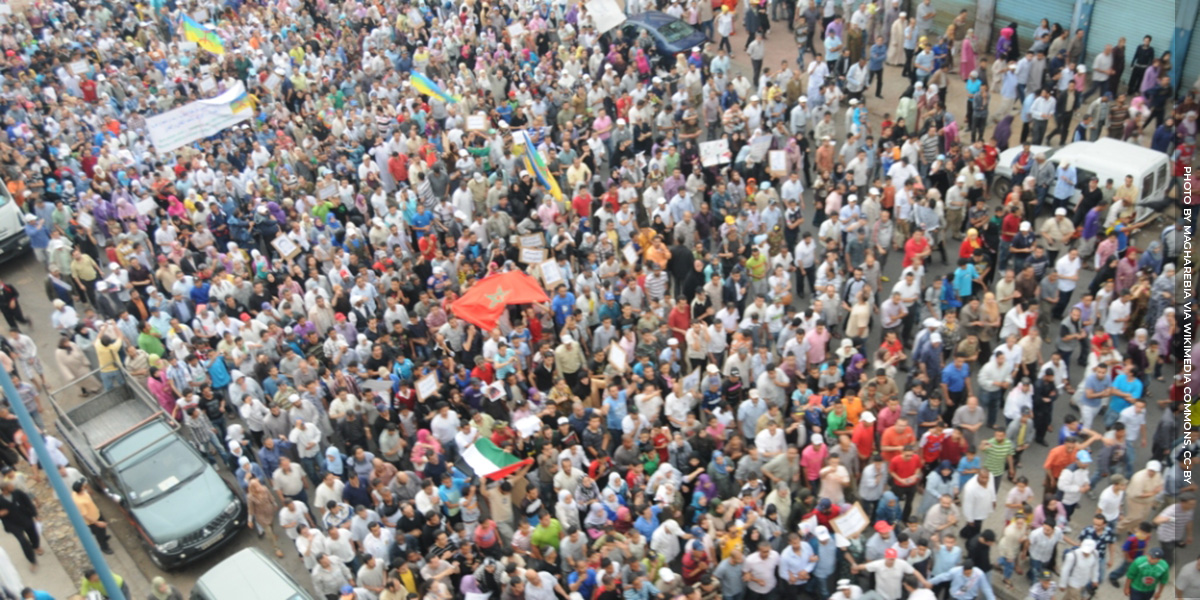


Thailand: joint statement by International NGOs on Pro-Democracy Protests
November 29, 2020A group of 13 important human rights NGOs – in a joint statement – condemn the Thai police’s unnecessary and excessive use of force against peaceful protesters marching to the national parliament in Bangkok on November 17, 2020. They are concerned that authorities could employ similar measures when facing protesters who have declared they will march to the Siam Commercial Bank headquarters on November 25.
On November 17, police set out barriers and barbed wire to prevent a peaceful march organized by pro-democracy movements from reaching the parliament. Protesters planned to protest outside the parliament as members of parliament and senators debated seven different proposals for constitutional amendments, including an amendment proposed by the lawyers’ non-governmental organization iLAW (Internet Law Reform Dialogue), which was supported by the People’s Movement and its allies. Police refused to let protesters through the barriers, and when the demonstrators acted to breach those barriers, police crowd control units used water cannons laced with purple dye and an apparent teargas chemical, as well as teargas grenades and pepper spray grenades, to forcibly disperse thousands of demonstrators, including students, some of whom are children. Water cannons were first used at approximately 2:25 pm and police continued their efforts to disperse protesters, with constant use of water cannons, teargas and pepper spray into the evening.
Police also failed to prevent violence between pro-democracy protesters and royalist “yellow shirts” near the Kiak Kai intersection, near the parliament. Initially, riot police separated the two groups. However, video posted on social media later showed police officers informing the royalist protesters that they would withdraw and seconds later they vacated their position between the two groups. During the ensuing skirmishes, both sides were filmed throwing rocks and wielding clubs. Live broadcasts included sounds that appeared to be gunfire.
The Erawan Medical Centre reported that there were at least 55 protesters injured, mostly from inhaling teargas. It also reported that there were six protesters who suffered gunshot wounds. The injured included children: a kindergartener and elementary school students….
On November 18, the spokesperson for United Nations Secretary-General António Guterres “expressed concern about the [human rights] situation in Thailand … it’s disturbing to see the repeated use of less lethal weapons against peaceful protesters, including water cannons … it’s very important that the government of Thailand refrain from the use of force and ensures the full protection of all people in Thailand who are exercising a fundamental peaceful right to protest.”
We call on the Thai government to respect, protect and fulfill the right of demonstrators to peacefully protest, in line with Thailand’s international obligations under the ICCPR and customary international law. Specifically, Thailand should:
1. Permit the People’s Movement march to proceed on November 25 and allow for non-violent protesters, including those who are children, to peacefully protest in front of the Siam Commercial Bank headquarters.
2. Protect the rights of protesters, including those who are children, in accordance with the Human Rights Committee’s General Comment No. 37 on the Right of Peaceful Assembly.
3. Facilitate the exercise of the right to peacefully assemble and refrain from dispersing assemblies by using weapons, including less-lethal weapons, against protesters in line with the United Nations Basic Principles on the Use of Force and Firearms by Law Enforcement Officials and UN and other guidance on less-lethal weapons.
4. Protect protesters, including those who are children, from violence and interference by non-State actors, while also protecting the rights of counter-demonstrators.
5. Take steps to ensure accountability for rights violations associated with the government’s crackdown on the protest movement and to ensure that those whose rights have been violated enjoy the right to an effective remedy, as guaranteed under ICCPR article 2(3).
Signed by:
Amnesty International
Article 19
ASEAN Parliamentarians for Human Rights
Asia Democracy Network
Asian Forum for Human Rights and Development (FORUM-ASIA)
Asian Network for Free Elections (ANFREL)
CIVICUS: World Alliance for Citizen Participation
Civil Rights Defenders
FIDH – International Federation for Human Rights
Fortify Rights
Human Rights Watch
International Commission of Jurists
Manushya Foundation
———–
https://www.hrw.org/news/2020/11/25/statement-international-ngos-pro-democracy-protests-november-17-and-25-2020
Posted in AI, Civil Rights Defenders (NGO), Front Line, HRW, human rights, Human Rights Defenders, ICJ | Leave a Comment »
Tags: freedom to demonstrate, General comment ICCPR, joint statement, NGOs, police violence, students, Thailand