On 21 September 2020 William Yen reported in Taiwan Focus on the Tang Prize 2020. Three NGOs that have won the 2020 Tang Prize for their significant contributions to the rule of law participated on-line in the Tang Prize Masters’ Forum in Rule of Law, organized by the Tang Prize Foundation and National Taiwan University’s College of Law. [see: https://en.wikipedia.org/wiki/Tang_Prize]
The Bangladesh Environment Lawyers Association (BELA),
The Colombian Dejusticia: The Center for Law, Justice and Society, and
The Legal Agenda, Lebanon.
Syeda Rizwana Hasan, chief executive of BELA, which promotes environmental justice and works toward sound environmental jurisprudence, said :”Corporate interests often take over public interests and the state loses its entity as a regulator and sides so much with the corporation that you can’t really differentiate which one is the state and which one is the corporation,”. This greatly impacts NGOs, as 430 environmental human rights defenders in Bangladesh were killed last year because they were fighting against mining projects or defending the rights of indigenous communities, Hasan said. See also: https://humanrightsdefenders.blog/2014/04/27/abu-bakar-siddique-released-but-worries-remain-for-human-rights-defenders-in-bangladesh/ “Authoritarian regimes are increasingly branding NGOs as foreign agents, enemies of the state and anti-development elements. They are trying to criminalize our entity and our functioning, they are trying to seize powers so they can assess our performances and delicense us if we go against their developmental narratives,” Hasan said.
Rodrigo Uprimny Yepes, co-founder of Dejusticia, which aims to strengthen the rule of law on issues such as discrimination against race and gender, said the challenges his organization, like many other NGOs will face in the future, will be the question of how to obtain financial sustainability without losing independence.
Samer Ghamroun, co-founder and current board member of The Legal Agenda, which focuses on promoting the independence of the judiciary and defending the rights of vulnerable groups, said that while religious equality is guaranteed in Lebanon, many other individual rights are sacrificed. “So religious equality coexists with social economic inequalities, huge social economical inquiries and lack of respect for individual rights,” Ghamroun said.
Yeh Jiunn-rong a professor at National Taiwan University, chair of the Tang Prize selection committee for the rule of law and moderator of the forum, expressed his gratitude for the organizations in sharing with Taiwan and the world their activisms and values. “Thank you very much to the representatives of these three laureates for the 2020 Tang Prize for Rule of Law,”.
In an open letter published Wednesday 9 September 2020 the groups say they are seeking greater scrutiny of and response to violations in places like Hong Kong, Tibet and Xinjiang, as well as beyond — such as through censorship, development that hurts the environment and the targeting of rights defenders.
The call for the creation of an “independent international mechanism” to focus on China’s rights violations adds to recent international pressure on Beijing over its handling of issues like protests in Hong Kong and detention centers — what the government calls vocational or training centers — for Uighur Muslims and others in western Xinjiang region.
“China has systematically persecuted rights defenders in reprisal for their cooperation with U.N. human rights operations — torture, enforced disappearance, imprisonment, and stripping licenses from lawyers,” said Renee Xia, director of Chinese Human Rights Defenders, in a statement. “The U.N. system should no longer tolerate such treatment.”
The move follows a call by independent experts who work with the United Nations for a special session of the Human Rights Council focusing on the array of issues around China’s rights record. Advocates insist that no country — no matter how large or powerful — should escape extra scrutiny of their rights records when warranted. [see also https://humanrightsdefenders.blog/2020/06/27/un-experts-address-3-big-ones-usa-china-and-india/]
The groups also want U.N. Secretary-General Antonio Guterres and the U.N. High Commissioner for Human Rights, Michelle Bachelet, to “take responsibility for publicly addressing China’s sweeping rights violations,” Human Rights Watch said in a statement.
At a news conference Wednesday in Beijing, Chinese Foreign Ministry spokesman Zhao Lijian sought to brush off the groups’ appeal, saying: “I think the statements made by these organizations are groundless and not worth refuting.”
The appeal comes before the start of the 47-member-state Human Rights Council’s fall session on Monday. In its summer session, the council held an urgent debate on a rise of police violence against Black people and repression of protests in the United States.
President of the Cairo Institute of Human Rights Studies, Bahey El-Din Hassan, 26 August 2020 [thenewkhalij/Twitter]
A so-called “terrorism court “in Egypt has sentenced the President of the Cairo Institute of Human Rights Studies, Bahey El-Din Hassan, to 15 years in prison in absentia.
The charges levelled against Bahey Hassan, who has been described as the spiritual father of the human rights movement, are familiar. They have been issued, in one form or another, against Egypt’s 60,000 political prisoners, multiple times: spreading false news and insulting the judiciary. The Cairo Institute for Human Rights Studies condemns the 15-year sentencing of its director, prominent human rights defender Bahey eldin Hassan, and calls for an end to a state security campaign of intimidation and vengeance that has targeted Egyptian rights advocates.
Bahey Hassan left Egypt in 2014 after receiving death threats for his work. Two years later a travel ban was issued against him and his assets were frozen after he and his organisation were targeted by what Amnesty terms a “politically motivated investigation into the work of human rights organisations in case 173”, or the foreign funding case.[see https://humanrightsdefenders.blog/2016/09/18/egypt-court-freezes-assets-of-rights-defenders-and-ngos/]
In 2019 Hassan was sentenced to three years in prison, again in absentia, and fined 20,000 Egyptian pounds ($1,259) for allegedly insulting the judiciary.
Amr Magdi, Egypt’s researcher for Human Rights Watch, has drawn comparisons with Bahey Hassan’s treatment by the Sisi government to how his organisation was allowed to operate under ousted President Hosni Mubarak.
Understandbly there have been massive reactions on Twitter and other social media against the 15-year sentence by Egypt ‘s ‘terror’ court.
An open letter has been signed by: Article 19, Assembly of Pro-Democratic NGOs of Belarus, Barys Zvozskau Belarusian Human Rights House, Belarusian Association of Journalists, Belarusian Helsinki Committee, Civil Rights Defenders, Human Constanta, Human Rights House Foundation, Human Rights Watch, International Federation for Human Rights (FIDH), La Strada International, Legal Initiative, Legal Transformation center (Lawtrend), Viasna Human Rights Center and World Organisation Against Torture (OMCT).
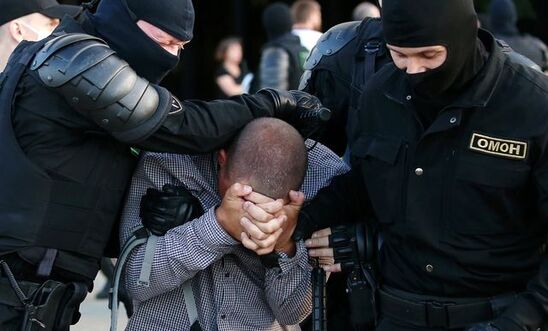
The UN Human Rights Council must urgently convene a special session to address the human rights crisis in Belarus. The joint letter expresses the organisations’ “utmost concern” over “widespread violations of human rights, including arbitrary arrests, prosecutions under trumped-up charges, and torture and other ill-treatment”.
The letter calls on the council to adopt a resolution requesting the UN High Commissioner for Human Rights to monitor and report on human rights abuses in Belarus with “a view to ensuring full accountability”.
[In the three days after the 9 August presidential election, the authorities in Belarus confirmed the arrest of at least 6,700 protesters. According to Viasna Human Rights Center, at least 450 of the detainees reported being tortured or otherwise ill-treated – including through severe beatings, being forced to perform humiliating acts, being threatened with rape and other forms of violence – while held in incommunicado detention for up to ten days.
Since 12 August, the authorities have taken steps to de-escalate the situation, refraining from mass arrests and releasing those detained. However, the threats against peaceful protesters recently made by President Alyaksandr Lukashenka and his subordinates together with the recent deployment of the armed forces in the country’s capital Minsk and elsewhere, signal a possible new spiral of violence and accompanying human rights violations.]
In a joint statement published on 29 July 2020 entitled “Sri Lanka: Human Rights Under Attack” by Human Rights Watch and 9 other major NGOs confirms what many have been fearing since the presidential election of November 2019, [See: defenders-in-sri-lanka-fear-return-to-a-state-of-fear/]:
The United Nations, as well Sri Lanka’s partners and foreign donors, should immediately call for full respect, protection and fulfillment of the human rights of all Sri Lankans, and particularly to halt the reversal of fragile gains in the protection of human rights in recent years.
Numerous civilian institutions, including the NGO Secretariat, have been placed under the control of the Defence Ministry. Serving and retired military officers have been appointed to a slew of senior government roles previously held by civilians. The authorities have recently established military-led bodies such as the Presidential Task Force to build “a secure country, disciplined, virtuous and lawful society,” which has the power to issue directives to any government official. This represents an alarming trend towards the militarization of the state. Many of those in government, including the president, defense secretary, and army chief, are accused of war crimes during the internal armed conflict that ended in 2009.
Dissident voices and critics of the current government, including lawyers, journalists, human rights defenders and victims of past abuses, are being targeted by the police, intelligence agencies and pro-government media.
Since the presidential election in November 2019, anti-human rights rhetoric intended to restrict the space for civil society has been amplified by senior members of government. On 6 July 2020, at an election rally, Prime Minister Mahinda Rajapaksa stated that “NGOs will be taken into a special attention under the new government formed after the General Election, specifically, how foreign monies and grants are received to the NGOs from foreign countries and further, activities of the international organisations will be observed.” The government has also announced a probe into NGOs registered under the previous government.
In the months following the November 2019 presidential election, a number of organizations reported visits from intelligence officers who sought details of staff, programs and funding, in particular, organizations in the war-affected Northern and Eastern provinces of the country. Such visits are blatant attempts to harass and intimidate Sri Lankan civil society.
In February, the acting District Secretary in the Mullaitivu District (Northern Province) issued a directive that only non-governmental organizations with at least 70 percent of their activities focused on development would be allowed to work, effectively enabling arbitrary interference with and prevention of a broad range of human rights work. A Jaffna-based think-tank was visited several times, including soon after the Covid-19 lockdown, and questioned about its work, funding and staff details.
Lawyers taking on human rights cases have been targeted through legal and administrative processes and have faced smear campaigns in the media. Kumaravadivel Guruparan, a human rights lawyer, was a senior lecturer at the Faculty of Law at the University of Jaffna. He appeared as counsel on behalf of victims in the case of 24 Tamil youth who were subjected to enforced disappearance while in military custody at Navatkuli in 1996. In November 2019, Guruparan was banned by the University Grants Commission (UGC) from teaching law while also practicing in court. The ban was following a letter sent by the Sri Lankan army to the UGC questioning why Guruparan was permitted to engage in legal practice while being a member of the faculty. Guruparan resigned from the University on 16 July 2020.[ see also: https://humanrightsdefenders.blog/2020/01/02/sri-lankan-human-rights-defender-barred-from-legal-practice-appeals-to-supreme-court/
On 14 April, Hejaaz Hizbullah, a lawyer who has represented victims of human rights violations, was arrested under the draconian Prevention of Terrorism Act (PTA). He is being held illegally without charge and without being produced before a magistrate for over 90 days. He has had limited access to his lawyers and family members. The day before his arrest, Hizbullah joined others in submitting a letter addressed to President Gotabhaya Rajapaksa criticising the denial of burial rights to the Muslim community under Sri Lanka’s Covid-19 regulations.
Achala Senevirathne, a lawyer who represents families in a case involving the enforced disappearance of 11 youth in 2008, in which senior military commanders are implicated, has been attacked on social media, including with threats of physical violence and sexualized abuse. The police have failed to act on her complaints of threats to her safety.
On 10 June, Swastika Arulingam, a lawyer, was arrested when she inquired about the arrests of people conducting a peaceful Black Lives Matter solidarity protest. Other lawyers, not named here for reasons of security, have also been visited at their homes by security officials, or called in for lengthy interrogations linked to their human rights work.
Journalists and those voicing critical opinions on social media, have been arbitrarily arrested. The UN High Commissioner for Human Rights expressed alarm at the clampdown on freedom of expression, including the 1 April announcement by the police that any person criticizing officials engaged in the response to Covid-19 would be arrested. It is unclear whether there is any legal basis for such arrests. The Human Rights Commission of Sri Lanka has cautioned against “an increasing number of such arrests since the issuing of a letter dated 1 April 2020”.
Media rights groups have condemned the targeting of journalists since the presidential election, with threats of arrest, surveillance, and lengthy police interrogations linked to their reporting. Dharisha Bastians, former editor of the Sunday Observer newspaper and a contributor to the New York Times, her family, and associates, have been persecuted by Sri Lankan police in retaliation for her work. Since December 2019, authorities have attempted to link Bastians to the disputed abduction of a Swiss Embassy employee in Colombo. The government claims the alleged abduction was fabricated to discredit the government. Since Bastians had reported on the incident as a journalist, the police have obtained and published her phone records, searched her house, and seized her laptop computer.
On 9 April, a social media commentator Ramzy Razeek was arrested under Sri Lanka’s International Covenant on Civil and Political Rights (ICCPR) Act and the Computer Crimes Act. He approached the Sri Lankan police for protection following online death threats linked to his social media posts condemning all forms of extremism. Instead of receiving protection, he was jailed and denied bail. His hearing has been postponed, despite his failing health and the heightened risk posed by the pandemic in prisons.
The targeting and repression of journalists and human rights defenders is not only an assault on the rights of these individuals, but an attack on the principles of human rights and the rule of law which should protect all Sri Lankans. These policies have a chilling effect on the rights to freedom of expression and association, which are crucial for the operation of civil society and fundamental to the advancement of human rights. Those working on ending impunity and ensuring accountability for past crimes, and especially victims, victim’s families, members of minority communities, and networks in the Northern and Eastern provinces, are particularly at risk of intimidation and harassment.
The Sri Lankan authorities must end all forms of harassment, threats, and abuse of legal processes and police powers against lawyers, human rights defenders and journalists. Ramzy Razeek and Hejaaz Hizbullah must be released immediately. Human rights defenders living and working in Sri Lanka should be able to carry out their peaceful human rights work without fear of reprisals, which requires a safe and enabling environment in which they can organize, assemble, receive and share information.
While the government of Sri Lanka continues to deny Sri Lankans the ability to promote and defend human rights, particularly targeting members of civil society, we call upon the international community, including states and the United Nations, to demand that Sri Lanka live up to its international human rights obligations.
Sri Lankan human rights defenders, lawyers and journalists need to be protected now.
Global leaders and civil society groups are to launch a COVID-19 Grassroots Justice Fund to help marginalised and oppressed communities protect their rights during the pandemic and ensure equitable recovery.
Mary Robinson, Chair of The Elders and former UN High Commissioner for Human Rights, said on 22 July 2020: “COVID-19 has exacerbated the problems of inequality and injustice and made it harder for grassroots organisations to provide much needed support. The COVID-19 Grassroots Justice Fund is a lifeline to these organisations as they adapt to the challenges created by this unprecedented pandemic, and I am proud that The Elders are supporting it with our partners.”
The Elders, the Legal Empowerment Network, Namati, Justice For All, Pathfinders and the Fund for Global Human Rights have come together as non-funding partners to assemble the COVID-19 Grassroots Justice Fund, which aims to raise US$1 million to support 100 grassroots justice groups within 12-18 months.
The Legal Empowerment Network will ensure that grantee selection is led by and for grassroots justice leaders. The Fund for Global Human Rights will administer funds, bringing to bear its deep experience channelling resources to grassroots groups around the world. The Pathfinders develop evidence-based strategies for justice for all in a pandemic and will make the case for investing in grassroots justice organisations as part of the pandemic response. The Elders will use their powerful global platform to highlight the vital work of grassroots justice in the pandemic.
…
A one-time grant will be provided to qualified grassroots justice defenders and aims to help save lives and address the intertwined health, economic and justice crisis. Applications will initially be limited to groups who have already participated in the Legal Empowerment Network’s COVID-19 Justice Challenge and other COVID-19 activities. An open call will be announced in the future to wider groups, depending on availability of funds…
Hong Kong’s chief executive Carrie Lam on giant screens remotely addressing the opening of the UN Human Rights Council’s 44th session on in Geneva, Switzerland, 30 June 2020, FABRICE COFFRINI/AFP via Getty Images
The 44th session of the UN Human Rights Council began with China’s imposition of legislation severely undermining rights and freedoms in Hong Kong. Within days, there were reports of hundreds of arrests, some for crimes that didn’t even exist previously. We welcome efforts during this session by a growing number of States to collectively address China’s sweeping rights abuses, but more is needed. An unprecedented 50 Special Procedures recently expressed concerns at China’s mass violations in Xinjiang, Hong Kong and Tibet, suppression of information in the context of COVID-19, and the targeting of human rights defenders across the country. The Council should heed the call of these UN experts to hold a Special Session and create a mechanism to monitor and document rights violations in the country. No state is beyond international scrutiny. China’s turn has come.
The 44th session also marked an important opportunity to enable those affected directly by human rights violations to speak to the Council through NGO video statements.
Amnesty’s Laith Abu Zeyad addressed the Council remotely from the occupied West Bank where he has been trapped by a punitive travel ban imposed by Israel since October 2019. We call on the Israeli authorities to end all punitive or arbitrary travel bans.
During the interactive dialogue with the Commission of Inquiry on Syria, victims’ associations and families of victims highlighted the human rights violations occurring in detention centers in Syria. We welcome the efforts by some States to underline their demands and welcome the adoption of the Syria resolution on detainees and urge the Syrian government to take all feasible measures to release detainees and provide truth to the families, noting the important pressure needed by Member States to further call for accountability measures for crimes committed in Syria.
Collette Flanagan, Founder of Mothers against Police Brutality, also delivered a powerful video statement at the Council explaining the reality of racist policing in the United States of America. We fully support victims’ families’ appeals to the Council for accountability.
We hope that the High Commissioner’s report on systemic racism, police violence and government responses to antiracism peaceful protests will be the first step in a series of meaningful international accountability measures to fully and independently investigate police killings, to protect and facilitate Black Lives Matter and other protests, and to provide effective remedy and compensation to victims and their families in the United States of America and around the world.
We appreciate the efforts made by the Council Presidency and OHCHR to overcome the challenges of resuming the Council’s work while taking seriously health risks associated with COVID-19, including by increasing remote and online participation. We recommend that remote civil society participation continue and be strengthened for all future sessions of the Council.
Despite these efforts, delays in finalising the session dates and modalities, and subsequent changes in the programme of work, reduced the time CSOs had to prepare and engage meaningfully. This has a disproportionate impact on CSOs not based in Geneva, those based in different time zones and those with less capacity to monitor the live proceedings. Other barriers to civil society participation this session included difficulties to meet the strict technical requirements for uploading video statements, to access resolution drafts and follow informal negotiations remotely, especially from other time zones, as well as a decrease in the overall number of speaking slots available for NGO statements due to the cancellation of general debates this session as an ‘efficiency measure.’
We welcome the joint statement led by the core group on civil society space and endorsed by cross regional States and civil society, which calls on the High Commissioner to ensure that the essential role of civil society, and States’ efforts to protect and promote civil society space, are reflected in the report on impact of the COVID-19 pandemic presented to the 46th Session of the HRC. We urge all States at this Council to recognise and protect the key role that those who defend human rights play.
We therefore welcome that the resolution “the promotion and protection of human rights in the context of peaceful protests” was adopted by consensus, and that the Council stood strongly against some proposed amendments which would have weakened it. We also welcome the inclusion in the resolution of a panel during the 48th session to discuss such events and how States can strengthen protections. We urge States to ensure full accountability for such human rights violations as an essential element of the protection of human rights in the context of protests. The current context has accelerated the urgency of protecting online assembly, and we welcome that the resolution reaffirms that peaceful assembly rights guaranteed offline are also guaranteed online. In particular, we also commend the resolution for calling on States to refrain from internet shutdowns and website blocking during protests, while incorporating language on the effects of new and emerging technologies, particularly tools such as facial recognition, international mobile subscriber identity-catchers (“stingrays”) and closed-circuit television.
We welcome that the resolution on “freedom of opinion and expression” contains positive language including on obligations surrounding the right to information, emphasising the importance of measures for encryption and anonymity, and strongly condemning the use of internet shutdowns.. Following the High Commissioner’s statement raising alarm at the abuse of ‘false news’ laws to crackdown on free expression during the COVID-19 pandemic, we also welcome that the resolution stresses that responses to the spread of disinformation and misinformation must be grounded in international human rights law, including the principles of lawfulness, legitimacy, necessity and proportionality. At the same time, we are concerned by the last minute addition of language which focuses on restrictions to freedom of expression, detracting from the purpose of the resolution to promote and protect the right. As we look to the future, it is important that the core group builds on commitments contained in the resolution and elaborate on pressing freedom of expression concerns of the day, particularly for the digital age, such as the issue of surveillance or internet intermediary liability, while refocusing elements of the text.
The current context has not only accelerated the urgency of protecting assembly and access to information, but also the global recognition of the right to a safe, clean, healthy and sustainable environment. We welcome the timely discussions on ”realizing children’s right to a healthy environment” and the concrete suggestions for action from panelists, States, and civil society. The COVID-19 crisis, brought about by animal-to-human viral transmission, has clarified the interlinkages between the health of the planet and the health of all people. We therefore support the UN Secretary General’s call to action on human rights, as well as the High Commissioner’s statement advocating for the global recognition of the human right to a safe, clean, healthy and sustainable environment – already widely reflected at national and regional levels – and ask that the Council adopts a resolution in that sense. We also support the calls made by the Marshall Islands, Climate Vulnerable Forum, and other States of the Pacific particularly affected and threatened by climate change. We now urge the Council to strengthen its role in tackling the climate crisis and its adverse impacts on the realization of human rights by establishing a Special Rapporteur on Human Rights and Climate Change, which will help address the urgency of the situation and amplify the voices of affected communities.
The COVID crisis has also exacerbated discrimination against women and girls. We welcome the adoption by the Council of a strong resolution on multiple and intersecting forms of discrimination against women and girls, which are exacerbated in times of a global pandemic. The text, inter alia, reaffirms the rights to sexual and reproductive health and to bodily autonomy, and emphasizes legal obligations of States to review their legislative frameworks through an intersectional approach. We regret that such a timely topic has been questioned by certain States and that several amendments were put forward on previously agreed language.
The Council discussed several country-specific situations, and renewed the mandates in some situations.
We welcome the renewal of the Special Rapporteur’s mandate and ongoing scrutiny on Belarus. The unprecedented crackdown on human rights defenders, journalists, bloggers and members of the political opposition in recent weeks ahead of the Presidential election in August provide a clear justification for the continued focus, and the need to ensure accountability for Belarus’ actions. With concerns that the violations may increase further over the next few weeks, it is essential that the Council members and observers maintain scrutiny and pressure even after the session has finished.
We welcome the extension of the mandate of the Special Rapporteur on Eritrea. We urge the government to engage, in line with its Council membership obligations, as the Special Rapporteur’s ‘benchmarks for progress’ form a road map for human rights reform in the country.
We welcome the High Commissioner report on the human rights situation in the Philippines which concluded, among other things, that the ongoing killings appear to be widespread and systematic and that “the practical obstacles to accessing justice in the country are almost insurmountable.” We regret that even during this Council session, President Duterte signed an Anti Terrorism Law with broad and vague definition of terrorism and terrorists and other problematic provisions for human rights and rule of law, which we fear will be used to stifle and curtail the rights to freedom of opinion and expression, to freedom of peaceful assembly and of association. Also during this session, in a further attack on press freedom, Philippine Congress rejected the franchise renewal of independent media network ABS-CBN, while prominent journalist Maria Ressa and her news website Rappler continue to face court proceedings and attacks from President Duterte after Ressa’s cyber libel conviction in mid-June. We support the call from a group of Special Procedures to the Council to establish an independent, impartial investigation into human rights violations in the Philippines and urge the Council to establish it at the next session.
The two reports presented to the Council on Venezuela this session further document how lack of judicial independence and other factors perpetuate impunity and prevent access to justice for a wide range of violations of civil, cultural, economic, political, and social rights in the country. We also urge the Council to stand ready to extend, enhance and expand the mandate of the Independent International Fact-Finding Mission when it reports in September.
We also welcome the report of the Special rapporteur on the human rights situation in the Palestinian Territory occupied since 1967 and reiterate his call for States to ensure Israel puts an end to all forms of collective punishment. We also reiterate his call to ensure that the UN database of businesses involved with Israeli settlements becomes a living tool, through sufficient resourcing and annual updating.
We regret, however, that several States have escaped collective scrutiny this session.
We reiterate the UN Special Rapporteur Agnes Callamard’s call to pressure Saudi Arabia to release prisoners of conscience and women human rights defenders and call on all States to sustain the Council’s scrutiny over the situation at the September session.
As highlighted in a joint statement of Special Procedures, we call on the Indian authorities to immediately release HRDs, who include students, activists and protest leaders, arrested for protesting against changes to India’s citizenship laws. Also eleven prominent HRDs continue to be imprisoned under false charges in the Bhima Koregaon case. These activists face unfounded terror charges under draconian laws such as sedition and under the Unlawful Activities (Prevention) Act. While we welcome that Safoora Zargar was granted bail on humanitarian grounds, the others remain at high risk during a COVID-19 pandemic in prisons with not only inadequate sanitary conditions but also limited to no access to legal counsel and family members. A number of activists have tested positive in prison, including Akhil Gogoi and 80-year-old activist Varavara Rao amid a larger wave of infections that have affected many more prisoners across the country. Such charges against protestors, who were exercising their rights to freedom of peaceful assembly must be dropped. We call on this Council to strengthen their demands to the government of India for accountability over the excessive use of force by the police and other State authorities against the demonstrators.
In Algeria, between 30 March and 16 April 2020, the Special rapporteur on freedom of opinion and expression, freedom of peaceful assembly and of association, human rights defenders, issued three urgent appeals in relation to cases involving arbitrary and violent arrests, unfair trials and reprisals against human rights defenders and peaceful activists Olaya Saadi, Karim Tabbou and Slimane Hamitouche. Yet, the Council has been silent with no mention of the crackdown on Algerian civil society, including journalists.
To conclude on a positive note, we welcome the progress in the establishment of the OHCHR country office in Sudan, and call on the international community to continue to provide support where needed to the transitional authorities. While also welcoming their latest reform announcements, we urge the transitional authorities to speed up the transitional process, including reforms within the judiciary and security sectors, in order to answer the renewed calls from protesters for the enjoyment of “freedom, peace and justice” of all in Sudan. We call on the Council to ensure continued monitoring and reporting on Sudan.
On 14 July Business-Wire reported that the VPN company TunnelBear has partnered with NGOs to give away 20,000 accounts (these NGOs inlcude Access Now, Frontline Defenders, Internews, and one other undisclosed participant).
This program aims to empower individuals and organizations with the tools they need to browse a safe and open internet environment, regardless of where they live. The VPN provider is encouraging other NGOs or media organizations across the world to reach out if they too are in need of support. “At TunnelBear, we strongly believe in an open and uncensored internet. Whenever we can use our technology to help people towards that end, we will,” said TunnelBear Cofounder Ryan Dochuk.
TunnelBear’s VPN encrypts its user’s internet traffic to enable a private and censor-free browsing experience.
“By undergoing and releasing independent audits of their systems, adopting open source tools, and collaborating with the open source community, TunnelBear has proven itself to be an industry leader in the VPN space and a valuable private sector partner within the internet freedom movement. Internews is happy to support TunnelBear in extending its VPN service to the media organizations, journalists, activists, and human rights defenders around the globe who can benefit from it,” said Jon Camfield, Director of Global Technology Strategy at Internews.
HRCnet was established in 2006 to enhance NGO engagement with the Human Rights Council and to strengthen the Council’s impact and influence on the ground. Since then, HRCnet members working in coordination and solidarity, or as a network as a whole, have contributed significantly to some of the most important initiatives and outputs of the Human Rights Council and its mechanisms.
HRCnet’s membership comprises 16 NGOs and organisations working at the international level and across almost all regions:
Africa
African Centre for Democracy and Human Rights Studies (The Gambia)
DefendDefenders (East and Horn of Africa Human Rights Defenders Project) (Uganda)
Southern African Human Rights Defenders Network (Zimbabwe)
West African Human Rights Defenders Network (Togo)
Asia-Pacific
Asian Legal Resource Centre (Hong Kong, China)
Asian Forum for Human Rights and Development (FORUM ASIA) (Thailand)
Commonwealth Human Rights Initiative (India)
Human Rights Law Centre (Australia)
Latin America
Centro de Estudios Legales y Sociales (CELS) (Argentina)
Conectas Direitos Humanos (Brazil)
Middle East and North Africa
Cairo Institute for Human Rights Studies (Egypt)
Egyptian Initiative for Personal Rights (Egypt)
International
CIVICUS (South Africa)
Human Rights Watch (USA)
International Service for Human Rights (Switzerland)
Open Society Foundations (USA)
HRCnet members have substantially shaped debates and made influential policy proposals on country situations, as well as thematic and institutional issues. HRCnet works to:
Safeguard civil society: through securing actions by key actors that have, in a number of cases, assisted in the release of human rights defenders from detention or in alleviating pressure on NGOs.
Enhance access: by assisting rights holders from the Global South in engaging with the international human rights system and strengthening capacity to influence States, and harness civil society, from all regions.
Amplify impact: by facilitating coordination and collaboration between international and regional NGOs.
Promote accountability: seeking the establishment of commissions of inquiry or other independent expert mechanisms to investigate and promote accountability for gross human rights violations.
Enhance scrutiny: through the mandating of new Special Procedures to monitor human rights and document violations.
Strengthen protection: through the establishment of new Special Procedures and other mechanisms.
The EU Reporterof 19 June 2020 comes with the good news that on 18 June, the Court of Justice of the European Union (CJEU) recognized that Hungary’s 2017 law “on the Transparency of Organisations Supported from Abroad” (i.e. receiving foreign funds) unduly restricts the freedom of movement of capitals within the European Union (EU) and amounts to unjustified interference with fundamental rights, including respect for private and family life, protection of personal data and freedom of association, as well citizens’ right to participate in public life. [see https://humanrightsdefenders.blog/2018/02/20/250-ngos-address-letter-to-hungarian-parliament-regarding-restriction-on-the-work-of-human-rights-defenders/]
The Observatory for the Protection of Human Rights Defenders (FIDH-OMCT) welcomes this decision and hopes it will put an end to the Hungarian government’s constant attempts to delegitimise civil society organisations and impede their work.
“This decision is more than welcome! It strongly asserts that stigmatizing and intimidating NGOs receiving funding from abroad and obstructing their work is not accepted in the European Union,” said Marta Pardavi, Co-Chair of the Hungarian Helsinki Committee (HHC), member organisation of FIDH and of OMCT’s SOS-Torture Network. “Today’s ruling is a victory not only for Hungarian civil society organisations, who have campaigned fiercely against this law since its adoption, but for European civil society as a whole. It is a clear reaffirmation of the fundamental role played by civil society in a democratic State founded on the rule of law.”
“Hungary should now withdraw this anti-NGO law and conform with the CJEU’s decision,” added OMCT Secretary General Gerald Staberock.
![President of the Cairo Institute of Human Rights Studies, Bahey El-Din Hassan, 26 August 2020 [thenewkhalij/Twitter]](https://i0.wp.com/www.middleeastmonitor.com/wp-content/uploads/2020/08/Bahey-El-Din-Hassan.jpg?resize=1200%2C800&quality=85&strip=all&zoom=1&ssl=1)