Thirty two years ago, I and some other good friends of Martin Ennals decided to create an award in the name of this human rights pioneer [see: https://youtu.be/tAhUi2gOHmU?si=6RxI5TduzLfLeJym]. I am very proud and happy that in two weeks time I wil be in Geneva to participate in the 30th edition of the award ceremony. I very much hope that many others wil be able to join, in person or via the live-stream.
The Award was given out for the first time in 1994 to recognize, promote and protect human rights defenders at risk or from under-reported contexts. It culminates every year in a public ceremony in Geneva, co-hosted with the City of Geneva. Over the years, the Award has offered defenders a platform to issues that are of global concern and the connections to steer the movement for human rights and larger freedoms.
The Jury has recognized 53 defenders in the past 30 years, from 37 countries and from all walks of life: lawyers, journalists, academics, medical practitioners, religious practitioners, housewives, students and grassroots activists. Their voices have illustrated some of the most important human rights demands of the past decades: free and fair justice for violations committed by security forces; access to information and freedom of expression to denounce repressive practices and authorities; the fight against gender discrimination and the importance of women’s full and equal participation in society; the essential role of civil society in conflict and post conflict resolution; the role of businesses in exploiting natural resources against the rights to land of indigenous people; or the role of global powers in the violations of the right to life of migrants.
The 2024 Martin Ennals Award continues the legacy and will honour two outstanding human rights defenders who have made it their life mission to protect human rights in their communities and countries despite evolving in deeply repressive environments.
A public discussion with Jury members later in the evening of ceremony will also be the opportunity to showcase the issues that will shape the future of the Award.
Get to know the 2024 Laureates by joining our traditional Award ceremony on Thursday 21 November at 18:30 CET, in Salle communale de Plainpalais, Rue de Carouge 52, Geneva.
The ceremony, co-hosted together with the City of Geneva, is the opportunity to learn about the two 2024 Laureates: who they are, their aspirations and what they have been doing to bring human rights at the forefront. Their inspiring stories illustrate key human rights struggles that the world needs to hear, for peace, dignity and equality of all. The Award ceremony will be followed by a cocktail offered by the City of Geneva.
You cannot join in person? We got you! The ceremony and the debate will be livestreamed on our media platforms.
JURY INSIGHTS
A public discussion on current global issues
Festivities will continue on Thursday 21 November with a late-night discussion to celebrate the 30th anniversary of the Martin Ennals Award. Since 1994, it is the careful deliberations of the Jury that have led to the recognition of some of the most outstanding human rights defenders and organisations. The Foundation is pleased to offer a special opportunity to listen in the inner thoughts of leading organisations on the state of human rights in the world and how to reclaim them.
The one-hour discussion will start at 21:15 CET in Salle communale de Plainpalais, after the cocktail, and will be the occasion for a young human rights defender to ask everyone’s most burning questions!
At a time of unprecedented backlash against them, dozens of the most at-risk human rights defenders (HRDs) from all regions of the world will come together with dignitaries and civil society leaders in Dublin for three days from 23-25 October at Front Line Defenders’ flagship event, the Dublin Platform. This is Front Line Defenders’ 12th Platform, bringing together around 100 HRDs from close to 100 different countries.
First held in 2002, previous Dublin Platforms have given HRDs from almost every country the opportunity to share strategies for advocacy and protection, build solidarity with colleagues around the world, and network with high-level decision makers.
“Human rights defenders represent the best of the human spirit. They steadfastly champion the human rights of others, often at great personal risk, to push for fairer, more just societies,” said Alan Glasgow, Executive Director of Front Line Defenders.
“But the challenges they face are enormous. For their courageous work, human rights defenders are often targeted with the worst forms of violence, surveillance, criminalisation and other repression.
The dignitaries addressing this year’s Platform will include: Volker Türk, UN High Commissioner for Human Rights; Mary Lawlor, UN Special Rapporteur on the situation of human rights defenders; Michael O’Flaherty, Commissioner for Human Rights of the Council of Europe; and Seán Fleming, Minister of State in Ireland’s Department of Foreign Affairs. https://www.ohchr.org/en/statements-and-speeches/2024/10/human-rights-defenders-are-oxygen-human-rights-ecosystem
Among the HRDs attending the Dublin Platform are LGBTIQ+ rights defenders; Indigenous, land and environmental rights defenders; women human rights defenders; journalists facing threats and persecution; those fighting against corruption and corporate abuse, and those working on a range of other issues.
The HRDs taking part in the Platform face a wide range of risks, from digital surveillance and online harassment, to death threats and violent attacks, to criminalisation and vilification through smear campaigns. Some work in extremely challenging circumstances amid armed conflicts, crackdowns and other large-scale crises. Front Line Defenders documents the wide array of risks faced by HRDs in its Global Analysis, published annually.
The HRDs in attendance will also attend a special tribute at the HRDMemorial monument in Dublin’s Iveagh Gardens, to commemorate the hundreds of their colleagues around the world who are killed every year for their peaceful work. According to the HRD Memorial initiative – which Front Line Defenders coordinates – at least 300 HRDs across 28 countries were killed in 2023
A Brazilian nun who has helped refugees and migrants for 40 years on Wednesday won the Nansen prize awarded every year by the U.N. High Commission for Refugees for outstanding work to protect internally displaced and stateless people.
Sister Rosita Milesi, 79, is a member of the Catholic order of the Scalabrini nuns, who are renowned for their service to refugees worldwide. Her parents were poor farmers from an Italian background in southern Brazil, and she became a nun at 19.
As a lawyer, social worker and activist, Milesi championed the rights and dignity of refugees and migrants of different nationalities in Brazil for four decades.
She is the second Brazilian to receive the award. Former Sao Paulo Archbishop Dom Paulo Evaristo Arns won the prize in 1985.
Milesi leads the Migration and Human Rights Institute (IMDH) in Brasilia, through which she has helped thousands of forced migrants and displaced people access essential services such as shelter, healthcare, education and legal assistance.
She coordinates RedeMIR, a national network of 60 organizations that operates throughout Brazil, including in remote border regions, to support refugees and migrants.
Human rights defender and former professor at the University of Delhi, Gokarakonda Naga(G.N.)Saibaba passed away on 12 October 2024 due to a cardiac arrest at the Nizam’ Institute of Medical Sciences Hospital at Hyderabad, India. On 7 March 2024, G.N. Saibaba was released from the Nagpur Central Jail after nearly a decade of imprisonment. In March 2024 he was acquitted of all charges by the Nagpur bench of the Bombay High Court, after being falsely accused of having links with banned Maoist organisations, and charged with serious offences including under the Unlawful Activities Prevention Act (UAPA).
G.N. Saibaba suffered from severe health conditions which worsened during his time in prison. These health conditions included polio related disabilities, a heart condition, a brain cyst, hypertension and breathing difficulties. While in prison, the human rights defender G.N. Saibaba was held in solitary confinement in a windowless cell and kept under constant CCTV surveillance. He contracted COVID-19 twice whilst in prison, in January 2021 and in February 2022, leading to further deterioration of his health condition. In a letter to his wife, G.N. Saibaba had spoken about his ill-treatment in prison stating that he had received no treatment for his ailments despite recommendations by doctors at the Government Medical College Hospital that he receive immediate medical attention. The United Nations Special Rapporteur on Human Rights Defenders had previously called for his release on medical grounds, calling on the “Indian authorities to immediately ensure that G.N. Saibaba has continuous and unrestricted access to health care, including adequate treatment and rehabilitation.”
Even though G.N. Saibaba was released prior to his demise, the ill-treatment suffered by the human rights defender and denial of healthcare during his imprisonment contributed to his already severe health issues. G.N. Saibaba never fully recovered from his time in prison which had prevented him from receiving urgent medical intervention. Front Line Defenders believes that his wrongful imprisonment is at least partially responsible for his untimely demise. It calls on Indian authorities to revise draconian counter-terrorism laws such as the UAPA and ensure that the legitimate work of human rights defenders is not criminalised.
Front Line Defenders holds the Indian authorities accountable for the death of G.N. Saibaba and calls for adequate monetary compensation to be awarded to his family.
A group of Cubans, including human rights activist defenders, unfolded a large banner this Thursday under the iconic Eiffel Tower in Paris, in support of the 1,113 political prisoners in Cuba. The banner displays the faces of many of those imprisoned on the island for expressing their discontent with the Castro regime, criticizing communist policies, or demanding respect for human rights.
Meanwhile, activist Avana de la Torre joined this peaceful demonstration in the French capital, while the NGO Prisoners Defenders presented its latest report on political prisoners in Cuba. The report highlighted that all these detainees face sentences imposed without judicial oversight, which violates international standards.
During 2024, repression and human rights violations against political prisoners in Cuba have intensified. On August 4, two Cuban activists were sent to prison accused of “propaganda against the constitutional order” after being detained in Villa Marista. Subsequently, on August 29, the UN condemned the forced labor that political prisoners suffer on the island, supporting a report from the organization Prisoners Defenders on systematic human rights violations. At the beginning of September, the platform Justicia 11J reported that at least ten political prisoners attempted suicide in Cuban prisons due to the harsh conditions of confinement.
At the 57th Human Rights Council session, civil society organisations share reflections on key outcomes and highlight gaps in addressing crucial issues and situations. Full written version below:
States continue to fail to meet their obligations under international law to put an end to decades of Israeli crimes committed against the Palestinian people, including the genocide in Gaza, and most recently Israel’s war on Lebanon. States that continue to provide military, economic and political support to Israel, while suppressing fundamental freedoms such as expression and assembly, as well as attacking independent courts and experts, and defunding humanitarian aid (UNRWA), are complicit in the commission of crimes. We urge the Council to address the root causes of the situation as identified by experts and the ICJ, including settler-colonialism and apartheid, and to address the obligations of third States in the context of the ICJ’s provisional measures stressing the plausible risk of genocide in Gaza and the ICJ advisory opinion recognising that ‘Israel’s legislation and measures constitute a breach of Article 3 of CERD’ pertaining to racial segregation and apartheid. The General Assembly adopted the resolution titled “The Crime of Genocide” in December 1946, which articulates that the denial of existence of entire human groups shocks the conscience of mankind. We remind you of our collective duty and moral responsibility to stop genocide.
States have an obligation to pay UN membership dues in full and in time. The failure of many States to do so, often for politically motivated reasons, is causing a financial liquidity crisis, meaning that resolutions and mandates of the Human Rights Council cannot be implemented. Pay your dues! The visa denials to civil society by host countries is a recurring obstacle to accessing the UN; and acts of intimidation and reprisals are fundamental attacks against the UN system itself. The right to access and communicate with international bodies is firmly grounded in international law and pivotal to the advancement of human rights. In this regard, we welcome the action taken by 11 States to call for investigation and accountability for reprisals against individually named human rights defenders. This sends an important message of solidarity to defenders, many of whom are arbitrarily detained for contributing to the work of the UN, as well as increasing the political costs for perpetrators of such acts. We welcome progress in Indigenous Peoples’ participation in the work of this Council as it is the first time that they could register on their own for specific dialogues.
We welcome the adoption of the resolution that renews the mandate of the Special Rapporteur on the promotion and protection of human rights in the context of climate change by consensus.
We also welcome the adoption of the resolution on biodiversity sending a clear call to take more ambitious commitments at the sixteenth meeting of the Conference of the Parties to the Convention on Biological Diversity and acknowledging the negative impact that the loss of biodiversity can have on the enjoyment of all human rights, including the right to a clean, healthy and sustainable environment. We welcome that these two resolutions recognize the critical and positive role that Environmental Human Right Defenders play. We also welcome the adoption by consensus of the resolutions on the rights on safe drinking water and sanitation; and the resolution on human rights and Indigenous Peoples.
We welcome the adoption of the resolution on equal participation in political and public affairs which for the first time includes language on children and recognises their right to participation as well as the transformative role of civic education in supporting their participation. We also welcome the recognition that hate speech has a restrictive effect on children’s full, meaningful, inclusive and safe participation in political and public affairs.
We welcome the adoption of the resolution from rhetoric to reality: a global call for concrete action against racism, racial discrimination, xenophobia and related intolerance. The resolution contains important language on the implementation of the Durban Declaration and Programme of Action as well as the proclamation by the General Assembly of a second International Decade for People of African Descent commencing in 2025. We welcome the inclusion of a call to States to dispense reparatory justice, including finding ways to remedy historical racial injustices. This involves ensuring that the structures in society that perpetuate past injustices are transformed, including law enforcement and the administration of justice.
We welcome the adoption of a new resolution on human rights on the internet, which recognises that universal and meaningful connectivity is essential for the enjoyment of human rights. The resolution takes a progressive step forward in specifically recommending diverse and human right-based technological solutions to advance connectivity, including through governments creating an enabling and inclusive regulatory environment for small, non-profit and community internet operators. These solutions are particularly essential in ensuring connectivity for remote or rural communities. The resolution also unequivocally condemns internet shutdowns, online censorship, surveillance, and other measures that impede universal and meaningful connectivity. We now call on all Sates to fully implement the commitments in the resolution and ensure the same rights that people have offline are also protected online.
Whilst we welcome the attention in the resolution on the human rights of migrants to dehumanising, harmful and racist narratives about migration, we are disappointed that the resolution falls short of the calls from civil society, supported by the Special Rapporteur on Human Rights of Migrants, for the Human Rights Council to set up an independent and international monitoring mechanism to address deaths, torture and other grave human rights violations at borders. Such a mechanism would not only support prevention and accountability – it would provide a platform for the people at the heart of these human rights violations and abuses to be heard. The study and intersessional mandated in this resolution must be used to enhance independent monitoring and increase access to justice.
We welcome the adoption of the resolution on Afghanistan renewing and strengthening the mandate of the Special Rapporteur. Crucially, the resolution recognises the need to ensure accountability in Afghanistan through “comprehensive, multidimensional, gender-responsive and victim-centred” processes applying a “comprehensive approach to transitional justice.” However, we are disappointed that the resolution once again failed to establish an independent accountability mechanism that can undertake comprehensive investigations and collect and preserve evidence and information of violations and abuses in line with these principles to assist future and ongoing accountability processes. This not only represents a failure by the Council to respond to the demands of many Afghan and international civil society organisations, but also a failure to fulfil its own mandate to ensure prompt, independent and impartial investigations which this and all previous resolutions have recognised as urgent.
We welcome the renewal of the Special Rapporteur on Burundi.
We welcome the renewal of the Special Rapporteur’s mandate on the human rights situation in the Russian Federation. The human rights situation in Russia continues to deteriorate, with the alarming expansion of anti-extremism legislation now also targeting LGBT+ and Indigenous organisations being just the latest example of this trend. The Special Rapporteur has highlighted how such repression against civil society within Russia over many years has facilitated its external aggression. The mandate itself remains a vital lifeline for Russian civil society, connecting it with the Human Rights Council and the broader international community, despite the Russian authorities’ efforts to isolate their people.
We welcome the resolution on promoting reconciliation, accountability and human rights in Sri Lanka renewing for one year the mandate of the OHCHR Sri Lanka Accountability Project and of the High Commissioner to monitor and report on the situation. Its consensual adoption represents the broad recognition by the Council of the crucial need for continued international action to promote accountability and reconciliation in Sri Lanka and keeps the hopes of tens of thousands of victims, their families and survivors who, more than 15 years after the end of the war, continue to wait for justice and accountability. However, the resolution falls short in adequately responding to the calls by civil society. It fails to extend these mandates for two years which would have ensured that the Sri Lanka Accountability Project has the resources, capacity and stability to fulfill its mandate.
We welcome the renewal of the Fact Finding Mission on Sudan with broader support (23 votes in favor in comparison to 19 votes last year, and 12 votes against in comparison to 16 votes last year). This responds to the calls by 80 Sudanese, African, and other international NGOs for an extension of the mandate of the FFM for Sudan. We further reiterate our urgent calls for an immediate ceasefire and the prompt creation of safe corridors for humanitarian aid organisations and groups, and to guarantee the safety of their operations, as well as our call on the UN Security Council to extend the arms embargo on Darfur to all of Sudan and create effective monitoring and reporting mechanisms to ensure the implementation of the embargo.
We welcome the renewal of the mandates of the Fact-Finding Mission on Venezuela (FFM) and of OHCHR for two more years. The deepening repression at the hands of government forces following the fraudulent Presidential elections in July has made evident the vital importance of continued independent documenting, monitoring and reporting by the FFM and its role in early warning of further human rights deterioration. We are pleased that OHCHR is mandated to provide an oral update (with an ID) at the end of this year. This will be key ahead of the end of the term of the current presidency on 10 January 2025. This resolution is an important recognition of and contribution to the demands of victims and civil society for accountability.
We regret that the Council failed to take action on Bangladesh. We welcome Bangladesh’s cooperation with the Office of the High Commissioner for Human Rights including by inviting the Office to undertake investigations into allegations of serious violations and abuses in the context of youth-led protests in July and August, as well as positive steps by the interim government. However, we believe that a Council mandate would provide much needed support, stability and legitimacy to these positive initiatives at a time of serious political uncertainty in the country.
The Council’s persistent inaction and indifference in the face of Yemen’s escalating human rights crisis is deeply troubling. Since the dissolution of the Group of Eminent Experts, and despite years of mounting atrocities, we have yet to see the type of robust, independent international investigation that is desperately needed. Instead, the Council’s approach has been marked by half-measures and complacency, allowing widespread violations to continue unchecked. Despite the precarious humanitarian situation, the recent campaign of enforced disappearances and arbitrary detention by the de facto Houthi authorities and recent Israeli bombardments, Yemen has increasingly become a forgotten crisis. The current resolution on Yemen represents this failure. Technical assistance without reporting or discussion is an insufficient response. The decision to forgo an interactive dialogue on implementing this assistance is an oversight, undermining the principles of accountability and transparency. We welcome the inclusion of language in the resolution recognizing the vital role of NGO workers and humanitarian staff who the Houthis have arbitrarily detained. We call for the immediate and unconditional release of those who continue to be detained for nothing more than attempting to ensure the rule of law is respected and victims are protected. We urge this Council to act decisively, prioritize the creation of an independent international accountability mechanism, and place civilian protection at the forefront of its deliberations on Yemen.
We continue to deplore this Council’s exceptionalism towards serious human rights violations in China committed by the government. On 17 August, the OHCHR stressed that ‘many problematic laws and policies’ documented in its Xinjiang report remain in place, that abuses remain to be investigated, and that reprisals and lack of information hinder human rights monitoring. We welcome the statement by the Xinjiang Core Group on the second anniversary of the OHCHR’s Xinjiang report, regretting the government’s lack of meaningful cooperation with UN bodies, the rejection of UPR recommendations, and urging China to engage meaningfully to implement the OHCHR’s recommendations, including releasing all those arbitrarily detained, clarifying the whereabouts of those disappeared, and facilitating family reunion. It is imperative that the Human Rights Council take action commensurate to the gravity of UN findings, such as by establishing a monitoring and reporting mechanism on China as repeatedly urged by over 40 UN experts since 2020. We urge China to genuinely engage with the UN human rights system to enact meaningful reform, and ensure all individuals and peoples enjoy their human rights. Recommendations from the OHCHR Xinjiang report, UN Treaty Bodies, and UN Special Procedures chart the way for this desperately needed change.
Finally, we welcome the outcome of elections to the Human Rights Council at the General Assembly. States that are responsible for atrocity crimes, the widespread repression of civil society, and patterns of reprisals are not qualified to be elected to this Council. The outcomes of the election demonstrate the importance of all regions fielding competitive slates that are comprised of appropriately qualified candidates.
Signatories:
International Service for Human Rights (ISHR)
Asian Forum for Human Rights and Development (FORUM-ASIA)
Following a concerted campaign led by ISHR together with other civil society partners, Saudi Arabia was just defeated in its bid to be elected to the UN Human Rights Council!
Ms Machado is a co-founder and former leader of Venezuelan vote-monitoring and citizens’ rights group Súmate, a former member of Venezuela’s National Assembly and currently the National Co-ordinator of the Vente Venezuela political movement. Barred from running in Venezuela’s recent Presidential election, she went into hiding in August 2024, declaring that she feared for her life, her freedom, and that of her fellow citizens.
Opening the award ceremony, PACE President Theodoros Rousopoulos pointed out that today, 6 of the 11 previous winners of the Havel Prize are in prison, and urged their immediate release. “These individuals committed only one ‘crime’ – they simply wanted to make their voices heard, to share their vision of a just and free society.”
Making the award to Ms Corina Machado’s daughter Ana, the President underlined that the Council of Europe “stands alongside those who risk their lives to make our societies more democratic and just”.
Ms Corina Machado herself, addressing the Assembly remotely from Venezuela, said she was “deeply moved, honoured and grateful” to be the first Latin American to win the distinction. “I want to dedicate this recognition to the millions of Venezuelans who, every day, embody Havel’s values and ideas – some without even realising it.” Her movement had demonstrated “the victory of democrats over dictatorship” in Venezuela’s recent elections, she said, declaring: “Today our struggle continues, because the truth persists until it prevails.”
The two other shortlisted nominees were Azerbaijani human rights defender and activist Akif Gurbanov, who is currently in pre-trial detention in Baku, and Georgian feminist activist and human rights lawyer Babutsa Pataraia, who was present at the ceremony.
As part of the ceremony, the Assembly was also addressed by Russian opposition leader Vladimir Kara-Murza, who was being held in detention in Russia when he was awarded the Havel Prize in 2022. He was released in August of this year as part of a prisoner exchange.
Volker Türk, United Nations High Commissioner for Human Rights
Global CITIZENS FESTIVAL 2024
New York
Friends, New Yorkers, global citizens.
Human rights defenders are champions for our future – shining a light on repression, on injustice and on solutions to humanity’s greatest challenges.
In return, they are often smeared, intimidated, imprisoned, and worse.
According to data gathered by my Office, last year, 320 human rights defenders, journalists and trade unionists in 40 countries were killed. Many of them while protecting nature and the environment.
Across the globe, environmental human rights defenders are leading efforts to tackle a climate crisis that is growing ever more ferocious, more terrifying, and more present.
They are standing up for the marginalized, for the natural world, and for the planet.
For the human right to a clean, healthy and sustainable environment.
They deserve our gratitude and our protection.
My office is proud to support the Leaders Network for Environmental Activists and Defenders (LEAD), a new initiative focused on meaningful and safe participation of defenders in climate and environmental discussions.
But they need your support too. So I urge you to join my office.
Take action to protect civic space and help us to build a more sustainable and more equal future.
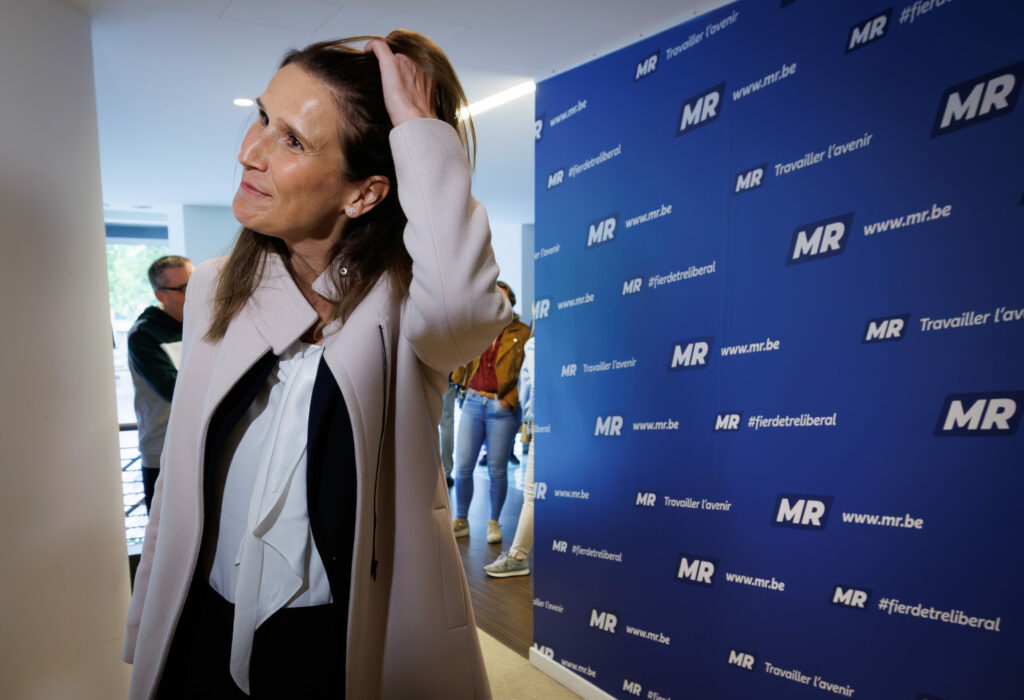
MR’s Sophie Wilmès (Renew). Credit: Belga/Benoit Doppagne
Human rights, democracy and the rule of law are at the heart of the powers that were delegated to Belgian Vice-President of the European Parliament Sophie Wilmès (Renew), President Roberta Metsola announced during the September plenary session in Strasbourg.
Metsola announced the powers delegated to the different vice-presidents for their two-and-a-half-year mandate. For Belgium’s Wilmès, there was a strong emphasis on human rights, democracy and the rule of law.
“Defending our fundamental values is a priority for me. With the democratic model clearly under threat around the world and under attack from all sides in Europe by those who indulge in authoritarian adventures, we democrats must show ourselves combative,” she said. “We are talking about the great inviolable principles that are part of our identity as Europeans. That is non-negotiable.“
In practice, Wilmès’ powers will take form in her work within the Democracy Support and Elections Coordination Group, which focuses on election observation and supporting parliaments to strengthen democracy and the rule of law in third countries, especially candidate countries.
She will also develop mediation initiatives to promote a culture of dialogue and support proponents of democratic change and human rights defenders. Additionally, she will represent the European Parliament at the United Nations, where it remains important to raise these issues.
Catholic aid agency CAFOD has called for justice, after the murder of a prominent environmentalist that CAFOD supported.
Following the news of the murder of Juan Lopez – anti-mining, environmentalist, community leader and Municipal Councillor of Tocoa, northern Honduras – who was shot dead by several men as he headed home in his car from church, Paz Redondo, CAFOD’s Country Representative for Central America said: “The assassination of Juan Lopez clearly shows once again the complicity between the authorities, international companies, and organised crime in Tocoa, and the inability of the government to protect environmental and human rights defenders in the emblematic case of the Guapinol river – despite the fact that precautionary measures had been ordered by the Interamerican Court of Human Rights – IACHR.“
Juan Lopez denounced the corruption within local and central governments in Honduras during a public press conference just before he was killed.
Paz Redondo continues: “Justice needs to be more than words for the state of Honduras, a state that shows once again its fragility and inability to combat corruption within its ranks, as it continues to serve the interests of extractives and organised crime. Juan publicly denounced this corruption within local and central governments and was killed days after his and his fellow activists’ latest public press conference.”
For over a decade, the communities of Guapinol, San Pedro and other areas in the vicinity of Tocoa have been denouncing the illegal granting of mining concessions in the “Carlos Escaleras National Park” in Honduras. Their advocacy efforts were fruitful in February, when the Honduran government approved Decree 18-2024 to protect the core zone of the national park, a key achievement to safeguard the environment against mining and energy projects in the area.
The murder of Juan Lopez is not the first killing in the Guapinol case. Over 160 community members in Tocoa have been killed protecting their land and natural resources since 2010 (Amnesty, 2024). In 2023, three community leaders were killed in what the community saw as retaliation, following the release of defenders who had been criminalised. Later in the year, in October 2023, 30 members of the Municipal Committee for the Defense of Common and Public Goods of Tocoa and of the Bufete Justicia para los Pueblos, were granted precautionary measures by the Human Rights Interamerican Court (IACHR).
Juan Lopez was killed despite precautionary measures which were ordered by the IACHR last October. The community of Tocoa believes his death could have been prevented if the Honduran authorities had implemented the precautionary measures granted to Juan Lopez. CAFOD, alongside ERIC has accompanied the Guapinol community in their fight to protect the land and natural resources essential for their survival, and we will continue supporting them as they defend their environmental rights.


 Hans Thoolen on Human Rights Defenders and their awards