Here a few highlights for this year from UN and NGOs sources:
While commemorating the 76th anniversary of the Universal Declaration of Human Rights, the United Nations Secretary-General Antonio Guterres said that “human rights are under assault”. “Whether economic, social, civic, cultural or political, when one right is undermined, all rights are undermined,” Guterres said in a post on X. “Let’s protect, defend and uphold all human rights for all people,” he added. In a video message, The UN secretary-general said “we must stand up for all rights — always.”
..As we mark Human Rights Day 2024, we are reminded that human rights are not abstract ideals. They are vital tools for addressing these pressing challenges and advancing dignity and justice for all.
… the United Nations Development Programme (UNDP) works to support human rights solutions that strengthen accountability, protect communities and foster peace, recovery, and stability. This includes partnering with National Human Rights Institutions, which often represent the frontline defenders of human rights. … Local initiatives also remain key. That includes women in Somalia who are being supported to lead peace efforts including assisting those facing violence, discrimination, and injustice. “I have resolved numerous local disputes…I feel motivated when I see I have been able to change people’s lives positively,” says Fatuma who led a local Peace Working Group.
As the accelerating climate emergency threatens the ability of current and future generations to enjoy their right to a clean, healthy, and sustainable environment, UNDP is focusing on access to justice, working with the United Nations Environment Programme (UNEP) and OHCHR to help communities claim their rights. …The private sector also has a pivotal role to play. UNDP supports the implementation of the UN Guiding Principles on Business and Human Rights including to advance sustainable practices that protect the environment. Indeed, technology offers both risks and opportunities to advance human rights. The Global Digital Compact aims to create an inclusive, open, safe, and secure digital space that respects, protects and promotes human rights. Tech-enabled UNDP tools like iVerify and eMonitor+ deployed in over 25 countries to monitor and address false narratives and hate speech show the potential. It is now crucial to adopt a rights-based approach to technologies like A.I., addressing ethical challenges, protecting data, and tackling biases to mitigate risks today and unlock immense benefits for the generations to come. [https://humanrightsdefenders.blog/2024/09/27/united-nations-adopts-ground-breaking-pact-for-the-future-to-transform-global-governance/]
——
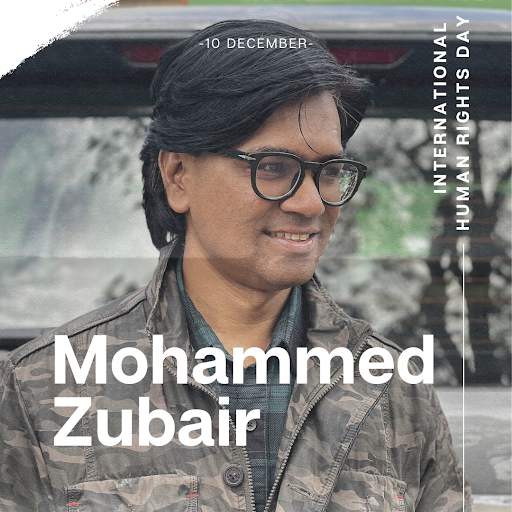
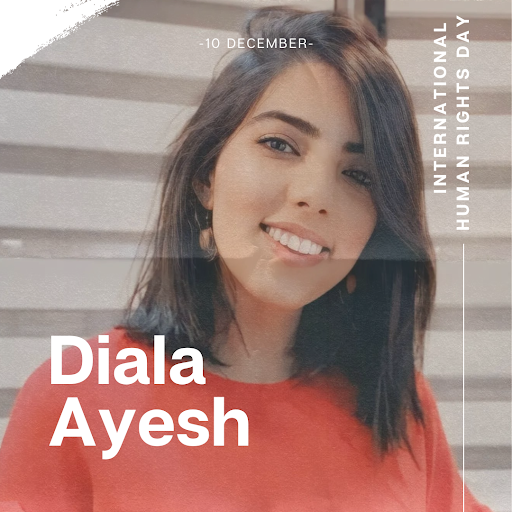
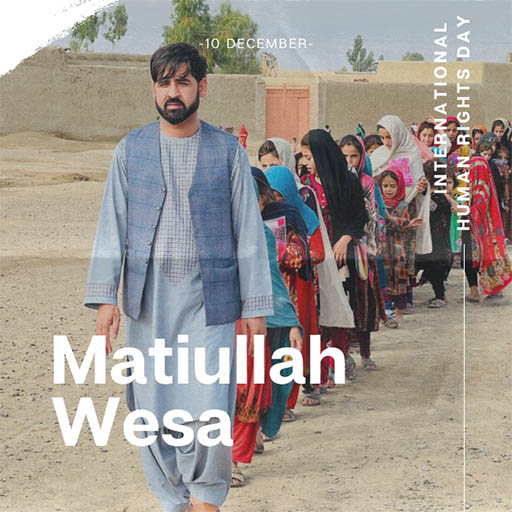
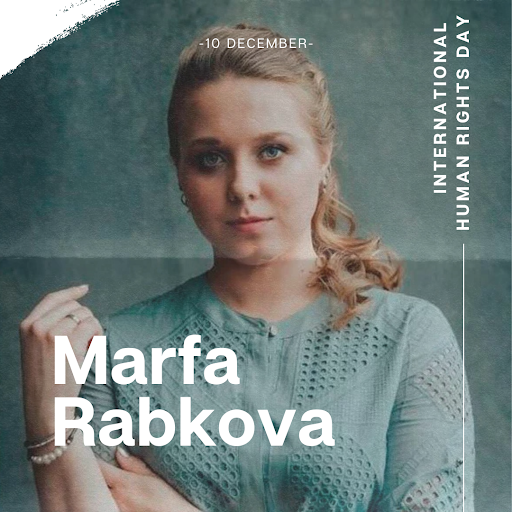
The NGO Index on Censorship spotlights four people standing up for human rights around the world:
Despite the declaration, all around the world human rights are being challenged, degraded and attacked. That is why this year, on Human Rights Day, we pay tribute to five human rights defenders who have worked tirelessly to defend people’s rights and have been persecuted as a result.
Jemimah Steinfeld, CEO at Index on Censorship said: “In this increasingly polarised and authoritarian world these people stand out as beacons of hope and light. It’s depressing to think that over 75 years since the Declaration, we still need a day like this but that should not detract from the bravery and fortitude of these people. May their example show us all how we can all better fight injustice.”
Marfa Rabkova (Belarus) Marfa Rabkova is a human rights defender who has been behind bars since 17 September 2020. She has long been targeted by the Belarusian authorities as a result of her civic activism. Marfa became head of the volunteer service at the Human Rights Centre Viasna in 2019. During the 2020 presidential election, she joined the “Human Rights Defenders for Free Elections” campaign, which registered over 1,500 election observers. When peaceful protests began to take place after the election, she helped document evidence of torture and violence against demonstrators. Marfa was indicted on a long list of charges, including inciting social hostility to the government and leading a criminal organisation. She was sentenced to 14 years and 9 months in prison in September 2022, after nearly two years of pre-trial detention. Index on Censorship calls for her immediate and unconditional release. See also: https://humanrightsdefenders.blog/2021/03/22/belarus-end-reprisals-against-human-rights-defenders/
On 4 December 2024, Aytan Farhadova in OC media reported that human rights defender Rufat Safarov was detained in Azerbaijan a week before he was set to be awarded the Human Rights Defender of the Year award by US State Secretary Antony Blinken. That day, Safarov’s lawyer, Elchin Sadigov, posted on Facebook that Safarov was accused of hooliganism and fraud resulting in major damage.
Sadigov later posted a message written by Safarov, in which he explained that he was planning to visit the US two days after receiving his visa in order to accept the Global Human Rights Defender Award from Blinken. [not totally clear which award is referred to – ed]
‘So I was awarded as a strong human rights defender of the year. Because the United States initially nominated me, I express my deep gratitude to [Mark] Libby, the US Ambassador in Azerbaijan, and Mr Blinken, US Secretary of State, who supported my candidacy.’
State Department’s Deputy Spokesperson, Vedant Patel, during a press briefing on Tuesday, said: We’re deeply concerned by reports that human rights defender Rufat Safarov has been detained in Azerbaijan’, Patel said, adding that they were ‘closely monitoring the case.’
Frank Schwabe, the head of the German delegation of the Parliamentary Assembly of the Council of Europe (PACE), criticised Safaravo’s arrest, saying that PACE will ‘respond to this in January’.
Safarov, a former prosecutor’s office official who spoke out against human rights abuses by the government, was sentenced to nine years in prison on charges of bribery, fraud, and human rights violations in 2016. He was released from prison alongside almost 400 others after Azerbaijani President Ilham Aliyev issued an amnesty to mark Novruz in 2019.
Walter Ngano, on Friday, 29 November 2024, wrote about three nationals in Kenya being honoured as Human Rights Defenders, illustrating again how awards can function at the national level.
Three Kenyan activists were feted at an awards ceremony on Friday, November 29, recognizing them for their commitment to protecting human rights. Boniface Mwangi, Hanifa Adan, and Hussein Khalid were awarded the Human Rights Defender of the Year award during the Human Rights Defenders (HRD) Awards. The event was held at the Royal Danish Embassy in Nairobi, Kenya.
The three, who are prominent activists in Kenya, were jointly awarded the prize, which is under the Working Group on Human Rights Defenders in Kenya, which brings together Civic Society Organizations and development partners concerned with the protection of HRDs.
The three were honoured for the role they played in the June-August Gen Z protests that were witnessed in Kenya in 2024. Together, they managed to lead Kenyans in advocating for the withdrawal of the Finance Bill, 2024.
Hussein was honoured for his contribution to ensuring access to justice for survivors and families of victims of rights violations. Hanifa, on the other hand, was awarded for her dedication to the promotion of public integrity in Kenya.
The aim of the ceremony is to honour and publicly recognise the important work of HRDs in Kenya by giving out awards to men and women who have demonstrated courage and impact in the promotion and protection of human rights and fundamental freedoms.
While speaking after winning the award, Hanifa Adan expressed her joy at winning the award and dedicated the award to Kenyans who lost their lives in the June-August Gen Z protests witnessed in 2024. The award was her fourth in 2024.
“I feel honoured to have won the Human Rights Defender of the Year Award. It’s such an honour, and this is my fourth award this year. I dedicate this award to each and every comrade that we lost during the Gen Z protests,” Hanifa noted.
Hussein Khalid while receiving his award expressed his surprise at being feted but acknowledged the role of activism in the country this year. “I am really shocked by this, but when I look back, it is because of the so many days and sleepless nights we spent doing post-mortems and autopsies for the comrades that we lost in the protests,” Khalid stated. The activist went ahead to request a moment’s silence for the deceased.
Nonhlanhla Dlamini heads SWAGAA – the Swatini Action Group Against Abuse, a local Eswatini organisation whose primary focus is on ending gender-based violence in the country. Since 1990, SWAGAA has provided care, support, prevention, and access to justice for victims and survivors of gender-based violence, by working with community leaders, community members, and the Government, as well as providing counselling for GBV victims. For the International Day for Women Human Rights Defenders, Dlamini answers questions about GBV, her inspirations and why it was necessary for her to become one of the first women elected as a member of parliament in Eswatini.
1. What was that specific inspiring moment or experience that made you decide to focus on gender-based violence?
What actually motivated me was an incident where a relative of mine was raped at the age of six by a stranger. We didn’t find the person. SWAGAA already existed, but I didn’t know anything about them. Then in 1997, I saw an advertisement [for SWAGAA] in the newspaper. And when I learned about what they were doing, I asked myself why I didn’t know about the organization when I had this problem because I had no one to talk to. I had no one to support me. We reported the matter to the police, but nothing ever happened. We’re so frustrated. So, when I saw the position, I just knew this was my job. And my objective was, I want people to know about SWAGAA. I wanted SWAGAA to be a household name.
2. How do you stay motivated and have you ever questioned your journey?
I have several times, particularly when I get hurt, because, you know, sometimes this world can be very cruel. And I ask myself, how could people do such an evil thing? I do get depressed. And when I’m very depressed, I’m like, you know, out of all the jobs that I could be doing, why am I even doing this job? Then I get some motivation with some of the success stories. If I quit, who else is going to do it? I kind of feel I’m compelled to do it because there’s a whole lot of people that are looking up to me for help. So, I continue.
3. You were elected MP back in the early 2000s, the first woman ever for your constituency. What made you decide you had to run?
… The mistake that we make as advocates and women’s rights activists is that we’re always pushing for others to go and make the change that we want to see. So, I made a decision; I was going to stand for the next elections, which were in 2008. I realized that for years, I’ve been part of a vote for a woman campaign, pushing women to stand for elections. But I’ve never thought of myself one day running for elections. I ran the race to Parliament. I was nominated. I was widely supported. I won the primary elections. It was easy for the primary elections, but the secondary elections were not easy. And I was the only woman against seven men. It was very rough. It was very testing. But I pushed with everything that I had. And I won the elections, and I became a member of Parliament. And the first motion that I moved in Parliament, was that the Minister of Justice bring the sexual offenses and domestic violence bill within 30 days. And his response was no. I kept asking, and that is how the bill was finally seen by Parliament.
4. Let’s look to the future. If you could change one thing about the situation of gender-based violence in Eswatini, what would it be?
The most critical thing is prevention. Prevention, prevention, because once it happens, it’s difficult to pick up the pieces. …
5. Do you consider yourself a woman human rights defender? Why?
Of course I do, 100 percent. I consider myself a human rights defender because due to the nature of the work that I’m doing, I am continuously standing up for the rights of women and girls in Eswatini. And I have advocated for better legislation in the country. I have advocated for better services in the country, be it in the police, be it in the hospitals, be it in the justice system. I have done everything that I think needs to be done under the sun to make sure that I stand for the rights of the citizens of this country. And I’m saying this because I also know people believe in me. I’ve done all I possibly can to advocate for the rights of women and children in the country.
Are you a human rights defender keen to use the UN to push for change at home? If so, apply for the 2025 edition of ISHR’s flagship training, the Human Rights Defender Advocacy Programme (HRDAP)!
Learn more about why you should apply for HRDAP by watching this video!
What is the Human Rights Defender Advocacy Programme 2025 (HRDAP25)?
The course equips human rights defenders with the knowledge and skills to integrate the UN human rights system into their existing work at the national level in a strategic manner and provides an opportunity for participants to prepare for and engage in advocacy activities at the UN with the aim to effect change back home.
Online course topics – ISHR
Defenders will complete a 10-week hybrid learning programme, online and offline, which will include:
Accessing the HRDAP Platform, where they can complete e-learning courses on each key UN human rights mechanism and on advocacy strategies, and access interactive learning materials and case studies on the ISHR Academy
Taking part in live Q&A sessions with human rights experts
Receiving a continuous personalised advocacy support and coaching in order to develop concrete advocacy objectives to make strategic use of the international human rights system taking into account the local context
Building networks around the world, and learning from peers from a range of regions working on a range of human rights issues
Applying their knowledge to case-studies scenarios and enhancing their advocacy toolbox according to their specific needs (elevator pitch, SMART recommendations…)
Receiving support and advocacy accompaniment to conduct activities during the 59th and 60th Human Rights Council sessions and other relevant opportunities.
Participants will have the unique opportunity to apply their knowledge and skills while being in Geneva as well as to meet and share with their peers and experts (UN staff, diplomats, supporting NGOs…). The blended format of the course allows defenders to continue their vital work on the ground, while diving into the inner workings of each key UN human rights mechanism and gaining first-hand experience from advocates and UN staff on how civil society can strategically engage in the international human rights space. The methodology we use is interactive and learner-centred and encourage participation of everyone.
By participating in HRDAP, defenders:
Gain knowledge and tools, which they can use to ensure their voice is central in international human rights decision-making
Explore and compare the benefits of engagement with the Human Rights Council, the Special Procedures, the OHCHR, the Universal Periodic Review and the Treaty Bodies, and examine how they can use them to bolster their work at the national level
Develop strategies and advocacy techniques to increase the potential of their national and regional advocacy work
This programme is directed at experienced human rights defenders working in non-governmental organisations, with existing advocacy experience at the national level and some prior knowledge of the international human rights system.
ISHR supports, and promotes solidarity with and between, defenders working in the following areas or contexts, which we recognise as intersectional and interdependent:
Equality, dignity and non-discrimination
Environmental justice and sustainability
International accountability for the repression of human rights defenders
Transparency and rule of law
The hybrid programme will bring together around 16 committed human rights defenders from different backgrounds, who work on a wide range of areas that are linked with our programmes to ensure a sustainable collaboration. This can include, but is not limited to, defenders working on the following thematics: women rights; Indigenous people’s rights; the human rights of LGBTIQ+ persons; anti-racism; reclaiming civil society space and increasing protection of human rights defenders.
What do former HRDAPers say?
16 human rights defenders from 15 countries took part in the last edition, HRDAP24. At the end of the training, 98% of the participants were either extremely satisfied or very satisfied with the programme and felt that they would be able to apply what they learnt to their own day-to-day work. Find out more about the outcomes of HRDAP24 here.
First, download and read carefully the HRDAP 2025 Programme Description to find out more about modalities, requirements and funding. If you meet the criteria, take some time to apply using this online form before midnight Geneva time on Friday 10 January 2025!
As only a limited number of human rights defenders are able to participate in HRDAP each year, in addition to our range of guides and handbooks, ISHR has developed an e-learning space in English, French and Spanish to help human rights defenders strengthen their advocacy skills with the UN for greater impact on the ground: the ISHR Academy. The learning modules demystify the UN human rights system and build capacity to push for change. Discover new tools, insider tips, defender stories, and more!
The lawyer and independent legislator for the Maule region died at the age of 74, a victim of cancer. “She left attentive, fighting until the end, and her life leaves these marks that will not be erased,” wrote X Boric on her account, who highlighted her fight for citizen prerogatives in the country’s dark times.
Despite being pregnant, Bulnes, along with her husband Roberto Celedón, were arrested after the 1973 coup d’état and subjected to torture, after being accused of having links with the Revolutionary Left Movement. After living in exile in the Netherlands, they returned to the country and opened a law firm in the 1990s to help those who did not have access to justice due to their lack of financial resources.
“Our Mercedes Bulnes has passed away, but she leaves behind in all of us who knew her a beautiful memory of life and struggle. Always a loving and fierce defender of human rights,” said the government spokesperson, Camila Vallejo.
The Frente Amplio party expressed its sorrow for the death of its colleague, whom it described as an “example of commitment and work for justice.”
Felice Gaer Baran, an internationally renowned human rights expert who for more than four decades brought life and practical significance to the Universal Declaration of Human Rights and international commitments to prevent grave human rights abuses around the world, died on November 9, 2024 in New York City, following a lengthy battle with metastatic breast cancer. She was 78. At the time of her death, she was the director of the American Jewish Committee’s Jacob Blaustein Institute for the Advancement of Human Rights (JBI)
Longtime UN official and Acting High Commissioner for Human Rights from 2003-2004 Bertrand Ramcharan characterized Gaer as a “pillar of the human rights movement.”
Throughout her career, in myriad roles, Gaer insisted that governments and the United Nations should consistently condemn the practices of tyrants and authoritarians and recognize that many forms of harm and inequality once considered ‘internal affairs’ of states as human rights abuses. Gaer’s influence established more protective interpretations of human rights norms from within and outside the United Nations human rights system. She effectively advocated for the creation and evolution of numerous international institutions and processes that play a critical role today in monitoring states’ human rights practices and holding violators to account.
Gaer achieved international recognition among human rights advocates as a force multiplier capable of overcoming the obstacles within government bureaucracies and multilateral institutions that often allow perpetrators of egregious abuses to avoid scrutiny and condemnation. Dr. Ahmed Shaheed, who served as the UN’s independent monitor on human rights in Iran and on the right to freedom of religion or belief, praised Gaer’s “exemplary track record” in 2021, stating that “You and JBI have made exemplary contributions to advancing human rights through the UN, especially in strengthening the effectiveness of the UN’s human rights mechanisms. Your own personal contribution, not just through the JBI, but in your own capacity as a member of the UN Committee against Torture and other roles, are not only legendary, but are a source of inspiration for everyone.” Elena Bonner, a one-time Soviet political prisoner, founder of the Moscow Helsinki Group, relentless advocate for democratic change in Russia, and wife of famed Soviet physicist, dissident, and Nobel Laureate Andrei Sakharov, with whom Gaer worked closely, recounted in 1997 that Gaer’s fierce approach to advocacy had helped a nascent international human rights movement find its voice. Said Bonner, “it was thanks to individuals like…Felice…who had the courage to be impertinent, that today it is more and more difficult for the rights-violating governments to challenge the universality of human rights and to ignore human rights concerns.”
Gaer began her career at the Ford Foundation as a program officer in 1974, focusing on the Soviet Union and Eastern Europe; subsequently, her areas also included arms control and human rights. At Ford, she became heavily involved in advocacy for the rights of Soviet Jewish refuseniks and encouraging broader internal changes that would catalyze greater respect for human rights for all in the Soviet Union. She maintained a passion for championing individual rights defenders while expanding her geographical focus. As the Executive Director of the International League for Human Rights from 1982 to 1991, Gaer championed human rights defenders throughout Latin America, particularly in Chile and Venezuela. She then served as Director of European Programs for the United Nations Association of the USA from 1992 to 1993, before becoming director at the Jacob Blaustein Institute in 1993–where she remained for the following three decades.
Gaer served for nine terms as an appointed “public member” of official U.S. government delegations to United Nations meetings between 1993 and 1999, including six U.S. delegations to meetings of the U.N. Commission on Human Rights. As a public member of the U.S. delegation to the 1993 World Conference on Human Rights in Vienna, Gaer’s advocacy was instrumental in the creation of the position of UN High Commissioner for Human Rights. Gaer also played a critical role in bringing about the conceptual and political victory that the U.S. government achieved for women’s rights at the 1995 World Conference on Women in Beijing – at which the UN explicitly recognized for the first time that women’s rights are human rights – working closely with US Ambassador to the UN Commission on Human Rights Geraldine Ferraro and First Lady Hillary Clinton.
In 1999, Gaer became the first American and first woman to serve on the 10-person United Nations Committee against Torture, an expert body that monitors implementation of the Convention against Torture. Over her 20 years on the United Nations Committee against Torture, Gaer insisted that the Committee and all other UN treaty bodies should affirmatively and publicly press governments to address allegations of wrongdoing, rather than accepting States’ assertions of compliance at face value. She led the Committee to develop practices that made it far more accessible to non-governmental organizations and human rights defenders seeking to share evidence of human rights violations. She also devoted extraordinary effort to ensuring that the Committee acted on information it received from third parties and conveyed accurate appreciation of the key human rights challenges occurring in every country it reviewed. Her rigorous and unsparing critiques – and her practice of inquiring about alleged victims of torture and arbitrarily imprisoned lawyers and advocates by name in public meetings – occasionally provoked angry outbursts by government officials accustomed to deferential, non-adversarial treatment in UN settings. However, Gaer’s approach turned what might otherwise have been pro-forma exercises into valuable opportunities for advocates to secure formal UN recognition of their claims.
Gaer’s efforts also led to a transformation in the Committee’s against Torture’s approach to the issue of violence against women, which previously was seen only as often a private matter rather than a form of torture or ill treatment for which perpetrators should be punished and victims of which are entitled to redress. The Committee became an important avenue for women’s rights advocates seeking to compel governments to develop more effective national capacities to protect women from violence, as well as members of vulnerable groups such as religious minorities and LGBTQI persons. These efforts brought significant public attention to previously overlooked issues in several countries. In one particularly noted case, Gaer’s insistence at public Committee meetings that Ireland had failed to address the abuses of the church-run ‘Magdalene Laundries’ – which had imprisoned and punished women the church had deemed ‘morally irresponsible’ – galvanized local advocates’ efforts for an official government inquiry to redress this longstanding historical injustice and acknowledge the State’s enduring obligations to survivors of the Laundries.
Gaer also championed the rights of religious minorities and victims of violence justified in the name of religion in countries around the world. Gaer was appointed and served five terms as an independent expert member of the bipartisan federal U.S. Commission on International Religious Freedom from 2001-2012, including as its chair. In that capacity, Gaer traveled to countries ranging from Sudan and Egypt to China to Afghanistan, directly pressing government officials to change policies and practices. She testified frequently before Congress and organizations including the Organization for Security and Cooperation in Europe on religious freedom issues.
Gaer’s commitment to universality also inspired her to work for decades to correct the persistent failure of the United Nations to recognize antisemitism as a serious human rights concern and to recognize the Holocaust as its most violent manifestation. Her engagement with public delegations to the UN Commission on Human Rights encouraged the U.S. to secure the inclusion of the first reference to antisemitism as an evil that UN efforts should seek to eradicate, in a resolution of the UN General Assembly, in a 1998 text condemning racism, using language previously negotiated by the U.S. at the Commission.
Gaer not only shared her wisdom and practical experience with colleagues but also convened numerous strategy discussions and facilitated the work of hundreds of human rights defenders, advocates, and other independent UN experts through JBI grants that empowered and encouraged their efforts to advance human rights norms and protections on a wide range of subjects and countries. For many colleagues and beneficiaries of her supports, Gaer was an invaluable resource, strategist, collaborator, mentor, and friend…
One of three children of Abraham Gaer, a businessman who owned a toy shop, and his wife Beatrice Etish Gaer, Felice was born on June 16, 1946 in Englewood, New Jersey. She was raised in Teaneck, New Jersey and graduated from Teaneck High School. She received a Bachelor of Arts degree from Wellesley College and pursued her graduate studies in political science at Columbia University’s Russian Institute (now Harriman Institute), where she received a Master of Arts degree in 1971 and a Master of Philosophy degree in Political Science in 1975. In 1975, she married Dr. Henryk Baran, a professor at the State University of New York-Albany; Dr. Baran has a long and distinguished career specializing in Russian literature and culture of the Russian Silver Age and avant garde. The couple’s two sons – Adam, a queer filmmaker and curator, and Hugh, a workers’ rights attorney who litigates wage theft, discrimination, and forced labor cases – survive her, as do her brother Arthur Gaer, sister Wendy Philipps, son-in-law Jacob Rozenberg, five nephews, and ten cousins. Gaer’s wisdom, support, conviction, and passionate concern for all humanity made her truly exceptional, and she will be deeply missed.
The undersigned human rights organisations, which together represent the Jury for the Martin Ennals Award for Human Rights Defenders, condemn the continued harassment against 2021 Martin Ennals Award Finalist and woman human rights defender from Turkmenistan, Soltan Achilova. This morning, Soltan Achilova and her daughter were once again prevented from travelling to Geneva. As in 2023, Soltan Achilova was set to be recognized for her valuable contributions to the documentation of human rights violations in Turkmenistan by the Martin Ennals Foundation.
Soltan Achilova is a woman human rights defender and journalist, who continues to work in Turkmenistan, one of the most repressive and isolated countries in the world, ranking 176th out of 180 countries in terms of press freedom and working conditions for journalists. She has been reporting about her country for over a decade. Her pictures of daily life are one of the few sources of documentation of human rights violations occurring in Turkmenistan. As a result of this work, she remains under constant surveillance by Turkmen authorities and has suffered numerous incidents of harassment, intimidation, and threats. Despite the challenges, Soltan Achilova persists in her human rights work, regularly sending information and pictures outside the country so that government authorities can be held accountable. [see: https://humanrightsdefenders.blog/tag/soltan-achilova/]
On the morning of 20 November 2024, Soltan Achilova and her daughter Maya Achilova were scheduled to travel from Ashgabat to Geneva, to participate in the Martin Ennals Award ceremony. At 6:30 a.m. local time, according to the information received by the Martin Ennals Foundation, a group of law enforcement officers pushed Soltan Achilova, her daughter and her daughter’s husband into an ambulance and brought them to the specialised hospital “Infectious Disease Control Centre” in the Choganly neighbourhood of Ashgabat, located near the Ashgabat International Airport. Maya Achilova reported to the Foundation that her husband, her mother and herself are being retained at the medical facility, guarded by the security forces, and that one of the security service agents is in possession of the keys to Soltan Achilova’s apartment. Thereby, Turkmen authorities have once again prevented Soltan Achilova from travelling to Geneva, Switzerland, where she would finally be recognized as a Finalist of the 2021 Martin Ennals Award for her documentation of land grabs and forced evictions of ordinary citizens in Ashgabat.
Turkmen authorities have prevented woman human rights defender Soltan Achilova from traveling freely outside of her country on several occasions; the latest occurring as recently as November 2023. In the early hours of 18 November 2023, Soltan Achilova and her daughter were stopped by Turkmen government officials from boarding their flight to Switzerland. A customs official took their passports, wet them with a damp rag and declared the passports to be ruined, preventing Soltan and Maya Achilova from boarding the plane. Despite receiving assurances at high-level from Turkmen authorities that Soltan Achilova would not be prevented from traveling once again, the authorities continue to harass the woman human rights defender with travel restrictions and arbitrary detention.
The human rights organisations that make up the Jury of the Martin Ennals Award, as well as the Martin Ennals Foundation, once again condemn Turkmen authorities for their continued harassment of woman human rights defender and photojournalist Soltan Achilova and her family members and call for their immediate release. The organisations jointly call upon the Turkmen authorities to provide all the necessary assistance to enable her travel outside of Turkmenistan. Finally, the organisations renew their calls for Turkmenistan to fully implement their human rights obligations, including, inter alia, allowing human rights defenders and journalists to conduct their work without fear of reprisals.
Following the writing of this statement, an article containing further details was published by the Chronicles of Turkmenistan, an online publication of the Turkmen Initiative for Human Rights, which, according to its author, has also been in contact with Soltan Achilova’s family.
Threats against investigative journalists are widely documented. According to UNESCO’s Observatory of Killed Journalists, 1,718 journalists have been killed since 1993. The Committee to Protect Journalists’ latest prison census found the number of jailed journalists hit a near-record high, with 320 reporters behind bars at the time of the count last December. Yet a lesser-known story is the increasing targeting of the lawyers representing them.
“Behind all those cases against journalists who have become household names — like Evan Gershkovich, Maria Ressa, and José Rubén Zamora — there are the often unseen lawyers representing them and taking remarkable risks to defend them,” Carolina Henriquez-Schmitz, director of TrustLaw, said at Trust Conference 2024. “[Lawyers] themselves are becoming the targets of a whole range of attacks.”
In recent years, threats have escalated. Azerbaijani lawyer Elchin Sadigov, and his client, journalist Avaz Zeynalli, were detained in 2022 while officers searched their homes and offices and seized confidential case files. Vo An Don, a Vietnamese human rights lawyer who represented a dissident blogger was disbarred in 2018 and subsequently sought political asylum in the US. Dmitry Talantov, a lawyer who represented Russian investigative journalist Ivan Safronov in 2021, now himself faces up to 15 years in prison on a number of charges.
“It sends an unequivocal message, not just to the individual lawyer, but to the entire legal profession,” Henriquez-Schmitz said. “If you pursue these cases, we will go after you. The potential chilling effect cannot be understated.”
Human rights lawyer Vo An Don was disbarred and forced to seek political asylum in the US after the Vietnamese government targeted him for representing a dissident blogger. Image: Screenshot, Facebook
The Thomson Reuters Foundation, in partnership with the American Bar Association Center for Human Rights and Media Defence, conducted a first-of-its-kind review of individual cases of harassment or persecution of lawyers defending journalists. The recently published preliminary findings identified over 40 cases of lawyers being targeted in four ways: criminal and other suits; interference with their ability to represent their clients; targeting their ability to practice the profession; and threatened killing, physical harm, forced flight, or exile, and other similar persecution.
“The research has identified cases in Vietnam, Ethiopia, Zimbabwe, Azerbaijan, Iran, Yemen, Tajikistan, Russia, China, and Hong Kong, to name a few. Unsurprisingly, many of these countries also happen to be among the world’s worst jailers of journalists,” Henriquez-Schmitz noted. “The damage greatly reverberates. Without lawyers, journalists are unable to adequately defend themselves against retaliatory charges, and citizens are likely left less informed on matters of public interest.”
José Carlos Zamora, chief communications and impact officer at Exile Content Studio and the son of Guatemalan investigative journalist José Rubén Zamora, joined the Trust Conference panel only a few days after his father’s release to house arrest. Previously, his father had spent more than 800 days in prison on charges of alleged money laundering. The elder Zamora founded elPeriódico, a now-defunct newspaper which specialized in government corruption investigations.
“It’s a great step forward, but it’s not the end of the process,” Zamora said of his father’s transition to house arrest. “These repressive regimes, everywhere from Russia, to the Philippines, to Hong Kong, to Venezuela and Nicaragua, use the same tactics. And you see them copy from each other’s punishments, and one of these tactics is attacking the legal defense. So they go after the lawyers, and the main goal is to leave the journalists defenseless.”
Guatemalan journalist José Rubén Zamora, who founded the elPeriódico site that dug into the country’s political corruption, recently spent more than 800 days in prison on alleged money laundering charges. Image: Shutterstock
In all, 10 lawyers represented Zamora, and all of them were persecuted and eventually forced to abandon the case. Many of them did not appear to have access to the case file, and one lawyer, Christian Ulate, had to leave Guatemala after ongoing harassment and intimidation. The lawyers that took over the case after Ulate, Romeo Montoya García and Mario Castañeda, were detained, and Castañeda was sent to a maximum security prison. Lawyers Juan Francisco Solórzano Foppa and Justino Brito Torres were also arrested.
“At that point, the only defense was the public legal defense. There were some great lawyers in the public legal defense, but unfortunately, they are also part of the system,” Zamora explained. “At one point, none of the lawyers could visit him in prison. So everything was done through us. They could rarely talk. The ones that could go did not want to visit him because it was dangerous for them.”In some countries, human rights attorney Caoilfhionn Gallagher said, even the act of talking to an international lawyer can put local lawyers at risk.
María Consuelo Porras has acted as Guatemala’s attorney general since 2018. In 2022, she was barred from entering the US due to involvement in significant corruption, and in 2023 she was named OCCRP’s Person of the Year in Organized Crime and Corruption, for “brutally persecuting honest prosecutors, journalists, and activists,” the group wrote. “Porras and her kind are the new banal faces of evil.”
“[Porras] became the best tool to persecute opposition, critical voices,” Zamora said. “Because they use this special prosecutor’s office that is focused on organized crime […] it allows them to have you in pre-trial detention. That prosecutor’s office was intended to investigate and prosecute the heads of drug cartels and mob bosses. And now they use it to go after journalists.”
Irish-born attorney Caoilfhionn Gallagher specializes in international human rights and civil liberties at Doughty Street Chambers in London. Her cases often involve working closely with domestic lawyers around the world, in order to hold the state to account on the global stage. In some countries, Gallagher said, even the act of talking to an international lawyer can put local lawyers at risk.
“When I deal with cases involving Iran, for example, or Egypt, even engaging with an international lawyer, being privy to a complaint going to the United Nations, could result in [local lawyers] themselves being charged with a whole range of things, including national security-type offenses,” she noted. One particular example she gives of lawyer oppression is the Philippines, where, in total, 63 lawyers were killed during President Rodrigo Duterte’s six-year term, and 22 journalists. “So this is completely a tactic,” Gallagher warned. “You try to leave nobody able to speak truth to power.”
One of Gallagher’s clients is 76-year-old publisher, writer, and prominent pro-democracy campaigner Jimmy Lai. A British national, Lai has been in solitary confinement in a maximum security Hong Kong prison for almost four years, on charges of breaching national security and colluding with foreign forces. His newspaper, Apple Daily — the most popular Chinese language paper in Hong Kong — supported pro-democracy protests in the region. He now faces life imprisonment.
“Being called an enemy of the people, hit pieces in Chinese state media, formal statements from the Chinese and Hong Kong authorities threatening to prosecute us,” Gallagher said, reflecting on the implications of representing Lai. “But as well as that, we get physical threats, rape threats, and dismemberment threats, and it’s targeted in a way which is designed to try to undermine you doing your job.”“We coordinate pro bono for human rights defenders, and what we realized was that standing next to every defender facing criminalization was a lawyer also at risk.” — Ginna Anderson, associate director of the American Bar Association’s Center for Human Rights
On a key day in Lai’s case, Gallagher will wake up to notifications that there has been an attempt to hack her bank account, as well as her personal and professional email addresses. “I will also wake up to a whole series of […] threats, including things relating to my kids,” she continued. “I had a really vile message last week about my teenage daughter, by name, and it’s unpleasant.”
Gallagher says that, despite attacks, she will continue to represent reporters. “You’re rattling the right cages,” she said. “It’s designed to try to stop you doing your job, and for me, it makes me think if they care this much about the lawyers for Jimmy Lai based in London, doing work in Geneva, New York, and Dublin, just think about how much they hate my clients. And to be honest, it makes me more determined to stick with it.”
Associate director of the American Bar Association’s Center for Human Rights, Ginna Anderson, emphasized the lack of current research into the growing threats against lawyers defending journalists, citing it as a driving force behind their work. “We realized no one was really talking about it, and the data wasn’t being collected,” she explained. “We coordinate pro bono for human rights defenders, and what we realized was that standing next to every defender facing criminalization was a lawyer also at risk and asking for none of those resources for themselves.”
While networks often operate to support journalists who are being subjected to physical threats, cyberattacks, and forced exile, Anderson emphasized the ad hoc nature of the support available to lawyers — in part due to the recent escalation in cases. “There’s not one place we go and coordinate,” she said. “It’s a lot of personal relationships and knowing who has capacity, and quite frankly there’s very little capacity in any of these places to really deal with the scale of the problem.”
“Just like journalists don’t want to be part of the story, lawyers don’t, and many other trends are mirrored,” she continued. “One thing that struck me […] was this perception that safety of journalist networks are so much better connected and resourced than anything to support lawyers. That terrified me because I think we all think that there’s not enough being done for the safety of journalists.”
“Lawyers are often trusted voices, just like some legacy media establishments,” Anderson said. “They’re trusted voices on the rule of law. They’re trusted voices on the Constitution. And when you disparage them and smear them, and in some cases make it criminal for them to talk about these issues, you have silenced one of the most important voices.”
Defending Lawyers Protecting Journalists
As attacks on lawyers rise, the panel reflected on the ways in which those representing journalists can defend themselves. Increasing knowledge of cybersecurity — which may not have previously been a priority for lawyers — is essential, Gallagher said. “In the last number of years working on cases against Saudi Arabia, Iran, and Russia, I’ve been very surprised by [top-ranked multinational law firms] trying to send you something on Google Docs,” she continued. “The media organization and the journalists will have really good protocols, but then when they get into some kind of difficulty, they may instruct an external lawyer who simply doesn’t.”
Law societies and governments also have a responsibility to take such threats more seriously, Gallagher says, reflecting on the case of Pat Finucane, a Northern Irish human rights lawyer who was murdered in his home in 1989. The UK government only announced a public inquiry into his death in 2024, 35 years later. “That is a home example of these issues simply not being taken seriously enough,” she said. “I can tell you basic preventative strategies were simply not implemented here in Britain.”
Another issue is a lack of psychological support for lawyers, Anderson says. “I’ve been surprised how often a conversation about digital security becomes the place where a lawyer may talk about what’s weighing on their mind,” she continued. “[They’re] not saying, ‘I would like to talk about my psychosocial needs’, but they start with a practical need around digital security, and it finds its way into the things that are weighing on them.”
As Zamora reflected on the future for his father, he seemed hopeful. “He’s excited. He’s very happy. He feels like he’s at a spa after spending those 813 days in an isolation cell,” he said. “We are going to continue fighting these processes. They are really spurious charges, and we are going to fight until the end to demonstrate that everything is false.”
While he says that his father’s trial has exposed the worst in humanity, through Guatemala’s political persecution of those standing up for democracy and freedom, Zamora also believes that it has brought out the best in humanity, too. “I feel that’s everybody in this room,” he concluded. “You care about these issues, you are doing the work, and you can continue to do the work to keep these cases alive.”
Emily O’Sullivanis an editorial assistant at GIJN. She has worked as an investigative researcher for BBC Panorama, and an assistant producer for BBC Newsnight. She has an MA in Investigative Journalism from City, University of London.
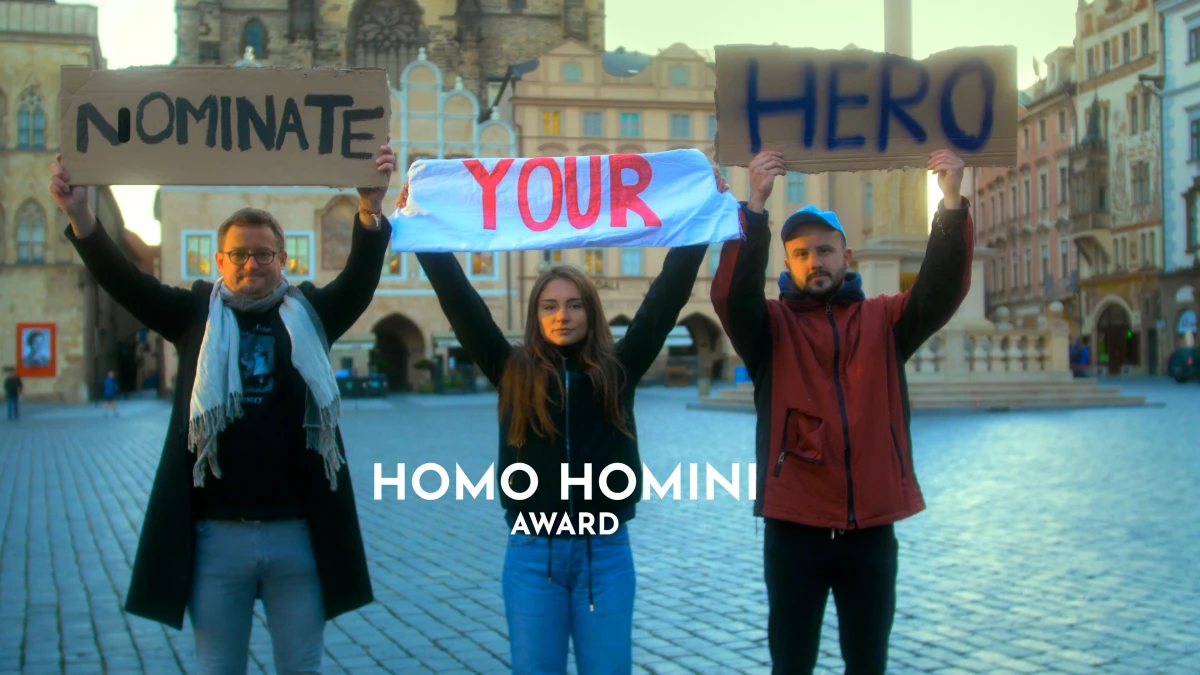
Since 2021, nominations are open to the public. As a result, not only organisations, but also individuals from all over the world may “nominate their heroes”. The deadline for nominations is 30 November, 2024.
The list of laureates includes famous names as well as relatively unknown individuals. Last year’s laureate is Abzaz Media, one of the last free media outlets in Azerbaijan.






 Hans Thoolen on Human Rights Defenders and their awards