Posts Tagged ‘Michel Forst’
March 2, 2017
One of the side events in Geneva during the UN Human Rights Council that is of special importance for human rights defenders is held tomorrow, 3 March 2017, from 13:00 – 14:00, in Room XXI, Palais Des Nations, Geneva.
Across the world, well-established principles and standards fundamental to maintaining a safe and enabling environment for civil society are being questioned and threatened in mature and consolidated democracies. In both the global North and global South, governments with vibrant civil societies and constitutional and historical commitments based on their struggles for democracy and freedom are adopting increasingly hostile and corrosive policies and practices to suppress independent civil society voices. The event will provide an opportunity for the UN Special Rapporteur on human rights defenders and civil society leaders to reflect on the global climate for civil society operating in mature democracies and articulate key measures these states must take to ensure an enabling environment for civil society and human rights defenders both at home and at the UN Human Rights Council. In advance of their examination under the Universal Periodic Review in May 2017, the event will also bring together civil society leaders from India, Brazil, Poland, and South Africa to examine state backsliding on civic space norms.[see also: https://humanrightsdefenders.blog/2017/02/24/2017-10-need-to-reset-for-h…]
Panelists:
- Michel Forst, UN Special Rapporteur on the situation of human rights defenders
- Camila Asano, Conectas – Brazil
- Henri Tiphagne, Human Rights Defenders Association – India
- Maciej Kozłowski, Committee for the Defence of Democracy (KOD) – Poland
- Corlett Letlojane, HURISA- South Africa
Moderator: Mandeep Tiwana, Head of Policy and Research, CIVICUS
The event is co-sponsored by key international NGOs: –Amnesty International, CIVICUS, Asian Forum for Human Rights and Development (FORUM-ASIA), International Society for Human Rights (ISHR), Human Rights Watch (HRW), Human Rights Defenders Alert India (HRDA), The Observatory for the Protection of Human Rights Defenders (OBS)
https://www.forum-asia.org/?p=23168
Posted in AI, HRW, human rights, Human Rights Defenders, ISHR, Observatory for the Protection of Human Rights Defenders | Leave a Comment »
Tags: Brazil, Camila Asano, CIVICUS, Corlett Letlojane, Forum Asia, Geneva, Henri Tiphagne, India, Maciej Kozłowski, Mandeep Tiwana, Michel Forst, Poland, side event, South Africa, Special Rapporteur on the situation of human rights defenders, UPR
February 22, 2017
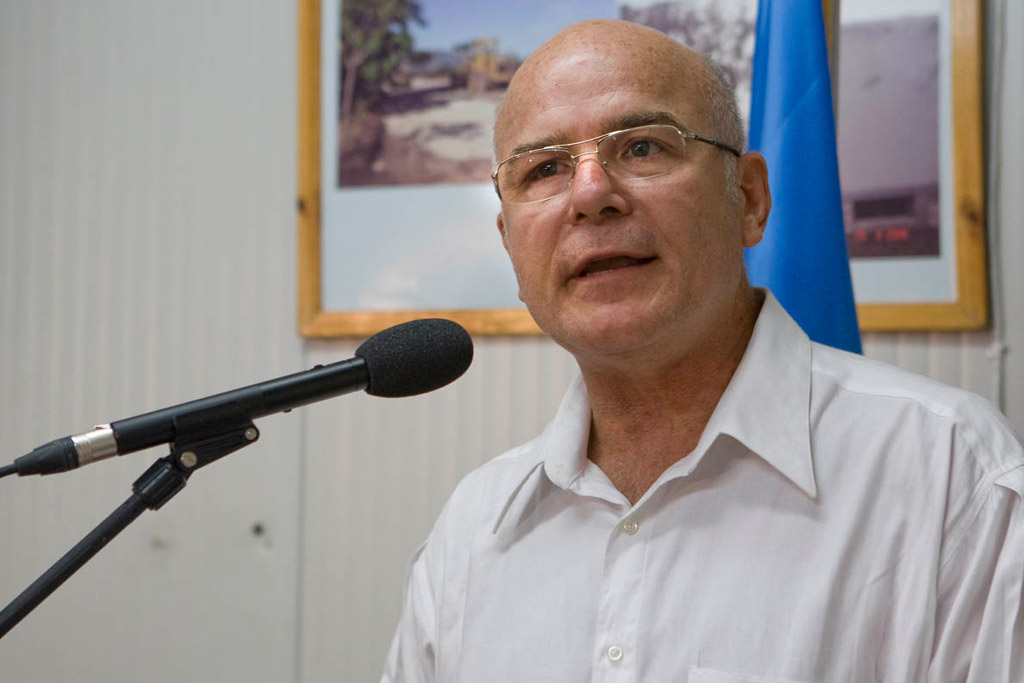
The UN Rapporteur on Human Rights Defenders, Michel Forst, has published his report (A/HRC/34/52) which covers the period of his first mandate:June 2014 and March 2017 [see also: https://humanrightsdefenders.blog/tag/m ichel-forst/ ].
In his report Michel Forst, provides a detailed summary of the activities he carried out during his first mandate, including statistics and trends based on the communications that he sent to States, his visits to a number of countries, the dialogues established with the authorities of various States, and the close cooperation developed with key stakeholders in the protection of human rights worldwide. The Special Rapporteur also presents the work in progress and the challenges and issues on which he plans to focus during his next mandate. The report includes suggestions for diversifying working methods, broadening the scope of cooperation with other key actors, and enhancing the visibility and accessibility of his mandate. Human rights defenders and the promotion of their work and their protection will remain at the core of the Special Rapporteur’s work.
After spending the past three years travelling around the world and documenting the situation of human rights defenders, the Special Rapporteur is more appalled than ever to see attacks against them multiplying everywhere, assailing bloggers, indigenous peoples, journalists, community leaders, whistle-blowers and community volunteers. Furthermore, the Special Rapporteur has become convinced that the incidents in question are not isolated acts but concerted attacks against those who try to embody the ideal of the Universal Declaration of Human Rights in a world free from fear and want. The Special Rapporteur is concerned by the lack of response to observations that have been made repeatedly since the establishment of the mandate.
We must be bolder and more creative in order to face up to threats that weigh heavily on civil society as a whole and on every individual fighting for fundamental rights and freedoms. The Special Rapporteur has also noted that intolerance thrives in part because people know little about their rights or the role of those who protect them. In that regard, it is more vital than ever to make the language of human rights accessible to all in order to ensure that civil society continues to enforce accountability.
As defenders face unprecedented attacks intended to undermine the legitimacy, credibility and sincerity of their commitment, it seems essential to quickly establish links between the specific actions undertaken by the Special Rapporteur and the pledges made at the United Nations when he was appointed in 2014. As populist, nationalist and fundamentalist movements of all kinds multiply, the Special Rapporteur remains convinced that more can be done under his mandate and that his office must continue to serve as a watchdog, a warning mechanism and a crucial resource for thousands of people. [Here he echoes sentiments expressed by others and referred to in this blog, see e.g. https://humanrightsdefenders.blog/2016/12/12/we-must-find-new-ways-to-protect-human-rights-defenders-and-to-counter-the-anti-human-rights-mood/ and the links to other such articles at the end of the post]
The report also identifies those areas in which, in view of the possible renewal of his mandate, the Special Rapporteur intends to become more involved so that his work remains relevant and responds as effectively as possible to defenders’ expectations.
I refer as source here not directly to the UN but draw attention to an excellent documentary service provided by RELIEFWEB:
Report of the Special Rapporteur on the situation of human rights defenders (A/HRC/34/52) – World | ReliefWeb
Posted in books, human rights, Human Rights Council, Human Rights Defenders, OHCHR, UN | 2 Comments »
Tags: attacks, Civil society, Human Rights Defenders, mandate holders, Michel Forst, Reliefweb, Special Rapporteur on the situation of human rights defenders, UN, UN Human Rights Council
October 31, 2016

Photo Credit: The Goldman Environmental Prize
Sarah Lazare is a staff writer for AlterNet and 30 October 2016 she summarized the findings of the latest OXFAM report under the appropriate title: There Is an Epidemic of Assassinations Targeting Human Rights Defenders in Latin America.
Michel Forst – the UN special rapporteur on human rights defenders – wrote on 21 October in the Guardian equally alarmingly about the problem faced by land rights defenders under the title: “Police and hired assassins are killing land rights defenders. Let’s end this violence.” He ends with the conclusion: “In a resource-constrained world heading towards a climate emergency, we urgently need to rethink our approach to land use, which pivots on short-term profit regardless of human and environmental cost. Working more closely with environmental defenders is not just about protecting individual lives; it’s about protecting our planet.”
Many (including HRW, AI and Front Line) have reported on the 18 October 2016 killing of human rights defenders José Ángel Flores and Silmer Dionisio were murdered after they left a meeting of peasant farmers in the Bajo Aguán region of [AGAIN https://thoolen.wordpress.com/tag/honduras/] Honduras. Both were organizers with the Unified Campesino Movement of the Aguán (MUCA). Read the rest of this entry »
Posted in Front Line, HRW, human rights, Human Rights Defenders, UN | 1 Comment »
Tags: AlterNet, Berta Carceres, environmental activists, Global Witness, Honduras, Indigenous rights, José Ángel Flores, land rights defender, Maxima Acuna, Máxima Acuña de Chaupe, Michel Forst, Oxfam, resource extraction, Silmer Dionisio
October 12, 2016

The Permanent Mission of Norway to the UN, Amnesty International, the Center for Justice and International Law (CEJIL), the International Federation for Human Rights (FIDH), Global Witness, the International Platform against Impunity, and the International Service for Human Rights (ISHR) cordially invite you to a panel discussion. “Empower environmental defenders, safeguard our future”
Monday 24 October 2016 1:00-2:30 in Conference Room 7 at the United Nations HQ in New York
In his latest report to the General Assembly, the Special Rapporteur on Human Rights Defenders warns of “a truly global crisis” of killings of environmental human rights defenders and that the vision espoused in the 2030 Agenda for Sustainable Development is “doomed to fail” if more is not done to protect those on the frontlines. The Special Rapporteur calls for urgent action and outlines a range of recommendations to empower and protect environmental defenders.
see also: https://thoolen.wordpress.com/2016/09/01/violence-against-environmental-human-rights-defenders-one-of-the-worst-trends-in-recent-years/
This side event will foster a discussion of these recommendations: why they are important, what is required to implement them effectively, and what the main challenges are to their effective implementation.
Speakers will include the Special Rapporteur on human rights defenders, Michel Forst, as well as State, NGO, and business representatives.
For more information, please contact: e.openshaw@ishr.ch
Posted in AI, FIDH, Human Rights Defenders, ISHR | Leave a Comment »
Tags: CIVICUS, environmental activists, FIDH, Human Rights Defenders, ISHR, land rights defender, Michel Forst, New York, Norway, Panel of Experts, side event, UN
September 24, 2016
Posted in AI, human rights, Human Rights Defenders, UN | Leave a Comment »
Tags: Arif Yunus, Azerbaijan, Azerbaijan Human Rights House, Denis Krivosheev, European Court of Human Rights, harassment, Hikmat Babaoghlu, HRHF, Human Rights Defenders, Leyla Yunus, Michel Forst, referendum, UN Special Rapporteur on Human Rights Defenders
June 17, 2016
While most attention on the issue of foreign funding of NGOs has gone to Russia, which for this purpose invented the ‘foreign agent’ law, [https://thoolen.wordpress.com/tag/foreign-agent-law/], another big country – India – has been stepping up its own version through a law restricting civil society access to foreign funding:

UN Special Rapporteur on the situation of human rights defenders Michel Forst. Photo: MINUSTAH
On 16 June 2016 three United Nations rapporteurs on human rights called on the Government of India to repeal a regulation that has been increasingly used to obstruct civil society’s access to foreign funding. The experts’ call comes as the Indian Ministry of Home Affairs suspended for six months the registration of the non-governmental organization Lawyers Collective, under the Foreign Contribution Regulation Act (FCRA), according to a news release from the Office of the UN High Commissioner for Human Rights (OHCHR) in Geneva. [see also my post form 2013: https://thoolen.wordpress.com/2013/11/05/india-should-end-funding-restraints-on-human-rights-defenders-says-hrw/]
The suspension was imposed on the basis of allegations that its founders, human rights lawyers Indira Jaising and Anand Grover, violated the act provisions by using foreign funding for purposes other than intended.
“We are alarmed that FCRA provisions are being used more and more to silence organisations involved in advocating civil, political, economic, social, environmental or cultural priorities, which may differ from those backed by the Government,” said UN Special Rapporteurs on human rights defenders, Michel Forst, on freedom of expression, David Kaye, and on freedom of association, Maina Kiai.
Despite detailed evidence provided by the non-governmental organization (NGO) to rebut all allegations and prove that all foreign contributions were spent and accounted for in line with FCRA, the suspension was still applied. “We are alarmed by reports that the suspension was politically motivated and was aimed at intimidating, delegitimising and silencing Lawyers Collective for their litigation and criticism of the Government’s policies,” the experts said noting that the NGO is known for its public interest litigation and advocacy in defence of the most vulnerable and marginalised members of Indian society.
Many civil society organizations in India now depend on FCRA accreditation to receive foreign funding, which is critical to their operations assisting millions of Indians in pursuing their political, cultural, economic and social rights. The ability to access foreign funding is vital to human rights work and is an integral part of the right to freedom of association. However, FCRA’s broad and vague terms such as ‘political nature’, ‘economic interest of the State’ or ‘public interest’ are overly broad, do not conform to a prescribed aim, and are not a proportionate responses to the purported goal of the restriction.
“Human rights defenders and civil society must have the ability to do their important job without being subjected to increased limitations on their access to foreign funding and the undue suspension of their registration on the basis of burdensome administrative requirements imposed to those organizations in receipt of foreign funds,” the UN human rights experts concluded.
Source: United Nations News Centre – UN rights experts urge India to repeal law restricting civil society access to foreign funding
Posted in human rights, Human Rights Council, Human Rights Defenders | 1 Comment »
Tags: civil society organisations, David Kaye, foreign agent law, Foreign Contribution Regulation Act (FCRA), foreign funding, freedom of association, funding restrictions, human rights lawyers, India, Maina Kiai, Michel Forst, NGOs, UN Rapporteurs
June 2, 2016
On its 35th Anniversary, Peace Brigades International is holding a conference to celebrate human rights defenders’ contributions to democracy and the rule of law, discuss their protection needs, and explore good practice and obstacles to enabling environments. Keynote speakers include the UN Special Rapporteur on the Situation of Human Rights Defenders, Michel Forst, human rights defenders from Latin America, Nepal and Kenya, UK government officials, NGOs, legal experts & donors There will be four panels:
1: Rule of Law: Uses and Abuses of the Law in relation to Human Rights Defenders
2: Access to Justice: Human Rights Defenders’ Fight for Justice
3: Business and Human Rights: Challenges and Developments
4: Strategies for Confronting Repressive Environments for Land and Environmental Rights Defenders
On Friday 17 June 2016, from 09:00 to 18:00 (BST) – at Canada House ,Trafalgar Square, London
For more information, tickets follow the link below:
Source: Building Enabling Environments for Human Rights Defenders at Risk Tickets, Fri, 17 Jun 2016 at 09:00 | Eventbrite
Posted in human rights, Human Rights Defenders | Leave a Comment »
Tags: anniversary, Business and human rights, enabling environment, judicial harassment, land rights defender, legal restrictions, Michel Forst, PBI, Peace Brigades International, Special Rapporteur on the situation of human rights defenders
March 16, 2016
On 7 March 2016 the ISHR held a joint side event on the protection needs of human rights defenders working on economic, cultural and social (ESC) rights [http://wp.me/pQKto-1ZJ]. Here a report and some more:
Panellists spoke about the crucial work of ESC rights defenders in their countries, including defenders in Ethiopia protesting illegal land grabs to prevent the displacement of communities; defenders in Malaysia working towards inclusive and sustainable development and to oppose corruption; and defenders in Guatemala working to protect indigenous rights and ensuring that companies consult with affected communities.
Read the rest of this entry »
Posted in human rights, Human Rights Defenders, ISHR, UN | Leave a Comment »
Tags: Allo Awol, Berta Cáceres, enabling environment, environmental activists, ESC rights, Geneva, Human Rights Defenders, International Covenant on Economic, ISHR, land rights, Michel Forst, Navi Pillay, side event, Social and Cultural Rights, social and economic rights, UN Council of Human Rights, UN Resolution
March 7, 2016
A major new report by the UN Special Rapporteur on human Rights Defenders, Michel Forst, documents good practices and policies in the protection of defenders and makes concrete recommendations to States, business enterprises, national human rights institutions, donors, civil society organisations and other stakeholders to ensure a safe and enabling environment for defenders’ work (A/HRC/31/55).
Key among these is a recommendation that, in consultation with civil society, States should develop and implement specific national laws and mechanisms to protect defenders and to investigate and ensure accountability for threats and attacks against them. [ISHR’s work to develop a model national law on the recognition and protection of human rights defenders is specifically referenced in this regard.] [see also: https://thoolen.wordpress.com/2014/03/05/two-more-side-events-on-human-rights-defenders-on-10-and-12-march/]
In addition to enacting laws, the Special Rapporteur recommends that States establish and adequately-resourced protection mechanisms, in consultation with civil society.
Through the report, the Special Rapporteur endorses a ‘holistic’ approach to the protection of defenders, engaging the responsibility of a range of actors. Key insights and recommendations included in the report include that:
- States should publicly recognise the vital and legitimate work of human rights defenders, disseminate and raise awareness about the Declaration and actively respect and protect ‘the right to defend rights’.
- National human rights institutions should develop concrete action plans to support and protect defenders and establish focal points to ensure effective implementation and evaluation of such plans.
- Business enterprises have an important and influential role to play in protecting defenders and should be engaged in this regard: ‘The condemnation of violations by members of the business community not only legitimises defenders’ concerns but also builds opposition to bad business practices,’ the report says. ‘In addition, due to their economic and political influence, the support of business leaders can draw in wider support of society.’
- Donors should provide long-term, sustainable, flexible financial support to defenders and their organisations and networks, providing for their ‘holistic protection’.
- The UN itself should strengthen the protection of defenders and prevent violations against them, including through the ‘Rights Up Front’ initiative and the Sustainable Development Goals, and by strengthening its institutional response to cases of reprisals against those who for cooperate with UN human rights mechanisms. The need to prevent and ensure accountability for reprisals is particularly important given the Special Rapporteur’s finding that international and regional human rights mechanisms are increasingly being turned to and relied upon by defenders either to complement and strengthen domestic advocacy efforts, or because democratic institutions and the rule of law are weak or non-existent at the national level. [see also my ‘old’ post: https://thoolen.wordpress.com/2014/03/13/zero-tolerance-for-states-that-take-reprisals-against-hrds-lets-up-the-ante/]
In addition to making concrete recommendations, the Special Rapporteur also articulates 7 key principles for all stakeholders that he considers should inform and underpin all policies and practices namely:
- Principle 1: They should adopt a rights-based approach to protection, empowering defenders to know and claim their rights.
- Principle 2: They should recognise that defenders are diverse and come from different backgrounds, cultures, and belief systems.
- Principle 3: They should recognise the significance of gender in the protection of defenders and apply an intersectionality lens to the assessment of risks and to the design of protection initiatives.
- Principle 4: They should focus on ‘holistic security’ of defenders, including physical security, digital security, and psychosocial wellbeing.
- Principle 5: They should not focus on the rights and security of individual defenders alone, but also include the groups, organisations, communities, and family members who share their risks.
- Principle 6: They should involve defenders in the development, choice, implementation and evaluation of strategies and tactics for their protection. The participation of defenders is key to their security.
- Principle 7: They should be flexible, adaptable, and tailored to the specific needs and circumstances of defenders.
http://www.ohchr.org/Documents/Issues/Defenders/A-HRC-31-55_en.pdf
See more at: http://www.ishr.ch/news/good-practices-protection-human-rights-defenders-major-new-report#sthash.VjHvu4uZ.dpuf
Posted in books, human rights, Human Rights Council, Human Rights Defenders, ISHR | 1 Comment »
Tags: Civil society, enabling environment, good practices, Human Rights Defenders, Human Rights Up Front, ISHR, legal protection, Michel Forst, national institutions, reprisals, UN Human Rights Council, UN Special Rapporteur on Human Rights Defenders
March 4, 2016
Severe time restraints made that several NGOs could not make their oral statement on 4 March 2016 during the Interactive Dialogue with the United Nations Special Rapporteur on the Situation of Human Rights Defenders in the UN Human Rights Council [see: https://thoolen.wordpress.com/2016/02/25/preview-of-the-upcoming-session-of-the-un-human-rights-council/].
Here follows the text of the statement that the World Organisation Against Torture (OMCT) and FIDH, within the framework of the Observatory for the Protection of Human Rights Defenders, would have delivered:
Read the rest of this entry »
Posted in FIDH, human rights, Human Rights Council, Human Rights Defenders, Observatory for the Protection of Human Rights Defenders, OMCT | Leave a Comment »
Tags: FIDH, Human Rights Defenders, intervention, Michel Forst, Observatory for the Protection of Human Rights Defenders, OMCT, oral statement, Special Rapporteur on Human Rights Defenders, stigmatization, UN Human Rights Council


 Hans Thoolen on Human Rights Defenders and their awards