The Trump administration’s omission of key sections and manipulation of certain countries’ rights abuses degrade and politicize the 2025 US State Department human rights report, Human Rights Watch, Amnesty International, Human Rights First and many other NGOs concluded .
On August 12, 2025, the State Department released its “Country Reports on Human Rights Practices” covering the year 2024. The report omits several categories of rights violations that were standard in past editions, including women, LGBT people, persons with disabilities, corruption in government, and freedom of peaceful assembly. The administration has also grossly mischaracterized the human rights records of abusive governments with which it has or is currently seeking friendly relations.
By undermining the credibility of the report, the administration puts human rights defenders at risk, weakens protections for asylum seekers, and undercuts the global fight against authoritarianism.
This year’s human rights report may strictly keep with the minimum statutory requirements but does not acknowledge the reality of widespread human rights violations against whole groups of people in many locations. As a result, Congress now lacks a widely trusted, comprehensive tool from its own government to appropriately oversee US foreign policy and commit resources. Many of the sections and rights abuses that the report omits are extremely important to understanding the trends and developments of human rights globally, Human Rights Watch said.
On Israel, the State Department disregards the Israeli authorities’ mass forced displacement of Palestinians in Gaza, their use of starvation as a weapon of war, and their deliberate deprivation of water, electricity, medical aid, and other goods necessary for civilians’ survival, actions that amount to war crimes, crimes against humanity, and acts of genocide. The State Department also fails to mention vast damage and destruction to Gaza’s essential infrastructure and the majority of homes, schools, universities, and hospitals.
The report is dishonest about abuses in some third countries to which the US is deporting people, stating that the US found “no credible reports of significant human rights abuses” in El Salvador, although they cite “reports” of extrajudicial executions, enforced disappearance, and mistreatment by police. The administration has transferred to El Salvador’s prisons, despite evidence of torture and other abuses.
The State Department glosses over the Hungarian government’s escalating efforts to undermine democratic institutions and the rule of law, including severe curbs on civil society and independent media, and abuses against LGBT people and migrants. It also fails to acknowledge that Russian authorities have widely used politically motivated imprisonment as a tool in their crackdown on dissent, and its prosecutions of individuals for “extremism” for their alleged affiliation with the LGBT movement.
The Carr Center’s Global LGBTQI+ Human Rights Program is excited to announce the launch of the Global LGBTQI+ Changemakers Network, which will serve as a hub for learning, research, and collaboration on global LGBTQI+ challenges.
The global network is a community of activists and professionals dedicated to advancing LGBTQI+ rights in 142 countries around the world, with the goal to create a vibrant space where ideas, knowledge, and opportunities are shared to strengthen and support one another in this crucial work at such a critical time.
The network will offer educational opportunities, including exclusive online and in-person webinars and workshops to highlight cutting-edge research and global success stories; research collaborations that will partner participants with Harvard students, faculty, and fellow advocates on impactful research projects; and creative partnerships with affiliates of the Carr Center’s Global LGBTQI+ Human Rights Program. The three core parts of the network’s offerings include:
The Global LGBTQI+ Changemakers Network: As referenced above, members of this network will receive access to a regular series of online trainings on a broad range of topics of interest to the movement. These will be available exclusively to this network, and by invitation, to a broader audience.
Foundational Curriculum Track: Sixty participants, selected by application, will take part in a series of in-depth, interactive online courses running from February to August 2025. This program is designed to work in tandem with the other offerings in this network.
The Global LGBTQI+ Changemakers Network is launched by the team at the Carr Center’s Global LGBTQI+ Human Rights Program, including:
Diego Garcia Blum, Program Director;
Timothy Patrick McCarthy, Program Faculty Chair; and
Jean Freedberg, Founding Practitioner Affiliate
The first Changemakers Network event will take place on Thursday, January 30, 2025. This webinar, “Illiberal Playbooks: Preparing for Attacks on LGBTQI+ Rights in the U.S.,” will explore lessons learned from Hungary, Poland, and Bulgaria on the Illiberal Playbook, and how these tactics may be employed in the United States. Registration is still open for the event by clicking the link. For members of the Changemakers Network, a follow-up workshop and discussion session in the style of classes at Harvard will follow, and Changemakers will be notified how to attend.
Through the Changemakers Network, we can learn from each other, sharpen our strategies, and push forward in the fight for dignity and justice. The movement needs all of us, and none of us can do it alone.
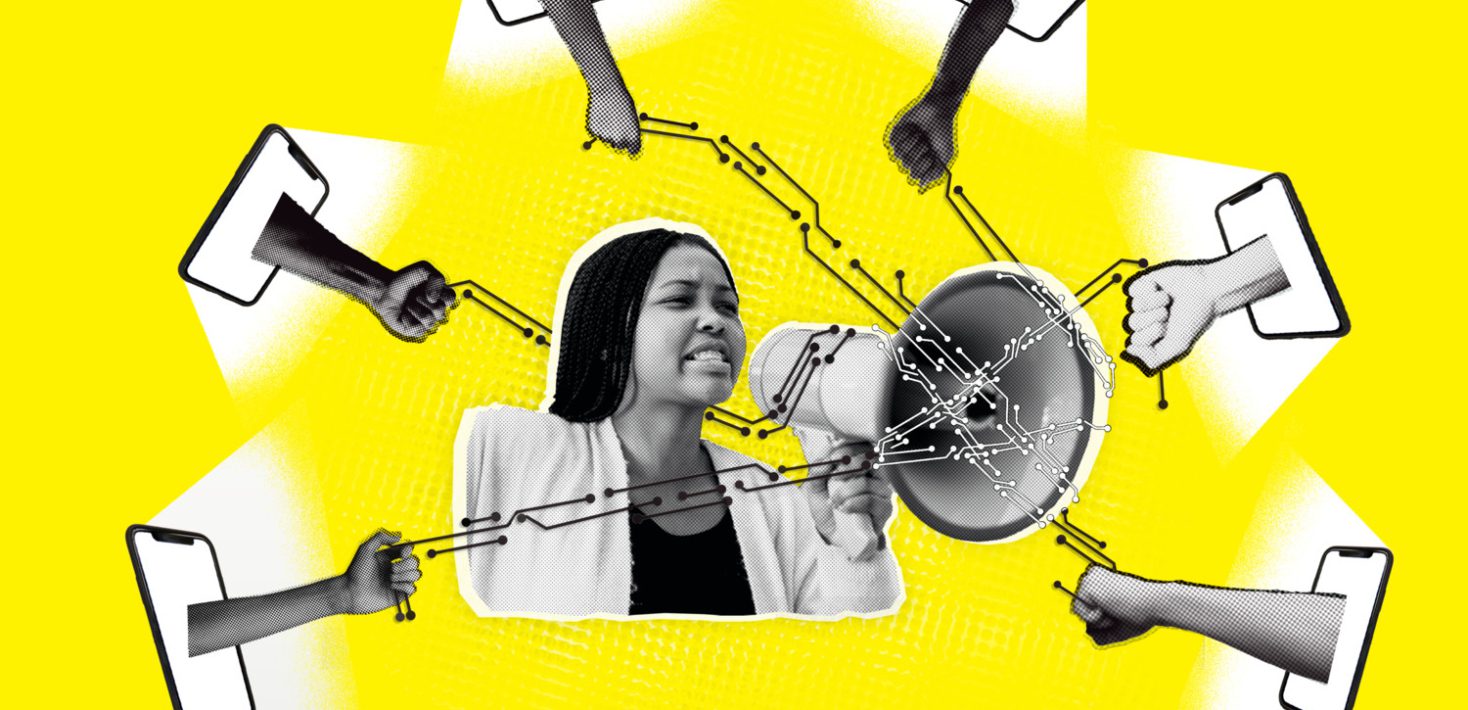
On July 1, 2024 AI published the findings of a survey which says that three out of five child and young human rights defenders face online harassment in connection with their activism, according to a new analysis of 400 responses to an Amnesty International questionnaire, distributed to young activists across 59 countries. More than 1400 young activists participated in the survey conducted as a part of Amnesty International’s global campaign to “Protect the Protest.”
Of those, 400 youth activists aged between 13 to 24 years agreed to the publication of their data.
They faced harassment in the form of hateful comments, threats, hacking and doxing which is often linked to offline abuse and political persecution often perpetrated by state actors with little or no response from Big Tech platforms resulting in the silencing of young people.
The highest rates of online harassment were reported by young activists in Nigeria and Argentina.
“I have been harassed […] by a stranger because of my pronouns. The stranger told me it is not possible to be a ‘they/them’ and kept sending messages about how I am crazy for identifying the way I identify. I had to ignore the person’s messages,” said a 17-year-old Nigerian queer LGBTI activist who asked not to be identified.
Another young activist – 21-year-old male Nigerian LBGTI rights activist said, “People disagree with my liberal progressive views, and immediately check my profile to see that I am queer Nigerian living in Nigeria, and they come at me with so much vitriol. I am usually scared to share my opinion on apps like TikTok because I can go viral. The internet can be a very scary place,” he said adding that, “Someone cat fishing as a gay man, lured me into coming out to see him after befriending me for a while, and then he attacked me with his friends. This is Nigeria, I couldn’t go to the police for secondary victimization.”
Twenty-one percent of respondents say they are trolled or threatened on a weekly basis and close to a third of the young activists say that they have censored themselves in response to tech-facilitated violence, with a further 14 percent saying they have stopped posting about human rights and their activism altogether.
“I always think twice before making a comment, when I express my political position, I start to get many comments that not only have to do with my position, but also with my body, my gender identity or my sexuality,” said Sofía*, a 23-year-old human rights defender from Argentina shared her experience on X formerly known as Twitter.
The survey respondents said they faced the most abuse on Facebook, with 87 percent of the platform’s users reporting experiences of harassment, compared to 52 percent on X and 51 percent on Instagram.
The most common forms of online harassment are upsetting and disrespectful “troll” comments (60 percent) and upsetting or threatening direct messages (52 percent).
Five percent of the young activists say they have faced online sexual harassment, too, reporting that users posted intimate images (including real and AI-generated images) of them without consent.
For many of the survey participants harassment in relation to their online activism is not limited to the digital world either. Almost a third of respondents reported facing offline forms of harassment, from family members and people in their personal lives to negative repercussions in school, police questioning and political persecution.
Twenty-year-old non-binary activist Aree* from Thailand shared their experience of facing politically motivated prosecution in five different cases whilst they were still a child.
Abdul* a 23-year-old Afghan activist reported being denied work at a hospital after authorities found out about his social media activism.
The Israel-Gaza war currently stands out as an issue attracting high levels of abusive online behaviour, but the threat of online harassment appears to be omnipresent across all leading human rights issues. Peace and security, the rule of law, economic and gender equality, social and racial justice, and environmental protection all served as “trigger topics” for the attacks.
However, the way young activists are targeted varies and appears to be closely linked to intersectional experiences of discrimination, likely harming survivors of identity-based abuse in longer lasting ways than issue-based harassment.
Twenty-one percent of respondents say they have been harassed in connection with their gender and twenty percent in connection with their race or ethnicity. Smaller percentages said they face abuse in connection with their socio-economic background, age, sexual orientation and/or disabilities.
“At first it was simply hateful comments since the posts I published were daring and spoke openly about LGBT rights, which later made me receive threats in private messages and it went further when my account was hacked,” said Paul a 24-year-old activist from Cameroon, on being targeted for his LGBTI related activism adding that, “For 2 years, I have been living in total insecurity because of the work I do as an advocate for the rights of my community online.”
For Paul and many other young activists, online harassment is having deep effects on their mental health. Forty percent of the respondents say they have felt a sense of powerlessness and nervousness or are afraid of using social media. Some respondents have even felt unable to perform everyday tasks and felt physically unsafe. Accordingly, psychological support is the most popular form of support which young activists call for, ahead of easier to use reporting mechanisms and legal support.
Many of the young activists voiced frustrations over leading social media platforms’ failure to adequately respond to their reports of harassment saying the abusive comments are left on the platforms long after being flagged.
Some respondents also felt that social media platforms are playing an active part in silencing them; multiple activists reported that they found posts about the war in Gaza removed, echoing previous reports of content advocating for Palestinian rights being subject to potentially discriminatory moderation by various platforms.
Others highlighted platforms’ role in enabling state-led intimidation and censorship campaigns, undermining activists’ hope for government regulation to provide answers to the challenge of tech-facilitated violence.
Episode 4: People who work to end violence and discrimination based on sexual orientation and gender identity (SOGI) face multiple forms of risk. They can be targeted for their actual or perceived sexual orientation or gender identity, and for being human rights defenders as well.
Karla Avelar is trans woman human rights defender from El Salvador who has been working since the 1990s to defend the rights of LGBTI persons, people with HIV and other marginalised groups. After being subjected to two and a half years in prison, where she was tortured, sexual assaulted and denied access to medical treatment, she began to work more intensely for the rights of LGBTI persons. She began by calling for appropriate provision of HIV medications and greater access to justice within El Salvador. In 2008 she founded COMCAVIS trans, El Salvador’s first organisation for trans women with HIV. In 2013, she was the first trans woman to appear before the Inter-American Commission on Human Rights. After multiple threats to her own life and that of her mother, she applied for asylum in Switzerland in 2017, where she now lives and continues her work. She was a finalist of the MEA in 2017 [see: https://humanrightsdefenders.blog/2017/05/16/trans-defenders-karla-avelars-life-is-under-constant-threat/]
Diversity in Adversity is a joint campaign by Mary Lawlor, UN Special Rapporteur on Human Rights Defenders, and Victor Madrigal-Borloz, UN Independent Expert on sexual orientation and gender identity. It will feature interviews with 10 SOGI rights defenders from all over the world; ordinary people engaged in extraordinary work. For more on this campaign, visit: https://www.ohchr.org/en/special-proc…
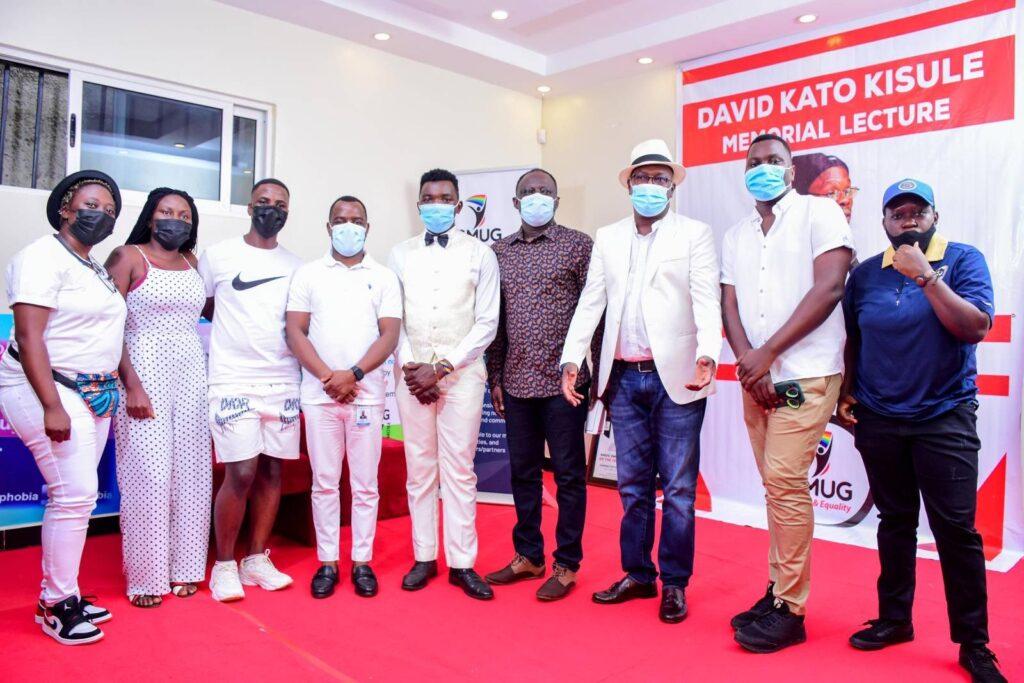
Human rights defenders pose at Kuchu Remembrance Day on Jan. 26, 2022, in honor of LGBT people killed. The event marked the launch of the planned David Kato Memorial Lectures in Kampala, Uganda. (Photo courtesy of Frank Mugisha)
The future “David Kato Memorial Lectures” were launched on 26 January 2022, during an event in Kampala organized by Hassan Shire, executive director of Defend Defenders, and Clément Nyaletsossi, United Nations Special Rapporteur on the Rights to Freedom of Peaceful Assembly and of Association. That date, the anniversary of Kato’s death, has been commemorated by Ugandan LGBT people since 2020 as Kuchu Remembrance Day, a day to remember the lives of LGBT activists who have been killed because of their activism and sexuality.
David Kato was considered a father of Uganda’s gay rights movement and described as “Uganda’s first openly gay man.” He became highly involved with the underground LGBT rights movement in Uganda, eventually becoming one of the founding members of Sexual Minorities Uganda (SMUG) in 2004.
On 26 January 2011, Kato was murdered in his home in Bukusa, Mukono Town, by a man who hit him twice in the head with a hammer. Kato died en route to hospital. Nsubuga Enoch, the man who confessed to murdering Kato, was found guilty at Mukono High Court and sentenced to 30 years with hard labour on 10 November 2011.
In October 2010, Kato was among the 100 people whose names, addresses, and photographs were published by the Ugandan tabloid newspaper Rolling Stone in an article which called for the murder of homosexuals. Kato and two other SMUG members who were listed in the article – Kasha Nabagesera and Pepe Julian Onziema – sued the newspaper to force it to stop publishing the names and pictures of people it believed to be gay or lesbian. The petition was granted on 2 November 2010, and the court later ordered the newspaper to pay Kato and the other two plaintiffs 1.5 million Ugandan shillings each (approx. US$450 as of May 2012).
Giles Muhame, the paper’s managing editor, was defiant at the time. “I haven’t seen the court injunction but the war against gays will and must continue. We have to protect our children from this dirty homosexual affront,” Muhame said of the court’s decision against his paper.
Several homophobic attacks have happened since Kato’s murder, resulting in deaths, body injuries, property damage and displacement. In memory of Kato, his former colleague Frank Mugisha, the executive director of SMUG, released a video on Twitter in which he pays him tribute. “The memorial lecture will bring out the core values that Kato stood for,” Mugisha says.
In a tweet about the David Kato memorial lectures, SMUG writes:
“It’s been 11 years since we lost David Kato due to homophobia and transphobia. Today we remember and celebrate the life of a remarkable man, an outstanding Human Rights activist.”
On 15 January 2021 The International Service for Human Rights (ISHR) published a long interview with Alicia Wallace, a human rights defender from the Bahamas. Here it is in full:
“I remember to be hopeful, not because it feels good or because I am waiting for something to happen on its own, but because I believe in my own power and the magic we create when queer people, Black people, women come together to channel our rage, righteous and raw, into sustained action.”
The year is 2050. What does the world look like – in particular for women, Black people, LGBTI people?
We are making strides toward equality and we are centered in all decision-making processes. We are protected and respected. It is a norm for us to be in positions of leadership. Diversity is expected. We are as safe at night as anyone is during the day. We have access to education, healthcare, food, and housing. All of our needs are met. Redistribution of wealth is in progress. Our survival is not dependent on or propping up the capitalist system. We are defining justice for ourselves. We recognise ourselves as the source of our own healing.
How did your work help achieve the vision you just described?
My work provoked conversation. It made information, from academic theory to changemaking methodologies, accessible to everyone. I created spaces where people have been comfortable to question, critique, challenge, learn, share, and create. I developed tools for all of us to be able to think outside of the reality we used to know. We knew we were not bound to it because I put significant emphasis on imagination and future-making. I found a way to fight the injustice we faced and facilitate collaborative visioning, imagining, and creating. We channeled our rage, weaponised hope (inspired by the work of artist Angelika Wallace-Whitfield), and we came together to co-create the futures. I helped to create tools and systems to enable that practice.
Was there a defining moment in your life that motivated you to defend human rights?
I am a queer Black woman. I have student loan debt. I am unwaged. I am a survivor of violence. My life is a collection of moments that make it necessary for me to defend and promote human rights if I am to survive and leave the world better than I met it. Perhaps what prompts me to action is recognition of another important fact—I have privilege. I have had experiences I may never speak of, and I know that my circumstances could be a lot worse. It is important for me to use what I have to help us all get what we ought to have had a long time ago. For me, the defining moment happens over and over again, when I feel rage threatens to control my body, and I remember to be hopeful, not because it feels good or because I am waiting for something to happen on its own, but because I believe in my own power and the magic we create when queer people, Black people, women come together to turn channel our rage, righteous and raw, into sustained action.
Do you face any threats and attacks because of your work?
I’ve been experiencing rape and death threats for the past six years. Most of it has been online. The most troubling threats come following participation in direct action or agitation from people in positions of influence. In 2018, when I participated in the 71st session of the Committee on the Elimination of Discrimination against Women (CEDAW) in Geneva, a radio personality made dangerous statements about me on the air. The same person incited the first threats of violence against me in 2014, so I knew I needed to take it seriously. I made a report to the CEDAW focal point on reprisals, but the outcome was not favorable. A government representative called me to suggest I report the incident to the police, but did not offer support in doing so and could not cite an offense, according to Bahamian law, that I would be reporting. It was a ridiculous suggestion that gave me no help. The government, of course, reported its “action” to the UN, even claiming that I said I no longer felt unsafe. I told the focal point that this was untrue and that, at the very least, the government should have been instructed to publicly state its support for human rights defenders, enact hate speech and hate crime legislation, and direct the radio personality to cease and desist all reference to me and any other human rights defenders. It would have cost the UN nothing to support me and other human rights defenders by making these recommendations to the government. Instead, I am left to fend for myself in a place where I continue to live and work without protection, legal or otherwise.
On this see what was stated by Andrew Gilmour in December 2019: “The Bahamas responded to the allegations of intimidation and reprisals against woman human rights defender Alicia Wallace after she engaged with the Committee on Elimination of all forms of Discrimination against Women (CEDAW). She and her colleagues were subjected to hate speech by a well-known radio personality, the effect of which was to create an unsafe environment for Ms. Wallace and other women human rights defenders. The Bahamas affirmed its commitment to protect human rights defenders and ensure that they can engage freely with the UN. The delegation told the Council that authorities proactively provided assistance to Ms. Wallace to guarantee her safety.”[from: https://humanrightsdefenders.blog/2019/09/23/andrew-gilmours-2019-report-on-reprisals-it-gets-worse-but-response-remains-mostly-rhetoric/]
What could be done for you to be able to work safely and effectively?
Institutions and people in positions of power need to rebuke violence, harassment, and threats of violence. The State needs to enact legislation against hate crimes and hate speech. It needs to publicly state its support of human rights defenders, make it clear that the relationship between itself and advocates is complementary, not adversarial, and assert that it will protect us. The United Nations and other bodies in control of international mechanisms and reporting processes need to take responsibility for the safety and security of the human rights defenders it depends on to monitor and evaluate State action. These organisations need to raise the bar, calling States to higher standards. They have to make it clear to States and the general public that the safety and security of human rights defenders are a matter of priority before we are detained, disappeared, or murdered.
How has the Covid-19 pandemic affected your work?
It has, as predicted, increased the volume of work. People, especially vulnerable people, are suffering. The pandemic has created crisis after crisis, from domestic violence and unpaid care work to unemployment and disruption of education. In anticipation of the effects of COVID-19 and State actions in response to it, Feminist Alliance for Rights (FAR)—where I am a steering committee member—produced guidelines for feminist policymaking during this time. This is one of the most critical pieces of work I have contributed to this year. In addition, I have been engaged in rapid response, working on policy recommendations to end gender-based violence, and continuing the regular programming of Equality Bahamas. It has been a busy year, but one of learning and where I have been able to see and strengthen my own agility. Human rights defenders have to be able to anticipate, prepare, respond, pivot, assess, and revise at all times, and especially during the crisis. The work has intensified and been taxing, but I believe that we have learned more this year than we have in years gone by, people are more aware of inequalities, and in addition to getting more people on our team, we can get institutions to make substantive change.
You are the producer of a monthly newsletter called The Culture RUSH. How does fusing pop culture with social justice help achieve your vision?
I want people to understand the movement for justice and equality. I want to see a broader understanding of feminism, women’s rights, LGBTQ+ people’s rights, and the importance of centering vulnerable people in decision-making processes, programmes, and activities. We need more people on our team. That requires two main actions: communicating in clear, accessible ways, and meeting them where they are in order to deliver the message. Academic text, feminist theory, and the language of institutions and advocacy are not as appealing or accessible as pop culture. People know what’s going on in Cardi B’s marriage, Megan Thee Stallion’s friend group, and the lives of real housewives. If WAP gets us talking about women’s pleasure, let’s talk about women in rap, lyrics, and music videos. In The Culture RUSH, I make connections between pop culture and social justice. In January 2021, I am starting Scorch, a paid subscription newsletter breaking feminist theory and academic text down into digestible bites (similar to Blinkist). I’m excited about making human rights and social justice accessible and interesting to wider audiences. When people are interested, they’re more likely to get invested, and when they’re invested, we can convince them to take action with us. People power is how we win.
Thank you, Alicia!
Alicia A. Wallace is a queer Black feminist, gender expert, and research consultant. She is the Director of Equality Bahamas which promotes women’s and LGBTQ+ rights as human rights through public education, community programming, and advocacy. Her work has included a two-year educational campaign ahead of a national referendum on gender and citizenship, the design and coordination of Women’s Wednesdays—a month event series bringing women together to share knowledge and ideas—and management of a disaster relief donation and distribution center. Alicia is also a steering committee member of Feminist Alliance for Rights (FAR). She has a weekly column on social and political issues in the Bahamian daily newspaper The Tribune and has published academic papers.
Photo credits in order of appearance: Blair J. Meadows, Equality and Justice Alliance, Equality Bahamas
The statement addresses several issues, including:
the right to health;
the rise of stigma and discrimination and scapegoating of LGBTI persons;
access to housing, water and sanitation;
the right to work and impacts on livelihood; and
civic space restrictions.
While acknowledging that actions to combat the COVID-19 pandemic are urgent and necessary, signatories of the statement urge UN Member States and stakeholders to ensure that international human rights obligations are complied with, and specific vulnerabilities of LGBTI persons are taken into account, during the implication of such emergency response measures.
Five key recommendations to States and stakeholders are included in the statement, including:
ensure accessibility of health care and services to every person, including sexual and reproductive health, without discrimination of any kind;
comply with international human rights laws and standards when implementing emergency measures, following requirements of legality, necessity, proportionality and non-discrimination, including on the basis of sexual orientation, gender identity and expression and sex characteristics (SOGIESC);
guarantee that shelters are inclusive for all persons regardless of their SOGIESC and implement measures allowing LGBTI persons to report violence and discrimination suffered in a private context, including at homes and shelters;
ensure that emergency measures to address the socio-economic impacts of the pandemic, as well as recovery plans, are inclusive to LGBTI persons – especially to trans, older and homeless LGBTI persons; and
ensure access to national, regional and international systems of accountability. States and stakeholders should implement lines of action designed to sustain and ensure the continuity of the engagement of civil society and human rights defenders in UN bodies and mechanisms.
In its conclusion, the statement urges authorities ‘to ensure that this public health emergency will neither exacerbate existing misconceptions, prejudices, inequalities or structural barriers, nor lead to increased violence and discrimination against persons with diverse sexual orientation, gender identity and expression and sex characteristics.’
A report on how Ugandan LGBT rights defenders celebrated Kuchu Memorial Day was posted by Kikonyogo Kivumbi on 28 in ‘Erasing 76 Crimes’. Human rights defenders in Uganda have earmarked January 26 as Kuchu Memorial Day to remember and celebrate the life of David Kato and other LGBT human rights defenders killed because of their activism and sexuality.
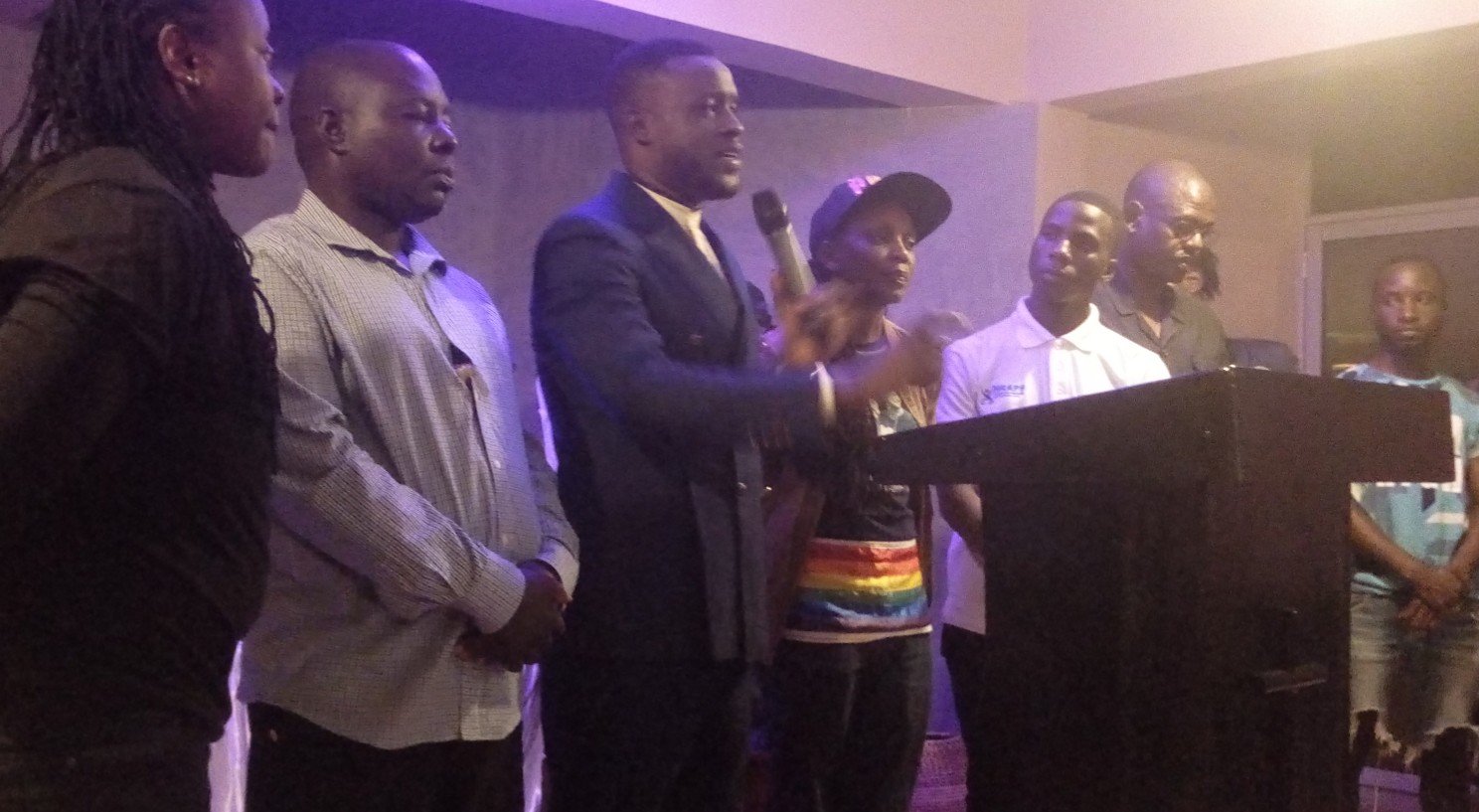
Pastor Simon Anthony addresses the Kuchu Memorial Day service in Kampala. Kasha Nabagesera stands beside him. (UhspaUganda photo)
At a memorial church service on Sunday, 26 January in Kampala, human rights defenders paid tribute to David Kato (murdered that day in 2011, at his home).
The remembrance service was led by Pastor Simon Anthony, a senior pastor from The Fellowship of Affirming Ministries (TFAM) Uganda. The fellowship embraces all people with love, irrespective of their sexuality or any other considerations.
Otgonbaatar Tsedendemberelhas advocated for the rights of LGBT persons in Mongolia for many years. On 6 March 2017 the ISHR published the following interview with him:
I am a co-founder of LGBT Center of Mongolia and worked as Advocacy Program Manager and then Executive Director from 2009 to 2014. We conducted workshops and training on LGBTI rights to raise awareness among the general public and law enforcement officers, health professionals, NGOs, public and private schools, etc. LGBT Center also worked hard in cooperation with other organisations to become one of the leading rights-based civil society organisations (CSOs) in Mongolia, contributing to the overall civil society development in the country and the mainstreaming of LGBTI issues into human rights issues as a whole. One of the highlights of what we have done collectively is the successful use of UN mechanisms such as the Universal Periodic Review (UPR), Committee against Torture (CAT) and Human Rights Committee to make the Government of Mongolia acknowledge its sexual minorities for the first time, express its political will to protect our rights and commit to implement the UPR and treaty bodies’ recommendations.
What motivated you to become involved in human rights work?
Having lived, studied and worked in Japan for 7 years, I felt that I needed to contribute to the development of my own country. As a young gay man who has seen the world, I was optimistically ambitious and daring enough to slip my hand into a tiger’s mouth, as the Mongolian saying goes. However, the situation for the LGBTI community was quite bleak with no rights-based NGO for the community operating. Then I joined the Mongolian Red Cross Society and where I met other co-founders of the LGBT Center. My personal desire for a better future for LGBTI Mongolians, the invincible passions of the co-founders Robyn Garner and Anaraa Nyamdorj, and the remarkable feminists and human rights defenders of vibrant, active Mongolian civil society motivated and still inspire me to work on LGBTI issues at home and abroad.
What risks, challenges or threats do you face as a human rights defender in your country?
Together with fellow activists I appeared on TV shows and gave interviews especially before, during and after UN and domestic advocacy efforts. Personal risks involved automatically “outing” my friends, family members and everyone around me, and in the process passively encroaching upon their right to privacy. They were so understanding and loving that they endured the negative attitudes, threats and attacks. Most of these threats come from a lack of information and misconceptions about LGBTI people and issues, as well as fear of being associated in any way with sexual minorities. I had to deactivate my Facebook account a few years ago to protect my family and what’s left of my privacy. Nevertheless, the situation is getting better after all these awareness-raising activities and LGBT Center’s work with the government and civil society, and I think now the private sector needs to join the cause for the sake of a better future for all.
What is the legal situation for NGOs and human rights defenders in Mongolia? What changes would you like to see to create a fully enabling environment for their work?
The NGO Law of Mongolia allows many NGOs to emerge and operate. The LGBT Center struggled initially to be registered as a legal entity back in 2007-2009. Since then we have not had any issues with the authorities in terms of the NGO registration. However, there is no law that enshrines the rights of human rights defenders (HRDs). In addition to the challenges of engaging in human rights work, LGBTI activists further suffer verbal and physical abuse and intimidation, family pressure and violence, financial obstacles, housing difficulties and even terrible treatment by landlords of NGO offices. Therefore, we desperately need a state policy and legislation on human rights defenders.
Can you give some examples of how you have engaged with the UN Special Procedures?
Ms. Magdalena Sepulveda Carmona, UN Special Rapporteur on Extreme Poverty and Human Rights, made an official visit to Mongolia in 2012. I met her towards the end of her visit and updated her on the situation of the LGBTI community. Ms. Magdalena Sepulveda observed that “the recent economic achievements made in Mongolia has not benefited the country’s poor” and highlighted vulnerable groups, including people living with HIV (PLHIV) and LGBTI persons.
In 2013, the Special Rapporteur’s report was released, concluding that “there is a high level of inequality at a time when the country is experiencing a major economic boom.” Given the pervasive inequality affecting the LGBTI community and the government’s recently expressed political will, the Center was encouraged to collect our own data on how poverty affects the LGBTI community and its root causes so that our advocacy efforts would be better informed and effectively targeted.
What have you achieved through this engagement?
The study – “Poverty and the Lesbian, Gay, Bisexual and Transgender Community in Mongolia” – was conducted in 2014. Its main author Dr. A. Bulbul discovered that the unemployment rate of survey participants was 10.4%, higher than the official rate of 7.8% among the general population, and approximately 22% lived below the national poverty line. The study concluded that enabling a legal environment to ensure equal access to education and employment and changing public perception and attitudes was necessary. This study – inspired by the Special Rapporteur’s visit – was significant since we got to utilise the UN Special Procedures and started to gather evidence to better inform the public and the relevant officials in the government and international organisations for better advocacy.
How do you think using the international human rights system assists in achieving domestic advocacy goals?
International human rights norms and standards definitely guide defenders to identify gaps, to better use the mechanisms established and available for us and to network with other like-minded activists, scholars, diplomats and UN officials. I would also like to thank organisations such as ISHR, ARC International, OutRight Action International, ILGA, COC Netherlands, OSCE, Open Society Foundations and FORUM-ASIA which act as a bridge between us – local and national activists – and the international and regional human rights systems, allowing us to lobby our government and make our advocacy more effective through their financial and technical assistance and support.
What if anything could the UN do to make the Special Procedures system easier/safer for you to engage with?
From experiences of working as an activist at the UN in Geneva and New York, I know that the UN is a political institution. However, it has been reformed to genuinely ensure the representation and participation of civil society. The UPR is a prime example because it brought LGBTI issues to the attention of our government, leading to legal reform. I would like to see those who work in the Special Procedures’ teams be present both online and offline. Country visits by Ms. Magdalena Sepulveda and meetings with diverse stakeholders were truly amazing and productive. Online presence of UN Special Rapporteur on Freedom of Assembly and Association Mr. Maina Kiai, who listens to activists’ voices from the ground is absolutely impressive. And most importantly, I wish the UN work at the headquarters could be translated into the UN country offices as swiftly, effectively and efficiently as possible.
Jacobus was a human rights defender from Namibia who proudly defended and promoted the rights of of lesbian, gay, bisexual, trans and intersex people via Pan Africa ILGA. ISHR reported this in their ISHR Monitor of December 2016.



 Pastor Simon Anthony addresses the Kuchu Memorial Day service in Kampala. Kasha Nabagesera stands beside him. (UhspaUganda photo)
 Hans Thoolen on Human Rights Defenders and their awards