Posts Tagged ‘Kashmir’

Join the campaign #EndReprisals: 4 examples of eminent HRDs being silenced

May 16, 2024

Human rights defenders and civil society are the voices of our communities. These voices must be at the heart of decision and policy making at all levels. Yet, some States and non-states actors feel those voices are too loud. Cao Shunli, Chinese human rights defender, victim of reprisals who died in detention 10 years ago. Around the world, inspiring voices echo Cao’s ambition, on different issues and in different contexts, but with the same aspiration: promoting and protecting human rights. In so doing, many have engaged with the United Nations to share evidence of abuses with experts and States. Regrettably, some are facing the same form of reprisals as Cao, and are now arbitrarily detained. 

These include Trang in Viet Nam, Irfan and Khurram in India and Abdulhadi in Bahrain.

It’s time to take a stand. Join us in our campaign to #EndReprisals and call for the release of Trang, Abdulhadi, Khurram and Irfan. Let’s ensure that no one else faces Cao’s fate. Their voices deserve to be heard, and their freedom and lives must be protected.

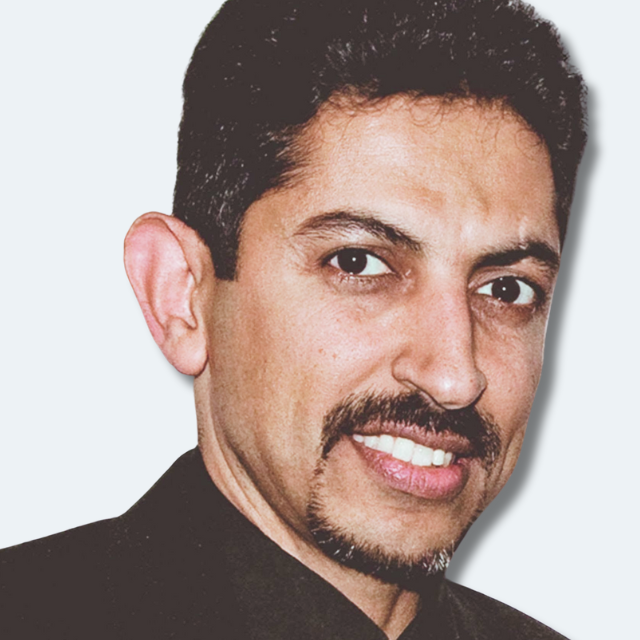
Abdulhadi Al-Khawaja

Abdulhadi Al-Khawaja is a Bahraini-Danish advocate known for his unwavering commitment to freedom and democracy. An outspoken human rights defender he serves as a source of inspiration for activists in Bahrain and globally. Abdulhadi has protested Bahrain’s unlawful detention and torture of several civilians since he was a student. He received political asylum in Denmark with his family where he continued his advocacy work, documenting human rights violations in Bahrain. 

He became the first civil society representative to speak at the first Universal Periodic Review of Bahrain in 2008.  He is the co-founder of both the Gulf Centre for Human Rights and the Bahrain Center for Human Rights, as well as the laureate of the 2022 Martin Ennals Award. [https://www.trueheroesfilms.org/thedigest/laureates/4d45e316-c636-4d02-852d-7bfc2b08b78d]

Abdulhadi Al-Khawaja was included for five times in the Secretary-General report on reprisals, noting “allegations of arbitrary arrest, torture and lengthy sentence following his engagement with United Nations human rights mechanisms.” In 2012, the Working Group on Arbitrary Detention found the detention of Abdulhadi arbitrary.

See also: https://humanrightsdefenders.blog/tag/abdulhadi-alkhawaja/

Pham Doan Trang

Pham Doan Trang is an author, blogger, journalist and pro-democracy activist from Viet Nam. She is a well-known advocate for human rights and has written on a wide range of human rights topics, including LGBTQI+ rights, women’s rights, environmental issues and on the suppression of activists.

She is considered among the most influential and respected human rights defenders in Viet Nam today. She has always been a major source of inspiration and mentorship for Vietnamese civil society and the next generation of human rights defenders.

Trang received the Reporters Without Borders 2019 Press Freedom Prize for Impact and was the Laureate of a Martin Ennals Award in 2022. As well as the Homo Homini in 2017 and the Women of Courage 2022. See: https://www.trueheroesfilms.org/thedigest/laureates/fe8bf320-1d78-11e8-aacf-35c4dd34b7ba

Trang was prosecuted for her articles and reports on the human rights situation in Viet Nam, including an analysis of a 2016 report on the Formosa Ha Tinh Steel Plant environmental disaster that was shared with the United Nations. See also: https://humanrightsdefenders.blog/tag/pham-doan-trang/

Trang was the subject of several communications by special procedures mandate holders and an Opinion by the Working Group on Arbitrary Detention in 2021, which found her deprivation of liberty arbitrary. On 2 November 2022, experts addressed Trang’s detention, including restriction of her right to family visits and her deteriorating health status. 

Irfan Mehraj and Khurram Parvez

Khurram Parvez and Irfan Mehraj are two Kashmiri human rights defenders. They have conducted ground-breaking and extensive human rights documentation in the Indian-administered Jammu and Kashmir, including through their work within the Jammu Kashmir Coalition of Civil Society (JKCCS) – Khurram as founder and programme coordinator, and Irfan as a researcher.

Both activists have been internationally recognised for their work. Khurram is the Chairperson of the Asian Federation against Involuntary Disappearances (AFAD), Deputy General Secretary of the International Federation for Human Rights (FIDH) and a laureate of the 2023 Martin Ennals Award. [see: https://www.trueheroesfilms.org/thedigest/laureates/81468931-79AA-24FF-58F7-10351638AFE3]

Irfan is a well-regarded independent journalist with frequent contributions to Kashmiri, Indian and international news outlets. He is the founder of Wande Magazine and is an editor at TwoCircles.net. See also: https://humanrightsdefenders.blog/2023/09/05/un-special-rapporteurs-express-serious-concern-about-kashmiri-human-rights-defenders/

On 22 November 2021, Khurram was arrested again by the Indian Government, this time by India’s National Investigation Agency (NIA) under the Unlawful Activities (Prevention) Act (UAPA) and other laws, reportedly on allegations of “terrorism funding, being a member of a terrorist organisation, criminal conspiracy, and waging war against the state.” He remains in arbitrary detention to this day. 

Meanwhile, on 20 March 2023, Irfan was summoned for questioning and arbitrarily detained by the NIA in Srinagar also under provisions of the UAPA and other laws.  The NIA targeted Irfan for being ‘a close associate of Khurram Parvez.’ Both Khurram and Irfan are presently in pre-trial detention in the maximum-security Rohini prison in New Delhi, India. If convicted, Khurram and Irfan could face life imprisonment or even the death penalty.  

Khurram’s situation has been included in the Secretary-General’s report on reprisals since 2017 and Irfan’s case was included in the 2023 report.

In June 2023, United Nations experts expressed serious concerns regarding the charges against and arrest of Irfan and Khurram, stating that their continued detention is ‘designed to delegitimise their human rights work and obstruct monitoring of the human rights situation in Indian-administered Jammu and Kashmir.’ The United Nation Working Group on Arbitrary Detention (WGAD) published an opinion in the same year, finding Khurram’s detention arbitrary. 

What do we want? It’s simple. We want Irfan, Khurram, Trang and Abduhadi to be freed so they can continue their work without fear of further reprisals, and we want accountability for Cao. 

How do we achieve this?

We mobilise diplomatic missions, encouraging them to speak out and raise individual cases of reprisals against defenders at the UN and in other spaces and hold their peers to account. We convince the UN Secretary General and his team to acknowledge and document ALL cases of reprisal and intimidation by including them in his annual report on reprisals and intimidation against defenders engaging or seeking to engage with the UN and its human rights mechanisms. We push the UN system to establish clearer protocols on how to consistently and effectively prevent, respond and follow up on cases of reprisals.  We encourage governments, activists, and concerned individuals to stand in solidarity with human rights defenders and organisations who are subjected to reprisals and intimidations.

What can you do?

To achieve our goals, we are drawing attention to some of the most emblematic cases of reprisals that illustrate how human rights defenders are prevented from or punished for engaging with the UN.   Here are impactful actions you can take:

Write to State representatives at the UN in Geneva and New York

ISHR’s #EndReprisals database

In order to assist stakeholders with research, analysis and action on cases of reprisals and intimidation, ISHR launched an online database compiling cases or situations of intimidation and reprisals documented by the United Nations (UN) Secretary-General between 2010 and 2020.

  • 878 Cases of intimidation and reprisals against human rights defenders engaging with the UN reported by the UN Secretary General between 2010 and 2020.
  • 81 Countries were cases of reprisals were documented by the UN Secretary-General between 2010 and 2020.
  • 13 Reports published by the UN Secretary General on intimidation and reprisals.

Visit ISHR’s #EndReprisal database

https://ishr.ch/campaign/endreprisals2024

UN Special Rapporteurs express serious concern about Kashmiri human rights defenders

September 5, 2023

The Pakistan Observer of August 11, 2023 carries the story which I wished Indian newspapers would also cover..:

The UN Special Rapporteur on Human Rights Defenders and other UN experts have expressed their serious concern at the arrest, detention and accusations brought against Kashmiri human rights defenders Irfan Mehraj and Khurram Parvez, which they said are “designed to delegitimize their human rights work and obstruct monitoring of the human rights situation in” Indian occupied Jammu and Kashmir

A joint communication released by the UN Special Rapporteur on Human Rights Defenders and other UN experts, and which is available at the website of the UN Special Rapporteur on Human Rights Defenders [https://srdefenders.org/india-arrest-detention-of-kashmiri-human-rights-defenders-irfan-mehraj-khurram-parvez-joint-communication/], said, “We underline the legitimacy of their work and of the activities of the JKCSS and express our fear that the arrest and detention of Mr. Mehraj, as well as the continued detention of Mr. Parvez since 2021 and his involvement in the second case at hand, are designed to delegitimize their human rights work and obstruct monitoring of the human rights situation in India-administered Jammu and Kashmir. [see: https://www.trueheroesfilms.org/thedigest/laureates/81468931-79AA-24FF-58F7-10351638AFE3]

“As we have repeatedly stressed in the past, counter-terrorism legislation should never be used to sanction human rights defenders. We express our abhorrence at the continued instrumentalization of national-security measures and discourse to undermine, obstruct and persecute those peacefully promoting, defending and seeking the advancement of human rights in the country, as well as to frustrate accountability for human rights violations.”

Disagreeing with the definition of a terrorist by the Modi government, the joint communication said, “As we previously raised in OL IND 7/2020, we are deeply concerned about the definition of ‘terrorist act’ in the UAPA, which substantially departs from the model definition offered by the Special Rapporteur on the promotion and protection of human rights and fundamental freedoms while countering terrorism and provides broad powers to the executive, without oversight or control from the judiciary. We further remind your Excellency Government that the definition of terrorism and terrorism offences must be ‘genuinely’ terrorist in nature in accordance with the elements identified by the Security Council in its resolution 1566 (2004).”

The statement warned that “Conflation of human rights work with terrorism is inconsistent with the obligations of State affirmed by the Security Council that counter-terrorism activities by States should not conflict with other international law obligations, particularly human rights, and with the agreed consensus of Member States contained in the Global Counter-Terrorism strategy opposing the misuse of counter-terrorism measures against civil society (A/RES/60/288).”

“We also note our deep concerns about allegation of ‘terror funding’ and highlight that the Financial Action Task Force (FATF) has set forth international practices and guidelines aimed at preventing global money laundering and terrorist financing. The FATF recommendations, while non-binding, provide recognized international guidance for the countering of terrorism financing. Recommendation (1) states that ‘countries should apply a risk-based approach (RBA) to ensure that measures to prevent or mitigate money laundering and terrorist financing are commensurate with the risks identified’ Recommendation (8) provides guidance to States on the laws and regulations that should be adopted to oversee and protect NPOs that have been identified as being vulnerable to terrorist financing concerns.”

“Such measures must be ‘focused and proportionate’; ‘ ‘one size fits all’ approach to address all NPOs is not appropriate.’ FATF has reaffirmed that State compliance with Recommendation (8) and the other FATF Recommendations ‘should not contravene a country’s obligations under the Charter of the United Nations and international human rights law to promote universal respect for, and observance of, fundamental human rights and freedoms, such as freedom of expression, religion or belief and freedom of peaceful assembly and of association.”

Blaming India for targeting civil society, the joint statement said, “We are concerned that these arrests appear to contravene a “risk-based” approach to countering terrorism finance and appear to demonstrate a misuse of countering terrorism finance laws and practice to disproportionately target civil society.”

It is worth mentioning here that the “communication written by the UN Special Rapporteur on Human Rights Defenders and other UN experts to the Government of India on 5 June 2023. The communication remained confidential for 60 days before being made public, giving the Government time to reply. Regrettably, the Government did not reply within this time frame.

The communication stated that “If a reply is received it will be posted on the UN Special Procedures communications database”.

“Since the communication was sent, the detention of Mr. Mehraj and Mr. Parvez has twice been extended following petitions by the National Investigation Agency (NIA), with the latest extension granted on 27 July 2023. Both human rights defenders remain detained in Rohini Prison in Delhi”.—KMS.

see also: https://humanrightsdefenders.blog/2020/02/09/forgotten-kashmir-something-has-to-be-done/

https://www.ohchr.org/en/press-releases/2023/03/india-un-expert-demands-immediate-end-crackdown-kashmiri-human-rights

https://spcommreports.ohchr.org/TMResultsBase/DownLoadPublicCommunicationFile?gId=28286

Breaking news: Laureates of the MEA for 2023 announced

January 19, 2023

Today the three Martin Ennals Award Laureates 2023 were announced !

The 2023 Laureates — Delphine Djiraibé (Chad), Feliciano Reyna (Venezuela), and Khurram Parvez (Jammu and Kashmir) — have each dedicated over 30 years of their lives to building movements which brought justice for victims, accountability from leaders, or medicines to the marginalized. They have made human rights real for thousands of people in their communities, despite the ongoing, sometimes life-threatening, challenges they endure.  For more on this award and its laureates, see: https://www.trueheroesfilms.org/thedigest/awards/043F9D13-640A-412C-90E8-99952CA56DCE

———————

Delphine Kemneloum Djiraibé was one of the first female lawyers in Chad and a pioneer of the human rights movement in one of the poorest countries in the world, fraught with corruption and human rights abuses. Convinced that her role is to “challenge the power”, Delphine has advocated on behalf of victims and the democratic process for over 30 years. She was a key figure in bringing the former dictator Hissène Habré to justice. Djiraibé heads the non-governmental organisation Public Interest Law Center (PILC), which trains volunteers and accompanies citizens seeking justice for violations of their rights. In recent years she has been particularly active in combating gender-based violence and is in the process of establishing the first women’s counselling center in Chad, which will include an emergency shelter for women affected by domestic violence. See also: https://www.trueheroesfilms.org/thedigest/laureates/5B701F71-12FD-B713-9F99-5E09B9AFD6DA

After the death of his partner Rafael from AIDS in 1995, Feliciano Reyna, then an architect, founded Acción Solidaria to provide much needed medication and treatment to Venezuelans living with HIV & AIDS. Feliciano and Acción Solidaria began advocating for access to health for the marginalised LGBTQI population in a country where healthcare was on the decline and corruption on the rise. They created the first national AIDS Help Line in Venezuela and ran a national awareness campaign on HIV & AIDS, which aired on TV and in movie theaters, and received radio and magazine coverage. Feliciano Reyna went on to found CODEVIDA, a coalition of Venezuelan organisations promoting the rights of Venezuelan citizens to health and life. As he put it: “We walked directly into the complex humanitarian emergency in Venezuela”. Despite ongoing threats, since 2006, he has worked closely with UN mechanisms to defend human rights in his country. In 2019 his advocacy was instrumental in establishing the Independent International Fact-Finding Mission on Venezuela. 

At the age of 13, when Khurram Parvez witnessed the shooting of his grandfather during a protest demonstration against the molestation of women outside his house in Kashmir, he chose to “not incite violence and become part of some revenge” , but rather to become a “nonviolent activist“. He founded the Jammu and Kashmir Coalition of Civil Society (JKCCS) and is the Chair of the Asian Federation Against Involuntary Disappearances. For 15 years he has travelled to the most remote parts of the region to sit with victims of abuse, collect documentation and report on their stories. Under his leadership, the JKCCS has been highly effective in translating the protections guaranteed in international human rights law into local realities. Despite continued attacks on his right to freedom of expression by the Indian government, being jailed in 2016 and losing a leg to landmines, Khurram relentlessly spoke the truth and was an inspiration to civil society and the local population. In November 2021, he was arrested under the Unlawful Activities Prevention Act (UAPA) on politically motivated charges. He remains detained without trial in India.  See also: https://www.trueheroesfilms.org/thedigest/laureates/81468931-79AA-24FF-58F7-10351638AFE3

You can watch them take questions from the press at the Club Suisse de la Presse, livestreamed on February 14th, 2023 from 12h CET.

A celebration of the Laureates 2023 will take place on 16 February at the Salle communale de Plainpalais in Geneva, at 6:30pm. The event is open to the public and livestreamed from the Martin Ennals Foundation’s website and Facebook page. Sign-up to the Ceremony

India arrests Khurram Parvez again

November 23, 2021

The National Investigation Agency (NIA) of India arrested on Monday, 22 November 2021 prominent human rights defender Khurram Parvez after a day of extensive searches at his residence and office in Jammu and Kashmir capital Srinagar. He is an internationally recognized human rights defender, see: https://www.trueheroesfilms.org/thedigest/laureates/81468931-79AA-24FF-58F7-10351638AFE3

A family member told The Wire that Khurram’s residence in the city’s Sonawar locality was raided by NIA officials who were accompanied by local police and paramilitary troopers, on Monday morning. Another raid was carried out later in the day at his office in the Amira Kadal locality.

The raids were carried out in connection with a case (RC 30/2021) filed by the agency earlier this year.

Sources said the investigators confiscated Khurram’s mobile phone, laptop, some books and documents from his office and residence before taking him to the agency’s camp office in Srinagar’s Church Lane on Monday afternoon. “In the evening, we got a call to bring his clothes,” said a family member, adding that his wife and their son went to the office and handed his clothes to the officials there.

The NIA has not so far issued any statement on the arrest of Khurram, who is also the chairman of Asian Federation Against Involuntary Disappearances. Sources said his family was handed the arrest memo on Monday evening and he is likely to be flown to New Delhi on Tuesday.

The United Nations said it was disturbed by the reports of Khurram’s arrest, “I’m hearing disturbing reports that  Khurram Parvez was arrested today in Kashmir & is at risk of being charged by authorities in #India with terrorism-related crimes. He’s not a terrorist, he’s a Human Rights Defender,” Mary Lawlor, UN Special Rapporteur on Human Rights Defenders, tweeted. David Kaye, a former UN Special Rapporteur, said Khurram’s arrest under terrorism charges was “yet another extraordinary abuse in Kashmir.”

World Organisation Again Torture (OMCT), a Geneva based non-profit which works with groups across the world to fight for human rights, said it was “deeply concerned” by Khurram’s arrest, “We are deeply concerned about the high risk of torture while in custody. We call for his immediate release,” OMCT said in a tweet.
One of the most prominent rights defenders from Kashmir, Khurram has extensively worked on documenting the abuses allegedly committed both by security forces and militants in Kashmir as coordinator of Jammu Kashmir Coalition of Civil Society (JKCCS), a rights group based in Srinagar. See also: https://humanrightsdefenders.blog/2016/12/01/human-rights-defender-khurram-parvez-reluctantly-released-in-india/

The JKCCS has published more than a dozen reports on human rights abuses in Kashmir and its last report, ‘Kashmir’s Internet Siege’ focused on the mass detentions and the reported breakdown of the judicial system in Jammu and Kashmir in the aftermath of the reading down of Article 370. See also: https://humanrightsdefenders.blog/2020/02/09/forgotten-kashmir-something-has-to-be-done/

Khurram’s last tweet on August 30 this year was about a programme organised by Asian Federation Against Involuntary Disappearances and its members countries across Asia who pledged “that truth will not be buried, disappeared won’t be ever forgotten & perpetrators will never be forgiven.”

However, India’s government resists any notion of having acted wrongly:

Ministry of External Affairs (MEA) spokesperson Arindam Bagchi said that the [UN] statement makes “baseless and unfounded allegations” against Indian security forces. “It also betrays a complete lack of understanding on the part of the OHCHR of the security challenges faced by India from cross-border terrorism and its impact on the most fundamental human right ‘the Right to Life’ of our citizens, including in Jammu and Kashmir,” he said.

Asserting that all actions are undertaken in accordance with the law, he said, “We urge the OHCHR to develop a better understanding of the negative impact of terrorism on human rights.”

https://www.sbs.com.au/news/prominent-human-rights-activist-arrested-by-india-s-top-anti-terrorism-agency/9b91bc37-0dd2-48d4-aedc-b020fb36ea54

https://www.telegraphindia.com/india/valley-rights-activist-khurram-parvez-detained-by-nia/cid/1840157

https://thewire.in/rights/khurram-parvez-nia-arrest

https://www.reuters.com/world/india/un-criticises-disturbing-arrest-rights-activist-indian-kashmir-2021-11-23/

https://www.thehindu.com/news/national/other-states/global-rights-bodies-call-for-release-of-kashmir-based-activist-khurram-parvez/article37640132.ece

https://thewire.in/diplomacy/un-ohchr-khurram-parvez-arrest-india-dismiss

Wrap up 46th session of UN Human Rights Council with key resolutions on Belarus and Myanmar and more

March 29, 2021

UN Photo/Jean-Marc FerréA general view of the Geneva-based UN Human Rights Council in session. 24 March 2021

The UN’s top rights forum passed resolutions condemning abuses of fundamental freedoms in Belarus and Myanmar on Wednesday, in response to ongoing concerns over the human rights situation in both countries.

The ISHR and another 15 organisations (see below) produced as usual their reflections on the key outcomes of the 46th session of the UN Human Rights Council, as well as the missed opportunities to address key issues and situations including pushbacks and other human rights violations faced by migrants and refugees, and the human rights situations in Algeria, Cameroon, China, India, Kashmir and the Philippines.

They welcome some important procedural advances such as the possibility for NGOs to make video statements, which should be maintained and expanded after the pandemic for all discussions, including in general debates. …They are concerned by the renewal for another year of the ‘efficiency’ measures piloted in 2020, despite their negative impact on civil society participation in a year also impacted by the COVID-19 pandemic. We urge States to reinstate general debates in the June sessions, to preserve their open-ended nature, and maintain the option of video intervention also in general debates.

Environmental justice:

They welcome the joint statement calling for the recognition of the right of all to a safe, clean, healthy and sustainable environment that was delivered by the Maldives, on behalf of Costa Rica, Morocco, Slovenia and Switzerland and supported by 55 States. We call on all States to seize this historic opportunity to support the core-group as they continue to work towards UN recognition so that everyone in the world, wherever they live, and without discrimination, has the right to live in a safe, clean and sustainable environment.

We welcome the joint statement that was delivered by Bangladesh, on behalf of 55 States, calling the Council to create a new Special Rapporteur on human rights and climate change. We believe this new mandate would be essential to supporting a stronger human rights-based approach to climate change, engaging in country visits, normative work and capacity-building, and further addressing the human rights impacts of climate responses, in order to support the most vulnerable. This mandate should be established without further delay.

Racial Justice: Over 150 States jointly welcomed that the implementation of HRC Resolution 43/1 will center victims and their families. They urge the Council to respond to the High Commissioner’s call to address root causes of racism including the “legacies of enslavement, the transatlantic trade in enslaved Africans, and its context of colonialism”. The Council must answer to the demands of victims’ families and civil society’s, and establish – at its next session – an independent inquiry to investigate systemic racism in law enforcement in the United States and a thematic commission of inquiry to investigate systemic racism in law enforcement globally, especially where it is related to legacies of colonialism and transatlantic slavery.

Right to health: The resolution on ensuring equitable, affordable, timely, and universal access by all countries to vaccines in response to the COVID-19 pandemic is a welcome move in highlighting the need for States not to have export and other restrictions on access to safe diagnostics, therapeutics, medicines, and vaccines, and essential health technologies, and their components, as well as equipment  and encouraged States to use all flexibilities within TRIPs. However, a revised version of the resolution tabled was further weakened by the deletion of one paragraph on stockpiling of vaccines and the reference to ‘unequal allocation and  distribution among countries”. The specific deletion highlights the collusion between rich States and big pharmaceuticals, their investment in furthering monopolistic intellectual property regimes resulting in grave human rights violations. The reluctance of States, predominantly WEOG States who continue to defend intellectual property regimes and States’ refusal to hold business enterprises accountable to human rights standards is very concerning during this Global crisis.

Attempts to undermine HRC mandate: They regret that once again this Council has adopted a resolution, purportedly advancing ‘mutual beneficial cooperation’ which seeks to undermine and reinterpret both the principle of universality and its mandate. Technical assistance, dialogue and cooperation must be pursued with the goal of promoting and protecting human rights, not as an end in itself or as a means of facilitating inter-State relations. We reiterate our call on all States, and especially Council members, to consider country situations in an independent manner, based on objective human rights criteria supported by credible UN and civil society information. This is an essential part of the Council’s work; reliance on cooperation alone hobbles the Council’s ability to act to support the defenders and communities that look to it for justice.

Country-specific resolutions: They welcome the new mandate for the High Commissioner focused on the human rights situation in Belarus in the context of the 2020 Presidential election. It is now essential for States to support the High Commissioner’s office, ensuring the resources and expertise are made available so that the mandate can be operationalised as quickly as possible. Immediately afterwards, on 24 March, 2021 the Human Rights House Foundation published a call by 64 Belarusian and international human rights organisations, welcoming the resolution passed by the UN Human Rights Council mandating the High Commissioner to create a new robust monitoring and reporting mandate focused on accountability for human rights violations in Belarus that have taken place since 1 May 2020. In so doing, the Council demonstrated its determination to hold Belarusian authorities to account. This mandate needs immediate action. We urge the international community to support this critical next step. The mandate should provide a complementary and expert international mechanism to regional accountability processes already under way. Furthermore, it should assist in the identification of those responsible for the most serious violations for future prosecution. [https://humanrightshouse.org/statements/civil-society-organisations-call-for-the-immediate-operationalisation-of-hrcs-new-mandate-on-belarus/]

They welcome the renewal of the mandate of the Special Rapporteur on Iran, and urge Council to consider further action to hold Iranian authorities accountable, in view of the systematic impunity and lack of transparency surrounding violations of human rights in the country.

They welcome the call for additional resources for the Special Rapporteur on Myanmar, increased reporting by OHCHR as well as the work of the IIMM. Lack of international monitoring on, the imposition of martial law in Myanmar to prosecute civilians, including protesters, before military courts, the dangerous escalation of violence by the Tatmadaw and the widespread human rights violations amounting to crimes against humanity demand more efforts to ensure accountability.

They welcome the renewal and strengthening of the OHCHR’s monitoring and reporting mandate on Nicaragua, in a context of steady human rights deterioration marked by the Government’s refusal to cooperate constructively with the Office, over two years after its expulsion from the country. The adopted resolution lays out steps that Nicaragua should take to resume good faith cooperation and improve the situation ahead of this year’s national elections. It is also vital that this Council and its members continue to closely follow the situation in Nicaragua, and live up to the resolution’s commitments, by considering all available measures should the situation deteriorate by next year.

They welcome the increased monitoring and reporting on the situation of human rights in Sri Lanka. However, in light of the High Commissioner’s report on the rapidly deteriorating human rights situation and Sri Lanka’s incapacity and unwillingness to pursue accountability for crimes under international law, the Council should have urged States to seek other avenues to advance accountability, including through extraterritorial or universal jurisdiction.

While they welcome the extension of the mandate of the Commission on Human Rights in South Sudan (CHRSS), they regret the adoption of a competing resolution under the inadequate agenda item 10. This resolution sends a wrong signal as myriads of local-level conflicts and ongoing SGBV and other violations of fundamental rights continue to threaten the country’s stability. We urge South Sudan to continue cooperating with the CHRSS and to demonstrate concrete progress on key benchmarks and indicators.

They welcome the report by the Commission of Inquiry on Syria on arbitrary imprisonment and detention and reiterate the recommendation to establish an independent mechanism “to locate the missing or their remains”, and call on States to ensure the meaningful participation of victims and adopt a victim-centered approach, including by taking into consideration the Truth and Justice Charter of Syrian associations of survivors and families of disappeared when addressing arbitrary detention and enforced disappearance.

Country-specific State statements: They welcome States’ leadership and statements on human rights situations that merit the HRC’s attention.

They welcome the joint statement on the situation in Ethiopia’s Tigray region and urge all actors, including the Ethiopian Federal Government, to protect civilians and ensure unhindered humanitarian access. Those responsible for crimes under international law, including Ethiopian soldiers, members of armed militias and non-State groups, and Eritrean soldiers involved in Tigray, must be held criminally accountable. The HRC should mandate an independent investigation and reporting by the High Commissioner.

For the first time in seven years, States at the HRC have united to condemn the widespread human rights violations by Egypt and its misuse of counter-terrorism measures to imprison human rights defenders, LGBTI persons, journalists, politicians and lawyers and peaceful critics. They welcome the cross-regional joint statement by 32 States and we reiterate our call supported by over 100 NGOs from across the world on the HRC to establish a monitoring and reporting mechanism on the situation.

They welcome the joint statement by 45 States focused on the human rights situation in Russia, including the imprisonment of Alexi Navalny and the large number of arbitrary arrests of protestors across Russia. The statement rightly expresses concern for shrinking civil society space in Russia through recent legislative amendments and Russia using its “tools of State” to attack independent media and civil society.

In the context of mounting international recognition that Israel imposes an apartheid regime over the Palestinian people, they welcome Namibia’s call for the “restoration of the UN Special Committee on Apartheid in order to ensure the implementation of the Apartheid Convention to the Palestinian situation.” See also: https://humanrightsdefenders.blog/2021/01/18/israel-and-apartheid-israeli-human-rights-group-stirs-debate/]

For the future:

The next session will receive a report on pushbacks from the Special Rapporteur on human rights of migrants. The Council must respond to the severity and scale of pushbacks and other human rights violations faced by migrants and refugees in transit and at borders and the ongoing suppression of solidarity, including by answering the High Commissioner’s call for independent monitoring. The Council’s silence feeds impunity, it must build on the momentum of the joint statement of over 90 States reaffirming their commitment to protection of the human rights of all migrants regardless of status.

While the OHCHR expressed deep concern about the deteriorating human rights situation and the ongoing crackdown on civil society in Algeria, and called for the immediate and unconditional release of arbitrarily detained individuals, the Council has remained largely silent. As authorities are increasingly arbitrarily and violently arresting protesters – at least 1,500 since the resumption of the Hirak pro-democracy movement on 13 February, they call on the Council to address the criminalisation of public freedoms, to protect peaceful protesters, activists and the media.

Cameroon is one of the human rights crises the Council has failed to address for too long. They condemn the acts of intimidation and reprisal exercised by the Cameroonian government in response to NGOs raising concerns, including DefendDefenders. This is unacceptable behavior by a Council member. The Council should consider collective action to address the gross human rights violations and abuses occurring in the country.

They echo the calls of many governments for the Council to step up its meaningful action to ensure that concerns raised by civil society, the UN Special Procedures and the OHCHR about the human rights situation in China be properly addressed, including through an independent international investigation. We also regret that a number of States have taken an unprincipled approach of voicing support to actions, such as those by the Chinese government, including in Xinjiang and Hong Kong, through their national and other joint statements.

They call for the Council’s attention on the rapid deterioration of human rights in India. Violent crackdowns on recent farmers’ protests, internet shutdowns in protest areas, sedition and criminal charges against journalists reporting on these protests, and criminalisation of human rights defenders signal an ongoing dangerous trend in restrictions of fundamental freedoms in India. We call on India to ensure fundamental freedoms and allow journalists, HRDs and civil society to continue their legitimate work without intimidation and fear of reprisals. [see also: https://humanrightsdefenders.blog/2020/10/29/also-un-calls-on-india-to-protect-human-rights-defenders/]

We once again regret the lack of Council’s attention on the human rights crisis in Kashmir. Fundamental freedoms in the Indian-administered Kashmir remains severely curtailed since the revocation of the constitutional autonomy in August 2019. Raids in October and November 2020 on residences and offices of human rights defenders and civil society organisations by India’s anti-terrorism authorities in a clear attempt at intimidation have further exacerbated the ongoing crisis. We call on the OHCHR to continue to monitor and regularly report to the Council on the situation in both Indian and Pakistani administered  Kashmir, and on Indian and Pakistani authorities to give the OHCHR and independent observers unfettered access to the region. [See also; https://humanrightsdefenders.blog/2020/02/09/forgotten-kashmir-something-has-to-be-done/]

Nearly six months since its adoption, the Council Resolution 45/33 on technical assistance to the Philippines has proven utterly insufficient to address the widespread human rights violations and persistent impunity. Killings in the war on drugs continue, and attacks on human rights defenders and activists have escalated. The killing of nine unarmed activists on 7 March 2021 clearly demonstrates that no amount of technical assistance will end the killings as long as the President and senior officials continue to incite violence and killings as official State policy. It is imperative that the Council sets up an international accountability mechanism to end the cycle of violence and impunity in the Philippines. [see also: https://humanrightsdefenders.blog/2021/03/09/philippines-killings-continue-and-de-lima-stays-in-jail/]

Watch the statement: 

*The statement was also endorsed by: Franciscans International; Egyptian Initiative for Personal Rights (EIPR); International Commission of Jurists (ICJ);  International Movement Against All Forms of Discrimination and Racism (IMADR); Asian Forum for Human Rights and Development (FORUM-ASIA); African Centre For Democracy And Human Rights Studies; International Federation for Human Rights Leagues (FIDH); MENA Rights Group; International Lesbian and Gay Association; Impact Iran; Ensemble contre la Peine de Mort (ECPM); Siamak Pourzand Foundation; Cairo Institute for Human Rights Studies (CIHRS); ARTICLE 19; CIVICUS: World Alliance for Citizen Participation.

NOTE: The 47th regular session of the Human Rights Council is scheduled from 21 June 2021 to 9 July 2021.

https://www.ishr.ch/news/hrc46-civil-society-presents-key-takeaways-human-rights-council

Human Rights

Clooney Foundation for Justice to observe trial of Kashmiri journalist Aasif Sultan

March 2, 2021

On 25 February, 2021 the Clooney Foundation for Justice announced it will monitor the trial of award-winning Kashmiri journalist Aasif Sultan who has been detained in Kashmir for over two and a half years and faces the death penalty if convicted. [See https://humanrightsdefenders.blog/2020/02/15/trialwatch-finds-its-feet-in-2019/.

Sultan is a journalist who wrote stories about human rights and political issues for the Kashmir Narrator. He has been imprisoned since his arrest in August 2018 and was only indicted 5 months later. He is now charged with supporting a terrorist group (the Hizbul Mujahideen) and conspiring to kill a police officer, and if convicted after trial, faces the death penalty. Press and human rights organizations believe the charges actually stem from Sultan’s coverage of a Kashmiri militant killed by Indian security forces, whose killing set off anti-government demonstrations in Kashmir in July 2016. The indictment cites Sultan’s social media posts and possession of letter pads of the Hizbul Mujahideen in his home as evidence of his involvement with the banned group. According to the Committee to Protect Journalists (CPJ), after CPJ called for Sultan’s release in The Washington Post, the Jammu and Kashmir police responded on Twitter that Sultan was not being held for his work but for “hatching a criminal conspiracy, harbouring and supporting terrorists who martyred a police constable.”

Sultan, who has received the John Aubuchon Press Freedom Award from the American National Press Club in 2019, featured in TIME magazine’s 10 ‘Most Urgent’ cases of threats to press freedom around the world last year.

Sultan’s trial is restarting after multiple delays by the State, including absences by key prosecution witnesses,and again afterthe2 019 revocation of Jammu and Kashmir’s semi-autonomous status. He is one of a number of journalists in Kashmir who appear to have been detained, investigated, and/or prosecuted in connection with their journalistic activities under Indian counterterrorism and related laws. Detained for over two and a half years in Kashmir Central Jail, where COVID cases have been mounting since the summer of 2020, Sultan’s next bail hearing is scheduled for February 26, 2021. The Clooney Foundation for Justice calls on the authorities to ensure that Sultan’s bail hearing is conducted in accordance with international human rights law and any proceedings against him respect his human rights, including his right to a fair trial and to freedom of expression.

https://thewire.in/media/clooney-foundation-to-monitor-trial-of-kashmiri-journalist-detained-for-over-2-years

India – back on Security Coiuncil – should clean up it human rights act

July 11, 2020

The admittedly Pakistan-based Geonet.tv gives a good summary of India’s disregard of concerns and objections in five letters by UN Human Rights Council (UNHRC) about human rights abuses in Jammu and Kashmir, India’s new terrorism law and the Citizenship law.

In the five letters, UNHRC experts raised pertinent questions and pointed out violations by Indian authorities of the resolutions by UN Security Council, General Assembly and UN Human Rights Council…

On July 4, 2020, United Nations Human Rights Council (UNHRC) made public 14 cases of worst possible human rights abuses in Jammu and Kashmir after the Indian government failed to respond to their concerns within the stipulated 60 days.

Four UNHRC Rapporteurs on torture, extrajudicial executions, minority issues and freedom of religion under HRC charter and mandate had written to Indian government on May 4th, 2020, to respond back on the 14 cases and countless other cases involving grave abuse of human rights in Kashmir after its annexation on Aug 5th, 2019. The UN Rapporteurs in the May 4th letter lamented that Indian government had not responded to their earlier letters on Aug 16, 2019, and February 27, 2020, on the atrocities in Kashmir. The two earlier letters questioned the restrictions in Kashmir on rights of expression and assembly and dissent following Indian annexation of Kashmir.

In another letter on May 6th, 2020, eight Rapporteurs of UNHRC and one Vice Chair of a Working Group raised serious concern on the new anti-Terrorism law passed by Indian parliament just before Indian annexation of Kashmir in July/Aug 2019. UNHRC questioned the detention of any accused for an extended period of six months under the new anti-terror law

In another letter on February 28th, 2020, eight Rapporteurs of UNHRC and one Vice Chair of a Working Group questioned the Indian Citizenship Act of December 2019 which discriminates against Muslims and bars them to get Indian citizenship whereas people from different religious beliefs who entered Indian before Dec 2014 are eligible for it. The letter also heavily criticise excessive use of force to quell protests against this Act which resulted in death of over 50 and injuries to hundreds.

See also: https://humanrightsdefenders.blog/2020/06/27/un-experts-address-3-big-ones-usa-china-and-india/

https://www.geo.tv/latest/297349-india-ignored-five-unhrc-letters-about-human-rights-violations

Result of the 42nd session of the UN Human Rights Council

October 2, 2019

On 27 September 2019 a group of civil society organisations welcomed significant outcomes of the HRC’s 42nd session, including reaffirming its condemnation of reprisals and extending its scrutiny over Yemen, Venezuela, Cambodia, Burundi, Myanmar, and Sudan. This session witnessed heightened scrutiny of Council members by shedding light on the situation in Saudi Arabia, but it missed an opportunity to ensure scrutiny over situations in China, Kashmir and Egypt. [see also: https://humanrightsdefenders.blog/2019/09/05/human-rights-defenders-issues-at-the-42nd-session-of-the-un-human-rights-council/]

The 42nd session also advanced standards on several issues including the right to privacy, administration of justice and the death penalty, but failed to defend the mandate of the Special Rapporteur on counter-terrorism against attempts to dilute and distract its focus. The High Commissioner failed again to present the database on companies facilitating Israel’s illegal settlements.

The Council reaffirmed that reprisals can never be justified. Council members rejected attempts to weaken the text including deleting the references to the roles of the Assistant Secretary-General and the Human Rights Council Presidents. [https://humanrightsdefenders.blog/2019/09/23/andrew-gilmours-2019-report-on-reprisals-it-gets-worse-but-response-remains-mostly-rhetoric/] The resolution listed key trends such as the patterns of reprisals, increasing self-censorship, the use of national security arguments and counter-terrorism strategies by States as justification for blocking access to the UN, acknowledged the specific risks to individuals in vulnerable situations or belonging to marginalized groups, and called on the UN to implement gender-responsive policies to end reprisals. The Council called on States to combat impunity and to report back to it on how they are preventing reprisals, both online and offline.

They welcome the creation of a Fact-Finding Mission (FFM) on Venezuela as an important step towards accountability for the grave human rights violations documented by the High Commissioner.

They welcome the renewal and strengthening of the mandate of the Group of Eminent Experts on Yemen, sending a clear message to parties to the conflict – and to victims – that accountability is at the center of the mandate, and providing a crucial and much-needed deterrent to further violations and abuses. States should support the recommendations made by the GEE in their recent report, including prohibiting the authorization of transfers of, and refraining from providing, arms that could be used in the conflict to such parties; and clarifying the GEE’s role to collect and preserve evidence of abuses.

They welcome the renewal of the mandate of the Special Rapporteur on Cambodia, but regret that calls to strengthen the mandate of the OHCHR to monitor and report on the situation have been ignored. We regret that the resolution fails to accurately depict the continuing crackdowns on civil society and the severity and scale of recent attacks on the political opposition.

They welcome the renewal of the mandate of the Commission of Inquiry on Burundi. Its work is vital as the country heads towards elections in 2020. The Burundian Government should desist from denial and insults, and should cooperate with the Commission and other UN bodies and mechanisms.

They welcome that the EU and OIC have jointly presented a resolution on Myanmar requesting the High Commissioner to report on the implementation of the recommendations of the Fact-Finding Mission at HRC 45. However, the international community needs to take stronger action to ensure accountability for and cessation of grave international crimes, in particular by referring Myanmar to the ICC and imposing a global arms embargo – and by acting on the FFM’s reports, including those on economic interests of the military and on sexual and gender-based violence in Myanmar and the gendered impact of its ethnic conflicts.

On terrorism and human rights, they are deeply disappointed that Mexico and other States have partially acquiesced in attempts by Egypt to dilute or distract the work of the Special Rapporteur on counter-terrorism away from its appropriate focus on human rights violations while countering terrorism and human rights of victims of terrorism. We regret that States have asked the Special Rapporteur to spend the limited time and resources of the mandate, to comment on the overbroad concept of the “effects” of terrorism, by which Egypt and some other States seem primarily to mean macroeconomic, industrial, and investment impacts, rather than the human rights of individual victims. The length to which States seem willing to put the existing Special Rapporteur’s mandate at risk, in the name of protecting it, while failing even to incorporate stronger consensus text on human rights issues included in the most recent merged parallel resolution at the General Assembly, suggests that the merger of the previous Mexican and Egyptian thematic resolutions no longer holds any real promise of positive results for human rights.

They welcome the Council’s renewed attention to the protection of the right to privacy in the digital age: fully integrating human rights into the design, development and deployment of Artificial Intelligence, machine learning technologies, automated decision-making, and biometric systems, is essential to safeguard not only the right to privacy, but also to freedom of expression, peaceful assembly, and association, and economic social and cultural rights.

On human rights in the administration of justice, we welcome the focus in this year’s resolution on concrete measures to prevent and respond to violence, death and serious injury in situations of deprivation of liberty, which illustrates the potential of thematic resolutions to set out specific practical, legal and policy steps that can be drawn on by governments, civil society, and other stakeholders to have real positive impact at the national level.

They commend Australia for its leadership on Saudi Arabia, as well as the other States who stood up for women’s rights activists and accountability. They urge more States to live up to their commitment to defend civil society and sign the statement in the coming 2 weeks.

For five years since the last joint statement in March 2014, the Council has failed to hold Egypt accountable for continuing systematic and widespread gross human rights violations. In the latest crackdown on peaceful protests, reports indicate that more than 2000 people have been arrested in the past week. When will the Council break its silence and convene a Special Session to address the grave and deteriorating human rights situation in Egypt?

Signatories:

  • International Service for Human Rights (ISHR)
  • DefendDefenders (the East and Horn of Africa Human Rights Defenders Project)
  • Commonwealth Human Rights Initiative (CHRI)
  • CIVICUS: World Alliance for Citizen Participation
  • Cairo Institute for Human Rights Studies
  • Asian Legal Resource Centre
  • Asian Forum for Human Rights and Development (FORUM-ASIA)
  • International Commission of Jurists (ICJ)
  • Amnesty International
  • Association for Progressive Communications (APC)
  • Human Rights Watch
  • International Federation for Human Rights (FIDH)
  • Physicians for Human Rights (PHR)

—————

Below the fulll list of 38 texts adopted:

Resolutions

Action on Text under Agenda Item 1 on Organizational and Procedural Matters

In a Presidential Statement (A/HRC/42/L.32) on the reports of the Advisory Committee, adopted without a vote, the Human Rights Council takes note of the reports of the Advisory Committee on its twenty-second and twenty-third sessions.

Action on Texts under Agenda Item 2 on the Report of the High Commissioner and Reports of the Office of the High Commissioner and the Secretary-General

In a resolution (A/HRC/42/L.6) on the composition of staff of the Office of the United Nations High Commissioner for Human Rights, adopted by a vote of 30 in favour, 13 against and four abstentions, the Council requests the United Nations High Commissioner for Human Rights to continue her efforts with a view to redress the current imbalance in the geographical composition of the staff of her Office and requests her to submit a report at the Council’s forty-fifth session.

In a resolution (A/HRC/42/L.16) on the human rights situation in Yemen, adopted by a vote of 22 in favour, 12 against and 11 abstentions, the Council decides to renew the mandate of the Group of Eminent International and Regional Experts for a further period of one year to, inter alia, monitor and report on the situation of human rights and carry out comprehensive investigations into all alleged violations and abuses of international human rights law and all alleged violations of international humanitarian law committed by all parties to the conflict since September 2014. The Council requests the Group of Eminent International and Regional Experts to present a comprehensive written report to the Human Rights Council at its forty-fifth session.

In a resolution ( A/HRC/42/L.21/Rev.1 ) on the situation of human rights of Rohingya Muslims and other minorities in Myanmar, adopted by a vote of 37 in favour, two against and seven abstentions, the Council requests the United Nations High Commissioner for Human Rights to follow up on the implementation of the recommendations made by the independent international fact-finding mission, including those on accountability, and to continue to track progress in the situation of human rights in Myanmar, including of Rohingya Muslims and other minorities, and to present a written report thereon to the Human Rights Council at its forty-fifth session.

In a resolution (A/HRC/42/L.38/Rev.1) on strengthening cooperation and technical assistance in the field of human rights in the Bolivarian Republic of Venezuela, adopted by a vote of 18 in favour, six against and 23 abstentions, the Council welcomes the permanent presence of the Office of the High Commissioner in Venezuela under the terms established in the memorandum of understanding signed on 20 September 2019, including unlimited access to all region and detention centres, and requests the High Commissioner to present to the Council, at its forty-third and forty-fifth sessions, as well as before the end of 2019, an oral update on the situation of human rights in Venezuela. The Council also requests the High Commissioner to submit a comprehensive written report on the situation of human rights in Venezuela at its forty-fourth session, including the outcome of the investigation on the ground into allegations of possible human rights violations to ensure the accountability of perpetrators and redress for victims.

Action on Texts under Agenda Item 3 on the Promotion and Protection of All Human Rights, including the Right to Development

In a resolution (A/HRC/42/L.1) on the human rights to safe drinking water and sanitation, adopted without a vote, the Council decides to extend the mandate of the Special Rapporteur on the human rights to safe drinking water and sanitation for a period of three years and requests the Special Rapporteur to compile good practices at the local, national, regional and international levels in order to promote the progressive realization of the human rights to safe drinking water and sanitation, and to report thereon to the Human Rights Council at its forty-fifth session.

In a resolution (A/HRC/42/L.2) on the role of prevention in the promotion and protection of human rights, adopted without a vote, the Council affirms the importance of effective preventive measures as a part of overall strategies for the promotion and protection of all human rights, and requests the Office of the High Commissioner to prepare a study, to be presented to the Human Rights Council at its forty-fifth session, on the contribution of the special procedures in assisting States and other stakeholders in the prevention of human rights violations and abuses.

In a resolution (A/HRC/42/L.5) on the World Programme for Human Rights Education: adoption of the plan of action for the fourth phase, adopted without a vote, the Council adopts the plan of action for the fourth phase (2020–2024) of the World Programme for Human Rights Education and decides to convene at its forty-eighth session a high-level panel discussion to mark the tenth anniversary of the United Nations Declaration on Human Rights Education and Training, on the theme “The tenth anniversary of the United Nations Declaration on Human Rights Education and Training: good practices, challenges and the way forward”.

In a resolution (A/HRC/42/L.7) on the promotion of a democratic and equitable international order, adopted by a vote of 25 in favour, 14 against and eight abstentions, the Council invites the Independent Expert on the promotion of a democratic and equitable international order to examine the impact of financial and economic policies pursued by international financial institutions on a democratic and equitable international order, in particular those of the World Bank and the International Monetary Fund, and to submit the report to the Human Rights Council at its forty-fifth session.

In a resolution (A/HRC/42/L.8) on the use of mercenaries as a means of violating human rights and impeding the exercise of the right of peoples to self-determination, adopted by a vote of 29 in favour, 14 against and four abstentions, the Council renews for a period of three years the mandate of the Working Group on the use of mercenaries as a means of violating human rights and impeding the exercise of the right of peoples to self-determination, and requests the Working Group to report its findings to the Human Rights Council at its forty-fifth session and to the General Assembly at its seventy-fifth session.

In a resolution (A/HRC/42/L.9) on the Special Rapporteur on contemporary forms of slavery, including its causes and consequences, adopted without a vote, the Council renews the mandate of the Special Rapporteur on contemporary forms of slavery, including its causes and consequences, for a period of three years, and requests the Special Rapporteur to submit reports on the implementation of the mandate to the Human Rights Council and the General Assembly in accordance with their annual programmes of work.

In a resolution (A/HRC/42/L.11) on human rights in the administration of justice, including juvenile justice, adopted without a vote, the Council invites States to take into consideration the issue of human rights in the administration of justice in the context of the Universal Periodic Review and requests the High Commissioner to submit to the Human Rights Council, at its forty-seventh session, an analytical report on human rights in the administration of justice, in particular on current and emerging challenges in the protection of persons deprived of their liberty, including judicial oversight.

In a resolution (A/HRC/42/L.13) on the human rights of older persons, adopted without a vote, the Council decides to extend the mandate of the Independent Expert on the enjoyment of all human rights by older persons for a period of three years, and requests the Secretary-General to ensure that the reports of the Independent Expert are brought to the attention of the Open-ended Working Group on Ageing.

In a resolution (A/HRC/42/L.14) on the right to social security, adopted without a vote, the Council decides to convene, before its forty-fifth session, an intersessional full-day panel discussion on the right to social security in the changing world of work with a view of identifying challenges and best practices. It also requests the High Commissioner for Human Rights to prepare a summary report on the panel discussion and to submit it to the Human Rights Council at its forty-sixth session.

In a resolution (A/HRC/42/L.17) on marking the twenty-fifth anniversary of the Beijing Declaration and Platform for Action, adopted without a vote, the Council decides to convene, during the high-level segment at its forty-third session, a high-level panel discussion to commemorate the twenty-fifth anniversary of the Fourth World Conference on Women, with a particular focus on the implementation of the Beijing Declaration and Platform for Action and the outcome documents of its review conferences, as well as on achievements, best practices and challenges in this regard.

In a resolution (A/HRC/42/L.18) on the right to privacy in the digital age, adopted without a vote, the Council requests the United Nations High Commissioner for Human Rights to organize, before its forty-fourth session, a one-day expert seminar to discuss how artificial intelligence, including profiling, automated decision-making and machine-learning technologies may, without proper safeguards, impact the enjoyment of the right to privacy, to prepare a thematic report on the issue, and to submit it to the Council at its forty-fifth session.

In a resolution (A/HRC/42/L.19) on the right of everyone to the enjoyment of the highest attainable standard of physical and mental health, adopted without a vote, the Council decides to extend the mandate of the Special Rapporteur on the right of everyone to the enjoyment of the highest attainable standard of physical and mental health, as established by the Human Rights Council in paragraph 1 of its resolution 6/29, for a further period of three years.

In a resolution (A/HRC/42/L.20) on human rights and transitional justice, adopted without a vote, the Council requests the Office of the United Nations High Commissioner for Human Rights to examine in a report how addressing a legacy of gross violations and abuses of human rights and serious violations of international humanitarian law through transitional justice measures can contribute to sustaining peace and the realization of Sustainable Development Goal 16, and to present the report to the Human Rights Council at its forty-sixth session.

In a resolution (A/HRC/42/L.23) on terrorism and human rights, adopted without a vote, the Council strongly condemns terrorist acts and all acts of violence committed by terrorist groups and the continued systematic and widespread abuses of human rights perpetrated by such groups, and requests States to refrain from providing support to entities or persons involved in terrorist acts, including support in establishing propaganda platforms advocating hatred that constitutes incitement to discrimination, hostility or violence, including through the Internet and other media.

In a resolution (A/HRC/42/L.24) on human rights and indigenous peoples, adopted without a vote, the Council decides to hold an intersessional round table on possible steps to be taken to enhance the participation of indigenous peoples’ representatives and institutions in meetings of the Human Rights Council on issues affecting them, with the full and effective participation of indigenous peoples’ representatives and institutions from the seven indigenous sociocultural regions represented at the thirteenth session of the Expert Mechanism on the Rights of Indigenous Peoples.

In a resolution (A/HRC/42/L.25) on human rights and indigenous peoples: mandate of the Special Rapporteur on the rights of indigenous peoples, adopted without a vote, the Council decides to renew the mandate of the Special Rapporteur on the rights of indigenous peoples for a period of three years to, inter alia, examine ways and means of overcoming existing obstacles to the full and effective protection of the rights of indigenous peoples, to pay special attention to the human rights and fundamental freedoms of indigenous children and women, and to take into account a gender perspective in the performance of the mandate.

In a resolution (A/HRC/42/L.27) on the protection of the rights of workers exposed to hazardous substances and wastes, adopted without a vote, the Council encourages States, business enterprises and other actors to implement the 15 principles presented by the Special Rapporteur on the implications for human rights of the environmentally sound management and disposal of hazardous substances and wastes through their respective legal and policy frameworks, as well as through initiatives and programmes to strengthen the coherence between human rights and occupational health and safety standards with regard to the exposure of workers to toxic substances.

In a resolution (A/HRC/42/L.34/Rev.1) on arbitrary detention, adopted without a vote, the Council decides to extend the mandate of the Working Group on Arbitrary Detention for a further period of three years, and requests the Working Group to prepare a study on arbitrary detention related to drug policies to ensure that upholding the prohibition thereon is included as part of an effective criminal justice response to drug-related crimes, and that such a response also encompasses legal guarantees and due process safeguards, and to submit to the Council at its forty-seventh session a report thereon, and to bring the report to the attention of the Commission on Narcotic Drugs as the policymaking body of the United Nations with prime responsibility for drug-control matters.

In a resolution (A/HRC/42/L.36) on the right to development, adopted by a vote of 27 in favour, 13 against and 7 abstentions as orally revised, the Council decides that, at its twenty-first session, the Working Group on the Right to Development will commence the elaboration of a draft legally binding instrument on the right to development on the basis of the draft prepared by the Chair-Rapporteur. The Council further decides to extend for a period of three years the mandate of the Special Rapporteur on the right to development, and to organize a biennial panel discussion on the right to development, starting at its forty-fifth session. It also decides to establish a subsidiary expert mechanism to provide the Council with thematic expertise on the right to development that shall consist of five independent experts who shall serve for a three-year period. The expert mechanism shall report annually to the Human Rights Council on its work and shall meet once annually for three days in Geneva and once annually for three days in New York.

In a resolution (A/HRC/42/L.37) on the question of the death penalty, adopted by a vote of 26 in favour, 14 against and 6 abstentions, the Council decides that the upcoming biennial high-level panel discussion to be held at the forty-sixth session of the Human Rights Council will address the human rights violations related to the use of the death penalty, in particular with respect to whether the use of the death penalty has a deterrent effect on crime rate, and requests the Office of the High Commissioner to prepare a summary report on the panel discussion and to submit it to the Human Rights Council at its forty-eighth session.

Action on Resolutions under Agenda Item 4 on Human Rights Situations that Require the Council’s Attention

In a resolution (A/HRC/42/L.4/Rev.1) on the situation of human rights in the Bolivarian Republic of Venezuela, adopted by a vote of 19 in favour, seven against and 21 abstentions, the Council requests the United Nations High Commissioner for Human Rights to prepare a comprehensive written report on the situation of human rights in Venezuela and to present the report to the Council at its forty-fourth session. The Council decides to establish, for a period of one year, an independent international fact-finding mission and to dispatch that mission urgently to Venezuela to investigate extrajudicial executions, enforced disappearances, arbitrary detentions and torture and other cruel, inhumane or degrading treatment since 2014, with a view to ensuring full accountability for perpetrators and justice for victims. The Council requests the mission to present a report on its findings during an interactive dialogue at its forty-fifth session.

In a resolution (A/HRC/42/L.10/Rev.1) on the situation of human rights in Burundi, adopted by a vote of 23 in favour, 11 against and 13 abstentions, the Council decides to extend the mandate of the Commission of Inquiry on Burundi in order for it to deepen its investigations, including into respect for and observance of political, civil, economic and social rights in the electoral context, until it presents a final report to the Human Rights Council during an interactive dialogue at its forty-fifth session and to the General Assembly at its seventy-fifth session. The Council requests the Commission to present an oral briefing to the Council at its forty-third and forty-fourth sessions during an interactive dialogue.

In a resolution (A/HRC/42/L.22) on the human rights situation in the Syrian Arab Republic, adopted by a vote of 27 in favour, six against and 13 abstentions, the Council deplores the fact that the conflict in the Syrian Arab Republic continues in its ninth year with its devastating impact on the civilian population, and urges all parties to the conflict to abstain immediately from any actions that may contribute to the further deterioration of the human rights, security and humanitarian situations. The Council demands that the Syrian authorities cooperate fully with the Human Rights Council and the Commission of Inquiry by granting the Commission immediate, full and unfettered access throughout the Syrian Arab Republic, and expresses deep concern about the grave humanitarian situation in the country and at the plight of the 11.7 million people in need of full, timely, immediate, unhindered and safe humanitarian assistance.

The Council welcomes the work of the International, Impartial and Independent Mechanism to Assist in the Investigation and Prosecution of Persons Responsible for the Most Serious Crimes under International Law Committed in the Syrian Arab Republic since March 2011 and its close cooperation with the Commission of Inquiry and Syrian civil society, and invites Member States to actively support the Mechanism and to provide adequate financial means for its functioning. The Council further welcomes the steps taken by Member States to prosecute the most serious crimes under international law committed in the Syrian Arab Republic in national courts under the principles of universal jurisdiction and extraterritorial jurisdiction as an important contribution to end impunity and ensure justice for victims.

Action on Resolution under Agenda Item 5 on Human Rights Bodies and Mechanisms

In a resolution (A/HRC/42/L.33/Rev.1) on cooperation with the United Nations, its representatives and mechanisms in the field of human rights, adopted by a vote of 36 in favour and 11 against, with no abstentions, as orally revised, the Council calls upon States to combat impunity by conducting prompt, impartial and independent investigations and pursuing accountability for all acts of intimidation or reprisal by State and non-State actors against any individual or group who seeks to cooperate, cooperates or has cooperated with the United Nations, its representatives and mechanisms in the field of human rights, and by condemning publicly all such acts, underlining that these can never be justified.

Action on Resolution under Agenda Item 9 on Racism, Racial Discrimination, Xenophobia and Related Intolerance

In a resolution (A/HRC/42/L.28/Rev.1) From rhetoric to reality: a global call for concrete action against racism, racial discrimination, xenophobia and related intolerance, adopted without a vote as orally revised, the Council requests the Office of the United Nations High Commissioner for Human Rights to organize, before the eleventh session of the Ad Hoc Committee on the Elaboration of Complementary Standards to the International Convention on the Elimination of All Forms of Racial Discrimination, a two-day expert seminar to consider the elements of a draft additional protocol to the Convention. It further requests the Group of Independent Eminent Experts on the Implementation of the Durban Declaration and Programme of Action to convene its seventh session for five working days during 2020 and to submit a report to the General Assembly at its seventy-fifth session.

Action on Resolutions under Agenda Item 10 on Technical Assistance and Capacity Building

In a resolution (A/HRC/42/L.3) on promoting international cooperation to support national mechanisms for implementation, reporting and follow-up, adopted without a vote, the Council requests the Office of the High Commissioner to organize five regional consultations to exchange experiences and good practices relating to the establishment and development of national mechanisms for implementation, reporting and follow-up, and their impact on effective implementation of human rights obligations and commitments.

In a resolution (A/HRC/42/L.12) on technical assistance and capacity-building for Yemen in the field of human rights, adopted without a vote, the Council requests the United Nations High Commissioner for Human Rights to continue to provide substantive capacity-building and technical assistance to the Government of Yemen and technical support to the National Commission of Inquiry to ensure that it continues to investigate allegations of violations and abuses committed by all parties to the conflict in Yemen, and requests the High Commissioner to present a written report on the implementation of technical assistance at the Council’s forty-fifth session.

In a resolution (A/HRC/42/L.15) on the enhancement of technical cooperation and capacity-building in the field of human rights, adopted without a vote, the Council decides that the theme of the annual thematic panel discussion under agenda item 10, to be held during its forty-fourth session, will be “Upholding the human rights of prisoners, including women prisoners and offenders: enhancing technical cooperation and capacity-building in the implementation of the Nelson Mandela Rules and the Bangkok Rules”.

In a resolution (A/HRC/42/L.26/Rev.1) on assistance to Somalia in the field of human rights, adopted without a vote as orally revised, the Council decides to renew the mandate of the Independent Expert on the situation of human rights in Somalia for a period of one year and requests the Independent Expert to report to the Human Rights Council at its forty-fifth session and to the General Assembly at its seventy-fifth session.

In a resolution (A/HRC/42/L.29/Rev.1) on technical assistance and capacity-building in the field of human rights in the Democratic Republic of the Congo, adopted without a vote, the Council requests the United Nations High Commissioner for Human Rights to present an oral update on the situation of human rights in the Democratic Republic of the Congo at its forty-third session and a comprehensive report at its forty-fifth session.

In a resolution (A/HRC/42/L.30) on technical assistance and capacity-building to further improve human rights in the Sudan, adopted without a vote as orally revised, the Council decides to renew the mandate of the Independent Expert on the situation of human rights in the Sudan for period of one year recognising the intention to phase out the mandate and requests the Independent Expert to present a report on the implementation of his mandate to the Human Rights Council at its forty-fifth session. The Council requests the Government of the Sudan and the Office of the High Commissioner to present their oral reports on progress towards the opening of a country office during an enhanced interactive dialogue at the Council’s forty-forth session.

In a resolution (A/HRC/42/L.31) on technical assistance and capacity-building in the field of human rights in the Central African Republic, adopted without a vote, the Council decides to renew, for one year, the mandate of the Independent Expert on the human rights situation in the Central African Republic and to organize, at its forty-third session, a high-level interactive dialogue to assess the evolution of the human rights situation on the ground, placing special emphasis on preventing the recruitment and use of children in the armed conflict and protecting their rights through their demobilization and reintegration.

In a resolution (A/HRC/42/L.35/Rev.1) on the advisory services and technical assistance for Cambodia, adopted without a vote, the Council decides to extend for two years the mandate of the Special Rapporteur on the situation of human rights in Cambodia, and requests the Special Rapporteur to report on the implementation of her mandate to the Human Rights Council at its forty-fifth and forty-eighth sessions.

http://ishr.ch/news/hrc42-civil-society-presents-key-takeaways-human-rights-council

https://reliefweb.int/report/venezuela-bolivarian-republic/human-rights-council-closes-forty-second-regular-session-adopts

FIDH dares to publish a report on ‘key human rights issues of concern’ in Kashmir

March 17, 2019

On 15 March 2019 the International Federation for Human Rights and its partner organizations Association of Parents of Disappeared Persons (APDP) and Jammu Kashmir Coalition of Civil Society (JKCCS) published a briefing note detailing key human rights issues of concern in Indian-administered Jammu & Kashmir. I use the term dare in the title as wading in to the issue of Jammu and Kashmir is always tricky and leads to furious reactions from governments and media.

Human rights violations began to be formally reported in Indian-administered Jammu & Kashmir in 1990 in the midst of counter-insurgency operations by the Indian Army to contain an armed struggle against Indian rule. These military operations were marked by excessive and disproportionate use of force. Since 1990, more than 70,000 people have been killed, more than 8,000 have been subjected to enforced disappearances, several thousands have been arrested and detained under repressive laws, and torture and other acts of inhuman and degrading treatment against protestors and detainees have been routinely used by Indian security forces.

ILLUSTRATION: MIR SUHAIL QADRI.

The NGOs have demanded full and unfettered access to Jammu & Kashmir to UN bodies and representatives, foreign and domestic human rights organizations, and foreign and local journalists. The groups also called for establishing a Commission of Inquiry to investigate allegations of all human rights violations perpetrated in Jammu & Kashmir, as recommended in the report by the UN Office of the High Commissioner for Human Rights (OHCHR) and the establishment of a mechanism to monitor the human rights situation in Jammu & Kashmir through diplomatic missions in New Delhi and Islamabad.

The note details “continuing crime of enforced disappearance, extrajudicial killings, torture used as punitive action, systematic impunity for grave crimes, use of arbitrary and administrative detentions to curb dissent, military operations threatening human rights, rights to freedoms of expression, freedom of association, and freedom of religion or belief being curbed, human rights defenders under threat, sexual violence used a tool of repressions, lack of safeguards continue to place children in danger,” among other crimes.

See also: https://humanrightsdefenders.blog/2017/09/30/parveena-ahangar-and-parvez-imroz-in-kashmir-awarded-rafto-prize-2017/

Parveena Ahangar and Parvez Imroz in Kashmir awarded Rafto Prize 2017

September 30, 2017

Several newspapers (here the Indian Express) referred to the announcement of the RAFTO award 2017. On Thursday the Bergen-based group announced that the award has gone to human rights defenders Parveena Ahangar and Parvez Imroz for their campaign “to expose human rights violations, promote dialogue and seek peaceful solutions to the intractable conflict in Kashmir that has inspired new generations across communities.” The Rafto Foundation noted “Parveena Ahangar and Imroz Parvez have long been at the forefront of the struggle against arbitrary abuses of power in a region of India that has borne the brunt of escalating violence, militarisation and international tension.” For more on the Rafto award, see: http://trueheroesfilms.org/thedigest

Terming the award an acknowledgement from Europe, Imroz, human rights lawyers and the founder of the Jammu Kashmir Coalition of Civil Society (JKCCS) said, “This helps to remind us that the international community has taken note of our struggles and our work.” “The state extends its control over every aspect of this conflict…. Speaking truth to power is not easy in these circumstances. This award is a recognition of the civil society in Kashmir” [see also https://humanrightsdefenders.blog/2016/12/01/human-rights-defender-khurram-parvez-reluctantly-released-in-india/

Source: J&K activist, lawyer awarded Rafto Prize | The Indian Express