38 NGOs, including HRW and AI, ask Algeria to end the repression of human rights and the “immediate” release of detainees. They have launched a campaign calling on Algeria to end the repression of Human Rights and demand the immediate release of people detained in the country for exercising their freedom of expression. “The campaign calls on all relevant individuals, organizations and parties to contribute to collectively demanding an end to the criminalization of the exercise of fundamental freedoms in Algeria using the label At least 300 people have been arrested since the beginning of 2022, and until April 17, in the country for exercising their right to free expression, peaceful assembly or association, according to human rights defender Zaki Hannache. “The arrests and sentences of peaceful activists, independent trade unionists, journalists and human rights defenders have not decreased, even after the protest movement was closed,” they said in a statement. The organizations have given the example of the hunger strike of the Algerian activist, Hadi Lassouli, to protest against his arbitrary imprisonment, as well as the case of Hakim Debazi, who died in custody on April 24 after being placed in preventive detention on April 22. February for social media posts. “Those suspected of criminal responsibility for serious human rights violations must be brought to justice in trials with due guarantees, and the authorities must provide victims with access to justice and effective reparations,” they have requested. This awareness campaign will be carried out until the anniversary of the death of Kamel Eddine Fejar, a human rights defender who died in custody on May 28, 2019 after a 50-day hunger strike. The United Nations High Commissioner for Human Rights, Michelle Bachelet, was “concerned” last March at the increase in fundamental restrictions in the country, including an increase in arrests and detentions of human rights defenders, as well as members of civil society and political opponents. “I call on the government to change course and take all necessary measures to guarantee the rights of its people to freedom of expression, association and peaceful assembly,” she said in a statement from the UN High Commissioner for Human Rights.
Posts Tagged ‘joint statement’
Myanmar: no impunity for the military leaders
March 23, 2022
On 23 March 2022 the above-mentioned NGOs issued a Joint Press Release: “Hold the Myanmar military accountable for grave crimes”
“UN must explore all possible ways to prosecute Myanmar military leaders and hold them accountable for genocide and atrocity crimes” said Human Rights Defenders from Myanmar in an online event as they engaged with the UN Human Rights Council following a series of reporting on Myanmar during the Council’s 49th Regular Session.
Nearly 14 months after the military launched its nationwide campaign of violence and terror in an attempt to illegally seize power, the military has killed over 2,000 people, including women and children and detained over 12,000. See also: https://humanrightsdefenders.blog/2022/02/02/myanmar-one-year-after-the-coup-only-getting-worse/
Having so far failed to impose its rule over the territory and population, the military continues to intensify its cruel and brutal attacks against the people of Myanmar with indiscriminate airstrikes, shelling, massacres, burning down of villages, torture, and sexual and gender-based violence. In addition, the military continues to block humanitarian aid to over 880,000 displaced people across the country while attacking medical facilities and medical and humanitarian workers.
Despite the brutal violence, the Myanmar people have continued to resist the military, steadfastly demonstrating their courageous will and defense of their democracy.
Over 400,000 civil servants who have joined the Civil Disobedience Movement refuse to work under the military, while others carryout general strikes and street protests. Boycott of military products and refusal to pay electricity bills continues and self-defense forces and formation of new autonomous local administrations alongside the existing parallel administrations in ethnic areas mar the military’s desperate attempts to assert administrative and territorial control.
Responding to calls made by civil society organizations for the UN to explore avenues to prosecute Myanmar military leaders and hold them accountable for grave crimes in Myanmar, His Excellency Aung Myo Min, National Unity Government’s Minister for Human Rights expressed his support during the online event, stating, ‘The UN Secretary-General should explore the feasibility of the establishment by the General Assembly or the Human Rights Council of an ad hoc tribunal to support accountability for alleged violations of international law in Myanmar.’
Following Minister Aung Myo Min’s remarks, Marzuki Darusman of Special Advisory Council for Myanmar and Former Chairperson of the Indpendent International UN Fact-Finding Mission on Myanmar stated during the event, ‘To complement the Independent Investigative Mechanism for Myanmar, that has been in operation for the last few years, it is only logical that an entity needs to be set up that is precisely a jurisdiction that would allow the IIMM – that was established by the Human Rights Council – to undertake its next step, and that is, on the basis of preparing the ground for criminal prosecution, for the Council to decide on a jurisdiction where those prosecutions can take place.’
Human Rights Defenders also called on the UN to seek pathways for accountability.
‘International community must rally to end cycle of impunity enjoyed by the military, and call on the Human Rights Council to explore all options to establish a jurisdiction to prosecute Myanmar military for committing war crimes, crimes against humanity and genocide, and stand with the people of Myanmar in their defense of democracy,’ said Khin Ohmar of Progressive Voice.
‘We welcome US designating the brutal violence committed against the Rohingya as genocide, but this must translate into action to hold the perpetrators accountable. Failure to act on the grave crimes being committed against the people of Myanmar, past and present, will only serve to embolden the military junta,’ said Razia Sultana of RW Welfare Society.
‘The military junta continues to conduct fierce airstrikes against civilians in Karen State, as well as in Karenni, Chin, and Sagaing with total impunity. CSOs and other human rights organizations have already provided, and continue to provide, the necessary evidence of atrocity crimes committed by the Myanmar military to UN bodies. It is time for active steps to be taken by the Human Rights Council to ensure that justice mechanisms move forward without delay.’ said Naw Htoo Htoo of Karen Human Rights Group.
‘Myanmar military is burning villages to the ground, conducting mass scorched earth campaigns in towns such as Thantlang, Chin State and using rape as a weapon of war. Without concrete action to stop this military’s campaign of terror, including an arms embargo and targeted sanctions, whole villages will continue to be reduced to ashes,’ said Salai Za Uk of Chin Human Rights Organization.
‘The price of inaction is surely clear to the Members of the Human Rights Council, which has documented military’s crimes for over 15 years. Through its various mandates and mechanisms such as the Fact-Finding Mission and Independent Investigative Mechanism for Myanmar, the Council has amassed vast amounts of evidence of Myanmar military’s atrocities including the genocide against Rohingya. It is time for the Council to build on this work and explore all possible avenues to hold the military leaders accountable through criminal prosecutions,” said FORUM-ASIA.
The online Side Event during the 49th Regular Session of the Human Rights Council “Justice and Accountability for Myanmar: Expectations and Possibilities”, which took place on 22 March 2022 can be viewed here: https://www.facebook.com/progressivevoice/videos/2137679243064231
***
For a PDF version of this press release, click here
100 NGOs join Amnesty International’s call for Biden to pardon Steven Donziger
March 16, 2022
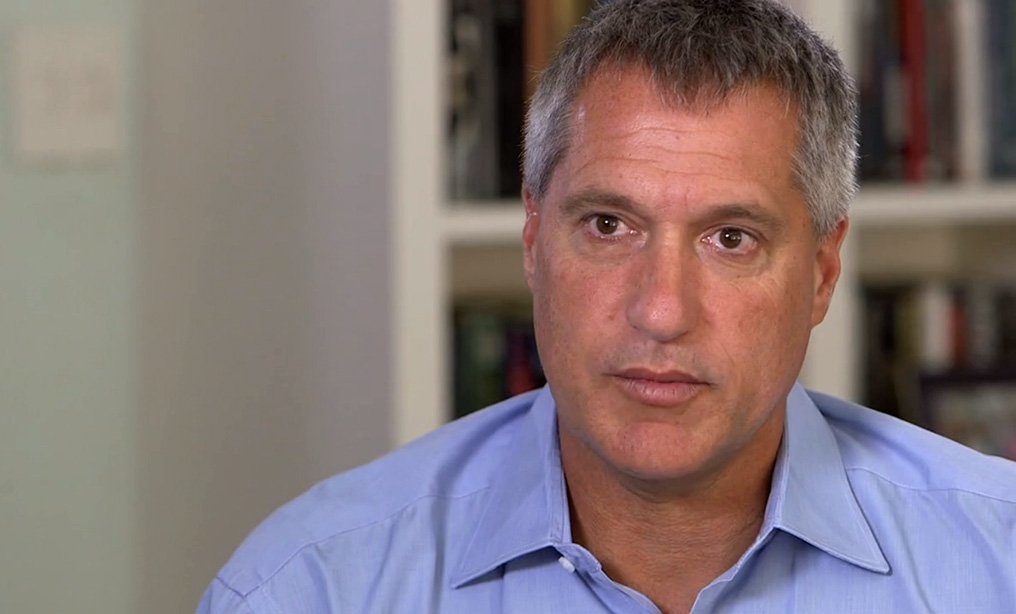
For more than two years, human rights lawyer Steven Donziger – currently serving the remainder of a six month sentence on house arrest – has been arbitrarily detained in apparent retaliation for his work to hold Chevron accountable for its deliberate dumping of more than 16 billion gallons of toxic oil waste into the Amazon rainforest. Despite repeated calls from human rights advocates and governmental authorities for Donziger’s release, the Department of Justice has refused to respond or take any action to remedy this human rights violation. Today, over 100 human rights and environmental organizations from around the world joined Amnesty International, Greenpeace USA, Amazon Watch, Global Witness, Rainforest Action Network, HEDA Resource Center, ReCommon, and the Pachamama Alliance to call on President Biden to exercise his clemency powers to pardon Steven Donziger as a way to ensure his immediate release.
In a letter to President Biden, the organizations state: “More than four months since a discerning opinion by the UN Working Group on Arbitrary Detention that found Steven Donziger’s detention to be arbitrary, U.S. judicial authorities have thus far failed to take any action to remedy the situation and implement the Working Group’s call to ensure Mr. Donziger’s immediate release.” See also: https://humanrightsdefenders.blog/2020/08/17/steven-donziger-speaks-out-himself-about-being-targetted-by-chevron
In a statement in October 2021, President Biden promised the U.S. would “stand in solidarity with, and continue to work tirelessly in support of, the activists, human rights defenders, and peaceful protestors on the front lines of the struggle between freedom and tyranny.”All the while, the administration has failed to side with the brave human rights defenders within the United States and respond to the demand of the U.N. Working Group on Arbitrary Detention, Congress, and the international community to free Steven Donziger.
“Steven Donziger is a human rights defender that bravely stood up against one of the most powerful corporations in the world,” said Daniel Joloy of Amnesty International. “In response, he has endured years of harassment, intimidation, smear campaigns and more than two years in arbitrary detention. President Biden must now listen to the over 100 human rights and environmental organizations calling to pardon Steven Donziger and ensure he is released immediately and unconditionally. Allowing this ordeal to continue only sends a chilling message that corporations around the world can continue attacking human rights defenders without consequences.”
Paul Paz y Miño of Amazon Watch said “Instead of supporting the people of Ecuador who were poisoned by Chevron’s admitted deliberate dumping of billions of gallons of toxic waste, Biden has turned a blind eye to the persecution of a key lawyer who worked to win a historic judgment against Chevron. The U.S. government’s responsibility should be to make Chevron clean up its waste and support efforts to hold the fossil fuel company accountable, not allow the appointment of a private prosecutor with ties to the very same oil company to imprison human rights lawyer Steven Donziger. This travesty has gone on for over two years, and Biden has ignored members of the E.U. parliament, members of the House and Senate, and even the United Nations High Commissioner for Human Rights. Well over 100 organizations are now demanding action, and Biden’s lack of action continues to be a dark stain on his alleged claims to respect human rights. Oil companies do not prosecute and imprison people in the U.S. This must end now.”
Chevron’s legal attack on Donziger is not the first, nor will it be the last case of its kind. Right now, the right to dissent is being repressed by both our government and corporations
Annie Leonard, co-Executive Director Greenpeace USA
Simon Taylor, Co-Founder & Director, Global Witness said “I have spent much of the past 25 years seeking accountability of the fossil fuel industry for its gross human rights abuses and other crimes. Amongst the judicial authorities we have liaised with during this time, the Southern District of New York has stood as a beacon in this fight against criminality. Shockingly, just as Biden gears up this struggle, New York’s judicial authorities seem instead intent on destroying their reputation, thanks to their apparent complicity in the unprecedented corporate prosecution and judicial harassment of Steven Donziger. These acts, in my experience, are more what I would expect from one of the ‘Banana Republics’ we have investigated around the world. These are shameful acts. If Biden is serious about tackling the climate crisis, he cannot allow the fossil fuel industry to weaponise the US judicial system to go after its detractors – Biden must act now and release Steven Donziger.”
NGOs express great worries about human rights situation in Russia at UN Human Rights Council
March 5, 2022UN Human Rights Council should take urgent action to address the dire human rights situation in Russia say NGOs in a Joint Letter to the United Nations Human Rights Council. See also: https://humanrightsdefenders.blog/2022/02/27/anti-war-human-rights-defenders-in-russia/
To Permanent Representatives of Member and Observer States of the United Nations (UN) Human Rights Council:
Excellency,
As the 49th session of the UN Human Rights Council gets underway, and Russia continues its invasion of Ukraine, we, the undersigned civil society organisations, would like to draw your attention to the dire human rights situation within the Russian Federation, and urge all states to bring this neglected country situation onto the agenda of the Human Rights Council.
A year after last year’s joint statement on the situation in Russia, authorities there have further intensified the already unprecedented crackdown on human rights. A fully-fledged witch hunt against independent groups, human rights defenders, media outlets and journalists, and political opposition, is decimating civil society and forcing many into exile.
The gravity of this human rights crisis has been demonstrated in the last few days by the forcible dispersal of anti-war rallies and pickets across Russia with over 6,800 arrested (as of 2 March 2022), attempts to impose censorship on the reporting of the conflict in Ukraine and to silence those media and individuals who speak out against Russia’s invasion of Ukraine, including through blocking media websites, threats of criminal prosecution under “fake news” and “high treason” charges and other means.
In a shocking development, the authorities moved to shut down “Memorial,” one of the country’s most authoritative human rights organizations. At the end of December, courts ruled to “liquidate” the group’s key legal entities, International Memorial Society and Human Rights Center Memorial, over alleged persistent noncompliance with the repressive legislation on “foreign agents.” On 28 February, the Supreme Court upheld this decision, despite an article 39 ruling from the European Court of Human Rights ordering the Russian authorities to halt liquidation proceedings.
The December rulings came at the end of a particularly terrible year for human rights in the country, during which authorities threw top opposition figure Alexei Navalny in prison, banned three organizations affiliated with him as “extremist,” launched criminal proceedings against several of his close associates, doubled down on Internet censorship, and designated more than 100 journalists and activists as “media-foreign agents”.
Recent months also saw a dramatic escalation of repression in Chechnya, where Russian law and international human rights obligations have been emptied of meaning. With the Kremlin’s tolerance or acquiescence, the local governor, Ramzan Kadyrov has been eviscerating all forms of dissent in Chechnya, often using collective punishment. In December 2021, Kadyrov opened a brutal offensive against his critics in the Chechen diaspora, by having the police arbitrarily detain dozens of their Chechnya-based relatives. It continued in January with the abduction and arbitrary detention on fabricated charges of Zarema Musaeva, mother of human rights lawyer Abubakar Yangulbaev, and death threats issued against the Yangulbaev family and some prominent human rights defenders and journalists.
This is a country situation urgently requiring the Council’s attention. We urge the Human Rights Council to adopt a resolution expressing serious concern about the human rights violations and abuses occurring in Russia, requesting the High Commissioner to monitor and report on the situation, and appointing a dedicated Special Rapporteur to address the human rights situation in Russia.
Yours sincerely,
Signed:
- Human Rights Watch
- Amnesty International
- Human Rights House Foundation
- International Federation for Human Rights
- International Service for Human Rights
- Human Rights Centre Memorial (Russia)
- Civic Assistance Committee (Russia)
There was also a statement was delivered by Yulian Kondur and the International Charitable Organization Roma Women Fund ‘Chiricli’ in the name of Minority Rights Group (MRG) and other organizations at the Human Rights Council’s Urgent Debate, held on Friday 4 March 2022, on the situation of human rights in Ukraine stemming from the Russian Aggression. They called on authorities and aid actors to ensure that Roma, minorities and marginalised peoples are granted equal access to protection and safety when seeking refuge, including those without identity documentation.
Campaign to free Chinese human rights lawyer Yu Wensheng
February 17, 2022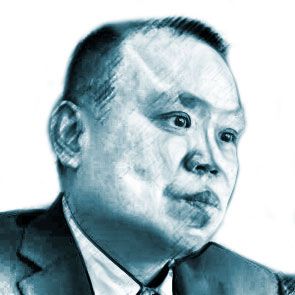
ISHR, the Martin Ennals Foundation and eight other major human rights groups urge in a joint statement the Chinese government to ensure lawyer Yu Wensheng is able to leave Nanjing Prison on March 1st, and freely reunite with his family in Beijing.
The signatory organisations also called in the joint statement for sustained attention on the growing risks and threats his wife, Xu Yan, faces for advocating for his rights and release.
A Laureate of the 2021 Martin Ennals Award, Yu Wensheng is a leading figure among human rights lawyers in China. He has fearlessly taken on a number of sensitive cases and issues, joining litigations on air pollution advocating for a constitutional government. See also: https://www.trueheroesfilms.org/thedigest/laureates/69fc7057-b583-40c3-b6fa-b8603531248e
For this, the authorities revoked his legal license on 16 January, 2018. Three days later, he was forcibly disappeared, a day after publishing an open letter calling for constitutional reform. He was put on trial in secret on 9 May 2019, but his wife, Xu Yan, was only informed of his four-years jail sentence in June 2020.
Yu Wensheng is expected to leave prison in Nanjing on 1 March 2022, after being detained for 50 months, which should mark the end of his sentence for ‘inciting subversion of State power’. As early as May 2019, UN experts concluded his detention was arbitrary and called on the government to release him. Ever since, a number of government and UN experts have called for his release.
The signatories of the joint statement express grave concern that Yu Wensheng may be put under a de facto home arrest, severely restricted in his movements and communication, and unable to reunite with his family in Beijing.
Human rights lawyers have endured such restrictions upon leaving prison on grounds of a supplemental sentence of ‘deprivation of political rights’, in a phenomenon known as ‘non-release release’. In September 2019, UN experts condemned the use of this practice against lawyer Jiang Tianyong as ‘gratuitously punitive and legally unjustified’.
IThe signatory organisations urge the Chinese authorities to:
- Ensure that Yu Wensheng is able to reunite with his family in Beijing on 1 March, to exercise his rights to move and communicate freely, and that he is not subjected to surveillance and harassment. He must also be able to resume his legal work without restrictions;
- Put an end to the surveillance and harassment of Yu Wensheng’s family;
- Guarantee in all circumstances that all lawyers in China, including human rights lawyers, are able to carry out their legitimate professional duties without fear of reprisals and free of restrictions.
You can add your own voice by filling out the form in: https://ishr.ch/latest-updates/on-march-1st-chinese-lawyer-yu-wensheng-must-be-fully-free/
Read the full statement https://ishr.ch/wp-content/uploads/2022/02/Joint-NGO-statement-on-YWS_English-1.pdf
https://mailchi.mp/ishr/749qlxejj6-33409?e=d1945ebb90
Anti-terror laws in India keep being used against human rights defenders
January 28, 2022On 26 January 2022 four major NGOs made a strong joint statement on India:
We, the undersigned civil society organizations, are deeply concerned about the ongoing harassment of 18 human rights defenders under the Unlawful Activities (Prevention) Act (UAPA) in reprisal for their advocacy work against the Citizenship (Amendment) Act (CAA) 2019. Thirteen of those arrested under the UAPA are currently in Rohini, Tihar, and Mandoli jails, New Delhi. We call for the immediate and unconditional release of all the human rights defenders arrested, and the dismissal of all charges against them.
The CAA has been widely criticized by activists, human rights defenders, civil society organizations, students and the international community for being openly sectarian and discriminatory against Muslims. After the CAA’s adoption, protesters across the country took the street to voice their concerns against the legislation, which goes against India’s Constitutional principles of secularism and equality. Police authorities responded by arresting human rights defenders and activists who spoke up against the CAA. Most of them were student activists and human rights defenders from the minority Muslim community.
The arrests of human rights defenders began in February 2020 and are still ongoing. Many of them had multiple First Information Reports (FIR) registered against them and were charged with serious offenses, including under UAPA. Of those arrested, only five human rights defenders – Natasha Narwal, Devangana Kalita, Safoora Zargar, Asif Iqbal Tanha, and Md. Faizan Khan – were released on bail. Thirteen others – Sharjeel Imam, Umar Khalid, Khalid Saifi, Tahir Hussain, Saleem Malik, Mohd. Saleem Khan, Meeran Haider, Shadab Ahmed, Tasleem Ahmed, Shifa Ur Rehman, Athar Khan, and women human rights defenders Ishrat Jahan and Gulfisha Fatima– remain in jail. Despite prolonged incarceration, the trial for their case has not commenced yet.
See also: https://humanrightsdefenders.blog/2020/06/01/eu-human-rights-committee-condemns-indias-arrest-of-human-rights-defenders/ and https://humanrightsdefenders.blog/2020/06/27/un-experts-address-3-big-ones-usa-china-and-india/
On 24 January 2022, a Delhi court framed charges against human rights defender Sharjeel Imam while rejecting his application for bail. The charges include Sections 124A (“sedition”), 153A (“promoting enmity between different groups on grounds of religion), 153B (“imputations, assertions prejudicial to national integration”), 505 (“statements conducing to public mischief”), along with Section 13 (“punishment for unlawful activities”) of the UAPA.
Khalid Saifi, Ishrat Jahan, and Gulfisha Fatima have reported custodial violence and torture by the Delhi police. There has been no effective investigations into these allegations or responsibility taken for their treatment. Shifa Ur Rehman, who has been in detention since 26 April 2020, suffers from severe kidney disease and has been denied access to adequate medical care in prison.
We express our deep concern over the harassment and arbitrary detention of human rights defenders that appear to be in retaliation to their peaceful activism and the legitimate expression of dissent against a discriminatory law. Despite the risks, human rights defenders have raised their voice for those oppressed by the CAA and in support of the Constitutional values that represent India.
We call on the Indian authorities to protect those defending human rights values and principles enshrined in national laws and to uphold international human rights commitments. We stand in solidarity with those who cannot speak out due to their incarceration, threats by Indian authorities, or due to a prevailing sense of fear. The treatment of these human rights defenders highlights a pattern of perpetrated abuse and violence, which is also exerted through legal mechanisms. This is especially concerning given India’s membership in the United Nations Human Rights Council and its pledge to preserve and protect human rights.
We urge the relevant authorities in India to:
1. Immediately and unconditionally release all human rights defenders arrested for protesting against the CAA, dismiss all charges, and cease all forms of harassment against them.
2. Guarantee under all circumstances that the arrested human rights defenders are not subjected to any form of torture and other ill-treatment while in police custody, and guarantee their access to adequate medical care and treatment.
3. Initiate a thorough judicial review of the Unlawful Activities (Prevention) Act and the Citizenship (Amendment) Act in genuine consultation with independent civil society organizations and human rights defenders, with a view to aligning these laws with India’s obligations under international human rights law.
4. Guarantee in all circumstances that all human rights defenders in India are able to carry out their legitimate human rights activities without fear of reprisals, and free of all restrictions—including police and judicial harassment.
Please inform us of any actions that may be taken with regard to the above case.
-FIDH
· Civicus:
· Front Line Defenders
· World Organisation Against Torture (OMCT)
Iranian dissident Poet Baktash Abtin dies of Covid in arbitrary detention
January 10, 2022On 8 January 2022 the Iranian poet Baktash Abtin died in Tehran after contracting COVID-19 in Evin Prison. Abtin, who died after being put into an induced coma while hospitalized, is the second known political prisoner to die in Iran in the first week of 2022. On January 1, Kian Adelpour died after going on hunger strike to protest being imprisoned without a fair trial.
“This is a preventable tragedy and more prisoners’ deaths are inevitable because there is no accountability in the Iranian government,” said Hadi Ghaemi, executive director of the Center for Human Rights in Iran (CHRI). “Abtin was imprisoned in Iran because the government wanted to muzzle him with a jail cell; the state killed him.” Abtin had been serving a five-year prison sentence on the charge of “assembly and collusion against national security.”
A group of main NGOs had addressed a joint letter to Ayatollah Ali Hosseini Khamenei on 7 January repeating their call that Abtin be given access to the best possible medical care as he battles for his life. In addition, we urge that: he and all those unjustly detained for their writing or expression be immediately and unconditionally released; that authorities refrain from summoning political prisoners to serve their sentences while the conditions inside Evin and other Iranian prisons remain unsafe; and that any who do contract COVID-19 or other serious illnesses while in jail be granted speedy access to all needed medical care or a medical parole on humanitarian grounds.
While offering condolences to Abtin’s family and friends, the Iranian Writers Association (IWA) where Abtin, 48, was a board member, released a statement on January 8 on the “injustice that was committed against Abtin”: “Baktash Abtin is alive because the spirit of freedom-seeking and the fight against tyranny and injustice is alive,” said the statement.
Fellow IWA board member Reza Khandan Mahabadi was also sentenced to five years in prison and Keyvan Bajan to three years and six months. An international chorus has condemned the IWA writers’ imprisonment, with dozens of high-profile writers and artistic figures including Nobel laureates calling for the writers’ acquittal.
At least 11 writers are known to be either currently imprisoned or living with an unserved prison sentence hanging over their heads in Iran as they await an appeal or to be summoned to jail, according to a list compiled by CHRI.
In an interview with CHRI in May 2019 after his trial, Abtin forcefully said the charge of “assembly and collusion against national security” was for statements published by the IWA, articles in the organization’s internal newsletter, and holding memorial ceremonies for IWA members Mohammad Mokhtari and Mohammad Jafar Pouyandeh, who were murdered in 1998 as part of a concerted state policy to eliminate political and cultural dissidents inside and outside of Iran.
“Nowhere in the world is it necessary to get a permit to gather around someone’s grave,” Abtin told CHRI. “But that’s what we’ve been charged with.”
https://www.hrw.org/news/2022/01/07/joint-ngo-letter-khamenei-baktash-abtins-condition
Harassment of Adilur Rahman Khan and other Human Rights Defenders in Bangladesh
December 21, 2021On 14 December 2021 a Statement “Bangladesh: Stop Harassment of Human Rights Defenders” was published by Forum Asia, FIDH and other NGOs: “Bangladesh authorities must end the harassment of Adilur Rahman Khan and ASM Nasiruddin Elan, respectively Secretary and Director of the human rights group Odhikar, who have been targeted through the misuse of the criminal justice system”, eleven rights groups said.

On December 15, 2021, the Cyber Tribunal of Dhaka will continue the examination of prosecution witnesses in the case brought against Adilur Rahman Khan, also a member of OMCT General Assembly and FIDH Secretary-General, and ASM Nasiruddin Elan, for charges brought against them in Case No. 1 of 2013 under the notorious Section 57 of the Information and Communication Technology (ICT) Act, 2006 (amended in 2009), in relation to a fact-finding report issued by Odhikar on the killing of at least 61 people by security forces and law-enforcement agencies in May 2013. Khan and Elan face up to ten years in prison. See also; https://www.trueheroesfilms.org/thedigest/laureates/88F17E2F-F919-580F-2FDA-59B8E24ACBF6
“The government should stop using vague laws to silence human rights defenders and start holding perpetrators of abuses to account, ” said Kerry Kennedy, President of Robert F. Kennedy Human Rights. “Odhikar’s findings not only should have led to investigations and reforms, but also should have been welcomed by the government as an opportunity to strengthen their commitment to upholding human rights.”
Following Odhikar’s 2013 report, Khan and Elan were arbitrarily detained for respectively 62 and 25 days until they were both released on bail. On February 14, 2021, the Appellate Division of the Supreme Court of Bangladesh rejected Odhikar’s appeal to quash the case on its legal merits. On September 12, 2021, the Cyber Tribunal of Dhaka resumed the trial in the case against the two while their review petition is still pending hearing before the Appellate Division of the Supreme Court, contravening the right to a fair trial. On October 5, November 9, and November 24, 2021, the Cyber Tribunal of Dhaka started to examine prosecution witnesses in the case.
We express our deepest concern over the ongoing harassment of Adilur Rahman Khan and ASM Nasiruddin Elan, which is manifestly a form of reprisals against Odhikar for their legitimate human rights work, including for cooperating with UN human rights mechanisms in documenting enforced disappearances, extra-judicial executions and torture in Bangladesh.
It is further a matter of great concern that since 2013, attacks, unlawful surveillance, smear campaigns and harassment against Odhikar and its staff and management have been incessant. Odhikar is also facing serious difficulties to conduct its work due to violations of the right to freedom of association, since its registration has not been renewed by the NGO Affairs Bureau of the Government of Bangladesh and is still pending since 2015. Moreover, all of its bank accounts have been frozen and the organization has been forbidden from receiving funding from foreign or international sources, impacting its operations considerably.
The trial against Khan and Elan resumes in a context where human rights in Bangladesh are under attack from all sides. Human rights violations committed by security forces, including enforced disappearances, extrajudicial executions, and torture remain pervasive throughout the country, with absolute impunity. Authorities regularly crackdown on human rights defenders and journalists who speak out against these violations, including through the use of the Digital Security Act – 2018, the Special Powers Act – 1974, and other draconian laws. See also: https://humanrightsdefenders.blog/2014/12/02/adilur-rahman-khan-speaks-out-against-torture/
Cases such as these question the Bangladeshi government’s commitment to protecting human rights. The international community, including the United Nations and the diplomatic corps in Bangladesh, should monitor the case against Adilur Rahman Khan and ASM Nasiruddin Elan and take a clear stand to ensure that the government of Bangladesh respects the rights of the two defenders to a fair and public trial and, more generally, guarantees the right to defend human rights and puts an end to all acts of harassment against all human rights defenders in Bangladesh.
Our organisations call on the authorities of Bangladesh to immediately and unconditionally drop all charges against Adilur Rahman Khan and ASM Nasiruddin Elan, and to ensure in all circumstances that human rights defenders in Bangladesh are able to carry out their legitimate activities without any hindrance and fear of reprisals.
“This trial is in reality an indictment of the authorities and a crucial test case for the country’s judiciary to be closely watched by the international community,” said Gerald Staberock, OMCT Secretary General, speaking on behalf of the Observatory. “The true culprits are those responsible for extra-judicial killings not those who report on it. Prosecuting human rights activists will not stifle dissent but will isolate Bangladesh from the international community.”
The NGOs:
Amnesty International
Anti-Death Penalty Asia Network (ADPAN),
Asian Human Rights Commission (AHRC),
Asian Network for Free Elections
Capital Punishment Justice Project (CPJP)
CIVICUS: World Alliance for Citizen Participation,
Eleos Justice, Monash University, Associate Professor
FIDH, within the framework of the Observatory for the Protection of Human Rights Defenders, i
FORUM-ASIA
Robert F. Kennedy Human Rights
World Organisation Against Torture (OMCT), within the framework of the Observatory for the Protection of Human Rights Defenders
TODAY: International Day for the Elimination of Violence against Women,
November 25, 2021Women and girls everywhere continue to be subjected to multiple forms of gender-based violence, including femicide, online violence and domestic violence, UN and regional experts (for impressive list see below) said today. They call on States to exercise due diligence and to fight pushbacks on gender equality.
On the International Day for the Elimination of Violence against Women, they issue the following statement: [see also: https://humanrightsdefenders.blog/2019/11/19/16-days-of-activism-against-gender-based-violence-start-on-25-november-2019/]
“Although they represent more than half the world’s population, women and girls the world over are still at risk of being killed and subject to violence, intimidation and harassment when they speak out – for the simple fact of being women and girls. Violence against women and girls is the result of intersectional forms of social, political, economic, racial, caste and cultural discrimination perpetrated daily against women and girls in all of their diversity, including in the context of armed conflict, and States and the international community have the obligation mandated by international human rights law and standards to address this violence. Together, these forms of discrimination not only aggravate the intensity and frequency of violence but also sharpen the impunity that exists against it and increase societal and individual readiness to allow it.
Of particular concern is the fact that not only women and girls continue to be subjected to multiple manifestations of violence but that the spaces where this violence takes place have also multiplied. Nowhere is this more apparent than within online spaces, including social media. Governments, private companies and others may seek to hide their responsibilities behind the seemingly “borderless” nature of the internet. But human rights are universal and, as such, there is one human rights regime that protects the rights of women and girls offline as well as online, and that demands zero tolerance for violence against women and girls in the digital space. Violence against women and girls flourishes because those who seek to silence women and girls and facilitate their exploitation, abuse, maiming and killing are not firmly prevented from and held accountable for their actions.
It is unacceptable that in today’s world where humanity and life on this planet faces the existential threats of climate change and toxic pollution amidst a proliferation of conflict; the COVID-19 pandemic has killed at least 5 million people and infected at least 250 million worldwide in less than two years, also causing an increase in domestic violence against women, that women and girls are unable to participate fully in responding to these threats or in the search for solutions because they are discriminated, abused and continue to suffer violence, including sexual violence, exploitation and death on the basis of their sex, gender, sexual orientation and gender identity. These global crises interact with and further deepen pre-existing inequalities as well as legal, institutional and policy gaps to eliminate gender-based violence against women and girls, which in many cases, worsen them. Indigenous women, internally displaced women, women with disabilities, lesbian and transgender women and women belonging to other vulnerable or marginalized groups are particularly affected by the failure of these policies to prevent such violence, as well as protect and assist survivors.
While a number of States, non-state actors and other stakeholders have stepped up their interventions and resource allocations to prevent and respond to gender-based violence against women and girls, more effort in terms of both financial and non-financial interventions is needed to make these approaches truly transformative, particularly with regards to prevention, to avoid that policies remain ‘gender blind’, ‘gender exploitative’ or ‘race neutral’. Many of these policies do not disaggregate data based on social and racial constructs which discriminate, marginalize, exclude, and violate women and girls. These policies need to transform the prevailing social, economic and political systems that produce, nurture, and maintain gender inequality and drive violence against women and girls everywhere, through increased investment in their education and skills development, access to information, social services and financial resources, and support for positive representation and images in public discourse and social media. Collectively, they need to do more to challenge the patriarchal social norms and constructs of masculinity, femininity, racism and casteism that are based on extremely harmful stereotypes and which can cause psychological, physical, emotional and economical harm, including for women of colour, including those of African descent. These stereotypes pervade state institutions as evidenced by the lack of accountability for many cases before law enforcement and justice systems. States must also ensure access to comprehensive physical and mental care for survivors of gender-based violence, as part of the full range of quality sexual and reproductive health care that must be available for all.
Collective effort is required to stop the reversal of progress made in ending violence against women across the world and to counter the backlash against gender equality and the tenets of human rights-based legislation and governance. Those responsible for these regressive steps often begin by attempts to co-opt the justice system, change or issue new legislation and curtail fundamental rights and freedoms for women and girls, such as their freedom of thought, expression and association, their right to peaceful assembly, freedom of association, freedom of thought and, in particular, their sexual and reproductive rights. All human rights are inalienable, interdependent and exist without a hierarchy, despite the efforts of some actors to sacrifice some of these rights at the expense of others, often in the name of their own cultural or religious norms and their particular perception of societal harmony.
Women and girls around the world need to be heard; their voices should not be silenced nor their experiences go unnoticed. Women will never gain their dignity until their human rights are protected. Women’s rights are human rights. Women and girls’ agency and participation in all processes that affect their rights and lives need to be promoted and protected at all costs. States should ensure and create an enabling environment for women to exercise their fundamental freedoms of expression, association, peaceful assembly and public participation free from intimidation and attacks. States must exercise their due diligence obligation and protect women human rights defenders, activists and women’s organizations who are regularly harassed, intimidated and subjected to violence for defending their rights and promoting equality. The level and frequency of violence against them should raise alarm bells everywhere. It is, and should be, a public policy and a human rights priority.
If we want to gauge the underlying health, security and prosperity of a society, we all need to address our duty to play a part in the respect and furtherance of women and girls’ rights. There will be no prosperity without ending violence against women and girls in the public as well as in the private sphere.
There will be no ending of violence against women and girls if we don’t recognize and protect the dignity, rights and security of women and girls everywhere and at all times.” ENDS
*The experts:
Platform of independent expert mechanisms on the elimination of discrimination and violence against women (EDVAW Platform): Reem Alsalem*, Special Rapporteur on violence against women, its causes and consequences; ****Melissa Upreti ****(Chair), **Dorothy Estrada Tanck **(Vice-Chair), Elizabeth Broderick, Ivana Radačić, and **Meskerem Geset Techane, ***Working Group on discrimination against women and girls*; ****Gladys Acosta Vargas, ***Chairperson of the UN Committee on the Elimination of Discrimination against Women;* Margarette May Macaulay******, ****Rapporteur on the Rights of Women of the Inter-American Commission on Human Rights**; Iris Luarasi, President of the Group of Experts on Action against Violence against Women and Domestic Violence of the Council of Europe; Tatiana Rein Venegas**, President of the* Committee of Experts of the Follow-up Mechanism to the Belém do Pará Convention*; Maria Teresa Manuela, Special Rapporteur on the Rights of Women in Africa.*
Obiora Okafor*, Independent Expert on human rights and international solidarity; Javaid Rehman, Special Rapporteur on the situation of human rights in the Islamic Republic of Iran; Fabian Salvioli, Special Rapporteur on the promotion of truth, justice, reparation and guarantees of non-recurrence; Marcos A. Orellana, Special Rapporteur on the implications for human rights of the environmentally sound management and disposal of hazardous substances and wastes; Francisco Cali Tzay, Special Rapporteur on the rights of indigenous peoples; Vitit Muntarbhorn,*Special Rapporteur on the situation of human rights in Cambodia*; Mama Fatima Singhateh, Special Rapporteur on the sale and sexual exploitation of children; Mary Lawlor, Special Rapporteur on the situation of human rights defenders; **Victor Madrigal-Borloz, ***Independent Expert on Protection against violence and discrimination based on sexual orientation and gender identity*; ****Alioune Tine****, Independent Expert on the situation of human rights in Mali; **Sorcha MacLeod (Chair-Rapporteur), Jelena Aparac, Ravindran Daniel, Chris Kwaja, ***Working Group on the use of mercenaries*; Gerard Quinn****, ****Special Rapporteur on the rights of persons with disabilities*; Livingstone Sewanyana*, Independent Expert on the promotion of a democratic and equitable international order; ****Fionnuala Ní Aoláin****, Special Rapporteur on the promotion and protection of human rights while countering terrorism; Cecilia Jimenez-Damary, Special Rapporteur on the human rights of internally displaced persons;** Saad Alfarargi, Special Rapporteur on the right to development; **Tomoya Obokata, Special Rapporteur on contemporary forms of slavery, including its causes and consequences; Fernand de Varennes****, Special Rapporteur on minority issues; Yao Agbetse, Independent Expert on the situation of Human Rights in the Central African Republic; **Nils Melzer, ***Special Rapporteur on torture and other cruel, inhuman or degrading treatment or punishment*; Felipe González Morales, Special Rapporteur on the human rights of migrants; Balakrishnan Rajagopal, Special Rapporteur on the right to adequate housing; Tlaleng Mofokeng, Special Rapporteur on the right to health; Attiya Waris, Independent Expert on debt, other international financial obligations and human rights; Pedro Arrojo Agudo, Special Rapporteur on the human rights to safe drinking water and sanitation;****Elina Steinerte**** (Chair-Rapporteur), ****Ms. Miriam Estrada-Castillo**** (Vice-Chair), ****Ms. Leigh Toomey****, ****Mr. Mumba Malila****, ****Ms. Priya Gopalan****, Working Group on arbitrary detention;** Michael Fakhri, Special Rapporteur on the right to food; Ahmed Shaheed, Special Rapporteur on freedom of religion or belief; Muluka Anne Miti-Drummond,Independent Expert on the enjoyment of human rights by persons with albinism; Siobhán Mullally, Special Rapporteur on trafficking in persons, especially women and children; Clément Nyaletsossi Voule, Special Rapporteur on the rights to freedom of peaceful assembly and of association**; **Isha Dyfan, ***Independent Expert on the situation of human rights in Somalia* ; ****Luciano Hazan (****Chair-Rapporteur),**** Aua Balde ****(Vice-Chair),**** Gabriella Citroni, Henrikas Mickevicius**** and ****Tae-Ung Baik, ***Working Group on Enforced or Involuntary Disappearances*; ****Alexandra Xanthaki, ***Special Rapporteur in the field of cultural rights;* **Morris Tidball-Binz ***Special Rapporteur on extrajudicial, summary or arbitrary executions*; Anais Marin, Special rapporteur on the situation of human rights in Belarus; Surya Deva (Chairperson), Elżbieta Karska (Vice-Chairperson), Githu Muigai, Fernanda Hopenhaym, and Anita Ramasastry, Working Group on Business and Human Rights; David Boyd, Special Rapporteur on human rights and the environment; Ms. Dominique Day (Chair), Ms. **Catherine S. Namakula (Vice-Chair), Ms. Miriam Ekiudoko,** Mr. Sushil Raj, Ms. Barbara G. Reynolds Working Group of Experts on People of African Descent; **Irene Khan, ***Special Rapporteur on the right to freedom of opinion and expression.
See also:
Joint Statement on the Sentencing of Two Members of Human Rights Group Viasna in Belarus
November 5, 2021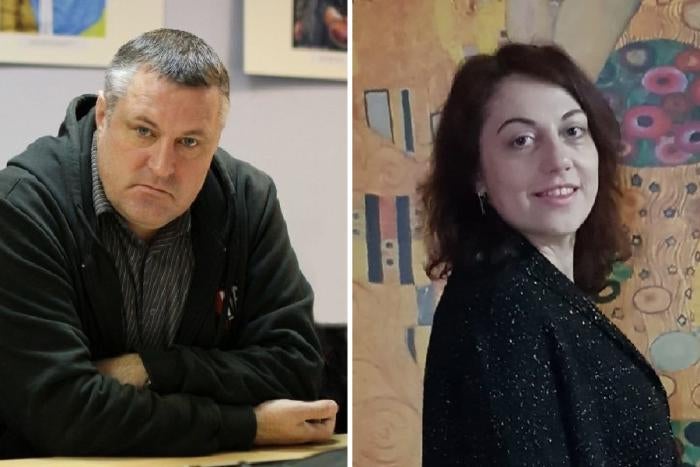
On Wednesday, November 3, the Centraĺny District Court in Homieĺ delivered the verdict in the politically motivated criminal case against two human rights defenders with the Homieĺ branch of Viasna, a leading Belarusian human rights group. The court sentenced the head of Viasna’s Homieĺ office Leanid Sudalenka and Viasna’s volunteer Tatsiana Lasitsa to three and two and a half years in prison, respectively.
18 international and Belarusian organizations call on Belarusian authorities to immediately annul the outrageous verdict and drop all charges against Sudalenka and Lasitsa, as well as five other members of Viasna who are currently in jail on politically motivated charges.
“Politically motivated prosecutions of Viasna members and volunteers are part of the ‘purge’ of Belarusian civil society declared by Aliaksandr Lukashenka and his government. Belarusian authorities’ targeting of Viasna in particular is no doubt designed to punish the organization for its outstanding and courageous human rights work over the course of 25 years.”
On October 14, the prosecutor’s office requested three years’ imprisonment for Sudalenka and Lasitsa on charges of “organizing, financing, training, and preparation of actions grossly violating public order and financing such activities.” The charges were backed by absurd “evidence,” such as Sudalenka’s Facebook post offering to buy firewood for the family of someone accused of “mass rioting” in connection with the peaceful protests of 2020.
Sudalenka and Lasitsa have been in pretrial detention for over nine months, having been arrested on January 18 and 21, respectively. Their trial began in early September and was held behind closed doors.
See also: https://humanrightsdefenders.blog/2021/10/27/crackdown-on-human-rights-lawyers-in-belarus-continues/
On January 18, authorities also detained Viasna’s volunteer Maryia Tarasenka in connection to Sudalenka and Lasitsa’s case. She was released under her own recognizance three days after the arrest. Tarasenka left Belarus after prosecutor’s office requested two and a half years imprisonment for her in October.
The other five Viasna members currently behind bars on politically motivated criminal charges are Ales Bialiatski, the founder and chairman of Viasna, Valiantsin Stefanovic, Viasna deputy chairman, Uladzimir Labkovich, a lawyer and coordinator of the group’s campaign “Human rights defenders for free elections,” Marfa Rabkova, coordinator of Viasna’s network of volunteers, and Andrei Chapyuk, a volunteer for Viasna in Minsk.
Around 100 Viasna human rights defenders and volunteers, as well as their family members, have also been interrogated and designated witnesses in criminal cases against their colleagues. At least seven have been designated suspects.
Belarusian law enforcement continues regular interrogations in connection with the criminal cases against Viasna employees, including activists of other civil groups and initiatives.
On September 17, 23 international and Belarusian human rights groups launched a campaign #FreeViasna, demanding the immediate release of the jailed Viasna human rights defenders. We continue calling on the Belarusian authorities to:
- Fully abide by their international human rights obligations as a party to the International Covenant on Civil and Political Rights to respect the rights to freedom of association, peaceful assembly, and expression of all people in Belarus.
- Fully respect the work of human rights defenders and lawyers and ensure that everyone can complain without fear of retaliation about actions and policies of individual officials and governmental agencies.
- In line with these obligations, release Tatsiana Lasitsa, Leanid Sudalenka, Ales Bialatski, Valiantsin Stefanovic, Uladzimir Labkovich, Marfa Rabkova and Andrei Chapyuk immediately, drop all charges against Viasna staff and volunteers, including Maryia Tarasenka, and other human rights defenders, and ensure their right to a remedy for arbitrary detention and malicious prosecution.
Also woth mentioning is that on 4 November 2021 in response to the Belarusian authorities’ failure to respond satisfactorily to the 5 November 2020 Moscow Mechanism report, 35 OSCE states invoked the Vienna (Human Dimension) Mechanism and Belarus’ commitments under that Mechanism.
Signed:
Amnesty International
Article 19
Barys Zvozskau Belarusian Human Rights House
Belarusian Helsinki Committee
Center for Civil Liberties
Civil Rights Defenders
FIDH, within the framework of the Observatory for the Protection of Human Rights Defenders
Front Line Defenders
Helsinki Foundation for Human Rights
Human Rights Center Viasna
Human Rights House Foundation
Human Rights Watch
International Partnership for Human Rights
Libereco – Partnership for Human Rights
Norwegian Helsinki Committee
Östgruppen – Swedish Initiative for Democracy and Human Rights
Right Livelihood
World Organisation Against Torture (OMCT), within the framework of the Observatory for the Protection of Human Rights Defenders
https://www.rferl.org/a/belarus-lawyer-sudalenka-jailed/31544089.html
 Hans Thoolen on Human Rights Defenders and their awards