Posts Tagged ‘ISHR’

NGO Forum preceding the April session of African Commission on Human and Peoples’ Rights

April 22, 2015

ISHR-logo-colour-highpublished on 21 April “KUMULIKA – THE AFRICAN COMMISSION MONITOR” which describes the NGO Forum that was held from 17-19 April prior to the 56th ordinary session of the African Commission on Human and Peoples’ Rights (ACHPR). It involved close to 200 civil society participants from the continent. As usual. the NGO Forum followed the practice of holding a series of panel discussions combined with smaller special interest discussion groups, over the course of which recommendations and resolutions were developed to put to the Commission at the upcoming session. You can find more detail in that Newsletter but some key elements are:

Read the rest of this entry »

Joint Inspection Unit on human rights: not so innocent as it sounds

April 7, 2015

In a long but excellent post in Universal Rights of 23 March 2015, Subhas Gujadhur and Marc Limon dissect the issue of the Joint Inspection Unit‘s [JIU] report at the 28th session of the UN Human Rights Council (2 – 27 March) under the title: “The JIU report: what’s all the fuss about?”.

The background in short is that for years a number of countries – not by coincidence those that do not like the sometimes rather forthright pronouncements by the Office of the UN High Commissioner for Human Rights -have tried to get more ‘control’ over its management and resources. They are in fact using the ‘backdoor’ of the UN inspection unit to get there.

This is a very important issue but one that is too much cloaked in UN jargon to make it to mainstream media. In the words of the authors:  “Casual observers of the Human Rights Council may have been forgiven.. for a degree of bafflement at repeated and sometimes quite excitable references to a three letter acronym: JIU.

So let me quote liberally from the post in question:

The report on the ‘review of management and administration’ of the OHCHR [JIU/REP/2014/7] was produced by the JIU in response to a request by the Human Rights Council in March 2013 (resolution 22/2) and the report’s author, Mr. Gopinathan Achamkulangare, hoped to be able to present is to the Council at is 28th session.

This may all seem innocuous enough. However, resolution 22/2 and the JIU report touch upon fundamental and extremely sensitive questions about the role, prerogatives and independence of OHCHR, and its relationship with the member states of the Council; and are part of a long-running struggle between two groups of states with very different views on what OHCHR is, what it is there to do, and how it’s work should be overseen.

Council resolution 22/2 (adopted by a vote, with developed countries against and developing countries in favour) requested the JIU to ‘undertake a comprehensive follow up review of the management and administration of the Office of the High Commissioner for Human Rights (OHCHR), in particular with regard to its impact on the recruitment policies and composition of the staff.’ This resolution, like many previous ones with the same title, was pushed by Cuba and others in the belief that the staffing policies of the OHCHR favoured individuals from some regions (notably the West) over others.

In Cuba’s view, OHCHR had continuously failed to improve regional balance among its staff and thus, in order to strengthen accountability; it was asked to report and explain itself to the Council.

However, to others – especially Western states – asking the OHCHR to report to the Council on an administrative issue represented a worrying step towards making this supposedly independent entity answerable – and thus under the political oversight of – states sitting in the UN’s apex human rights intergovernmental body.

Similar differences of opinion have arisen, since the Council’s establishment in 2006, with regard to the financial resources of the OHCHR. Cuba and other developing countries have regularly expressed concern about where the Office’s money comes from (the UN’s regular budget or voluntary contributions from certain states), and how it is used and allocated (e.g. to certain field operations, to certain Special Procedures mandates). These concerns led Cuba and others to circulate a resolution in 2011, calling for greater financial transparency – though this was subsequently replaced by a Presidential Statement merely inviting the High Commissioner to provide more information on funding.

Central to the concerns of Cuba and others on both issues is a suspicion that the high proportion of individuals from Western states working at the Office (including at senior levels) together with Western financial support (especially where that support is ‘earmarked’ for certain purposes), gives the West undue influence over the OHCHR.

For its part, Western states, together with a number of states from other regions, suspect that Cuba and other leading countries of the Like Minded Group are intent on undermining the independence of the Office and bringing it under the political control of the Council (and thereby seeking to stop OHCHR criticism of states’ human rights records).

It should also be noted that the main author of the report is Mr. Gopinathan Achamkulangare, a former Ambassador of India to the Human Rights Council, who took position in the debates favoring the prerogatives of the Council over the OHCHR.

The report (more detail in the post itself) makes six recommendations:

  1. The GA should initiate an action-oriented review of the governance arrangements of the OHCHR through an open-ended working group/ad hoc committee […] so as to strengthen the capacity of member states to provide strategic guidance and to direct and monitor the work of OHCHR.
  2. The High Commissioner should update the existing action plan with specific measures, targets and timetables to broaden the geographical diversity of the professional workforce.
  3. The High Commissioner should develop a comprehensive strategy and related action plan to adapt specific circumstances and requirements of OHCHR’s human resource management strategy and policies.
  4. The Secretary General should, in the context of the Human Rights Up Front initiative, review the mandates of the different UN entities with human rights functions with a view of streamlining their work and mainstreaming human rights across the UN system.

The controversy even led to uncertainty that Mr. Gopinathan Achamkulangare would be allowed to present the report with some states (correctly, based on a legal analysis of relevant UN documents) arguing that discussing the management and administration of OHCHR is not part of the Council’s mandate as per GA resolution 60/251. In the end, the President of the Council and the Bureau announced that, as a courtesy, the JIU inspector would be allowed to present his report, but there would be no interactive debate with states.

By the time of the report’s presentation on 13th March, the Secretary-General had provided his comments on its findings and recommendations.[Note by the Secretary-General, A/70/68/Add.1] as follows:

  • The Secretary-General in effect rejected recommendation 1, arguing that ‘existing governance arrangements strike an appropriate balance between independence and accountability.’ The Secretary-General noted GA resolution 48/141 (1993) creating the post of High Commissioner, which decided that the High Commissioner would be appointed by the Secretary-General (i.e. is part of the secretariat). He also rejected the notion (used to support the view that while the High Commissioner is independent, the OHCHR is not and should operate under the political oversight of the Council) that the High Commissioner and OHCHR ‘have separate mandates and perform separate functions.’
  • Regarding recommendation 4, the Secretary-General noted that geographical diversity is a priority for the entire secretariat.
  • The Secretary-General also rejected recommendation 5 which called for the UN secretariat’s human resource management strategy to be ‘adapted to the specific circumstances and requirements of OHCHR’, on the grounds that ‘OHCHR is part of the Secretariat…and its staff members are subject to the same regulations, rules and policies as other departments.’
  • Finally, the Secretary-General welcomed recommendation 6 as a useful opportunity to strengthen the mainstreaming of human rights across the UN system.

There was some debate in which Western states, in line with the analysis of the Secretary-General, rejected key findings and recommendations in the report. For example, Norway noted that ‘existing governance arrangements strike an appropriate balance between independence and accountability,’ and underscored the importance of safeguarding the independence of the High Commissioner.

Countering this view, Pakistan on behalf of Like-Minded Group (LMG) states, expressed support for the JIU conclusions and recommendations, noting that oversight by a relevant intergovernmental body would contribute to ‘enhanced efficiency and effectiveness of the Office activities.’ LMG states therefore called for a clarification ‘of the respective roles of the different intergovernmental bodies with a view to streamlining the governance dynamics of OHCHR’ (i.e. in line with the JIU’s recommendations).

The post by Subhas Gujadhur and Marc Limon provides detailed and interesting background to the issue of imbalance in staffing and funding and rightly states that it “doesn’t take an international lawyer to understand that all these utterances are packed with possible political meanings, some subtle some less so, and have enormous potential implications for the functioning of the UN human rights system”.

——–

In this context, on 23 March a group of leading human rights NGOs (delivered by HRW, and supported by ISHRCivicusFIDHFORUM ASIAOMCT and EIPR), called in a statement to the Human Rights Council to resist Cuban-led attempts to micromanage and fetter the independence of the UN’s top human rights official.

The statement said that among its contradictory recommendations, the report proposes a mechanism to enable States to ‘direct and monitor’ the work of the High Commissioner and highlighted that creation of High Commissioner for Human Rights was one of the landmark achievements of the Vienna Declaration adopted by all States in 1994. For more than 20 years, successive High Commissioners have provided a strong and independent voice, committed to promoting and protecting human rights around the world, the statement said.

Today, that independence is under threat. The draft resolution, inaccurately titled “Composition of staff of the Office of the UN High Commissioner for Human Rights” seeks to affirm and encourage follow-up to the report of the Joint Inspection Unit (JIU), which reviews the “Management and Administration” said John Fisher of HRW delivering the statement.

The independence of the High Commissioner for Human Rights and his office is axiomatic to his effectiveness. The High Commissioner must be free to speak without fear and without favour, unconstrained by the political agenda of any State or group of States,’ said ISHR’s Michael Ineichen. ‘This report must not be permitted to be used as a subterfuge to constrain the High Commissioner and his office at a time when both their monitoring and reporting, and their advice and technical assistance, are needed perhaps more than ever before.’

See the full statement here.

 http://www.universal-rights.org/blogs/128-the-jiu-report-what-s-all-the-fuss-about

Human Rights Council: Reject attempts to limit Office of the High Commissioner | ISHR.

What the Human Rights Council did on HRDs in March 2015

April 7, 2015

For those (few, I hope) who do not regularly read the Human Rights Monitor of the ISHR, here is a wrap-up of the 28th session of the Human Rights Council in relation to human rights defenders:ISHR-logo-colour-high

5 Resolutions adopted: Read the rest of this entry »

China OR the UN must ensure independent investigation into death of Cao Shunli !

March 27, 2015

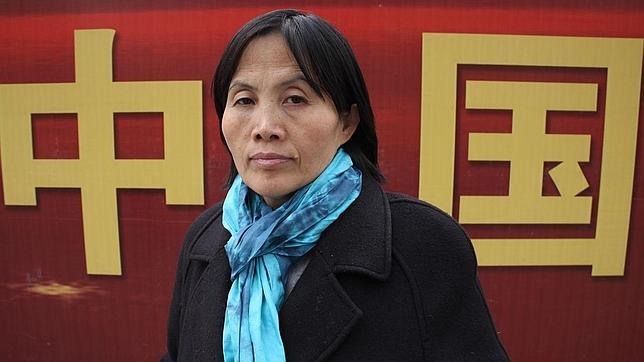
When late Chinese human rights defender Cao Shunli – as Final Nominee of he Martin Ennals Award 2014 – got a standing ovation during the ceremony in October last year, we all said, with the 10 NGOs on the Jury, that we should not forget her. On 19 March 2015 in a statement to the UN Human Rights Council that is exactly what a group of NGOs [International Service for Human Rights and supported by Human Rights WatchCIHRSCIVICUSConectasEHARDPArticle 19HRHF and ALRC] asked for: Ensure independent investigation into death of Cao Shunli.CAO_SHUNLI_PORTRAIT

China must ensure a full, independent and impartial investigation into the death of Chinese human rights defender Cao Shunli, ..If Chinese authorities are unable or unwilling to conduct such an investigation in accordance with international standards, the Human Rights Council as the world’s top human rights body must take appropriate action, the statement said.

One year after her tragic death, there has been no adequate investigation or accountability in relation to the death of Chinese defender Cao Shunli,’ said Michael Ineichen, Head of Human Rights Council Advocacy at ISHR. ‘If China is let of the hook for such a blatant case of reprisals against someone wanting to cooperate with UN human rights mechanisms, the Council sends a message to rights abusers that activists can be attacked with impunity.’

The statement highlighted the negative effect of impunity for cases of intimidation and reprisals, as shown by the numerous reported cases of intimidation and reprisals occurring during the 28th session of the Human Rights Council, including against South Sudanese and Bahraini defenders.

The legal and moral obligations of States to protect those who cooperate with the UN are clear, and if a State fails to conduct stop reprisals or to properly investigate allegations, the UN has a responsibility to act, the statement said.

We welcome recent advances on the institutional level, such as the treaty body policies that recognise States’ primary duty to ensure accountability in the case of reprisals, and the UN’s own duty of care,’ said Eleanor Openshaw, Head of Reprisals Advocacy at ISHR. ‘However, in the absence of a more systematic approach, such as through a dedicated focal point on reprisals which could coordinate investigation of and follow-up to individual cases, these steps will remain the proverbial drop in the ocean’   The statement is available as a PDF and video.

for more on reprisals in this blog see: https://thoolen.wordpress.com/tag/reprisals/

Broad coalition of NGOs at UN condemns Egypt’s treatment of women human rights defenders

March 23, 2015

During the adoption of the Universal Periodic Review (UPR) report on Egypt in the UN Human Rights Council on 20 March 2015 the Women Human Rights Defenders International Coalition (for the composition see below), made a forceful statement about the terrible situation of women human rights defenders in that country.

“The systematic judicial harassment faced by many women human rights defenders is highlighted through the emblematic case of the seven women defenders2 arrested on 21 June 2014 for protesting peacefully against the Protest and Public Assembly Law (No. 107), who faced arduous hassles including prolonged pre-trial detention. Their sentence was finally reduced to two years of imprisonment and two years of surveillance by the appeals court in December 2014. [The seven are: Ms. Sanaa Seif, Ms. Yara Sallam, Ms. Hanan Mustafa Mohamed, Ms. Salwa Mihriz, Ms. Samar Ibrahim, Ms. Nahid Bebo and Rania El-Sheikh]

Furthermore, we strongly condemn the killing of Shaimaa ElSabbagh during a peaceful protest on 24 January 2015. She was taking part in a gathering to commemorate the fourth anniversary of the 25 January revolution. We call on the Egyptian government to ensure a prompt, independent and effective investigation to identify the perpetrator and hold them to account. In this connection, we are deeply concerned that Azza Soliman from the Centre for Egyptian Women’s Legal Assistance (CEWLA), who was witness to the incident and testified before the Prosecutor’s Office, is now targeted as a suspect and charges have been brought against her under the public assembly law.

Finally, we express our continued dismay over sexual violence against women in online and offline public spaces. Though a national strategy to combat violence against women has been announced, we emphasise the need for it to be comprehensive and holistic with involvement of all relevant ministries and stakeholders, as well as adequate budget allocation. During the UPR, the government highlighted a new amendment to the Penal Code article 306, which addresses sexual harassment. This amendment is far insufficient in its scope as it only considers sexual harassment a crime if the intent of the perpetrator is proven to be related to obtaining sexual benefits…”

The Coalition members:  Amnesty International, Asia Pacific Forum on Women, Law and Development (APWLD), Asian Forum for Human Rights and Development (FORUM-ASIA), Association for Progressive Communications (APC), Association for Women’s Rights in Development (AWID), BAOBAB for Women’s Human Rights, Centre for Reproductive Rights, Centre for Women’s Global Leadership, Coalition of African Lesbians, Front Line Defenders, Human Rights First, Information Monitor (INFORM), International Federation for Human Rights, International Service for Human Rights (ISHR), International Women’s Rights Action Watch Asia-Pacific (IWRAW-AP), Isis International, ISIS Women’s International Cross- Cultural Exchange, Just Associates (JASS), The Latin American and Caribbean Committee for the Defense of Women’s Rights (CLADEM), MADRE, Nazra for Feminist Studies, Peace Brigades International, Rainbow Rights Project Inc, Urgent Action Fund for Women’s Human Rights, Women Living Under Muslim Laws (WLUML), Women’s Global Network for Reproductive Rights, WOmen’s Initiatives for Gender Justice, Women’s Rehabilitation Centre (WOREC), World Organisation against Torture (OMCT).

Nawaf Al Hendal: portrait of a human rights defender from Kuwait

February 9, 2015

“I recognise that I may never be granted these fundamental rights in my life time, but I want more for our children. We should promise them that.”

On 30 January 2015 the ISHR Bulletin did a good write-up on Nawaf Al Hendal, a Human rights defender from Kuwait.

The Universal Periodic Review of Kuwait took place at the Human Rights Council in Geneva on 28 January 2015. Prominent human rights defender, Nawaf Al Hendal, who travelled to Geneva for the review of Kuwait’s human rights record, was advised that an arrest warrant awaits him on return to Kuwait in connection with allegations of damaging foreign relations and using Twitter to insult lateSaudi King Abdullah. Nawaf discussed the situation for human rights defenders in Kuwait and the on-going threat of reprisals with ISHR.

Nawaf Al Hendal, the founder of Kuwait Watch, has been an active human rights defender in Kuwait since 2004. Nawaf’s drive to become a human rights defender initially arose when he witnessed his colleagues being subject to unfair work standards imposed by his employer at the time. Nawaf could not allow his colleagues’ rights to be eroded without any resistance. For this reason, when his colleagues felt unable to do so, Nawaf decided to fight for the protection of their rights.

‘I love my country and its people. I believe that every person in Kuwait should have access to fundamental and equal rights.’

When Nawaf realised he was able to have an impact in the protection of his colleagues’ rights, his focus extended to the protection of people’s rights more generally in Kuwait.

Nawaf is well known for his work defending the rights of stateless persons, including the Bedouin community who are deprived of the right to employment, education and healthcare in Kuwait. Nawaf, now through Kuwait Watch, is active in engaging with the UN human rights system, including making submissions to the UPR, various treaty bodies and States active in the human rights system, as well as international NGOs. Kuwait Watch also actively engages in grass roots advocacy, including organising peaceful protests and consulting with employers and medical practitioners to gain employment and medical care for Bedouin people.

Nawaf is adamant about the importance of social media in the work of human rights defenders.

‘We use social media to demonstrate the restrictions on fundamental freedoms placed on people in Kuwait to the rest of the world. We also use social media to make it clear to the Kuwaiti authorities that we will continue to defend the rights of all people in Kuwait.’

Overall, Nawaf considers that his work thus far has not gone unnoticed by the Kuwaiti authorities. Despite the troubling implications for Nawaf as an individual, he considers that the fact that a warrant for his arrest was issued simultaneously with his travel to Geneva for the periodic review of Kuwait is indicative of the Kuwaiti Government’s concern in relation to the increasing influence of Kuwaiti human rights defenders.

Nawaf explains that his advocacy is not politically driven, it is rights driven. He emphasised that Kuwait Watch is not seeking a political transformation in government but simply the development of legal protections for people in Kuwait.

‘We [Kuwait Watch] commended the Kuwaiti Government’s decision to make primary and intermediate education free and compulsory for children and prohibit children under the age of 15 years from working.’

The prosecution of human rights defenders, opposition activists and bloggers for allegedly undermining the status of the emir of Kuwait is widespread in the country. Lese-majeste, national security and ‘national unity’ laws have recently been used to prosecute activists who are critical of the human rights records of heads of state with which Kuwait has diplomatic relations, including Saudi Arabia and Egypt. According to Nawaf, the Public Gatherings Law, the Penal Code, national security legislation, press regulations, and lese-majeste and blasphemy laws, are all used and abused to criminalise free speech in the country.

‘As a human rights defender in Kuwait you are always at risk. In an attempt to silence dissenting voices, human rights defenders are often imprisoned for unrelated, and often fabricated, offences.’

Nawaf tells the story of his arrest in 2013 on his return to Bahrain, where he had been studying at Delmon University for Science & Technology since 2008. Nawaf was advised that he could no longer enter Bahrain as the Kuwaiti authorities intended to arrest him in connection with terrorist activities.

‘Since my arrest in 2013, I have not been able to return to Bahrain and my five years of study in Bahrain have not been recognised.’

Nawaf explained that in an additional attempt to silence dissenting voices, national newspapers and television channels have been known to print articles in an attempt to invalidate the work of human rights defenders.

‘In addition to legislation restricting fundamental rights of people living in Kuwait and the independence of human rights institutions, the legislative framework limits the number of human rights organisations to one’

Given the restriction on the number of human rights organisations in Kuwait, Kuwait Watch is registered in the United Kingdom.

‘We engage with the UN human rights system in the hope that the UN will require the Kuwait Government to enact and reform legislation to protect human rights defenders as well of the rights of all people in Kuwait.’

Nawaf emphasises the importance he places on ensuring that the next generation will have the fundamental rights they are entitled to.

‘I recognise that I may never be granted these fundamental rights in my life time, but I want more for our children. We should promise them that.’


Nawaf Al Hendal: Human rights defender from Kuwait | ISHR.

The top 5 human rights posts in 2014 of the ISHR

January 12, 2015

On 26 December 2014, the Geneva-based International Service for Human Rights (ISHR) reported that the following posts were the most visited on its website in 2014:

  1. The African Commission on Human and Peoples’ Rights adopts a landmark resolution condemning violence and calling for an end to discrimination on the basis of sexual orientation and gender identity, perhaps marking a turning of the tide against anachronistic laws across the continent which criminalise homosexuality and even the advocacy of LGBT rights: http://www.ishr.ch/news/african-commission-adopts-landmark-resolution-lg…
  2. The UN Human Rights Council adopts a crucial resolution on the protection of human rights defenders, calling on States to enact laws and policies to support and enable their work. The resolution also renews the mandate of the UN Special Rapporteur on Human Rights Defenders for a term of three years: http://www.ishr.ch/news/un-human-rights-council-adopts-crucial-resolutio…
  3. Human rights advocates from around the world take a stand at the UN Human Rights Council, calling on Chinese authorities to be investigated and held accountable for the death of detained human rights defender Cao Shunli: http://www.ishr.ch/news/china-interrupts-moment-silence-cao-shunli-un-hu…
  4. ISHR releases a new film on the human cost of intimidation and reprisals against those who cooperate with the UN: http://www.ishr.ch/news/new-video-reprisals-human-cost-cooperating-unite…
  5. What are the characteristics and strategies of the most successful human rights campaigns? In a guest opinion piece, Jo Becker of Human Rights Watch examines some of the most significant international human rights campaigns over the last decade to identify the secrets of success: http://www.ishr.ch/news/jo-becker-5-ways-successful-human-rights-campaign

The main topics are linked to the question of reprisals and bring to the fore the importance of the ISHR in linking to the international and regional fora.ISHR-logo-colour-high

Top 5 human rights posts for 2014 | ISHR.

Alejandra Ancheita on the challenges for women defenders working on business and human rights

December 2, 2014

(Photo credit: Martin Ennals Foundation)

For the 3rd UN Forum on Business and Human Rights (going on at the moment), ISHR published also an article by Alejandra Ancheita, 2014 Martin Ennals Award Laureate and Executive Director of ProDESC. Women defenders and those working on business and human rights represent two groups facing particular risks yet, in Mexico, the State’s response is falling short, concludes Alejandra Ancheita in her article:

“The challenges and risks that human rights defenders (HRDs) are facing in Mexico and other Latin American countries are diverse and growing daily in the absence of comprehensive State action to address this situation. The inadequate response of the Mexican government to the hundreds of cases of attacks and intimidation has become evident in various spaces. For instance in the recent Universal Periodic Review of the United Nations, the Mexican State received 24 recommendations on the situation of human rights defenders and journalists in the country, whilst the Protection Mechanism for Human Rights Defenders and Journalists,  in the Interior Ministry, has received 130 applications for protection. Its response has been insufficient, particularly for those groups of defenders who face particular and heightened risks. As a woman human rights defender who works on issues related to business and the environment, I ought to know.……

Importantly, the fact that women human rights defenders face specific threats has been well established. However, existing protection mechanisms have not yet adjusted to incorporate this reality into their functioning, thus leaving women defenders vulnerable to gender-specific threats and aggressions. This is a global phenomenon and, in over 15 years as a human rights defender in Mexico, I have personally suffered violations of my human rights because of my gender and numerous colleagues have found themselves in the same situation.….

Integral security for women defenders must also seek to transform public opinion to understand and support our work. The first step in this regard is for States to recognize that working to defend certain rights can make women HRDs particularly vulnerable, for example by working on indigenous land rights in Latin America. Public statements made by public officials on the importance of our role and the legitimacy of our work are key. Authorities must investigate and punish those responsible for statements that seek to defame or attack defenders or delegitimize their work, even when such statements are made by non-State actors like community leaders or company representatives. Given the severe impact inflammatory statements have on women defenders’ work and wellbeing, they must be treated as aggressions in and of themselves.…..

In the vast majority of countries there are no specific mechanisms in place to protect human rights defenders. Where mechanisms have been created they are often hindered by operational failings, a lack of financial or human resources, the absence of gender-sensitivity, limited options for collective or community measures, and absent political will…..

As my work is based in Mexico, and due to my incorporation into the Federal Protection Mechanism for human rights defenders and journalists last year, this is the Mechanism I am best-placed to comment on. One very positive aspect of the mechanism is that four of the nine members of the decision-making body come from civil society. However, the Mechanism is also faced with several challenges.

The Mechanism falls short in the preventative aspect. Recently, various actors including Amnesty International, Human Rights Watch and the CEDAW Committee have highlighted impunity for violations against women defenders as the greatest obstacle in improving their safety. In spite of this concern, the law establishing the Mechanism does not guarantee the adequate investigation and prosecution of perpetrators.

The Mechanism also fails to incorporate a gender perspective to better understand the situation facing women HRDs. I believe that the Mexican authorities have the opportunity to set best practices in this regard, by providing gender-sensitive training to staff and by developing gender indicators to guide the granting, planning and implementation of protection measures.

Mexican authorities responsible for the Mechanism must also effectively involve defenders in the design and implementation of protection measures, as well as conducting risk assessments in a more transparent way. This is particularly important in the case of defenders working on issues that impact upon private actors such as business, or those defending land rights in isolated communities. Finally, cooperation and coordination between federal, state and local authorities in the implementation of protection measures need to drastically improve……..”

Read the rest of this entry »

Michel Forst on protecting defenders who work on business and human rights

December 1, 2014

At the start of the 3rd UN Forum on Business and Human Rights, today 1 December, the ISHR publishes a series of articles by key human rights defenders and experts in this field. [https://thoolen.wordpress.com/2014/11/17/register-for-the-3rd-annual-forum-on-business-and-human-rights-1-to-3-december-2014/] The Special Rapporteur on HRDs, Michel Forst, goes first:

Read the rest of this entry »

No more double speak for Peña Nieto’s Mexico

November 21, 2014

On 21 November 2014 Ben Leather (Advocacy and Communications Manager at the International Service for Human Rights, who was previously Advocacy Coordinator for Peace Brigades International’s Mexico Project) published an extensive and fascinating piece on Mexico’s double talk when it comes to human rights defenders: “No more doble-cara: it’s time for Peña Nieto to practise what he preaches”.

(In Mexico, 43 students remain missing. How is this possible in a country known for its UN human rights advocacy? Demotix/Hugo Ortuño – Some rights reserved)

The key notion of the article in Open Democracy is summarized in the phrase: “How can Mexico lead the way internationally, when it cannot protect the basic rights of its own people?“. A contradiction laid bare also by Alejandra Ancheita’s Martin Ennals Award for Human Rights Defenders in October this year [https://thoolen.wordpress.com/2014/10/07/breaking-news-alejandra-ancheita-is-the-2014-mea-laureate/].

On September 26, I delivered the final NGO statement to the United Nations Human Rights Council’s 27th session, celebrating some of the key resolutions passed after weeks of diplomatic arm-wrestling. As in previous experiences advocating at the UN since swapping Mexico City for Geneva, I observed Mexico’s firm commitment to strengthening international human rights norms through its diplomats’ constructive initiatives.

Yet that very same night, I also learned that Mexican police forces were suspected of disappearing 43 student protesters from Ayotzinapa college, after murdering six others at the scene. A month later, those students remain missing, while the role of Mexican officials in human rights violations is becoming increasingly apparent.

These contrasts are a microcosm of Mexico’s perverse doble-cara, or two-facedness, which has exasperated its civil society for decades. They demonstrate the schizophrenia of a reputed international human rights promoter that is also proven to repress, torture, disappear and kill at home. How can Mexico lead the way internationally, when it cannot protect the basic rights of its own people?

This contradiction was underscored when Alejandra Ancheita, Director of the Mexican human rights group ProDESC, won the acclaimed Martin Ennals Award and denounced the risks facing Mexican human rights defenders. Mexican journalist Lydia Cacho then visited the UN to put her own case of arbitrary detention and torture to its Human Rights Committee. She highlighted Mexico’s exemplary efforts to strengthen its own legal framework, but lamented appalling implementation. She also emphasised the role of corruption, drugs and people traffickers—in exacerbating the context of abuses.

The schizophrenia’s causes therefore, are complex. However, the cases of Ayotzinapa, Alejandra and Lydia are not only emblematic of the Mexican human rights paradox, but also of two crucial factors which prevent its cure: blanket impunity and unbridled risks for human rights defenders.

Mexico: la doble-cara of human rights

None of this, of course, is new. In the 1960s and 70s, successive Mexican presidents opened the doors to political refugees fleeing persecution in Europe and Latin America, while simultaneously disappearing, torturing andmassacring student activists, political opponents and guerrilla groups in theDirty War.

Under former president Felipe Calderón, Mexico became a member of the UN’s Human Rights Council, where it led and lobbied for resolutions on women’s, migrant and indigenous rights. It consistently promoted the protection of human rights defenders, and voted for UN action worldwide. Yet this was all happening while the Mexican State was failing to prevent systemic femicide, migrants were denouncing abuses by public security forces colluding with organised crime, and indigenous activists were condemning attacks by the army.

Calderón promulgated some excellent human rights policies, including a Constitutional Reform guaranteeing the domestic legal transcendence of international treaties. On the ground, however, the abuses multiplied: 80,000 people were killed and over 27,000 disappeared in six years of the “War on Drugs”. In many cases, there is considerable evidence that Mexican State actors were involved, but the lack of sufficient investigation leaves most perpetrators free and unidentifiable.

Under current President Peña Nieto, with his emphasis on structural economic reforms and on international investment, Mexico’s progressive reputation at the UN and the Organization of American States has consolidated. Time magazine’s controversial front page this February was emblematic of the international community’s willingness to overlook Mexico’s human rights abuses in return for business opportunities. However, the disappearance of 43 students in Ayotzinapa, along with the attempted cover-up of 22 civilians killed by Mexican soldiers in the town of Tlatlaya this June, mean that—like the mass graves in Guerrero State—Mexico’s human rights reality is being exposed.

Impunity: green light for human rights abusers

In December 2011, I participated in Peace Brigades International’s meetings with Guerrero Governor Angel Aguirre and federal authorities to demand accountability for the killing of two students from Ayotzinapa shot by police at a protest, with others arbitrarily detained and tortured. Aguirre promised justice, while Mexico’s Human Rights Commission deemed authorities at all levels guilty of abuses. Nevertheless, the local Attorney only imprisoned a handful of local policemen, who were soon released.

Exacerbating the large number of crimes in Mexico is the fact that 98% of them remain unsolved. The impunity of 2011 joined a longer list of unsolved violations and, echoing in a weak international response, sent a message that resonated with grave implications this September: in Mexico, you can murder and abuse activists without consequence.

The relevance of widespread impunity becomes even clearer when one realises that Aguirre last governed Guerrero when the 1998 El Charco Massacre saw the army open fire on indigenous community activists, killing 11. His predecessor had stood down following another massacre of activists, just as Aguirre did this October. Nobody was punished for either crime. Meanwhile Peña Nieto himself has been criticised for the excessive use of force, torture and sexual abuse by police officers against protesters in San Salvador Atenco, when he was governor of the state of Mexico. Impunity prevails.

Silencing those who dare to speak out

Alejandra Ancheita has faced defamation, threats and attacks for her work. Yet this is par for the course in Mexico, with at least 25 human rights defenders killed and 29 disappeared in the first 18 months of Peña Nieto’s government, which began—in December 2012—with the arbitrary detentions and excessive use of force by Mexico City police against those protesting alleged electoral fraud. The UN Office of the High Commissioner for Human Rights has documented that activists face threats, attacks, criminalisation, harassment and killings for their work, with aggressions carried out by a range of state, non-state and unidentified actors. Members of the ruling party have proposed a lawto jail protesting teachers.

In 2012, Mexican activists successfully lobbied for the passage of the Law for the Protection of Human Rights Defenders and Journalists, which reflects civil society input and international best practise. Yet the law’s implementation has been consistently undermined by administrative flaws, a lack of resources and—crucially, as identified by NGOs on the ground—an absence of political will at all levels. Government officials have not implemented the preventative organ promised by law, staff constantly rotate, and some activists complain that the same police forces attacking them are sent to protect them.  

A shared schizophrenia

It is not only Mexico’s doublespeak that compromises global human rights protection. If the international public is appalled by abuses in Mexico, then it is time their political and diplomatic representatives began to condition aid, trade and political support on the evidence of real change on the ground. While the EU and the US have established human rights dialogues with their Mexican counterparts, activists complain that these serve only to legitimise, rather than impact, the free trade agreements with what the EU calls its “strategic partner”.

Meanwhile in Mexico, Peña Nieto must use Ayotzinapa as a catalyst to ensure his federal officials are clean, competent and accountable, and that they use their power to investigate and punish local level officials suspected of human rights violations. Ongoing abuses undermine not only the valuable efforts of Mexico’s diplomats, but the international system itself.

Resolutions and laws are not enough: those with leverage must demand implementation and otherwise attach a real political cost. By protecting human rights defenders and ensuring justice, Mexico can take steps towards safeguarding not only human rights on the ground, but the integrity of the entire human rights system.”

No more doble-cara: it’s time for Peña Nieto to practise what he preaches | openDemocracy.