Posts Tagged ‘ISHR’

The top 5 human rights posts in 2014 of the ISHR

January 12, 2015

On 26 December 2014, the Geneva-based International Service for Human Rights (ISHR) reported that the following posts were the most visited on its website in 2014:

  1. The African Commission on Human and Peoples’ Rights adopts a landmark resolution condemning violence and calling for an end to discrimination on the basis of sexual orientation and gender identity, perhaps marking a turning of the tide against anachronistic laws across the continent which criminalise homosexuality and even the advocacy of LGBT rights: http://www.ishr.ch/news/african-commission-adopts-landmark-resolution-lg…
  2. The UN Human Rights Council adopts a crucial resolution on the protection of human rights defenders, calling on States to enact laws and policies to support and enable their work. The resolution also renews the mandate of the UN Special Rapporteur on Human Rights Defenders for a term of three years: http://www.ishr.ch/news/un-human-rights-council-adopts-crucial-resolutio…
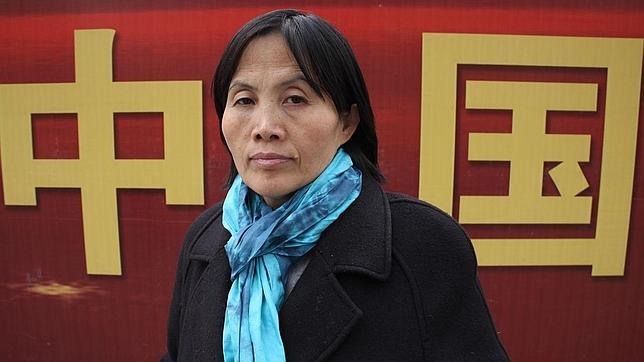
  3. Human rights advocates from around the world take a stand at the UN Human Rights Council, calling on Chinese authorities to be investigated and held accountable for the death of detained human rights defender Cao Shunli: http://www.ishr.ch/news/china-interrupts-moment-silence-cao-shunli-un-hu…
  4. ISHR releases a new film on the human cost of intimidation and reprisals against those who cooperate with the UN: http://www.ishr.ch/news/new-video-reprisals-human-cost-cooperating-unite…
  5. What are the characteristics and strategies of the most successful human rights campaigns? In a guest opinion piece, Jo Becker of Human Rights Watch examines some of the most significant international human rights campaigns over the last decade to identify the secrets of success: http://www.ishr.ch/news/jo-becker-5-ways-successful-human-rights-campaign

The main topics are linked to the question of reprisals and bring to the fore the importance of the ISHR in linking to the international and regional fora.ISHR-logo-colour-high

Top 5 human rights posts for 2014 | ISHR.

Alejandra Ancheita on the challenges for women defenders working on business and human rights

December 2, 2014

(Photo credit: Martin Ennals Foundation)

For the 3rd UN Forum on Business and Human Rights (going on at the moment), ISHR published also an article by Alejandra Ancheita, 2014 Martin Ennals Award Laureate and Executive Director of ProDESC. Women defenders and those working on business and human rights represent two groups facing particular risks yet, in Mexico, the State’s response is falling short, concludes Alejandra Ancheita in her article:

“The challenges and risks that human rights defenders (HRDs) are facing in Mexico and other Latin American countries are diverse and growing daily in the absence of comprehensive State action to address this situation. The inadequate response of the Mexican government to the hundreds of cases of attacks and intimidation has become evident in various spaces. For instance in the recent Universal Periodic Review of the United Nations, the Mexican State received 24 recommendations on the situation of human rights defenders and journalists in the country, whilst the Protection Mechanism for Human Rights Defenders and Journalists,  in the Interior Ministry, has received 130 applications for protection. Its response has been insufficient, particularly for those groups of defenders who face particular and heightened risks. As a woman human rights defender who works on issues related to business and the environment, I ought to know.……

Importantly, the fact that women human rights defenders face specific threats has been well established. However, existing protection mechanisms have not yet adjusted to incorporate this reality into their functioning, thus leaving women defenders vulnerable to gender-specific threats and aggressions. This is a global phenomenon and, in over 15 years as a human rights defender in Mexico, I have personally suffered violations of my human rights because of my gender and numerous colleagues have found themselves in the same situation.….

Integral security for women defenders must also seek to transform public opinion to understand and support our work. The first step in this regard is for States to recognize that working to defend certain rights can make women HRDs particularly vulnerable, for example by working on indigenous land rights in Latin America. Public statements made by public officials on the importance of our role and the legitimacy of our work are key. Authorities must investigate and punish those responsible for statements that seek to defame or attack defenders or delegitimize their work, even when such statements are made by non-State actors like community leaders or company representatives. Given the severe impact inflammatory statements have on women defenders’ work and wellbeing, they must be treated as aggressions in and of themselves.…..

In the vast majority of countries there are no specific mechanisms in place to protect human rights defenders. Where mechanisms have been created they are often hindered by operational failings, a lack of financial or human resources, the absence of gender-sensitivity, limited options for collective or community measures, and absent political will…..

As my work is based in Mexico, and due to my incorporation into the Federal Protection Mechanism for human rights defenders and journalists last year, this is the Mechanism I am best-placed to comment on. One very positive aspect of the mechanism is that four of the nine members of the decision-making body come from civil society. However, the Mechanism is also faced with several challenges.

The Mechanism falls short in the preventative aspect. Recently, various actors including Amnesty International, Human Rights Watch and the CEDAW Committee have highlighted impunity for violations against women defenders as the greatest obstacle in improving their safety. In spite of this concern, the law establishing the Mechanism does not guarantee the adequate investigation and prosecution of perpetrators.

The Mechanism also fails to incorporate a gender perspective to better understand the situation facing women HRDs. I believe that the Mexican authorities have the opportunity to set best practices in this regard, by providing gender-sensitive training to staff and by developing gender indicators to guide the granting, planning and implementation of protection measures.

Mexican authorities responsible for the Mechanism must also effectively involve defenders in the design and implementation of protection measures, as well as conducting risk assessments in a more transparent way. This is particularly important in the case of defenders working on issues that impact upon private actors such as business, or those defending land rights in isolated communities. Finally, cooperation and coordination between federal, state and local authorities in the implementation of protection measures need to drastically improve……..”

Read the rest of this entry »

Michel Forst on protecting defenders who work on business and human rights

December 1, 2014

At the start of the 3rd UN Forum on Business and Human Rights, today 1 December, the ISHR publishes a series of articles by key human rights defenders and experts in this field. [https://thoolen.wordpress.com/2014/11/17/register-for-the-3rd-annual-forum-on-business-and-human-rights-1-to-3-december-2014/] The Special Rapporteur on HRDs, Michel Forst, goes first:

Read the rest of this entry »

No more double speak for Peña Nieto’s Mexico

November 21, 2014

On 21 November 2014 Ben Leather (Advocacy and Communications Manager at the International Service for Human Rights, who was previously Advocacy Coordinator for Peace Brigades International’s Mexico Project) published an extensive and fascinating piece on Mexico’s double talk when it comes to human rights defenders: “No more doble-cara: it’s time for Peña Nieto to practise what he preaches”.

(In Mexico, 43 students remain missing. How is this possible in a country known for its UN human rights advocacy? Demotix/Hugo Ortuño – Some rights reserved)

The key notion of the article in Open Democracy is summarized in the phrase: “How can Mexico lead the way internationally, when it cannot protect the basic rights of its own people?“. A contradiction laid bare also by Alejandra Ancheita’s Martin Ennals Award for Human Rights Defenders in October this year [https://thoolen.wordpress.com/2014/10/07/breaking-news-alejandra-ancheita-is-the-2014-mea-laureate/].

On September 26, I delivered the final NGO statement to the United Nations Human Rights Council’s 27th session, celebrating some of the key resolutions passed after weeks of diplomatic arm-wrestling. As in previous experiences advocating at the UN since swapping Mexico City for Geneva, I observed Mexico’s firm commitment to strengthening international human rights norms through its diplomats’ constructive initiatives.

Yet that very same night, I also learned that Mexican police forces were suspected of disappearing 43 student protesters from Ayotzinapa college, after murdering six others at the scene. A month later, those students remain missing, while the role of Mexican officials in human rights violations is becoming increasingly apparent.

These contrasts are a microcosm of Mexico’s perverse doble-cara, or two-facedness, which has exasperated its civil society for decades. They demonstrate the schizophrenia of a reputed international human rights promoter that is also proven to repress, torture, disappear and kill at home. How can Mexico lead the way internationally, when it cannot protect the basic rights of its own people?

This contradiction was underscored when Alejandra Ancheita, Director of the Mexican human rights group ProDESC, won the acclaimed Martin Ennals Award and denounced the risks facing Mexican human rights defenders. Mexican journalist Lydia Cacho then visited the UN to put her own case of arbitrary detention and torture to its Human Rights Committee. She highlighted Mexico’s exemplary efforts to strengthen its own legal framework, but lamented appalling implementation. She also emphasised the role of corruption, drugs and people traffickers—in exacerbating the context of abuses.

The schizophrenia’s causes therefore, are complex. However, the cases of Ayotzinapa, Alejandra and Lydia are not only emblematic of the Mexican human rights paradox, but also of two crucial factors which prevent its cure: blanket impunity and unbridled risks for human rights defenders.

Mexico: la doble-cara of human rights

None of this, of course, is new. In the 1960s and 70s, successive Mexican presidents opened the doors to political refugees fleeing persecution in Europe and Latin America, while simultaneously disappearing, torturing andmassacring student activists, political opponents and guerrilla groups in theDirty War.

Under former president Felipe Calderón, Mexico became a member of the UN’s Human Rights Council, where it led and lobbied for resolutions on women’s, migrant and indigenous rights. It consistently promoted the protection of human rights defenders, and voted for UN action worldwide. Yet this was all happening while the Mexican State was failing to prevent systemic femicide, migrants were denouncing abuses by public security forces colluding with organised crime, and indigenous activists were condemning attacks by the army.

Calderón promulgated some excellent human rights policies, including a Constitutional Reform guaranteeing the domestic legal transcendence of international treaties. On the ground, however, the abuses multiplied: 80,000 people were killed and over 27,000 disappeared in six years of the “War on Drugs”. In many cases, there is considerable evidence that Mexican State actors were involved, but the lack of sufficient investigation leaves most perpetrators free and unidentifiable.

Under current President Peña Nieto, with his emphasis on structural economic reforms and on international investment, Mexico’s progressive reputation at the UN and the Organization of American States has consolidated. Time magazine’s controversial front page this February was emblematic of the international community’s willingness to overlook Mexico’s human rights abuses in return for business opportunities. However, the disappearance of 43 students in Ayotzinapa, along with the attempted cover-up of 22 civilians killed by Mexican soldiers in the town of Tlatlaya this June, mean that—like the mass graves in Guerrero State—Mexico’s human rights reality is being exposed.

Impunity: green light for human rights abusers

In December 2011, I participated in Peace Brigades International’s meetings with Guerrero Governor Angel Aguirre and federal authorities to demand accountability for the killing of two students from Ayotzinapa shot by police at a protest, with others arbitrarily detained and tortured. Aguirre promised justice, while Mexico’s Human Rights Commission deemed authorities at all levels guilty of abuses. Nevertheless, the local Attorney only imprisoned a handful of local policemen, who were soon released.

Exacerbating the large number of crimes in Mexico is the fact that 98% of them remain unsolved. The impunity of 2011 joined a longer list of unsolved violations and, echoing in a weak international response, sent a message that resonated with grave implications this September: in Mexico, you can murder and abuse activists without consequence.

The relevance of widespread impunity becomes even clearer when one realises that Aguirre last governed Guerrero when the 1998 El Charco Massacre saw the army open fire on indigenous community activists, killing 11. His predecessor had stood down following another massacre of activists, just as Aguirre did this October. Nobody was punished for either crime. Meanwhile Peña Nieto himself has been criticised for the excessive use of force, torture and sexual abuse by police officers against protesters in San Salvador Atenco, when he was governor of the state of Mexico. Impunity prevails.

Silencing those who dare to speak out

Alejandra Ancheita has faced defamation, threats and attacks for her work. Yet this is par for the course in Mexico, with at least 25 human rights defenders killed and 29 disappeared in the first 18 months of Peña Nieto’s government, which began—in December 2012—with the arbitrary detentions and excessive use of force by Mexico City police against those protesting alleged electoral fraud. The UN Office of the High Commissioner for Human Rights has documented that activists face threats, attacks, criminalisation, harassment and killings for their work, with aggressions carried out by a range of state, non-state and unidentified actors. Members of the ruling party have proposed a lawto jail protesting teachers.

In 2012, Mexican activists successfully lobbied for the passage of the Law for the Protection of Human Rights Defenders and Journalists, which reflects civil society input and international best practise. Yet the law’s implementation has been consistently undermined by administrative flaws, a lack of resources and—crucially, as identified by NGOs on the ground—an absence of political will at all levels. Government officials have not implemented the preventative organ promised by law, staff constantly rotate, and some activists complain that the same police forces attacking them are sent to protect them.  

A shared schizophrenia

It is not only Mexico’s doublespeak that compromises global human rights protection. If the international public is appalled by abuses in Mexico, then it is time their political and diplomatic representatives began to condition aid, trade and political support on the evidence of real change on the ground. While the EU and the US have established human rights dialogues with their Mexican counterparts, activists complain that these serve only to legitimise, rather than impact, the free trade agreements with what the EU calls its “strategic partner”.

Meanwhile in Mexico, Peña Nieto must use Ayotzinapa as a catalyst to ensure his federal officials are clean, competent and accountable, and that they use their power to investigate and punish local level officials suspected of human rights violations. Ongoing abuses undermine not only the valuable efforts of Mexico’s diplomats, but the international system itself.

Resolutions and laws are not enough: those with leverage must demand implementation and otherwise attach a real political cost. By protecting human rights defenders and ensuring justice, Mexico can take steps towards safeguarding not only human rights on the ground, but the integrity of the entire human rights system.”

No more doble-cara: it’s time for Peña Nieto to practise what he preaches | openDemocracy.

High-level Legal Briefing and Debate on Reprisals on 20 November 2014 in Geneva

November 12, 2014

On Thursday, 20 November 2014, the International Service for Human Rights (ISHR) celebrates its 30th anniversary with the launch and discussion of two important legal reports:ISHR-logo-colour-high

The first is a memorandum of advice on the legal obligations of the Human Rights Council, its President and Bureau to combat reprisals prepared by Sir Nicolas Bratza and Prof Egbert Myjer (both formerly of the European Court of Human Rights – Egbert Myjer portrayed here on the left), together with the leading international law firm Freshfields. This is indeed a crucial area for the future of the whole human rights system as argued consistently in this blog : https://thoolen.wordpress.com/tag/reprisals/]


The second study is a comparative research report on the recognition and protection of human rights defenders under national law.

The panelists are:

  • Sir Nicolas Bratza, report author and former President of the European Court of Human Rights

  • Maryam Al-Khawaja, Bahraini human rights defender

  • Reine Alapini-Gansou, Special Rapporteur on Human Rights Defenders of the African Commission on Human and Peoples’ Rights

The debate is moderated by Phil Lynch, Director, International Service for Human Rights

The event takes place in Room IX of the Palais des Nations, Geneva, from 15h00 to 16h15. The legal briefing is followed by ISHR’s 30th anniversary reception.

Invitation to a High-level Legal Briefing: 20 November 2014.

Special Rapporteur on HRDs in first address to General Assembly: Combat reprisals and protect human rights defenders

October 17, 2014
The need to combat impunity for attacks against human rights defenders, together with the enactment of specific laws and policies to protect their work, have been identified as key priorities by the new UN Special Rapporteur on Human Rights Defenders, Michel Forst, in his inaugural report to the UN General Assembly next week. This is stated by the International Service for Human Rights in Geneva.
 

The report, which will be presented to the General Assembly in New York in the week of 20 October, sets out a vision and priorities for the mandate over the coming three years, including a focus on groups of human rights defenders who are ‘most exposed’ or at risk, such as those working to promote economic, social and cultural rights, the rights of minorities, the rights of lesbian, gay, bisexual, transgender and intersex persons, women human rights defenders, and those working on issues of business and human rights or on accountability for past violations. According to the Special Rapporteur, each of his ‘future thematic and mission reports will contain a specific section dedicated to analysing the development of trends and particular threats facing the most exposed groups’.

The report expresses grave concern at the related issues of lack of cooperation with the mandate by some States, and the intimidation and reprisals faced by many human rights defenders in connection with their engagement with international and regional human rights mechanisms. The Special Rapporteur is ‘struck by the number and gravity of threats’ against those who cooperate with the UN, the report says, including ‘threats against the defenders themselves or their families, defamation campaigns, death threats, physical violence, abductions, hounding by law enforcement, assassinations or various forms of harassment and intimidation by the police’. In this connection, the Special Rapporteur pledges to follow-up more actively and systematically with States in relation to the investigation and remediation of alleged threats and attacks against defenders.

The need to ensure accountability and combat impunity for attacks against defenders comes through as a strong theme in the Special Rapporteur’s report, with Mr Forst identifying that ‘it is partially because of the de facto impunity enjoyed by perpetrators of reprisals against defenders that the phenomenon grows and expands’ and pledging that ‘one of the main lines of his work will be to combat the culture of impunity’. It is likely that the Special Rapporteur will dedicate a forthcoming report to this topic.[for examples see: https://thoolen.wordpress.com/tag/reprisals/]

Building on the recommendation of the previous Special Rapporteur that States enact specific laws and policies to protect human rights defenders, Mr Forst’s inaugural report identifies a need to ‘intensify efforts to convince governments to develop specific national measures, following the examples of Brazil, Colombia, Cote d’Ivoire and Mexico’ and foreshadows a future study focusing on the importance of national laws and mechanisms and ways to improve their effectiveness. He also pledges to play a significant role in the identification and dissemination of ‘good practices’ in the implementation of the Declaration of Human Rights Defenders, including through a more visible social media presence for the mandate.

Finally, the Special Rapporteur identifies a need to further intensify cooperation with other UN mandate holders, together with the Special Rapporteurs on Human Rights Defenders appointed by regional mechanisms, including the African Commission on Human and Peoples’ Rights and the Inter-American Commission on Human Rights. In this regard, it is notable that the Special Rapporteur has already issued joint statements with other mandate holders, such as the Special Rapporteurs on Freedom of Expression and Freedom of Association and Assembly, on issues including the detention of Bahraini human rights defender Maryam Al-Khawaja, the use of anti-terrorism legislation to criminalise human rights defenders in Ethiopia, and the passage of draconian anti-protest legislation in the Australian state of Tasmania.

via Special Rapporteur: Combat impunity and enact laws to protect human rights defenders | ISHR.

Human Rights Council in throwback to muzzling NGOs

September 24, 2014

Phil Lynch, Director of the International Service for Human Rights, wrote an insightful post on URG Insights that is a must. It describes with concrete examples how the current Human Rights Council – and especially its Bureau – is failing to uphold the acquired right of NGOs to speak freely in the UN and – when necessary – mention names of offending countries. It seems like a complete throwback to the early 80’s when in the then Commission on Human Rights NGOs were restricted in mentioning countries by name. This let to untenable and even comical situations where NGOs would describe in detail atrocities and then say that they were talking about a big country in the south of Latin America, only to be asked by the Chair to say which country they had in mind. When the obvious answer came: “Argentina”, the NGO was ruled out of order! That States now feel that the time is right to try again to muzzle NGO criticism became already clear last year with China’s elaborate efforts to silence the ‘one minute silence’ for Cao Shunli [https://thoolen.wordpress.com/2014/03/20/china-in-the-un-human-rights-council-manages-to-silence-cao-shunli-as-well-as-ngos/] and the worryingly broad support it got for its procedural wrangling. Thus it would be crucial that the whole NGO movement and the States that support them take a clear stand. In meantime Lynch’s Human Rights Council President, Bureau and Member States must respect the role and rights of NGOs” is giving the right background and follows here in toto:

“The right, and indeed the responsibility, of non-governmental organisations (NGOs) to critique governments, expose and pursue accountability for human rights violations, and advocate for changes in law, policy and practice should be uncontroversial and uncontested. This is particularly the case at the UN Human Rights Council, the world’s apex body for human rights debate and dialogue, the mandate of which includes promoting and protecting the right to freedom of expression.

Read the rest of this entry »

Sri Lanka reprisals against human rights defenders who cooperate with the UN continue

September 17, 2014

A UN Human Rights Council mandated inquiry is currently investigating alleged violations of international humanitarian law, as well as gross and systematic human rights abuses, committed by the Government of Sri Lanka and the Liberation Tigers of Tamil Eelam, which led to estimated 40,000 civilian deaths in 2009 alone. In a joint letter dated 25 August to the President of the UN Human Rights Council and to the Ambassador of Sri Lanka, a coalition of NGOs outline an alarming trend of intimidation, threats and reprisals in Sri Lanka against people engaging with UN human rights mechanisms, including the Commission of Inquiry.

This pattern has been brought many times to the attention of the UN Human Rights Council by civil society, human rights experts and States, and even by the UN Secretary-General and High Commissioner. ‘The Government of Sri Lanka has the primary responsibility for protecting people from threats, intimidation and reprisal, and must condemn all such acts immediately and unequivocally as well as take all necessary lawful steps to affirm and uphold the right of all persons to free communication with the UN, safe from hindrance or insecurity’ said ISHR Director Phil Lynch. See also on reprisals: https://thoolen.wordpress.com/tag/reprisals/

Still on 13 September 2014, human rights defenders Mr Namal Rajapakshe and Mr Manjula Pathiraja in Sri Lanka were threatened with death in connection to their work as defence lawyers, reported Front Line on 15 September. Namal Rajapakshe and Manjula Pathiraja are leading human rights lawyers who have frequently appeared (often pro bono) in public interest litigation representing victims of human rights violations across Sri Lanka.

[On 13 September 2014, two unidentified men wearing jackets and helmets covering their faces entered the office of Namal Rajapakshe and threatened that he and Manjula Pathiraja would be killed should they appear in any more “unnecessary cases”.  This is not the first time that Namal Rajapakshe and Manjula Pathiraja have been targeted. On 4 August 2014, the human rights defenders were intimidated, along with another lawyer, while they were making representations on behalf of their clients. They were harassed by a group of thugs inside the Maradana Police station – in front of the local Inspector.]

via Sri Lanka: End reprisals against those who cooperate with the UN | ISHR.

Protecting civil society space and preventing reprisals: side event by ISHR on 19 September; also as webcast

September 15, 2014

Protecting civil society space and preventing reprisals: National and international developments and next steps” is side event that will be held on Friday, 19 September 2014 from 9.15 to 10.45 am in the Palais des Nations, Geneva, Room XXIV.

Opening remarks Olivier de Frouville, member of the UN Working Group on Enforced and Involuntary Disappearances and member-elect of the UN Human Rights Committee

Panelists:

  • Reine Alapini-Gansou, Special Rapporteur on Human Rights Defenders, African Commission on Human and Peoples Rights
  • Stephania Kulaeva, Director, Anti-Discrimination Centre Memorial, Russia
  • Patricia OBrien, Ambassador of Ireland to the UN
  • Eleanor Openshaw, Reprisals Advocacy Manager, International Service for Human Rights
  • Mothusi Bruce Rabasha Palai, Ambassador of Botswana to the UN TBC

Moderator: Michael Ineichen, Human Rights Council Advocacy Director, ISHR

The event will be webcast at www.ishr.ch/webcast. You can also follow the event on Twitter @ISHRGlobal, using the hashtag #ProtectCSS.

If you would like to attend but do not have UN accreditation, please email information[at]ishr.ch before 12 noon on 16 September.

via Protecting civil society space and preventing reprisals: National and international developments and next steps | ISHR.

for earlier posts on reprisals, see: https://thoolen.wordpress.com/tag/reprisals/

The universality of human rights at a side event on 10 September

September 9, 2014

Another interesting side event to take place in Geneva in the margins of the UN Human Rights Council is on the topic of The universality of human rights on Wednesday 10 September from 16h30 to 18h00, Palais des Nations, Room XXIV.

It is organised  by ISHR, ARC International, Article 19 and the Association for Progressive Communications. The objective of the event is to ensure that the universality of human rights is not undermined at the national level and through initiatives at the UN Human Rights Council.  Speakers:

  • Nadine Moawad – Association for Progressive Communications
  • Fulata Moyo – World Council of Churches
  • Sunita Kujur – Creating Resources for Empowerment in Action CREA
  • Andrew Smith – Article 19 moderator

For more information: Pooja Patel at: p.patel[at]ishr.ch

via The universality of human rights | ISHR.