Posts Tagged ‘ISHR’

Interview with Olga Karach of International Center for civil initiative in Belarus.

December 20, 2019

On 21  October 2019 ISHR published this filmed interview with Olga Karach, Chief of International Center for civil initiative OUR HOUSE from Belarus.


How to work with the UN and its Rapporteurs: new ISHR guidance for human rights defenders

December 18, 2019

On 18 November 2019 the ISHR launched its new guide to the UN Special Procedures, an essential tool for human rights defenders seeking to engage more strategically with these experts, for greater impact on the ground.

ISHR’s Practical Guide to the UN Special Procedures provides an overview of the system of independent human rights experts known as the Special Procedures, and the different ways human rights defenders can make use of it to further their human rights causes. Often their independence allows them to discuss issues deemed too politically ‘sensitive’ at the international level. It also enables them to act swiftly and react publicly against human rights violations. This handbook is intended to be a practical aid to working with the Special Procedures for non-governmental organisations (NGOs) and human rights defenders. O

Read the Practical Guide to the UN Special Procedures here

You can find more tips and examples of how to engage with Special Procedures in the ISHR Academy, ISHR’s e-learning space for human rights defenders looking to strengthen their advocacy skills with the UN for greater impact on the ground. Helping human rights defenders strengthen their advocacy skills with the UN

Navigating the UN

An overview of the international human rights system and the importance of civil society engagement

Watch the video

Test your knowledge

Learning Modules

Build your advocacy skills

Hand holding a globe in a light bulb

ISHR Academy Introduction

A quick start guide to getting the most out of the learning modules developed by ISHR

People sat around the council debating chamber

UN Human Rights Council

Understand the structure, purpose and mandate of the Human Rights Council and the opportunities for effective engagement

A team of experts

Special Procedures

Explore the purpose and mandates of the Special Procedures and how you can work with them to strengthen your advocacy. For more see: https://academy.ishr.ch/

Vacancies at the International Service for Human Rights in Geneva and New York

December 17, 2019

has some vacancies:


Digital Communications Officer – Geneva (Maternity Cover, 60%)

Do you have a passion for changing the world? Are you a fan of new technologies and the opportunities offered by the digital space? Then this might be the right opportunity for you! This temporary position (5-8 months) within ISHR’s communications team offers a unique opportunity to view the United Nations human rights system at work in Geneva. It provides hands-on experience working for an international non-governmental organisation as well as the opportunity to contribute to our work supporting human rights defenders to achieve a world that’s more equal, fair and sustainable. How to apply.

Programme Internships – New York

The internship offers a unique opportunity to view the United Nations human rights system at work in New York. It provides hands-on experience working for an international non-governmental organisation as well as the opportunity to contribute to our work supporting human rights defenders, strengthening human rights systems, building and leading human rights coalitions, and responding to significant and systemic situations of concern. How to apply.

Programme Internships – Geneva 

The ISHR Programme internships offer a unique opportunity to view the United Nations human rights system at work in Geneva. They provide hands-on experience working for an international non-governmental organisation (NGO) as well as the opportunity to contribute to our work supporting human rights defenders, strengthening human rights systems, building and leading human rights coalitions, and responding to significant and systemic human rights concern. How to apply.

http://ishr.ch/vacancies

Rescuing Human Rights – another way of re-assessing human rights

November 17, 2019

I wrote abut Hurst Hannum’s book ‘Rescuing Human Rights’ earlier [https://humanrightsdefenders.blog/2019/04/20/hurst-hannum-wants-a-radically-moderate-approach-to-human-rights/]. On 30 July 2019, Peter Splinter wrote for ISHR a book review “Rescuing Human Rights – Making the case for a reassessment of the scope of human rights advocacy”

 
Hurst Hannum, Rescuing Human Rights: A Radically Moderate Approach, Cambridge University Press, 2019. 223 pp.

Hannum argues the case for a hard-headed reassessment of what human rights are and what they can achieve, done with the aim of preventing unrealistic expansion or overreach that undermines their legitimacy and universal acceptance.

Hannum expresses a firm conviction in the durable value of human rights. He brings to Rescuing Human Rights a lifetime of rich and diverse experiences as an observer, teacher and practitioner of human rights in numerous capacities and settings. While conservative, Hannum’s thesis does not hark back to a golden age of human rights. He recognises that human rights law has evolved and will continue to evolve. He also accepts that “pushing the envelope of human rights norms may sometimes be a legitimate [advocacy] tactic.”

Hannum’s principal concern is with human rights ‘overreach’ – efforts to resolve contentious political issues by trying to make them into technical human rights matters that they are not. He is not a fan of a widespread inclination to advocate for human rights of the next good cause.

“Attempting to regulate ever more narrow slices of life under ever more diverse circumstances through promoting new human rights runs a serious risk of undermining both the legitimacy of human rights and their universality. The result may be to simply expand the number of rights that are routinely ignored rather than to bring real help to those whose rights, no matter how narrowly construed, are already being violated.” (p. 79)

He perceives that human rights activism based on an expansive concept of rights as the primary means to effect domestic social and political change is feeding a global backlash against human rights. He is concerned that this will undermine the legitimacy and effectiveness of human rights advocacy to protect universally recognised rights, which “facilitate the development and influence of other socio-economic-political-moral change agents in ways that are likely to respond to the needs of most people of the world.” (p. 10) While acknowledging that human rights are inherently political, as they constrain government behaviour, Hannum suggests that the more that human rights advocacy approximates politics, the less rights will be able to effectively set the boundaries for the open, inclusive, democratic politics required to effectively address major contemporary social, political and economic issues by ensuring that political decision-making takes account of the needs and preferences of all relevant parts of society.

“This book is an appeal for radical moderation, which values and promotes human rights norms without distorting or deifying them. …  Underlying many of the book’s arguments is the belief that human rights cannot provide dispositive answers to all of the world’s problems, although they may be a necessary precondition for resolving many of them.” (p. 157)

Rescuing Human Rights focusses on human rights as universal legal norms embodied in public international law, particularly universal and regional treaties. Hannum assumes a universal consensus over the core content and legitimacy of most human rights. He distinguishes human rights from moral and political standards, while acknowledging their complementarity as forces that shape societies.

While Rescuing Human Rights discusses human rights primarily as they are shaped and invoked at the international level, Hannum emphasises that they are applied in national contexts where the relationship of the State and rights-holders is played out. Human rights promotion and protection are essentially a national project that is shaped and constrained by national governments’ voluntary acceptance of universal legally binding human rights standards. An important chapter is devoted to arguing for flexibility in the application and prioritisation of human rights norms on the grounds that universality is not uniformity. This recognition points to the need for further examination of Hannum’s thesis in specific national contexts. Are the dangers of human rights expansion and overreach at the international level mirrored by developments at the national level in individual countries?

Rescuing Human Rights focusses largely on what human rights are not and should not be made out to be. Hannum’s thesis would also benefit from further exploration of how human rights can be used better to contribute to efforts to address major contemporary social, economic and political issues at the international and national levels. If one accepts that human rights cannot determine the outcomes for issues such as development, climate change and corruption, then what are the contributions that specific rights make in specific contexts to political, economic, cultural, moral and technological efforts to meet those and other challenges? Any recalibrating of human rights promotion and advocacy in accordance with the approach Hannum proposes would benefit from robust exploration of the important contributions that human rights do and can make, such as ensuring that climate change policies are developed in consultation with representatives of all persons whose rights might be affected and have regard to their human rights impacts, including for the most marginalised communities and groups.

Today, while human rights are increasingly invoked in connection with efforts to address a growing range of global and national challenges, they are also increasingly flouted or questioned in many parts of the world. This includes in some countries where until recently human rights appeared largely beyond challenge. Many governments are demonstrating a renewed brazenness in violating their international human rights obligations. In many countries, there is widespread apathy, popular disillusionment and even hostility for human rights. This current state of human rights has led to calls from civil society organisations, academics, governments and inter-governmental organisations for urgent stocktaking about what is to be done to defend and reinforce the post-1945 human rights achievement. Some call into question the human rights project, and others call for its reinvention. Some appeal to humanity’s better angels, and others buckle down on business as usual. Some pursue novel organisational approaches to human rights advocacy, and others look to human rights to provide solutions for ever more matters of concern.

The way forward is not clear. However, Hannum’s lucid argument for greater focus and humility in recourse to human rights and his call for the recalibration of the scope of human rights advocacy should form part of any discussion about the future of human rights. Rescuing Human Rights merits reading and reflection by all who study, defend or promote human rights.

Peter Splinter is an international human rights consultant and was Amnesty International’s Representative in Geneva from 2004 to 2016. Follow him on Twitter at @pgsplinter.

http://www.ishr.ch/news/book-review-i-rescuing-human-rights-making-case-reassessment-scope-human-rights-advocacy

71 countries make first joint statement on reprisals at the Third Committee

November 14, 2019

which followed the GA, reported this unprecedented move: a cross-regional group of countries called on all States and the UN to prevent, respond to, and ensure accountability for cases of intimidation and reprisals against those who engage or seek to engage with the UN. In this joint statement presented to the Third Committee of the General Assembly in Octber 2019, 71 countries (listed below) highlighted that the UN must ensure that civil society organisations and human rights defenders who wish to engage with the UN are able to do so without fear of reprisal or intimidation. That same week the Assistant Secretary-General in his mandate as the senior official on reprisals held an event to discuss the annual reprisals report of the Secretary General.

This welcome move led by the Permanent Mission of the United Kingdom to the UN is in line with the call made, just last month, in resolution 42/28 at the Human Rights Council for the General Assembly to remain seized of all work in this area. ‘The statement highlighted that beyond the immediate impact on victims, these acts of intimidation and reprisals undermine the credibility and effectiveness of the UN as a whole, including the human rights system,’ said ISHR’s Tess McEvoy.

The integral role played by civil society and human rights defenders in encouraging openness, transparency and dialogue between people and those in power was also acknowledged. While highlighting positive steps that have been taken by the UN, including the Secretary-General’s annual report on reprisals and the work done by the Assistant Secretary-General in his mandate as the senior official on reprisals, the 71 countries strongly condemned any act of intimidation and reprisal, whether online or offline, against individuals and groups who cooperate or seek to cooperate with the UN, and expressed alarm about the growing number of cases.

‘While positive responses by some States to cases of reprisals were acknowledged, critically, the statement acknowledged the primary obligation of States to prevent and address reprisals. Moreover, all States were called on to prevent and ensure adequate protection against such acts by raising awareness, investigating and ensuring accountability and effective remedy by both State or non-State actors,’ added McEvoy. The statement also made clear the duty of the UN to address reprisals and called on the UN to strengthen the collective response to reprisals.

While we welcome this statement and the leadership of the United Kingdom as a step towards enhanced dialogue on the issue of reprisals at the General Assembly, more needs to be done to protect the right of everyone to communicate with the UN. We echo previous calls for States to step up efforts to address reprisals, including by referring to  specific cases during future dialogues at the UN. [see also my ‘old’: https://humanrightsdefenders.blog/2014/03/13/zero-tolerance-for-states-that-take-reprisals-against-hrds-lets-up-the-ante/]

The full statement as delivered is available here. The statement was made by the United Kingdom on behalf of Afghanistan, Albania, Andorra, Australia, Austria, the Bahamas, Belgium, Bosnia and Herzegovina, Bulgaria, Canada, Chile, Colombia, Costa Rica, Croatia, Cyprus, the Czech Republic, the Dominican Republic, Denmark, Ecuador, El Salvador, Estonia, Fiji, Finland, France, Georgia, Germany, Greece, Guatemala, Iceland, Ireland, Italy, Japan, Jordan, Latvia, Lebanon, Liechtenstein, Lithuania, Luxembourg, Malta, the Marshall Islands, Mexico, Monaco, Mongolia, Montenegro, the Netherlands, New Zealand, North Macedonia, Norway, Panama, Poland, Portugal, the Republic of Korea, the Republic of Moldova, Romania, Samoa, San Marino, Seychelles, Slovakia, Slovenia, South Africa, Spain, Sweden, Switzerland, Tunisia, Turkey, Tuvalu, Ukraine, the United States, Uruguay and Vanuatu.

https://www.ishr.ch/news/unga74-71-countries-make-first-joint-statement-reprisals-third-committee

Meet Marisa Hutchinson of the Association EQUALS in Barbados

November 10, 2019

On 22 October 2019 ISHR published this interview with Marisa Hutchinson, Board member of the Association EQUALS in Barbados

Michel Forst in last address to General Assembly pleads to fight reprisals

November 8, 2019
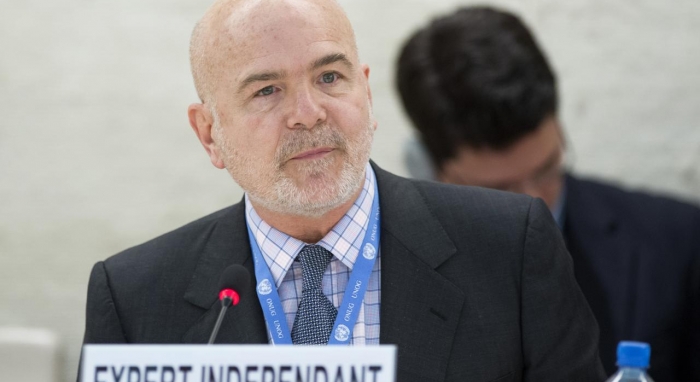
On 18 October 2019 the International Service on Human Rights (ISHR) reported on Special Rapporteur, Michel Forst, last appearnace before the UN General Assembly  making key recommendations to State and non-State actors and called for human rights defenders to be protected, and for authors of attacks and reprisals to be brought before justice.

On 15 October 2019, the Special Rapporteur on Human Rights Defenders Michel Forst presented his report (A/74/159) to the UN General Assembly’s Third Committee on the issue of impunity for attacks and reprisals against human rights defenders. This was followed by an interactive dialogue with States. This is the last time Forst will address the Third Committee in the capacity of Special Rapporteur. Forst voiced specific concern about digital attacks against youth and women human rights defenders, and expressed the need to protect them. He also expressed concern at specific attacks on human rights defenders living in isolated environments, as well as those working on sexual and reproductive rights and on sexual orientation and gender identity issues.

Impunity is used as a weapon by those who wish to undermine the rule of law and silence those struggling to uphold human rights. I echo Forst’s comment that impunity is a political choice, otherwise how do we explain that around 98 percent of killings of human rights defenders in certain countries remains unpunished?’ asked ISHR’s Tess McEvoy.

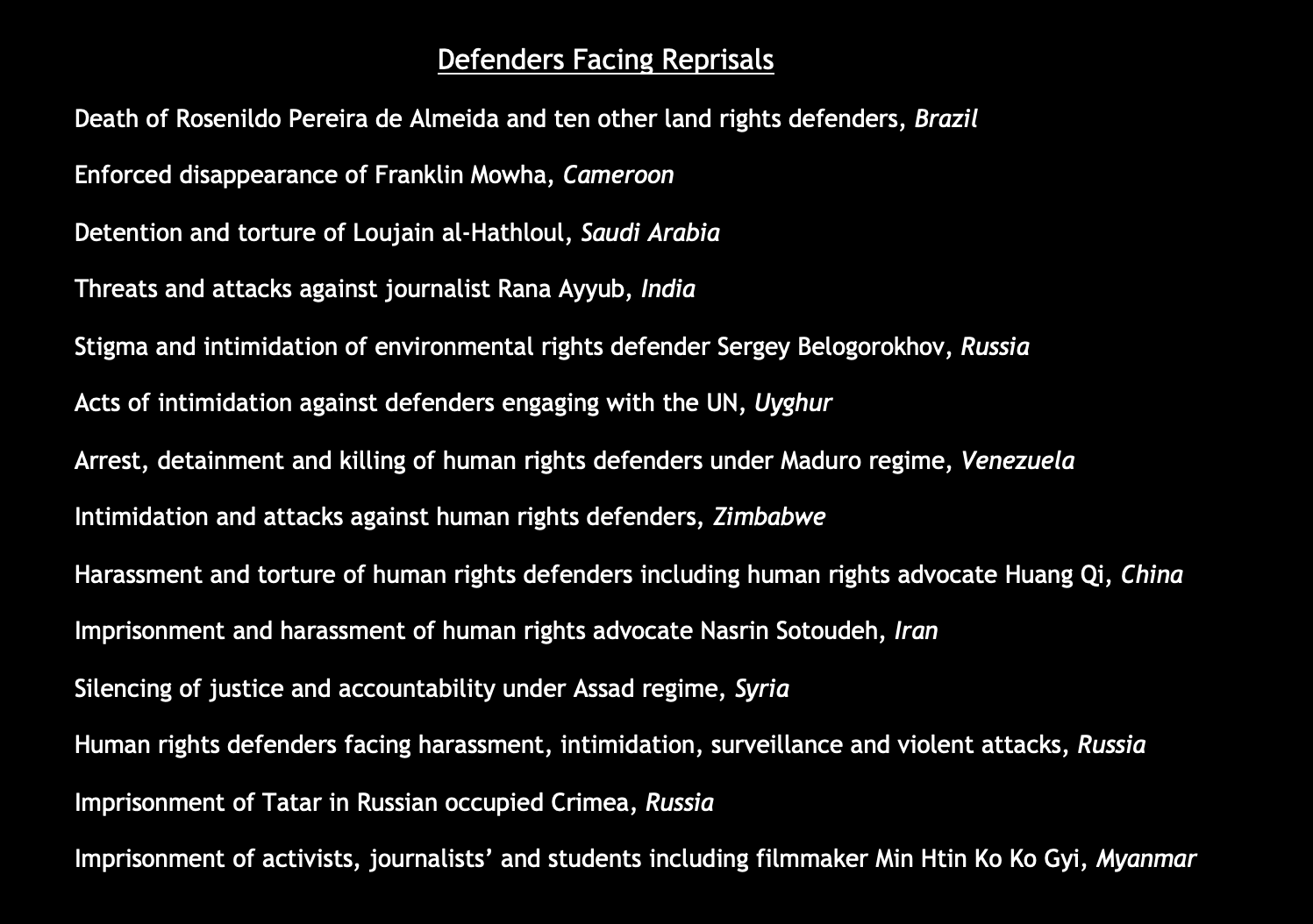
The Special Rapporteur – and the United States – highlighted individuals and groups from various countries who are victims of reprisals. These included:

The Special Rapporteur’s report made recommendations to States on ways to effectively combat impunity. These included:

  • Strengthening mechanisms for the protection of human rights defenders;
  • Criminalising acts of violence against human rights defenders; and
  • Adopting policies that protect the right to defend human rights whilst also recognising the obstacles that certain groups such as women human rights defenders and those protecting the rights of LGBTI and indigenous persons face.

These recommendations were echoed in a side event organised by ISHR and Amnesty International on 16 October, where women human rights defenders from Yemen and Myanmar provided harrowing accounts of attacks they face in their respective contexts.

Several States voiced their support for the report and the mandate, including Norway who called on all States to support this year’s resolution on Human Rights Defenders currently being negotiated. Notwithstanding the adoption by consensus of a definition of human rights defenders in the 1998 Declaration on Human Rights Defenders, the usual detractors – including Russia and China – sought to delegitimise the work of human rights defenders by questioning whether the term is universally recognised. China went further to suggest that individuals were using the ‘flag of defending human rights’ to violate the law.

Notwithstanding the primary responsibility of States to combat impunity for attacks against defenders, the Special Rapporteur again emphasised his call for non-State actors to protect human rights defenders, and concluded by referencing his 2017 report on Business and Human Rights (A/72/170).

https://www.ishr.ch/news/unga-74-states-must-put-end-impunity-reprisals-against-defenders

Applications now open for ISHR’s 2020 training for human rights defenders

November 7, 2019
ISHR is calling for applications for its flagship Human Rights Defender Advocacy Programme in 2020 – the extensive training programme for human rights defenders. So if you are a human rights defender keen to use the UN to push for change at home, you can apply now.

The training will take place in Geneva between 8 and 19 June 2020 and provides defenders with opportunities to put their advocacy skills directly into action at the 44th session of the UN Human Rights Council. The draft programme is here, and how to apply here.

ISHR’s Human Rights Defender Advocacy Programme (HRDAP) equips defenders with the knowledge and skills to make strategic use of the international human rights system. It also provides an opportunity for participants to directly engage in lobbying and advocacy activities at the UN level to effect change on the ground back home. As well as receiving training modules on all the UN human rights mechanisms from a range of experts, participants will also have the opportunity to build networks in Geneva and around the world, carry out lobbying of UN member States and UN staff, and learn from peers from a range of regions working on a range of human rights issues.

The programme brings togethers 16 committed human rights defenders from extremely different contexts and working on a wide range of areas: migrant rights; women human rights defenders in conflict, post-conflict & occupation settings; business, environment and human rights; the human rights of LGBTI persons; reclaiming civil society space and increasing protection of human rights defenders.

At the end of the training, 100% of participants were either “very satisfied” or “satisfied” with the overall programme, and they all also felt that they would be able to apply what they learnt to their own day-to-day work. ISHR will look to build upon this success in 2020.

Participants will take part in:

  1. A short online learning component, prior to face-to-face training, to enable you to consolidate your existing knowledge and develop your advocacy objectives;
  2. Intensive training in Geneva during June, to coincide with the 44th session of the Human Rights Council. The training will focus on ways to effectively use international human rights mechanisms and to influence outcomes;
  3. Specific advocacy at Human Rights Council sessions and other relevant meetings, with regular feedback and peer education to learn from the experiences, including expert input from leading human rights advocates.

This programme is directed at experienced human rights defenders in non-governmental organisations, with existing advocacy experience at the national level and some prior knowledge of the international human rights system.

In 2020, ISHR is particularly seeking applications from women human rights defenders working in conflict, post conflict and occupation settings. In addition, our work with migrant rights defenders aims to support coalitions and strategies to push back on the criminalisation of solidarity, as well as to ensure that the UN human rights mechanisms do their part to meaningfully raise the issue of migrants’ rights violations.

As we support human rights defenders across all the thematic areas, ISHR is working with these advocates to identify ways to push for safer environments at home, so that they are able to continue their vital work.

If you are interested in applying for ISHR’s training programme, please read the call for applications to check that you comply with the requirements, and apply before midnight Geneva time on 1 December 2019. The link to the online application form can be found in the call for applications. For more information, write to hrdap2020@ishr.ch.

https://www.ishr.ch/news/hrdap-ishr-2020-training-human-rights-defenders-apply-now-hrdap20

Third Committee of the GA also has a lot to do with human rights defenders

October 13, 2019

The UN General Assembly’s Third Committee will run for eight weeks from 1 October to 21 November this year. The International Service for Human Rights, which follows the UN human rights bodies diligently, put out an Alert for this 74th Session on 1 October 2019.

The Third Committee brings together a wide array of Special Procedures mandate holders, including Special Rapporteur, independent experts, and chairs of working groups that are mandated by the Human Rights Council to discuss some of the most pressing human rights concerns and present findings and recommendations to the Third Committee. These findings should in turn play a role in shaping the focus of resolutions negotiated at this session.

Third Committee is expected to consider approximately 60 resolutions on a range of topics, including:

  • the advancement of women
  • the rights and protection of children
  • the rights of refugees
  • the elimination of racism
  • self-determination
  • and social development, amongst others.

ISHR will be closely monitoring the work of the Third Committee as well as relevant developments in the plenary of the General Assembly and will report on key developments. Follow them on Twitter at @ISHRglobal using #UNGA74 for the latest updates.

Overview of Key Resolutions  

  • Human Rights Defenders (Lead Sponsor: Norway) – This year Norway will present the biennial resolution on human rights defenders. One year after the twentieth anniversary of the UN Declaration on Human Rights Defenders, implementation of the Declaration unfortunately remains far from adequate in a number of States. ISHR therefore welcomes the resolution’s continued focus on the Declaration’s implementation and urges States to ensure that the resolution includes calls for concrete activities and mechanisms to monitor and facilitate the implementation of the Declaration and previous resolutions on human rights defenders.
  • Terrorism and Human Rights (Lead Sponsors: Mexico and Egypt) – The Third Committee will consider a resolution relating to Terrorism and Human Rights. Previous resolutions on the topic have condemned terrorist acts as criminal and unjustifiable, and expressed concerns about their detrimental effects on the enjoyment of all human rights. The resolution is the result of the combination of two previously separate resolutions on the “Protection of human rights and fundamental freedoms while countering terrorism” and the “Effects of Terrorism on the Enjoyment of Human Rights” led by Mexico and Egypt, respectively. Civil society remains concerned that the combined resolution compromises language on State obligations to protect human rights by prioritising the impact of terrorism on human rights. ISHR hopes that language in the original resolution led by Mexico is not compromised and that this resolution upholds State responsibility and the rights of victims.
  • Safety of Journalists (Lead Sponsors: Greece, Argentina, Austria, Costa Rica and France) – A resolution on the safety of journalists is expected to be advanced at this session. ISHR will be watching this negotiation closely and hopes the resolution will be used to expand, rather than restrict, space for civil society and strengthen protections for human rights defenders.

Several country resolutions are expected again this session. For the 17th year, Canada will present a draft resolution on the Situation of human rights in the Islamic Republic of Iran spotlighting the continued dismal human rights situation and lack of progress over the last year. The European Union will again lead on a resolution on the Democratic People’s Republic of Korea, similarly underlining the lack of human rights progress. Ukraine will again present a draft resolution condemning Russia’s activities in Crimea. Resolutions on the human rights situation in Myanmar and Syria are also expected to be led by the Organisation of Islamic Cooperation and Saudi Arabia respectively.

ISHR remains concerned that China will again attempt to insert the seemingly harmless language of ‘win/win’ language in resolutions, which in fact focuses only on intergovernmental dialogue and cooperation, rather than actual human rights violations or accountability. This language risks shrinking space for civil society and roll back human rights norms across a number of resolutions.

Several resolutions are expected to become battle grounds regarding references to gender, and sexual and reproductive health and rights, including resolutions on the Improvement of the situation of women and girls in rural areas, Violence against women migrant workers, Rights of the Child, The girl child, The human rights to safe drinking water and sanitation,

Elections for the Human Rights Council are set to take place in mid-October as part of the General Assembly. ISHR is once again disappointed that this year a number of regions have presented closed slates. ISHR has published ‘scorecards‘ for each of the States seeking membership. These provide a brief overview of their human rights records, cooperation with civil society, past roles in the Council, and past engagement with UN human rights mechanisms.

Overview of Reports and Dialogues with UN Experts: 

The UN Special Procedures – Special Rapporteurs, independent experts, and working groups – will report to the Third Committee and hold interactive ‘dialogues’ with member States. Several of this year’s reports reflect concerns about increased attacks on human rights defenders and emphasise the critical importance of creating and maintaining space for civil society. Click here for a list and schedule of dialogues.

  • Report of the Special Rapporteur on the Situation of Human Rights Defenders – Combatting the currently widespread impunity for human rights violations that target human rights defenders is, according to Special Rapporteur Michel Forst’s report (A/74/159), “an essential prerequisite to guarantee human rights and to advance towards equal societies that are free from fear and violence.” He outlines a regulatory framework on the right to access to justice, including due diligence in investigations and elaborates on the de facto and legal barriers to access to justice. He offers essential guidelines for ensuring due diligence in the investigation of such violations. Good practices implemented by States and civil society are also described. He will present his report and an interactive dialogue will be held on 15 October 2019 at 3pm.
  • Report of the Special Rapporteur on the situation of human rights in the Islamic Republic of Iran – At least 32 Iranians have been arrested as a result of viral social media campaigns against compulsory veiling laws, such as the #whitewednesdays and “Girls of Revolution Street.” Human rights lawyer and defender Nasrin Sotoudeh was sentenced to 148 lashes and 38 years in prison last March for defending some of these women. BBC Persian staff have suffered reprisals for engaging with UN human rights mechanisms. These are only some of the attacks on human rights defenders that Special Rapporteur Javaid Rehman flags in his report (A/74/188), which calls on Iran to stop violating the rights of human rights defenders through intimidation, harassment, arbitrary arrest, deprivation of liberty, among other arbitrary sanctions. The Special Rapporteur will present and discuss his report on 23 October 2019 at 10am.
  • Report of the Independent Expert on protection against violence and discrimination based on sexual orientation and gender identity – In his report (A/74/181), Independent Expert Victor Madrigal-Borloz exposes the ways in which socio-cultural norms and discriminatory laws continue to marginalise and exclude LGBTI persons. In order to become fully inclusive of LGBTI individuals, he stresses that States cannot overlook the “vital role” of partnerships with civil society. He cites a number of partnerships in the fight against HIV/AIDS as particularly strong examples of this. Independent Expert Madrigal-Borloz will present his report and hold an interactive dialogue on 24 October 2019 at 10am.
  • Report of the Special Rapporteur on the promotion and protection of human rights and fundamental freedoms while countering terrorism – How can States truly integrate human rights into the global fight against terrorism that is increasingly shaped by elusive norms of ‘soft law’? According to Special Rapporteur Fionnuala Ní Aoláin’s report (A/74/335), one of the keys is for States to engage with and create space for civil society, non-governmental organisations, and human rights defenders to participate in the shaping of these counter-terrorism norms. Her report maps out how civil society access to these processes can be transformed from “ad hoc and inconsistent” to consistent and meaningful, ensuring that soft-law counter-terrorism norms are not at odds with human rights. The Special Rapporteur’s report will be presented and discussed on 16 October 2019 at 10am.
  • Report of the Special Rapporteur on the issue of human rights obligations relating to the enjoyment of a safe, clean, healthy and sustainable environment – Special Rapporteur David R. Boyd clarifies the obligations of States and businesses under a human-rights based approach to climate change in his report (A/74/161). These obligations include providing strong protections for environmental and environmental defenders who work on issues relating to climate change. In addition, the report examines how UN human rights mechanisms can be empowered to better address climate change. The Special Rapporteur will present his report and an interactive dialogue will be held on 24 October 2019 at 3pm.
  • Report of the Special Rapporteur on Freedom of Religion or Belief – Special Rapporteur Ahmed Shaheed expresses alarm in his report (A/74/358) about the rise of anti-Semitism around the world and the ways in which the underreporting of these hate crimes and lack of mechanisms to monitor them enable anti-Semitic hate crimes. The report finds that a lack of Jewish civil society engagement with UN human rights monitors only exacerbates this issue and calls on States to work more closely with Jewish communities and organisations to create mechanisms that fill this void. Special Rapporteur Shaheed ends his report with the recommendation that the Office of the UN Secretary-General appoint a senior-level focal point specifically responsible for monitoring and engaging with Jewish communities on this issue. He will present his report and hold an interactive dialogue on 17 October 2019 at 3pm.
  • Report of the Special Rapporteur on violence against women, its causes and consequences – In her report (A/74/137), Special Rapporteur Dubravka Šimonović stresses the need to address mistreatment and violence against women in reproductive health services from a human rights perspective. The report therefore calls for the creation of human rights-based accountability mechanisms and greater State collaboration with civil society organisations to address violence and mistreatment in reproductive and obstetric care. The Special Rapporteur will present her report and hold an interactive dialogue with the Third Committee on 4 October 2019 at 10am.

ISHR Events

Ending impunity for violations against Human Rights Defenders: see https://humanrightsdefenders.blog/2019/10/09/panel-against-impunity-for-abuses-against-human-rights-defenders-new-york-on-16-october/

  • Book Launch – ISHR will also be hosting a launch of Hurst Hannum’s new book ‘Rescuing Human Rights: A Radically Moderate Approach’ on 18 October at 1:15-2:30pm. Please contact Marina Wilbraham at m.wilbraham@ishr.ch if you are interested in attending. [see also: https://humanrightsdefenders.blog/2019/04/20/hurst-hannum-wants-a-radically-moderate-approach-to-human-rights/]
  • Venezuela on the Brink: The urgency of an appropriate international response to the crisis, where Eleanor Openshaw will be discussing the implications of Venezuela being re-elected to the Human Rights Council. 2 October at 10am in the Church Center, 777 UN Plaza.
  • Breakfast reception to mark the launch of URG’s new yourHRC.org Guide to the 2019 Human Rights Council Elections, where Madeleine Sinclair will be discussing ISHR’s ‘scorecards’ for each of the States seeking election to the UN Human Rights Council for 2020- 2022. October 10 at 8:30 am in Conference Room 6, UNHQ.

https://www.ishr.ch/news/alert-ga-74th-session-third-committee
The NGO Forum and the 65th session of the African Commission on Human and Peoples’ Rights

October 11, 2019

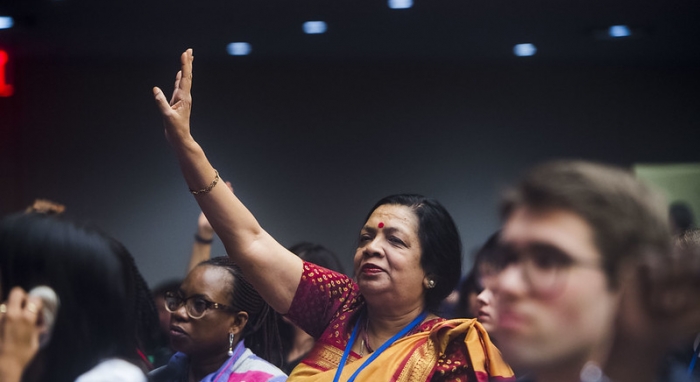
The 65th Ordinary Session of the African Commission on Human and Peoples’ Rights will be held in Banjul, The Gambia from 21 October to 10 November 2019. The African Commission session will be preceded by the NGO Forum and 39th African Human Rights Book Fair, which will take place from 17 to 19 October 2019.​ The ISHR gives a preview:

What will happen during the NGO Forum and 65th ordinary session of the African Commission?

The NGO Forum

Like every year, ahead of this session of the NGO Forum, a training on advocacy particularly focused on regional and international mechanisms will be organised. This year’s training is organised by CIVICUS and will be held from 15 to 21 October 2019. It will consist of three different elements:

  • Advocacy training will be conducted by our partner in The Gambia, from 15 to 17 October
  • Participants will then attend the NGO Forum, which is held ahead of the ordinary sessions of the African Commission
  • The 65th session of the African Commission will open on 21 October and participants will have the opportunity to put the training into practice

The Forum on the Participation of NGOs in the Ordinary Sessions of the African Commission, also known as the ‘NGO Forum’ is an advocacy platform coordinated by the African Centre for Democracy and Human Rights Studies (ACDHRS) to promote advocacy, lobbying and networking among and between human rights NGOs, for the promotion and protection of human rights in Africa. The NGO Forum shares updates on the human rights situation in Africa by the African and international NGOs community with a view of identifying responses as well as adopting strategies towards the promotion and protection of human rights on the continent.

Issues such as:

  • Resilience strategies and protection of displaced human rights defenders
  • The situation of statelessness in Africa
  • The status of intersex and transgender refugees in Africa
  • The rights of internally displaced people during armed conflicts
  • The use of surveillance technologies to stifle protest, expression and privacy in Africa

The 65th ordinary session of the African Commission on Human and Peoples’ Rights

  • Panel discussions
  • The importance of civic space participation in the 2030 and 2063 agendas, 23 October, 9.30 to 11am.
  • Panel on the Protection of Human Rights Defenders with a focus on Protection Laws, 23 October, 3 to 4.30pm

During every session, special mechanisms from the African Commission present their activity report. These reports catalogue the activities and initiatives undertaken by each mechanism inter-sessionally and includes one by the Special Rapporteur on Human Rights Defenders and Focal Point on Reprisals in Africa. For the full programme, click here.

ISHR will also organise side events, such as Ending intimidation and reprisals against those cooperating with regional mechanisms in Africa on 22 October 2019, 17.30-19.00 in the Kairaba Hotel, Banjul, The Gambia. This side event aims at providing more visibility and clarity on the Special Rapporteur’s mandate on reprisals, to share some lessons learned from efforts to address reprisals and intimidation at the international level, and to hone in on what more can be done at the regional level. In particular, the event will be an opportunity for the Special Rapporteur to share key information on how to engage with the reprisal’s aspect of his mandate through the presentation of the mandate’s working documents in this regard.

Panellists:

  • Remy Ngoy Lumbu, African Commission’s Special Rapporteur on Human Rights Defenders and Focal Point on Reprisals in Africa
  • Michel Forst, UN Special Rapporteur on the situation of Human Rights Defenders
  • Clément Voule, UN Special Rapporteur on Freedom of Association and Assembly
  • Madeleine Sinclair, ISHR New York Co-Director and Legal Counsel
  • A woman defender from Sudan

ISHR will monitor and report on key developments at the 65th ordinary session of the African Commission. Follow them on Twitter at @ISHRglobal, @ISHR_fr and at #ACHPR65.

https://www.ishr.ch/news/achpr65-alert-ngo-forum-and-65th-session-african-commission-human-and-peoples-rights