Posts Tagged ‘Irene Khan’

UN experts are turning the spotlight on Kenya over a troubling pattern of human rights violations – the case of Bob Njagi and Nicholas Oyoo

October 30, 2025
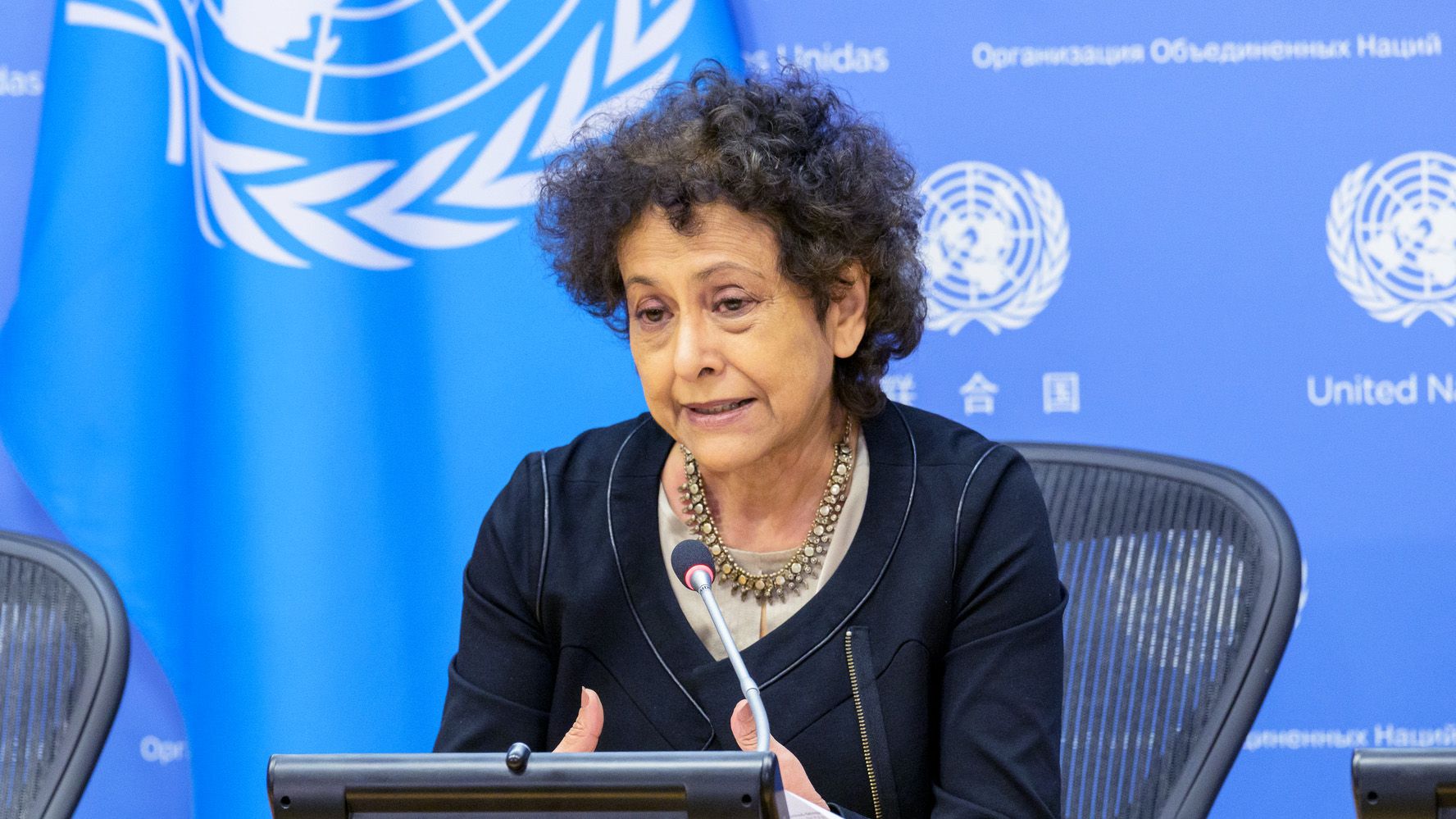
UN Special Rapporteur on Freedom of Expression and Opinion Irene Khan
Mary Lawlor UN Special Rapporteur for human rights defenders

On 5 August 2025 a group of United Nations human rights experts has written to the Kenyan government over allegations of serious human rights violations.  These violations include the killing of protesters, the arrest and detention of human rights defenders, the deportation of a Ugandan lawyer, and the suppression of media freedom during the June 25 protests across the country.

The letter (referenced AL KEN 3/2025,) was sent by four UN Special Rapporteurs, namely Mary Lawlor (Human Rights Defenders), Matthew Gillett (Arbitrary Detention), Irene Khan (Freedom of Expression), and Gina Romero (Freedom of Assembly and Association). 

Copies of the letter were also shared with the governments of Uganda and Tanzania, given their involvement in the alleged incidents. The Kenyan government was given 60 days to respond to the communication before being made public on the UN’s human rights website.

By October 22, Kenya had not responded to the contents of the letter. The experts expressed grave concern over what they described as “an emerging pattern of criminalisation and harassment of human rights defenders in Kenya.”

According to the communication, nationwide protests on June 25, 2025, left 16 people dead and hundreds injured. The demonstrations, which marked the first anniversary of the 2024 anti-Finance Bill protest, were allegedly met with excessive police force.

During the protests, several major media houses reportedly had their transmission centres raided by police and communication officials who switched off live broadcasts. The Communications Authority of Kenya allegedly issued a directive barring media outlets from airing live coverage of the protests,  a decision later suspended by the High Court in Milimani, which termed it “potentially unconstitutional” pending a hearing scheduled for October 24, 2025.

Kenyan youth confronts UN with tough questions in Geneva forum [VIDEO]

The letter cites the arrest of Mark Amiani, John Mulingwa Nzau, and Francis Mutunge Mwangi, all members of the Social Justice Centres Working Group, who were detained by police on June 27 while travelling to work in Mombasa.  They were later charged with incitement of violence, damage to property, and theft, though the experts said no credible evidence was presented in court.

They were held for five days before being released on bail on July 2, with conditions requiring them to report to the police twice weekly. Their next court hearing was scheduled for August 21, 2025.

Prominent activist and photojournalist Boniface Mwangi was also arrested at his Nairobi home on July 19, where police allegedly confiscated electronic equipment and even tear gas canisters.  He was charged with unlawful possession of ammunition and released on bail two days later.

The UN experts noted that Mwangi had previously been arrested several times and was abducted in Tanzania in May 2025, before being found in Kenya’s coastal town of Ukunda days later.

The letter further highlighted the deportation of Ugandan lawyer Martin Mavenjina, a senior legal advisor at the Kenya Human Rights Commission (KHRC), who was expelled from Kenya on July 5 despite having a valid residency and a Kenyan family. 

He was allegedly detained at Jomo Kenyatta International Airport and forced onto a flight to Kampala without being informed of the reason or given access to legal counselADVERTISEMENT

A day after Mavenjina’s deportation, armed men reportedly stormed a press conference hosted at the KHRC offices in Nairobi, where women and widows were calling for an end to police brutality and enforced disappearances.  The assailants allegedly destroyed journalists’ equipment and accused the women of organising protests. Despite reports being filed, no investigations have been launched, according to the letter.

UN calls for action and accountability: The UN experts urged the Kenyan government to clarify the legal basis for the arrests, detentions, and deportations, and to end the intimidation of journalists and human rights defenders. 

They also demanded investigations into the killings and injuries from the protests.

The experts warned that the events “constitute blatant violations” of international human rights laws, including the International Covenant on Civil and Political Rights, which guarantees freedoms of

But good news the two were found back after more than a month, see: https://www.monitor.co.ug/uganda/news/national/missing-kenyan-activists-freed-after-39-days-in-secret-ugandan-military-detention-5257852

and https://nation.africa/kenya/news/africa/kenyan-activists-bob-njagi-nicholas-oyoo-freed-after-diplomatic-pressure-on-uganda-5257840

and: https://k24.digital/411/activist-bob-njagi-opens-up-on-chilling-torture-he-faced-while-detained-in-uganda

https://www.pulselive.co.ke/articles/news/local/why-un-experts-are-calling-out-kenya-in-scathing-letter-to-government-2025102704150886531

https://nation.africa/kenya/news/abductions-kenya-risks-sanctions-for-ignoring-un-queries-on-human-rights-abuses-5245882

https://eastleighvoice.co.ke/national/231234/east-africa-law-society-warns-of-eroding-rule-of-law-as-kenyan-activists-tanzanian-diplomat-go-missing

https://nation.africa/kenya/news/kenya-responds-to-un-on-abductions-after-media-highlight-5249510

https://www.theeastafrican.co.ke/tea/news/east-africa/kenya-tells-un-it-acted-within-the-law-on-rights-5251392#google_vignette

https://www.msn.com/en-xl/africa/kenya/activist-reveals-possible-whereabouts-of-bob-njagi-and-nicholas-oyoo-claims-they-ve-been-tortured/ar-AA1PLNzW

https://www.the-star.co.ke/news/2025-11-08-activists-njagi-oyoo-freed-what-we-know-so-far
https://www.chron.com/news/world/article/kenyan-activists-released-from-ugandan-detention-21149624.php

UN experts call for justice for Tunisian human rights defender Sihem Bensedrine

August 12, 2024

UN experts called on the Tunisian authorities to respect the right to judicial guarantees and judicial protection of Sihem Bensedrine, who was arrested on 1 August 2024.

“In a context marked by the suppression of numerous dissenting voices, the arrest of Ms Bensedrine raises serious concerns about the respect of the right to freedom of opinion and expression in Tunisia and has a chilling effect on journalists, human rights defenders and civil society in general,” the experts said.

https://www.trueheroesfilms.org/thedigest/laureates/5A2E5622-80B0-425E-A2AE-2703983126B4

Bensedrine is the former President of the Truth and Dignity Commission (TVD) which documented the crimes committed under previous regimes, and a journalist who has long denounced human rights violations in the country.

Since 2021, she has been involved in a judicial investigation into the alleged falsification of a chapter in the TVD´s final report regarding corruption in the banking system. The independent human rights experts have already held discussions with the Tunisian government concerning this investigation.

“This arrest could amount to judicial harassment of Ms Bensedrine for work she has undertaken as President of the Truth and Dignity Commission,” the experts said. “It appears to be aimed at discrediting information contained in the Commission’s report, which could give rise to legal proceedings against alleged perpetrators of corruption under the previous regimes.”

The Special Rapporteurs urged Tunisia to uphold its obligation to protect members of commissions of enquiry into gross human rights violations from defamation and civil or criminal proceedings brought against them because of their work, or the content of their reports.

“We call for strict respect for Ms Bensedrine’s right to judicial guarantees, including the right to a fair trial by due process, impartiality and independence, and for an end to abusive proceedings and reprisals against her.”

The experts: Bernard Duhaime, Special Rapporteur on the promotion of truth, justice, reparation and guarantees of non-recurrence; Irene Khan, Special Rapporteur on freedom of opinion and expression; Mary Lawlor, Special Rapporteur on the situation of human rights defenders.

https://www.miragenews.com/un-experts-demand-justice-for-tunisian-rights-1292532/

https://www.ohchr.org/en/press-releases/2024/08/un-experts-call-justice-tunisian-human-rights-defender

https://www.hrw.org/news/2024/08/12/tunisia-hollows-out-its-media-landscape-ahead-elections

but then in February2025 comes the good news over releases:https://www.france24.com/en/live-news/20250219-tunisia-court-orders-release-of-top-rights-activist

Human Rights Defenders at Polish-Belarus border under pressure

February 18, 2022

Poland must probe into harassment of human rights defenders at Belarus border

Poland must investigate all allegations of harassment of human rights defenders, including media workers and interpreters, at the border with Belarus, and grant access to journalists and humanitarian workers to the border area ensuring that they can work freely and safely, UN human rights experts* said on 16 February 2022.

I am receiving several reports of harassments from human rights defenders who assist migrants and document human rights violations against them at the Polish-Belarusian border, and I am deeply concerned at this practice,” said Mary Lawlor, the Special Rapporteur on the situation of human rights defenders.

Jakub Sypiański, a volunteer interpreter assisting migrants and asylum-seekers, was reportedly stopped by armed soldiers when driving home in November 2021. The soldiers, who were in an unmarked vehicle, did not identify themselves nor explain their actions. They forced open the car door, took the keys out of the ignition and tried pulling him out by his legs.

“Most of the migrants at the border do not speak Polish,” said Mary Lawlor. “Interpreters play a vital role in ensuring their human rights are protected both at the border and in immigration detention centres.”

At around the same time, armed soldiers reportedly harassed journalists covering the arrival of migrants and asylum seekers. Soldiers who did not identify themselves stopped, searched and handcuffed photojournalists Maciej Moskwa and Maciej Nabrdalik outside a military camp. The soldiers searched their equipment, scrutinising their photos, and documented their phone messages and incoming calls.

Journalists Olivia Kortas and Christoph Kürbel, along with two local Polish residents, were allegedly harassed by soldiers while filming a documentary about the human rights situation of migrants at the border.

Reports that these journalists are being persecuted for documenting such human rights violations are appalling,” said Irene Khan, the Special Rapporteur on the right to freedom of opinion and expression. “Their work is crucial for everyone’s access to information about the situation unfolding at the border. If they are not allowed to do their job, there are very serious consequences for the human rights of migrants”.

“Interpreters and journalists, along with medics, lawyers and others who peacefully work for the protection of human rights or who provide humanitarian aid, are human rights defenders, according to the UN Declaration on Human Rights Defenders. Poland should bear this in mind and ensure that they are able to carry out their legitimate work in a safe and enabling environment and with full access to the border area,” said Lawlor.

The experts are in contact with the Polish authorities on the matter.

The experts’ call was endorsed by: Mr. Felipe González Morales, Special Rapporteur on the human rights of migrants, and Ms. Elina Steinerte (Chair-Rapporteur), Ms. Miriam Estrada-Castillo (Vice-Chair), Ms. Leigh Toomey, Mr. Mumba Malila, and Ms. Priya Gopalan, Working Group on arbitrary detention.

https://www.devdiscourse.com/article/law-order/1924185-poland-must-probe-into-harassment-of-human-rights-defenders-at-belarus-border

https://news.un.org/en/story/2022/02/1112032

Virtual Side Event on Freedom of Opinion and Expression and Academic Freedom today 9:00-10:00 EST in New York

October 21, 2020

Co-organizers:

●UN Special Rapporteur on the promotion and protection of the right to freedom of opinion and expression

●Permanent Mission of Finland to the UN

●Permanent Mission of the State of Qatar to the UN

●Open Society Foundations’ Education Program

●Scholars at Risk

Context: On Friday 23 October 2020 the Third Committee of the UN General Assembly will consider the report on academic freedom presented by the Special Rapporteur on the promotion and protection of the right to freedom of opinion and expression. The report focuses on the ways in which the freedom of opinion and expression protect and promote academic freedom, and the special role played by academics and academic institutions in democratic society when assured of institutional autonomy and self-governance. Without academic freedom, societies lose their capacity for self-reflection, for knowledge generation and for a constant search for improvements of people’s lives and social conditions. Drawing on examples from all regions of the world, the report highlights the repression and harassment of scholars and students, unlawful restrictions on freedom of opinion and expression that interfere with research, teaching, debate and discussion by the academic community in their institutions or in other fora, and various measures, from funding of research to hiring of professors and administrators, that are used to erode and attack the autonomy of academic institutions.The report provides clear guidance on the scope of academic freedom, recognizing that it is protected by a wide range of human rights norms and principles, including the right to freedom of opinion and expression. It encourages individuals and organizations to articulate their claims as violations of academic freedom, and concludes with a set of recommendations to States, academic institutions and civil society. The side event is aimed at discussing how the report’s findings and recommendations can be used to ensure the realization of the freedom of opinion and expression to seek, receive and impart information and ideas of all kinds, regardless of frontiers as an integral aspect of academic freedom and enhance the ability of academics and institutions to contribute to democracy and development around the world.Objectives

This side event will provide a forum to discuss the challenges to academic freedom, including social harassment and political repression of scholars, students, and institutions around the globe, as well as legal protections offered by international human rights law, including in particular the right to freedom of opinion and expression, and how the report’s analysis and recommendations can be used to protect the freedom of opinion and expression aspects of academic freedom worldwide.Modalities.

The one-hour moderated discussion will have the following format:

Opening remarks: H.E. Sheikha Alya Ahmed bin Saif Al-ThaniPermanent Representative of Qatar to the United Nations and H.E. Juan Ramon de la Fuente Permanent Representative of Mexico to the United Nations

Ms. Irene Khan, Special Rapporteur on the promotion and protection of the right to freedom of opinion and expression.

Presentation of the main findings and recommendations of the report Prof. David Kaye, former Special Rapporteur on the promotion and protection of the right to freedom of opinion and expression.

Panel discussion:

●Ms. Camilla Croso, Director of the Education Program of the Open Society Foundations, will highlight the role of academic freedom and its importance in advancing open and democratic societies

●Dr. Maleiha Malik, Executive Director, Protection of Education in Insecurity and Conflict, Education Above All Foundation, will discuss the particular challenges to academic freedom in countries affected by conflict

●Mr. Robert Quinn, founding Executive Director of the Scholars at Risk Network, will describe some current legal challenges and responses to pressures on academic freedom around the world

Concluding remarks: Ms. Irene Khan, Special Rapporteur.

UN Human Rights Council concluds 44th session and appoints four special rapporteurs, including Irene Khan

July 20, 2020

Thanks to ReliefWeb‘s detailed coverage of the UN Human Rights Council:

On 17 july The Human Rights Council adopted four resolutions dealing with the promotion and protection of human rights in the context of peaceful protests ; the situation of human rights in the Syrian Arab Republic ; the Social Forum ; and the contribution of respect for all human rights and fundamental freedoms to achieving the purposes of the Charter of the United Nations. It also appointed four Special Procedure mandate holders, and concluded its regular forty-fourth session.

The Council also appointed four new Special Procedure mandate holders : Marcos A. Orellana (Chile) for the position the Special Rapporteur on the implications for human rights of the environmentally sound management and disposal of hazardous substances and wastes ; Irene Khan (Bangladesh) for the position of the Special Rapporteur on the promotion and protection of the right to freedom of opinion and expression ; Tlaleng Mofokeng (South Africa) as Special Rapporteur on the right of everyone to the enjoyment of the highest attainable standard of physical and mental health ; and Siobhán Mullallay (Ireland) as the Special Rapporteur on trafficking in persons, especially women and children.

Yackoley Kokou Johnson, Vice-President of the Council and Rapporteur, noted that during the session, the Council had held 29 meetings, seven debates and 35 interactive dialogues, including with the High Commissioner on her annual report, as well as with 22 Special Procedure mandate holders, two commissions of inquiry and two special representatives of the Secretary-General, covering over 50 human rights themes and 40 country situations.

Elisabeth Tichy-Fisslberger, President of the Council, concluded by thanking those present for their dedication, flexibility and creativity in implementing many precautionary measures, proving that the Council could continue to do its important work in these difficult times.

The Human Rights Council is scheduled to hold its forty-fifth session from 14 September to 2 October.

https://reliefweb.int/report/world/human-rights-council-adopts-four-resolutions-appoints-four-special-procedure-mandate__________