In Newsweek of 21 September 2020 Basit Mahmood did an interview with Kenneth Roth who has spent 27 years as the executive director of Human Rights Watch (HRW) in which he warns that China poses a threat to the global human rights system, that U.S. is no longer to be relied on as a supporter of human rights and how this has left a void, emboldening autocrats who have used the pandemic to undermine democratic societies.
“China and the threat it poses to human rights both at home and around the world is a huge issue,” he says, identifying the current period as the darkest in China’s history when it comes to human rights since the Tiananmen Square massacre in 1989. More than a million Uighur Muslims have been put in internment camps in the country’s Xinjiang province, According to the United Nations (U.N.). China says the camps serve as “re-education” centers designed to combat extremism, but those who have managed to escape share stories of forced labor, torture, medical experiments and rape. Roth says: “The Uighurs are the most severe example of worsening repression under Xi Jinping (China’s prime minister). It’s quite clear that this is the darkest moment in China in human rights terms since the massacre of Tiananmen Square protesters in 1989, the Uyghurs have been the most grievous sufferers of that where a million or more have been detained essentially to force them to abandon Islam and their culture.” The worsening repression doesn’t just extend to minorities, it’s something Roth says we can see also occurring in Hong Kong and Tibet as well as against China’s own population more widely.
“There is no independent civil society,” he says. “There is no independent media, human rights defenders are routinely imprisoned. There is a complete lockdown on any organized public dissent and that is just across the board, not just minority population areas. China’s also building this so-called social credit system which is designed to condition access to various governmental benefits on one’s social reliability. So it’s using high-tech tools to control the population.“…
….
On the human rights challenges facing Europe, Roth expresses particular concern about the situation in Belarus, where the man dubbed “Europe’s last dictator“, Alexander Lukashenko, is facing widespread protests over a disputed election. Lukashenko has been in power since 1994, with the government frequently accused of repressing the opposition….
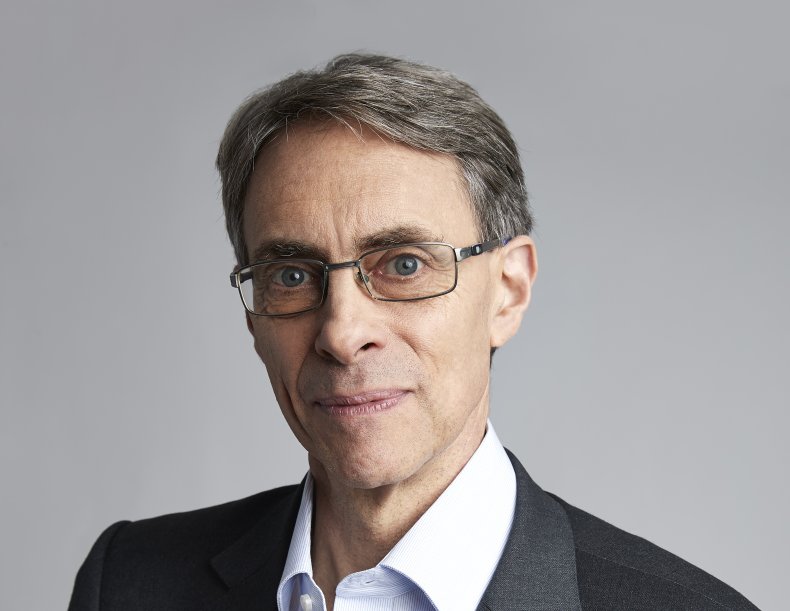
Kenneth Roth, executive director of Human Rights Watch
He also thinks India‘s Prime Minister Modi has got away with what he calls his systematic discrimination against the country’s 172 million Muslims because of the West’s desire to tap into Indian markets and use it as a counterweight against China, which Newsweek will be reporting on in the coming days.
Roth is highly critical of the Trump administration, accusing the president’s foreign policy of being driven by the guiding principle of “self-glorification” and only speaking out in defense of human rights when the offending country is a perceived adversary.
“Trump is utterly uninterested in calling out any human rights violation by anybody other than a handful of perceived adversaries, China, Venezuela, Iran, Nicaragua and Cuba and that’s about it, which is a completely unprincipled approach to human rights which does not attract any adherence and greatly weakens the force of US intervention,” he says. “Human Rights Watch has been living with Trump for four years now and we have already stopped relying on the U.S. as anything like a principled supporter of human rights.”
With the U.S. increasingly withdrawing from the world stage and with the European Union not really filling the void, as he says, is there a new approach to the defense of human rights emerging?
Thanks to student Amrita Nair in the Leaflet of 14 September 2020 we have a good report of Indira Jaising‘s webinar: “The nature of the Legal Profession: Its role, challenges and limitations”
The motto of the courts is “The truth shall prevail.” Speaking at a webinar held by The Lawsters on the subject, “The nature of the Legal Profession: Its role, challenges and limitations”, senior lawyer Indira Jaisingremarked, “One can never know what the truth really is as we, as lawyers, are no eye witness to what happened. Our role is to serve the seekers of justice and help the court do justice.” The task of a lawyer is a difficult one, as they have to completely identify with the person they represent and believe their version on one hand, while on the other, they have to try to serve justice by helping the courts in their quest for finding the truth. It puts them in a situation where it becomes imperative to become dispassionate about their work “but being dispassionate about a case should not be seen as being dispassionate about the quest for justice, equality and non-discrimination,” she said. [re Jaising see also: https://humanrightsdefenders.blog/2019/07/22/retired-civil-servants-in-india-come-out-to-support-human-rights-defenders/]
She referred to the courts as the conflict zones and lawyers being people who resolve conflicts.
Quoting Atticus Finch, Jaising stated that the courts are to be great levelers where all men must be treated equally, but alas, this is ideal, but not necessarily the situation. Bias, blind prejudice, and lack of access to legal services have created huge gaps between people, making them less equal from one another. People come to the courts for all sorts of reasons. But the largest litigant in the court of law is the State, being respondent in a plethora of cases relating to fundamental rights violations and enjoying the monopoly for prosecuting crimes, among other things. While the state has the privilege to prosecute crimes, several individuals find themselves arrayed as accused persons in these cases, warranting the help of legal representation to prevent being stripped off of their right to life and liberty. The fight of an individual against the might of the state is unequal in criminal cases, making the system intrinsically unequal and discriminatory. Not every individual has the resources to hire a lawyer who could represent their case to the best of their capabilities. It is during such times that lawyers must come to the rescue of the unfortunate and underprivileged, to help restore balance in the system.
Jaising traced back the history of the evolution of the legal profession, stating that India got it from the British and emphasised how important it is to study the history of courts to understand how and why they function the way they do, today.
She spoke about the concept of the Star Chambers where the proceedings went on in closed chambers with only the judge, the jury, and the executioner present. Emphasis was laid on how there was no legal representation allowed and everything depended on how a person defended his own case, making it highly arbitrary as not everyone possessed the skills to defend themselves.
The emergence of the legal profession came with the modern judges having local experience and the position of the Barrister being created, with wide powers including the power to remove other advocates. The judicial system has come a long way since then, with modern-day High Courts and the Supreme Court making their own rules and the monopoly of Barristers being removed.
The Indian Bar Council Act was enforced with the objective of unifying various practicing advocates under the banner of lawyers or the members of the Bar. The Bar Councils were given more powers with regard to the decisions in matters of education, regulation and appointment. The Advocates Act of 1961 established an All India Bar which had wide powers and duties in regard to the legal profession.
Jaising remarked that the rejection of the Star Chambers and the need to protect the life and liberty of the people is what our system is based on. Lawyers are the frontline warriors and defenders of rule of law, which is a basic feature of the Constitution.
She said it was the duty of the lawyers in defending and upholding the values of the 73-year-old Constitution of India.
While speaking about the Parliamentary form of government, Jaising observed that the government does may claim to represent the will of the people, but their decisions and laws are subject to judicial review and even a majoritarian government cannot violate the basic features of the Constitution. It was the duty of the lawyers to question them when they seemed to deviate from the constitutional principles and mandate.
Addressing the issues surrounding the independence of the judiciary, Jaising stated that there cannot be an independent judiciary without the independence of the legal profession. Just as there exists the separation of powers between the three branches of the government, lawyers must be independent of judges. They must be allowed to make bona fide criticism of judges and the judgements or else the system gets reduced to the archaic Star Chambers, without any voice of opposition.
She explained that being charged with contempt of court charge by the judiciary threatened the independence of the legal profession. Prashant Bhushan’s case being a recent example. In Bhushan’s case, the court exercised powers to convict him dehors the Contempt of Courts Act, 1971. Fundamental rights can only be restricted by law and not by relying on the inherent powers to convict, the court threatened the freedom of speech and the independence of the legal system by bypassing the Act.
“Lawyers need to be respectful of judges, but not sycophants. Lawyers who bend over backward for judges pose a threat to the independence of the legal system,” she said.
According to her, an attack on one lawyer is an attack against the entire profession. The ability of lawyers to speak truth to power must be defended collectively through Bar Associations and Bar Councils. The need of the hour is more Bar Associations that speak out on issues of Human Rights, she said.
Jaising explained how the police were often the biggest lawbreakers, relying on the media to defame the innocent. Press conferences being held by the police while the case is sub judice brings prejudice into the matter and amounts to contempt of court. It is the lawyers that step in to defend the individuals against the might of the State and a prejudiced media, she said.
She pointed out that the right to legal representation itself is under attack. She spoke of how the State had the time and again targeted various lawyers defending the foundations of the Indian Constitution by standing against CAA, defending human rights, criticizing the State among other things. As lawyers and members of the legal community, despite all attacks, the only way to live is to stand up for our rights.
When asked about the pay gap between a corporate job and litigation and whether one would have enough to fend for themselves if they take up the litigation route, Jaising made an observation that the ones who chose the corporate path realised soon that the pursuit of wealth is not giving them any satisfaction. She responded by saying that all law students must come together and demand that all juniors working with a senior advocate must be paid a minimum amount of salary that is pre-decided and equal for all. It must be taken up at an institutional level and the Bar Council must come up with a rule to tackle this problem. Like in the US, ones engaging in pro bono work must have their loans waived and must do a mandatory 2-3 years of pro bono with law firms. She encouraged students to engage in work that they’re passionate about and not be driven by the quest for money. The satisfaction derived out of the work is priceless and one will never feel the lack of money when they engage in the work that they love and are passionate about.
In response to a question regarding the emotional connect of a lawyer with a client and the righteousness of the law and how it might prove to be an impediment, Jaising said that it is always possible to have an emotional connection with the client while also being dispassionate about the case. It is important to not make a conflict out of the two. One must not lie or manipulate the record but make the judge see the law as they see it or how the law ought to be seen.
“Get up, stand up and stand up for your rights!” said Jaising. She urged law students and lawyers to become human rights defenders and fight for principles they believed in.
A photo of human rights defender Nandini Sundar, one of those the Chhattisgarh Police had falsely charged for the murder of a man in Sukma district in 2016. | Nandini Sundar/Twitter
The National Human Rights Commission has ordered the Chhattisgarh government to compensate human rights defenders Rs 1 lakh each, for allegedly false cases filed against them. The commission had in February asked the Congress government in the state to comply within six weeks.
Human rights defenders Nandini Sundar, Archana Prasad, Manju Kawasi, Vineet Tiwari, Sanjay Parate and Mangla Ram Karma said that on November 5, 2016, the Chhattisgarh Police lodged first information reports against them under various sections of the Indian Penal Code, Arms Act and Unlawful Activities (Prevention) Act for the alleged murder of a person in Nama village of Sukma district. The Bharatiya Janata Party was in power at that time. “The case was supposedly filed on the written complaint of Shyamnath Baghel’s widow, Vimla Baghel,” they said in a press release. “However, she is on record saying she did not name anyone.” On November 15, 2016, the Supreme Court gave the individuals protection from arrest. However, they filed a fresh plea in the Supreme Court in 2018 as the matter had not yet been investigated or closed. The Congress-led Chhattisgarh government initiated a probe in the matter and in February 2019, concluded that the defenders were innocent.
In February this year, noting that the Chhattisgarh Police’s admission that there was no case to be made out against the signatories, the NHRC said that the individuals would have “certainly suffered a great mental pain and agony as a result of registration of false FIRs against them by the police”. “Therefore we recommend and direct the Government of Chhattisgarh through its Chief Secretary to pay a sum of Rs One Lakh each as monetary compensations to the six persons namely Prof Nandini Sundar, Ms. Archana Prasad, Shri Vineet Tiwari, Shri Sanjay Parate, Ms. Manju and Shri Mangla Ram Karma, whose human rights were gravely violated by the Chhattisgarh police,” the NHRC ruled.
The commission also directed the Chhattisgarh government to provide the same compensation to a group of lawyers from Telangana who were acquitted of all charges after being put in jail in Sukma for seven months. However, the six human rights defenders indicated that they had not yet received the compensation. “We welcome the NHRC order and hope that the Chhattisgarh government will act promptly to redress the reputational loss and mental agony suffered by us,” the press release said.
The signatories also said they hoped the police officers responsible for filing false charges against them, especially SRP Kalluri who was then the Bastar inspector general of police, will be investigated and prosecuted.
The defenders added: “To date, despite NHRC recommendations in 2008 and repeated Supreme Court directions, the Government of Chhattisgarh has not compensated the thousands of villagers whose homes were burnt by Salwa Judum or prosecuted those responsible for rapes and murders. Fake encounters and false arrests continue to be a grave concern in Chhattisgarh.”
Salwa Judum was a militia organised and mobilised by the government in Chhattisgarh to break the back of Maoist violence in the region. In July 2011, the Supreme Court declared Salwa Judum an illegal organisation, and ordered it to disband. However, the organisation continues to survive in the form of various vigilante groups operating in Chhattisgarh.
The signatories thanked the People’s Union of Civil Liberties for taking up all the cases of human rights defenders in Chhattisgarh, and said it was unfortunate that PUCL Secretary Sudha Bharadwaj had been arrested and imprisoned under “false charges” in the Elgar Parishad case.
Governments who were lauded for releasing prisoners in response to COVID-19outbreaks have in fact excluded human rights defenders from the measures and continue to make new arrests of activists, journalists and critics.
In a new briefing, “Daring to Stand up for Human Rights in a Pandemic”, which documents attacks on human rights defenders during the pandemic, the organization highlights the hypocrisy of governments including Egypt, India, Iran and Turkey, who have left prisoners of conscience to languish in appalling conditions despite widely publicized prisoner release programmes.
“COVID-19 has been an added punishment for human rights defenders who are unjustly imprisoned, and has also been used as a pretext for further harassment, prosecution and even killings,” said Lisa Maracani, Amnesty International’s Researcher on Human Rights Defenders. “The exclusion of human rights defenders from release measures underscores the political nature of their imprisonment. In Turkey for example, journalists, lawyers, activists and opposition politicians held in pre-trial detention on baseless charges remain behind bars despite government measures that have seen over 100,000 people released since April. It is plain to see that the Turkish government still fears criticism more than the pandemic.”
The new briefing documents attacks on human rights defenders during the COVID-19 period in 46 countries, and shows how “fake news” laws, movement restrictions, reduced police protection and heightened intolerance to criticism have led to new crackdowns around the world, including against whistle-blowers in the health sector and those highlighting inadequate responses to the pandemic.
Amnesty International has identified 131 people who speak up for human rights globally who have been harassed, prosecuted, killed or imprisoned on COVID-19-related pretexts – this figure is likely to be the tip of the iceberg.
On 25 March 2020, the UN High Commissioner for Human Rights urged all states to release “every person detained without sufficient legal basis, including political prisoners, and those detained for critical, dissenting views” in response to the COVID-19 pandemic. However, several countries excluded human rights defenders from decongestion measures in prisons and other places of detention. [see also: https://humanrightsdefenders.blog/2020/05/30/virutal-human-rights-council-adopts-presidents-statement-on-implications-of-covid-19/]
In India, for example, many students and activists who had participated in peaceful protests against India’s discriminatory citizenship law continue to be unjustly detained.
In Egypt, the government failed to release human rights defenders detained solely for expressing their views, as well as thousands of other pre-trial detainees, many of whom are facing overly vague “terrorism”- related charges amid concerns over breaches of due process.
In Turkey, decongestion measures have explicitly excluded those who are held in pre-trial detention, and those who are on remand for or have been convicted of offences under Turkey’s overly broad anti-terrorism laws. They include political and human rights activists, journalists, academics, and others who have spoken out against the government.
In Iran, authorities announced that they had temporarily released 85,000 prisoners but many human rights defenders continue to be held on politically motivated charges in appalling conditions.
They include Narges Mohammadi, a human rights defender who suffers from serious pre-existing health conditions and is showing suspected COVID-19 symptoms. The authorities continue to deny Narges Mohammadi health care in prison, and refuse to inform her of the results of a COVID-19 test taken on 8 July. Note that today (6 Augusrt 2020) th Voice of America reported: “in a written message sent to VOA Persian on Tuesday, Mohammadi’s husband, Taghi Rahmani, living in exile in Paris, said the dangerous phase of his wife’s illness had passed. Rahmani said his wife had been at risk of serious health complications if the illness had spread to her lungs, which already had been hobbled by a preexisting disease.”[https://www.voanews.com/middle-east/voa-news-iran/jailed-iranian-journalist-mohammadi-out-danger-coronavirus-husband-says]
Amid the crisis, Iranian authorities have also continued to arbitrarily arrest and imprison human rights defenders. In other countries where prisons are already severely overcrowded, governments have continued to arrest human rights defenders on trumped-up charges, exacerbating the problem and putting more people at risk. In Azerbaijan for example, the government has mounted a new wave of arrests and prosecutions of dozens of political activists, journalists and human rights defenders, often in response to their criticism of the government’s handling of the pandemic. Among those arrested are opposition activist Tofig Yagublu on bogus charges of hooliganism, and human rights defender Elchin Mammad, who was arrested on theft charges days after he published a report on the human rights situation in the country.
New arrests of human rights defenders have also been reported in Tunisia, Morocco, Niger, Zimbabwe and Angola, among others.
“International cooperation must also include pressuring governments to release people who are in prison simply for peacefully exercising their human rights, and who are now at serious risk of contracting COVID-19.” said AI/
In Honduras, the most serious recent incident includes the possible forced disappearance of five young men, four of whom are activists with the Black Fraternal Organisation of Honduras (OFRANEH). They were taken from their homes on 18 July by men wearing police uniforms and have not been seen since.
In Colombia, civil society organization INDEPAZ has reported 166 killings during the first six months of 2020. Among them was Carlota Isabel Salinas Pérez, a women’s rights activist killed outside her home in March. Carlota was a community leader and had been collecting foodstuffs for families in need on the day she was killed.
“Now more than ever, the work of human rights defenders is essential in fighting for equal access to healthcare, food and shelter, and informing the public about the virus and ways to protect themselves. Governments who exploit this crisis to attack human rights defenders should know they are being closely watched,” said Lisa Maracani. “It is vital that governments provide effective protection to human rights defenders and ensure they are safe from those attempting to exploit the pandemic and silence them.”
Asfreeas Jafri in Politics, of 14th July, 2020 wrote a fascinating opinion piece which I think deserves more attention. It is mostly about India but has wider implications: for ease of reference here the full text:
One complaint I often get from friends is that I say very “offensive” things online. My Facebook, Twitter, and Instagram, they accuse, are filled with the same sad and angry words against Islamophobia. Although despite my repetitive rants, they continue to ignore the agony of these words.
On July 10, 2020, the Turkish president announced that Hagia Sophia would be a mosque again.
Amongst other things, I am accused of being biased. Also, I am accused to be writing for a vested agenda. Usually, my Hindu friends make these allegations since I write a lot about the persecution of Indian Muslims. However, recently I noticed Muslim friends on social media making the same kind of accusations against those who expressed displeasure at the conversion of Hagia Sofia into a mosque.[ see also: https://humanrightsdefenders.blog/2020/07/06/the-unholy-wisdom-of-invoking-sovereignty/]
A few days back, some of them were irked after being questioned for running a homophobic WhySoProud trend on Twitter. This time the allegation against those Muslims who opposed this conversion is that they are doing this to please “Hindu liberals”.
Those who make these charges are undermining our agency and reason. It is insulting for me to think that what I and several other Muslims write, is not out of our individual agency and free will. When someone as outspoken as Umar Khalid is accused of doing that by several Muslims, I feel that we need to introspect.
The attackers are overlooking Umar’s incisive critique of Islamophobia in the Indian left. Muslims who are opposed to this are being called apologetic. I never pledged allegiance to the new sultan of Turkey. Not calling out Erdogan’s vile actions or political gimmicks does not fill any Muslims with a sense of vicarious guilt, at least in front of people we are allegedly supposed to be pleasing. But to say that those who dislike Erdogan are apologetic is quite irresponsible.
I will any day stand with someone like Umar Khalid who has been a constant ally in the fight against Islamophobia, rather than choosing a faraway ‘Sultan’ who is hardly bothered about the existence of Indian Muslims. It is people like Umar whose strong and sharp words have made young Muslims more unapologetic and bothered about their rights than their predecessors.
The other charge was against those liberals who wanted schools and hospitals on that disputed land, some congress leaders and “practising Hindu atheist” liberals like Dhruv Rathee who had strongly supported the Ayodhya verdict but are now opposed to Erdogan’s move. To many people’s shock, they had claimed that the Ayodhya verdict was respectable to all sides and that it will put a halt to the hate against Muslims. It did not halt. It actually increased.
I agree that this hypocrisy should be called out but when you also support either of the two majoritarian displays of power, are you not a hypocrite too? Also, what about those who have been vehemently opposed to the demolition and protested the SC verdict on Ayodhya? Do they have the right to comment on this?
Some found the comparison of Hagia Sofia with Babri Masjid as problematic. They said that it is not as bad in Turkey as it is in India. Umar rightly asks, ‘are we waiting for it to be that bad?’ Babri was illegally demolished and mobs killed hundreds. The history of these two events is different but what makes the comparison fair is how the Indian and Turkish governments and judiciary ignored the sentiment of the Muslim and Christian minorities. That the majoritarian will become the conscience of the state is starkly similar in both these cases.
As per media reports, Christians were blamed for spreading Coronavirus in Turkey. Consequently, some churches were attacked. The Christian community has faced mysterious disappearances and deaths, attacks and propaganda in recent years.
Turkey’s President Recep Tayyip Erdogan
Recently, a group of Erdogan backed lawyers published an article to “redo” what happened in Armenia. As somebody who often hears Hindutva extremists warning to repeat 2002, which they eventually did in North East Delhi earlier this year, I understand the consequences of these hateful words. The increasing murderous hate attacks on Kurds in Erdogan’s Turkey are known to everybody except those who deny the Armenian genocide.
Erdogan supporters see him as the emperor of the neo-Ottoman empire. The majority rallies behind his brand of Islamic nationalism. Through a constitutional referendum, he has vested immense new authority in himself. Institutions look timid. Rogue opposition is either tamed or jailed. Rivals have been pushed into a tunnel of silence.
The pandemic was used to target the feeble opposition while political prisoners languishing in jails were given no relief. Amnesty International observed that rivals have been targeted using anti-terror laws during the pandemic.
Apart from the political opposition, universities, intellectuals, writers and journalists have invited the severe wrath of the Sultan. Many “Anti-national” academics have lost their jobs in recent years. Many renowned Human rights defenders and lawyers are behind bars.
Ever since the failed coup, suspicion and divisions amongst the Turks has reached new heights. The recent losses in elections, a growing economic crisis and waning popularity of the ruling party are being seen as the reasons behind these desperate populist decisions.
Many wrote that the mosque was “bought” by the Ottomans centuries ago. I did not want to argue about that since copies of the receipt in modern digital font and scanned PDFs of the transaction are easily available on WhatsApp! Several individuals shared stories of Israel, Greece and Spain converting mosques into other structures. This was followed by “where were you then” and whataboutery. Ironically, if you are opposed to what the aforesaid nations did, then you should be opposed to what Turkey did as well.
At the same, I also acknowledge that the western media and academia in the post-cold war world villainised Islam and Muslims. The “Muslim victim” did not fit into the “war on terror” narrative pushed by the west.
The attack on Islam and Muslims did not receive the same kind of recognition or outrage, and was side-lined. Writers like Chomsky and Edward Said have noted the West’s white-washing of its crimes in that part of the world and its malicious contempt for Islam. This has increased anti-West hostility in that region.
A few months ago, I read a blog post while casually scrolling on social media. A young Erdogan critic made a very significant point which I think should be thought about more in the above-mentioned context. He said that as long as the western standards of Human rights will be limited to the people living on the American soil, as long as the west hates on ordinary refugees and working-class innocent Muslims, as long as the occupation and Persecution of Palestine are seen as Israel’s sovereign right, as long as people deny what the US did to ordinary Iraqis, people in the Middle East will continue to invest in defenders who eventually oppress.
In December, while protesting the CAA at Jantar Mantar, I spoke to the Wire and NDTV. That video went viral on social media. It was shared by hundreds of Muslims in Pakistan including actress Mehwish Hayat.
On that thread, many Pakistanis had expressed solidarity with Indian Muslims. I replied to one of the comments, “The best Pakistani Muslims can do in the interest of Indian Muslims is to set a good example for India’s Hindus by treating their minorities well.”
It angered a lot of people. They replied with “Thank you Jinnah” taunts. Many users made the same comments on Indian Muslim handles after the Delhi violence.
What were they actually mocking? They were mocking the fact that Indian Muslims refused to go to Pakistan to be a majority and instead chose to live as a minority in India. This also suggests that they believe minority persecution is natural and that Indian Muslims missed an opportunity to be a persecuting majority. The recent demolition of a Hindu religious structure in Islamabad or the post-Babri demolitions and attack on Hindu religious sites in Pakistan and Bangladesh describe majoritarian solidarity aptly.
On the recent Krishna temple debate, I saw an interesting thread on Twitter where a Pakistani Muslim was explaining it to a Pakistani Hindu that Temples are not essential to the faith20 of Hinduism while mosques are essential to the faith of Islam.
People demolishing the Babri Masjid.
In India, the judiciary applied the same principle to say that mosques are not necessary for prayers. This opens a door to another important debate: Are laws merely a manifestation of the majoritarian interpretation of morality and righteousness?
Even in the West, the so-called cradle of secularism, minorities face rampant discrimination and attacks. The recent murder of George Floyd in broad daylight attests to that. The need of the hour is strong debate around majoritarianism. It must gain global momentum.
As long as we are afraid of losing friends and being unpopular, such a debate is not possible. Right now, our only “agenda” is to rattle our people’s numbed conscience. We need to be courageous to be truthful. Sometimes, we have to offend those who like us when we offend others.
When violence becomes an everyday character of society, when irrationality overpowers reasons, when cruelty is seen defence, when injustice flows in a people’s vein, when malice rules their heads, oppression pleases their hearts and vulgarity embeds itself in their “proud” nation’s soul, writers are bound to protest, annoy, and be repetitive in what they write.
The admittedly Pakistan-based Geonet.tv gives a good summary of India’s disregard of concerns and objections in five letters by UN Human Rights Council (UNHRC) about human rights abuses in Jammu and Kashmir, India’s new terrorism law and the Citizenship law.
In the five letters, UNHRC experts raised pertinent questions and pointed out violations by Indian authorities of the resolutions by UN Security Council, General Assembly and UN Human Rights Council…
On July 4, 2020, United Nations Human Rights Council (UNHRC) made public 14 cases of worst possible human rights abuses in Jammu and Kashmir after the Indian government failed to respond to their concerns within the stipulated 60 days.
Four UNHRC Rapporteurs on torture, extrajudicial executions, minority issues and freedom of religion under HRC charter and mandate had written to Indian government on May 4th, 2020, to respond back on the 14 cases and countless other cases involving grave abuse of human rights in Kashmir after its annexation on Aug 5th, 2019. The UN Rapporteurs in the May 4th letter lamented that Indian government had not responded to their earlier letters on Aug 16, 2019, and February 27, 2020, on the atrocities in Kashmir. The two earlier letters questioned the restrictions in Kashmir on rights of expression and assembly and dissent following Indian annexation of Kashmir.
In another letter on May 6th, 2020, eight Rapporteurs of UNHRC and one Vice Chair of a Working Group raised serious concern on the new anti-Terrorism law passed by Indian parliament just before Indian annexation of Kashmir in July/Aug 2019. UNHRC questioned the detention of any accused for an extended period of six months under the new anti-terror law
In another letter on February 28th, 2020, eight Rapporteurs of UNHRC and one Vice Chair of a Working Group questioned the Indian Citizenship Act of December 2019 which discriminates against Muslims and bars them to get Indian citizenship whereas people from different religious beliefs who entered Indian before Dec 2014 are eligible for it. The letter also heavily criticise excessive use of force to quell protests against this Act which resulted in death of over 50 and injuries to hundreds.
In “Media oppression is a shifting landscape” by Sevanti Ninan (a media commentator and founder-editor of TheHoot.org) published on 29 June 2020 in the Indian Telegraph you wil find a good analysis of the problems of news gathering in the current situation. It is about India but the analysis would be valid for many countries.
Arms of the government see journalism (of all kinds) not as a useful source of feedback at a time when the population is in distress but as a nuisance to be squashed. Fake news is no longer seen only as an electronic menace but as reporting with malign intent, whether in Kashmir or elsewhere. Pexels
For some years now, the growing challenge to journalism has come from the increasing use of predictable laws (think of sedition and criminal defamation in the Indian Penal Code)….but media oppression is a shifting landscape. Tracking its changing features is just the first challenge. While the onset of Covid-19 has led to the government putting hitherto under-used laws to work, such as the Disaster Management Act and the Epidemic Diseases Act, these have been used in tandem with Sections of the IPC to criminalize reporting of the government’s response to the pandemic as well of the outcomes of its handling, such as the migrant exodus. Panicky administrations across the country have, so far, used no less than 14 Sections of the IPC and Sections of the IT Act (including the one that was struck down), the DMA, the Unlawful Activities (Prevention) Act, the Motor Vehicles Act and the provisions of Scheduled Castes and Tribes (Prevention of Atrocities) Act to issue showcause notices, lodge first information reports against reporters and arrest, confine and torture them.
If newsgathering is being criminalized in some parts of the country, it is being policed in Jammu and Kashmir… it has been gifted a 50-page media policy, which makes the government the arbiter of fake news and mandates background checks of media owners and editors if they are to receive government advertising. Charming! Who knows what will follow elsewhere in the country.
Overall then, a convergence of factors is at work. Arms of the government see journalism (of all kinds) not as a useful source of feedback at a time when the population is in distress but as a nuisance to be squashed. …
Electronically disseminated fake news, until now, was in the domain of technology. But when the charge is levelled at reporting on the ground in far-flung areas of the country, it enters the domain of physical fact-finding. Busting fake news with internet tools is one thing. Doing it for field reporting is quite another.…..
..What support structures can be put in place? The country has a Press Council, a Human Rights Commission and numerous courts. But it needs a growing network of human rights defenders, a galvanizing force created by an alliance of journalist organizations, concerned lawyers and civil society stalwarts to map a strategy for this canvas. The Press Council is selective in what it takes note of; one must also ask whether its censure changes anything on the ground.
So far, the response to a sustained assault on journalism has been statements issued by media bodies themselves. But journalists need allies at a time like this; solidarity within their own ranks is not enough to put pressure on the oppressors. Just as civil society has come together to keep alive a human rights campaign for the release of Gautam Navlakha, Sudha Bhardwaj and others in the Bhima Koregaon case, journalists, particularly the embattled, invisible ones the districts, now need ballast in their fight to keep up the pressure.
Precedents will be set if the misuse of laws goes unchallenged. District magistrates across states labelling reporting as fake news will be further emboldened without a pushback.
Joint statements by groups of UN experts are becoming more frequent, with at least three this month. When it comes to major powers like the USA, China and India – who are rather sensitive when criticised – there must be safety in numbers:
Addressing the USA after George Floyd..
On 5 June 2020 nearly 30 independent experts appointed by the UN Human Rights Council called for the United States to reform its criminal justice system in the wake of a recent spate of killings of African Americans, including at the hands of the police. In their statement they urged the US authorities to address systemic racism and racial bias, and to conduct independent investigations into cases of excessive use of force by police officers.
The UN human rights experts charged that these killings involved impunity, disregard or depravity toward human life, and the use of public spaces to assert racial control, with each characteristic of a modern-day lynching. “The latest videos to surface showing white men chase, corner, and execute a young man who was out jogging, or showing an officer kneeling with his weight on a man’s neck for eight minutes shock the conscience and evoke the very terror that the lynching regime in the United States was intended to inspire”, they said.
With millions of Americans taking to the streets, the experts also expressed concern about police response to these protests. They said demonstrations have been marked by violence, arbitrary arrest, militarisation and the detention of thousands of protesters. Journalists of colour have also been targeted and detained, some of whom have faced violence and harassment.
UN Experts Urge India To Release Protest Leaders
On 26 June 2020 13 UN experts jointly called on India to immediately release human rights defenders who have been arrested for protesting against changes to the nation’s citizenship laws. “These defenders, many of them students, appear to have been arrested simply because they exercised their right to denounce and protest against the CAA (Citizenship Amendment Act), and their arrest seems clearly designed to send a chilling message to India’s vibrant civil society that criticism of government policies will not be tolerated,” the experts said.
“Authorities should immediately release all human rights defenders who are currently being held in pre-trial detention without sufficient evidence, often simply on the basis of speeches they made criticising the discriminatory nature of the CAA,” they said. (Meeran Haider, Gulfisha Fatima, Safoora Zargar, Asif Iqbal Tanha, Devangana Kalita, Natasha Narwal, Khalid Saifi, Shifa Ur Rehman, Dr. Kafeel Khan, Sharjeel Imam, Akhil Gogoi.)
The experts also highlighted their concern that the authorities’ response to the protests seemed discriminatory. It appears they have not similarly investigated allegations of incitement to hatred and violence made by CAA supporters, some of whom are reported to have chanted “shoot the traitors” at counter-rallies.
UN experts call for decisive measures to protect ‘fundamental freedoms’ in China
On 26 June 2020 almost 50 UN independent experts on Friday to express their continuing alarm, urging the country to “abide by its international legal obligations”.
After having “repeatedly communicated” their concerns, they highlighted the repression of protests and democracy advocacy in the Hong Kong; impunity for excessive use of force by police; the alleged use of chemical agents against protesters; the alleged sexual harassment and assault of women protesters in police stations; together with the alleged harassment of health care workers.
The experts also raised their “grave concerns” on issues ranging from the collective repression of specific communities – “especially religious and ethnic minorities, in Xinjiang and Tibet” – to the detention of lawyers and prosecution – in addition to disappearances – of human rights defenders across the country. .
They urged China to invite civil and political rights monitors to conduct independent missions “in an environment of confidentiality, respect for human rights defenders, and full avoidance of reprisals” and encouraged the UN Human Rights Council (HRC) to urgently monitor Chinese human rights practices.
A multi-year investigation by Citizen Lab has unearthed a hack-for-hire group from India that targeted journalists, advocacy groups, government officials, hedge funds, and human rights defenders.
Jay Jay – a freelance technology writer – posted an article in Teiss on 9 June 2020 stating that Citizen Lab revealed in a blog post published Tuesday that the hack-for-hire group’s identity was established after the security firm investigated a custom URL shortener that the group used to shorten the URLs of phishing websites prior to targeting specific individuals and organisations. Citizen Lab has named the group as “Dark Basin“.
“Over the course of our multi-year investigation, we found that Dark Basin likely conducted commercial espionage on behalf of their clients against opponents involved in high profile public events, criminal cases, financial transactions, news stories, and advocacy,” the firm said.
It added that the hack-for-hire group targeted thousands of individuals and organisations in six continents, including senior politicians, government prosecutors, CEOs, journalists, and human rights defenders, and is linked to BellTroX InfoTech Services, an India-based technology company.
….The range of targets, that included two clusters of advocacy organisations in the United States working on climate change and net neutrality, made it clear to Citizen Lab that Dark Basin was not state-sponsored but was a hack-for-hire operation.
…As further proof of Dark Basin’s links with BellTroX, researchers found that several BellTroX employees boasted capabilities like email penetration, exploitation, conducting cyber intelligence operations, pinging phones, and corporate espionage on LinkedIn. BellTroX’s LinkedIn pages also received endorsements from individuals working in various fields of corporate intelligence and private investigation, including private investigators with prior roles in the FBI, police, military, and other branches of government.
The list of organisations targeted by Dark Basin over the past few years includes Rockefeller Family Fund, Greenpeace, Conservation Law Foundation, Union of Concerned Scientists, Oil Change International, Center for International Environmental Law, Climate Investigations Center, Public Citizen, and 350.org. The hack-for-hire group also targeted several environmentalists and individuals involved in the #ExxonKnew campaign that wanted Exxon to face trial for hiding facts about climate change for decades.
A separate investigation into Dark Basin by NortonLifeLock Labs, which they named “Mercenary.Amanda”, revealed that the hack-for-hire group executed persistent credential spearphishing against a variety of targets in several industries around the globe going back to at least 2013…
Maria Arena is the chairperson of the Subcommittee of Human Rights of the European Parliament member of Socialist and Democrats parliamentary group. Photo: Reporter
20 May 2020 the chairperson of the Subcommittee of Human Rights of the European Parliament sent a letter to Indian Home Minister Amit Shah, condemning the arrest of human rights defenders under the Unlawful Activities (Prevention) Act.
In her letter, Maria Arena said the European body has been closely following the arrests of human rights defenders Anand Teltumbde and Gautam Navlakha by the National Investigative Agency in India.
Academic and Dalit author Teltumbde and human rights defender Navlakha had surrendered to the police last month after exhausting their possible legal remedies.
Nine other defenders have been in jail since 2018 in the Bhima Koregaon case, where the charges relate to caste violence around an Ambedkarite event and an alleged Maoist plot to foment armed revolution and possibly assassinate Prime Minister Narendra Modi.
In 2018, the United Nations’ Office of the High Commissioner for Human Rights had issued a statement against terror charges being invoked against the activists.
“It is particularly alarming to note that human rights defenders cannot conduct advocacy activities, notably in favor of India’s poorest and most marginalised communities, without becoming subject to intimidation and harassment,” Arena said in her letter.
“Equally worrying is the fact that terrorism charges, including under the Unlawful Activities Prevention Act (UAPA) have been used to silence them,” she noted pointing out that by United Nations Special Procedures, this clearly represents a violation of international human rights standards.
“This is notably the case for human rights activists such as Safoora Zargar, Gulfisha Fatima, Khalid Saifi, Meeran Haider, Shifa-Ur-Rehman, Dr Kafeel Khan, Asif Iqbal and Sharjeel Imam, who were recently arrested by the police,” the letter noted.
Against this background, there are also increased fears that the legislation might confer discretionary powers upon state agencies. India, she said, should do much more to ensure a safe and conducive environment for civil society working in the country and consider enacting a law on the protection and promotion of human rights defenders.
In a similar vein, ProtectDefenders on May 26 2020 reports “Increasing attacks against human rights defenders in India and Guatemala”. …..
Over the past month, ProtectDefenders.eu has received a considerable and growing number of reports regarding attacks, threats, and alerts affecting human rights defenders in India. This information alerts to the numerous acts of police and judicial harassment in the repression of legitimate activities in favor of human rights. Among other incidents, police harassment and arbitrary detention of human rights defenders were reported in Manipur State, in relation to statements made to criticise the management of the current COVID-19 pandemic by local authorities.
Moreover, the Paris-based International Federation for Human Rights has written to Prime Minister Narendra Modi and home minister Amit Shah terming the detentions of several Indian human rights activists ‘arbitrary’. It says the activists have been arrested for “their participation in peaceful protests against the Citizenship Amendment Act 2019 (CAA)” in the last few months.
The letter highlights the cases of Devangana Kalita and Natasha Narwal, student activists who have been associated with the anti-CAA protests in Delhi and were arrested recently by the Delhi police.



 Hans Thoolen on Human Rights Defenders and their awards