The Danish government should renew and strengthen efforts to secure the immediate and unconditional release of prominent human rights defender and dual Danish-Bahraini citizen, Abdulhadi Al-Khawaja, 108 international and Bahraini rights groups said on 24 January 2021 in a joint letter to Prime Minister Mette Frederiksen of Denmark. As reported by the AhlulBayt News Agency (ABNA).
The human rights defender, Abdulhadi Al-Khawaja, 59, is serving a life sentence in Bahrain’s Jaw prison for his peaceful political and human rights activities, in violation of his right to freedom of expression. [see also https://humanrightsdefenders.blog/tag/abdulhadi-al-khawaja/]
“There is no doubt that the conviction and sentencing of Abdulhadi al-Khawaja was unfair and oppressive and tried to silence his prominent voice demanding the rights of Bahrainis,” said Joe Stork, deputy Middle East director at Human Rights Watch. “Al-Khawaja should not have had to spend a single minute behind bars, yet he has been unjustly detained for almost a decade.”
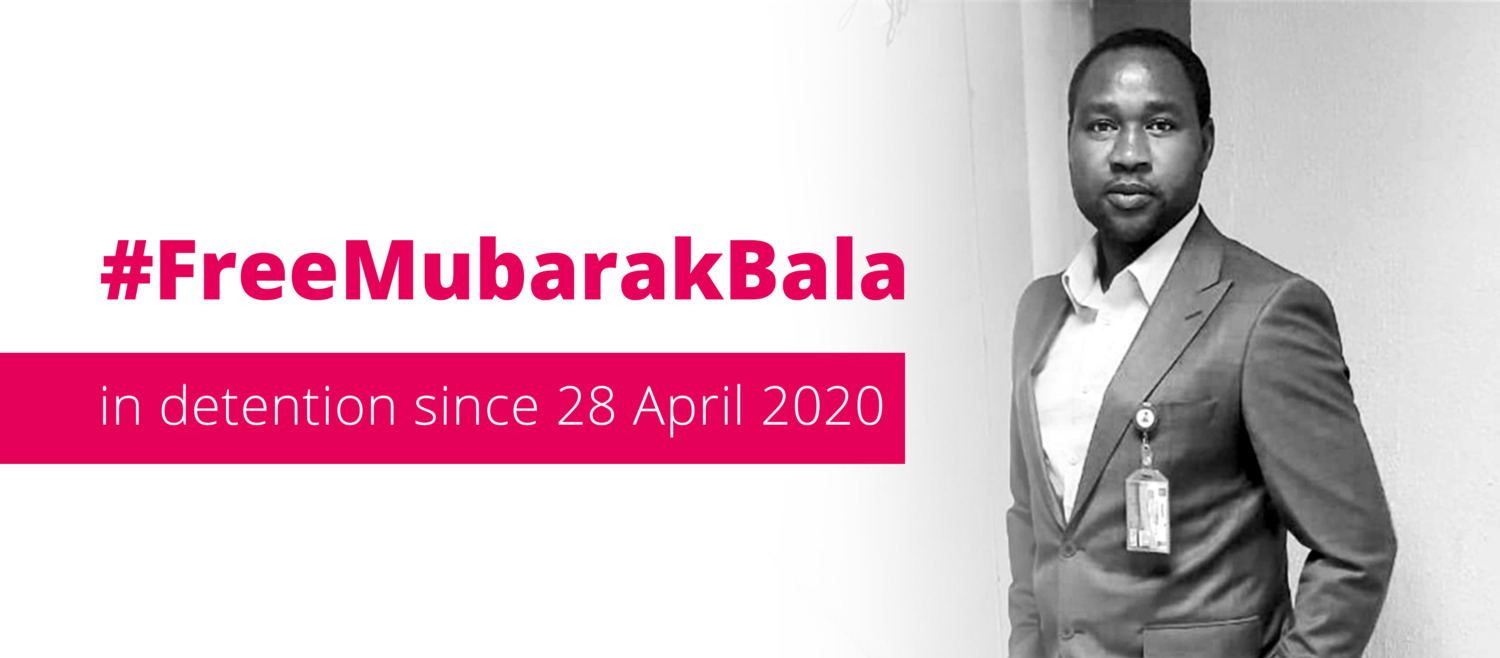
Humanist International created an ingenious way to show how long Mubarak Bala is being held illegally in detention:
Mubarak Bala has been detained arbitrarily without charge for:
161 DAYS : 13 HOURS : 37 MINUTES : 00 SECONDS
Mubarak Bala is the president of the Humanist Association of Nigeria. He has beenheld in detention without access to a lawyer since his arrest on 28 April 2020 in connection with a Facebook post.
Humanists International believes that Mubarak Bala is being targeted for the peaceful exercise of his rights to freedom of expression and religion or belief, and calls for the case against him to be dropped, for Mubarak Bala to be released immediately and unconditionally, and for the Nigerian authorities to ensure his safety upon his release.
Dulat Aghadil died in mysterious circumstances in February.
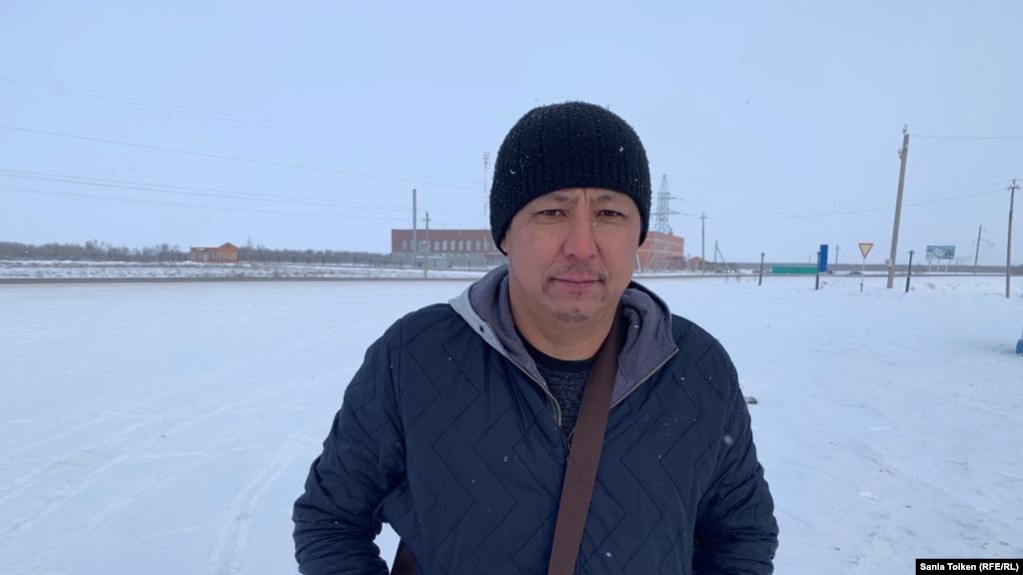
According to RFE/RL’s Kazakh Service of 28 August 2020 dozens of Kazakh human rights defenders were given short jail sentences or fines for attending a commemorationof prominent civil rights campaigner Dulat Aghadil, who died in custody in February this year.
At least seven people were found guilty for attending an unsanctioned rally and sentenced to up to 15 days in detention this week, relatives and rights defenders said.
Among those jailed were activists Alma Nurysheva and Alsan Hasanonov, who were sentenced by a court in Aqmala Province on August 27. Their trials took place via a video link. The same court ordered several other activists to pay fines ranging between $200 and $400. Kazakh human rights defenders say “dozens” of activists from Nur-Sultan, Almaty, Aqtau, Oskemen, and Semei cities have gone on trial in recent days.
At least 100 people attended the commemoration on August 8 in Aghadil’s home village of Talapker in the Aqmola Province. Aghadil, 43, died under mysterious circumstances while being held in pretrial detention in the capital, Nur-Sultan, in late February, just one day after being arrested for failing to comply with a court order to report to local police. Authorities said Aghadil died from a heart attack, but his family and fellow rights defenders say he had no history of heart issues. Rallies were held in Nur-Sultan and other cities in February and March to demand a thorough investigation into his death.
The Staff Correspondent of Newagebd published on 8 August 2020 an appeal by Amnesy Intenational to the Bangladeshi government to stop harassing and intimidating the family members of exiled blogger Asad Noorand other human rights defenders immediately.
The Human rights organisation also said that defending human rights in Bangladesh has become increasingly challenging as many bloggers and human rights defenders fled persecution at home and sought protection abroad in recent years while continuing their activism. The authorities are now targeting their families remaining in the country in an effort to silence them, said that statement.
In July, Asad Noor published several video blogs protesting against the persecution of the minority Buddhist community in Rangunia upazila in Chattogram. A local youth leader of the ruling Awami League sued Asad on 14 July 2020 under the draconian Digital Security Act, accusing him of ‘hurting religious sentiments’ and ‘running propaganda against the spirit of the liberation war.’ Amnesty found that the local police raided Asad’s parental house in Amtali village in the southern district Barguna times and again on July 14, 15, 16 and 18, and being unable to find Asad, harassed his parents.
The local police kept the family members in detention for 40 hours before releasing them in the night of July 19. ‘The harassment of Asad’s family is not an isolated incident. It is part of a worrying pattern targeting families of human rights defenders in exile,’ said Sultan Mohammed Zakaria.
Amnesty’s South Asia researcher Sultan Mohammed Zakaria said that harassment of families, to muzzle human rights defenders in exile from Bangladesh, was utterly reprehensible. Such tactics of intimidation must be stopped immediately. Instead, the authorities have the responsibility to prevent and effectively address allegations of human rights abuses and ensure a safe and enabling environment for human rights defenders, by carrying out prompt and independent investigations and bringing suspected perpetrators to justice, he said.
Among the signatories are Nobel Prize, Academy Award, Pulitzer Prize, Booker Prize and British Academy Film Awards winners, including: Juliette Binoche, Laurent Cantet, Noam Chomsky, JM Coetzee, Judi Dench, Claire Denis, Dave Eggers, Danny Glover, Paul Greengrass, Maggie Gyllenhaal, Rebecca Hall, Naomie Harris, Khaled Hosseini, Anish Kapoor, Naomi Klein, Mike Leigh, Ken Loach, Paul Mason, Simon McBurney, Ruth Negga, Thandie Newton, Michael Ondaatje, Philip Pullman, Miranda Richardson, Andrea Riseborough, Arundhati Roy, and Stellan Skarsgård.
Leading advocacy groups, including Amnesty International, PEN International, Human Rights Watch and Reprieve have also signed onto the letter, as have prominent film organizations, including Sundance Institute, International Documentary Film Festival Amsterdam, the European Film Academy and Société des Réalisateurs de Films.
On 9 june 2020 Agnes Callamard, the UN special rapporteur on extrajudicial, summary or arbitrary executions, urged member states to pressure Saudi Arabia to free women activists before a G20 nations summit which Riyadh will be hosting in November. At least a dozen prominent women’s rights activists were arrested in Saudi Arabia in 2018 as it lifted a ban on women driving cars, a step that many of the detainees had long campaigned for. The women were rounded up as part of a broader crackdown on dissent that extended to clerics and intellectuals.
Several of the arrested women have alleged torture and sexual assault in detention. Saudi officials deny this and said the detainees were suspected of having harmed Saudi interests and offered support to hostile elements abroad.
Some of the activists are now on trial, but few charges have been made public. Charges against at least some of the activists relate to contacts with foreign journalists, diplomats and human rights groups. Their prosecution has drawn global criticism, particularly following the 2018 murder of journalist Jamal Khashoggi by Saudi agents inside the kingdom’s Istanbul consulate. (as Rapporteur Agnes Callamard also dealt with Khashoggi’s killing: https://humanrightsdefenders.blog/2019/12/23/the-unsatisfactory-end-to-the-khashoggi-investigation/)
Earlier Amnesty International had called on Saudi Arabian authorities to immediately release women human rights activists, including those who are “being punished for daring to drive.“…. Amnesty UK has launched a “Beep for freedom” campaign in support of the persecuted women’s rights defenders. The campaign involves supporters sharing photos of themselves behind the wheel of a car or sharing the campaign’s “Beep For Freedom” car horn symbol, with an appeal to the Saudi authorities to “immediately and unconditionally” release the activists and drop all charges against them.
While welcoming of course the disclosure by the Pakistani Government of the whereabouts of Khattak, they strongly condemned his enforced disappearance. On 16 June 2020, the Pakistani authorities acknowledged for the first time that he has been in the custody of law enforcement authorities and detained incommunicado since then.
“The enforced disappearance of Mr. Khattak, which began over seven months ago, is an intolerable attack on his legitimate work of monitoring, documenting and advocating against a range of human rights and minority violations in the Khyber Pakhtunkhwa and the former Federally Administered Tribal Areas in Pakistan,” the independent experts said.
“Even today, Mr. Khattak remains deprived of the most basic protections of the law, and his enforced disappearance subjected him and his family to severe and prolonged suffering, that could amount to torture,” the experts said. “Given the arbitrariness of Mr. Khattak’s arrest and detention, and the very serious violations of his integrity and procedural rights, we call on the Government of Pakistan to immediately release Mr. Khattak and to provide him and his family with adequate redress and rehabilitation,” said the experts..
The experts stressed that there can be no justification for the Government’s failure to end enforced disappearances and that any such violation must be investigated, prosecuted and punished.
“Truth and justice must be served, both in the case of Idris Khattak and for countless other victims and their families in Pakistan. State-sponsored disappearances and related impunity may amount to a crime against humanity and must end now,” they said.
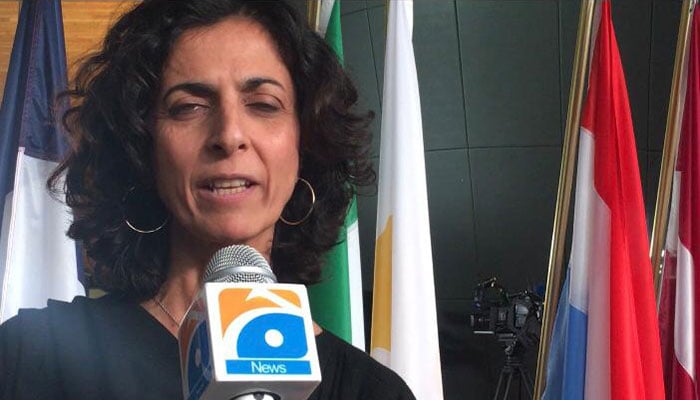
Maria Arena is the chairperson of the Subcommittee of Human Rights of the European Parliament member of Socialist and Democrats parliamentary group. Photo: Reporter
20 May 2020 the chairperson of the Subcommittee of Human Rights of the European Parliament sent a letter to Indian Home Minister Amit Shah, condemning the arrest of human rights defenders under the Unlawful Activities (Prevention) Act.
In her letter, Maria Arena said the European body has been closely following the arrests of human rights defenders Anand Teltumbde and Gautam Navlakha by the National Investigative Agency in India.
Academic and Dalit author Teltumbde and human rights defender Navlakha had surrendered to the police last month after exhausting their possible legal remedies.
Nine other defenders have been in jail since 2018 in the Bhima Koregaon case, where the charges relate to caste violence around an Ambedkarite event and an alleged Maoist plot to foment armed revolution and possibly assassinate Prime Minister Narendra Modi.
In 2018, the United Nations’ Office of the High Commissioner for Human Rights had issued a statement against terror charges being invoked against the activists.
“It is particularly alarming to note that human rights defenders cannot conduct advocacy activities, notably in favor of India’s poorest and most marginalised communities, without becoming subject to intimidation and harassment,” Arena said in her letter.
“Equally worrying is the fact that terrorism charges, including under the Unlawful Activities Prevention Act (UAPA) have been used to silence them,” she noted pointing out that by United Nations Special Procedures, this clearly represents a violation of international human rights standards.
“This is notably the case for human rights activists such as Safoora Zargar, Gulfisha Fatima, Khalid Saifi, Meeran Haider, Shifa-Ur-Rehman, Dr Kafeel Khan, Asif Iqbal and Sharjeel Imam, who were recently arrested by the police,” the letter noted.
Against this background, there are also increased fears that the legislation might confer discretionary powers upon state agencies. India, she said, should do much more to ensure a safe and conducive environment for civil society working in the country and consider enacting a law on the protection and promotion of human rights defenders.
In a similar vein, ProtectDefenders on May 26 2020 reports “Increasing attacks against human rights defenders in India and Guatemala”. …..
Over the past month, ProtectDefenders.eu has received a considerable and growing number of reports regarding attacks, threats, and alerts affecting human rights defenders in India. This information alerts to the numerous acts of police and judicial harassment in the repression of legitimate activities in favor of human rights. Among other incidents, police harassment and arbitrary detention of human rights defenders were reported in Manipur State, in relation to statements made to criticise the management of the current COVID-19 pandemic by local authorities.
Moreover, the Paris-based International Federation for Human Rights has written to Prime Minister Narendra Modi and home minister Amit Shah terming the detentions of several Indian human rights activists ‘arbitrary’. It says the activists have been arrested for “their participation in peaceful protests against the Citizenship Amendment Act 2019 (CAA)” in the last few months.
The letter highlights the cases of Devangana Kalita and Natasha Narwal, student activists who have been associated with the anti-CAA protests in Delhi and were arrested recently by the Delhi police.
Dated 27 February 2020, the UN has released the letter after 2 months. Qayoom was moved to Agra Central Jail, Uttar Pradesh, on 8 August and was kept in solitary confinement, as per the letter, adding that he is suffering from multiple health issues — including a scheduled open heart surgery at the time of his detention. On 29 January, the letter states, Qayoom suffered a heart attack. Next day, he was taken back to the jail’s dispensary. On 1 February 2020, he was transferred from Agra Central Jail to the All India Institute of Medical Science (AIIMS) in New Delhi, for a medical check-up. “He was then transferred to Tihar Jail, New Delhi,” the letter added.
The Special Rapporteurs also claimed in the letter that Qayoom is being denied “the right to a fair trial… and the right of everyone to hold opinions and to freedom of expression.”
“We also express concern that Mr. Qayoom’s deprivation of liberty appears to be a reprisal for his opinions, the legitimate and peaceful exercise of his freedom to express them and his human rights work,” the letter added, citing various previous cases and relevant articles of ICCPR that entitles anyone who is deprived of liberty by arrest or detention to take proceedings before a court. “Arrest or detention as punishment for the legitimate exercise of other rights, as guaranteed by the ICCPR, is arbitrary, including the right to freedom of opinion and expression,” it mentioned.
The Special Rapporteurs stated:
“Please provide detailed information about the factual and legal grounds for the arrest and detention of Mr. Qayoom, including the charges brought against him. Please explain how his arrest and continued detention are in conformity with India’s international human rights obligations under the conventions it has acceded to.
Please provide detailed information on the treatment by the court of the habeas corpus petition initiated by Mr. Qayoom. Please explain how the absence of a decision on his petition more than six months after it was made is compatible with the requirement that the lawfulness of his detention’s petitioner is adjudicated as expeditiously as possible, and with India’s obligations under ICCPR.
Please provide detailed information on the present medical situation of Mr. Qayoom and explain how his medical concerns have been duly taken into account and addressed since he was arrested and placed in detention. Please explain what measures are being taken to ensure Mr. Qayoom’s access to appropriate medical care on a reliable and regular basis.
Please indicate what measures have been taken to ensure that human rights defenders in India are able to carry out their legitimate work in a safe and enabling environment without fear of threats or acts of intimidation and harassment of any sort.
Please provide detailed information, included disaggregated data to the extent possible, as to the number of persons from Jammu and Kashmir who have been detained under the Public Security Act since August 2019.”
On 24 February, 2020 over 50 NGOs and individuals reminded the UAE authorities that “ Freedom of expression must be upheld at all times, not only tolerated during Hay Festival Abu Dhabi”
As the Hay Festival Abu Dhabi opens on February 25–28, 2020 in the United Arab Emirates, we the undersigned call on the Emirati authorities to demonstrate their respect for the right to freedom of expression by freeing all human rights defenders imprisoned for expressing themselves peacefully online, including academics, writers, a poet, and lawyers. In the context of the Hay Festival, the UAE’s Ministry of Tolerance is promoting a platform for freedom of expression, while keeping behind bars Emirati citizens and residents who shared their own views and opinions. We support the efforts of festival participants to speak up in favor of all those whose voices have been silenced in the UAE. We further support calls for the UAE authorities to comply with international standards for prisoners, including by allowing prisoners of conscience to receive books and reading materials.The country’s most prominent human rights defender, Ahmed Mansoor, is currently serving a 10-year prison sentence after being convicted on the spurious charge of “insulting the status and prestige of the UAE and its symbols including its leaders” in reprisal for his peaceful human rights activism, including posts on social media. [see also: https://humanrightsdefenders.blog/tag/ahmed-mansoor/]……
Other prisoners have been tortured in prison in the UAE. A Polish fitness expert, Artur Ligęska, was held in the same isolation ward as Mansoor, in conditions he described as “medieval.” After his charges were dismissed and he was freed in May 2019, Ligęska wrote a book in which he recounted the prison conditions in Al-Sadr’s isolation wing, where prisoners were held without running water for many months in very unhygienic conditions, and some were subjected to torture, abuse, and sexual assault. He was instrumental in getting the news about Mansoor’s hunger strike out to the world from prison in March 2019, at great personal risk.
Other human rights defenders have faced similar mistreatment in prison, where they are often held in isolation, resorting to hunger strikes to try to bring attention to their unjust imprisonment and ill-treatment in detention, such as human rights lawyersDr. Mohammed Al-Roken and Dr. Mohammed Al-Mansoori...
,,,
The Hay Festival Abu Dhabi is supported by the UAE’s Ministry of Tolerance in a country that does not tolerate dissenting voices. Regrettably, the UAE government devotes more effort to concealing its human rights abuses than to addressing them and invests heavily in the funding and sponsorship of institutions, events, and initiatives that are aimed at projecting a favorable image to the outside world.
With the world’s eyes on the Hay Festival Abu Dhabi, we urge the Emirati government to consider using this opportunity to unconditionally release our jailed friends and colleagues, and in the interim, to at least allow prisoners of conscience to receive books and reading materials, to have regular visits with family, to be allowed outside of their isolation cells to visit the canteen or go outside in the sun. In particular, we ask that Ahmed Mansoor be given a bed and a mattress so that he no longer has to sleep on the floor, and that prison officials cease punishing him for public appeals that are made on his behalf. We ask the authorities to improve their prison conditions as a sign of goodwill and respect for people who wish to organize and participate in events in the UAE, such as the Hay Festival Abu Dhabi or the upcoming Expo 2020 Dubai, in the future. By doing so, the UAE would demonstrate that the Hay Festival is an opportunity to back up its promise of tolerance with actions that include the courageous contributors to freedom of expression who live in the country. [see also: https://humanrightsdefenders.blog/2019/10/26/celebrity-endorsements-and-the-dubai-expo-on-the-one-hand-and-the-other/]



 Hans Thoolen on Human Rights Defenders and their awards