“Bahrain’s hosting of sporting and high-level international events is a transparent attempt to launder its decades-long campaign to crush political opposition and suffocate the country’s vibrant civil society,” said Tirana Hassan, Human Rights Watch’s acting executive director. “Its unilateral reversal of Human Rights Watch’s access to the IPU conference is a blatant example of its escalating repression. Governments, organizations with influence, and key officials should speak out loudly against Bahrain’s abuses so they are not complicit in its efforts to whitewash its horrific rights record.”
Bahrain is hosting the meeting of the IPU, a global organization of national parliaments, from March 11-15. The organization’s slogan is “For democracy. For everyone,” and the theme of the 146th Assembly is “Promoting peaceful coexistence and inclusive societies: Fighting intolerance.” These statements are in stark contrast to the extensive record of serious human rights abuses in Bahrain that Human Rights Watch and other rights organizations have documented, Human Rights Watch said. This includes the continued detention of the prominent human rights activist and Danish-Bahraini dual citizen Abdulhadi Al-Khawaja. Al-Khawaja is reportedly suffering serious health problems while being denied adequate medical care. He is this year’s laureate of the MEA [see: https://humanrightsdefenders.blog/tag/abdul-hadi-al-khawaja/]
….. Two of Bahrain’s former parliament members are in prison for exercising their freedom of expression, and the government has forced many more into exile and stripped them of their citizenship.
On March 5, Bahrain hosted Formula One’s (F1) opening season race. Twenty-one groups, including Human Rights Watch, sent a letter to F1’s president to raise “serious concerns over F1’s ongoing role in ‘sportswashing’ amidst a deterioration in Bahrain’s human rights situation.” An F1 driver, Lewis Hamilton, recently said that he is “not sure [the human rights situation] has got better while we have been coming all these years” to countries like Bahrain and Saudi Arabia.
“With local civil society severely restricted by Bahrain’s autocratic government, members of the IPU Assembly should live up to its organizational values and speak out on behalf of Bahrain’s victims of repression,” Hassan said.
On 14 February, 2023 Louis Charbonneau, HRW United Nations Director, reported that the UN General Assembly achieved a funding breakthrough by agreeing to fully fund UN human rights mechanisms that China, Russia, and their allies had sought to defund in the 2023 budget. All these efforts failed. The Czech Republic as European Union president countered by proposing full funding for human rights mechanisms at the level proposed by Secretary-General António Guterres. The resolution passed by a sizable majority.
There’s more good news. Not only did the defunding efforts fail, but the highly problematic recommendations put forward by the UN Advisory Committee on Administrative and Budgetary Questions were rejected. The Advisory Committee is supposed to be an independent body of experts, but in recent years, its “experts” from countries like China and Russia have been pushing their governments’ anti-human rights agendas and advocating for sharp cuts in funding for human rights work, with no good reasons. Due to divisions between western countries and developing states, the standard UN funding compromise had become accepting the non-binding Advisory Committee recommendations. For example, if its recommendations had been adopted, the staff and budget for the Iran commission of inquiry would have been cut in half.
This should set a precedent for UN human rights funding in the future.
Eric Goldstein, Deputy Director, Middle East and North Africa Division of Human Rights Watch, wrote on 8 February 2023 about the demise of Algeria’s first independent human rights league, and do so with a personal touch.
“Shortly after I started my first human rights job in 1986, Amnesty International issued an alert about a group of Algerians sentenced to up to three years in prison for creating the country’s first independent human rights league.” The league became a fixture of the transnational Arab human rights movement in the early 1990s. Those events came to mind as I learned of an Algerian court’s decision, issued in 2022 but made public in January 2023, to dissolve the league, in response to a petition by the ministry of interior. The court found that the group had violated Algeria’s regressive law on associations by failing to “respect national constants and values” when it met with nongovernmental organizations “hostile to Algeria” and engaged in “suspicious activities” such as “addressing … the issue of illegal migration” and “accusing the authorities of repression of protests.”
The LADDH loudly denounced abuses during the bloody 1990s. After the terrorism and savage repression of that decade subsided, the League accompanied families of the disappeared in demanding answers and justice. Recently, it supported protesters of the peaceful Hirak movement that burst onto the scene in 2019, demanding political reform. Ali Yahia Abdennour, who was among those arrested in 1985 and served as president of the LADDH for decades, died at 100 in 2020.
The LADDH is the latest of several independent organizations authorities have shut on flimsy pretexts. They have jailed hundreds of Hirak protesters for peaceful expression and practically obliterated Algeria’s independent media – another product of the 1989 reforms – most recently by arresting on December 24 Ihsane Kadi and sealing the offices of his two online outlets, Radio M and Maghreb Emergent.
Fearing arrest, activists have been fleeing the country when they have not been arbitrarily blocked at the border, including three prominent League figures now in exile in Europe.
The pretexts used to shut Algeria’s flagship human rights organization are no less absurd than those used to convict its founders four decades ago. Though much has changed since the 1988 protests, Algeria is governed once again by those who brook almost no dissent.
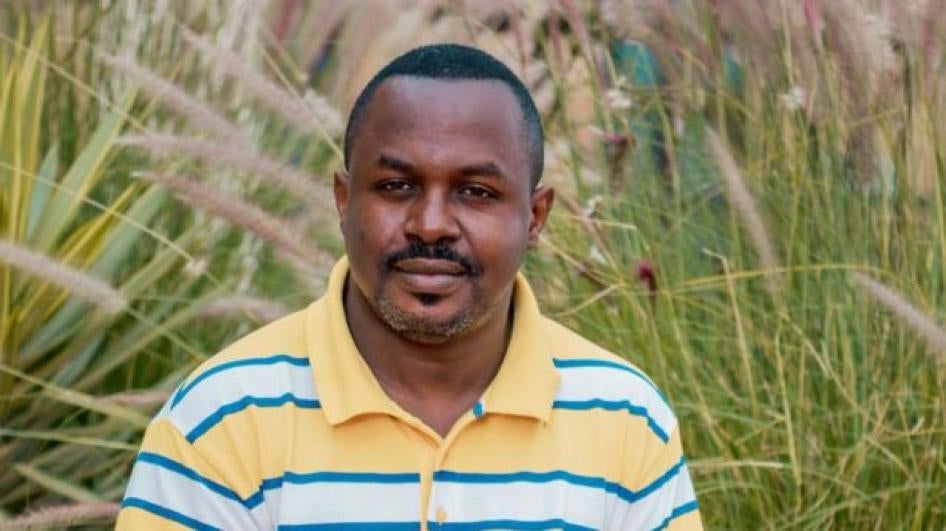
Human Rights Watch and others demand that the Rwandan authorities allow an effective, independent, and transparent investigation into the suspicious death of John Williams Ntwali, a leading investigative journalist and editor of the newspaper The Chronicles. Ntwali was regularly threatened due to his work as a journalist exposing human rights abuses in Rwanda and had expressed concern about his safety to Human Rights Watch and others.
“John Williams Ntwali was a lifeline for many victims of human rights violations and often the only journalist who dared report on issues of political persecution and repression,” said Lewis Mudge, Central Africa director at Human Rights Watch. “There are many reasons to question the theory of a road accident, and a prompt, effective investigation, drawing on international expertise, is essential to determine whether he was murdered.”
News of Ntwali’s death emerged in the evening of January 19, 2023. Police asked Ntwali’s brother to identify his body at Kacyiru Hospital morgue, telling him that Ntwali had died in a road accident the night of January 17 to 18. The police told the New Times website that Ntwali died in a motorbike accident in Kimihurura, Kigali, on January 18 at 2:50 a.m., but to date, have not provided details of the accident such as a police report, its exact location, or information on the others involved. Human Rights Watch is not aware of any reports about an alleged accident coming to light until the evening of January 19.
Ntwali was regularly threatened and attacked in the pro-government media for his investigative reporting. He played a leading role in covering and bringing attention to the plight of Kangondo neighborhood residents, who are in a long-standing dispute with authorities over land evictions. Recently, he also published videos on his YouTube channel about people who had suspiciously “disappeared.” His last video, posted on January 17, was about the reported disappearance of a genocide survivor who had spoken out about being beaten by police officers in 2018.
I don’t know what’s going to happen to me after CHOGM [the Commonwealth Heads of Government Meeting which took place in Kigali in June 2022]. I’m told that after CHOGM, they won’t play around with us anymore. I’ve been told five or six times. I receive phone calls from private numbers. Some [intelligence] people have come to my house twice to tell me. NISS [National Intelligence and Security Services] has told me: ‘If you don’t change your tone, after CHOGM, you’ll see what happens to you.’
On July 12, he told a friend he had survived a number of “staged accidents” in Kigali. “He was telling me about ordeals and threats he faces for his journalism,” his friend told Human Rights Watch.
Given these circumstances, Rwanda has a legal obligation to ensure a prompt, effective investigation that is capable of determining the circumstances of Ntwali’s death and identifying those responsible, with a view to bringing them to justice. An effective investigation must be independent, impartial, thorough, and transparent, conducted in full compliance with the Revised United Nations Manual on the Effective Prevention and Investigation of Extra-legal, Arbitrary and Summary Executions (The Minnesota Protocol on the Investigation of Potentially Unlawful Death).
Rwandan authorities have long targeted Ntwali. He was arrested in January 2016, in the lead up to the 2017 elections, and accused of raping a minor. Judicial officials later changed the charge to indecent assault and eventually dropped the case for lack of evidence.
At the time, Ntwali had been investigating several sensitive issues, including the death of Assinapol Rwigara, a businessman and father of would-be independent presidential candidate Diana Rwigara, whose candidacy to the 2017 elections was later rejected. The police said that Assinapol Rwigara died in a car accident in February 2015, but his family contested the authorities’ version of events.
Ntwali had also been arbitrarily arrested several other times and his website was blocked by a government regulator, apparently in retaliation for his reporting that was critical of the government.
“It is an embarrassment for the Commonwealth and a problematic message about its values that the country that presides over it is a place where the suspicious deaths of journalists and activists can be swept under the carpet,” Mudge said. “Rwandan authorities should not only not harm journalists but should be actively protecting them, and Rwanda’s partners should be holding the government to account in full for its obligations under international human rights law.”
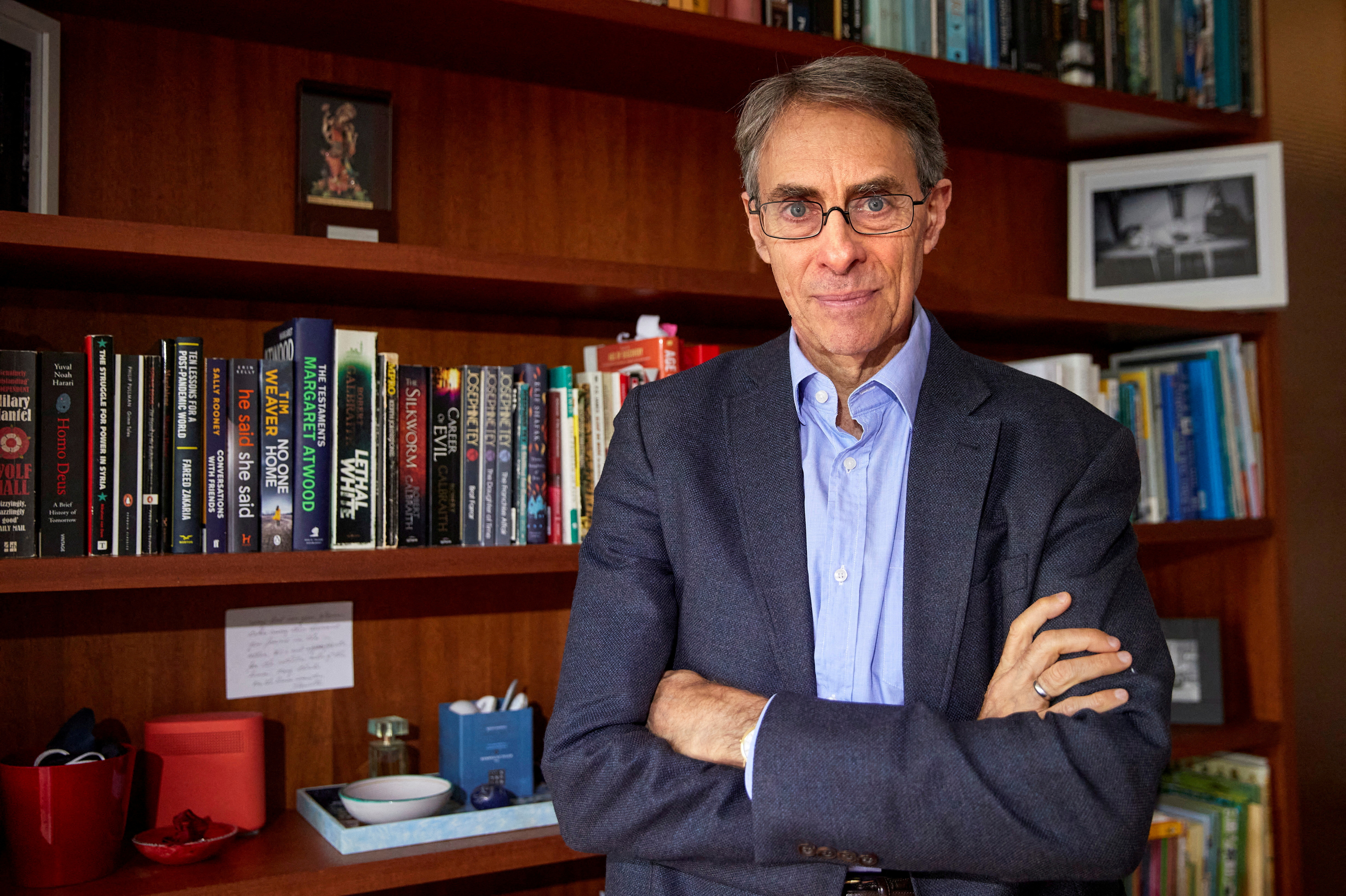
“In the case of Mr. Roth, I now believe that I made an error in my decision not to appoint him as a Fellow at our Carr Center for Human Rights… We will extend an offer to Mr. Roth to serve as a Fellow. I hope that our community will be able to benefit from his deep experience in a wide range of human rights issues,” Elmendorf said.
The decision not to award a fellowship to Roth, first reported by The Nation, drew criticism from some alumni, the American Civil Liberties Union and HRW itself. Freedom of expression advocacy group PEN America said the decision “raises serious questions about the credibility of the Harvard program itself.”
Roth in a statement posted on Twitter on Thursday said he was “thrilled” that Elmendorf had rescinded his decision.
On 16 December, 2022 Human Rights Watch published “In Memory of Aleh Hulak“, chair of the Belarusian Helsinki Committee (BHC) and a long-time leader of the Belarus human rights movement. Hulak, 55, led the Helsinki Committee with courage and unwavering commitment, including through the country’s recent, vicious crackdown on rights and the entrenchment of President Aliaksandr Lukashenka’s autocracy.
The BHC, one of the country’s oldest human rights groups, has a broad mandate to advance civil and political, and social and economic rights. Hulak was a strong voice for free speech and the release of political prisoners and also for fair work conditions, and upholding human rights in business, trade union operations and health care.
The Belarusian government liquidated the BHC in 2021, along with hundreds of other independent groups. Hulak for years had pursued, against all odds, the group’s accreditation at the United Nations Economic and Social Council. In a bittersweet victory, his efforts succeeded less than two months ago.
Just before the United Nations Human Rights Council will hold a special session on ongoing human rights violations in Iran on 24 November, Human Rights Watch urge it to establish an independent fact-finding mission to investigate Iran’s deadly crackdown on widespread protests as a first step toward accountability, Human Rights Watch said today.
The demonstrations began on September 16, 2022, following the death of Mahsa (Jina) Amini, a 22-year-old Kurdish-Iranian woman, in the custody of the “morality police.” As of November 22, human rights groups are investigating the deaths of 434 people including 60 children. Human Rights Watch has documented a pattern of Iranian authorities using excessive and unlawful lethal force against protesters in dozens of instances in several cities including Sanandaj, Saghez, Mahabad, Rasht, Amol, Shiraz, Mashhad, and Zahedan.
“Iranian authorities seem determined to unleash brutal force to crush protests and have ignored calls to investigate the mountains of evidence of serious rights violations,” said Tara Sepehri Far, senior Iran researcher at Human Rights Watch. “The UN Human Rights Council should shine a spotlight on the deepening repression and create an independent mechanism to investigate Iranian government abuses and hold those responsible accountable.”
Since mid-November, Iranian authorities have dramatically escalated their crackdown against protests in several Kurdish cities, with at least 39 people killed, according to the Kurdistan Human Rights Network. The group reported that from November 15 to 18, at least 25 Kurdish-Iranian residents were killed in Kurdish cities during three days of protests and strikes to commemorate the victims of the government’s bloody crackdown on protests in November 2019.
The authorities have pressured families of recent victims to bury their loved ones without public gatherings, but several funerals have become the scene of new protests. The group said that at least 14 people were killed in Javanrood, Piranshahr, Sanandaj, Dehgan, and Bookan from November 19 to 21, 2022. Radio Zamaneh said the victims included Ghader Shakri, 16, killed in Piranshahr on November 19, and Bahaedin Veisi, 16, killed in Javanrood on November 20.
A 32-year-old Sanandaj resident told Human Rights Watch that the security forces fatally shot Shaho Bahmani and Aram Rahimi on November 17 and forcibly removed their bodies from the Kowsar Hospital in Sanandaj, and threatened the two men’s families outside the hospital.
Jalal Mahmoudzadeh, a parliament member from Mahabad, toldShargh Daily on November 21 that between October 27 and 29, security forces killed seven protesters in the city Mahabad. Mahmoudzadeh said security forces also damaged people’s houses; one woman was killed in her home outside of the protests. He said that since then, another man had been killed, and three more had been shot and killed during his funeral, bringing the total number killed in Mahabad, since October 27, to 11.
Videos circulated on social media show that authorities have deployed special forces and Islamic Revolutionary Guard Corps units armed with military assault rifles, vehicle-mounted DShK 12.7mm heavy machine guns, and armored vehicles.
On October 24, Masoud Setayeshi, the judiciary spokesperson, told media that authorities have started prosecuting thousands of protesters. These trials, which are often publicized through state media, fall grossly short of international human rights standards, with courts regularly using coerced confessions and defendants not having access to the lawyer of their choice. As of November 21, trial courts have handed down death sentences to at least six protesters on the charges of corruption on earth and enmity against God. The acts judicial authorities have cited to bring charges against the defendants, including “incineration of a government building” or “using a “cold weapon” to “spread terror among the public.” Amnesty International said that at least 21 people are facing charges in connection to the protests that can carry the death penalty.
Since the protests began in September, the authorities have arrested thousands of people during protests as well as hundreds of students, human rights defenders, journalists, and lawyers outside the protests. Detainees are kept in overcrowded settings and are subjected to torture and other ill-treatment, including sexual harassment, Human Rights Watch said.
Two women who were arrested during the first week of protests in Sanandaj told Human Rights Watch that the authorities brutally beat them, sexually harassed them, and threatened them during their arrests and later while they were detained at a police station. One of these women said she had several severe injuries, including internal bleeding and fractures.
Over the past four years, Iran has experienced several waves of widespread protests. Authorities have responded with excessive and unlawful lethal force and the arbitrary arrests of thousands of protesters. In one of the most brutal crackdowns, in November 2019, security forces used unlawful force against massive protests across the country, killing at least 321 people. Iranian authorities have failed to conduct any credible and transparent investigations into the security forces’ serious abuses over the past years.
Iranian authorities have also used partial or total internet shutdowns during widespread protests to restrict access to information and prohibit dissemination of information, in particular videos of the protests, Human Rights Watch said. They have blocked several social media platforms, including WhatsApp messaging application and Instagram, since September 21, 2022, by an order of Iran’s National Security Council.
“On November 24, UN Human Rights Council members should vote to establish an independent mechanism to document serious human rights violations in Iran and advance on the path to accountability,” Sepehri Far said.
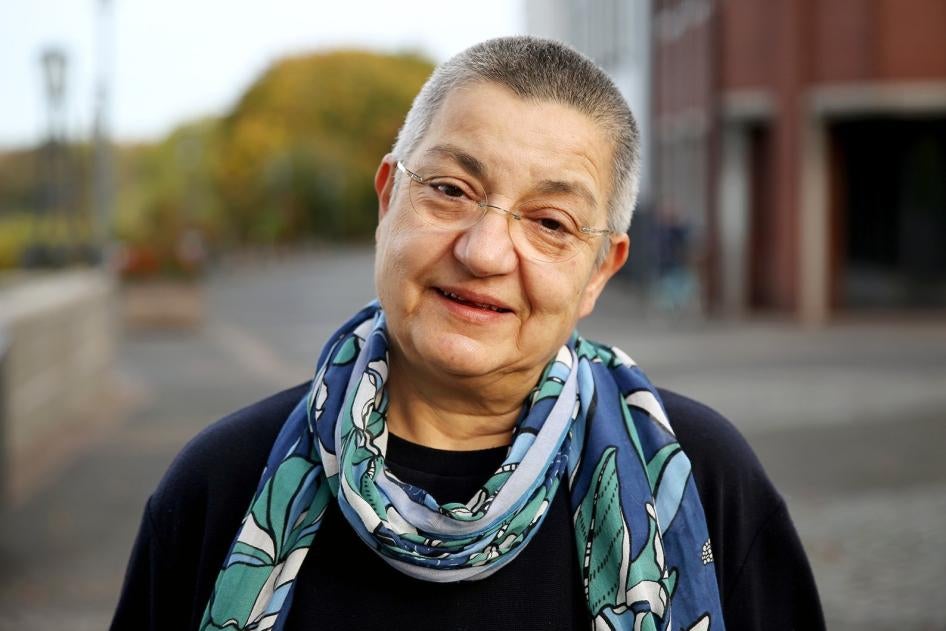
On 28 October 2022 HRW reports on the continuing crackdown on human rights defenders in Turkey, where Şebnem Korur Fincancı is the latest human rights defender to be jailed as authorities pursue a bogus investigation against her for “spreading terrorist propaganda.” Korur Fincancı is head of the Turkish Medical Association, former head of the Human Rights Foundation of Turkey, and a retired professor of forensic pathology. Her work was central to the creation of the United Nations’ “Istanbul Protocol,” a landmark manual on how to identify and document signs of torture. She has also worked on the exhumation of mass graves and forensic documentation of war crimes in different countries. See also: https://humanrightsdefenders.blog/2018/11/05/turkish-human-rights-defender-and-forensic-doctor-sebnem-korur-fincanci-honoured/
Korur Fincancı’s arrest and pre-trial detention followed an interview she gave to pro-Kurdish TV on October 19. Responding to allegations that the Turkish military had used chemical weapons against the armed Kurdistan Workers’ Party (PKK) in the Kurdistan Region of Iraq, Korur Fincancı said the video footage she had seen suggested use of toxic gases affecting the nervous system and that there should be a full investigation. Turkish pro-government media and President Recep Tayyip Erdoğan accused Korur Fincancı and the Turkish Medical Association of slandering the Turkish military. Prosecutors and courts rapidly responded by ordering her investigation and detention.
Korur Fincancı’s arrest is the latest in a pattern of politically motivated cases as the Erdoğan government continues its crackdown on critics and opponents. Just this week, police also detained 10 Kurdish journalists on top of 16 incarcerated in June. The Turkish authorities show all the signs of being determined to silence the voices of experts like Korur Fincancı as well as the journalists who report their words.
Authorities also appear focused on a broader plan of reshaping and taking over professional bodies that have been critical of government policies. On October 27, Turkey’s justice minister announced a plan to restructure both the Turkish Medical Association, from which Korur Fincancı will be removed as head, and the Union of Chambers of Turkish Engineers and Architects. Mücella Yapıcı, a prominent member of the latter, was convicted and jailed in April along with rights defender Osman Kavala and six others for her alleged role in the 2013 Gezi Park protests.
In the run-up to the 2023 presidential and parliamentary elections, the Turkish government is likely to continue to misuse criminal charges and detention against individuals it wants to silence and attempt to seize institutions outside its control.
A long-delayed but groundbreaking United Nations report published on August 31, 2022, says the Chinese government has committed abuses that may amount to crimes against humanity targeting Uyghurs and other Turkic communities in the Xinjiang region. The report by the outgoing UN High Commissioner for Human Rights, Michelle Bachelet, contains victim accounts that substantiate mass arbitrary detention, torture, cultural persecution, forced labor, and other serious human rights violations, and recommends that states, businesses, and the international community take action with a view to ending the abuses, and advancing justice and accountability. See also: https://humanrightsdefenders.blog/2022/06/09/disappointment-with-un-high-commissioners-visit-to-xinjiang-boils-over/
“The UN human rights chief for the first time lays bare the Chinese government’s grave abuses and concludes they may amount to crimes against humanity,” said John Fisher, Global Advocacy Deputy Director at Human Rights Watch. “Victims and their families whom the Chinese government has long vilified have at long last seen their persecution recognized, and can now look to the UN and its member states for action to hold those responsible accountable.”
The high commissioner’s report challenges the Chinese government’s blatant disregard for its international human rights obligations, Human Rights Watch said. It calls on businesses to meet their responsibilities to respect human rights, and for follow-up by UN member countries and bodies, which could take the form of an investigation to interview victims and survivors, identify those responsible, gather evidence, and recommend strategies for accountability. Similar recent UN Human Rights Council mechanisms have included commissions of inquiry, fact-finding missions, and independent international monitoring missions. This could also lead to the identification of all those missing and forcibly disappeared so that they can be reunited with their families.
The report should be formally presented to the Human Rights Council as a matter of priority, Human Rights Watch said, so that states can discuss the report’s findings and take the steps needed to implement its recommendations.
In the report, the high commissioner details widespread abuses, including targeting of cultural and religious practices, family separation, arbitrary arrests and detention, rape, torture, and enforced disappearances, across Xinjiang. The report concludes that “[t]he extent of arbitrary and discriminatory detention of members of Uyghur and other predominantly Muslim groups, pursuant to law and policy, in context of restrictions and deprivation more generally of fundamental rights enjoyed individually and collectively, may constitute international crimes, in particular crimes against humanity.”
Detainees interviewed for the report described conditions in so-called “vocational training centres” that would amount to torture or other forms of ill-treatment, including “being beaten with batons, including electric batons while strapped in a so-called “tiger chair”; being subjected to interrogation with water being poured in their faces; prolonged solitary confinement; and being forced to sit motionless on small stools for prolonged periods of time.”
The report noted that Chinese authorities continue to openly criticize victims and their relatives now living abroad for speaking about their experiences in Xinjiang, engaging in acts of intimidation, threats, and reprisals. In the words of one interviewee: “We had to sign a document to remain silent about the camp. Otherwise, we would be kept for longer and there would be punishment for the whole family.”
The report also draws on analyses of Chinese laws, regulations, and policies. The findings are consistent with those of academics, journalists, and human rights organizations, published since 2017 documenting grave international crimes. In the past five years, Human Rights Watch has documented mass arbitrary detention, pervasive surveillance, and crimes against humanity across the region.
The high commissioner has been systematically assessing a growing body of evidence regarding Chinese government human rights violations targeting Uyghurs and other Turkic communities. Treaty body reviews and reports from UN human rights experts also informed the new report, reinforcing concerns about secret detention and unlawful family separations, among other violations.
In June 2020, 50 UN human rights experts urged the Human Rights Council to establish an independent UN mandate to monitor and report on human rights violations in China, partly in response to Chinese government resistance to UN human rights scrutiny. In June 2022, another group of UN experts reiterated the 2020 statement and again urged Chinese authorities to grant them access to investigate “allegations of significant human rights violations and repression of fundamental freedoms in the country.”
In May, Bachelet visited China, despite being unable to travel or engage with interlocutors freely, and had little direct engagement with affected communities. In an end-of-mission statement delivered on May 28, Bachelet underlined that the visit was not an investigation, which she noted would require “detailed, methodical, discreet work of an investigative nature.” The new report lays a solid foundation for further UN and Human Rights Council action towards accountability in China.
“Never has it been so important for the UN system to stand up to Beijing, and to stand with victims,” Fisher said. “Governments should waste no time establishing an independent investigation and taking all measures necessary to advance accountability and provide Uyghurs and others the justice they are entitled.”
Amnesty International’s Secretary General Agnès Callamard said:
“This 46-page document lays bare the scale and severity of the human rights violations taking place in Xinjiang – which Amnesty International previously concluded amounted to crimes against humanity. There can be little doubt why the Chinese government fought so hard to pressure the UN to conceal it.
On August 15, 2022, the Attorney General’s Office formally notified the Justice Ministry’s Department of Special Investigation (DSI) of its decision to indict four park officials accused of abducting and murdering Porlajee “Billy” Rakchongcharoen in April 2014. The charges include illegal confinement, premeditated murder, and concealing the victim’s body.
“Thai officials have long hindered justice for Billy through cover-ups and exploitation of legal loopholes,” said Elaine Pearson, acting Asia director at Human Rights Watch. “The authorities can right this wrong by ensuring that the attorney general’s decision to indict four officials moves promptly to an effective and fair prosecution.”
Billy was last seen on April 17, 2014, in the custody of Chaiwat Limlikitaksorn, then-head of Kaeng Krachan National Park in Phetchaburi province, and his staff. The park officials said they released him after questioning him briefly and had no information regarding his whereabouts. On September 3, 2019, DSI officials announced that his remains had been found in Kaeng Krachan National Park. Chaiwit was among the four indicted.
Pinnapa Prueksapan, Billy’s wife, told Human Rights Watch that she hoped there would be answers to basic questions, such as who had abducted and killed her husband, and who had obstructed justice.
Thailand is obligated under international human rights treaties to which it is a party to investigate and appropriately prosecute enforced disappearance, torture, custodial deaths, and other alleged human rights violations. In addition, in September 2019, Prime Minister Gen. Prayut Chan-ocha ordered the Department of Special Investigation to ensure that the case was watertight so the culprits could be brought to justice, regardless of their rank or position.
However, the investigation has suffered from a cover-up, Human Rights Watch said. Despite a long list of allegations against Chaiwat for serious abuses and misconduct during his tenure as head of Kaeng Krachan National Park, he has never been held to account.
In addition, Thai law does yet not recognize enforced disappearances as a crime. Human Rights Watch has repeatedly urged Prime Minister Prayut and his government to ratify the International Convention for the Protection of All Persons from Enforced Disappearance, which Thailand signed in 2012, and make enforced disappearance a criminal offense.
Chaiwat and his staff arrested Billy on April 17, 2014, for alleged illegal possession of a wild bee honeycomb and six bottles of honey.
At the time of his enforced disappearance, he was traveling to meet with ethnic Karen villagers and activists in preparation for an upcoming court hearing in the villagers’ lawsuit against Chaiwat and the National Park, Wildlife, and Plant Conservation Department of the Ministry of Natural Resources and Environment.
The villagers alleged in the lawsuit that, in July 2011, park authorities had burned and destroyed the houses and property of more than 20 Karen families in the Bangkloy Bon village. Billy was also preparing to submit a petition about this case to Thailand’s monarch. When he was arrested, he was carrying case files and related documents with him. Those files have never been recovered.
In September 2014, Police Region 7 officers filed malfeasance charges under article 157 of the penal code against Chaiwat and three other park officials for unlawfully detaining him. The other suspects named in the case are Boontaen Bussarakham, Thanaseth or Pitoon Chaemthes, and Krissanapong Jitthes. The DSI found traces of human blood in a vehicle belonging to the park office, but was not able to verify if the blood belonged to Billy because the vehicle was cleaned before forensic experts could examine it.
On September 3, 2019, the DSI announced that his remains had been found in Kaeng Krachan National Park, where he was last seen in custody of the park officials. The investigation team found an oil barrel, its lid, two steel rods, a burned wooden piece, and two bones at the bottom of the reservoir on April 26, 2019.
The Central Institute of Forensic Science subsequently confirmed the genetic trace of one of the bones found inside the barrel matched Billy’s mother. The investigation team then concluded it was part of his remains. The condition of this piece of human skull, which was burned, cracked, and shrunk due to exposure to heat of 200 to 300 degrees Celsius, suggests the killers burned his body to conceal the crime.
“The indictment of Chaiwat and other park officials is an important step for justice for Billy and all those whom Thai government officials have forcibly disappeared and killed,” Pearson said. “Thai authorities should recognize that they can’t escape being held accountable for the most heinous crimes.”





 Hans Thoolen on Human Rights Defenders and their awards