On 16 December, 2022 Human Rights Watch published “In Memory of Aleh Hulak“, chair of the Belarusian Helsinki Committee (BHC) and a long-time leader of the Belarus human rights movement. Hulak, 55, led the Helsinki Committee with courage and unwavering commitment, including through the country’s recent, vicious crackdown on rights and the entrenchment of President Aliaksandr Lukashenka’s autocracy.
The BHC, one of the country’s oldest human rights groups, has a broad mandate to advance civil and political, and social and economic rights. Hulak was a strong voice for free speech and the release of political prisoners and also for fair work conditions, and upholding human rights in business, trade union operations and health care.
The Belarusian government liquidated the BHC in 2021, along with hundreds of other independent groups. Hulak for years had pursued, against all odds, the group’s accreditation at the United Nations Economic and Social Council. In a bittersweet victory, his efforts succeeded less than two months ago.
Just before the United Nations Human Rights Council will hold a special session on ongoing human rights violations in Iran on 24 November, Human Rights Watch urge it to establish an independent fact-finding mission to investigate Iran’s deadly crackdown on widespread protests as a first step toward accountability, Human Rights Watch said today.
The demonstrations began on September 16, 2022, following the death of Mahsa (Jina) Amini, a 22-year-old Kurdish-Iranian woman, in the custody of the “morality police.” As of November 22, human rights groups are investigating the deaths of 434 people including 60 children. Human Rights Watch has documented a pattern of Iranian authorities using excessive and unlawful lethal force against protesters in dozens of instances in several cities including Sanandaj, Saghez, Mahabad, Rasht, Amol, Shiraz, Mashhad, and Zahedan.
“Iranian authorities seem determined to unleash brutal force to crush protests and have ignored calls to investigate the mountains of evidence of serious rights violations,” said Tara Sepehri Far, senior Iran researcher at Human Rights Watch. “The UN Human Rights Council should shine a spotlight on the deepening repression and create an independent mechanism to investigate Iranian government abuses and hold those responsible accountable.”
Since mid-November, Iranian authorities have dramatically escalated their crackdown against protests in several Kurdish cities, with at least 39 people killed, according to the Kurdistan Human Rights Network. The group reported that from November 15 to 18, at least 25 Kurdish-Iranian residents were killed in Kurdish cities during three days of protests and strikes to commemorate the victims of the government’s bloody crackdown on protests in November 2019.
The authorities have pressured families of recent victims to bury their loved ones without public gatherings, but several funerals have become the scene of new protests. The group said that at least 14 people were killed in Javanrood, Piranshahr, Sanandaj, Dehgan, and Bookan from November 19 to 21, 2022. Radio Zamaneh said the victims included Ghader Shakri, 16, killed in Piranshahr on November 19, and Bahaedin Veisi, 16, killed in Javanrood on November 20.
A 32-year-old Sanandaj resident told Human Rights Watch that the security forces fatally shot Shaho Bahmani and Aram Rahimi on November 17 and forcibly removed their bodies from the Kowsar Hospital in Sanandaj, and threatened the two men’s families outside the hospital.
Jalal Mahmoudzadeh, a parliament member from Mahabad, toldShargh Daily on November 21 that between October 27 and 29, security forces killed seven protesters in the city Mahabad. Mahmoudzadeh said security forces also damaged people’s houses; one woman was killed in her home outside of the protests. He said that since then, another man had been killed, and three more had been shot and killed during his funeral, bringing the total number killed in Mahabad, since October 27, to 11.
Videos circulated on social media show that authorities have deployed special forces and Islamic Revolutionary Guard Corps units armed with military assault rifles, vehicle-mounted DShK 12.7mm heavy machine guns, and armored vehicles.
On October 24, Masoud Setayeshi, the judiciary spokesperson, told media that authorities have started prosecuting thousands of protesters. These trials, which are often publicized through state media, fall grossly short of international human rights standards, with courts regularly using coerced confessions and defendants not having access to the lawyer of their choice. As of November 21, trial courts have handed down death sentences to at least six protesters on the charges of corruption on earth and enmity against God. The acts judicial authorities have cited to bring charges against the defendants, including “incineration of a government building” or “using a “cold weapon” to “spread terror among the public.” Amnesty International said that at least 21 people are facing charges in connection to the protests that can carry the death penalty.
Since the protests began in September, the authorities have arrested thousands of people during protests as well as hundreds of students, human rights defenders, journalists, and lawyers outside the protests. Detainees are kept in overcrowded settings and are subjected to torture and other ill-treatment, including sexual harassment, Human Rights Watch said.
Two women who were arrested during the first week of protests in Sanandaj told Human Rights Watch that the authorities brutally beat them, sexually harassed them, and threatened them during their arrests and later while they were detained at a police station. One of these women said she had several severe injuries, including internal bleeding and fractures.
Over the past four years, Iran has experienced several waves of widespread protests. Authorities have responded with excessive and unlawful lethal force and the arbitrary arrests of thousands of protesters. In one of the most brutal crackdowns, in November 2019, security forces used unlawful force against massive protests across the country, killing at least 321 people. Iranian authorities have failed to conduct any credible and transparent investigations into the security forces’ serious abuses over the past years.
Iranian authorities have also used partial or total internet shutdowns during widespread protests to restrict access to information and prohibit dissemination of information, in particular videos of the protests, Human Rights Watch said. They have blocked several social media platforms, including WhatsApp messaging application and Instagram, since September 21, 2022, by an order of Iran’s National Security Council.
“On November 24, UN Human Rights Council members should vote to establish an independent mechanism to document serious human rights violations in Iran and advance on the path to accountability,” Sepehri Far said.
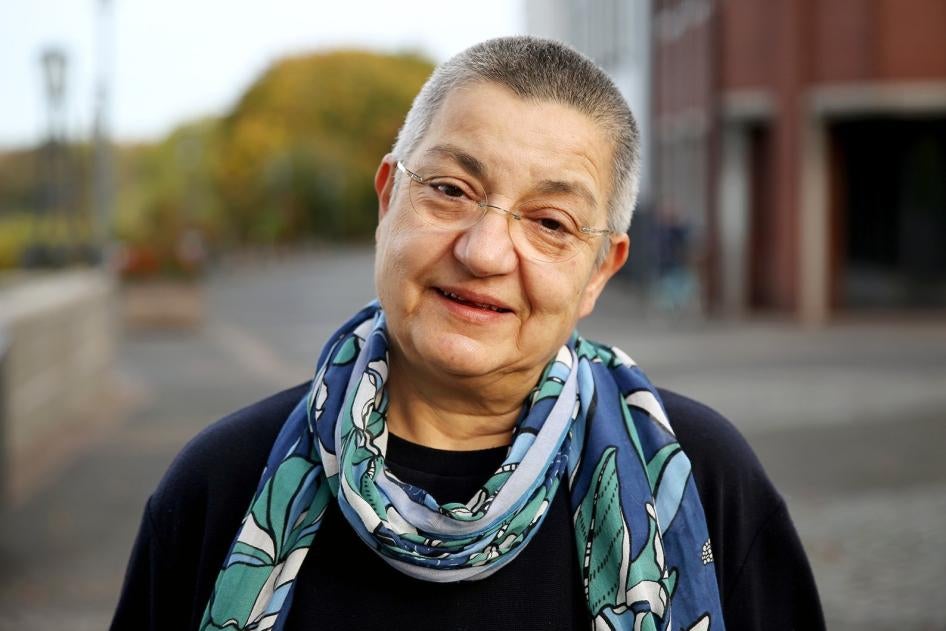
On 28 October 2022 HRW reports on the continuing crackdown on human rights defenders in Turkey, where Şebnem Korur Fincancı is the latest human rights defender to be jailed as authorities pursue a bogus investigation against her for “spreading terrorist propaganda.” Korur Fincancı is head of the Turkish Medical Association, former head of the Human Rights Foundation of Turkey, and a retired professor of forensic pathology. Her work was central to the creation of the United Nations’ “Istanbul Protocol,” a landmark manual on how to identify and document signs of torture. She has also worked on the exhumation of mass graves and forensic documentation of war crimes in different countries. See also: https://humanrightsdefenders.blog/2018/11/05/turkish-human-rights-defender-and-forensic-doctor-sebnem-korur-fincanci-honoured/
Korur Fincancı’s arrest and pre-trial detention followed an interview she gave to pro-Kurdish TV on October 19. Responding to allegations that the Turkish military had used chemical weapons against the armed Kurdistan Workers’ Party (PKK) in the Kurdistan Region of Iraq, Korur Fincancı said the video footage she had seen suggested use of toxic gases affecting the nervous system and that there should be a full investigation. Turkish pro-government media and President Recep Tayyip Erdoğan accused Korur Fincancı and the Turkish Medical Association of slandering the Turkish military. Prosecutors and courts rapidly responded by ordering her investigation and detention.
Korur Fincancı’s arrest is the latest in a pattern of politically motivated cases as the Erdoğan government continues its crackdown on critics and opponents. Just this week, police also detained 10 Kurdish journalists on top of 16 incarcerated in June. The Turkish authorities show all the signs of being determined to silence the voices of experts like Korur Fincancı as well as the journalists who report their words.
Authorities also appear focused on a broader plan of reshaping and taking over professional bodies that have been critical of government policies. On October 27, Turkey’s justice minister announced a plan to restructure both the Turkish Medical Association, from which Korur Fincancı will be removed as head, and the Union of Chambers of Turkish Engineers and Architects. Mücella Yapıcı, a prominent member of the latter, was convicted and jailed in April along with rights defender Osman Kavala and six others for her alleged role in the 2013 Gezi Park protests.
In the run-up to the 2023 presidential and parliamentary elections, the Turkish government is likely to continue to misuse criminal charges and detention against individuals it wants to silence and attempt to seize institutions outside its control.
A long-delayed but groundbreaking United Nations report published on August 31, 2022, says the Chinese government has committed abuses that may amount to crimes against humanity targeting Uyghurs and other Turkic communities in the Xinjiang region. The report by the outgoing UN High Commissioner for Human Rights, Michelle Bachelet, contains victim accounts that substantiate mass arbitrary detention, torture, cultural persecution, forced labor, and other serious human rights violations, and recommends that states, businesses, and the international community take action with a view to ending the abuses, and advancing justice and accountability. See also: https://humanrightsdefenders.blog/2022/06/09/disappointment-with-un-high-commissioners-visit-to-xinjiang-boils-over/
“The UN human rights chief for the first time lays bare the Chinese government’s grave abuses and concludes they may amount to crimes against humanity,” said John Fisher, Global Advocacy Deputy Director at Human Rights Watch. “Victims and their families whom the Chinese government has long vilified have at long last seen their persecution recognized, and can now look to the UN and its member states for action to hold those responsible accountable.”
The high commissioner’s report challenges the Chinese government’s blatant disregard for its international human rights obligations, Human Rights Watch said. It calls on businesses to meet their responsibilities to respect human rights, and for follow-up by UN member countries and bodies, which could take the form of an investigation to interview victims and survivors, identify those responsible, gather evidence, and recommend strategies for accountability. Similar recent UN Human Rights Council mechanisms have included commissions of inquiry, fact-finding missions, and independent international monitoring missions. This could also lead to the identification of all those missing and forcibly disappeared so that they can be reunited with their families.
The report should be formally presented to the Human Rights Council as a matter of priority, Human Rights Watch said, so that states can discuss the report’s findings and take the steps needed to implement its recommendations.
In the report, the high commissioner details widespread abuses, including targeting of cultural and religious practices, family separation, arbitrary arrests and detention, rape, torture, and enforced disappearances, across Xinjiang. The report concludes that “[t]he extent of arbitrary and discriminatory detention of members of Uyghur and other predominantly Muslim groups, pursuant to law and policy, in context of restrictions and deprivation more generally of fundamental rights enjoyed individually and collectively, may constitute international crimes, in particular crimes against humanity.”
Detainees interviewed for the report described conditions in so-called “vocational training centres” that would amount to torture or other forms of ill-treatment, including “being beaten with batons, including electric batons while strapped in a so-called “tiger chair”; being subjected to interrogation with water being poured in their faces; prolonged solitary confinement; and being forced to sit motionless on small stools for prolonged periods of time.”
The report noted that Chinese authorities continue to openly criticize victims and their relatives now living abroad for speaking about their experiences in Xinjiang, engaging in acts of intimidation, threats, and reprisals. In the words of one interviewee: “We had to sign a document to remain silent about the camp. Otherwise, we would be kept for longer and there would be punishment for the whole family.”
The report also draws on analyses of Chinese laws, regulations, and policies. The findings are consistent with those of academics, journalists, and human rights organizations, published since 2017 documenting grave international crimes. In the past five years, Human Rights Watch has documented mass arbitrary detention, pervasive surveillance, and crimes against humanity across the region.
The high commissioner has been systematically assessing a growing body of evidence regarding Chinese government human rights violations targeting Uyghurs and other Turkic communities. Treaty body reviews and reports from UN human rights experts also informed the new report, reinforcing concerns about secret detention and unlawful family separations, among other violations.
In June 2020, 50 UN human rights experts urged the Human Rights Council to establish an independent UN mandate to monitor and report on human rights violations in China, partly in response to Chinese government resistance to UN human rights scrutiny. In June 2022, another group of UN experts reiterated the 2020 statement and again urged Chinese authorities to grant them access to investigate “allegations of significant human rights violations and repression of fundamental freedoms in the country.”
In May, Bachelet visited China, despite being unable to travel or engage with interlocutors freely, and had little direct engagement with affected communities. In an end-of-mission statement delivered on May 28, Bachelet underlined that the visit was not an investigation, which she noted would require “detailed, methodical, discreet work of an investigative nature.” The new report lays a solid foundation for further UN and Human Rights Council action towards accountability in China.
“Never has it been so important for the UN system to stand up to Beijing, and to stand with victims,” Fisher said. “Governments should waste no time establishing an independent investigation and taking all measures necessary to advance accountability and provide Uyghurs and others the justice they are entitled.”
Amnesty International’s Secretary General Agnès Callamard said:
“This 46-page document lays bare the scale and severity of the human rights violations taking place in Xinjiang – which Amnesty International previously concluded amounted to crimes against humanity. There can be little doubt why the Chinese government fought so hard to pressure the UN to conceal it.
On August 15, 2022, the Attorney General’s Office formally notified the Justice Ministry’s Department of Special Investigation (DSI) of its decision to indict four park officials accused of abducting and murdering Porlajee “Billy” Rakchongcharoen in April 2014. The charges include illegal confinement, premeditated murder, and concealing the victim’s body.
“Thai officials have long hindered justice for Billy through cover-ups and exploitation of legal loopholes,” said Elaine Pearson, acting Asia director at Human Rights Watch. “The authorities can right this wrong by ensuring that the attorney general’s decision to indict four officials moves promptly to an effective and fair prosecution.”
Billy was last seen on April 17, 2014, in the custody of Chaiwat Limlikitaksorn, then-head of Kaeng Krachan National Park in Phetchaburi province, and his staff. The park officials said they released him after questioning him briefly and had no information regarding his whereabouts. On September 3, 2019, DSI officials announced that his remains had been found in Kaeng Krachan National Park. Chaiwit was among the four indicted.
Pinnapa Prueksapan, Billy’s wife, told Human Rights Watch that she hoped there would be answers to basic questions, such as who had abducted and killed her husband, and who had obstructed justice.
Thailand is obligated under international human rights treaties to which it is a party to investigate and appropriately prosecute enforced disappearance, torture, custodial deaths, and other alleged human rights violations. In addition, in September 2019, Prime Minister Gen. Prayut Chan-ocha ordered the Department of Special Investigation to ensure that the case was watertight so the culprits could be brought to justice, regardless of their rank or position.
However, the investigation has suffered from a cover-up, Human Rights Watch said. Despite a long list of allegations against Chaiwat for serious abuses and misconduct during his tenure as head of Kaeng Krachan National Park, he has never been held to account.
In addition, Thai law does yet not recognize enforced disappearances as a crime. Human Rights Watch has repeatedly urged Prime Minister Prayut and his government to ratify the International Convention for the Protection of All Persons from Enforced Disappearance, which Thailand signed in 2012, and make enforced disappearance a criminal offense.
Chaiwat and his staff arrested Billy on April 17, 2014, for alleged illegal possession of a wild bee honeycomb and six bottles of honey.
At the time of his enforced disappearance, he was traveling to meet with ethnic Karen villagers and activists in preparation for an upcoming court hearing in the villagers’ lawsuit against Chaiwat and the National Park, Wildlife, and Plant Conservation Department of the Ministry of Natural Resources and Environment.
The villagers alleged in the lawsuit that, in July 2011, park authorities had burned and destroyed the houses and property of more than 20 Karen families in the Bangkloy Bon village. Billy was also preparing to submit a petition about this case to Thailand’s monarch. When he was arrested, he was carrying case files and related documents with him. Those files have never been recovered.
In September 2014, Police Region 7 officers filed malfeasance charges under article 157 of the penal code against Chaiwat and three other park officials for unlawfully detaining him. The other suspects named in the case are Boontaen Bussarakham, Thanaseth or Pitoon Chaemthes, and Krissanapong Jitthes. The DSI found traces of human blood in a vehicle belonging to the park office, but was not able to verify if the blood belonged to Billy because the vehicle was cleaned before forensic experts could examine it.
On September 3, 2019, the DSI announced that his remains had been found in Kaeng Krachan National Park, where he was last seen in custody of the park officials. The investigation team found an oil barrel, its lid, two steel rods, a burned wooden piece, and two bones at the bottom of the reservoir on April 26, 2019.
The Central Institute of Forensic Science subsequently confirmed the genetic trace of one of the bones found inside the barrel matched Billy’s mother. The investigation team then concluded it was part of his remains. The condition of this piece of human skull, which was burned, cracked, and shrunk due to exposure to heat of 200 to 300 degrees Celsius, suggests the killers burned his body to conceal the crime.
“The indictment of Chaiwat and other park officials is an important step for justice for Billy and all those whom Thai government officials have forcibly disappeared and killed,” Pearson said. “Thai authorities should recognize that they can’t escape being held accountable for the most heinous crimes.”
The International Court of Justice (ICJ) on 22 July, 2022, rejected Myanmar’s preliminary objections to the case brought by Gambia under the international Genocide Convention. The case concerns Myanmar’s alleged genocide against the ethnic Rohingya population in Rakhine State, with a focus on military operations launched in October 2016 and August 2017.
Gambia filed the case before the ICJ in November 2019 alleging that the Myanmar military committed the genocidal acts of “killing, causing serious bodily and mental harm, inflicting conditions that are calculated to bring about physical destruction, imposing measures to prevent births, and forcible transfers … intended to destroy the Rohingya group in whole or in part.”
“The ICJ decision opens the door toward an overdue reckoning with the Myanmar military’s murderous campaign against the Rohingya population,” said Elaine Pearson, acting Asia director at Human Rights Watch. “By holding the military to account for its atrocities against the Rohingya, the World Court could provide the impetus for greater international action toward justice for all victims of the Myanmar security forces’ crimes.”
In February 2022, the ICJ heard Myanmar’s four objections challenging the court’s jurisdiction and Gambia’s legal standing to file the case, as well as Gambia’s response.
In response to Myanmar’s argument that Gambia has no standing to bring the case due to its lack of ties to Myanmar or the Rohingya, the court concluded, “All the States parties to the Genocide Convention thus have a common interest to ensure the prevention, suppression and punishment of genocide, by committing themselves to fulfilling the obligations contained in the Convention.”
By rejecting the preliminary objections, the ICJ is allowing the case to proceed on the merits to examine Gambia’s genocide allegations against Myanmar. Myanmar will now have to submit its response to Gambia’s main arguments filed in October 2020 detailing its case.
The ICJ case is not a criminal case against individual suspects, but a legal action brought by Gambia against Myanmar alleging that Myanmar bears responsibility for genocide as a state.
In December 2019, the court held hearings on Gambia’s request for provisional measures to protect the Rohingya remaining in Myanmar from genocide, which it unanimously adopted in January 2020. The provisional measures require Myanmar to prevent all genocidal acts against the Rohingya, to ensure that security forces do not commit acts of genocide, and to take steps to preserve evidence related to the case. The court also ordered Myanmar to report on its compliance with the provisional measures every six months.
Myanmar is legally bound to comply with the order. However, Human Rights Watch and other groups have continued to document grave abuses against the 600,000 Rohingya remaining in Myanmar, contravening the provisional measures.
The court’s decision on Myanmar’s preliminary objections should encourage the United Kingdom, Netherlands, Canada, and other concerned governments to support Gambia’s case through formal interventions to bolster the legal analysis on specific aspects of the Genocide Convention as it relates to the Rohingya, Human Rights Watch said.
Under article 41(2) of the ICJ Statute, the court’s order for provisional measures is automatically sent to the UN Security Council. As the fifth anniversary of the military’s atrocities against the Rohingya approaches, Security Council members should take steps to address the failure to secure justice and security for the Rohingya. Council members should work to adopt a resolution that gives the International Criminal Court (ICC) a mandate over the situation in Myanmar and severs the junta’s supply of arms and revenue, even if the resolution would be vetoed by Russia or China.
As the Myanmar armed forces continue to carry out atrocities against civilians and ethnic minorities, the ICJ remains one of the few available paths for holding the military to account. Ethnic groups and human rights defenders have aligned in Myanmar to push for the establishment of democratic rule, efforts that are amplified by the pursuit of justice at the ICJ.
“Concerned governments seeking to be leaders for accountability in Myanmar should formally intervene in the Genocide Convention case,” Pearson said. “The case provides an important opportunity to scrutinize the Myanmar military’s abusive policies and practices that have preserved its power over decades.”
“I’m thrilled, honored, humbled and grateful to announce that next month, I will begin my appointment as @hrw’s new Program Director, supervising our research and investigations as we reorient ourselves to strengthen the broader human rights ecosystem and meet today’s challenges,” Bashi tweeted on Friday.
In the past, Bashi, a lawyer by training, co-founded and directed Gisha, an organization that pushes for freedom of movement for Palestinians in Gaza. From 2015 to 2018 she served as the director of Israel-Palestine for HRW, and returned to the organization last year as a special adviser.
In recent years, Bashi, a US native, has been open about her relationship with a Palestinian man originally from Gaza, and the struggles they have faced to live in the same place. They lived together for a few years in the United States as well as in South Africa, and have based their lives in Ramallah, she said, since they are unable to live together in Israel.
The reaction was quick in coming. On 2 May Just the News stated: “A powerful nongovernmental organization with a massive budget and an alleged ideological bias against Israel will continue targeting the Jewish state after it completes a major leadership change now underway, according to experts and lawmakers who spoke to Just the News.” “Unfortunately, the extremely biased attitude toward Israel which Kenneth Roth represented in Human Rights Watch will, most probably, be cemented with the appointment of Sari Bashi,” said Sarah Stern, president of the Endowment for Middle East Truth, a think tank. “Throughout her career, Ms. Bashi has constantly demonstrated her lack of objectivity and overwhelming animus towards the state of Israel.”
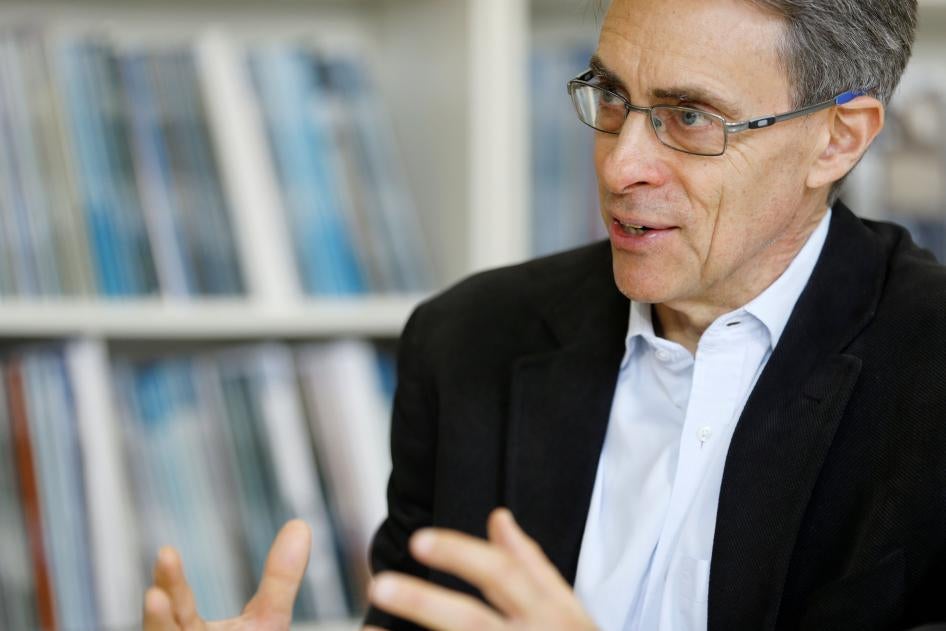
Human Rights Watch Executive Director Kenneth Roth has announced that he plans to step down at the end of August 2022, Human Rights Watch said on 26 April. Roth has led the organization since 1993, transforming it from a small group of regional “watch committees” to a major international human rights organization with global influence.
“I had the great privilege to spend nearly 30 years building an organization that has become a leading force in defending the rights of people around the world,” Roth said. “I leave Human Rights Watch with confidence that a highly talented and dedicated staff will carry on that defence with great energy, creativity, and effectiveness.”
Under Roth’s leadership, Human Rights Watch grew from a staff of about 60 with a $7 million budget, to 552 covering more than 100 countries and a nearly $100 million budget.
Roth began his human rights career as a volunteer, working on nights and weekends while serving as an attorney and a federal prosecutor. He joined Human Rights Watch in 1987 as deputy director. At the time, the organization consisted of Helsinki Watch, formed in 1978 to support dissident movements in Eastern Europe; Americas Watch, founded in 1981; and Asia Watch, formed in 1985. Shortly after Roth joined, the organization created Middle East Watch and Africa Watch. Early in his tenure, Roth moved the organization toward a single identity as Human Rights Watch…
Roth recognized the need for real time documentation of atrocities to generate immediate pressure to end them. That led to the creation of a group of specially trained researchers who could provide a surge capacity to the organization’s regular country researchers.
Roth also embraced new possibilities to bring perpetrators to justice. As Human Rights Watch researchers meticulously documented abuses, the organization pressed the United Nations Security Council, then in a more cooperative moment, to create international war crimes tribunals for the former Yugoslavia and Rwanda. Human Rights Watch research was used to build some of the cases, and staff testified at both UN tribunals. Human Rights Watch also played a prominent role in establishing the International Criminal Court, fending off pressure from the US government seeking to ensure immunity for its own forces.
“Ken’s fearless passion for justice, his courage and compassion towards the victims of human rights violations and atrocity crimes was not just professional responsibility but a personal conviction to him,” said Fatou Bensouda, former chief prosecutor of the International Criminal Court. “He has indeed been a great inspiration to me and my colleagues.”
Today, amid the horrific abuse taking place in Ukraine, an infrastructure is in place to hold perpetrators accountable.
Roth also created special teams to address the needs of certain marginalized people, including women, children, lesbian, gay, bisexual and transgender (LGBT) people, refugees, people with disabilities, and older people. He also oversaw the development of specialized programs on poverty and inequality, climate change, technology, and corporate social responsibility. In addition, he initiated a program to address human rights in the United States.
Roth changed the way that Human Rights Watch directed its advocacy. The organization began focusing mainly on US foreign policy. Roth globalized the organization’s advocacy, establishing offices in Brussels, London, Paris, Berlin, Stockholm, Tokyo, Sao Paolo, Johannesburg, and Sydney. He also spearheaded the organization’s work with the United Nations, with dedicated advocates in New York and Geneva.
After the 9/11 attacks, Human Rights Watch documented and exposed the use of “black sites” where US officials interrogated and tortured terrorism suspects. Under Roth, Human Rights Watch pressed the US government to investigate and prosecute those responsible for issuing the orders. Eventually the US Senate issued the Torture Report confirming Human Rights Watch’s findings and denouncing the Central Intelligence Agency’s use of torture.
“Ken Roth turned Human Rights Watch into a juggernaut for justice,” said Anthony Romero, executive director of the American Civil Liberties Union. “He has inspired a generation of human rights defenders to fight for a better world. During the so-called ‘war on terror,’ Ken went to Guantanamo and brought to bear his acumen and stature in exposing the farce of the military commission process. No organization and no leader have had a greater impact in human rights on a global scale.”
Human Rights Watch’s communication strategy evolved dramatically under Roth. The organization began by writing reports. Over time, it also began producing shorter and quicker reports and built a strong multimedia capacity, so that videos, photos, and graphics now routinely accompany the organization’s publications and sometimes are the publication itself. The organization also embraced social media. The organization has amassed nearly 14 million followers on the major social media platforms. Roth himself has more than half a million Twitter followers.
In his nearly 30 years at the helm of Human Rights Watch, Roth traveled the world, pressing government officials of all stripes to pay greater respect to human rights. He met with more than two dozen heads of state and government along with countless ministers and made investigative or advocacy trips to more than 50 countries. Whenever he could, he also met with communities affected by human rights violations. During his early years with the organization, he conducted fact-finding investigations himself, including in Haiti, Cuba, Israel-Palestine, Kuwait after the Iraqi invasion, and Serbia after the US bombing. In recent years, he has been especially concerned with addressing atrocities during the Syrian war as well as Chinese government repression in Xinjiang.
Roth inevitably earned many enemies. Despite being Jewish (and having a father who fled Nazi Germany as a 12-year-old boy), he has been attacked for the organization’s criticism of Israeli government abuses. The Rwandan government was particularly vitriolic in its criticism of Roth after Human Rights Watch, which had issued a definitive account of the genocide, also reported on atrocities and repression under President Paul Kagame.
The Chinese government imposed “sanctions” on him and expelled him from Hong Kong when he traveled there to release the annual World Report in January 2020, which spotlighted Beijing’s threat to the global human rights system. Roth responded to these and many other criticisms by noting that the organization employs the same fact-finding methodology and applies the same human rights principles in every country where it works.
Roth has written extensively on a range of human rights issues. In addition to writing the introduction to the World Report since 1990, he has published more than 300 articles including in the New York Times, The Washington Post, The Guardian, The New York Review of Books, Foreign Policy, and Foreign Affairs. I quoted him often in this blog: see e.g. : https://humanrightsdefenders.blog/tag/kenneth-roth/
Roth plans to write a book drawing on his personal experiences about the most effective strategies for defending human rights. “I am leaving Human Rights Watch but I am not leaving the human rights cause,” Roth said.
Human Rights Watch will conduct an open search for Roth’s successor. Tirana Hassan, chief programs officer, will serve as interim executive director.
The authorities in Thailand should urgently investigate an incident intended to intimidate a prominent human rights defender, Human Rights Watch said on 13 April, 2022.
On April 12, 2022, at about 6 a.m., an unidentified assailant threw a pair of 9-inch-long scissors at the house of Angkhana Neelapaijit in Bangkok, making a hole in her front door. Security camera footage showed what appeared to be a woman wearing a face mask and a dark t-shirt with the Thai numeral 9 standing in front of the house, throwing the scissors, and then running away. Angkhana, 66, is a former commissioner of the National Human Rights Commission of Thailand and a newly appointed member of the United Nations Working Group on Enforced or Involuntary Disappearances. See: https://www.trueheroesfilms.org/thedigest/laureates/0D5DED3E-F79F-4AB4-8261-F6A19486F062
“Violent acts intended to intimidate a well-known figure like Angkhana not only pose a threat to her and her family, but send a spine-chilling message to the entire Thai human rights community,” said Elaine Pearson, acting Asia director at Human Rights Watch. “The Thai government should respond immediately by undertaking a serious investigation to ensure that everyone responsible for this incident is held accountable.”
Angkhana told Human Rights Watch that she and her family felt vulnerable after the Justice Ministry canceled her protection under the government’s witness protection program on April 1. The authorities claimed the service was no longer needed because Angkhana’s life would no longer be in danger after the Department of Special Investigation ended its investigation of the enforced disappearance of her husband, the prominent human rights lawyer Somchai Neelapaijit. [See also: https://humanrightsdefenders.blog/2021/03/17/where-is-somchai-a-brave-wifes-17-year-quest-for-the-truth/]
“The Thai government should not ignore this disturbing incident, which appears to be a response to Angkhana’s effective human rights advocacy,” Pearson said. “Foreign governments and the United Nations should press the Thai government to urgently act to protect Angkhana and other human rights defenders in the country.”
On 8 April 2022, the Russian government closed the offices of Amnesty International and Human Rights Watch and several other NGOs such as Carnegie Endowment for International Peace, Friedrich Naumann Foundation for Freedom, Friedrich Ebert Foundation. This decision has been taken “in connection with the discovered violations of the Russian legislation.”
On 11 March, Russia’s media regulator had already blocked access to Amnesty International’s Russian-language website.
“Human Rights Watch has been working on and in Russia since the Soviet era, and we will continue to do so,” said Kenneth Roth, executive director of Human Rights Watch. “This new iron curtain will not stop our ongoing efforts to defend the rights of all Russians and to protect civilians in Ukraine.”
Reacting to the news, Agnès Callamard, Secretary General of Amnesty International, said: “Amnesty’s closing down in Russia is only the latest in a long list of organizations that have been punished for defending human rights and speaking the truth to the Russian authorities. In a country where scores of activists and dissidents have been imprisoned, killed or exiled, where independent media has been smeared, blocked or forced to self-censor, and where civil society organizations have been outlawed or liquidated, you must be doing something right if the Kremlin tries to shut you up.“