On 2 February2026 Exile Hub, one of Global Voices’ partners in Southeast,Asia, published this story on How Kant Kaw turned a dream into a 15-year fight for equality in Myanmar.
Kant Kaw’s journey into journalism officially began in 2009, but her story started long before that. As a child, she devoured books of every kind, captivated by the power of language. She dreamed of becoming a writer, yet understood early that writing alone could not sustain her. So she pursued practical jobs while holding on to her passion. Everything changed the day she discovered journalism. For her, it was the perfect convergence of purpose and livelihood. It allowed her to write, to witness, and to serve the public. Fifteen years later, she remains in the field, saying that she never stopped loving the work.
Kant Kaw soon realized that her calling extended beyond reporting events as they unfolded. She felt compelled to disclose the struggles that women in Myanmar face every day. “I met women who had to carry their fear in silence, yet still found the strength to protect their children and families. They wake up every morning choosing survival. In our conversations, I saw not weakness, but extraordinary strength — especially during moments of political upheaval.”
Through Kant Kaw’s work, stories that might otherwise have remained untold reached wider audiences. For example, she shone a light on the realities of a young mother in a conflict-affected township who begins each day calculating risk, choosing safer routes to buy food, wondering whether her child’s school will be open, and navigating military checkpoints.
Years of reporting, especially in post-coup Myanmar, have taken a toll. These days, she practices intentional self-care to sustain her work: music, hiking, friendships, and proactive emotional problem-solving. She gives care as much as she receives it, offering support and presence to friends who struggle. She knows the stakes:
Her dream of becoming a writer did come true — just not in the way she first imagined. She writes for the public, for women whose voices have been muted by injustice, and continues to write as an act of resistance, a record of truth, and a source of hope.
Through her writing, she pushes back against silence, against injustice, and against anyone who dares to underestimate what a woman can do.
Patricia Egessa, Director of Global Communications, published this NGO assessment:
Looking back at the year 2000 from a gender justice perspective is sobering. The previous decade had famously been declared as ‘the end of history’ by Western male political pundits. But women knew better. As conflicts continued to rage with devastating and disproportionate impacts on women and families, gender justice activists decided history still had some way to go and demanded a central role in peacebuilding. Their efforts galvanized the adoption of the pathbreaking UN Resolution 1325, which established the Women, Peace and Security (WPS) agenda.
As the WPS agenda marks its 25th anniversary, civil society organizations are uniting to reaffirm the importance of women’s full and meaningful participation and leadership in global processes. The NGO Working Group on Women, Peace and Security has released its annual Open Letter calling on the international community to defend the core values of the WPS agenda amid growing threats to women’s rights globally. We cite just a part of that letter as a statement of our shared concern:
Yet, when we should be paying tribute to the hard-fought achievements of these feminist movements, we are instead confronting an alarming backlash against women’s autonomy and rights, and against those who advocate for them, at a time when the consequences of armed conflict and crises on the lives of women and girls could not be more devastating. The very term gender—a core concept in international human rights law mobilized by feminist movements for decades to challenge the systematic oppression of women and LGBTQIA+ people—is today being blatantly undermined by anti-gender movements globally, including at the United Nations (UN). Civil society and human rights defenders around the world, especially those defending gender equality, women’s rights, sexual and reproductive rights, and LGBTQIA+ rights, are being targeted for who they are and the work they do. Combined with rising militarism, erosion of respect for international law, capitalist exploitation and slashing of funding for gender equality and women’s rights organizations, these attacks have thrown our work and our movements into crisis, even as the vision of the WPS agenda is more necessary than ever.
ICRW has proudly signed on to this collective statement precisely for the reason so clearly articulated in this letter: to remain silent as the WPS agenda and those who advocate for it are attacked not only undermines decades of progress but jeopardizes peace and security for everyone. Twenty-five years after the adoption of the UN resolution, our work is unfinished. We join over 600 organizations worldwide in ensuring that our unified voice reaches the UN Security Council, governments, and the world’s citizens who understand and support a more peaceful world for our children.
Marie Louise Baricako, a women’s rights activist from Burundi, in Geneva for the Human Rights Council (Geneva Solutions/Michelle Langrand)
Michelle Langrand in Geneva Solutions of 8 October 2025, talks with Burundian women’s rights defender Marie Louise Baricako – who was In Geneva to attend the Human Rights Council. She warns that her country is sinking deeper into crisis as the region teeters on the brink, urging the international community to push for a national dialogue.
Marie Louise Baricako recalls the Arusha negotiations with a mixture of pride and sorrow. In the late 1990s, she pushed for women to have a seat at the table in the talks aimed at ending Burundi’s inter-ethic civil war – and yet, 25 years on, much of the agreement’s promises remain unfulfilled.
“If women are left out, Burundi will keep losing,” she says. “How can you hope to develop when 52 per cent of your population are left aside?”
Baricako has spent a lifetime trying to empower that 52 per cent. In 1988, she became the first Burundian woman to earn a PhD, studying in Cameroon, and later led the English department at the University of Burundi. Born in Muramvya province, she spent much of her adult life abroad, including in The Gambia, where she joined Femme Africa Solidarité, a feminist network founded in Geneva in 1996 to promote female leadership in peace, security and development……
Fortuné Gaetan Zongo, UN special rapporteur on Burundi since 2021, warns of a “real risk” of regional destabilisation. “If Kinshasa were to fall, Burundi would be deeply affected,” he tells Geneva Solutions. Some 78,000 Congolese refugees fleeing the violence have crossed into Burundi since the beginning of the year, raising questions about how Burundi, already struggling, can cope with their humanitarian needs while the UN aid system is strapped for cash.
Baricako sees how ethnic narratives continue to be exploited by those in power. “This is what our leaders today are nourishing, because in their mind, Tutsi had kept power for so long alone, excluding Hutus. Now, they say ‘we have taken it, we shall not release it, until Jesus comes back’,” she says.
Yet repression is not limited to a group. “When women or human rights defenders dare to speak out on any violation, the next day, either they are in prison or they are killed,” she says…
Despite the bleak prospects, Baricako places hope in ordinary Burundians. “They have had time to believe in these stories of Hutus or Tutsi being the enemy. Now I believe people have realised that it is not about the ethnic group,” she says. “Burundians want a peaceful country, and they are ready to work as hard as they can to rebuild Burundi.”
Baricako stresses that talks would lead to more unfulfilled promises without the participation of those in power. She calls on the African Union and the East African Community to step out of their indifference and pressure Burundi to the table.
Zongo, who has been met with the government’s outright refusal to cooperate with him and other human rights experts, also notes that certain states with good relations with Burundi, like Tanzania, DRC and Cameroon, “can convince Burundi to sit at the table and engage in cooperation.”
For all the setbacks, Baricako remains steadfast. “The support of civil society has been essential in staying strong and not abandoning the fight,” she says. “Peace is our business, whether they want it or not. I will not go to the battlefield with a weapon, but what I have in my heart, I will use it to stand for peace and security of Burundians.”
One in four countries report backlash on women’s rights in 2024
Women’s and girls’ rights are facing unprecedented growing threats worldwide, from higher levels of discrimination to weaker legal protections, and less funding for programmes and institutions that support and protect women.
Despite important progress, only 87 countries have ever been led by a woman, and a woman or girl is killed every 10 minutes by a partner or member of her own family. Digital technology and artificial intelligence spread harmful stereotypes, while the digital gender gap limits women’s opportunities.
In the past decade, the world registered a disturbing 50 percent increase in the number of women and girls living in conflict, and women’s rights defenders confront daily harassment, personal attacks and even death. Recent global crises—like COVID-19, the climate emergency, soaring food and fuel prices—are only increasing the urgency to respond.
“UN Women is committed to ensuring that ALL Women and Girls, everywhere, can fully enjoy their rights and freedoms,” affirmed UN Women Executive Director Sima Bahous. “Complex challenges stand in the way of gender equality and women’s empowerment, but we remain steadfast, pushing forward with ambition and resolve. Women and girls are demanding change—and they deserve nothing less.”…
Today’s report also features the new Beijing+30 Action Agenda, a courageous roadmap to complete our unfinished business by focusing on:
A digital revolution for all women and girls: We must ensure equal access to technology, equip women and girls to lead in AI and digital innovation, and guarantee their online safety and privacy.
Freedom from poverty: Investments in comprehensive social protection, universal health coverage, education, and robust care services are needed for women and girls to thrive and can create millions of green and decent jobs.
Zero violence: Countries must adopt and implement legislation to end violence against women and girls, in all its forms, with well-resourced plans that include support for community-based organizations on the front lines of response and prevention.
Full and equal decision-making power: Temporary special measures like gender quotas have proven their effectiveness in rapidly increasing women’s participation.
Peace and security: Fully finance national plans on women, peace and security and gender-responsive humanitarian aid are essential. Frontline women’s organizations, so often the first responders to crisis, must receive dedicated, sustained funding to build lasting peace.
Climate justice: We must prioritize women’s and girls’ rights in climate adaptation, center their leadership and knowledge, and ensure they benefit from new green jobs.
Across these six Actions, putting young women and girls at the heart of our efforts is the best way to guarantee success, both today and tomorrow. These six plus one actions have the potential to unleash progress on women’s rights and put us back on track for 2030.
The Beijing+30 commemoration and the forthcoming UN Commission on the Status of Women (CSW69) are clear opportunities to enshrine this Action Agenda into national policies, regional strategies, and global agreements.
In a pivotal year for women and girls, that is also a year of pushback and crises like no other, let us push women’s rights forward to create a world where all women and girls enjoy equal rights and equal opportunities. We can be the first generation that can live in an equal world.
Ahead of International Women’s Day, Amnesty International’s Secretary General, Agnès Callamard, said:
“The significance of International Women’s Day 2025 cannot be overstated. It is no longer a case of addressing unfinished business on the gender justice front, but one of bracing ourselves to resist active regression and a mounting assault on our rights.
“Thirty years ago, 189 governments came together at the Fourth World Conference on Women to adopt the Beijing Declaration and Platform for Action, a groundbreaking blueprint for strengthening women’s rights endorsed by thousands of activists. Despite significant progress since then, the world has failed to fully deliver on all the promises. From rape and femicide to coercion, control and assaults on our reproductive rights, violence against women and girls still threatens their safety, happiness and very existence in a multitude of ways.
“And crucially, we are now going backwards. The aggressive patriarchal crusade led by President Trump and other powerful leaders against the rights and bodily autonomy of women and gender-diverse people has already had devasting consequences not just in the United States but all over the world. By dismantling domestic efforts to tackle gender-based, racial and other forms of discrimination, erasing recognition of transgender identity, and ending international funding for abortion counselling or referrals, the US administration is shamefully erasing years of hard-fought gains.
“Let us be clear, this trend has deeper roots than President Trump’s recent election. For several years now, brazen anti-rights movements have conspired to turn back the clock to an age when patriarchal oppression was the norm. We cannot afford to be complacent in the face of this gathering storm, for women, girls and LGBTQI+ people are under attack the world over.
“Amnesty International calls on states and non-state actors who believe in universal values and a rule-based international order to resist this accelerated and well-resourced attack against women’s rights. We call on them to strengthen protections of women, girls, LGBTQI+ people and other marginalized groups against gender-based violence. We urge them to recognize and support the vital work of all women human rights defenders and all those on the frontlines of the fight for sexual and reproductive rights, and to implement concrete measures to protect and empower them.
“We appeal to all to respect sexual and reproductive rights and prevent rollbacks, including by revoking any laws that criminalize or punish people for exercising these rights, as well as fully decriminalizing, providing and funding universal access to abortion.
“Finally, this International Women’s Day, Amnesty International reiterates its call on states to recognize gender apartheid under international law as a crime against humanity. Doing so would fill a major gap in the global legal framework and help to combat institutionalized and systematic domination and oppression on the basis of gender, no matter where it occurs.
“Despite suffering setbacks and facing countless attempts to block, divide and undermine us throughout history, feminist, LGBTI+ and grassroots movements keep marching forward. We may be walking a rocky path, but we will never stop fighting for a world where women, girls and gender-diverse people are free to enjoy the full range of human rights without discrimination or fear of reprisal.”
On 7 March 2025 SaferWorld carried a post “Still standing: The resilience of women peacebuilders in a time of crisis”
As we mark International Women’s Day 2025, women’s rights organisations (WROs) and frontline activists in crisis and conflict settings are standing strong despite immense challenges. ..Yet, while their work is more critical than ever, the harsh reality is that many are being forced to operate with dwindling resources, due to global funding cuts and shifting donor priorities towards militarisation, over a genuine investment in long-term peace, security and gender justice.
At a time when conflict, displacement and violence against women are escalating, and misogyny is a core pillar of the far-right agenda, these cuts will only deepen existing inequalities and undermine efforts to build sustainable peace and security globally. The reduction in funding for gender equality and Women, Peace and Security (WPS) initiatives threatens to reverse decades of progress and compounds the global rollback on women’s equality, safety and security. For example, cuts to the UK official development assistance (ODA) budget in 2021 led to a 30 per cent reduction in funding to programming with a focus on gender equality and to a 66% reduction in funding to WROs compared to 2017. WROs and women-led organisations – many of which are small community groups – often struggle to access direct, flexible and long-term funding, despite being the first responders in humanitarian crises and leading conflict prevention and peace efforts. When funding disappears, so do vital services, safe spaces for survivors of gender-based violence and conflict-related sexual violence, safe spaces for women peacebuilders to re-mobilise, legal aid for women and girls who have been displaced, and advocacy that ensures women’s voices are central in peace processes. But despite these constraints, WROs and women peacebuilders are still standing. Their resilience is evident in their ability to adapt, mobilise local resources and continue working in the most difficult circumstances. But resilience alone is not enough – they need meaningful and sustained support.
As the world commemorates International Women’s Day and gathers at the United Nations Commission on the Status of Women (CSW) to discuss gender equality and sustainable development, we reaffirm our commitment to ensuring that women and girls play a central role in peacebuilding and conflict prevention efforts around the world.
The international community, donors, funders and philanthropists will need to act urgently to ensure that WROs are not just surviving but thriving. This means:
Increasing direct, flexible and long-term funding and shifting power to local women-led organisations, women activists and women’s groups – we have seen the value in our work of providing sustained core funding to WROs, moving beyond short-term, project-based grants to ensure continuity of their critical efforts in conflict prevention, peacebuilding and humanitarian response. To make this shift meaningful, international organisations and donors should prioritise direct and flexible funding to frontline WROs rather than channelling resources through large intermediaries. This will ensure that funding reaches those who are best placed to drive lasting change within their communities.
Ensuring women’s leadership in conflict prevention, peace and humanitarian processes – women from all backgrounds and marginalised communities must have a seat at decision-making tables, not just as implementers but as equal partners in shaping policies and solutions that affect their lives.
Standing up for gender equality and women’s rights – urgently pushing back against reversals in women’s rights and gender equality, especially in fragile and conflict-affected contexts, where regressive policies and shrinking civic space are eroding hard-won gains. Women peacebuilders, human rights defenders and frontline activists are already standing up to these challenges, demanding that women’s voices remain central. Their leadership must be protected, amplified and meaningfully supported to sustain progress and counteract the global rollback on gender equality.
Protecting and supporting women human rights defenders and peacebuilding organisations – governments and international actors must recognise and safeguard the work of women human rights defenders and peacebuilding organisations in conflict zones, ensuring they can operate without fear of reprisals.
Strengthening accountability mechanisms – governments and multilateral bodies must hold themselves accountable to their commitments to the WPS agenda and support localisation of the UN Security Council Resolution 1325 on WPS.
Women’s rights organisations are the backbone of peace and resilience in crisis and conflict settings. This International Women’s Day, we celebrate their unwavering commitment – but celebration is not enough. The global community must act with urgency to fund, support and protect these organisations so they can continue to drive meaningful change.
Nonhlanhla Dlamini heads SWAGAA – the Swatini Action Group Against Abuse, a local Eswatini organisation whose primary focus is on ending gender-based violence in the country. Since 1990, SWAGAA has provided care, support, prevention, and access to justice for victims and survivors of gender-based violence, by working with community leaders, community members, and the Government, as well as providing counselling for GBV victims. For the International Day for Women Human Rights Defenders, Dlamini answers questions about GBV, her inspirations and why it was necessary for her to become one of the first women elected as a member of parliament in Eswatini.
1. What was that specific inspiring moment or experience that made you decide to focus on gender-based violence?
What actually motivated me was an incident where a relative of mine was raped at the age of six by a stranger. We didn’t find the person. SWAGAA already existed, but I didn’t know anything about them. Then in 1997, I saw an advertisement [for SWAGAA] in the newspaper. And when I learned about what they were doing, I asked myself why I didn’t know about the organization when I had this problem because I had no one to talk to. I had no one to support me. We reported the matter to the police, but nothing ever happened. We’re so frustrated. So, when I saw the position, I just knew this was my job. And my objective was, I want people to know about SWAGAA. I wanted SWAGAA to be a household name.
2. How do you stay motivated and have you ever questioned your journey?
I have several times, particularly when I get hurt, because, you know, sometimes this world can be very cruel. And I ask myself, how could people do such an evil thing? I do get depressed. And when I’m very depressed, I’m like, you know, out of all the jobs that I could be doing, why am I even doing this job? Then I get some motivation with some of the success stories. If I quit, who else is going to do it? I kind of feel I’m compelled to do it because there’s a whole lot of people that are looking up to me for help. So, I continue.
3. You were elected MP back in the early 2000s, the first woman ever for your constituency. What made you decide you had to run?
… The mistake that we make as advocates and women’s rights activists is that we’re always pushing for others to go and make the change that we want to see. So, I made a decision; I was going to stand for the next elections, which were in 2008. I realized that for years, I’ve been part of a vote for a woman campaign, pushing women to stand for elections. But I’ve never thought of myself one day running for elections. I ran the race to Parliament. I was nominated. I was widely supported. I won the primary elections. It was easy for the primary elections, but the secondary elections were not easy. And I was the only woman against seven men. It was very rough. It was very testing. But I pushed with everything that I had. And I won the elections, and I became a member of Parliament. And the first motion that I moved in Parliament, was that the Minister of Justice bring the sexual offenses and domestic violence bill within 30 days. And his response was no. I kept asking, and that is how the bill was finally seen by Parliament.
4. Let’s look to the future. If you could change one thing about the situation of gender-based violence in Eswatini, what would it be?
The most critical thing is prevention. Prevention, prevention, because once it happens, it’s difficult to pick up the pieces. …
5. Do you consider yourself a woman human rights defender? Why?
Of course I do, 100 percent. I consider myself a human rights defender because due to the nature of the work that I’m doing, I am continuously standing up for the rights of women and girls in Eswatini. And I have advocated for better legislation in the country. I have advocated for better services in the country, be it in the police, be it in the hospitals, be it in the justice system. I have done everything that I think needs to be done under the sun to make sure that I stand for the rights of the citizens of this country. And I’m saying this because I also know people believe in me. I’ve done all I possibly can to advocate for the rights of women and children in the country.
GORDON OSEN on 24 October 2024 in the Star of Kenya published a warm portrait of Rachael Mwikali who, born and bred in Mathare slums, has come face to face with discrimination and abuse.
When you watch Rachael Mwikali do her activism, you may dismiss her as an antagonistic feminist and a rebel without a cause. Not so. At proximity, the globally recognised champion of sexual and reproductive health rights and women is a warm and compassionate personality whose work is fired up by empathy.
She told the Star during an interview on the sidelines of the annual meeting of the African Commission on Human and People’s Rights in Banjul, The Gambia, that at the age of 13, a man 10 years older than her sexually abused her. “The saddest part is the community did not protect me. In fact, they blamed me for engaging in sex at a young age,” she said.
“I learnt to speak up for myself and others who may not have the courage.” Her reward, she says, is when the marginalised get justice. At the heart of her campaign is turning women’s perceived vulnerability and weaknesses into strengths.
Through her organisation Coalition for Grassroots Human Rights Defenders, she champions for intersectionality as well. When El Nino ravaged Mathare slums this year, Mwikali started a community kitchen that would make up to 500 hot meals per day.
She is also part of the #EndFemicideKE. Her agitation has seen her count her losses and keep some wins. In 2016, aged 24, Mwikali was named the Lobbyist for Change by a Swedish non-governmental organisation known as We Effect. She also sits on the Amnesty International board, the Royal Denish Embassy Youth Sounding board and the Youth Advisory board of the Kingdom of Netherlands. She is also the chairperson of the Human Rights Defenders Awards in Kenya which recognises activists at the frontline of human rights protection. The awards are given annually by the Defenders Coalition.
Asked about what motivates her and what she considers a win, Mwikali says she dreams of having many more passionate women standing up for their rights, and championing for an equal society
Sara Nabil is a human rights defender and artist from Afghanistan. She spoke to ISHR about her dream of one day seeing a ‘free democratic Afghanistan, where each human being [regardless of which] gender they are, man or woman, neutral or other genders, [would be] treated equally.’
Stand in solidarity with Sara and other women human rights defenders from Afghanistan: join us in our campaign to push for UN experts and States to explicitly and publicly recognise the situation in Afghanistan as a form of gender apartheid and the need for an accountability mechanism to address gross human rights violations against women.
On 25 june 2024, when adopting a resolution today based on the report by Petra Bayr (Austria, SOC), PACE strongly condemned the frequent attacks perpetrated against women human rights defenders, and called for an end to impunity for perpetrators of violence.
The resolution emphasises that women human rights defenders – which include activists, NGO members, health workers, private sector actors, researchers, lawyers, students, teachers, artists, trade unionists, bloggers and journalists – act “in a peaceful and legal way to promote and protect human rights”. The Assembly deplores that they face attacks and specific threats, both on and offline, and are often victims of intersecting forms of discrimination
In this context, PACE called on member States to “repeal laws, policies and practices that affect women human rights defenders, in all their diversity, and unduly restrict their activities”. It also recommended guaranteeing their protection, by ensuring a secure and enabling environment in which to carry out their activities, and prosecuting the perpetrators of attacks and threats, including members of police forces.
Finally, PACE called on national parliaments to support women human rights defenders through practical actions and the introduction of new policies.
Global Voices has released a special coverage called Empowering voices: Women in politics, which explores the state of women’s political participation around the world.
Human Rights First referred to a new report reveals that WHRDs face increasing harassment and threats from a global movement against gender equality and LGBTQI+ rights. The Kvinna till Kvinna Foundation, a leading feminist women’s rights organization, released Hope and Resistance Go Together: The State of Women Human Rights Defenders 2023, a report that found discouraging growth in harassment of WHRDs. The foundation surveyed 458 women’s and queer rights activists and interviewed 25 activists representing WHRDs from 67 countries affected by violence or conflict.
They found that 75% reported facing harassment for their activism, a 15% increase from two years ago, and 25% of respondents have received death threats. Most harassment comes from government authorities, but increased harassment from far-right groups and anti-gender equality actors is also driving these startling statistics. Human Rights Defenders (HRDs) across the world face resistance and violence. In 2022, at least 401 HRDs were killed for their peaceful work. But some of the obstacles facing WHRDs are distinct. https://humanrightsfirst.org/library/recognizing-women-human-rights-defenders-on-international-womens-day/
Human Rights Watch on 7 March carried a piece by Macarena Sáez who says inter alia:
On this International Women’s Day, we march for the one in three women who experience physical or sexual violence in their lifetime. We cheer for countries like Argentina, Colombia, and Ireland that value our autonomy to choose to be pregnant and have legalized access to safe abortion, while protesting that abortion is still or again illegal in many places, including US states like Alabama and Texas. At the same time, we march to honor the women who marched before us, like the Mexican women who organized the first feminist congress in 1916 to push for family law reforms and their right to vote, and the Nigerians who waged their “Women’s War” against colonization and patriarchal laws in 1929. Their struggles sadly mirror the reality of many women around the world today – especially women who belong to historically marginalized groups – who continue to rally against violence and abuse.
Fearing the power of women’s solidarity and collective actions, governments have stifled women’s speech through restrictions on movement, censorship, smear campaigns, and criminal prosecutions. In highly repressive contexts, like Afghanistan and Iran, women suffer arbitrary detention, and even enforced disappearance and torture, for their activism. Meanwhile, social media companies have not done enough to protect women from online violence, chilling women’s freedom of expression on and offline. These barriers make it hard for women’s equality to become reality. Gender justice requires an enabling environment in which women can express themselves, speak and spread their political views, and participate in political and public life. Instead of repressing or tolerating the repression of women, governments should recognize our collective actions – and consequent power – and enshrine our rights in laws, policies, and practice. [https://www.hrw.org/news/2024/03/07/womens-voices-have-power-drive-change]
On 8 March 8, 2024 Almyra Luna Kamilla and Rosalind Ratana opined in IMHO on “Navigating the storms of repression: The resilience of young women rights defenders in Asia”
In recent years, Asia has been witnessing rising authoritarianism and shrinking civic space. Among those in the frontlines of resistance are young women human rights defenders. As we celebrate International Women’s Day, let us demand for an enabling world where women human rights defenders can continue their noble pursuits without fear of reprisals.
In Thailand, the royal defamation law is being excessively used to silence criticisms against the monarchy. Meanwhile in Sri Lanka, economic and political mismanagement has sparked peaceful protests that are met with violence and intimidation. The fate of Asia’s political climate hangs by a thread as elections are held across many countries, including Bangladesh, Indonesia, India, South Korea, and Pakistan. Now more than ever, governments across the region are finding ways to solidify their power, putting an even tighter grip on civil society to the detriment of democracy and people’s fundamental rights and freedoms.
Despite such challenges, many are courageously speaking out and taking collective action to reclaim power for the people. This includes young women human rights defenders – or Youth WHRDs – who are claiming space to call out human rights violations and to demand accountability from oppressive governments. [https://www.rappler.com/voices/imho/young-women-rights-defenders-asia/]
The Alliance for Human Rights in Afghanistan(a coalition of 9 major NGOs) urgently appealed to the international community to significantly bolster its support and actively safeguard the human rights of Afghan women and girls, including Afghan women human rights defenders who face persecution for their peaceful campaigns for rights and basic freedoms.
In 2023, the Taliban further intensified its oppressive policies toward women, girls, the LGBTIQ+ community, and religious minorities. Afghan women and girls have seen their rights and prospects increasingly curtailed, from greater enforcement of restrictions on education – including a ban on girls attending secondary schools and universities – to intensifying exclusion of women from political and public life. Women have been banned from a growing list of forms of paid employment, and economic barriers, such as the ban on women registering organisations and undergoing vocational training, have contributed to a sharp decline in women’s participation in the labour market, impeding their right to make a living. This exacerbates financial insecurity, widens gender disparities, and further confines women to the private sphere. Lesbian, bisexual, and transgender women face severe threats, including torture, sexual violence, forced marriage, and death. Victims of gender violence, including those who identify as such, lack minimal legal and practical support. Obstacles to healthcare and education have exacerbated poverty and vulnerability among women and girls. In 2023, new discriminatory restrictions imposed by the Taliban included the closure of all beauty salons, blocking women from overseas travel for study, mandating female health workers in some areas to have a male chaperone while travelling or at work, and prohibiting women from entering a famous national park.
The oppressive environment extends to female activists, NGO leaders and journalists. Notable cases include the arrests of women’s rights activists Neda Parwani and Zholia Parsi, the enforced disappearance and subsequent discovery of Manizha Seddiqi in Taliban custody to date, the arrest of Matiullah Wesa, founder of an NGO advocating for girls’ education rights, and the arbitrary detainment of Ahmad Fahim Azimi and Seddiqullah Afghan—both dedicated girls’ education activists, among many others. Journalists reporting on the Taliban, facing arrests and threats, equally illustrate the difficulties encountered by the media, particularly women, when covering crimes against women or advocating for women’s rights. Collectively, these cases underscore the near-total denial of freedom of expression, gender equality, or any other internationally recognized right in Afghanistan under the Taliban.
Amid this growing oppression, segregation and fear, Afghan women human rights defenders have urged the international community to exert greater pressure on the Taliban. They call on international bodies to involve Afghan women in all negotiations with the Taliban and to facilitate direct meetings between women and the de facto authorities to address their concerns. Afghan women have also stressed the importance of advocacy for women’s rights by external actors based on the voices and realities of women inside Afghanistan. They call for coordinated efforts between organisations inside and outside the country to defend the rights of Afghan women and girls.
The UN Special Rapporteur on the situation of human rights in Afghanistan, Richard Bennett, called on the Taliban to release women human rights defenders as the world marks International Women’s Day.
I reiterate my appeal to the Taliban to respect all the human rights of women and girls in Afghanistan, including to education, work, freedom of movement and expression, and their cultural rights, and I urge the meaningful and equal participation of Afghan women and girls in all aspects of public life. I call on the Taliban to immediately and unconditionally release all those who have been arbitrarily detained for defending human rights, especially the rights of women and girls.”
On International Women’s Day, the a group of NGOs (ALQST for Human Rights, Amnesty International, CIVICUS, European Saudi Organization for Human Rights (ESOHR), Front Line Defenders, Gulf Centre for Human Rights (GCHR), HuMENA for Human Rights and Civic Engagement, International Service for Human Rights (ISHR),MENA Rights Group, Salam for Democracy and Human Rights) renewed their call on Saudi Arabian authorities to release all women human rights defenders (WHRDs), women’s rights activists and their supporters who are detained in contravention of international human rights standards. The organisations further call on Saudi authorities to lift travel bans imposed on WHRDs and their relatives, and to abolish the male guardianship system. [https://ishr.ch/latest-updates/civil-society-reiterates-their-call-on-saudi-authorities-to-release-jailed-womens-rights-activists/]
The President of Georgia awarded severl with mesla of honor: co-founder of “Safari” organization Babutsa Pataraia, human rights defender Ana Arganashvili, founders of “National Network for Protection from Violence”: Eliso Amirejibi and Nato Shavlakadze and founder of “Vedzeb” organization Tamar Museridze.
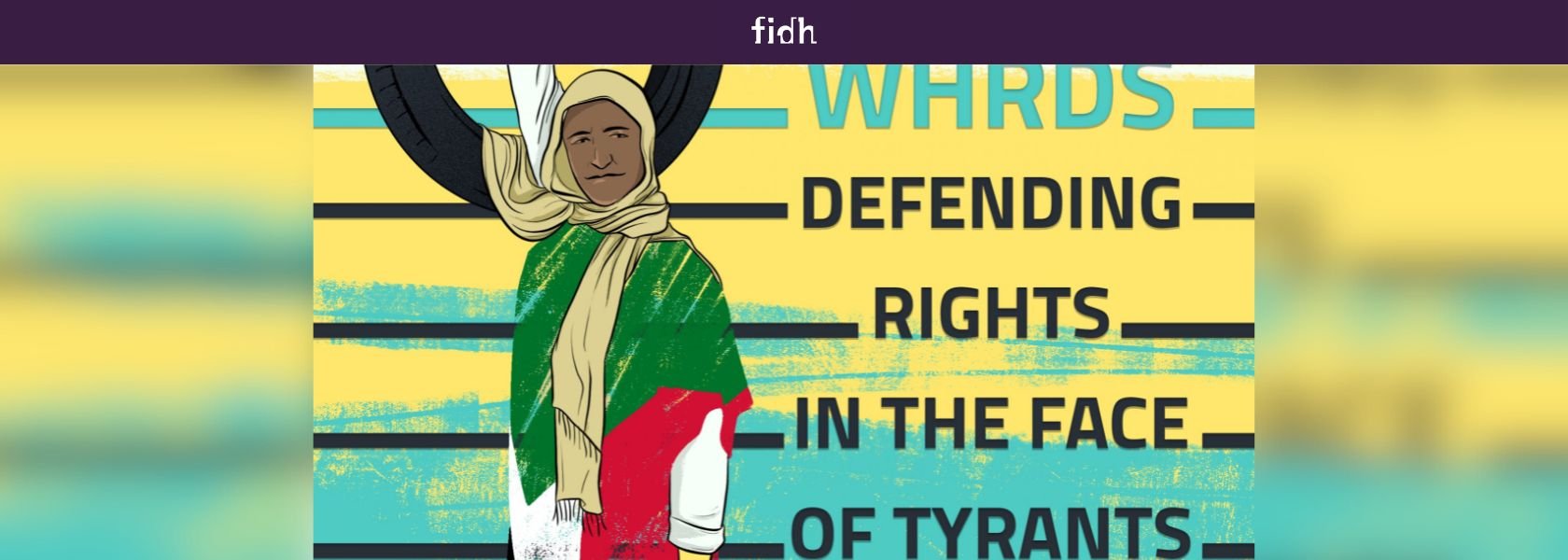
On 14 February 2024, eight organisations, including FIDH and OMCT within the framework of the Observatory for the Protection of Human Rights Defenders, expressed their grave concern over the closure of civic space, attacks on freedom of expression, rising militarisation and continuous disruption and shutdown of communication that threatens the work and safety of Women Human Rights Defenders (WHRDs) and Women’s Rights Groups in Sudan:
February 14, 2024. We the undersigned groups and organisations would like to express our grave concern and raise the alarm over ongoing reports about the closure of the civic space, attacks on freedom of expression, rising militarisation and continuous disruption and shutdown of communication that threatens the work and safety of Women Human Rights Defenders (WHRDs) and Women’s Rights Groups in Sudan.
Shutdown of Communications
On February 7th, 2024, Sudan witnessed a complete communications shutdown. Reasons behind this shutdown remain unknown in the absence of official statements from operating companies and the warring parties. This shutdown followed two days of the extensive interruption of communications at the end of January 2024. The interruption of communications and frequent shutdowns have life threatening implications and put the safety and security of WHRDs at risk. Without access to communications, WHRDs struggle to document and report on the mounting atrocities on the ground. The interruption of internet networks has also impeded women groups’ access to the mobile banking apps that facilitate money transfers to operate or secure protection for WHRDs at risk. The #KeepItOn coalition — a global network of over 300 human rights organisations from 105 countries working to end internet shutdowns — has raised concerns that “amid the ongoing brutal violence in Sudan, the continued weaponisation of internet shutdowns is a flagrant violation of international law.”
Attack on Wad Madani
Since the attack on Wad Madani, the capital of the central Al Jazirah state, in mid-December 2023, Women’s Rights groups and WHRDs have lost the resources collected since the start of the war. Dozens of WHRDs and Women’s Rights Groups were forcibly displaced for the second time, driven from the city that had been the humanitarian response hub for local and international NGOs. As WHRDs were forced to flee again, they faced enormous challenges searching for safe locations across states and neighbouring countries. Dozens of WHRDs were harassed, detained, summoned and threatened by both warring parties during the last few weeks.
Targeting of Activists
The Sudanese Armed Forces (SAF) launched an intensified attack on human rights defenders, humanitarian workers and volunteers, journalists, and peace activists in the last few months in the areas under their control. Aid groups and first responders faced rising restrictions of movement and supplies.
Rapid Support Forces (RSF) continued to arrest civilians, loot both public and private properties and perpetrate systemic sexual violence across the areas under their control. WHRDs and Women’s Rights Groups struggle to operate in these areas as the risks of sexual violence are growing.
At least five WHRDs and women first responders have been detained, summoned, harassed or threatened in the last few weeks. The attacks were reported in areas controlled by both warring parties. Since the war erupted, four WHRDs have been killed, two of whom were journalists. At least 11 women health workers were killed as well.
Closure of Civic Space and Restrictions on Freedom of Expression
In January 2024, Sudanese authorities in the relatively safer states in Northern and Eastern Sudan, including local governors, issued decrees to dissolve neighbourhood resistance committees. These grassroot groups were mobilizing and organising communities since the emergence of the protests movement in 2018. The governors of five states also banned publication of information and imposed heavy penalties on publishing information on social media or other newspapers regarding the security situation in their states. Journalists and activists were detained in three states and two women journalists were summoned and threatened by local authorities following these decrees. In the Blue Nile state, Red Sea and other states, meetings and other forms of peaceful civic activities are either banned or not authorized. Women’s Rights groups and other NGOs operating in these states are working in hostile and increasingly challenging environments. Civic space in Sudan is closed, with an increasing militarisation of the state and local communities.
Rising Militarisation
During the last three months, Sudanese authorities launched a mobilisation campaign to arm civilians in various states under SAF control. This campaign’s leaders attacked and threatened activists who criticized the armament of civilians, including women, girls and boys. Voices of peace activists are considered treasonous by SAF supporters. The widespread arms in the hands of civilians has led to unprecedented threats to women and peace and security, including gender-based violence (GBV) in the areas outside of the fighting zones.
We the undersigned groups call on:
The warring parties:
An immediate ceasefire and the prompt creation of safe corridors for humanitarian aid organisations and groups, and to guarantee the safety of their operations;
An immediate restoration of telecommunications across the country;
Cease attacks on health facilities, medical supplies, and health workers, and uphold obligations under international humanitarian law;
The international community:
States and international human rights, peace-building and feminist groups and organisations to work together to create an immediate long-term protection program for WHRDs (and their families) that addresses relocation needs (in several locations if needed), provides psychological support for post-traumatic stress caused by war and conflict, including due to GBV, and equips WHRDs’ with all the necessary means to continue their work in the defense of human rights;
States to provide support for the FFM and other international mechanisms mandated to document human rights violations in Sudan, including by ensuring that these entities have the necessary resources to carry out their work effectively;
States to support local initiatives providing humanitarian support to local communities as well as support services to victims, and to support civil society’s documentation and reporting efforts so that the evidence obtained can be used for future judicial proceedings, including for those related to SGBV crimes.
The international community to establish a mechanism for the disclosure of the whereabouts of the disappeared and the release of detainees, and to urgently address the issue of enforced disappearances and grave violations in detention centers, including GBV;
The international community to reinforce and protect medical staff in accordance with international humanitarian law;
The Fact Finding Mission (FFM) recently established by the UN Human Rights Council, to ensure accountability is pursued for GBV crimes committed by warring parties, to regularly and meaningfully engage with civil society in this process, and to ensure effective protection of witnesses and victims;
All other UN human rights mechanisms, including UN Special Procedures, to support the FFM’s work and to investigate GBV as a weapon of war, to call for the release of detainees and for the disclosure of the whereabouts of the disappeared, and to demand an investigation into violations in detention, including GBV;


![[OPINION] Navigating the storms of repression: The resilience of young women rights defenders in Asia](https://www.rappler.com/tachyon/2024/03/women-rights-defenders-asia-mar-7-2024.jpg)
 Hans Thoolen on Human Rights Defenders and their awards