On 29 January 2026 ISHR, in collaboration with its various partners, announced that it has established a network of legal professionals for the protection of human rights defenders in Africa
Legal professionals and human rights defenders from several African countries came together to finalise the establishment of a network for the protection of human rights defenders in Africa.
This Network aims to be a space for collaboration, solidarity and strategic legal action, with a view to strengthening the collective response to violations of the rights of human rights defenders in Africa. Its establishment is part of a project implemented by the International Service for Human Rights with the support of Open Society Foundations, and in collaboration with national and regional human rights networks.
Participants at this regional meeting reviewed the Network’s founding charter, defining its principles, governance and operating procedures, and identifying common priorities for strengthening the legal protection of human rights defenders on the continent.
Participants noted that in some African countries, violations, criminalisation and impunity persist, even in contexts with specific legal frameworks. Emphasising the need to move beyond isolated approaches, participants agreed to strengthen regional coordination among legal professionals.
During the meeting, the Network members agreed on a set of common principles and values, including a defender-centred approach, commitment, solidarity, independence, apoliticality, professionalism, integrity, and confidentiality. They also defined clear criteria for the Network’s engagement in situations of violations, in order to ensure responsible, strategic actions that respect the safety of defenders.
The meeting also served as an opportunity to discuss the legal challenges faced by defenders in different national contexts, as well as regional and international mechanisms that could strengthen their access to justice and protection.
The members of the Network committed to continuing the work begun at this meeting and to translating the adopted recommendations into concrete actions:
For countries that have not yet adopted an act on the recognition and protection of human rights defenders, to adopt such legislation.
For countries that have adopted such legislation, to implement it and establish national mechanisms for the protection of human rights defenders.
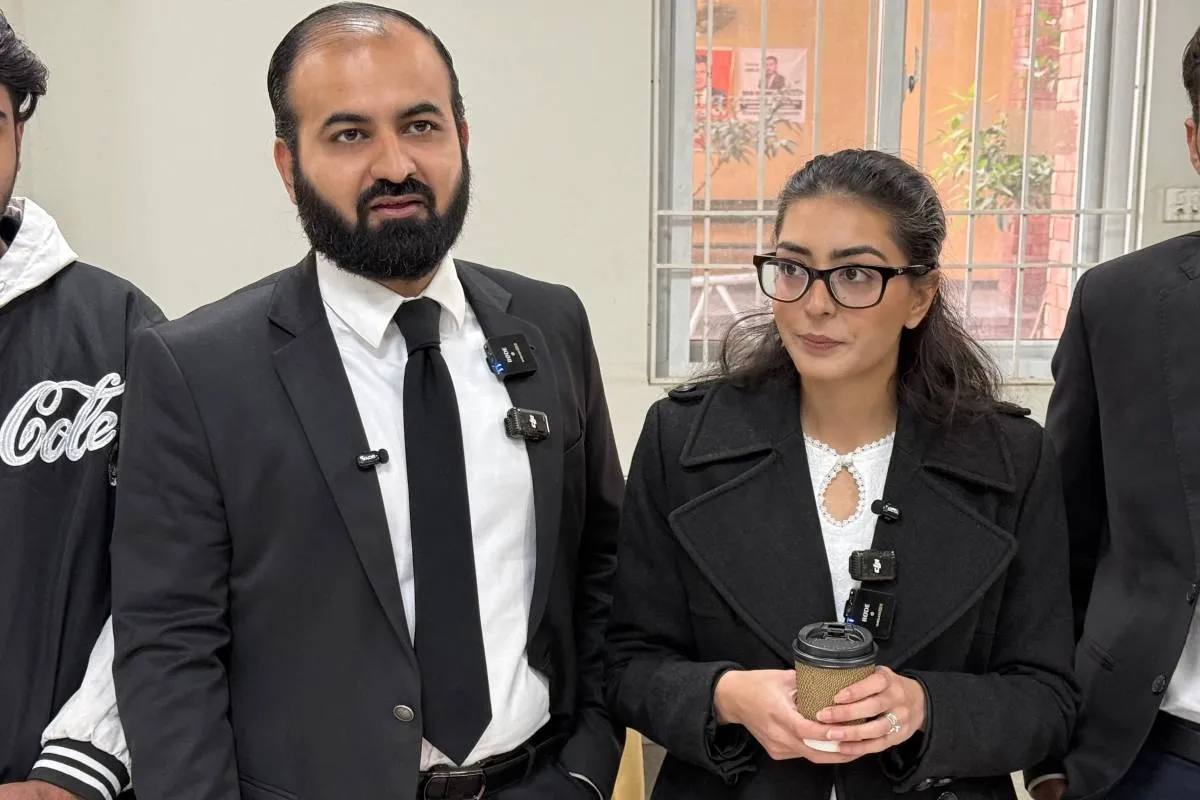
Several media (such as the CSR Journal and Barrons) and NGO (Frontline) talk about the case of human rights lawyer Imaan Mazari and her husband and fellow lawyer Hadi Ali Chattha who were sentenced 10-year-jail by an Islamabad court on 24 January 2026 over anti-state social media posts. However, the pressure and arrest haven’t been able to silence her voice. She said to media agencies, “We will not back down. Truth seems overwhelmingly difficult in this country. But we knew that when we got into this work, we’re ready to face that,”. Mazari noted that the prison term won’t dent her resolve.
Imaan Mazari is a 32-year-old human rights lawyer from Pakistan who rose to fame for fighting some of the most sensitive cases and she has been defending ethnic minorities, journalists facing defamation charges and some of her clients have been branded blasphemers. With Mazari’s coming to prominence, so did the charges by the Pakistani government for cyber terrorism and hate speech. As per a court document, Mazari has been disseminating highly offensive content.
Mazari comes from a well-known family, she is the daughter of former minister for human rights, Shireen Mazari, and her late father was one of the top paediatricians of South Asia. Because of her strong determination of fighting back despite all odds, she is being compared to Pakistan’s one of the popular human rights lawyers, late Asma Jahangir. [see: https://www.trueheroesfilms.org/thedigest/laureates/14CC52FE-5F1B-4EF8-B1F5-607ED173AACC]
Mazari is a pro bono lawyer, she has handled some of the most sensitive cases in Pakistan, e.g. enforced disappearances of ethnic Balochs, she defended Mahrang Baloch. She has also taken up blasphemy cases.
Last year, the UN special rapporteur for human rights defenders said, “Cases against her appear to reflect an arbitrary use of the legal system to harass and intimidate”. She was first targeted in a press conference held sometime in early January, where a military spokesman Lieutenant General Ahmed Sharif Chaudhry, shared Mazari’s post on X posts and filed a case against her, stating her as, “hidden elements committing subtle crimes. They operate under the guise of democracy and human rights to promote terrorism,”.
The first Sunday in December is Lawyers’ Day in Belarus. It iscelebrated against the backdrop of the fact that at least 18 lawyers, human rights activists, and legal professionals remain in prison. Since 2020, according to the Right to Defence project, 146 lawyers have had their licenses revoked, and dozens have been charged with administrative and criminal offences. Among those currently imprisoned for political reasons are Aliaksei Barodka, Vital Brahinets, Aliaksandr Danilevich, Maksim Znak, Anastasia Lazarenka, Siarhei Khlystou, and Yuliya Yurhilevich.
On November 29, the Homyel Regional Court convicted 41-year-old preacher Aliaksei Yahiela, charged with “assisting extremist activity” under two parts of Article 361-4 of the Criminal Code. Yahiela, who has a medical background but also worked as an evangelical preacher and healthy-lifestyle activist, had attracted attention, even from state media, for his anti-smoking initiative. Initially, it was unknown what sentence Aliaksei would receive.
However, it later emerged that he had been sentenced to imprisonment and is currently being held at Homiel’s Pretrial Detention Center No. 3.
Marharyta Yasevich, 29, a BSU history graduate from Lida, was convicted of “assisting extremist activity” under Parts 1 and 2 of Article 361-4 of the Criminal Code. Yasevich, who, after graduating, ran a business in Smolensk and lived in Samakhvalavichy for the last few years, was sentenced, according to preliminary information, to imprisonment under house arrest.
On the fifth anniversary of the “Xiamen Gathering” crackdown, 34 civil society organisations (on 10 February 2025) across the world reaffirm their solidarity with Chinese human rights defenders and lawyers persecuted for advocating for human rights:
26 December 2024 marked the fifth anniversary of the crackdown on the “Xiamen gathering”, a private gathering that about 20 Chinese human rights defenders and lawyers convened in Xiamen, China in December 2019 to discuss the situation of human rights and civil society in China. In the weeks after, Chinese authorities interrogated, harassed, detained and imprisoned every participant who was not able to leave China then and subjected almost all of them, including some families and friends, to travel bans, up to the present day, under the pretext of national security.
Among those detained were legal scholar Xu Zhiyong and human rights lawyer Ding Jiaxi. Both are leading human rights defenders who spearheaded the “New Citizens’ Movement”, empowering citizens as rights-bearers to advocate for a more equal, rights-respecting and free society, and to combat corruption, wealth inequality and discrimination in access to education. In 2014, Xu and Ding were both sentenced to four years and three and a half years in prison, respectively, for participating in the New Citizens’ Movement and charged with “gathering a crowd to disturb public order”.
From 26 December 2019, and over the weeks that followed, the Chinese authorities forcibly disappeared both under Residential Surveillance at a Designated Location (RSDL), a criminal procedure allowing secret detention for up to six months without access to legal counsel or family. RSDL is considered by UN Special Procedures experts to constitute secret detention and a form of enforced disappearance, and may amount to torture or other ill-treatment. While held under RSDL, both men were subjected to torture and other ill-treatment, before being charged with the national security crime of “subversion of State power”. They were subsequently convicted in a secret trial and handed severe prison sentences of 14 and 12 years, respectively, in April 2023. Despite multiple calls from the UN High Commissioner for Human Rights Volker Türk and from UN Special Procedures’ experts as recently as November 2024, China has failed to address these grave violations.
These cases are emblematic of a broader and alarming trend of persecution of human rights defenders and lawyers in China. Authorities systematically employ RSDL, harsh national security charges, torture and other ill-treatment, prolonged detention, travel bans and harassment to silence dissent and dismantle independent civil society. The use of vague charges such as “subversion of State power” or “picking quarrels and provoking trouble” has become a routine tactic to criminalise human rights work, despite UN human rights experts’ repeated call for them to be repealed. Victims often face prolonged pre-trial detention, lack of due process, restricted access to lawyer and adequate healthcare, and torture or other ill-treatment aimed at extracting forced ‘confessions’.
This systematic repression is further reflected in the cases of human rights lawyers Xie Yang and Lu Siwei, feminist activist Huang Xueqin, labour activist Wang Jianbing, and citizen journalist Zhang Zhan, all of whom are currently subjected to arbitrary detention or imprisonment . UN Special Procedures’ experts have recently described these cases as part of “recurring patterns of repression, including incommunicado detention and enforced disappearance aimed at […] silencing human rights defenders and dissenting or opposing views critical of the Government”.
As we commemorate the fifth anniversary of the crackdown, we, organisations and activists from all over the world, continue to stand in solidarity with all human rights defenders and lawyers in China who courageously advocate for justice despite knowing the risks of doing so.
We urge the Chinese government to:
Immediately and unconditionally release all human rights defenders and lawyers arbitrarily detained or imprisoned for their human rights work, including Xu Zhiyong and Ding Jiaxi;
End the systematic crackdown on civil society, including harassment, unjustified detention, enforced disappearance, and imprisonment of human rights defenders and lawyers;
Amend laws and regulations, including national security legislation, the Criminal Law and the Criminal Procedure Law, to bring them fully in line with international human rights standards;
Rescind the travel bans imposed on the gathering participants as well as their friends and families immediately.
Signatories:
Alliance for Citizens Rights
Amnesty International
Asian Lawyers Network (ALN) (Japan)
CIVICUS: World Alliance for Citizen Participation
Free Tibet (United Kingdom)
Human Rights in China
India Tibet Friendship Society Nagpur Maharashtra (India)
International Bar Association’s Human Rights Institute (IBAHRI)
International Campaign for Tibet
International Federation for Human Rights (FIDH), within the framework of the Observatory for the Protection of Human Rights Defenders
International Service for Human Rights (ISHR)
International Tibet Network
Judicial Reform Foundation (Taiwan)
Lawyers for Lawyers (Netherlands)
LUNGTA – Active for Tibet (Belgium)
PEN America (United States)
Safeguard Defenders (Spain)
Swiss Tibetan Friendship Association (Switzerland)
Taiwan Association for Human Rights (Taiwan)
The 29 Principles (United Kingdom)
The Network of Chinese Human Rights Defenders
The Rights Practice (United Kingdom)
Tibet Justice Center (United States)
Tibet Solidarity (United Kingdom)
Voluntary Tibet Advocacy Group (V-TAG) (Netherlands)
World Organisation Against Torture (OMCT), within the framework of the Observatory for the Protection of Human Rights Defenders
Acción Solidaria (Venezuela)
Amnistía Internacional Chile (Chile)
CADAL (Argentina)
Centro de Derechos Humanos Fray Francisco de Vitoria OP, A.C. (Mexico)
CONTIOCAP – Coordinadora Nacional de Defensa de Territorios Indígenas Originarios Campesinos y Áreas Protegidas en Bolivia (Bolivia)
Movimiento Autónomo de Mujeres (Nicaragua)
Red Nacional de Organismos Civiles de Derechos Humanos Todos los Derechos para todas, todos y todes (Mexico)
24 January 2025 was the Day of the Endangered Lawyer. Its purpose is to call attention to threatened human rights lawyers who work to advance the rule of law and promote human rights under governmental harassment and intimidation, often at great personal risk. Each year the focus is on those lawyers working in one designated country.
In 2025, the Day of the Endangered Lawyer spotlights the persecution of lawyers in Belarus. Since 2020, a crackdown by the Belarus government has resulted in the targeting of lawyers and human rights defenders. Legal practitioners face increasing criminal sanctions, arbitrary detention and systemic interference in their abilities to practice law. Constitutional and legislative changes have eroded the independence of the judiciary and professional legal bodies and given the executive branch unwarranted control over the judiciary and legal profession.
Today, the ABA recognizes these human rights lawyers who champion justice and fight for the rule of law.
On 17 January, 2025 Mark Trevelyan for Reuters reported that three lawyers for the late opposition leader Alexei Navalny were found guilty by a Russian court of belonging to an extremist group and sentenced to years in a penal colony.
Igor Sergunin, Alexei Liptser and Vadim Kobzev were arrested in October 2023 and added the following month to an official list of “terrorists and extremists”. They were sentenced respectively to 3-1/2, 5 and 5-1/2 years after a trial held behind closed doors in the Vladimir region, east of Moscow.
“Vadim, Alexei and Igor are political prisoners and must be released immediately,” Yulia Navalnaya, the widow of the late politician, posted on X.
Human rights activists say the prosecution of lawyers who defend people speaking out against the authorities and the war in Ukraine crosses a new threshold in the repression of dissent under President Vladimir Putin.
“Lawyers cannot be persecuted for their work. Pressure on defence lawyers risks destroying the little that remains of the rule of law, whose appearance the Russian authorities are still trying to maintain,” rights group OVD-Info said in a statement.
It said Navalny’s lawyers were being prosecuted “only because the letter of the law still matters to them and they did not leave the man alone with the repressive machine”.
The Kremlin says it does not comment on individual court cases. Authorities have long cast Navalny and his supporters as Western-backed traitors seeking to destabilise Russia. Despite his imprisonment, Navalny was able via his lawyers to post on social media and file frequent lawsuits over his treatment in prison, using the resulting legal hearings as a chance to keep speaking out against the government and the war. The lawyers were accused of enabling him to continue to function as the leader of an “extremist group”, even from behind bars, by passing his messages to the outside world.
In court, a woman shouted “Boys, you are heroes” and supporters applauded the three men, standing together in a barred cage for the defendants, after their sentencing.
Yulia Navalnaya last month published video of secretly recorded meetings between Navalny and the lawyers in prison, something she said was illegal because an accused person has the right to confer privately with a lawyer. Russia’s federal prison service did not reply to a request for comment.
Navalnaya said the recordings were made by the authorities and handed to her team after it offered a reward for people to come forward with information about Navalny’s death.
She alleges her husband was murdered on Putin’s orders, an accusation that the Kremlin has strongly denied. Navalnaya herself is wanted in Russia for alleged extremist activity but has said she hopes to return to the country one day and run for president.
On 21 January 2025 the UN Special Rapporteur on the situation of human rights in the Russian Federation, Mariana Katzarova, urged authorities to end the severe crackdown on the legal profession in Russia and stop endangering the lives and safety of lawyers.
A United Nations special rapporteur on Thursday 16 January 2025 condemned Turkey’s continued use of counterterrorism laws to imprison human rights lawyers and activists, calling it a violation of international human rights obligations.
Mary Lawlor, the UN special rapporteur on human rights defenders, expressed alarm over the long-term detention of nine Turkish human rights lawyers and activists who were sentenced to lengthy prison terms on what she described as “spurious terrorism-related charges.”
The group includes eight members of the Progressive Lawyers’ Association (ÇHD) who were arrested between 2018 and 2019 and convicted under Turkey’s Anti-Terror Law: Barkın Timtik, Aytaç Ünsal, Özgür Yılmaz, Behiç Aşçı, Engin Gökoğlu, Süleyman Gökten, Selçuk Kozağaçlı and Oya Aslan. They were sentenced to up to 13 years in prison in what has been widely criticized as an unfair trial, known as the ÇHD II trial.
Another arrestee, lawyer Turan Canpolat of the Malatya Bar Association, was imprisoned in 2016 based on the testimony of a client who later admitted he had been coerced. Canpolat was convicted of alleged links to the Gülen movement, inspired by the late Turkish cleric Fethullah Gülen, which Ankara accuses of orchestrating a coup attempt in 2016, and sentenced to 10 years in prison. The Gülen movement denies involvement in the coup.
Canpolat was detained in 2016 after responding to a police search at a client’s residence, only to find himself accused based on doctored evidence and coerced testimony. Despite the dismissal of related charges against others implicated in his case and the recanting of key testimony, he remains in prison. His conviction was based on his legal representation of companies later closed by emergency decrees after the coup, a move critics argue criminalizes standard legal work. International legal groups have denounced his imprisonment as a miscarriage of justice, calling for his release.
All nine lawyers are currently held in high-security prisons, and Canpolat has reportedly been kept in solitary confinement for nearly three years without a disciplinary order, a practice the UN expert found “extremely disturbing.”
Lawlor has raised concerns about their cases since the beginning of her mandate in 2020, but Turkey has continued to criminalize their work. “I remain dismayed that the criminalization of their human rights work has not stopped,” she said.
She urged Turkish authorities to comply with international human rights law and guarantee fair appeal hearings for the detained lawyers. “I am ready to discuss this further with Turkish authorities,” she added.
The Turkish government has repeatedly been criticized for using broad anti-terror laws to silence political dissent and imprison journalists, lawyers and activists. Since the 2016 coup attempt, Turkey has arrested thousands on terrorism-related charges, often based on tenuous evidence such as social media posts or association with banned groups.
International human rights organizations, including Amnesty International and Human Rights Watch, have condemned Turkey for what they describe as politically motivated prosecutions and the erosion of due process. The European Court of Human Rights has ruled against Turkey in multiple cases, finding that it has violated the right to a fair trial and engaged in arbitrary detention.
Threats against investigative journalists are widely documented. According to UNESCO’s Observatory of Killed Journalists, 1,718 journalists have been killed since 1993. The Committee to Protect Journalists’ latest prison census found the number of jailed journalists hit a near-record high, with 320 reporters behind bars at the time of the count last December. Yet a lesser-known story is the increasing targeting of the lawyers representing them.
“Behind all those cases against journalists who have become household names — like Evan Gershkovich, Maria Ressa, and José Rubén Zamora — there are the often unseen lawyers representing them and taking remarkable risks to defend them,” Carolina Henriquez-Schmitz, director of TrustLaw, said at Trust Conference 2024. “[Lawyers] themselves are becoming the targets of a whole range of attacks.”
In recent years, threats have escalated. Azerbaijani lawyer Elchin Sadigov, and his client, journalist Avaz Zeynalli, were detained in 2022 while officers searched their homes and offices and seized confidential case files. Vo An Don, a Vietnamese human rights lawyer who represented a dissident blogger was disbarred in 2018 and subsequently sought political asylum in the US. Dmitry Talantov, a lawyer who represented Russian investigative journalist Ivan Safronov in 2021, now himself faces up to 15 years in prison on a number of charges.
“It sends an unequivocal message, not just to the individual lawyer, but to the entire legal profession,” Henriquez-Schmitz said. “If you pursue these cases, we will go after you. The potential chilling effect cannot be understated.”
Human rights lawyer Vo An Don was disbarred and forced to seek political asylum in the US after the Vietnamese government targeted him for representing a dissident blogger. Image: Screenshot, Facebook
The Thomson Reuters Foundation, in partnership with the American Bar Association Center for Human Rights and Media Defence, conducted a first-of-its-kind review of individual cases of harassment or persecution of lawyers defending journalists. The recently published preliminary findings identified over 40 cases of lawyers being targeted in four ways: criminal and other suits; interference with their ability to represent their clients; targeting their ability to practice the profession; and threatened killing, physical harm, forced flight, or exile, and other similar persecution.
“The research has identified cases in Vietnam, Ethiopia, Zimbabwe, Azerbaijan, Iran, Yemen, Tajikistan, Russia, China, and Hong Kong, to name a few. Unsurprisingly, many of these countries also happen to be among the world’s worst jailers of journalists,” Henriquez-Schmitz noted. “The damage greatly reverberates. Without lawyers, journalists are unable to adequately defend themselves against retaliatory charges, and citizens are likely left less informed on matters of public interest.”
José Carlos Zamora, chief communications and impact officer at Exile Content Studio and the son of Guatemalan investigative journalist José Rubén Zamora, joined the Trust Conference panel only a few days after his father’s release to house arrest. Previously, his father had spent more than 800 days in prison on charges of alleged money laundering. The elder Zamora founded elPeriódico, a now-defunct newspaper which specialized in government corruption investigations.
“It’s a great step forward, but it’s not the end of the process,” Zamora said of his father’s transition to house arrest. “These repressive regimes, everywhere from Russia, to the Philippines, to Hong Kong, to Venezuela and Nicaragua, use the same tactics. And you see them copy from each other’s punishments, and one of these tactics is attacking the legal defense. So they go after the lawyers, and the main goal is to leave the journalists defenseless.”
Guatemalan journalist José Rubén Zamora, who founded the elPeriódico site that dug into the country’s political corruption, recently spent more than 800 days in prison on alleged money laundering charges. Image: Shutterstock
In all, 10 lawyers represented Zamora, and all of them were persecuted and eventually forced to abandon the case. Many of them did not appear to have access to the case file, and one lawyer, Christian Ulate, had to leave Guatemala after ongoing harassment and intimidation. The lawyers that took over the case after Ulate, Romeo Montoya García and Mario Castañeda, were detained, and Castañeda was sent to a maximum security prison. Lawyers Juan Francisco Solórzano Foppa and Justino Brito Torres were also arrested.
“At that point, the only defense was the public legal defense. There were some great lawyers in the public legal defense, but unfortunately, they are also part of the system,” Zamora explained. “At one point, none of the lawyers could visit him in prison. So everything was done through us. They could rarely talk. The ones that could go did not want to visit him because it was dangerous for them.”In some countries, human rights attorney Caoilfhionn Gallagher said, even the act of talking to an international lawyer can put local lawyers at risk.
María Consuelo Porras has acted as Guatemala’s attorney general since 2018. In 2022, she was barred from entering the US due to involvement in significant corruption, and in 2023 she was named OCCRP’s Person of the Year in Organized Crime and Corruption, for “brutally persecuting honest prosecutors, journalists, and activists,” the group wrote. “Porras and her kind are the new banal faces of evil.”
“[Porras] became the best tool to persecute opposition, critical voices,” Zamora said. “Because they use this special prosecutor’s office that is focused on organized crime […] it allows them to have you in pre-trial detention. That prosecutor’s office was intended to investigate and prosecute the heads of drug cartels and mob bosses. And now they use it to go after journalists.”
Irish-born attorney Caoilfhionn Gallagher specializes in international human rights and civil liberties at Doughty Street Chambers in London. Her cases often involve working closely with domestic lawyers around the world, in order to hold the state to account on the global stage. In some countries, Gallagher said, even the act of talking to an international lawyer can put local lawyers at risk.
“When I deal with cases involving Iran, for example, or Egypt, even engaging with an international lawyer, being privy to a complaint going to the United Nations, could result in [local lawyers] themselves being charged with a whole range of things, including national security-type offenses,” she noted. One particular example she gives of lawyer oppression is the Philippines, where, in total, 63 lawyers were killed during President Rodrigo Duterte’s six-year term, and 22 journalists. “So this is completely a tactic,” Gallagher warned. “You try to leave nobody able to speak truth to power.”
One of Gallagher’s clients is 76-year-old publisher, writer, and prominent pro-democracy campaigner Jimmy Lai. A British national, Lai has been in solitary confinement in a maximum security Hong Kong prison for almost four years, on charges of breaching national security and colluding with foreign forces. His newspaper, Apple Daily — the most popular Chinese language paper in Hong Kong — supported pro-democracy protests in the region. He now faces life imprisonment.
“Being called an enemy of the people, hit pieces in Chinese state media, formal statements from the Chinese and Hong Kong authorities threatening to prosecute us,” Gallagher said, reflecting on the implications of representing Lai. “But as well as that, we get physical threats, rape threats, and dismemberment threats, and it’s targeted in a way which is designed to try to undermine you doing your job.”“We coordinate pro bono for human rights defenders, and what we realized was that standing next to every defender facing criminalization was a lawyer also at risk.” — Ginna Anderson, associate director of the American Bar Association’s Center for Human Rights
On a key day in Lai’s case, Gallagher will wake up to notifications that there has been an attempt to hack her bank account, as well as her personal and professional email addresses. “I will also wake up to a whole series of […] threats, including things relating to my kids,” she continued. “I had a really vile message last week about my teenage daughter, by name, and it’s unpleasant.”
Gallagher says that, despite attacks, she will continue to represent reporters. “You’re rattling the right cages,” she said. “It’s designed to try to stop you doing your job, and for me, it makes me think if they care this much about the lawyers for Jimmy Lai based in London, doing work in Geneva, New York, and Dublin, just think about how much they hate my clients. And to be honest, it makes me more determined to stick with it.”
Associate director of the American Bar Association’s Center for Human Rights, Ginna Anderson, emphasized the lack of current research into the growing threats against lawyers defending journalists, citing it as a driving force behind their work. “We realized no one was really talking about it, and the data wasn’t being collected,” she explained. “We coordinate pro bono for human rights defenders, and what we realized was that standing next to every defender facing criminalization was a lawyer also at risk and asking for none of those resources for themselves.”
While networks often operate to support journalists who are being subjected to physical threats, cyberattacks, and forced exile, Anderson emphasized the ad hoc nature of the support available to lawyers — in part due to the recent escalation in cases. “There’s not one place we go and coordinate,” she said. “It’s a lot of personal relationships and knowing who has capacity, and quite frankly there’s very little capacity in any of these places to really deal with the scale of the problem.”
“Just like journalists don’t want to be part of the story, lawyers don’t, and many other trends are mirrored,” she continued. “One thing that struck me […] was this perception that safety of journalist networks are so much better connected and resourced than anything to support lawyers. That terrified me because I think we all think that there’s not enough being done for the safety of journalists.”
“Lawyers are often trusted voices, just like some legacy media establishments,” Anderson said. “They’re trusted voices on the rule of law. They’re trusted voices on the Constitution. And when you disparage them and smear them, and in some cases make it criminal for them to talk about these issues, you have silenced one of the most important voices.”
Defending Lawyers Protecting Journalists
As attacks on lawyers rise, the panel reflected on the ways in which those representing journalists can defend themselves. Increasing knowledge of cybersecurity — which may not have previously been a priority for lawyers — is essential, Gallagher said. “In the last number of years working on cases against Saudi Arabia, Iran, and Russia, I’ve been very surprised by [top-ranked multinational law firms] trying to send you something on Google Docs,” she continued. “The media organization and the journalists will have really good protocols, but then when they get into some kind of difficulty, they may instruct an external lawyer who simply doesn’t.”
Law societies and governments also have a responsibility to take such threats more seriously, Gallagher says, reflecting on the case of Pat Finucane, a Northern Irish human rights lawyer who was murdered in his home in 1989. The UK government only announced a public inquiry into his death in 2024, 35 years later. “That is a home example of these issues simply not being taken seriously enough,” she said. “I can tell you basic preventative strategies were simply not implemented here in Britain.”
Another issue is a lack of psychological support for lawyers, Anderson says. “I’ve been surprised how often a conversation about digital security becomes the place where a lawyer may talk about what’s weighing on their mind,” she continued. “[They’re] not saying, ‘I would like to talk about my psychosocial needs’, but they start with a practical need around digital security, and it finds its way into the things that are weighing on them.”
As Zamora reflected on the future for his father, he seemed hopeful. “He’s excited. He’s very happy. He feels like he’s at a spa after spending those 813 days in an isolation cell,” he said. “We are going to continue fighting these processes. They are really spurious charges, and we are going to fight until the end to demonstrate that everything is false.”
While he says that his father’s trial has exposed the worst in humanity, through Guatemala’s political persecution of those standing up for democracy and freedom, Zamora also believes that it has brought out the best in humanity, too. “I feel that’s everybody in this room,” he concluded. “You care about these issues, you are doing the work, and you can continue to do the work to keep these cases alive.”
Emily O’Sullivanis an editorial assistant at GIJN. She has worked as an investigative researcher for BBC Panorama, and an assistant producer for BBC Newsnight. She has an MA in Investigative Journalism from City, University of London.
On 12 July 2024 OMCT welcomed the UN Working Group’s call to the government of Tajikistan to unconditionally release them and grant them the right to compensation and other reparations. All five are representatives of the Pamiri indigenous population in the Gorno-Badakhshan Autonomous Province. Their arrest, detention and conviction occurred amidst a human rights crisis in the Autonomous Province when, following the killing of a local Pamiri resident by police, mass protests erupted in November 2021 and were violently cracked down, leaving 40 people dead and hundreds detained.
Ms. Ulfatkhonim Mamadshoeva is a journalist, well-known human rights defender, and advocate for the rights of the Pamiri Indigenous population. She was arrested and detained on 18 May 2022 in Dushanbe and sentenced to 20 years imprisonment in December 2022.
Faromuz Irgashov, Khursandsho Mamadshoev and Manuchehr Kholiqnazarov are human rights lawyers and belong to the Pamiri Lawyers’ Association, the Director of which is Mr. Kholiqnazarov. All three were members of Commission 44, presided by Mr. Irgashov. This commission had been formed to investigate police brutality following the November 2021 protests. Still, after a further escalation in May 2022, its members were threatened, and several of them were detained and convicted on charges of terrorism or establishing or participating in a criminal association. They were arrested and imprisoned in Khorog on 28 May 2022 and sentenced in December 2022 to 29-, 18- and 16-years imprisonment.
Sorbon Yunoev is a Pamiri civic activist involved in community initiatives in support of the Pamiri indigenous population, who actively criticised the crackdown and police violence during the November 2021 protests. He was arrested on 13 June 2022 in Khorog, released, re-arrested, and detained on 17 June 2022. On 23 August 2022, he was sentenced to 10 years’ imprisonment.
The World Organisation Against Torture (OMCT) submitted communications on these cases to the WGAD on 10 October 2023 and requested the Working Group to declare their detention as arbitrary and to call for their immediate release.
In its Opinions, the WGAD endorsed the arguments submitted by the OMCT and concluded that the detention of all five human rights defenders meets the definition of arbitrary deprivation of liberty on four separate counts. It noted also that the government failed to provide evidence that the accusations and charges brought had a factual basis.
The WGAD concluded that the arrest and detention of Mr Irgashov, Mr Mamadshoev and Mr Kholiknazarov were related to their legitimate advocacy for the investigation into police violence against the Pamiri Indigenous population and for having criticised law enforcement authorities for failing to effectively investigate police violence, as part of their work for Commission 44. Likewise, the Working Group concluded that the basis for the arrest and conviction of Ms. Mamadshoeva and Mr. Yunoev was their exercise of freedom of expression and freedom of assembly.
The Working Group considers that these convictions should be assessed against the backdrop of the current human rights and media freedom situation in Tajikistan – “a picture suggesting that these charges are trumped up and retaliatory in nature, aimed at silencing dissent and quashing human rights advocacy”, in particular in the context of the Gorno-Badakhshan Autonomous Province, and the broader context as reported among other things by the Special Rapporteur on the situation of human rights defenders, which indicates a pattern of repression in Tajikistan, where the crackdown on peaceful protests, independent media and human rights defenders has intensified
On 20 June 2024 Swissinfo spoke with human rights defenders from Ukraine and Israel about how they operate in tough contexts. The main tasks of human rights defenders include investigating, collecting information about, and reporting rights violations. They raise public awareness to ensure that human rights are respected. But how do they work in a war zone or in an environment where a large part of public opinion is against them? SWI swissinfo met activists from Ukraine and Israel in Geneva’s Palais des Nations, where they had come to meet delegations and attend side-events during a session of the Human Rights CouncilExternal link .
“We are documenting testimonies from victims of the war in Ukraine,” says Lyubov Smachylo, an analyst with the Ukrainian organisation Media Initiative for Human Rights (MIHR).
MIHR’s main office is in Kyiv. It has direct access to victims and witnesses of rights violations, such as Ukrainians living in the north of the country – formerly under Russian occupation and now back under Ukrainian rule – or former prisoners in Russian jails. Smachylo, who lives between Kyiv and Paris, analyses documented testimonies of human rights violations committed by Russia. These include Russian armed forces acting with generalised impunity, the arbitrary detention of civilians – often accompanied by torture and ill-treatment – and in some cases enforced disappearances. Lyubov Smachylo from the Ukrainian Media Initiative for Human Rights. Courtesy of Lyubov Smachlyo
MIHR is one of the few NGOs able to gather information on the ground. Virtually no international organisation can go into the occupied Ukrainian regions, not even the Office of the UN High Commissioner for Human Rights (OHCHR). The International Committee of the Red Cross (ICRC), for example, has only limited access to Ukrainian prisoners of war. This absence of accountability and the underreporting of abuses mean there is an increased risk of mistreatment and of perpetrators going unpunished.
Among other things, the MIHR deals with prisoners of war and civilians who have been arrested in the Russian-occupied regions of Ukraine or who are being detained in unknown places. Beatings and torture are rife, and some have died because of the poor detention conditions, says Smachylo.
“We know of 55 places of detention in the occupied regions of Ukraine and 40 in Russia, where a total of at least 1,550 Ukrainian civilians are being held,” says Smachylo. Contacted by SWI, the ICRC did not comment on whether it has access to the occupied regions. More More Human Rights Council: Fundamental or fundamentally flawed?
This content was published on Jun 30, 2021 The Human Rights Council, convening in Geneva, is mired in US-China rivalry, while the Council also faces criticism from developing countries. Read more: Human Rights Council: Fundamental or fundamentally flawed Increasingly hostile environment
Tal Steiner is meanwhile a human rights lawyer and director of the Public Committee Against Torture in Israel (PCATI). The NGO holds Israel accountable on its use of torture, which is not illegal in the country, although there is an absolute prohibition on torture enshrined in international human rights instruments such as the Universal Declaration of Human Rights. Steiner says her NGO’s work has become particularly difficult since the Hamas attacks of October 7 and the Israeli-Palestinian war. Israel has restricted access to political prisoners, while rights defenders find themselves in an increasingly hostile environment where they are regularly branded as“defending terrorists”.
The political prisoners to which Steiner has access include Palestinians living in Israel and in the West Bank as well as Jewish Israeli citizens.
“Working on the issue of torture – or on any issue in Israel that affects human rights in terms of security – has never been easy,” she says. Tal Steiner, right, pictured with Miriam Azem, advocacy associate at the Legal Center for Arab Minority Rights in Israel (ADALAH). Keystone/AFP/Coffrini
Compassion for Palestinian prisoners and the view that human rights apply to everyone have been greatly diminished since the war, Steiner explains.“This means that the circle that supports our work has become smaller.”
According to her, many Israelis have opted for security above human rights. Many also harbour feelings of vengeance towards Palestinians.“We saw this, for example, at the Israeli Prison Service (IPS),” Steiner says. There, extreme overcrowding since October 7 has led to a severe deterioration in conditions, including limited access to basic needs like water, electricity, food, and medical care. Human rights groups have also noted cases of severe beating of detainees and prisoners, sexual harassment and intimidation.
Miriam Azem also took part in the SWI interview with Steiner. The international advocacy expert works for Palestinian organisation Adalah, which defends Palestinians living in Israel and the occupied territories in Israeli courts. “Since October 7, the attitude towards our lawyers has changed a lot,” she says. This has become apparent in disciplinary committees, which handle disputes in universities.“Since the beginning of the war, over 120 disciplinary proceedings have been initiated against Palestinian students – citizens of Israel – for statements made on their private social media accounts” she says.
She cites the example of Palestinian students with Israeli citizenship who have been accused of inciting terrorism on the basis of unfounded arguments. Adalah attorneys, who have represented 95 Palestinian students facing this charge,“were questioned regarding their loyalty to Israel”, Azem says.
According to Azem, there has been an increase in arrests and interrogations due to posts on social media. “The vast majority of these posts do not meet any criminal threshold. Nevertheless, the accusations against activists were grounded in Israel’s Counter-Terror Law, which carries severe imprisonment penalties,” she says. More More Is Geneva still the capital of peace?
In February, PCATI and Adalah, together with two other Israeli organisations, sent an urgent appeal to the UN Special Rapporteur on Torture, Alice Jill Edwards. They called on Edwards to intervene immediately to stop torture and the systematic mistreatment of Palestinian prisoners in Israeli detention facilities. Apart from private lawyers, these are the only four organisations that can currently visit Israeli prisons – Israel has denied the ICRC access.
“We are therefore the only ones who can report what we have seen there,” says Steiner. Around 10,000 Palestinian prisoners are currently in Israeli custody, many of them detained without trial. However, no one is allowed to visit the Israeli military camps for prisoners from the Gaza Strip. PCATI fears a“new Guantanamo” is being established there, in reference to the US facility in Cuba where prisoners were held indefinitely without trial in the aftermath of the terrorist attacks on September 11, 2001.
In their appeal to the UN rapporteur, the four organisations also expressed concern about the dehumanising rhetoric being used by some members of the Israeli government. The Minister of National Security, Itamar Ben-Gvir, in charge of the IPS, has repeatedly spoken out in favour of subjecting Palestinians to degrading and inhumane treatment.
In the meantime, UN rapporteur Edwards has called on Israel to investigate the numerous allegations of torture against detained Palestinians. Since the attacks of October 7, it is estimated that thousands of Palestinians including children have been detained, she has written. Edwards says she received allegations of individuals being beaten, kept blindfolded in cells, handcuffed for excessive periods, deprived of sleep, and threatened with physical and sexual violence. Burnouts and death threats
Burnout and death threats are also part of the job. Smachylo says the war which stretches through the whole of Ukraine is an added strain on a very stressful job. Activists and staff members of her organisation spend hours writing reports detailing torture and mistreatment of Ukrainian citizens by the Russian authorities. She particularly highlights the risk of burnout for those who regularly carry out missions in the field.
The Geneva-based World Organization against Torture (OMCT), which cooperates with the NGO, provides financial support for their psychological and therapeutic retreats.
Steiner, for her part, draws particular attention to the huge amount of work involved.“In view of the grief over the tragedies of October 7 and the war in the Gaza Strip, cooperation between Israelis and Palestinians is proving to be a challenge right now,” she says. For her, it is fundamental that every detainee has the right to defense.
Smear campaigns have also targeted her work. For example, the Israeli TV station Channel14, the equivalent of the rightwing US station Fox News, made a derogatory programme about PCATI and other organisations campaigning for Palestinian rights. The title:“Disgrace: the Israeli activists who take care of the treatment of Hamas terrorists”. The program led to harassment and threatening phone calls. Some of the emails Steiner received were about rape and death threats, others targeted her family.
“We are aware that we are operating in an environment that is very hostile to our work,” says Azem.“As an NGO registered in Israel, we are extremely cautious.” Steiner adds that the persecution of NGOs in Israel and Palestine has a long history. Six Palestinian human rights organisations have been classified as terrorist by Israel. And several bills currently envisage a higher taxation rate for Israeli NGOs in order to block their work.



 Hans Thoolen on Human Rights Defenders and their awards