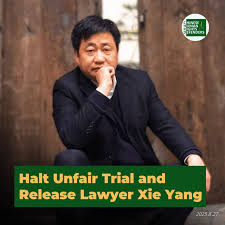
A court in China sentenced the prominent human rights lawyer Xie Yang to five years in prison on March 23, 2026, on politically motivated charges of “inciting subversion of state power,” Human Rights Watch said on 24 March 2026. The Chinese government should immediately quash the conviction, which followed serious procedural violations and years of persecution, and free Xie unconditionally
The Changsha Intermediate People’s Court cited several of Xie’s WeChat posts as the basis for the verdict, Xie’s former wife, Chen Guiqiu, posted on social media. The court also ordered the confiscation of 100,000 yuan (US$14,500).
“The Chinese authorities’ prosecution of Xie Yang and the court’s harsh sentence reflects Beijing’s utter contempt for the rule of law,” said Maya Wang, deputy Asia director at Human Rights Watch. “This case not only aimed to persecute a brave human rights lawyer like Xie, but to intimidate all lawyers seeking to protect Chinese people’s rights.”
Xie’s trial violated the right to a fair trial by an independent and impartial court as provided under international human rights law, Human Rights Watch said. In addition, the proceedings violated China’s Criminal Procedural Law, which guarantees a right to a defense (articles 33-35), public trial hearings (article 188), and time limits for a criminal investigation. With time served, Xie’s sentence is expected to go to January 2027.
The United Nations Working Group on Arbitrary Detention has recognized Xie’s detention as arbitrary and called for his immediate release.
Xie, 54, from Changsha, Hunan province, began practicing law in 2011. He has defended activists and victims of rights abuses in politically sensitive cases, including cases of religious persecution and land rights disputes.
Xie has faced repeated retaliation for his work. In July 2015, during the nationwide arrests of human rights lawyers known as the “709 crackdown,” Xie was tortured and subjected to enforced disappearance, convicted of “inciting subversion,” and imprisoned until 2017.
The authorities detained him again in January 2022 after he pressed for the release of a young teacher who had been forcibly committed to a psychiatric facility for criticizing censorship in education. Police raided Xie’s home, tortured him in custody, and held him on charges of “inciting subversion” and “picking quarrels and provoking trouble,” said the US-based Chinese Human Rights Defenders.
“Foreign governments should continue to speak out for human rights lawyers like Xie Yang because this kind of support is most important when the circumstances are so dire,” Wang said. “Vocal international support could improve Xie’s treatment, and crucially, help give him and others in China the strength to persevere.”
On 29 April 2025 (last year) Amnesty International Indonesia raised concerns over the persistent violence and intimidation targeting human rights defenders in the country, recording at least 123 cases involving physical assaults, digital attacks, threats, and other retaliatory actions against 288 individuals throughout 2024.
Usman Hamid, Executive Director of Amnesty International Indonesia, attributed the frequency of such incidents to a lack of strong legal safeguards. “This makes human rights defenders vulnerable to threats and intimidation,” Usman said.
He added that the absence of robust legal frameworks also results in weak law enforcement, with only a few perpetrators of violence against human rights defenders in 2024 being brought to justice. Among the cases highlighted was the shooting of lawyer and human rights advocate Yan Christian Warinussy in Manokwari, West Papua, on July 17, 2024, after attending a corruption trial. [see https://www.hrw.org/news/2024/07/25/prominent-rights-lawyer-shot-west-papua-indonesia] “As of the end of the year, there has been no progress known in the police investigation,” Usman stated.
It was not until February 2025 that police arrested a suspect, ZT, in connection with the shooting. The arrest took place at a residence in Manokwari Regency and was carried out by the Manokwari City Police Special Team. ZT’s testimony led investigators to identify four additional suspects, including the alleged mastermind, OU, who is still at large. According to Manokwari City Police Chief Commissioner Rivadin B. Simangunsong, the attack on Yan was linked to a separate legal case: the murder of Yahya Sayori, for which Yan had been providing legal assistance. “It is motivated by another issue currently being processed in court, namely the murder case of the late Yahya Sayori, who was accompanied by lawyer Yan Christian Warinussy,” said Rivadin.
Then on 6 March 2026 came the good news that an Indonesian court acquitted four other activists after judges find no link to protest violence, prompting renewed scrutiny of policing and restrictions on civic space.
Responding to the acquittal of four activists – Delpedro Marhaen, Muzaffar Salim, Syahdan Husein and dan Khariq Anhar – accused by the authorities of inciting people to commit violent acts during the August 2025 protests, Usman Hamid, Amnesty International Indonesia’s Executive Director, said: “This brings new hope amid an creasingly shrinking civic space in Indonesia. The acquittal sends a clear message to law enforcement authorities that they should stop criminalising human rights defenders and anyone who peacefully exercises their right to protest. This is a significant victory for justice and human rights in Indonesia.
So maybe there will be progress also on the case of Yan Christian Warinussy ?
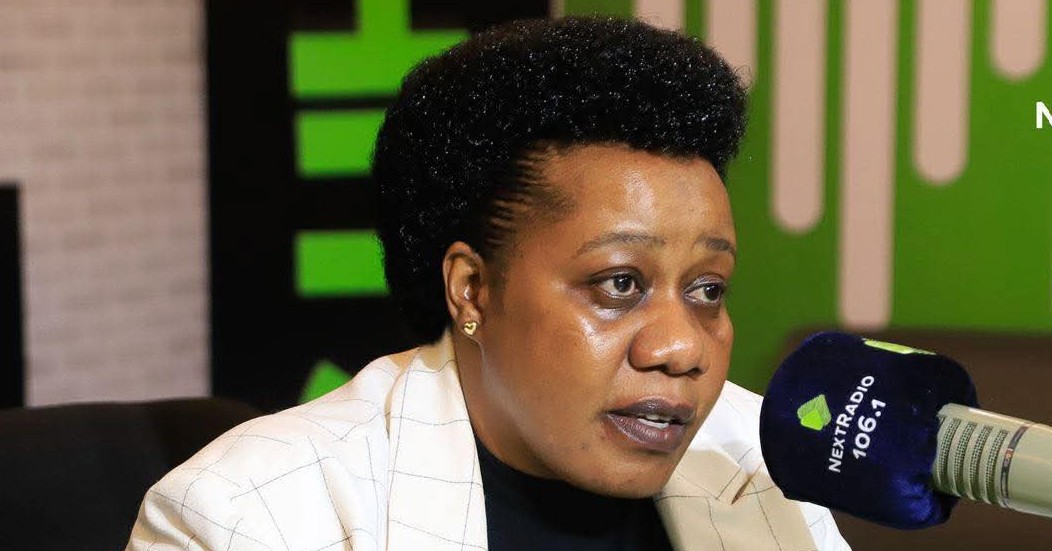
Sarah Bireete was arrested on December 30, 2025, after police and military personnel surrounded her home in Kampala. Shortly before her arrest, she posted on X, “My house is under siege by police and army”. As reported by East and Horn of Africa Election Observation Network (E-HORN) on 2 January 2026
The Police Reforms Working Group (PRWG) Kenya has called for the immediate release of Uganda’s human rights lawyer and civil society leader, Dr Sarah Bireete, warning that her detention ahead of the January elections threatens civic space and undermines democratic processes.
The Uganda Police confirmed her arrest in a brief social media post, stating she would be produced in court “in due course”. Police spokesperson Rachel Kawaala described the detention as part of “ongoing operations” but offered no further details.
“Dr Bireete is widely recognised for her unwavering passion for the protection of civil liberties, her lifelong quest for justice, and her steadfast commitment to democracy, a clarion call that has consistently advanced accountable governance across the region,” the Group said.
Bireete currently serves as Executive Director of the Centre for Constitutional Governance (CCG), Chairperson of the East Africa Civil Society Forum (EACSOF), and Chairperson of the Horn of Africa Election Observers Network (E-HORN).
PRWG Kenya described these roles as reflective of her integrity, credibility and long-standing contributions to human rights, electoral integrity and democratic governance.
The group urged Ugandan authorities to respect civil liberties, the rule of law and democratic processes.
“Respect for civil liberties, rule of law and democratic processes is fundamental to ensuring free, fair, and transparent elections,” PRWG Kenya said.
The statement also highlighted that Uganda’s constitution, under Article 23, guarantees that anyone arrested must be promptly informed of the reasons for their detention, a step that has not been followed in Dr Bireete’s case.
Bireete’s arrest follows her recent advocacy for Starlink, a satellite internet service operated by SpaceX, as a safeguard against potential internet shutdowns during the elections.
In a post dated December 23, 2025, she wrote, “Dear Ugandans, are you thinking of ways to navigate internet shutdown during elections? Starlink got you covered.”
As the country approaches general elections on 15 January 2026, UN experts* today warned that the pervasive climate of fear in Uganda, marked by allegations of enforced disappearance, the use of disproportionate force against political opposition supporters, and the intensified suppression of civil society and independent media, is not conducive to peaceful elections.
Gladys Mbuya is a lawyer by profession, a human rights defender, and a peace crusader. She is the founder of the Liberal Law Office in Cameroon and serves as the president of the International Federation of Women Lawyers for Cameroon. She also holds a role as a traditional leader.
Her work centres on promoting the recognition and respect of human rights, particularly the rights of women and girls. She represents women and girls in court who cannot afford legal fees and actively advocates for the revision of laws that discriminate against them.
Gladys faced intimidation, threats, and even attempts at arrest for her activism, yet remains steadfast in her mission. She has defended numerous individuals – including prominent activists – in cases involving arbitrary detention and violations of free expression and assembly. She was part of the legal team that defended Mimi Mefo, Ndoki Michèle, and Agbor Balla, which led to their cases being dropped at the court.
‘Human rights defence work is a noble cause. The international community should continue standing by human rights defenders. They should increase the volume of political pressure on our governments for them to fulfil their obligations under all the international conventions they have ratified.’
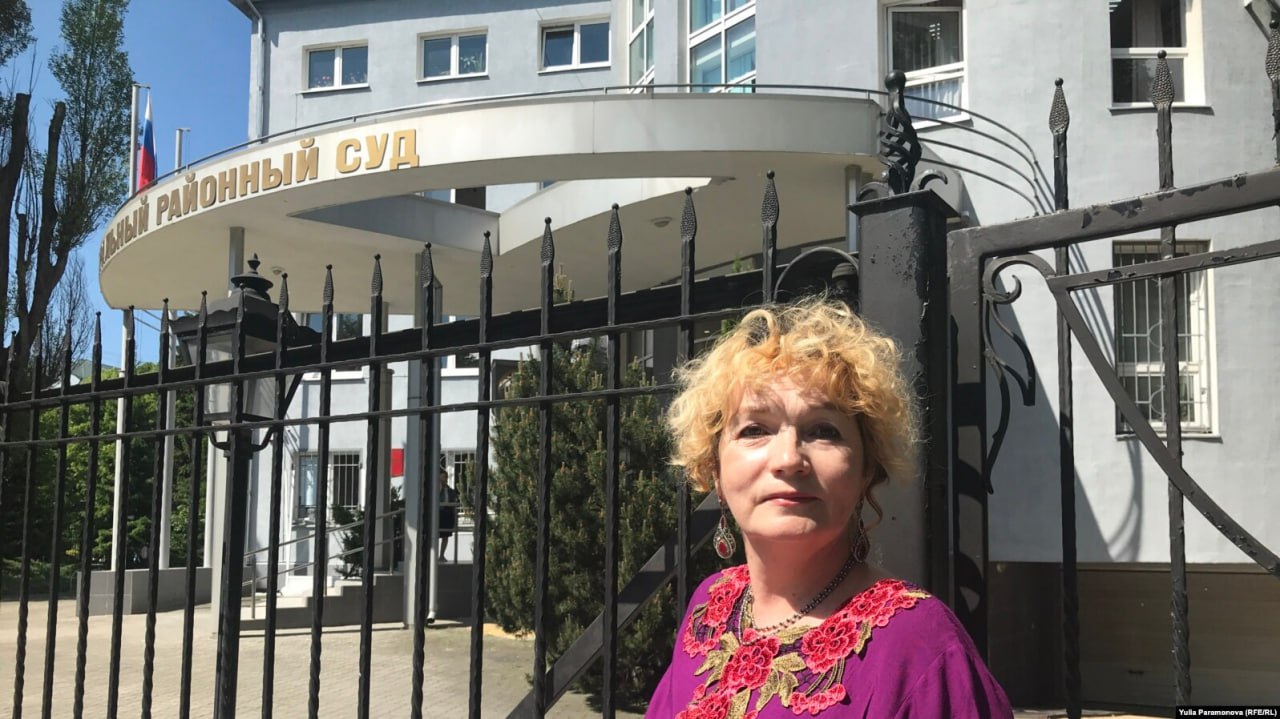
On 10 June 2025 The International Commission of Jurists (ICJ) condemned the arrest and detention of prominent Kaliningrad lawyer and human rights defender Maria Bontsler and called on the Russian authorities to release her immediately.
The ICJ is concerned that the charges against Maria are spurious and likely to be related to Bontsler’s legitimate activities. Proceedings against her have been undertaken in a shroud of secrecy and the ICJ calls on the authorities to immediately clarify their legal and factual basis for the charges against her.
Maria Bontsler was arrested on 28 May 2025 under Article 275.1 of the Russian Criminal Code, which provides for criminal liability for “confidential cooperation with a foreign State” aimed at “undermining the security of the Russian Federation”.
Available information indicates that a court hearing concerning Maria Bontsler’s detention or the filing of charges was held behind closed doors, at the Prosecutor’s request, on grounds of State secrecy. However, no official justification has been provided to demonstrate that the secrecy of the proceedings was necessary and proportionate as required under international human rights law. The ICJ is concerned that this lack of transparency undermines Bontsler’s right to a fair hearing.
“This prosecution reflects a broader campaign of retaliation against lawyers in Russia who engage in what the authorities see as politically sensitive cases. Such actions serve to intimidate and discourage other lawyers from vigorously defending their clients,” Temur Shakirov, Director (ad interim) of ICJ Europe and Central Asia Programme said.
Maria Bontsler has a long record of defending politically persecuted individuals, including critics of Russia’s unlawful military intervention in Ukraine.
Irrespective of any charges, the ICJ stresses that it is inappropriate to keep Maria Bontsler in pre-trial detention.
In a broader context of interference with the legal profession, searches were also carried out at the homes of her colleagues, Roman Morozov and Ekaterina Selizarova, with electronic devices and legal documents seized. According to available reports, Morozov was questioned in relation to his alleged connections to the human rights organisation Memorial.
The ICJ stresses that under international law and standards, including the UN Basic Principles on the Role of Lawyers, lawyers must be able to perform their professional activities without hindrance, including the collection and dissemination of information essential to protecting effectively their clients’ rights.
Maria Bontsler is a well-known human rights lawyer who represents individuals in politically charged cases and has been recognized by the Moscow Helsinki Group for her human rights defence work. Her clients include critics of the Russian Federation’s unlawful military intervention in Ukraine.
….Previously, Maria Bontsler was fined under administrative proceedings for courtroom statements made in defence of her clients, part of a systematic harassment faced by lawyers handling “political” cases in Russia
On 23 April, 2025 OMCT made public this interview with Armel Niyongere, exiled Burundian lawyer and Secretary General of SOS-Torture Burundi, a member of the World Organization Against Torture (OMCT) SOS-Torture network. He continues to denounce human rights violations in his home country. Despite 10 years of threats and intimidation from the authorities, Mr. Niyongere continues his fight to promote and protect human rights. In this interview he talks about the difficulties of exile, the challenges facing those who defend human rights, and the role of the international community.
On 4 April, 2025 the Miami Herald reported that Haiti-based human rights lawyer Mario Josep died in a car accident.
In a country where justice is often elusive, Mario Joseph was a fearless crusader who didn’t care whether his opponent was the Haitian government or the international community as he defended political prisoners and poor victims of human rights abuses in his Caribbean homeland. Joseph died Monday night from injuries sustained in a car accident last week as he pulled into his house. His death was confirmed by his longtime friend Brian Concannon and the Boston-based nonprofit Institute for Justice & Democracy in Haiti. He was 62. Concannon said in a statement. “The global human rights movement has lost an inspirational leader when the notion of human rights itself is under broad attack.”
Since 1996 Joseph had served as the attorney for the Bureau des Avocats Internationaux, or Bureau of International Lawyers, in Port-au-Prince. The organization represented victims of human rights violations, trained Haitian law students and worked with U.S. law schools clinics, while also closely collaborating with the Institute for Justice & Democracy in Haiti. His high-profile cases included championing the rights of 5,000 victims of waterborne-cholera who blamed the United Nations for its introduction into Haiti after the 2010 earthquake.
Among Jospeh’s many accolades over the years was the Judith Lee Stronach Human Rights Award from the Center for Justice & Accountability in San Francisco, the Alexander Human Rights Award from Santa Clara University, and honorary doctorates from the University of San Francisco and Indiana University School of Law. He was also a finalist for the 2013 Martin Ennals Human Rights Defenders Award.
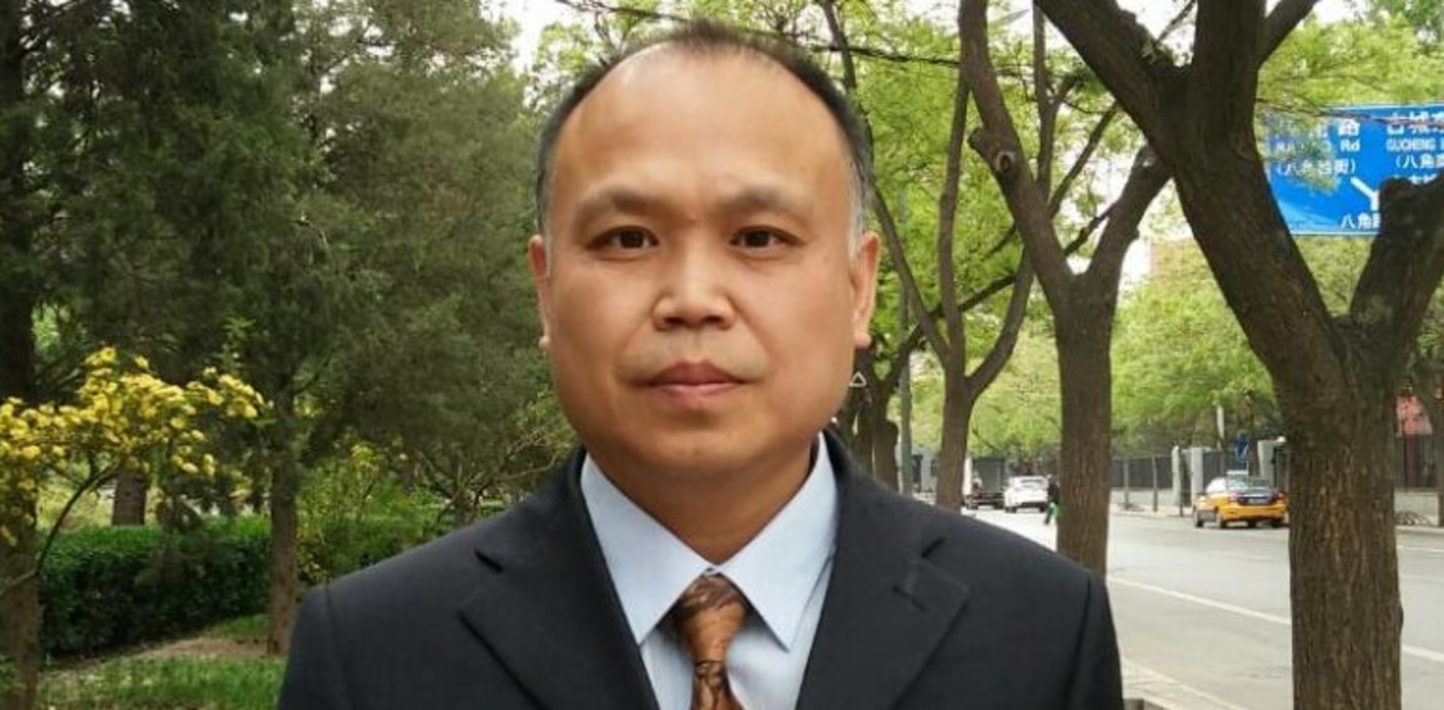
Responding to the rejection of Chinese human rights lawyer see also:s appeal against his three-year prison sentence for “inciting subversion of state power”, Amnesty International’s Interim Regional Deputy Director for Research Kate Schuetze said on 6 January, 2025: “The charges against Yu Wensheng and his wife, activist Xu Yan – who was convicted of the same offence – are entirely baseless. They reveal the authorities’ inability to provide any legitimate justification for their imprisonment.
“The Chinese government has used Yu’s online comments and his numerous international human rights awards as an excuse to label him a threat to national security. But all this really demonstrates is Beijing’s deep fear of human rights defenders who dare to dissent.
“Yu Wensheng and Xu Yan have been imprisoned solely for exercising their right to freedom of expression and they must be released immediately and unconditionally.”
Manuchehr Kholiqnazarov. Photo from personal Facebook page
On 29 May 2024, IPHR (International Partnership for Human Rights – an independent, non-governmental organization founded in 2008 in Brussels) published an Op-ed about Human Rights Defender Manuchehr Kholiqnazarov.
Tuesday marked the sad anniversary of the arrest of lawyer and human rights defender Manuchehr Kholiqnazarov in Tajikistan. First arrested on 28 May 2022, he has now spent two years behind bars, serving a 16-year-long prison sentence in retaliation for his human rights work.
The organisations issuing this statement – International Partnership for Human Rights (IPHR), the Tajikistan Civil Society Coalition against Torture and Impunity, Helsinki Foundation for Human Rights (HFHR, Poland), Norwegian Helsinki Committee (NHC), as well as International Federation for Human Rights (FIDH) and World Organisation against Torture (OMCT) within the framework of the Observatory for the Protection of Human Rights Defenders – are increasingly worried about Manuchehr’s state of health and call again on the Tajikistani authorities to immediately and unconditionally release him.
“Manuchehr was arrested and imprisoned for no other reason than his tireless work to help the most vulnerable victims of human rights violations. We will not give up fighting against his unjust sentence until he is released and allowed to return home to his family,” said Brigitte Dufour, Director of IPHR.
On 9 December 2022 Tajikistan’s Supreme Court found Manuchehr guilty under articles 187, part 2 (participation in a criminal organisation) and 307 (3), part 2 (participating in the activities of a banned organisation due to its extremist activities) of the Criminal Code, sentencing him to 16 years’ imprisonment in a strict regime penal colony.
Manuchehr is the Director of the Lawyers Association of Pamir (LAP), one of the few civil society organisations in Tajikistan’s Gorno Badakhshan Autonomous Region (GBAO) that works to promote and protect human rights.
On 25-28 November 2021, mass protests erupted in Khorog, GBAO, over the extrajudicial killing of a young man, Gulbiddin Ziyobekov. After the protests settled, Manuchehr joined the “Commission 44”, consisting of representatives of local civil society and law enforcement agencies, to investigate the events. Given his professional experience, Manuchehr was included in the Joint Investigation Team headed by the Prosecutor General’s Office and helped secure lawyers for victims of indiscriminate violence during the November 2021 protests.
However, May 2022 saw a renewed crackdown on protests in Khorog and Rushan District of GBAO. On 28 May 2022, Manuchehr was arrested along with a dozen members of Commission 44 for alleged “participation in a criminal association” and “publicly calling for violent change of the constitutional order”. Their trial began on 20 September 2022, and was held behind closed doors at a detention facility of the State Committee for National Security (SCNS) in Dushanbe. Following his conviction, Manuchehr was transferred to a prison facility in the capital.
Manuchehr’s health has deteriorated significantly in detention. In particular, he suffers from back problems. The authorities should ensure that he has access to adequate medical assistance for these health problems and that his treatment complies fully with international standards as long as he remains behind bars.
In addition to human rights NGOs, the United Nations Special Rapporteur on Human Rights Defenders and other international human rights experts have repeatedly raised concerns about Manuchehr’s imprisonment and called for his release. The Tajikistani authorities should heed to these calls, promptly release him and allow him to reunite with his family.
Here Haris Azhar shares how and why he believes the law can be used as a powerful tool to deal with repression of democratic voices and their rights. Read more from our In My Own Words series here.
My name is Haris Azhar. I would say I’ve been working, in general terms, on human rights issues for the last 25 years. I work across the country in Indonesia on some human rights, issues or situations, and in some conflict areas such as in Papua.
I have been working for and dealing with some vulnerable groups such as labour groups, as well as the indigenous people and victims from the violence as well. These days I practise as a lawyer, I do pro bono and also professional for-profit work where I use the profits work to subsidise the pro bono and public interest legal work. I have also joined some organisations, and I was director for two human rights organisations. So that’s why I’ve been very human rights focused.
In early 2024 me and my friend Fatia were brought to court. We won, and we got a good decision from the court. But this is not the final one, because the attorney general has appealed to the Supreme Court. I think this whole process was meant to serve as an example.
The whole process, especially last year, was intended to be intimidation. The litigation or the pre-trial process was intended to intimidate me [and] not to not say more about the practice of business oligarchs in this country. But myself, lawyers, and groups here said, we would not say sorry. We would not stop speaking, and that those in power could continue their judicial harassment of us and that we would fight them.
And during the fight, a lot of things happened [such as] intimidations, negative accusations and campaigns. They accused us of hoax stories, but actually they did the hoax stories. They took over and intercepted my mobile phone as well. These are the lengths and practices of intimidation in place.
However, the process of the court for people like us, we pretty much don’t really care about the final decisions. We can see the shadow of the prisons, because what the government thinks is important for them is for us to not have democratic voices. There aremany cases by politicians and by business groups that aim to criminalise decent voices, and it has become a [common] practice. There are even consultants that can help you if you would like to know how to criminalise decent/democratic voices.
It’s become an industry against freedom of expression, to show that, “This is what happens if you are against us.” They wanted to show they could bring me to court so the warning was that anyone who becomes the client of Haris should be aware. It was symbolic, and that’s what I mean it is a message to intimidate and to intimidate vulnerable groups especially.
Widespread engagement on human rights, working through organisations, has developed not only my knowledge, my skill, but also my networks. This has also developed my interest in what some of the ways we (as a nation) would like to put on the table with regards to issues of human rights.
As a practising lawyer, we have always believed here that we can use the law [to achieve justice]. However the movement here is not like in South Africa, as an example, where at one point in South Africa there was no real equality. There was no legal institution that could be used to secure fairness. We don’t have that kind of situation here [in Indonesia], but we are still looking for the formalisation of equality and fairness.
We like to use the legal debate, space, and discourse as a way to combat evil, because the law provides the kind of tools or ammunition to attack evil. Those in power hide behind the law and therefore here in Indonesia, most of the battle and discourse always has an element of legality.
I believe that the law is one of the crucial things that need to be handled, in addition to other advocacy issues. Because we know that the law or legal mechanisms are [also] being used by the bad guys, by the oligarchs to justify and legalise their plans and to do their own business. Those in power always say that they have complied with the law, that they uphold the rule of law, but actually we know that the law they comply with is their own creation. It is their own definition. That’s why we [as legal practitioners] need to step in, even though it’s not the popular action to do so.
If those in, and adjacent to, power cannot be left to create what is good and not good within the framework of law. We need to bring in the voices from the ground. We need to bring the voices from the indigenous people. We need to bring the voices from the labour groups, from the students, from the women’s groups, and many other vulnerable groups who are connected to the issues.
This is instead of the politicians and the business groups alone making their own arguments and developing their own definitions. We cannot let them be, and let them take over in that kind of way. Rule of law and legislation, has to be accompanied and coloured by the vulnerable voices and interests. This is why we insist that a part of the campaign, part of the research, is that we take the legal action as well.
The gap between the haves and the political groups on the ground is huge. This has been happening year on year, and it is getting worse every year. The new regulations and legislations that we have here, which very much comply with the interests of the business groups which belong to some politicians, create more loose protection of rights of workers and women. For the youth and the students, they are getting fewer protections for their education and freedom.
There’s no freedom on campus for students anymore, [because of] intervention from the government and the police on campuses. It’s getting obvious these days. So I think we need at least two things. First, figuring out how to protect vulnerable groups, because why they were attacked or would be attacked is because they found irregularities, and problematic issues behind the policies of the government, or the law.
These issues have led to economic issues, social issues, business issues and so the vulnerable groups make a choice where they complain or protest, but they get attacked by police, government and intelligence. That is why we need more collaborations with vulnerable groups.
We also need more friends — lawyers, international advocates, researchers — coming down into the rural areas, and into the urban areas to capture what is happening and make a noise, to campaign. That’s why we need to have the first group that I mentioned before. We need not to deal with the substance of the problem, but with the second layer of the problem, [which is] the attacks of the participation, the effects to the participation. For this we need to have a lot of groups [working on] how to deal with this kind of shrinking space.
We just had the 2024 elections where we campaigned around the threat to our freedoms of speech and expression. Some of the candidates responded very well, but the one that was supported by the current regime didn’t have a strong resonance with what we are saying. In addition to the campaign, along with my criminalisation, myself, some friends and organisations submitted a complaint to the Constitutional Court.
Our complaint was regarding some legal articles which were being used against me and against some journalists. We won the case in the Constitutional Court earlier this year, and an article which had been used to criminalise a lot of people has now been dropped. But this win is very short [lived] because we have some articles within certain laws which allow the police to criminalise speech.
When I said we won, that’s regarding just one article in our criminal code. But in the next year and a half we will have a new criminal code implemented and new articles to criminalise speeches. We will need to challenge those articles in the next two years. It’s like Tom and Jerry, where we play hide and seek. It seems politicians and business need a shield to protect themselves from the public, hence these situations but we keep fighting them using the same law.
Legal institutions are not our institutions yet. They are still their institutions [meaning the powerful]. However to a certain degree, the legal space is an open stage for you to perform, to have a say. I think if we don’t fill the space, it will be filled by those who are not supportive of freedom of speech or freedom of expression.
These are the reasons why I think we have to join legal action. So as to not give space for evil to come in and occupy. Also, legal action is not the only type of work needed. It has to be one among others. For instance there is advocacy work too. But law cannot be neglected and that’s why this current situation (and the coming situations), require more than just focusing on the legal system. It has to be about a collaborative methodology and approach.





 Hans Thoolen on Human Rights Defenders and their awards