Posts Tagged ‘Human Rights Defenders’

Human rights defenders in Afghanistan: crucial role

March 3, 2020

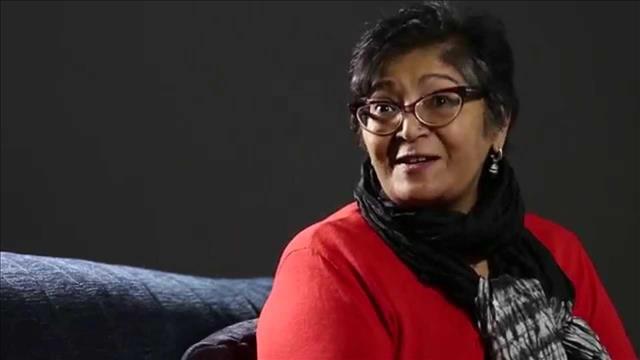
While uncertainty about the status of a peace accord in Afghanistan continues to feature in the main media, this opinion piece by Samira Hamidi in Khaama, Afghanistan/ of Wednesday, 26 February 2020 is most timely: “Human rights defenders strategy: From commitments to action”. Samira Hamidi is Regional Campaigner for Amnesty International’s South Asia Regional Office. She was the former Country Director for Afghan Women’s Network and has also chaired the board of AWN and Human Rights Defenders Committee.

Wherever there is injustice in Afghanistan, you will find some of the bravest people fighting against it. They are lawyers and activists supporting women who have suffered violence and discrimination. They are teachers who are supporting the right to education of girls and boys. They are journalists who advance the right to freedom of expression. They are whistleblowers who expose allegations of corruption and other abuses of government and its officials. They are all human rights defenders, as they work to contribute to the protection and promotion of human rights in the country

Human rights defenders in Afghanistan have played a crucial role in bridging the gap between the government and the people. They have been key actors in protecting and promoting human rights and strengthening the rule of law, often at great risk to themselves, their families and communities, and to the organizations and movements they represent. For decades, they have advocated humanity’s core values of equality, justice, fairness and non-discrimination. They have not only contributed to the development and progress of communities and the country but have also paid a high price for the work they do.

Despite the positive contributions they make, human rights defenders face hostility from different state and non- state actors. They have been subjected to threats, intimidation, harassment, violence and even death. The human rights defenders and women human rights defenders are questioned for their human rights work, labeled as ‘anti-religion’ and ‘anti-culture’ and are targeted for challenging injustices. There have been systematic attacks on human rights defenders in Afghanistan in the last couple of years, which notably increased in 2019.

In May last year, a female journalist and activist, Mena Mangal was shot dead in Kabul. In July, Saeed Karim Musawi a well-known human rights defender and civil society activist was shot and killed by two gunmen who were riding on a motorbike and escaped the scene in Kunduz province. … Abdul Samad Amiri, a human rights defender and head of the Ghor provincial office for Afghanistan Independent Human Rights Commission was kidnapped and killed on his way to Ghor province. In November, two prominent human rights defenders from Logar province were forcibly disappeared and then detained for exposing alleged sexual abuse against children. [see also: https://humanrightsdefenders.blog/2019/11/26/afghanistan-human-rights-defenders-targeted-but-fearless/]

These attacks on human rights defenders, and many more that are yet to be documented,…There are also examples where human rights defenders were advised to silence themselves, claiming officials are not capable enough to provide them protection. In certain cases, human rights defenders were even told to acquire weapons to protect themselves.

….Over recent months, the human rights community with the support of Amnesty International collaborated in devising a protection strategy for human rights defenders in Afghanistan. This maiden effort addresses the protection of human rights defenders, the need for investigations of threats, calls for bringing suspected perpetrators to justice and encourages collaboration between the government and international community specifically for the protection of human rights defenders.….The international community has a key role to play here as well. For years, human rights defenders have worked with these actors to provide first-hand information about violations taking place in Afghanistan. The international community has encouraged them to speak out against human rights violations and abuses and to promote human rights values. When these same human rights defenders are at risk, the international community has a responsibility to stand up for them – as the United Nations Declaration on Human Rights Defenders demands.…..As human rights defenders emphasized during the launch of the human rights defenders protection strategy, it is time for the Afghan government and the international community to put their commitments to action.


Human rights defenders strategy: From commitments to action

Hay Festival in Emirates promotes freedom of expression but not for its citizens

February 26, 2020
As the Hay Festival Abu Dhabi opens on February 25–28, 2020 in the United Arab Emirates, we the undersigned call on the Emirati authorities to demonstrate their respect for the right to freedom of expression by freeing all human rights defenders imprisoned for expressing themselves peacefully online, including academics, writers, a poet, and lawyers. In the context of the Hay Festival, the UAE’s Ministry of Tolerance is promoting a platform for freedom of expression, while keeping behind bars Emirati citizens and residents who shared their own views and opinions. We support the efforts of festival participants to speak up in favor of all those whose voices have been silenced in the UAE. We further support calls for the UAE authorities to comply with international standards for prisoners, including by allowing prisoners of conscience to receive books and reading materials.The country’s most prominent human rights defender, Ahmed Mansoor, is currently serving a 10-year prison sentence after being convicted on the spurious charge of “insulting the status and prestige of the UAE and its symbols including its leaders” in reprisal for his peaceful human rights activism, including posts on social media. [see also: https://humanrightsdefenders.blog/tag/ahmed-mansoor/]……

Other prisoners have been tortured in prison in the UAE. A Polish fitness expert, Artur Ligęska, was held in the same isolation ward as Mansoor, in conditions he described as “medieval.” After his charges were dismissed and he was freed in May 2019, Ligęska wrote a book in which he recounted the prison conditions in Al-Sadr’s isolation wing, where prisoners were held without running water for many months in very unhygienic conditions, and some were subjected to torture, abuse, and sexual assault. He was instrumental in getting the news about Mansoor’s hunger strike out to the world from prison in March 2019, at great personal risk.

Other human rights defenders have faced similar mistreatment in prison, where they are often held in isolation, resorting to hunger strikes to try to bring attention to their unjust imprisonment and ill-treatment in detention, such as human rights lawyers Dr. Mohammed Al-Roken and Dr. Mohammed Al-Mansoori...

,,,

The Hay Festival Abu Dhabi is supported by the UAE’s Ministry of Tolerance in a country that does not tolerate dissenting voices. Regrettably, the UAE government devotes more effort to concealing its human rights abuses than to addressing them and invests heavily in the funding and sponsorship of institutions, events, and initiatives that are aimed at projecting a favorable image to the outside world.

With the world’s eyes on the Hay Festival Abu Dhabi, we urge the Emirati government to consider using this opportunity to unconditionally release our jailed friends and colleagues, and in the interim, to at least allow prisoners of conscience to receive books and reading materials, to have regular visits with family, to be allowed outside of their isolation cells to visit the canteen or go outside in the sun. In particular, we ask that Ahmed Mansoor be given a bed and a mattress so that he no longer has to sleep on the floor, and that prison officials cease punishing him for public appeals that are made on his behalf. We ask the authorities to improve their prison conditions as a sign of goodwill and respect for people who wish to organize and participate in events in the UAE, such as the Hay Festival Abu Dhabi or the upcoming Expo 2020 Dubai, in the future. By doing so, the UAE would demonstrate that the Hay Festival is an opportunity to back up its promise of tolerance with actions that include the courageous contributors to freedom of expression who live in the country. [see also: https://humanrightsdefenders.blog/2019/10/26/celebrity-endorsements-and-the-dubai-expo-on-the-one-hand-and-the-other/]

for names see: https://pen.org/open-letter-ngos-and-individuals-to-uae-authorities/

Turkey: who will defend the human rights defenders?

February 16, 2020

Milena Buyum, Amnesty International, wrote on 14 February 2020 a moving piece on the detention and suffering of her fellow human rights defenders in Turkey.

Some moments in life are forever etched in our minds. Everyone recalls where they were when they heard their favourite rock star died, or how they felt around the birth of a child. For me, 6 June and 5 July 2017 are two dates that will forever be on my mind. They are the days when I learned that my friends and colleagues, human rights defenders, had been detained by Turkish police…On 6 June 2017, I was in Istanbul on a work visit, meeting with journalists and lawyers ahead of the start of the trial of two writers. It had almost been a year since the attempted and bloody military coup of July 2016. The Turkish government had responded with a sweeping crackdown on dissenters from all backgrounds, which was continuing to gather pace. I was with the editor of a small newspaper when I heard that my colleague Taner Kılıç had been detained. I will never forget the sinking feeling during those first moments. Trying to make sense of the nonsensical is always difficult. Knowing about the crackdown had not prepared me for how I’d feel when someone I knew was caught up in it.

…..

It was around 8pm on 5 July when I saw several missed calls from a colleague in Turkey. When I rang back, I learned that Amnesty’s Director in Turkey, Idil Eser, and nine others were in detention after being arrested  while attending a workshop on the island of Buyukada. My friend and sister Ozlem was among them. I recall vividly the ensuing hours, making frantic calls to whoever I could think of to try and find out where they were and what was going on. How could people be arrested for attending a human rights workshop? It made no sense.

…….

This week, I will be in Istanbul for the verdict in the case of Taner and the Buyukada 10. If found guilty of ‘membership of a terrorist organisation’, they could face up to 15 years behind bars. At the last hearing in November, I was in the courtroom when the state prosecutor requested that Taner and five of the Buyukada 10 – Idil, Ozlem, Gunal, Nejat and Veli – be convicted, and recited those initial absurd allegations that had been destroyed under the weight of the evidence their defence had provided. This included the allegation that Taner had the secure messaging app ByLock on his phone. Since the coup attempt the authorities have used this allegation against tens of thousands of people to try to prove they were part of an armed terrorist organization. In Taner’s case it was proven to be baseless, including by the state’s own reports to the court. In fact, after 10 hearings in the case, all the accusations made against them have been shown, one by one, to be entirely baseless. How is it possible that the state is still asking for the convictions of our colleagues and friends? The situation facing them is not unique. Their situation is in many ways emblematic of the wave of repression that has gripped Turkey. On Tuesday, another landmark verdict is expected in the case of Osman Kavala and 15 others accused of conspiring to overthrow the government. Despite failing to produce a shred of evidence to support their claim, the prosecution has nevertheless sought life prison for them… [see also: https://humanrightsdefenders.blog/2020/01/29/turkey-defies-european-court-on-kavala-and-undergoes-upr-review/]

I have been in that courtroom for this trial ever since it began. Each time, the absurdity of the prosecution and the complete lack of evidence of any crime having been committed – let alone under terrorism laws – struck everyone in attendance as reserved to the pages of a nightmarish novel. When I walk into the Istanbul courtroom next week, I know there is only one outcome that could deliver justice.  Taner, Ozlem, Idil, Nala. Seyhmus, Ilknur, Ali, Peter, Veli, Gunal and Nejat must all be acquitted. For defenders of human rights, for our friends, for human rights in Turkey, this is the only way just end to this long saga.

https://www.amnesty.org/en/latest/news/2020/02/who-will-defend-the-defenders/

OHCHR’s Minorities Fellowship Programme: Applications invited

February 12, 2020
OHCHR’s Minorities Fellowship Programme: Applications invited

On 10 February 2020 the Office of the United Nations High Commissioner for Human Rights (OHCHR) invited applications for its Minorities Fellowship Programme, a training programme for human rights and minority rights defenders belonging to national or ethnic, religious and linguistic minorities. During the Programme, human rights defenders will get an opportunity to establish contacts with other activists from different parts of the world.

Applicants of the fellowship must belong to a national, ethnic, linguistic or religious minority group. Selected persons will get a ticket from the country of residence to Geneva and stipend.

The application form for the fellowship can be download from the website of OHCHR (click here). Applications form along with the relevant documents can be sent to email id minorityfellowships@ohchr.org or by post to “Mr. Morse Caoagas Flores Coordinator, Indigenous & Minorities Fellowship Programmes Indigenous Peoples and Minorities Section Office of the High Commissioner for Human Rights 48, Avenue Giuseppe-Motta, Office 2-05 CH-1211 Geneva 10, Switzerland”. The deadline is 28 February 2020.

https://www.siasat.com/ohchrs-minorities-fellowship-programme-applications-invited-1821299/

Cuba and EU dialogue: five empty chairs show serious shortcomings

February 9, 2020
Cuban human rights defenders who participated to the project of presenting a report on EU’s agreement with Cuba. [Civil Rights Defenders]

The EU needs to change strategy if it wishes to stand for democracy in Cuba by opening up to independent civil society, write Anders L. Petersson and Erik Jennische (of the NGO Civil Rights Defenders) on 4 February 2020. On Saturday 1 February. five Cuban democracy activists were stopped at the airport in Havana as they were on their way to Brussels to speak at the European Parliament today. They were banned from leaving the country by the Cuban authorities. Instead, the seminar at the European Parliament was held with Cuban activists based outside the country, and five empty chairs – a vivid reminder of the current strategy’s shortcomings. [Instituto Patmos has shown that at least 226 activists were banned from travelling abroad during 2019]. The five democracy activists were supposed to present their ideas on what the EU could do to promote respect for human rights and democratisation in the country. Their proposals form part of a report by Civil Rights Defenders – a total 30 letters from Cuban democracy activists and organisations – as a contribution to the EU’s policy development.

Although the EU and Cuba in their Agreement recall “their commitment to the recognised principles of democracy”, Civil Rights Defenders regrets that the EU remained silent on the sham elections and the transfer of power that followed. Apparently, it was all acceptable under the new Agreement…..When Federica Mogherini visited Cuba for the last time as High Representative for Foreign Affairs in September 2019, she rather perplexingly concluded that “after completing its generational transition and adopting a new Constitution, Cuba now faces major challenges in carrying out its economic modernization”.

….Reflecting on the stories of harassed and imprisoned activists in Cuba, we cannot afford to make such surrender again. The EU needs to change strategy if it wishes to stand for democracy in Cuba. It needs to build a formal and open dialogue with Cuba’s independent civil society. Since the negotiations began on the Agreement in the spring of 2014, the EU has not invited civil society to a single formal discussion on the content of the Agreement or its implementation. When the EU and Cuba held its human rights dialogue in October 2019, the Cuban government took the liberty to decide which European and Cuban organisations could participate. The papers in the report of CRD hold a great number of proposals and ideas – the two core messages being:

  • That both European and Cuban civil societies need to be recognised as formal partners to the EU in its relations to Cuba.
  • That the EU needs to speak out on the absence of democracy in Cuba and denounce all human rights violations.

The EU can never contribute to positive change in Cuba via a dialogue with the Cuban government. The only way is to give legitimacy and support to the civil society that openly and peacefully supports democratisation. It is time for the EU to include civil society in its relations with Cuba.

See also: https://humanrightsdefenders.blog/2018/12/15/new-rule-of-law-and-human-rights-in-cuba-and-venezuela-and-eu-engagement/

One of the award-winning Cuban dissident who was detained this week announced that he has been released without charge but barred from a planned trip to Europe for a meeting on human rights. Guillermo Farinas, a 58-year-old psychologist, is a leading voice in the opposition to Cuba’s communist government and won the European Parliament’s Sakharov human rights prize in 2010. Farinas was arrested Tuesday in the central city of Santa Clara, where he lives, as he planned to go to the Spanish Embassy in Havana to pick up travel documents. He had been due to take part in a meeting of the human rights commission of the European Parliament. “The main reason for my arrest was to keep me from traveling to Europe,” Farinas told AFP.

In the meantime a number Cuban and latin solidarity groups in Belgium had a quite different view: “Campaign by MEPs against Cuba rejected in Belgium. Another instance of the Empire’s vulgar and interfering policy of subversion and discredit against the Cuban Revolution. Cuba is sovereign and independent, we won’t yield to anyone”. http://www.cubadebate.cu/noticias/2020/02/04/rechazan-en-belgica-nueva-campana-contra-cuba-de-eurodiputados/#.XjsNg2q23cd 


Five empty chairs remind of Cuba’s regime true nature

https://www.france24.com/en/20200207-cuban-dissident-freed-but-cannot-leave-country

https://www.euronews.com/2020/02/07/cuban-activists-blocked-from-attending-eu-meeting

Human Rights and Climate defenders should join hands says Andrew Gilmour

February 5, 2020

The Korea Herald of 4 February 2020 carries an opinion piece by Andrew Gilmour (former UN assistant secretary-general for human rights) entitled “Preventing climate change is a human rights issue”. In it he makes a strong case for human rights and climate groups to work more togehter:
…They’d seem to be natural allies. They both regard (with good reason) today’s situation as the worst in their movements’ existence. Second, they share common foes: Leading climate change deniers and environmental despoilers tend to be dismissive of human rights (Presidents Rodrigo Duterte, Donald Trump, or Jair Bolsonaro, to name but three). Third, both movements are accused of being “elitist” by their opponents, a charge neither group of activists has done enough to overcome.  But the two groups haven’t historically worked closely together.

…. In a seminal UN report last spring, Philip Alston castigated the human rights community for its failure to face up to the fact that “human rights might not survive the coming upheaval.” The idea that democratic systems failed to prevent global heating may well take hold, with a resulting urge to strengthen state powers at the cost of rights and freedoms.

To prevent this from happening, human rights advocates and environmentalists both need to broaden their mobilization campaigns by reaching out to groups who have traditionally not been allies of either movement. From Europe to the US to Australia, an alliance of populist leaders, corporate lobbyists and the Murdoch-owned press have pushed the idea that any gains for human rights or environmental protection will come at the expense of jobs. For example, the “gilets jaunes” protests in France were provoked, in part, by a fuel tax hike designed to reduce carbon emissions. (“Fin du monde, fin du mois” was one rallying cry — stop talking about the end of the world, when we’re just trying to get to the end of the month.)

Fossil fuel workers, cattle farmers and others need to know that they will still have livelihoods after serious measures have been taken to reduce global heating. Governments, NGOs and the private sector can offer such assurances through reskilling programs and subsidies for alternative land management and carbon sequestration. Without job security, too many people will remain vulnerable to wealthy climate science deniers — such as the Koch brothers — who have been able to convince them that climate change is basically a hoax against the “people” perpetrated by the “elite.”

Activists and sympathetic local officials must also work harder to win over indigenous people. In many countries, including Brazil, the Philippines and Honduras, there are examples of indigenous groups resisting renewable energy projects. Not because they are politically opposed to renewable energy, but because they have traditionally not been consulted about enterprises inflicted on them within their traditional lands and waters.

Climate and human rights activists should be reaching out to these groups to get their buy-in. Governments should be transferring ownership of forested land back to the indigenous communities who have proven time and again to be the most effective guardians of their own ecosystems. Instead, indigenous people are being attacked — literally. In 2017, an average of three indigenous, environmental or land rights defenders were killed every week worldwide.

Collaboration between human rights advocates and environmentalists will make it more likely that we come together to reduce emissions and mitigate the worst effects of climate change — and that we do so equitably. But the first step is to create far stronger bonds between the leaders and activists of each cause. Until both sides have fully recognized that neither agenda can be achieved without the other, they will continue to under-perform against their powerful opponents.

http://www.koreaherald.com/view.php?ud=20200203000932

Compilation of recommendations to companies and investors on HRDs and civic freedoms

February 1, 2020

Several national and international non-governmental organizations, think-tanks, coalitions and UN bodies and experts have made recommendations to businesses and investors about how to ensure respect for human rights defenders and civic freedoms. This non-exhaustive list brings together these recommendations.

Recommendations for companies and investors:

Name / Title:

Description:

Business sector:

Authors – type of organization(s): 

Date and Year:

Zero Tolerance InitiativeThe Geneva Declaration Declaration made by defenders of human rights and environment and supporting NGOs, with recommendations for states, companies and investors  All sectors Affected communities’ representatives, national and international NGOs November 2019
Action plan from the World HRDs Summit  Action plan made by defenders of human rights and environment and supporting NGOs, with recommendations for states, companies and investors  All sectors Affected communities’ representatives, national and international NGOs December 2018
Situation of human rights defenders – A/72/170 UN Special Rapporteur on HRDs’ report on HRDs working on business and human rights, with recommendations to states, companies and investors All sectors UN Expert July 2017

Recommendations for companies:

Human rights defenders and civic space – the business and human rights dimension Working Group on Business and Human Rights, as part of its mandate to promote the UN Guiding Principles, decided to give focused attention to the issue of HRDs and civic space – this is the summary of UNWG’s efforts on this issue to date and includes draft guidance for companies  All sectors  UN Working Group Ongoing
Shared Space under pressure: Business Support for Civic freedoms and HRDs Guidance document on business support for civic freedoms and HRDs All sectors International NGOs (informed by interviews with business representatives, HRDs, national and international NGOs) August 2018
Thematic overview: Civil society and the private sector CIVICUS’ 2017 State of Civil Society Report addressed the theme of civil society and the private sector, gathering a range of informed views from 27 different stakeholders that wrote about different aspects and produced a set of recommendations for the private sector  All sectors  National and international NGOs January 2017
Cross-regional group of human rights defenders called on business to take action for their engagement and protection Joint statement from 40+ civil society organizations, with guidance for businesses All sectors National and international NGOs 2016
Human Rights Defenders and Business: Searching for Common Ground Report with case studies, analysis and recommendations for businesses  All sectors International NGOs (informed by HRDs and national NGOs) December 2015

Recommendations for investors and financial institutions:

 Uncalculated Risks: Threats and attacks against human rights defenders and the role of development finance Report with 25 case studies and recommendations for international financial institutions  Finance & banking International and national NGOs June 2019
Guide for independent accountability mechanisms on measures to address the risk of reprisals in complaint management Toolkit that aims to assist independent accountability mechanisms (IAMs) to address the risk of reprisals within the context of their complaint management process  Finance & banking Independent Consultation and Investigation Mechanism (IDBG) January 2019

This list will continue to be updated – please notify the NGO at zbona(at)business-humanrights.org, if there is a set of recommendations missing from it.

https://www.business-humanrights.org/en/compilation-of-recommendations-to-companies-and-investors-on-hrds-civic-freedoms

NGOs demand that rules against Strategic Lawsuits Against Public Participation (SLAPP) are upgraded

January 28, 2020

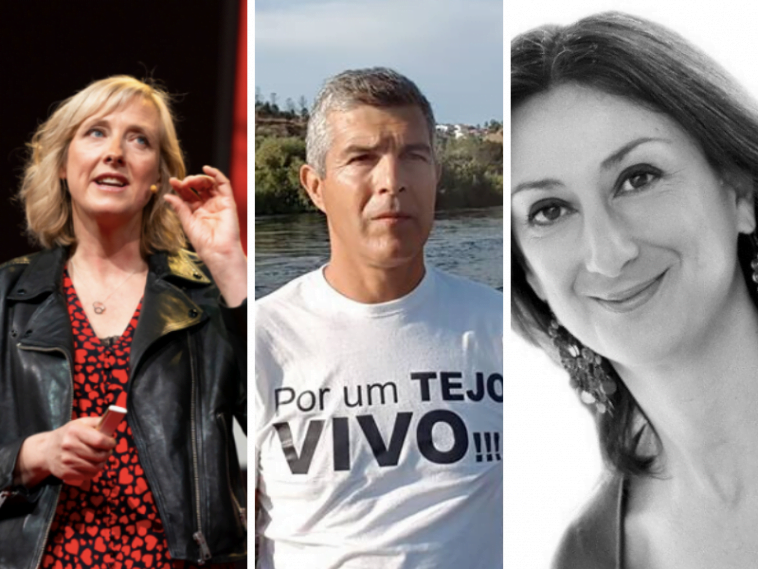
Journalist Carole Cadwalladr, activist Arlindo Marquês and slain journalist Daphne Caruana Galizia have all being victims of SLAPP.

. to European Commissioner Vice President Věra Jourová ahead of proposed new laws. The NGOs want to ensure that EThe organisations include the Daphne Caruana Galizia Foundation, Reporters Without Borders, Greenpeace and Friends of the Earth Europe

Jourová is preparing legislation which will work to deter such lawsuits.

In essence, SLAPPs are used to silence individuals and organisations that play a watchdog role and hold those in positions of power to account,” they wrote. Naming journalists within the European Union affected by SLAPP, the groups called the lawsuits received by assassinated journalist Daphne Caruana Galizia one of “the most striking examples which include journalists”. Maltese reporter Daphne Caruana Galizia had 47 law suits pending against her at the time of her assassination,” they said. (The Maltese government has refused to ban the use of SLAPP suits in Malta, rejecting a motion by the Opposition in parliament).

The Shift, which works with international organisations to fight the threats against journalists, has also itself faced threats of SLAPP suits twice – one by a Russian banker and another by Henley & Partners, Malta’s concessionaire for the cash for passports scheme. The same firm also targeted Caruana Galizia prior to her assassination. In both cases, The Shift did not back down. Journalist Carole Cadwalladr, who exposed the Cambridge Analytica data-harvesting scandal, is also facing SLAPP action, the organisations noted. British co-founder of the Leave.EU campaign Arron Banks is refusing to drop the final two SLAPP lawsuits against the journalist who now started a crowdfunding campaign to cover the massive legal costs.

The organisations said that SLAPP lawsuits are not limited to journalists, but are also targeted at academia, trade unionists, activists, civil society organisations and individual citizens, including human rights defenders. Strong EU anti-SLAPP measures, including legislation and legal funds for victims, at a time when there is no such legislation in force in any EU member state will help protect those who are vulnerable to this type of legal harassment, they said. Such measures would also send a strong political message that the EU is ready to stand up for its citizens and protect fundamental rights,” they continued.

EU legislation must cover everybody affected by SLAPP – 27 NGOs

Sri Lankan Government accused of embarking on process to silence critics

January 22, 2020
img

MENAFN in the Colombo Gazette of 13 January 2020 reports that the new Government in Sri Lanka, headed by President Gotabaya Rajapaksa, has been accused of embarking on a strategy to “militarize and securatize” Sri Lanka unleashing a chilling process of repression targeting critics and human rights defenders. Two human rights groups, the International Truth and Justice Project – Sri Lanka (ITJP) and Journalists for Democracy in Sri Lanka (JDS) said that with the help of activists in Sri Lanka (who cannot be named for their own safety) they have documented 69 incidents of intimidation and threats both before and after the elections which have targetted journalists, human rights defenders, lawyers, plaintiffs, academics and opposition figures. In some cases the threats have been so serious the individuals have fled the country.

The report also illustrates how Gotabaya Rajpaksa has spread his tentacles across the government by appointing many members of his former army regiment to positions of authority and has increasingly militarized the policing and intelligence functions. Those involved in investigating past crimes including fraud have been removed from their posts.

Individuals previously accused of corruption or alleged to be involved in war crimes are now in office again – the ‘deep state’ is out in the open, occupying positions of authority,’ said Bashana Abeywardene of JDS, adding that it’s cast a pall of silence over once outspoken journalists, trades union activists and human rights activists.

On 16 January Amnesty International echoes this in https://www.amnesty.org/en/documents/asa37/1678/2020/en/

Shocking: Aluízio Palmar being sued by his torturer in Brazil

January 21, 2020

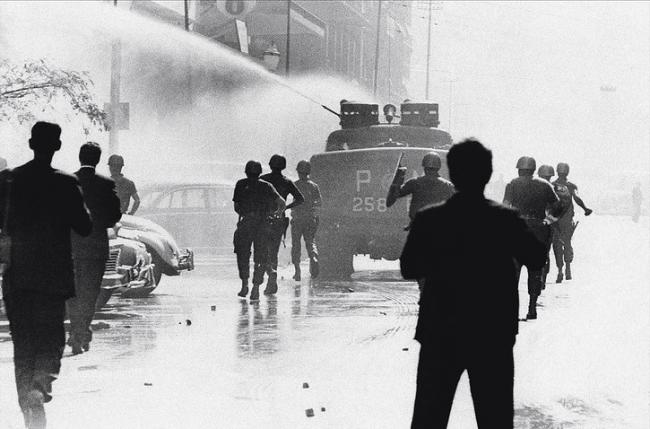
A scene in São Paulo, Brazil, on April 1, 1964, during the military coup against President João Goulart that installed a dictatorship. (Photo via Public Archive of São Paulo State)

A scene in São Paulo, Brazil, on April 1, 1964, during the military coup against President João Goulart that installed a dictatorship. (Photo via Public Archive of São Paulo State)

Jacob Blanc a history professor at the University of Edinburgh – published in Nacia of 20 January 2020 a real ‘horror story’ about Aluízio Palmar, a Brazillian human rights defender and tortutre victim being sued by a dictatorship-era torturer. He puts the blame squarely on the climate created by Bolsonaro.

The physical and psychological torture happened 40 years ago, when Palmar was imprisoned by the military dictatorship that ruled Brazil from 1964 to 1985. But it was only last month, in a climate defined by Brazil’s right-wing president Jair Bolsonaro, that Palmar’s abuser felt emboldened to file the suit….In a cruel twist, it is not a case of the victim seeking justice from his abuser. Instead, Ostrovski—who became a lawyer after his military service—has sued Palmar for defamation of character and “moral damages” over his efforts to bring public attention to Ostrovski’s crimes.

Ostrovski’s human rights abuses have been well-documented, including in the 1984 report on torture titled Brasil: Nunca Mais (Brazil: Never Again) and also in the 2014 National Truth Commission, the largest effort to-date to elucidate the repression of Brazil’s military regime. In these reports, multiple victims testified to Ostrovski’s acts of torture. Despite this evidence, Ostrovski has never stood trial. Nor, for that matter, has anyone in Brazil been held accountable for the cruelty of dictatorship. Unlike in neighboring Chile and Argentina where limited trials did take place, not a single member of the Brazilian military has faced criminal charges.

The lack of legal justice for Brazil’s human rights abusers helps explain the lawsuit against Palmar. Since the 1980s, Palmar has been an ardent human rights activist and journalist. He has co-founded a political newspaper, written a book on the forced disappearances of six Brazilian dissidents, maintained a website that publishes declassified documents, and established the Center for Human Rights and Popular Memory in the city of Foz do Iguaçu. So although there has been a concerted absence of political and institutional justice, Palmar and countless Brazilians like him have fought to keep the memory of the past alive. One of these initiatives took place in 2013 and stands as the crux of the current lawsuit.

As part of the investigations for the National Truth Commission, Palmar and three other torture victims testified in a public hearing. In the aftermath of this testimony, protestors engaged in a political action common in Latin America known as an escrache: to expose Ostrovisky—who had been living in relatively anonymity—the crowd marched to his law office and held a noisy rally to “out” him as a torturer. Palmar himself did not take part in the protest, but he did publicize the event on Facebook. And it is precisely Palmar’s act of sharing the protest on Facebook that Ostroviski is now citing in his claim for legal and financial restitution. But if the event in question took place in 2013, why is the lawsuit only now being brought forth?…The answer ties directly to Brazil’s current political landscape. Since Bolsonaro’s election in October 2018, a long-standing culture of impunity has become even more brazen. An army captain in the final years of the dictatorship, Bolsonaro has built his political career on an unapologetic nostalgia for military rule. Among his many headline-grabbing statements, Bolsonaro invoked the dictatorship’s most notorious torturer in voting to impeach the former president Dilma Rousseff—herself a torture victim—and he has stated that the regime’s murder of some 500 citizens did not go far enough.

“Since 1979, torturers have been protected by a law that is interpreted as impunity for them,” Luciana Silva, a professor of history at the State University of Western Paraná, said. “Now they are sheltered by an irresponsible president, who clearly governs for only a portion of the population. The torturer felt comfortable suing his victim as if nothing were going to happen.”

As both a journalist and a human rights defender, Palmar embodies two of the sectors of civil society most under threat in Bolsonaro’s Brazil. Between early December and early January alone, multiple journalists and media outlets in Brazil have suffered abuse, including two reporters in Rondônia receiving suspended jail time in a defamation case and a radio station’s antennae being destroyed by arson. Bolsonaro himself recently renewed his antagonism against the press: When asked in December about the growing corruption scandal surrounding his family, he deflected by verbally assaulted the journalist: “You look terribly like a homosexual.” These threats contribute to a dangerous reality where since 2010, 22 journalists in Brazil have been killed.

And according to the NGO Frontline Defenders, Brazil is also one of the deadliest places on earth for human rights activists, with a frightening increase in the threats, arrests, and physical attacks on activists, particularly around environmental, Indigenous, and LGBTQI+ rights. In 2019, the number of Indigenous leaders and activists killed reached the highest rate in two decades, and the Bolsonaro regime continues to skirt any responsibility to solve the 2018 assassination of Marielle Franco, a city councilwoman, gay Black feminist, and human rights activist. Bolsonaro also lashed out against the media when evidence emerged of apparent links between his family and Franco’s suspected killers.  [see also: https://humanrightsdefenders.blog/2019/03/13/marielle-franco-one-year-after-her-killing-in-rio/]

Palmar’s situation is symptomatic of how human rights are being inverted in Brazil.  “With Bolsonaro in power, [these abusers] feel free,” Palmar said. “They feel free to go around threatening us, to commit a form of terrorism. And more and more they’re putting Brazilian democracy itself in danger. There is a real enemy, and it’s going to set us back a long time.

https://nacla.org/news/2020/01/20/inversion-human-rights-brazil