Posts Tagged ‘Human Rights Defenders’

Kenyan Star reports Increasing Threats to Human Rights Defenders

January 16, 2013

There have been increased threats on human rights defenders and journalists in the last 6 months. Kenyan Human Rights Commission (KHRC) Director Atsango Chesoni says among those who have been threatened are Maina Kiai, Hassan Omar, Ndungu Wainaina and Makau Mutua. She says the threats are directed at those who have spoken out on issues such as the ICC and integrity.

via INCREASING THREATS ON HUMAN RIGHTS DEFENDERS AND JOURNALISTS | The Star.

About the growing importance of images in the human rights world and the big challenges it poses

January 16, 2013

Yvette Alberdingk Thijm, executive director of the US-based NGO Witness, wrote a post in the Huffington Post of 15 January about this fascinating topic on the occasion of Witness’ 20th anniversary. Here are some quotes before making a more critical comment:

Twenty years ago, WITNESS was created because a world with many cameras — a world “where the eyes of the world are opened to human rights” — did not yet exist, a big bold vision at the time. Today, building on two decades of experience in creating tangible human rights change by exposing the truth through video, we are envisioning the next frontier: a world where video is not only ubiquitous, but has given millions the power to hold human rights abusers accountable, to deliver justice and to transform the human rights landscape.”….”So in 2013 and beyond, we are committed to building “video-for-change” communities, supporting networks of human rights defenders, from communities fighting forced evictions in Brazil to youth in the U.S. campaigning to protect the environment.”

In 2012, Witness launched the Human Rights Channel in partnership with YouTube and Storyful to ensure that important human rights stories are seen and contextualized. “We are committing in 2013 and beyond to take on the systems. The technology companies that run the platforms must create more human rights friendly spaces for all of us. And we decided to focus on the international legal systems to improve the understanding of how to authenticate citizen media to hold perpetrators of abuse accountable. We are working to achieve this vision by partnering and sharing in order to meet the challenge in front of us. We’ll join forces with technology mavens and mobile developers, with courageous human rights defenders worldwide, with brave bloggers, with witnessing citizens, with peer networks and effective organizations.”

Witness has indeed greatly advanced the use of images in the struggle for human rights and its future plans are daunting. What is missing – understandably in a piece that celebrates the achievement of a group’s anniversary – is the wider picture of what the human rights movement is doing with images. From the visualization of human rights defenders (the Martin Ennals Award, Front Line Defenders, Rights Livelihood Awards, Tulip Award, Civil Rights Defenders, HRF to mention just some who regularly make film portraits and/or stream their proceedings), the production of films on HRDs (e.g. True Heroes foundation),  the systematization of access to images (e.g. by HURIDOCS) and the showing of films by a myriad of human rights film festivals (HRW, AI, Movies that Matter, and some 30 others). This modest blog alone has made some 60 references to the use of film images for human rights, many by Witness and the organizations mentioned above.

I mentioning this not because of ‘fairness’ in the sense that others need to be mentioned also, but because the full scope of the challenges ahead needs to be seen and addressed. Human rights images face the same problems as documentation: (1) information overload; (2) finding the most relevant information (even more daunting for images as searching directly on images is still far away); (3) authenticity and veracity; (4) ensuring quantity and quality  of dissemination (what goes ‘viral’ is not necessarily what serves human rights) and (5) protecting of sources and participants (have the persons in the film given informed consent?). And I am sure there are quite a few other important issues.

So when the executive director of Witness states that it excites her “that we, together with so many allies, are taking the challenge for the future head on“, one must hope that it includes all those who can contribute to her vision of a world ” where many, many more citizens and human rights defenders have access to knowledge, skills and tools enabling them to create compelling, trustable videos and to make sure that their video is acted upon and human rights change happens.”

http://www.huffingtonpost.com/witness/human-rights-2013_b_2475221.html

Follow Witness on Twitter: www.twitter.com/witnessorg  see its annual report:  annual report

“One Hour of Human Rights” broadcasts on private channel in Sweden

January 15, 2013

The Stockholm-based NGO Civil Rights Defenders hosts regular morning seminars called “One Hour of Human Rights” at its head office in Stockholm. These seminars are broadcasted live on its Bambuser channel and are also available to be viewed afterwards. The next one will be on 23 January 2013 on Burma/Myanmar: “Strengthened or weakened rights in the advancement of foreign investment?” [Burma/Myanmar is opening up after decades of military dictatorship, isolation and conflict. Rich natural resources and low production costs attract international companies. In the process there is a real risk that human rights may be disregarded. Hear Donna Guest, leading expert on human rights in Burma, speak about the challenges facing investors.]

The latest was on 28 November 2012: Silence over Eurovisionland

Civil Rights Defender’s meeting in BakuAs the Eurovision Song Contest 2012 was disappearing from people’s minds, the Azeri government has put all its efforts on controlling freedom of expression, assembly and association in the country. Rasul Jafarov is Chairman of the Human Rights Club and Campaign Coordinator for Sing for Democracy, spoke about human rights in Azerbaijan. Special guest: Loreen.

Mexico Launches Initiative to Protect Journalists and Human Rights Defenders

January 14, 2013

From the MacArthur Foundation in the USA comes this short, welcome announcement:

Insecurity in Mexico has resulted in mounting pressures against activists and journalists in Mexico, causing some to flee or cease their work for fear of retaliation. In the fall of 2012, Mexico inaugurated a new government initiative to protect human rights defenders and journalists through transparent protection measures. The initiative’s governing body, composed of government officials and civil society representatives, will receive and analyze reports of threats to advocates and journalists, decide which cases are to be granted protection, and oversee effective implementation of its resolutions, which will be mandatory for government agencies. The initiative was supported by MacArthur grantees Red Nacional de Organismos Civiles de Derechos Humanos “Todos los Derechos para Todos” and the Instituto Mexicano de Derechos Humanos y Democracia; leaders of these organizations will serve on an Advisory Council responsible for ensuring the initiative’s protection measures are comprehensive, context-specific, and gender-sensitive.

via Mexico Launches Initiative to Protect Journalists and Human Rights Defenders — MacArthur Foundation.

HRD Eloísa Barrios In Venezuela under threat following the killing of another member of her family

January 12, 2013

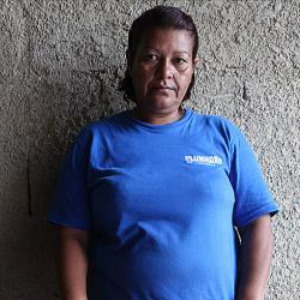
Following the killing, on 15 December 2012, of the ninth member of her family since 1998, the NGO Front Line Defenders is extremely concerned for the safety of human rights defender Eloísa Barrios and her family. Eloísa Barrios has previously submitted petitions to the Inter-American Commission (IACHR) and Court of Human Rights (IACtHR), on 16 March 2004 and 30 December 2005, requesting protection measures for the family as a result of persecution, allegedly by members of the Police of Aragua State.eloisa_barrios_cropped_0

Eloísa Barrios,together with local NGOs, has publicly denounced human rights violations in Aragua State. She has also actively promoted the committees of victims and families of victims in Aragua, and in particular has mobilised mothers of those extrajudicially killed by the state police and accompanied them through the process of filing complaints, the court process and speaking out in social media. Eloísa Barrios has been vocal in speaking out about the Venezuelan State’s failure to effectively protect her family from extrajudicial killings and other human rights violations and has reported an increase in the threats made against her and her family after she denounced the killings before the Inter-American system. She has been threatened by state police officials in retaliation for the constant complaints to the 20th Prosecutor’s Office of the Public Ministry in Aragua concerning her son’s detention on three occasions and ill-treatment in custody. In January 2012 the human rights defender moved from her home as a result of the intimidation.

Since 1998 nine members of the Barrios family have been murdered and several others have been detained and subjected to illegal and arbitrary searches of their homes, suffered threats against their lives and personal integrity, and been forced to move from their place of residence.

The IACHR and the IACtHR have followed the case through all available mechanisms after concluding that Venezuela has violated the rights to life, physical integrity and freedom of several members of the Barrios family, including some minors, however the State has failed to comply with the recommendations of either institution and the Barrios family continue to be at risk.Frontline NEWlogos-1 condensed version - cropped

Short video with summary portraits of the winners of the Tulip award

January 11, 2013

A short documentary about the five winners of the Human Rights Tulip Award, the award of the Dutch government for human rights defenders. The winners are from Honduras, Congo, Iran, China and India. The films were done by the True Heroes Foundation (THF).


Ukrainian activists support Belarusian human rights defenders – Charter97

January 10, 2013


Good to see that Human Rights Defenders from Ukraine support their colleagues in Belarus.

Charter97 reports how Ukrainian human rights activists launched an Internet campaign on behalf of Belarusian colleagues arrested for posting photos with a portrait of Ales Byalyatski on the Internet.

First results appear on the website – activists from different human rights groups send their photos with a portrait of Ales Byalyatski.

Participants of the Second International Human Rights training for the Youth:

Ukrainian activists support Belarusian human rights defenders – Charter97 :: News from Belarus – Belarusian News – Republic of Belarus – Minsk.

LARGEST EVER TRIAL OF HUMAN RIGHTS DEFENDERS IN VIETNAM

January 10, 2013

ARTICLE 19 staff imageAND VIET TAN ON 9 JANUARY REPORT ON THE TRIAL AND CONDEMNATION OF 14 ACTIVISTS IN VIETNAM

  • Ho Duc Hoa (13 years in prison, 5 years house arrest)
  • Dang Xuan Dieu (13 years in prison, 5 years house arrest)
  • Paulus Le Son (13 years in prison, 5 years house arrest)
  • Nguyen Van Duyet (6 years in prison, 4 years house arrest)
  • Nguyen Van Oai (3 years in prison, 2 years house arrest)
  • Ho Van Oanh (3 years in prison, 2 years house arrest)
  • Nguyen Dinh Cuong (4 years in prison, 3 years house arrest)
  • Nguyen Xuan Anh (5 years in prison, 3 years house arrest)
  • Thai Van Dung (5 years in prison, 3 years house arrest)
  • Tran Minh Nhat (4 years in prison, 3 years house arrest)
  • Nong Hung Anh (5 years in prison, 3 years house arrest)
  • Nguyen Dang Vinh Phuc (probation)
  • Nguyen Dang Minh Man (9 years in prison, 3 years house arrest)
  • Dang Ngoc Minh (3 years in prison, 2 years house arrest)

The men and women were convicted of “carrying out activities aimed at overthrowing the people’s administration” under Article 79 of the penal code. The criminal activities the group are said to have engaged in include writing commentary that is critical of the Government and distributing this on the internet, and both participating in and encouraging peaceful protest. ARTICLE 19 believes that these activities should not be considered to be criminal. The Vietnamese authorities have failed to recognise basic human rights and these convictions fail to meet international standards freedom of expression. “Thirteen people [one was given probation – ed] are now behind bars for doing nothing more than expressing legitimate political concerns.  They have been locked away for sharing views about matters of public importance on the internet and for taking part in peaceful demonstrations. These are not things which should be considered criminal. It seems that the real crime here is the appalling abuse of fundamental rights, including the right to freedom of expression, by the state” said Agnes Callamard, Executive Director of ARTICLE 19.

The group, many of them bloggers and citizen journalists, were arrested between August and December 2011 and held for more than a year before standing trial.

Human Rights in Zimbabwe: disappointing compromises, but progress

January 8, 2013

Somewhat different from the Observatory’s report on Zimbabwe I referred to in my post of 26 November 2012, this report by a broad coalition of local NGOs (listed at the end of the document) paints a more mixed picture. The report of the Zimbabwe NGO Human Rights Forum covers the period September to december 2012.

After reflecting on the deadlock in the constitution making process, the report documents the continuing harassment of civil society and political activists that characpreviewterised the period. The operating environment for NGO’s continued to be very challenging. Police arrested and ill-treated peaceful protesters, especially the Women of Zimbabwe Arise activists. Other organisations that faced raids and arrests included the Gays and Lesbians of Zimbabwe, the Counselling Services Unit and many other civil society organisations offering vital services to vulnerable Zimbabweans. Human Rights lawyers were hampered at every turn as they tried to carry out their professional duties and protect Human Rights Defenders.

Fears of the same levels of political violence that characterised the 2008 election period were re-ignited when President Mugabe announced to the UN General Assembly that there would be a constitutional referendum in November 2012 and harmonised elections in March 2013. The news was greeted with great concern. In September 2012, the Zimbabwe Election Support Network stated that it would be logistically impossible to hold a referendum in November and elections in March. They cited disputes in finalising the new constitution, continuing political intimidation and gross inaccuracies in voters’ lists that still name ‘ghost’ electors who have long been dead. The organisation called for a number of important issues to be dealt with first. These include resourcing the Zimbabwe Electoral Commission, revision of the outdated Referendum Act and effecting technical changes to the Electoral Bill as well as updating and cleaning the voter’s roll. This led to the passing into law of the Zimbabwe Human Rights Commission and the Electoral Amendment acts.

Sadly as 2012 drew to a close the Annual ZANU PF Congress rang a warning bell against NGO’s and, as if nothing had ever changed, within days, the police began wantonly raiding and arresting human rights organisations all over again.

Despite the setbacks narrated above, it is our view that Zimbabwe is in a better place today than it was 2008. All the credit is due to the Human Rights Defenders who have tirelessly worked on the ground as well as our regional and international partners and without whose input the country could have descended into lawlessness. The attainment of democracy is a process not an event and indeed Zimbabwe is currently in transition although that transition is fraught with unnecessary detours and compromises. However such compromises, disappointing as they may be in the short run, may aid the transitional process in the long run. A case in point is the limited temporal jurisdiction of the Zimbabwe Human Rights Commission and Zimbabwe’s failure to ratify the Rome Statute.

Ironically a focus on ratification of the Rome Statute for some countries in transition can impede the chances of a peaceful transition. In other words whilst Zimbabwean civil society is absolutely committed to ratification, that long-term necessity should also not derail the process of transition, and this indeed calls for a judicious balancing act. ‘In other words it was important not to allow perfection to become the enemy of the good.’

Download PDF (340.68 KB)

Documentary on Human Rights Defenders on Irish RTÉ One on 8 January

January 7, 2013

Last minute announcement: ‘Lives on the Line’, narrated by Martin Sheen, is to be aired tomorrow on Tuesday, 8th of January on Irish channel RTE1. Written and directed by Nuala Cunningham and narrated by Martin Sheen, this documentary, ‘Lives on the Line’, follows Mary Lawlor, founder of Front Line Defenders, an Irish-based international organisation dedicated to offering practical support to human rights defenders at risk throughout the world, as she goes to Guatemala to visit a number of human rights defenders who are risking their lives every day for their work. One such individual, Dr Yuri Melini, survived an assassination attempt on his life in 2008 but continues to fight for the protection of the environment and the rights of indigenous Mayan communities in Guatemala.

via Documentary On Human Rights Defenders To Air On RTÉ One | The Irish Film & Television Network.