(Photo Credit: Facebook/Girldy Lareche Dorsinvil and Facebook/Daniel Dorsinvil)
Nicole Phillips in RYOT News of 18 February reports that on Saturday 8 February 2014, Daniel Dorsainvil and his wife Girldy Lareche were shot and killed by an unidentified man who fled the scene on a motorcycle. The double homicide left three children without their parents, Read the rest of this entry »
The Geneva Academy of International Humanitarian Law and Human Rights, is organising an expert seminar on The Right to Privacy in the Digital Age, a topic of great importance for human rights defenders. It will take place on Monday 24 February 2014,in room XXI in the Palais des Nations, Geneva. It purpose is to examine the international human rights law framework of the right to privacy, and identify challenges raised by modern communications technologies; foster understanding of how the right to privacy is implemented by governments, as well as addressed by the private sector and civil society; examine the extent to which domestic and extraterritorial surveillance may infringe on an individuals’ right to privacy; and identify ways forward to ensure the protection and promotion of the right to privacy.
This is a long but excellent to piece to read over the weekend by Stefania Kulaeva of the remarkable NGO Memorial in Russia:
AT THE TIME of the Olympic Winter Games in Sochi it is important to remember the human rights abuse of minorities and their defenders in Russia. This is a question for gay people but also for Roma, immigrant workers and members of other ethnic communities.Read the rest of this entry »
New York based Human Rights First is now accepting nominations for the 2014 Roger N. Baldwin Medal of Liberty which recognizes an individual or organization who demonstrates exceptional commitment to advancing human rights. Named in honor of the principal founder of the American Civil Liberties Union and the International League for Human Rights, the Roger N. Baldwin Medal of Liberty Award was established in 1989. This year marks the 25th anniversary of the award and it will focus areas such ashuman trafficking, religious freedom, LGBT rights, refugee protection, and defense of civil society. The winner will be selected by a jury and will receive a $25,000 prize. The award will be presented at a ceremony during Human Rights First’s annual Human Rights Summit in Washington, D.C. in December 2014. Nominations are due on March 15, 2014.
More information on this award and past awardees can be found at: <http://www.humanrightsfirst.org/our-work/human-rights-defenders/baldwin-award> .
The Geneva-based International Service for Human Rights organises an important side event during the upcoming UN Human Rights Council. Under the title “Creating a safe and enabling environment for human rights defenders” the event will take place on 11 March 2014, from 12h00 – 14h00 in the Palais des Nations, Geneva (exact room to be determined later). Those who cannot attend in person, can follow the event through a live webcast and ask questions or share comments via Twitter using #HRDs before and during the event. Photos and further details will also be available on Facebook following the event, Read the rest of this entry »
As this blog is very fond of human rights films, I am copying the programme almost in full. Morever, one the five themes in London this year is: Human Rights Defenders!
The 18th edition of the Human Rights Watch Film Festival in London will be presented from 18 to 28 March, 2014, with a programme of 20 award-winning documentary and feature films. The festival will take place at the Curzon Mayfair, Curzon Soho, Ritzy Brixton and for the first time at the Barbican cinemas.
This year’s programme includes ten UK premieres and three exclusive previews organised around five themes:
Armed Conflict and the Arab Spring;
Human Rights Defenders, Icons and Villains;
Lesbian, Gay, Bisexual and Transgender (LGBT) Rights;
Migrants’ Rights; and
Women’s Rights and Children’s Rights.
“This year’s programme demonstrates the risks filmmakers take to capture the stories behind the headlines, and our centrepiece film, the E-Team, reveals the tenacity and heroic efforts of human rights activists to bring war crimes to the world’s attention,” said John Biaggi, film festival director at Human Rights Watch. Read the rest of this entry »
expressed its concern that the whereabouts of human rights defender and lawyer Roshdy El Sheikh Rasheed remain unknown ten days after his disappearance from the city of Tadmor on 31 January 2014. Mr Roshdy El Sheikh Rasheed is the vice-president of the Arab Organization for Human Rights (AOHR) in Syria, an international organisation with UN consultative status whose objective is to promote adherence to human rights principles in Arab states. The human rights defender was taken from his home to an unknown location by plain-clothes individuals on 31 January 2014. As Tadmor is under control of government forces, it is considered very likely that state actors are involved in the disappearance. Roshdy El Sheikh Rasheed fled from Homs to Tadmur in 2013 in order to seek medical attention for an injury he sustained whilst documenting human rights violations during armed battles in Homs. [The human rights defender had been previously detained twice by authorities in Homs.]
The Syrian conflict has been marked by the targeting and abductions of other human rights defenders, to mention just: Razan Zaitouna, Wael Hamada, Nazem Hamaadi and Samira Khalil, Khalil Matouk (or Matouq).
(Martha Díaz at the 2013 FLD Platform for Human Rights Defenders)
Death threats abound again in Colombia:
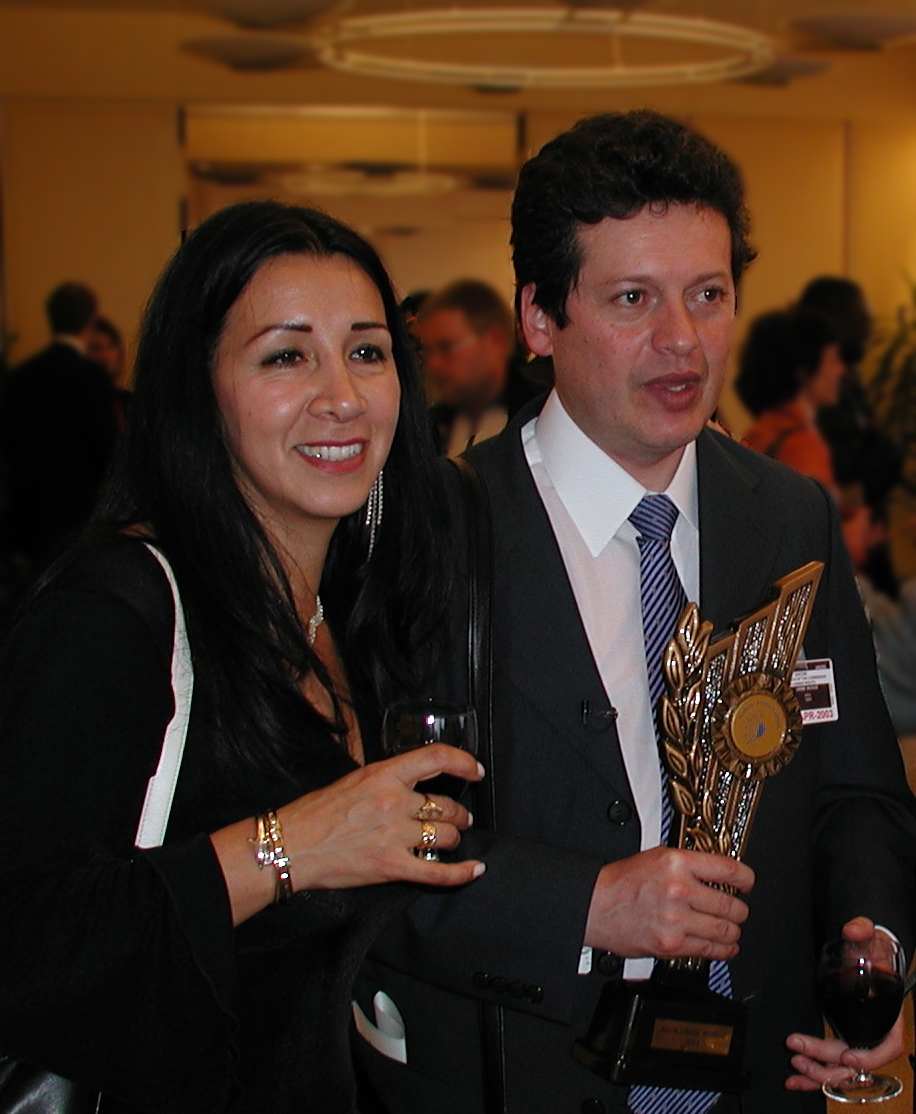
Front Line Defenders report that on 9 February 2014, human rights defender Martha Díaz received the fifth text message to declare her a military target and threaten her with death within three days. All five threats have come from the same phone number. Martha Díaz is the director and legal representative of the Asociación de Familiares Unidas por un Solo Dolor (Association of Relatives United by a Single Sorrow – AFUSODO), an organisation for family members of victims of extrajudicial killings, particularly false positives. She is also the technical secretary of the Atlantic chapter of MOVICE (National Movement of Victims of the State).On Wednesday 12 February, the President of Parliamentarians for Global Action Ross Robertson has expressed his concern and condemnation of the death threats against a well-known Colombian parliamentarian, Ivan Cepeda is a well-respected Colombian MP and human rights defender as well as against Bogota Mayor Gustavo Petro and human rights defender Alirio Uribe Muñoz (the latter is the 2003 Laureate of the Martin Ennals Award for Human Rights Defenders, portrayed here with his wife in 2003).
It sounds almost like a joke but it truly happened. On 9 February 2014 Ukrainian border officials barred a Russian human rights defender from entering the country, according to Human Rights Watch: Andrei Yurov, a member of Russia’s presidential human rights council and the Head of its permanent commission on human rights outside Russia, was deported to Russia upon his arrival at Borispyl airport in Kiev. Yurov was to meet in Kiev with Council of Europe Human Rights Commissioner Nils Muiznieks, and to work within the International Human Rights Defenders’ Group on the Situation in Ukraine, which was founded on December 1, 2013, in response to the November 30 police violence against peaceful protesters in Kiev.
“Yurov’s expulsion is an unprecedented and wholly regrettable step,” said Rachel Denber, deputy Europe and Central Asia director at Human Rights Watch. “Instead of driving out human rights defenders the Ukrainian government should be open to scrutiny of its human rights record during this crisis.”
Human rights of womenin Afghanistan were at the forefront of the international agenda after the fall of the Taliban in 2001. Thirteen years later, nine Afghan women human rights defenders working at the front line reflect on the progress that has been made over the last years, as well as on the risks they have faced because of their work. Today, new challenges arise, as the lack of commitment at national and international level endangers past achievements and the continuation of progress in the near future. Dublin-based Frontline Defenders published the following video in 2 parts:
 (Photo Credit: Facebook/Girldy Lareche Dorsinvil and Facebook/Daniel Dorsinvil)