I am sharing with you an important new report on the protection and security of human rights defenders entitled, “Keeping Defenders Safe: A Call to Donor Action”. The report was released this summer but did not get the attention it deserves. The report reviews existing responses to the security challenges that human rights defenders face, with a focus on the grant-makers who support work aimed at strengthening HRD protection and security. The author, Borislav Petranov, conducted more than 150 interviews with defenders and related stakeholders around the world, seeking to capture the viewpoints of activists on the ground. Monette Zard prepared it for publication. The report’s conclusions suggest changes in focus and approach with recommendations that donors can implement individually as well as collectively to enhance the protection and security of HRDs. While it is not a roadmap or comprehensive analysis of protection mechanisms, it does recommend considered reflection on current policies and practices in the field: Read the rest of this entry »
Posts Tagged ‘Human Rights Defenders’
Important Report: “Keeping Defenders Safe: A Call to Donor Action”
November 8, 2014Cambodian MEA Laureate 2012 Luon Sovath charged with incitement
November 5, 2014
 AFP)
[Under the Penal Code, incitement is vaguely defined in article 495 as directly provoking the commission of a crime or an act that creates “serious turmoil in society” through public speech, writings or drawings, or audio-visual telecommunication. Luon Sovath faces up to five years in prison if convicted, while Sourn Serey Ratha faces a total maximum punishment of 15 years.]
True Heroes Films in Geneva: what it did in 2014 until now
November 3, 2014
In mid 2013 True Heroes Films (THF) moved to Geneva to set up its office there. Now the NGO has produced its first newsletter for 2014 showing a remarkable range of activities for HRDs, NGOs and others:
Swiss Guidelines on Human Rights Defenders analyzed by civil society
November 2, 2014In December 2013, the Swiss Government became one of the few countries to issue specific Guidelines on the Protection of Human Rights Defenders (http://www.humanrights.ch/en/switzerland/foreign-affairs/human-rights-foreign-policy/multilateral-policy/switzerland-guidelines-protection-human-rights-defenders). As in the case of all guidelines, the real test is in the implementation and on 12 June 2014, the Centre for Peacebuilding (KOFF) at Swisspeace organized a conference on the protection of HRDs, which brought together HRDs from Guatemala, Honduras, Serbia, Russia and Sri Lanka, Swiss government officials and representatives of Swiss civil society in order to give consideration to the different challenges that exist when it comes to HRD protection and, in particular, implementation of the Swiss guidelines.
12 November 2014: 5th Theo van Boven lecture by Hina Jilani
November 1, 2014
Theo van Boven 2011
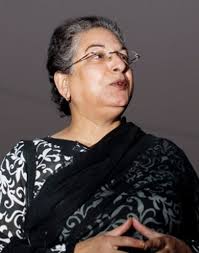
On 12 November 2014 the fifth annual Theo van Boven Lecture will be delivered by Mrs. Hina Jilani, in the University of Maastricht (16.00 – 18.30). The lecture is in honour of Prof. Theo van Boven, one of the founders of the Maastricht Centre for Human Rights and the most crucial human right director in the UN in 1977-1982 when the first special procedures were enacted. [https://thoolen.wordpress.com/tag/theo-van-boven/]
Mrs. Jilani is an internationally known human rights defender from Pakistan. She created Pakistan’s first all-women law firm and co-founded Pakistan’s first legal aid centre. She also founded the Human Rights Commission of Pakistan and Pakistan’s Women Action Forum, a prominent women’s rights group whose campaigns have been at the heart of the democracy movement in the country. She was the first Special Representative of the United Nations Secretary-General on Human Rights Defenders from 2000 to 2008. Since 2013 she is a member of The Elders. For more information on her work: http://www.maastrichtuniversity.nl/web/file?uuid=23a2b13c-1422-4e13-8df8-4209bb39e791&owner=20b720a7-b4e5-478d-a68e-9b2019fc1761. The lecture is open to the public.
Bangladesh Human Rights Defender Adilur accorded more awards
October 29, 2014
Bangladesh human rights defender Adilur Rahman Khan, of the human rights organisation Odhikar, has won the 2014 International Bar Association (IBA) Human Rights Award.
Human Rights First annual summit on 9-10 December 2014
October 28, 2014
 organises on 9-10 December 2014 its annual Human Rights Forum. It takes place in the Newseum in Washington DC, USA. Several panels are of direct relevance to human rights defenders, such as:
- Show Them the Money: What are the Lifelines for Civil Society in a Sea of Restrictions? More and more governments – and not only authoritarian ones – are finding ways to close the space for independent civil society groups, especially those critical of government policies. As part of this effort, governments have developed sophisticated methods to undermine the credibility of international –especially American – support for local human rights and democracy organizations. Russia and Egypt are leading the way; each has passed laws restricting access by independent civil society groups to foreign funding, which is essential to their existence. How should the U.S. government and other donors respond to these coordinated efforts to restrict human rights and democracy activists? Given the legal landscape, is foreign funding for NGOs even possible anymore?
- Progress and Backlash in the Global Struggle for LGBT Equality Human rights advocates often describe achieving full equality for LGBT people as the next chapter in the struggle for universal human rights. For many years, this movement appeared to be one of steady gains, but we are now facing a moment of profound backlash. LGBT citizens of Russia, India, and Nigeria have seen a sharp curtailment of their rights. In many cases, this is part of a larger attack on civil society, marked by laws and policies aimed at limiting freedom of expression, freedom of association, and other basic rights. The countries in question may see themselves as in conflict with the West and its values; support for such laws is often driven by anti-Western sentiment. How can the United States respond to this development in ways that will improve the lives of LGBT people worldwide?
- NGOs as the Enemy Within? Human rights defenders face particular challenges when their societies mobilize for war. In such circumstances, questioning government policies can be characterized as disloyalty or siding with the enemy. Human rights defenders become targets of defamation, persecution, and violence. The universal values they are seeking to uphold are themselves called into question and undermined. Does the U.S. government have a role in preserving the rights of activists espousing what may be deeply unpopular points of view in times of public fear and conflict?
For more information and to enroll: http://www.humanrightsfirst.org/event/human-rights-summit
The Anna Lindh Lecture 2014 focused on human rights defenders
October 27, 2014On 23 October former UN Rapporteur on Human Rights Defenders, Margaret Sekaggya, gave the Anna Lindh Lecture 2014 under the title: “Providing a safe and enabling environment for Human Rights Defenders: Critical factors to Consider”. This was done in the context of the 30th anniversary of the Raoul Wallenberg Institute in Lund, Sweden.
The full text is available: http://rwi.lu.se/wp-content/uploads/2014/10/AL-Sekaggya-2014.pdf

