Posts Tagged ‘Human Rights and Liberties’

Human rights defenders are not enemies of the state, says national conference in Dhaka

October 3, 2013

The Chairman of the National Human Rights Commission (NHRC) in Bangladesh, a member of the Law Commission, and several rights activists and academics said on Saturday 28 september that the state should not treat human rights defenders as its enemy. They also expressed concern over the use of several laws against human rights defenders Read the rest of this entry »

In run-up to meeting with OSCE observers authorities of Nakhichevan threaten local human rights defenders with physical reprisal

October 2, 2013

In the context of reprisals here is a report from Panorama concerning Azerbaijan, admittedly from an Armenian news source: Read the rest of this entry »

Kazakhstan: Court upholds psychiatric confinement of human rights lawyer Zinaida Mukhortova

October 1, 2013

On 27 September 2013, Karaganda’s regional court of Karaganda confirmed the decision of the Balkhash Court to approve the forced psychiatric confinement of human rights defender and lawyer Zinaida Mukhortova on which this blog reported earlier.  Read the rest of this entry »

Trial of Vietnamese human rights defender Le Quoc Quan set for 2 October

September 27, 2013

In five days from now, on 2 October 2013, the People’s Court in Hanoi, Viet Nam, will hear the case of human rights defender Le Quoc Quan, who has been held in detention since 27 December 2012 and whose trial was postponed on 8 July 2013. Le Quoc Quan is a prominent lawyer, blogger and human rights defender. He has a long history of being targeted by the Vietnamese authorities in retaliation for his work. As a lawyer, he represented many victims of human rights violations, but was disbarred in 2007 on suspicion of engaging in “activities to overthrow the regime”. Le Quoc Quan also runs a blog http://lequocquan.blogspot.ie/  where he writes about various issues including civil rights, political pluralism and religious freedom. On 27 December 2012, Le Quoc Quan was arrested on trumped up allegations of tax evasion, was held incommunicado for the first two months and spent fifteen days on hunger strike. Currently the human rights defender remains imprisoned awaiting trial.Frontline NEWlogo-2 full version - cropped

More information, please see update from 12 July 2013 http://www.frontlinedefenders.org/node/23255


For HRDs digital surveillance can mark the difference between life and death says Mary Lawlor

September 22, 2013

This blog has tried to pay regularly attention to the crucial issue of electronic security and referred to the different proposal that aim to redress the situation in favour of human rights defenders. In a column of Friday 20 September the Director of Front Line, Mary Lawlor, writes about the digital security programme “Security in a Box” which her organisation and the Tactical Technology collective started some years ago. For Sunday reading here the whole text:

Mary Lawlor

ARE YOU AWARE that the recording device on your smartphone can be activated remotely and record sensitive conversations? And that the webcam on your PC can film inside your office without you knowing?

For most people, debates about the snooping NSA and GCHQ are little more than great material for a chat down the pub, but for human rights defenders around the world, digital security is synonymous with personal security. For a gay rights campaigner in Honduras or a trade unionist in Colombia, safety from interception of communications or seizure of data can be the difference between freedom or imprisonment, life or death.

Digital surveillance has been described as “connecting the boot to the brain of the repressive regime”. Governments are developing the capacity to manipulate, monitor and subvert electronic information. Surveillance and censorship is growing and the lack of security for digitally stored or communicated information is becoming a major problem for human rights defenders in many countries.

By hacking into the computer system of a human rights organisation, governments or hostile hackers can access sensitive information, including the details of the organisation’s members and supporters. They can also install spyware or viruses to monitor or disrupt the work of the organisation.

Dangerous in the wrong hands

One of the best-documented cyber attacks on an NGO was the hacking of the Political Prisoner’s Solidarity Committee, a Colombian human rights organisation. The organisation’s email account was hacked and used to send malicious viruses and spam messages, and all employee work email accounts were deleted.

The hacked email account was also used to send threatening emails to a member of the organisation based in a different region. Their offices were broken into and the hard disk of one computer was stolen and replaced with a faulty one. Spyware was found on the computer used to maintain the organisation’s website; this recorded all the information on the computer and sent it via the internet to an unknown location. This cyber attack also coincided with a wave of anonymous phone calls and direct threats to staff members.

In this digital age how can human rights defenders make sure their online communications and their data are safe and that they are not putting themselves or colleagues in danger?

This is where Front Line Defenders is able to give practical help. With a security grant from Front Line Defenders, the Political Prisoner’s Solidarity Committee installed a new secured server and router, and upgraded their whole computer security system. We also organised a workshop on digital security for all the members of their organisation.

This was useful for a seriously at-risk organisation. But there are effective steps all of us can take to stay safe. Most of us have a computer or laptop and most have a password. That password is probably a cat’s name or a daughter’s name – which can be broken in about 10 seconds. Simply by changing your password to a longer one which combines upper case, lower case and digits makes the password virtually unbreakable and is a simple, first step to improve your online security.

“Back doors”

Recent revelations have shown that even encrypted communications that were previously thought to be secure have been built with deliberately included “back doors”, so that organisations like the NSA and GCHQ can access information that people think is secret. One protection against these built-in weaknesses is to use open-source software – this is software not provided by a big-name company like Microsoft or Apple, but one in which the workings of the software are made available for all to see, so that any such intended weakness in the encryption would be spotted and exposed by the global community of digital security experts.

Even if authorities or malicious hackers can’t see what you’re communicating, it can still be possible for them to see when you communicate and with whom. The Tactical Technology Collective has said, “If you use a computer, surf the internet, text your friends via a mobile phone or shop online – you leave a digital shadow.” If you want to find out the size of your digital shadow, and more importantly want to know what you can do about it, visit their award-winning website myshadow.org (now: https://privacy.net/analyzer/)

.

Security in-a-box (available onlineis a collaborative effort of the Tactical Technology collective and Front Line Defenders. It was created to meet the digital security and privacy needs of advocates and human rights defenders, but can also be used by members of the public.Security in-a-box includes a how-to booklet  which addresses a number of important digital security issues.

It also provides a collection of Hands-on Guides, each of which includes a particular freeware or open source software tool, as well as instructions on how you can use that tool to secure your computer, protect your information or maintain the privacy of your internet communication.

A clear understanding of the risks

When we started our Digital Security Programme we only ran one or two trainings per year. Now we are organising workshops on digital security all over the world, sometimes in secret locations for human rights defenders from countries where even to use the word “encryption” in an email would bring you under the eagle eye of the security services.

Electronic communication enables human rights defenders to network and cooperate as never before but survival depends on having a clear understanding of the risks involved and the need for a well thought-out digital security strategy.
Column: For some people, digital surveillance can mark the difference between life and death.

American Bar Association Writes to Nigerian Justice Minister about HRDs

September 21, 2013

In the Guardian of Nigeria of 21 September, Joseph Okoghenun writes that the American Bar Association [ABA] yesterday expressed their disappointments on the inability of the Nigerian Government to enforce rule of law and respect the rights of Nigerians, especially of those defending human rights in the country.  In letter specifically addressed to the Attorney General of the Federation and Minister of Justice, Mr. Mohammed Bello Adoke, the Center for Human Rights of the ABA, said it was deeply  “concerned at recent events in Nigeria that threaten the rights and activities of human rights defenders and undermine the rule of law.” The letter cited several reports it received from Nigerian NGO Civil Liberties Organisation [CLO] about conduct that “reflect a pattern of ongoing human rights abuses by security forces in Nigeria, including extrajudicial killings, torture, arbitrary arrests, and extortion”. The ABA strongly but respectfully urged the minister of justice  to look into this matter.

via American Lawyers Write Justice Minister, Seek Enforcement Of Human Rights.


Challenges for Human Rights Education at side event Council on 25 September

September 19, 2013

The World association for the School as an Instrument of Peace & the International Training Centre for Human Rights and Peace Teaching organise on 25 SEPTEMBER, from 10.00 – 12.00 in ROOM XXIV – PALAIS DES NATIONS, Geneva a side event:
Making Human Rights a Reality : Challenges for Human Rights Education“.
Speakers include:
Ms Rebiya Kadeer, President of the World Uyghur Congress [who is the laureate of the HRW “Human Rights Defenders Award” in 2000 as well as the Norwegian Rafto Award in 2004. Former member of  the Political Consultative Congress of China (1992 -1997).
Mr. Emmanuel Decaux, Professor, University of Paris II, Member of the UN Committee on Forced Disappearances
Ms. Amina Lemrini, President of the High Council for Audiovisual Communication, Morocco

Ms. Nadira Eshmatova, Youth Human Rights Group, Kyrgyzstan

Ms. Géraldine Puig, 
 Education program on citizenship and human rights, Ministry of public education, Republic and Canton of Geneva.

Moderator : Ms. Stefanie Rinaldi, University of Teacher Education, Lucerne

if you are interested contact:  Cifedhop cifedhopATmail-box.ch.

Good Breaking News: Iranian lawyer Nasrin Sotoudeh among freed political prisoners

September 18, 2013

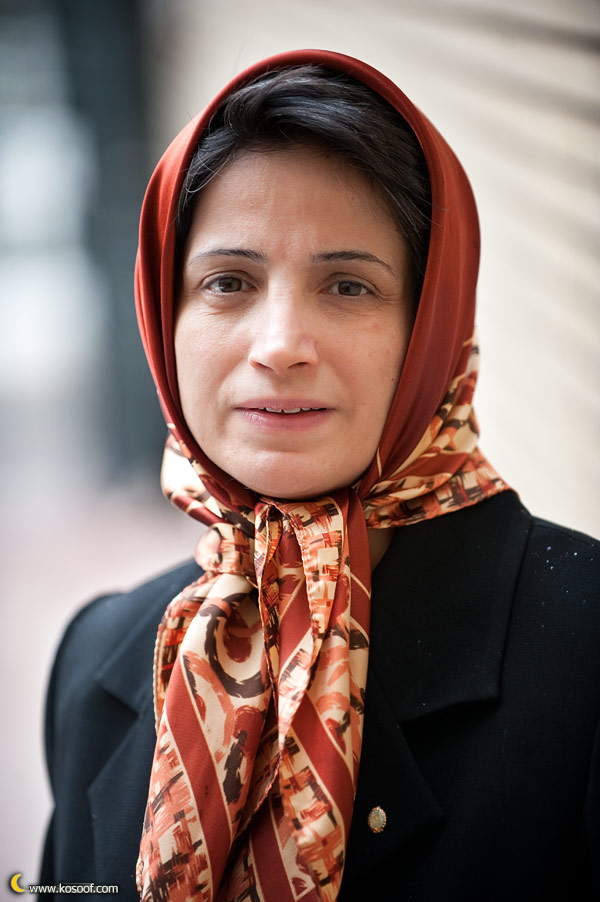
Today, 18 September 2013, the BBC and other news media brought the good news that Iran lawyer Nasrin Sotoudeh is among the freed political prisoners which Iran is reported to have freed (at least eight). Nasrin Sotoudeh was arrested in 2010 and jailed for six years on charges of acting against national security. She was one of the three Final Nominees of the MEA in 2012 and winner of the European Parliament’s Sakharov award.NASRIN_SOTOUDEH_PORTRAIT

The release of the political prisoners comes just days before Iran’s new President Hassan Rouhani visits New York for the UN General Assembly. In his election campaign, he promised to free political prisoners.

via BBC News – Iran lawyer Nasrin Sotoudeh among freed political prisoners.


Kyrgyzstan follows bad example set by Russia: foreign agents

September 13, 2013

On 6 September 2013 members of the Kyrgyzstan‘s Parliament Mr Tursunbay Bakir Uulu and Mr Madaliev introduced a draft law on “non-commercial organisations fulfilling the role of foreign agent” for public discussion.  The text of the draft law is inspired by [the ‘success’] similar provisions adopted in the Russian Federation in 2012.   Read the rest of this entry »

Development of Amnesty’s Panic Button App

September 11, 2013

Having last week referred to 3 different (and competing?) techno initiatives to increase the security of HRDs, i would be amiss not to note the post of 11 september  2013 by Tanya O’Caroll on the AI blog concerning  the development of the Panic button. Over the next couple of months, she will be keeping you posted about the Panic Button. If you want to join the community of people working on Panic Button, please leave a comment on the site mentioned below or email panicbutton@amnesty.org.

via Inside the development of Amnesty’s new Panic Button App | Amnestys global human rights blog.