Bernice Chan wrote in the South China Morning Post on 8 May 2019 “They’re not music videos’: YouTube human rights news channel Just Asia struggles to make a difference”.
I have often referred to ‘Just Asia’, the weekly YouTube news programme from the Hong Kong-based NGO Asian Human Rights Commission that aims to broadcast news of regional human rights abuses to a global audience. It is the only regular ‘broadcast’ of its kind.
As founding video producer of Just Asia, Amila Sampath, 30, gathers film clips and news snippets from around the region. His sources include activists, lawyers and NGOs, and the show, uploaded on Fridays, is anchored by university student volunteers. Sampath has produced more than 250 episodes of Just Asia, but getting audiences to take an interest in the protection and well-being of fellow human beings has not been easy. He is disappointed the show is not more widely viewed. “It is difficult to get people to watch human rights stories,” Sampath says. “They’re not music videos, but I just have to keep trying.”
Sampath’s aim is to broadcast regional human rights abuses to a global audience. Photo: Dickson Lee
Just Asia he puts together with a skeletal crew comprising himself as producer, cameraman and director, and colleague Meryam Dabhoiwala, who writes the scripts and edits. Their studio is a simple office in Ho Man Tin, Kowloon, with a green screen background. Each week he compiles five regional stories and enlists the help of university students to shoot the episodes and edit the videos.
Hong Kong student volunteer Alexandra Leung presents an episode of Just Asia, a weekly human rights news programme on YouTube produced by the Hong Kong-based Asian Human Rights Commission.
One volunteer is Alexandra Leung Chui-yan, 22, who will be graduating from the School of Communication at Hong Kong Baptist University this month. On August 17, 2017, Leung was in Barcelona, walking along La Rambla boulevard, when a car ploughed into a crowd. The terrorist attack killed 13 people and injured more than 130, including Leung. In the ensuing chaos she was trampled, resulting in a broken toe and fractured knees. Leung has since undergone surgery, but is still not completely healed. A few months after the incident she began volunteering for Just Asia as a trainee, learning how to read the news in front of a camera and how to pronounce Southeast Asian names.
Around 20 activists staged a silent protest at the City Hall foyer, just before the start of a concert titled “Songs of Persia.” Venue staff did not intervene, as the protesters revealed black t-shirts stating “Free Nasrin Sotoudeh” The event was presented by the Iranian Consulate as part of a week-long cultural celebration.
“We revealed our t-shirts in a quiet, dignified way, in the lobby… I would say everyone who went into the concert saw our protest,” one of the organisers – who did not wish to be named – told HKFP. She added that concertgoers took photos, and many already were familiar with Sotoudeh’s plight. One attendee told the group that Sotoudeh was his lawyer.
Tibetans in Sydney celebrate Nobel Peace Prize Day and Int’l Human Rights Day.
Hundreds of Tibetans and supporters across New South Wales gathered at Forestville to celebrate the 29th anniversary of the conferment of Noble Peace Prize to the spiritual leader of Tibet, His Holiness the 14th Dalai Lama….Speakers also reminded that 10 December is international human rights day. This must provide the opportunity for us to recall the continuing violation of human rights in Tibet.
2. In the Hong Kong Free Press of 16 December Kong Tsung-gan lists the best human rights books, October to December 2018: The 14 books are set in Argentina, China, Guatemala, India, Israel, Mexico, Niger, Northern Ireland, Palestine (3), Russia, South Sudan, the United States (4), and globally. They deal with the following human rights issues: activism and nonviolent struggle, arbitrary detention, censorship and propaganda, children’s rights, rights of civilians in conflict, corruption, democracy and dictatorship, right to education, enforced disappearance, equality, extrajudicial killings, genocide, human rights defenders, indigenous peoples’ rights, labour rights, land rights, the right to life, nonviolent protest, prisoners’ rights, racism and discrimination, the right of self-determination, sexual violence and harassment, slavery, torture, war crimes, and women’s rights.
3. “For People of Faith, 70-Year-Old Human Rights Document Holds Special Meaning“. Under this title Nelu Burcea, the Seventh-day Adventist Church’s liaison to the United Nations, reflects that “seventy years ago this week, the international community entered into a groundbreaking agreement to uphold a set of shared principles and values that would guide humanity as it moved into the future. …….For me, as a person of faith, Article 18 of the Declaration holds special significance……Although Article 18 deals specifically with religious freedom, it is not an isolated, stand-alone human right. It is inextricably bound up with many other fundamental freedoms, such as the freedom of assembly, freedom of thought, freedom of speech, and so on. As a Seventh-day Adventist I would suggest that there is an earlier, even more fundamental expression of Article 18. As I read the Bible, I learn that we are all born free and equal; that every human being is endowed with the spark of Divine by his or her Creator; that every man, woman, and child stands equal before God in value and dignity. Even more, Scripture teaches us that every person has the personal right—indeed, the obligation—to choose freely whether or not to worship God and follow His will.”
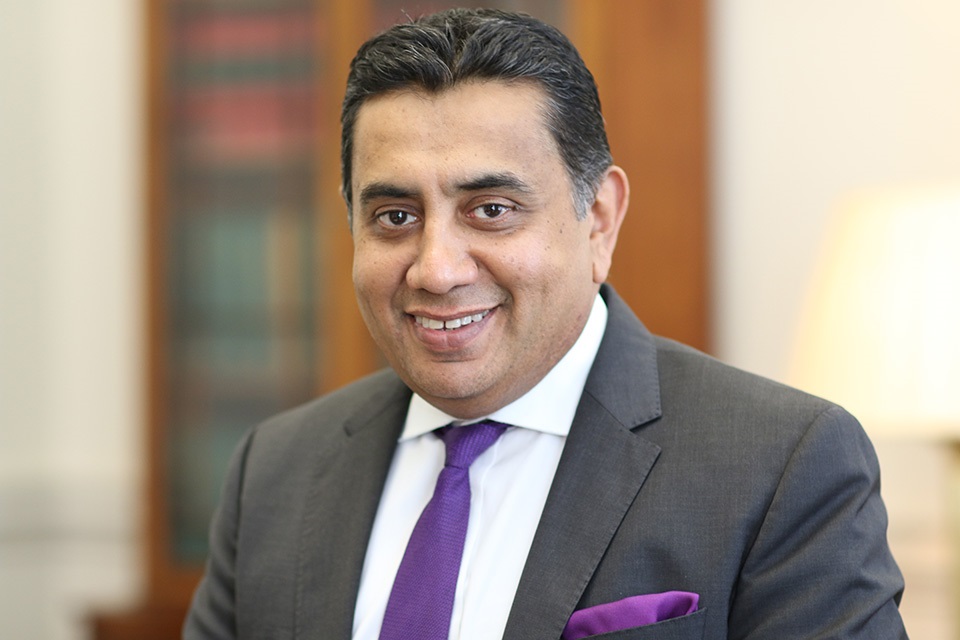
4. Lord Ahmad of Wimbledon delivered a speech at the Amnesty International Annual Human Rights Day Reception on 12 December 2018. Through the link below you can get the transcript of the speech, exactly as it was delivered.
….The area of Human Rights is something I believe in very passionately and take very seriously, and therefore not withstanding other events – and there are a few others going on today – it is important that we show our commitment, not just through events like this, but through collaborative and collective action on this important agenda. It should not matter who you are, where you are, what country, what age, what gender, what faith, what creed, what colour – no matter who you are, wherever you are our collective responsibility on this important agenda is clear. Therefore, I am delighted to support, amongst other human rights defender organisations, the sterling work done by Amnesty International around the world, and Kate, thank you for this opportunity to allow me to come and share some of my thoughts…
Threats to Human Rights Defenders
Indeed, as we look at 70 years on from the Human Rights declaration, there are 300 Human Rights Defenders have been murdered this year alone. Why? For defending the human rights of others – that is crucial. That is 300 families shattered. 300 communities shocked and living in fear. And many thousands of ordinary people robbed of a brave and committed advocates, close friends and family. For every one of those killed, there are many, many more thousands locked up, attacked and threatened. …These incredibly courageous people ..put themselves at risk to defend the rights that matter to us all, and that is why, here at the Foreign and Commonwealth Office, I and others that work with me make it a priority that we put human rights and Human Rights Defenders at the heart of our work. We learn from them. We not only advocate for them, we seek to also protect and strengthen the work they do – we must continue to strengthen the work we do in this area…. Over the past year, I have done this on many occasions during overseas visits, including in Iraq, Algeria, Egypt and Indonesia, to name but a few. It is so important, as we are defending the right to Freedom of Religion or Belief, we should not do so alone; it is the responsibility of us collectively, to promote and respect those who hold different religious beliefs, or no religious beliefs whatsoever, but collectively stand up for their right to do just that – not just internationally, but when we see challenges at home, we should stand up. As we approach Christmas in a year of goodwill – good to remember at this particular time. It is important that we do, and it is an area that I have been looking at very closely, and as we look at Freedom of Religion or Belief, we also recognise that there are many people, because of their Christian faith around the world who won’t be able to celebrate, who will not be able to have the family dinners, who will not be able to go to church to worship in the way they wish to do – a poignant moment to reflect on.
There Are No Dead Here is a deep dive into key human rights cases that exposed the murderous nexus between right-wing paramilitaries, drug lords, and Colombia’s military and political establishment. Through dogged reporting, in part as a Human Rights Watch researcher, McFarland unravels the links that led to the murders of Colombian rights investigators by powerful interests that reached as high as military leadership and even the Colombian presidency.
First awarded in 2008, the Méndez Human Rights Book Award honors the best current, fiction or non-fiction book published in English on human rights, democracy, and social justice in contemporary Latin America. The books are evaluated by a panel of expert judges drawn from academia, journalism, and public policy circles.
6. The Human Rights Centre held an event in Burao to observe Human Rights Day. Burao is the second largest city in Somaliland and is located in the eastern part of the country. Regional and district administration officials including the regional coordinator of ministries of Justice, Employment and Social Affairs, Religious Affairs, and Burao district officials attended the celebration with community members, IDPs, youth activist and civil society activists. ‘We warmly welcome the celebration. It is the first time such event is held in our city, Burao. We are thanking Human Rights Centre for coming to here,’ the secretary of Burao local government, Osman Shiekh, said. ‘Somaliland constitution upholds human rights. We have to all work toward its realization,…..At the same time, HRC celebrated with the law students of the University of Hargeisa. Human rights defenders and activists encouraged the students to advocate for human rights and raise awareness. Students, activists, academics and other members of the public attended the event…..This year also marks the 20-year anniversary of the United Nations Declaration on Human Rights Defenders. Human rights defenders endure tremendous pressure and intimidations. The marking will elevate their work and will call on the government of Somaliland to respect the work of human rights defenders as recognized in the United Nations Declaration on Human Rights Defenders.
On 8 May 2018 a new NGO was launched: the “International Human Rights Council – Hong Kong” (IHRC-HK) based in Hong Kong . The geographical gambit is not totally clear but the press release speaks of the “active participation of the dedicated human rights defenders from the various countries in Asia, specifically from the region of South Asia”, while a footnote states that the IHRC-HK is a “regional human rights” organisation.
Mr. Baseer Naveed, the executive director, while announcing the formation of the IHRC-HK, stated, that it is to “Articulate the voice of the victims, place it in their proper human and legal context, examine the justice delivery system with a view to its reform and the enforcement of the rule of law both for punitive and preventive action”. The IHRC-HK says it will focus on cases of individuals that are subjected to violations by the State and their functionaries exposing also the institutions of justice which have become the tools of injustice and repression. These can be followed by Urgent Responses, Statements, and Reports for sessions of the UN Human Rights Commission and different stakeholders. The purpose of Urgent Response is: To expose the authorities that have turned a blind eye to abuses, press for immediate legal action against perpetrators, redress to the victims and to mobilize civil society response by way of signatures.
The new NGO claims a very broad mission: “the strengthening of democracy and human rights, Constitutional Rights, Legal Empowerment, particularly among Women, Minorities and persons with Special Needs by campaigning for the establishment of the Rule of Law and the strengthening of the institutions of justice…..The IHRC-HK will work for justice, peace by promoting human dignity and equality within the community and in the State institutions. Wherever possible seek ways to promote Sustainable Development thereby guaranteeing the socio-economic rights of the people.”
There is preciously little information on the new organisation’s effective capacity, from where it gets its funding and how it distinguishes itself from existing NGOs, such as the Asian Human Rights Commission or Forum-Asia. Time will tell.
Anson Chan, a longtime Hong Kong dignitary and fierce advocate of human rights and the rule of law, was awarded the O’Connor Justice Prize in Arizona. Hope more in this and other international human rights awards, see: http://trueheroesfilms.org/thedigest/awards/o-connor-justice-prize.
“I am deeply honored to be awarded the 2018 O’Connor Justice Prize and to join the company of three most distinguished predecessors,” said Chan, the fourth recipient of the award. “The values embodied within the spirit of this prize, namely advancement of the rule of law, justice and human rights, are particularly close to my heart, and it is a privilege to be associated with an award that celebrates Justice O’Connor’s extraordinary legacy.”
Known as “Hong Kong’s conscience” for her decades of devotion to social justice and democracy, Chan recounted how she and O’Connor had blazed similar trails that broke through gender barriers. While O’Connor was the first woman to serve as a state Senate majority leader and first to join the U.S. Supreme Court, Chan was the first woman to be appointed head of a Hong Kong government department, first female policy secretary and the first woman — as well as the first ethnic Chinese citizen — to be appointed head of the civil service.
Chan expressed concerns about Hong Kong’s independence, describing increasing oversight by the Chinese government. She pointed to the changes that have taken place in the two decades since the transfer of sovereignty from British rule in 1997, a transition that Chan helped oversee in her role as chief secretary for administration.
The O’Connor Justice Prize advisory board with the 2018 O’Connor Justice Prize recipient, the Honorable Anson Chan (center).
Chan’s words drew a response the next day from the Hong Kong government. In a release, the government said, “Statements made arbitrarily to undermine the rule of law and our well-recognized reputation in this regard is not conducive to Hong Kong’s progress.”
This week, to mark the International Day in Support of Victims of Torture, celebrated annually on 26 June, Just Asia has a special report on Hong Kong’s plan [not sure but still…] to withdraw from the UN Convention against Torture. The reason for such a withdrawal is a misguided attempt to address the rise in torture protection claimants in Hong Kong and block “fake” refugees, as well as solve the issue of illegal workers. In the video report Just Asia speaks to three prominent persons in the city to discuss their views. Puja Kapai is the Director of Hong Kong University’s Centre for Comparative and Public Law; Mark Daly is a human rights lawyer with Daly and Associates; as is Patricia Ann Ho. The three discuss how such a withdrawal will impact Hong Kong’s international standing, Hong Kong’s human rights protections, and whether it will truly make a difference to the city’s numerous torture claimants. [for other Just Asia posts: https://humanrightsdefenders.blog/tag/just-asia/]
In the same context of anti-torture work in Asia, Amnesty International and the International Commission of Jurists issued today a statement calling on Thailand to finally follow through on commitments to prevent torture and ill-treatment. They regret repeated delays to the finalisation and passage of Thailand’s Draft Prevention and Suppression of Torture and Enforced Disappearance Act……Similarly, Amnesty International and the International Commission of Jurists urge Thailand to move ahead with its commitment to ratify the Optional Protocol to the Convention against Torture, which obligates authorities to establish a National Preventive Mechanism.. as well as to allow such visits by an international expert body. Such independent scrutiny is critical to prevent torture and other ill-treatment, including through implementing their detailed recommendations based on visits. Authorities should also act immediately on the commitment made at Thailand’s Universal Periodic Review before the United Nations Human Rights Council in 2016, to inspect places of detention in line with the revised UN Standard Minimum Rules for the Treatment of Prisoners, also known as the Nelson Mandela Rules….
Acts of torture and other ill-treatment in Thailand have rarely been investigated in a prompt, impartial, independent and efficient manner, as required by the Convention against Torture, and perpetrators of such acts have seldom been held to account. Amnesty International and the International Commission of Jurists urge authorities to ensure that such investigations are undertaken into all credible reports of torture and other cruel, inhuman or degrading treatment or punishment. The scope, methods and findings of such investigations should be made public. Where sufficient, admissible evidence is gathered, perpetrators should be prosecuted in fair trials in civilian courts.
Amnesty International and the International Commission of Jurists also notes with concern the criminal prosecution or threats of prosecution—often under criminal defamation provisions—of victims of torture, their family members, and human rights defenders who have raised allegations of torture, including with a view to seeking redress. The organizations urge that such threats, investigations, charges, prosecution or other proceedings against these persons be are withdrawn and charges dropped, and that authorities take steps to create an enabling environment for freedom of expression in which people are able to seek redress and raise concerns about torture publicly without fear of reprisal or recrimination….
Peter Dahlin appears on China state TV for his confession. CCTV/Twitter/Tom Phillips
The Hong Kong bookseller Gui Minhai, after being kidnapped by Chinese security services, made a confession on CCTV earlier this week. Now also Peter Dahlin a Swede working for a NGO [CUAWG] in China has made a “scripted” television confession following his detention earlier this week. [https://thoolen.wordpress.com/2016/01/13/the-plight-of-human-rights-defenders-in-china-just-two-weeks-into-the-new-year/] In a TV appearance on the state-run CCTV news channel, Dahlin said: “I violated China’s law through my activities here. I’ve caused harm to the Chinese government. I’ve hurt the feelings of the Chinese people. I apologise sincerely for this and I am very sorry that this ever happened. I have been given good food, plenty of sleep and I have suffered no mistreatments of any kind.”
Cases the CUAWG have worked on include that of Qi Chonghuai, a journalist and writer who was imprisoned for reporting on Communist party corruption, and Tulip Award winner Ni Yulan, a lawyer who opposed illegal demolitions and was beaten, harrased and imprisoned by police.
I have not referred to this excellent initiative for a while. The Asian Human Rights Commission (AHRC) continues it visual reporting, Now already episode 106!: Read the rest of this entry »
“I call on states to honour their obligation to protect human rights every day of the year. I call on people to hold their governments to account. And I call for special protections for the human rights defenders who courageously serve our collective cause,” UN Secretary-General stated in his message for Human Rights Day. There is so much to report on this day, that I decided to focus on stories from 4 Asian countries (China (Hong Kong), India, Thailand, Bangladesh) which give an impression (not more than that) of how Human Rights Day is reflected in the media.
The first article “Responsibility for the protection of human rights is in our hands” appeared in the South China Morning Post of Tuesday, 09 December, 2014


 5. The
 Peter Dahlin appears on China state TV for his confession.
  Hans Thoolen on Human Rights Defenders and their awards