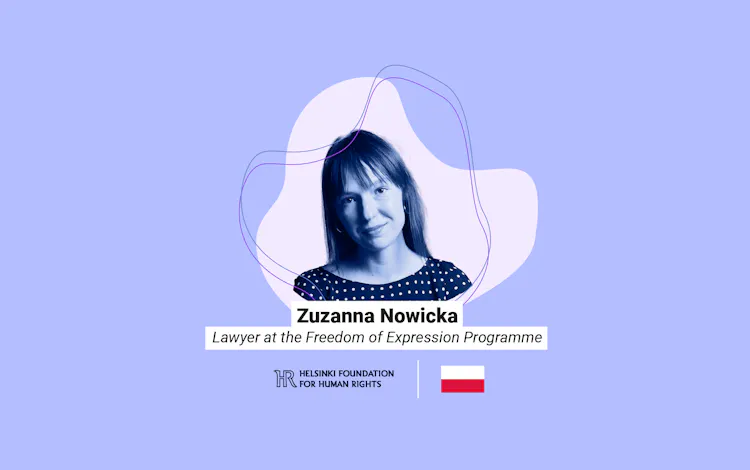
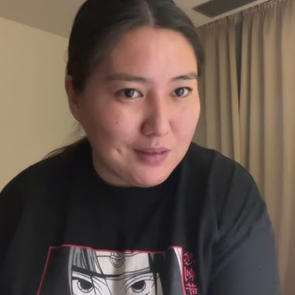
Mette Meyknecht on 21 April, 2026, makes us meet up Zuzanna Nowicka Lawyer (Freedom of Expression Programme) at the Polish Helsinki Foundation For Human Rights.
Meet Our Members is a series where Liberties introduces you to our network of human rights defenders. We hear the stories of the people behind the organisations and why they do the work they do. Liberties is an umbrella network which coordinates campaigns with its expanding network of national civil liberties NGOs in 18 EU Member States.
Zuzanna speaks about her work with quiet defiance. No grand declarations or sweeping ideals, but with persistence in the daily decision, to keep going. “I just think it’s important,” she says simply. “I couldn’t imagine doing something that is not for the public good.”
Zuzanna is a lawyer at the Helsinki Foundation for Human Rights in Poland, where she focuses on freedom of expression and strategic litigation. But her path into human rights law wasn’t linear. After studying law and working in various law firms, she realised something wasn’t quite right. “I was simply not feeling it,” she recalls. “I did not find myself comfortable working in those conditions.”
Despite early exposure to human rights work through internships, NGO roles, and advocacy campaigns, it took time to fully embrace it as a career. A formative moment came after graduating, when, uncertain about her next steps, a position at the Helsinki Foundation appeared unexpectedly. Her interview, she admits with a laugh, did not go well. “The internet connection was really bad… I couldn’t hear half of the things,” she says. “But for some reason, they trusted me, and I got hired.”
That was four years ago. She has been there ever since.
Zuzanna’s work today, defending freedom of expression, is deeply personal. She grew up surrounded by journalists: her parents, grandparents, and extended family all worked in the media. She explains that, from an early age, “I was a direct witness of the worsening situation in the media.” Although she initially wanted to study journalism, her parents encouraged her to pursue law instead. Today, her work spans litigation before national courts and the European Court of Human Rights, legal advocacy, training, and public engagement. She drafts opinions on legislation, contributes to coalitions, and even hosts a podcast discussing pressing issues in Poland. It’s everything,” she says of her role. “Litigation, advocacy, writing, training – all of it.”
When asked about her proudest achievement, Zuzanna does not point to a specific case. Instead, she speaks about endurance. “I think what I’m most proud of is the persistence,” she says. “I just keep going.” It is a job that demands constant adaptation, from juggling multiple areas of law, responding to rapidly changing political developments, and managing a heavy workload. At any given time, she may be handling around 20 ongoing cases, alongside urgent advocacy work.
reminds us that Mr Surendra Gadling is a lawyer specialising in the defence of human rights and marginalised communities, particularly Dalits and indigenous peoples in India. He has been held in detention for nearly eight years in connection with the Bhima Koregaon case. He is now the only defendant still in prison – the other fifteen people prosecuted in this case have been released on bail.
Gadling was arrested in 2018 and is one of a group of human rights defenders prosecuted for their alleged involvement in violence that occurred in Bhima Koregaon. Several organisations believe that these prosecutions are in fact targeting committed activists and denounce the charges as baseless. [see also: https://www.frontlinedefenders.org/en/case/surendra-gadling-arrested]
Mr Gadling is also being prosecuted in another case linked to a fire at a mining site in Surajgarh. According to several lawyers, inconsistencies have been identified in the complaint (including the absence of evidence linking him directly to the incident).
In both cases, the key evidence used against him is the purported discovery of incriminating documents found on his PC. Independent Cyber forensic analysts have observed that these documents were planted using a Remote Access Trojan unknown to Mr. Gadling. Several lawyers’ organisations have called for his immediate release and condemned the use of the Unlawful Activities Prevention Act (UAPA), which is considered particularly repressive. The prolonged detention of Mr Surendra Gadling raises serious concerns regarding respect for the right to liberty and a fair trial. It also raises questions about the protection of lawyers and human rights defenders, particularly when they are involved in sensitive cases.
The Observatory calls on the Indian authorities to ensure that Surendra Gadling’s fundamental rights are respected, in particular his right to a fair trial within a reasonable time.
A woman holds up a blank sheet of paper during a demonstration against China’s strict COVID-19 lockdown measures following the deadly apartment fire in Urumqi, Xinjiang. (Photo by Frederic J. BROWN / AFP via Getty Images)
Democracy activists often face arrest, exile, harassment, or retaliation against their families. This essay explains why NED protects sensitive information about grantees, how that duty of care supports the people advancing freedom, and how NED balances discretion with accountability.
Imagine living in a place where a knock at the door in the middle of the night could mean imprisonment, or worse. This is the daily reality for countless democracy and human rights activists around the world. Their bravery makes their work not only meaningful, but also deeply consequential.
The National Endowment for Democracy (NED) supports those working to strengthen fundamental freedoms in transitional and fragile democracies, as well as those bravely advancing freedom in closed societies. Our grantmaking focuses on the building blocks of democratic life—free elections, independent media, and the freedoms of association, speech, and belief. Just as important, however, is our responsibility to protect the individuals who make that work possible.
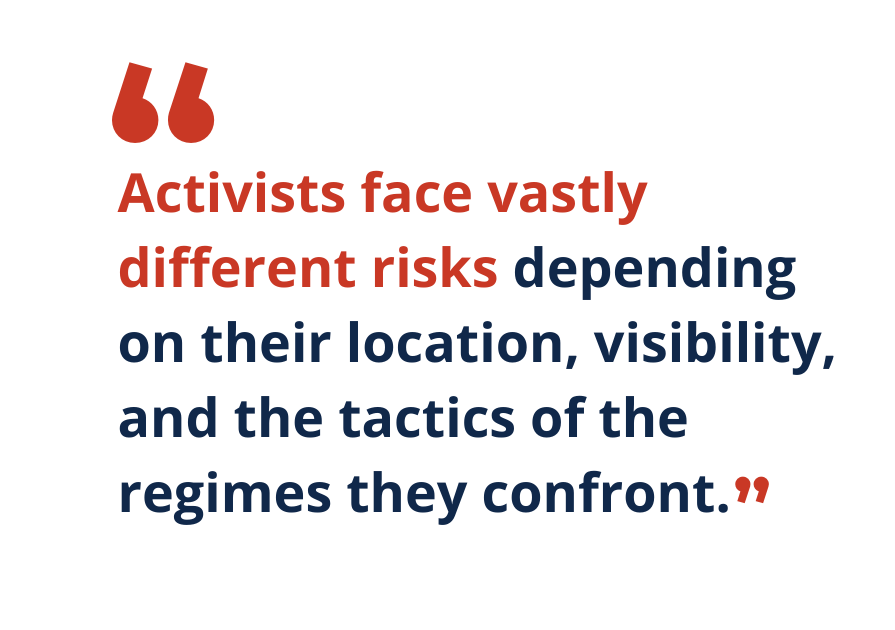
This primer offers an overview of why NED carefully manages information about its grantees, including what is shared publicly, what is provided to Congressional oversight bodies, and how discretion underpins the safety and viability of those we support. Activists face vastly different risks depending on their location, visibility, and the tactics of the regimes they confront. Supporting democracy means protecting those who fight for it, including respecting their choices about public visibility to ensure their safety.
Why Public Exposure Can Be Dangerous
Speaking out in many parts of the world can mean risking arrest, exile, or death. According to Freedom House, only about one in five countries around the world is rated “free,” while The Economist’s Intelligence Unit has found that only 25 countries today qualify as full democracies. For the vast majority living under authoritarian or hybrid regimes, even symbolic acts of dissent, like holding up a blank piece of paper, can lead to life-disrupting consequences.
Authoritarian regimes understand the power of dissent and the threat posed by those who dare to speak. That’s why they’ve developed increasingly sophisticated methods to target activists, journalists, human rights lawyers, and civil society leaders, both inside their borders and abroad. Their reach extends across continents, threatening those in exile through transnational repression and those at home through direct prosecution.
The following stories from grantees illustrate why NED’s approach to protection must adapt to the risks posed by both transnational repression and direct prosecution.
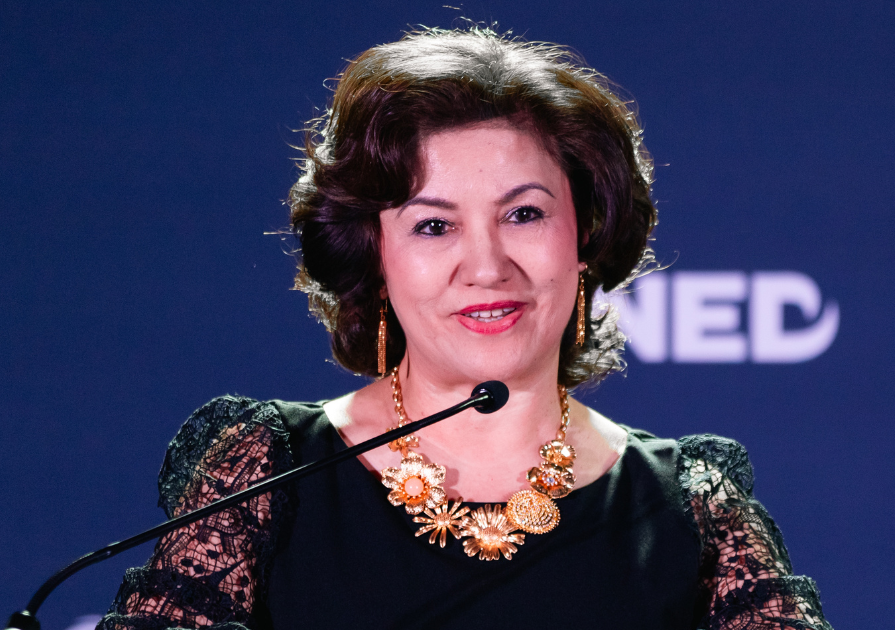
Rushan Abbas at the 2025 Democracy Awards. (Photo: M.K. Mindful Media)
Case Study: Rushan Abbas and the CCP’s Hostage Diplomacy
Rushan Abbas, founder of Campaign for Uyghurs and a NED grantee, gave her first public speech about China’s abuses in Xinjiang in 2018. Her husband’s entire family had already vanished in the 2017 crackdown. Just six days after her speech, her sister, Dr. Gulshan Abbas, a retired medical doctor with no political ties, also disappeared.
“She was being targeted because of my advocacy,” Abbas said. “Every day I wake up with her eyes in my mind. Of course, I feel guilty. Speaking out in the United States as an American citizen cost my sister her freedom.”
To this day, Dr. Gulshan Abbas remains missing in China’s vast detention system—her only ”crime” being related to someone who exposed the CCP’s abuses. This brutal form of hostage diplomacy forces exiled activists into an impossible choice: stay silent or risk their loved ones’ safety.
Case Study: Natalia Arno and the Kremlin’s Transnational Reach
Natalia Arno (Photo by THOMAS SAMSON/AFP via Getty Images)
Natalia Arno, president of the Free Russia Foundation and a longtime NED partner, was forced into exile from Russia in 2012. Since then, she’s been a leading voice in exile activism, advocating for political prisoners, supporting democratic leaders, and coordinating programs to hold the Putin regime accountable.
But in May 2023, after a private event in Prague, she returned to her hotel to find the door ajar and a strange scent inside the room. Hours later, she experienced numbness, pain, and blurred vision. Doctors in Washington, D.C. confirmed exposure to nerve toxins.
“I never could have believed the scale and brazenness and how long the Kremlin tentacles are into the West,” she said. Despite years of surveillance and intimidation, Arno continues her work. “You could lose your life,” she said, listing examples of poisoned, tortured, and murdered activists. “I have been in this game for 20 years, and I can write a book about all the kinds of attacks against me in Russia.”
Activism in Exile and Under Authoritarian Rule
Authoritarian regimes target democracy advocates in two primary ways. Activists working inside authoritarian states face direct repression: denial of employment, education or housing to surveillance, interrogation, imprisonment, or death. Activists living in exile, such as members of the diaspora, confront transnational repression: intimidation, harassment, cyberattacks, and retaliation against relatives still living under dictatorship.
While both forms of courage are vital to the cause of freedom, they require different kinds of protection. For activists in exile like Abbas and Arno, visibility can be both a tool and a vulnerability—they use their public platforms to build international support while enduring harassment and threats from afar. For those working quietly inside repressive states, even the faintest association with democracy support can result in severe consequences. NED’s Duty of Care and Do-Not-Disclose policies reflect this spectrum of risk, providing flexible protections appropriate to different contexts, roles, and levels of exposure.
Visibility and Risk in Democracy Activism
Activists face difficult decisions about how visible they can afford to be. For some who live in exile, like Abbas and Arno, activism is essential to raising awareness and building international support. As public figures in free societies, they can testify before lawmakers, engage journalists, and speak on behalf of silenced communities. But even in freedom, visibility comes with the danger of transnational repression.
Abbas has faced smear campaigns, online harassment, and death threats requiring FBI involvement. Her family in China has been targeted. “Those kinds of things actually became so normal because we face this almost weekly or monthly,” she said. “And we just laugh at it and take it as the impact of our work.”
Arno’s risks didn’t end after fleeing Russia. “Being in NATO or EU countries doesn’t save us from this huge Kremlin machine,” she said. “Surveillance is still huge, cyberattacks are huge, but also physical attacks.”
These cases illustrate the first front of transnational repression: authoritarian regimes projecting power beyond their borders to intimidate, threaten, or attack critics abroad.
Iran has become one of the clearest examples of how far authoritarian regimes are willing to go to silence dissent beyond their borders. Iranian democracy activists, journalists, and human rights defenders living in exile have faced kidnapping plots, assassination attempts, surveillance, and harassment across Europe and North America. Multiple Western governments have linked Iranian intelligence services to plots targeting exiled dissidents, leading to disrupted operations, criminal prosecutions, and sanctions. Iran’s efforts to pursue critics abroad underscore the growing reality of transnational repression and the need for democracy organizations to extend duty-of-care protections even to partners living in open societies.
At the same time, this external pressure is inseparable from the repression activists face at home. For those still inside authoritarian states, the threat is direct and unrelenting. These activists continue their work at great personal risk, operating under surveillance, harassment, and the constant threat of arrest or imprisonment while pushing for democratic change.
In response to these dangers, many activists adopt a lower profile. How public they are in their work is an intentional choice to protect themselves, their families, and their networks from retaliation. While the steps they take to remain safe in authoritarian environments may mean their activism lacks the visibility of public campaigns, it is no less vital. Activists in authoritarian environments take great risks to build the infrastructure of democracy movements—documenting abuses, organizing communities, and informing international action.
In China, the Chinese government has systematically stigmatized international democracy funding. Even tenuous connections to external support and collaboration can carry severe consequences. As one activist working with international human rights and democracy organizations explained, “Me, myself, my family members, were interrogated by police officers in China.” Others have been detained and prosecuted for similar work. The Chinese government has also targeted the family members of human rights defenders in an effort to deter continued activism.
As a result, discretion is essential. “We prefer NED to not mention our names publicly,” the activist said, “in order to protect staff members and board members and even former colleagues, former members, and our families.”
Public activism draws global attention and builds coalitions, but it also brings heightened risk. Regimes often target public figures to intimidate or silence them—and to send a warning to others.
Activism that seeks to engage in quieter and less confrontational forms of engagement, by contrast, can provide greater security and sustainability, particularly in repressive settings. “While of course it’s much more dangerous for those activists who are inside Russia to speak out,” one Russian activist explained, “it’s much safer for those working in exile and most continue their work quietly.”
Human rights work in authoritarian environments demands different operational and political strategies. While the work often seeks to expose gross human rights abuses and expose corrupt networks, the ability to gather and verify the information requires close cooperation between groups that are in exile and networks that are in country.
In Tibet, NED-supported partners have documented China’s campaign to erase Tibetan identity through colonial-style boarding schools. In Venezuela and Cuba, investigative journalists have exposed corruption and human rights violations while keeping low profiles to stay safe. While international and exile organizations are often the face of the work, the networks on the ground are equally essential to what they achieve.
As Arno put it, “People are our biggest value, our biggest treasure. When activists are facing such dangerous things like imprisonment, torture, murder, we have to protect them with all possible measures.”
Supporting Activists Safely and Effectively
Since its founding in 1983, NED has supported democracy activists and citizen leaders—whether operating in exile or inside closed societies—to advance human rights and democratic values in some of the world’s most repressive contexts. NED’s Founding Statement of Principles and Objectives notes that in “societies where even [these] independent institutions are prohibited or severely restricted, the immediate objective is to enlarge whatever possibilities exist for independent thought, expression, and cultural activity. … [The Endowment] will not neglect those who keep alive the flame of freedom in closed societies.”
As a congressionally mandated independent nonprofit, NED was designed to provide support to its partners in a way that is impactful, secure, and accountable. Few donors are structured to do this work with the same level of care and discretion, which is why frontline democracy advocates consistently place their trust in NED.
Key to NED’s approach is the principle of protection through discretion. As NED’s Board of Directors approve grantmaking strategy and individual projects, the identifying details of grantees are made available to them. However, we avoid public disclosures that could expose partners to government reprisal. This is not only an ethical commitment—it is a key operating principle rooted in NED’s Duty of Care and Public Disclosure Policies, which obligates the organization to do no harm.
Without this policy of protection, many activists could not safely engage with international support. “It’s very difficult to build reputation and trust” one democracy activist said. “How you treat your grantees, with special care and understanding of the particularities of each region, should be the gold standard that all donors take as an example.”
NED’s Approach to Public Disclosure of Grantees
NED publishes listings of its current grantees twice a year on its website and includes a comprehensive listing of grantees in its annual report, complete with grant descriptions, grant amounts, and grant durations, organized by country and region. However, we do not publicly disclose personally identifiable information in these listings to avoid placing individuals at risk, now or in the future.
Some have asked why NED does not publish the personally identifying details of its grantees on its website. The reason is simple: in many cases, doing so would put a target on the backs of those we support and compromise their ability to do their work.
NED’s Duty of Care and Public Disclosure policies seek to balance the ability of our partners to operate as freely and securely as possible with our transparency requirements. At the same time, our relationship with our grantees is fully transparent. Organizations must take the initiative themselves to seek support from the Endowment. They know who we are, where our funds come from, and the values that guide our support. Activists seek out NED’s assistance precisely because it is open, accountable, and trusted.
NED respects the agency of its grantees to decide whether it is safe to publicly disclose their relationship with NED. Organizations regularly and proudly share their partnership with NED as a mark of credibility and support. Others, particularly those operating in hostile environments, often request confidentiality to safeguard their security and effectiveness. In all cases, NED ensures our partners are aware of our policies and procedures so that they can make informed decisions about their own public posture.
This approach is an ethical obligation as much as it is a matter of organizational policy. We know about the persecution of Uyghurs and underground Christians in China, the protests in Cuba and Iran, the continued repression in Belarus and Nicaragua, and human rights abuses in Burma and North Korea because courageous individuals risk their lives to report them. Supporting democracy means more than funding programs or issuing statements—it means protecting the people behind the work.
With that responsibility comes a duty: to minimize risk, not add to it through careless exposure. In a world where authoritarian regimes are increasingly sophisticated, coordinated, and ruthless in targeting dissent, discretion becomes an essential safeguard.
Transparency and Accountability
Even as NED protects grantee confidentiality in public settings, it maintains rigorous transparency and accountability to the NED Board, Congress, and U.S. oversight bodies. The NED Board reviews and approves both grantmaking strategy and individual grants. As outlined in our Duty of Care, we submit comprehensive annual plans and updates to congressional committees that outline our strategy and grantmaking priorities. We maintain active communication with Members and their staff, respond promptly to official requests for information, and create opportunities for elected officials to engage directly with our grantees—both in Washington and abroad—to better understand the real-world impact of NED-supported efforts. We likewise provide an annual report to the executive branch as a formal accounting of our work, priorities, and impact. NED consults regularly with representatives of the legislative and executive branches on our work, both in Washington and in the field, and responds to Freedom of Information Act information requests.
NED upholds strict due diligence and financial oversight procedures to ensure that resources are used responsibly and for their intended purpose. Our grantmaking is governed by the standards of all federal spending, with clear agreements, financial reporting requirements, and independent audits to ensure funds are used for their intended purpose.
In addition, the Endowment is subject to comprehensive oversight, including Government Accountability Office (GAO) investigations, State Department Inspector General reviews, and annual independent audits.
By combining discretion abroad with transparency at home, NED fulfills its dual responsibility: protecting those who advance freedom in repressive environments while remaining transparent and accountable. As authoritarian threats grow more complex and far-reaching, we will continue strengthening our Duty of Care so those who defend democracy can pursue their work safely, effectively, and with confidence in the support behind them.
Front line Defenders on 27 March 2026 shared an update on human rights defender Makhabat Tazhibek Kyzy:
On 23 March 2026, the Leninskii District Court of the City of Bishkek, Kyrgyzstan, ordered the release of a woman human rights defender Makhabat Tazhibek Kyzy from prison. At the preliminary session of the retrial in her case, the Court changed the measure of restraint and granted her release from the penal colony where she had been detained. Her release is conditional upon an order not to leave the country. The retrial is scheduled to begin on 7 April 2026.
Makhabat Tazhibek Kyzyis a woman human rights defender and journalist. She is the director of Temirov Live and Ayt Ayt Dece. Temirov Live is a YouTube-based media outlet that investigates and reports on corruption by state and non-state actors in Kyrgyzstan, founded in 2020 by Bolot Temirov, a prominent Kyrgyzstani human rights defender and journalist. Ayt Ayt Dese is a YouTube-based project aimed at popularising human rights issues through the performance and publication of folk songs on human rights topics. Among other topics, Ayt Ayt Dese has covered investigations by Temirov Live.
On 23 March 2026, Leninskii District Court of the city of Bishkek commenced the retrial of the case of Makhabat Tazhibek Kyzy with a preliminary session. The retrial was set following a decision of the Supreme Court of Kyrgyzstan on 10 March 2026. Based on Opinion No. 52/2025 by the UN Working Group on Arbitrary Detention, the Supreme Court ordered a retrial and overturned the previous rulings that sentenced the woman human rights defender to six years in prison.
At the preliminary session, Makhabat Tazhibek Kyzy’s lawyers filed three motions. First, the defence attorneys requested the Court to declare the expert witness evidence from previous trials as inadmissible, arguing that authorities had pressured the expert witnesses into giving false testimonies. The issue of evidence tampering by the authorities was previously highlighted in the case of human rights defender and whistleblower Zhoomart Karabaiev, who was on trial for reporting that authorities pressured expert witnesses to provide statements supporting the prosecution. The second motion requested that the Court immediately and unconditionally ceases all judicial proceedings against Makhabat Tazhibek Kyzy. The third motion sought a change in her measure of restraint, from detention in the penal colony to release under the condition that she remains in the country. While the Court denied the first two motions, it agreed to change the measure of restraint for Makhabat Tazhibek Kyzy, leading to her release later that day.
Upon her release, Makhabat Tazhibek Kyzy expressed gratitude for the support she has received since the beginning of the prosecution against her in 2024. However, she also shared that she was subjected to psychological pressure and violence from the authorities in the penal colony, which aimed at exacerbating her isolation from the community supporting and defending her rights.
Front Line Defenders welcomes the Court’s decision to release Makhabat Tazhibek Kyzy, who has been targeted solely for her peaceful and legitimate human rights work. The organisation continues to call upon the authorities in Kyrgyzstan to immediately and unconditionally cease all types of persecution targeting the woman human rights defender and drop all charges against her.
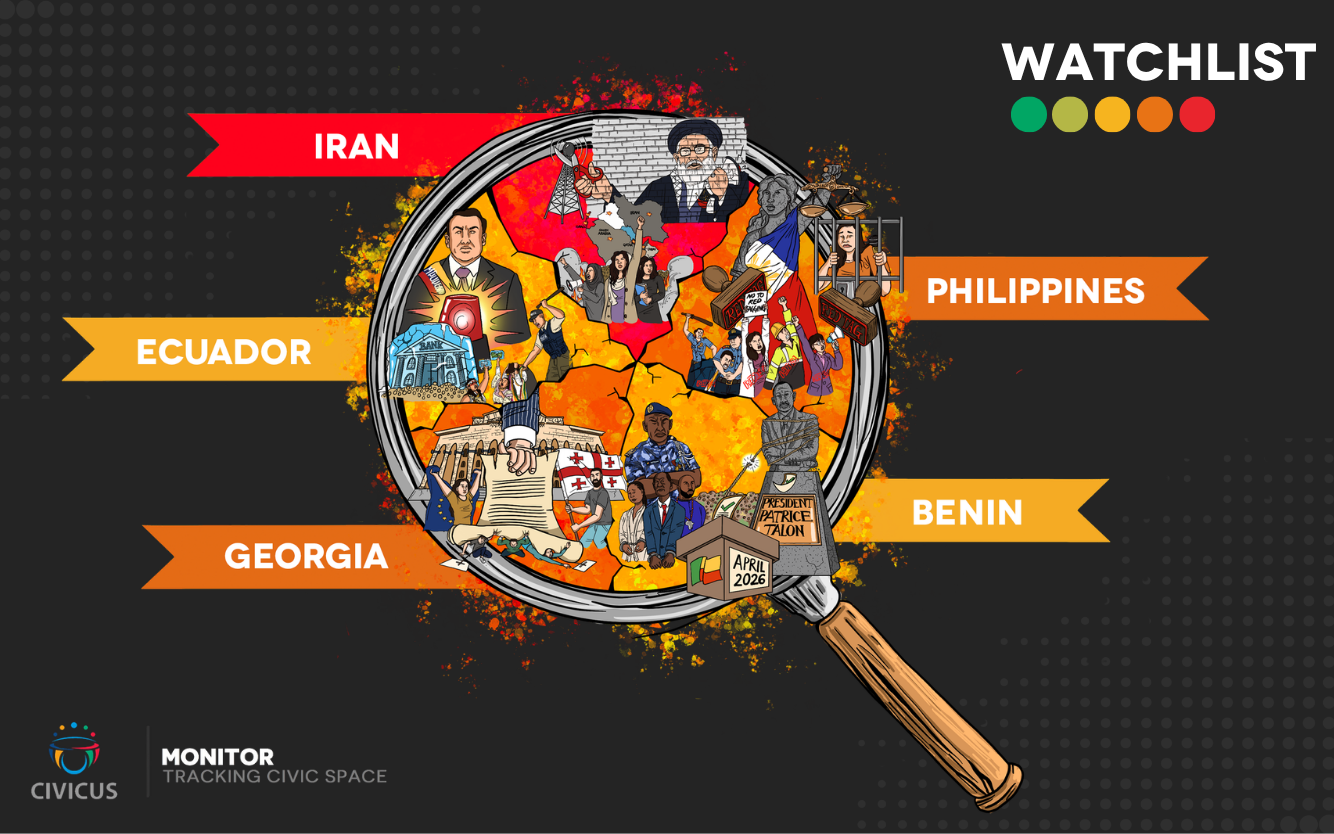
The March 2026 Watchlist from the CIVICUS Monitor highlights five countries where civic freedoms are deteriorating at an alarming pace: Ecuador, Georgia, Iran, the Philippines and Benin. Each faces escalating restrictions on fundamental rights, including freedoms of expression, association and peaceful assembly. The Watchlist draws on research findings, partner input and testimony from activists on the ground, and signals where urgent international attention is needed.
CIVICUS MONITOR CIVIC SPACE RATINGS:
OPEN
NARROWED
OBSTRUCTED
REPRESSED
CLOSED
Ecuador Civic space rating:Obstructed Ecuador’s government has increasingly relied on militarised security measures, invoking an “internal armed conflict” to justify exceptional powers. Indigenous-led protests in 2025 were met with lethal force, arbitrary detentions and internet disruptions. Environmental and Indigenous leaders face criminalisation, with more than 200 social leaders investigated or prosecuted. A 2025 law has expanded state control over civil society organisations, enabling account freezes and burdensome reporting. Journalists face killings, attacks and suspensions of media outlets, all unfolding amid a broader erosion of judicial independence.
Georgia Civic space rating:Repressed Georgia has seen a dramatic decline in civic space, marked by mass protests since late 2024 and heavy-handed police responses. Hundreds have been detained, tortured or investigated. New laws restrict protests, impose “foreign agent” requirements on civil society and media, and threaten criminal penalties for receiving foreign funding. Opposition parties and leaders face politically motivated charges, and new rules bar many civil society actors from political participation for years.
Iran Civic space rating: Closed Iran’s civic space, already severely restricted, has worsened following mass protests over economic and political grievances. Security forces killed thousands of protesters in January 2026 during a nationwide internet blackout, and tens of thousands were arrested. After regional airstrikes in February 2026, authorities imposed another shutdown and intensified censorship. Journalists and activists face extreme risk, and some detainees now face the death penalty. Despite repression, demonstrations continue following the death of the Supreme Leader.
The Philippines Civic space rating:Repressed Civic space in the Philippines remains under pressure, with police violence and mass arrests during anti-corruption protests in 2025. Dozens of protesters face sedition charges under cybercrime laws. Human rights defenders are frequently targeted, including through fabricated terrorism-financing cases. Red-tagging—accusing critics of communist links—remains widespread. Journalists also face prosecution, including the conviction of reporter Frenchie Mae Cumpio after years of pre-trial detention.
Benin Civic space rating:Obstructed Benin approaches its April 2026 presidential election with shrinking democratic space. Strict electoral rules have limited the field to two approved candidates, and the January 2026 legislative elections produced a parliament without opposition representation. Authorities increasingly use the Digital Code to prosecute journalists and critics, while media outlets face suspensions and mandatory government messaging. Protests are routinely banned or dispersed, and fear of reprisals has led to widespread self-censorship.
Judge Temirbek Mamatov, who reviewed the case following the ruling by the nation’s Supreme Court, refused to drop the charges and acquit the journalist who participated in the hearing via a web link from the prison colony, Radio Azattyk reported. Mamatov also imposed a travel ban on Tajibek kyzy, and her case is expected to be retried.
On 23 March 2026 Civil Rights Defenders welcomed the decision allowing Makhabat Tajibek kyzy to return home and to finally reunite with her family and teenage son. We also repeat the call that Civil Rights Defenders and other human rights groups have made since the day Tajibek kyzy and her colleagues were arrested: Kyrgyzstani authorities should drop all unsubstantiated charges brought in retaliation for her legitimate journalistic work. Makhabat Tajibek kyzy needs to be fully acquitted and rehabilitated.
The director of anti-corruption investigative outlets Temirov Live and Ait Ait Dese, Tajibek kyzy was arrested in January 2024 along with 10 other current and former staff members and sentenced in October of that year to six years in prison on charges of calling for mass unrest. Until today, all of her co-defendants in the case have been released from jail under probation, pardoned or acquitted.
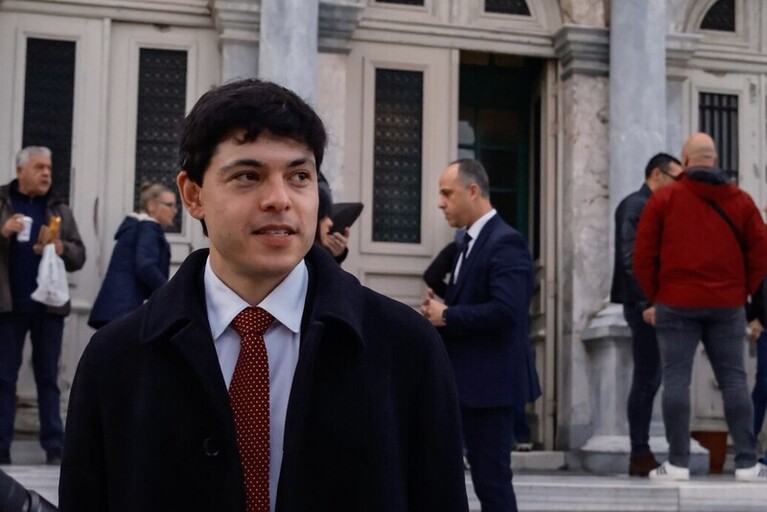
My ordeal started at about 2am one morning in February 2018, when I was arrested by the Greek police. People were fleeing conflicts at home and coming to Europe seeking safety in unseaworthy boats and I was helping the Emergency Response Center International to conduct search and rescue activities.
I was detained without understanding what exactly was happening; we were provided neither a lawyer nor an interpreter. After two nights, we were released “pending further investigation.” We continued to do search and rescue. After all, we had done nothing wrong. In fact, we continued to cooperate with the very authorities that had arrested us.
Then, in August 2018, six months after our initial arrest, my colleague and I were detained again. This time, we were charged with serious crimes, including forgery, the illegal use of radio frequencies, espionage, money laundering, being members of a criminal organization, and facilitating illegal entry….Finally, on 15 January this year, I was acquitted. The prosecutor at trial stated there was no evidence of criminality, and the panel of judges unanimously agreed that my 23 co-defendants and I were motivated by, and engaged in, legal humanitarianism.
Whilst I am delighted not to be returning to prison, it has taken far too long for this absurd prosecution to collapse. In the interim, the damage has already been done. EU states’ authorities have obstructed civilian rescue efforts, and over 32,000 lives have been lost at Europe’s borders since 2014. Meanwhile, dozens of humanitarians across Europe face similar prosecutions, obstruction, intimidation and harassment. Sadly, my case was not the exception but part of a wider pattern of states criminalizing humanitarian work.
The current effort to reform EU anti-smuggling legislation, the so-called “Facilitators Package” offers an opportunity to address some of the issues that have led to our baseless prosecution. However, the proposed revisions to the legislation might inadvertently increase the risk of criminalizing rescue workers – meaning future prosecutions will still be possible and may not end in acquittals like mine. They will also impact migrants, people of migrant origin and racialized people who all too often suffer from these policies.
As Amnesty International has highlighted, the proposal’s broad and vague provisions risk perpetuating the criminalization of refugees, migrants and human rights defenders. Any reform should clarify explicitly and in a binding manner that acts of humanitarian assistance or solidarity should be exempted from prosecution or punishment. Migrants who may have been smuggled themselves, or people assisting their family members should also be protected from criminal liability.
Through this reform, the EU has an opportunity to align with the EU Charter, UN Conventions and Smuggling Protocols, and treaties on maritime search and rescue, and to explicitly protect the right to life, the right to seek asylum, and the duty to render assistance.
As it stands, the proposal tries to expand the avenues to pursue humanitarian workers by introducing the crime of “public instigation” of irregular migration. This vague new provision could be misconstrued to harm refugees and migrants, advocates and activists protesting unjust migration laws or professionals providing legal information or assistance.
Prosecutors should focus on exploitation and violence, including by authorities summarily force people across land or sea borders.
Last year, the European Court of Human Rights found “serious evidence” of systematic pushbacks in Greece. Evidence of similar practices has been mounting across European borders. Without border monitoring, this already opaque crime becomes ever more obscure. Finally, trafficking, another cross-border crime, is arguably exacerbated by EU policy. A UN report published in 2018 found that asylum seekers in Libya face “unlawful killings, torture, arbitrary detention, gang rape, slavery, forced labour and extortion,” with apparent complicity by State actors. Nevertheless, the EU has for years financed the so-called Libyan Coast Guard.
Whether in the Facilitators Package or in its wider border policies, the EU must respect the rule of law and human rights.
The way to stop people taking dangerous journeys is providing safe and legal pathways for protection, commensurate in scale with the need for protection, and channels for regular migration for those seeking a better life. By denying safe routes, the EU pushes people into the arms and boats of smugglers and traffickers.
All the while, EU laws and narratives on stopping smugglers continue being used to criminalize migrants and people doing what they can to save lives or offer assistance. Unless the reform of the Facilitators package takes serious steps to uphold the duty to rescue and defend humanitarians, people will continue to risk jail for doing what is normal, human behaviour: helping others at risk.
Watch Seán as he discusses his case, his reflections and hopes for the future.
Listen to Séan’s full story in the first season of Amnesty’s podcast ‘On the Side of Humanity’.
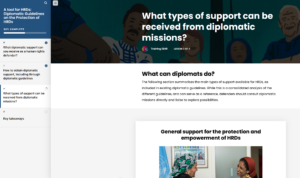
ISHR is launching two new interactive tools to strengthen diplomatic initiatives to support human rights defenders.
one tool designed for diplomats and
the other for defenders;
The resources provide practical guidance on how to enhance diplomatic support for defenders to prevent risks, respond to threats and better protect those working to promote and defend human rights. The tools will be available in English, French and Spanish.
Human rights defenders (HRDs) play a vital role in promoting accountability and advancing justice. Yet defenders around the world increasingly face harassment, criminalisation, surveillance, detention and reprisals because of their work. Diplomatic missions can play an important role in the overall protection strategy for defenders, including by addressing risks, monitoring cases, engaging authorities, or providing emergency support when defenders face serious threats. Some countries or region have adopted specific ‘Diplomatic Guidelines’ on the protection of human rights defenders (HRDs), including Switzerland, Canada, the European Union, Norway, Finland, and the UK.
To help strengthen the effective use of diplomatic protection measures, ISHR has developed two new interactive tools aimed at two complementary audiences: diplomats and human rights defenders themselves.
The first tool provides practical guidance for diplomatic and permanent missions on how to better provide quality, consistent and targeted support and protection to defenders including through the implementation of existing ‘diplomatic guidelines’ (40 minutes to complete). It outlines key principles for diplomatic engagement, including applying a “do no harm” approach, consulting closely with defenders, and adopting flexible and context-specific responses. It also highlights forms of diplomatic support, from regular engagement with defenders to trial observation, public advocacy, and emergency measures such as facilitating visas or temporary relocation.
The second tool is designed for human rights defenders and civil society organisations (20 minutes to complete). It is intended to help defenders better leverage diplomatic support by developing understanding of diplomatic guidelines, how they work, and what defenders should consider to safely engage with embassies and diplomatic missions. It also outlines the types of support that may be available, from meetings with diplomats and public advocacy to targeted or emergency assistance in situations of risk.
The content is grounded in the needs and lived experiences of HRDs, as documented by ISHR and other international organisations, and is informed by international human rights norms and standards. It draws in particular from the UN Declaration on Human Rights Defenders and its recent supplement, the Declaration+25.
By enhancing understanding of diplomatic initiatives and making them more accessible, ISHR aims to strengthen collaboration between diplomats and defenders and help ensure that defenders can continue their essential work in safer conditions. We also hope these tools may serve to catalyse action by States that have not yet adopted specific diplomatic guidelines.
The two interactive tools are available on the ISHR Academy in English, French and Spanish.
If you want more information or provide feedback on those initiatives, please contact us at: training@ishr.ch
Aziza Abdirasulova has displayed great courage and determination in defending human rights
Aziza Abdirasulova, a prominent human-rights defender and a pioneering independent civil society activist from Kyrgyzstan, has been awarded the 2026 Council of Europe Raoul Wallenberg prize in recognition of her efforts to protect fundamental rights with a particular focus on prisoners’ rights, freedom from torture, and the right to peaceful assembly.
At the award ceremony in Strasbourg, on 21 January 2026, Council of Europe Secretary GeneralAlain Berset recognised the great courage and determination of Ms Abdirasulova making an outstanding contribution to fundamental rights in Kyrgyzstan, often at great personal and physical risk.
“As one of the first independent human-rights defenders in Kyrgyzstan to document torture and arbitrary detention systematically, Aziza Abdirasulova has kept facts on the record when silence would have been easier. At a time when attention is drawn to geopolitical shifts and crises at the top, she reminds us that the Raoul Wallenberg prize brings the focus back to human-rights defenders.”
In the spirit of Raoul Wallenberg’s work, notably his single-minded determination and extraordinary courage in standing up to protect fundamental rights, the jury emphasised that Aziza Abdirasulova refused to be silenced by intimidation and harassment. Underlining the essential role of human-rights defenders in challenging times, including backsliding on human rights, the jury stressed that “her organisation Kylym Shamy has played a key role in exposing systemic human-rights violations providing legal support to victims and mobilising public opinion nationally and internationally. It has also been a vital source of credible information for the international community on human-rights issues in Central Asia. She has worked indefatigably to promote and protect freedom of assembly and the right to peaceful protest in the face of severe official restrictions on protests and public gatherings.”
Receiving the prize, Aziza Abdirasulova said: “For me, like for Raoul Wallenberg, every human life saved had and has the ultimate value. Over the years of my work, I have consistently defended fundamental human rights: freedom of peaceful assembly, freedom from torture and cruel treatment, freedom of speech and opinion. This work required not only professional knowledge but also great personal courage. I happened to witness hundreds of cases of torture, and in each case, I have tried to provide whatever support I could to the victims.”
On 26 February 2026 the Human Rights Foundation (HRF) launched its research project, the Tyranny Tracker, a qualitative index that classifies the world’s countries and territories as democratic, hybrid authoritarian, or fully authoritarian. This political regime assessment tool is now available to the public at a moment when tyranny is on the rise worldwide.
According to HRF’s Tyranny Tracker, 75% of the world’s population lives under authoritarianism despite representing only 92 countries, or less than half of all countries in the world — a number that is partly explained by the hybrid authoritarian regimes of India, Indonesia, Pakistan, and the Philippines, and by the fully authoritarian regimes of China, Ethiopia, Nigeria, Russia, and Vietnam, which rule over some of the world’s most populous countries. The Tyranny Tracker classifies countries using a methodology consisting of 45 indicators categorized into three thematic pillars: electoral competition, freedom of dissent, and institutional accountability. The methodology is informed by academic literature and HRF’s 20 years of experience advocating on behalf of dissidents from countries ruled by authoritarian regimes. The research draws on a range of sources, including media, data collected by HRF’s in-house research team, an extensive human rights network, and expert advice. Published today in the Journal of Democracy, a piece from HRF’s lead researchers Javier El-Hage, Malaak Jamal, and Alvaro Piaggio, explores what sets the Tyranny Tracker apart from other indexes, and how readers can use the tool to inform their work.
“The Tyranny Tracker is a culmination of years of HRF’s internal research to identify patterns of authoritarianism worldwide and decide which regimes to prioritize as targets of our advocacy work,” said Malaak Jamal, HRF’s director of policy and research. The Tyranny Tracker uses three classifications for the governments ruling countries around the world: Democratic governments are characterized by largely free and fair elections, freedom to criticize the government, and an independent judiciary capable of being an effective check on government abuse. While many of these governments currently face real challenges in resisting the autocratic tendencies of democratically elected leaders emboldened by increased political polarization globally, they continue to maintain the mechanisms of self-correction that allow democracies to survive and evolve, as opposing political parties regularly and peacefully transfer power. Hybrid authoritarian regimes are typically the result of the severe erosion of institutions by an initially democratically elected government, and represent a step in the process of authoritarian consolidation. While these authoritarian regimes maintain a façade of democracy through regular elections, their autocratic actions heavily skew elections in favor of the incumbent to the point that an opposition victory and peaceful transfer of power are highly unlikely. Fully authoritarian regimes systematically stifle meaningful electoral competition and the basic freedom to dissent, all the while tightly controlling a judicial branch, which lacks any ability to serve as a check on government abuse. These authoritarian regimes regularly rig elections (when they hold them at all), shut down critical media outlets and organizations, and target political opponents and dissenters with arrests and killings, making the chance of a nonviolent transition to democracy as a result of elections little more than a theoretical possibility.
“HRF’s new tool aims to contribute to the healthy competition and complementarity among existing democracy indexes by great institutions, such as Freedom House, V-Dem, International IDEA, or the Economist Intelligence Unit, that already do a great job documenting the situation of authoritarianism worldwide in a quantitative way. The Tyranny Tracker, on its part, is methodologically different as it follows a simple yet structurally cohesive and qualitative analysis process, carried out by HRF’s regional policy and advocacy researchers and experts, resulting in limited yet materially significant differences in country classifications,” said Javier El-Hage, HRF’s chief legal and policy officer.