In March 2026, the UN Human Rights Council (the Council) will appoint the next Special Rapporteur on the situation of Human Rights Defenders. The role of this Special Rapporteur is essential: they promote the work of those who defend human rights and they protect human rights defenders at risk. The Special Rapporteur serves in a voluntary capacity and is independent of the UN, States and non-governmental organisations. As other Special Rapporteurs, they are tasked by the UN to monitor and report on human rights situations around the world. They also provide advice and recommendations for the implementation of those rights.
The four rapporteurs until now have all been of exceptional calibre:
Mary Lawlor (Ireland)
2020-2026
She became a Board member of the Irish Section of Amnesty International in 1975, was elected Chair from 1983 -1987 and in 1988 became its Director. She founded Front Line Defenders in 2001 to focus specifically on the protection of human rights defenders at risk.
On 1 May 2020, she took up the mandate of the Special Rapporteur on the situation of human rights defenders, where she has adopted a people-centred approach to the mandate. Her mandate was renewed for another three-year term by the UN Human Rights Council in April 2023.
She is also currently an Adjunct Professor of Business and Human Rights in the Centre for Social Innovation (CSI), School of Business, Trinity College Dublin.
Mr. Michel Forst (France) was Special Rapporteur on the situation of human rights defenders from June 2014 until April 2020. From 2008 to 2013, Mr. Forst was the UN Independent Expert on the situation of human rights in Haiti, and between 2012 and 2013 he was the Chair of the Coordination Committee of the Special Procedures of the Human Rights Council.
Mrs. Margaret Sekaggya (Uganda) was the Special Rapporteur on the situation of human rights defenders from 2008 to 2014. Before her appointment as Special Rapporteur, Ms. Sekaggya was the Chairperson of the Uganda Human Rights Commission and a High Court Judge in the country.
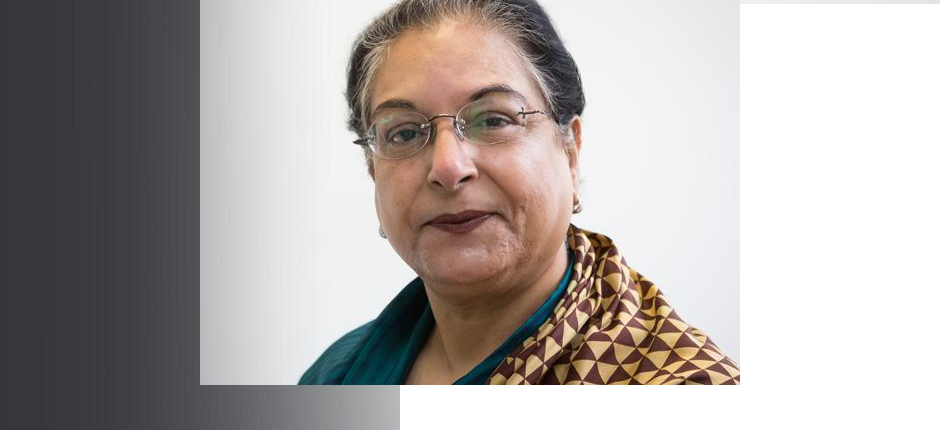
Ms. Hina Jilani (Pakistan) was Special Rapporteur on the situation of human rights defenders from 2000 – 2008. In 1980, she and her sister founded Pakistan’s first women-only legal practise. She became an Advocate of the Supreme Court shortly after her tenure as Special Rapporteur came to an end.
We should becampaigning so the new person appointed is independent, impartial and competent and comes from a background that represents the diversity of our world.
Are you a suitable candidate? Apply! (1) Complete the online survey (2) Submit the application form in Word format. The deadline for applications is 31 August 2025, noon Geneva time (CEST).
Azin Mohajerin and Hina Jilal at OMCT’s offices on International Women’s Day, 8 March 2023. (Geneva Solutions/Michelle Langrand)
Michelle Langrand in Geneva Solutions of 10 March 2023 speaks with two human rights defenders, from Iran and Pakistan.
Iran’s crackdown on women’s rights protests that erupted in September and the Taliban recently banning women from working in NGOs or from attending university have served as a reminder of how fast women’s rights are sliding back in the region and other parts of the world. But despite widespread arrests, allegations of torture and the execution of four protesters in Iran, the women-led movement refuses to back down. For Azin Mohajerin, 36, it means that change is a little more within grasp. Mohajerin left Iran in 2010, following the wave of post-electoral protests that swept the country.
This time around she is supporting rights campaigners in the country, specifically from minority groups, through Miaan, an NGO in Texas she co-founded in 2019 and where she works as senior human rights officer.
Hina Jilani, an advocate of Pakistan’s Supreme Court and president of the World Organisation Against Torture (OMCT), who fought against sharia laws in Pakistan back in the 80s, views it as another illustration of women’s resistance on the path to obtaining change.
Mohajerin and Jilani were in Geneva for international women’s day for an event organised by OMCT. Geneva Solutions spoke to the activists about the challenges women face in their countries and the lessons they can draw from each other.
Born in Lahore, the capital of Pakistan’s Punjab region, Hina Jilani grew up hearing about courtrooms and prisons. At that time, Pakistan was under martial law and her father’s political opposition would often land him into trouble. Rather than being traumatised, Jilani was empowered by the environment in which she was raised. Later in life as a lawyer, her work would also land her in those same courtrooms and prisons. Jilani passed the bar exam in 1977, the same year Sharia law was imposed on Pakistan. One of the new laws made adultery a crime against the state. See also: https://www.trueheroesfilms.org/thedigest/laureates/705AB196-BD5E-4EC2-B6C1-96AC5DDB353E .“While now Pakistan has a fit and reasonably good, protective legal framework for women, we have not gotten rid of the notorious practices like child marriage or honour killings. Gender-based violence is one of our biggest issues in Pakistan,” she pointed out. Pakistan reported around 63,000 cases of gender-based violence in the past three years according to Pakistan’s National Commission of Human Rights.
In Iran, the women-led movement for the freedom to choose what they wear and what to do with their bodies has been shaking the country for the past few months. But observers are cautious about the chances of the current uprising spurring real change in Iran as previous ones have failed to do so. Mohajerin, who cannot return to her country because of the sensitive nature of her work, sees it as one more step in the long path towards the respect of human rights.
The protests in Iran have brought out Iran’s ethnic minorities to march along with the Persian majority. Mahsa Amini, whose death in custody of the morality police last September triggered mass unrest, was a 22-year-old Kurdish woman from Saqqez, in the Kurdistan province of Iran.
Mohajerin, who works with minority groups in Iran, sees that cultural change has seeped into some of the most conservative communities. “Women in Balochistan bravely went to the street in one of the rare moments that they have spoken up about their rights,” said Mohajerin.“There is a recognition that there is a gap that needs to be filled in terms of ethnic equality and gender equality.”
But Iran has also come down hard on these groups. “After Tehran, the top places in terms of arrests were minority populated areas: the Kurdish area, the Turkic and then Balochistan,” said Mohajerin. Many of them remain behind bars, she said.
“Culture can help people to break the chains,” said Jilani. “Not everything is because of what the leadership or the ruling elite do. Unfortunately, the ruling elite act in a certain manner because that is the national psyche.”
Mohajerin noted that Iranians have been fighting for their freedom for a long time now. “It’s not a new movement, it is not something that started in September or even last year. It has been a long-lasting fight,” said Mohajerin.
She recalled when women first marched against the mandatory hijab after it was introduced by the Islamic revolution in Iran 44 years ago. “In Iran, the woman cannot have custody of the child after a certain age and they don’t have the right to divorce. But they do not just give up and say okay, this is how we should live. They’ve been fighting to get their rights and finding loopholes in the system,” she said.
“The cultural change that has been achieved during the past decades is way more significant than the law that exists,” said Mohajerin.
The situation in Iran has drawn international outcry, with western powers condemning Iran’s violent response to the protests. Like many activists, Jilani and Mohajerin see international solidarity as essential to their causes.
“Voices from the outside can help when the environment inside the country is very difficult,” said Jilani. “I’m alive today because of international public opinion and the pressure of the international community,” said Jilani. She recalls former US president Jimmy Carter and former president of Ireland Mary Robinson pleading for her release from prison at one time.So many world leaders sent letters to Pakistan, protesting against my incarceration, that when they released me they showed me this thick file and said we don’t know why people around the world are so worried about you.”
When Iranian foreign minister Hossein Amir-Abdollahian was in Geneva last week to speak before the Human Rights Council, campaigners called for diplomats to stage a walkout during his speech. Mohajerin recognised it as a “significant symbolic gesture to condemn the human rights abuses in Iran”. “However, it is crucial for the international community to engage in dialogue with the Iranian government regarding human rights violations, particularly in cases of executions, at the highest level,” she added.
But both Jilani and Mohajerin are adamant about something: change has to come from within. “The voice should come from the people inside the country. They are the ones who live in the country, and they are the ones who have to decide for their future,” said Mohajerin, noting that views within her country are not a monolith.
On 2 May 2022 – for the 30th year – the Human Rights Commission of Pakistan has put forward its review of the state of human rights in the country and the measures that should be taken to reduce human rights violations in the country. The main takeaway from the report is that there were blatant and unrelenting attempts to crack down on dissent, with at least nine journalists having faced harassment in an attempt to silence them in their work. As happens every year, violence against women took every possible form: from rape to domestic abuse to horrific murders to honour killings. The report has noted that 478 honour killings were reported in the country in 2021, although the number is almost certainly much higher with many never reaching the press, and over 5000 cases of rapes were reported by the media. Overall, violence in the country appeared to have increased quite dramatically. The HRCP has especially noted the case of Nazim Jokhio, and the mob lynching of Sri Lankan national Priyantha Kumara in Sialkot. These are but just a few examples of the disturbing trend of increased violence in the country. Just a few months back, research had revealed how many of these cases of violence are perpetrated by young people. The past few years we have watched in horror as Pakistani society has increasingly grown more violent — bringing nightmare-inducing optics straight to our phones. This is a direct result of the extremist tendency prevalent in society, an inevitable consequence of consistent state policies.
The report has also noted the way the previous government used ordinances to push through laws, some of them highly detrimental to freedom of expression. The HRCP has also noted that religion was used multiple times over the years to try and stop various acts of legislation from being passed. One of the most difficult issues human rights defenders in Pakistan have faced over a number of years has been that of missing persons or enforced disappearances. In 2021, says the HRCP, the highest number of enforced disappearances was reported to have been in Balochistan, with the government having failed to resolve concerns of families of the missing despite sit-ins in Islamabad.
From missing persons to the Gujjar and Korangi nullah evictions to sectarian violence to violence against transgender persons — the HRCP’s State of Human Rights 2021 is a timely reminder to the current government that it must do better on all these counts and more. It is on the Shehbaz Sharif led government to ensure that media freedom is upheld, there are no more arbitrary anti-journalism laws, and journalists are not harassed for doing their jobs. The incumbent government must not make the mistake of taking human rights issues lightly during its tenure. This report card on human rights by the HRCP comes out every year but each successive government has failed to take suggestions from rights activists seriously. It is hoped that with a change in government there will finally be a change in how citizens’ rights are treated and that all citizens from all communities and regions in the country can feel safe and less vulnerable to injustice and state or non-state violence.
Prominent Pakistani human rights defender and lawyer Asma Jahangirhas died at the age of 66. She reportedly suffered a cardiac arrest and was taken to hospital, where she later died.
She was one of the most recognized and honored human rights defenders with over 17 human rights awards, including the Martin Ennals Award in 1995, whose film on her work shows a much younger Asma, fearless in spite of threats on her life:
I met her for the first time in 1993 at the 2nd World Conference on Human Rights in Vienna, where she deeply impressed me by standing up and openly criticizing her fellow NGO representatives for having tried to prevent former President Jimmy Carte from speaking at the NGO forum. This principled stand was a hallmark of her life as Pakistani human rights lawyer and as UN Special Rapporteur. In many instances she was able to give sound advice on cases of other human rights defenders in difficulty. For earlier posts on Asma see: https://humanrightsdefenders.blog/tag/asma-jahangir/
Asma Jahangir’s career in short:
Trained as a lawyer and worked in Pakistan’s Supreme Court from age 30
A critic of the military establishment
Jailed in 1983 for pro-democracy activities
Put under house arrest in 2007 for opposing military leader’s removal of Supreme Court chief justice
Co-founder of the Human Rights Commission of Pakistan and of the first free legal aid centre in Pakistan (together with her sister Hina Jilani)
Co-founder of the Women’s Action Forum, set up to oppose law that reduced a woman’s testimony in court to half that of a man’s
The first female leader of Pakistan’s Supreme Court bar association
Winner of 17 human rights awards and the French Legion of Honour
Served twice as UN special rapporteur: on freedom of religion and on later on Human Rights in Iran
Nobel Peace Prize winner Malala Yousafzai called Ms Jahangir a “saviour of democracy and human rights”.
On 29 November 2016 OMCT announced thatHina Jilani, a prominent Pakistani human rights defender, is the newly elected President of the World Organisation Against Torture (OMCT).
Ms. Jilani was elected to a four-year term on Saturday 26 November at the organization’s General Assembly meeting held every four years. Addressing OMCT partners and members of its SOS-Torture network of more than 200 non-governmental organizations around the world, she said she would focus on boosting its cohesion to make its voice louder. “We can’t just condemn points of view; we have to convince people,” she said. “We have to show them that these values did not come out of nothing, that they are worth being preserved. We have to show that undermining these values is not in the best interest of humanity.”
Hina Jilani created Pakistan’s first all-women law firm and co-founded Pakistan’s first legal aid centre in 1986. In 1991 helped set up a shelter for women fleeing violence and abuse and presented one of the first cases of domestic violence in the country. Ms. Jilani was also one of the founders of the Human Rights Commission of Pakistan, an NGO promoting human rights in Pakistan. She also created Pakistan’s Women Action Forum, a prominent women’s rights group whose campaigns have been at the heart of the democracy movement in the country. Ms. Jilani has been a lawyer at the Supreme Court of Pakistan since 1992.
At the international level, she was the first United Nations Special Representative of the Secretary-General on the situation of Human Rights Defenders from 2000 to 2008. She was appointed in 2006 and 2009, respectively, to the UN International Fact-Finding Commissions on Darfur and on the Gaza Conflict.
Her expertise and lifelong dedication to human rights has earned her international recognition. In 2013, she joined The Elders, a group of statesmen, peace activists and human rights advocates, brought together by Nelson Mandela. In 2000 she was honoured with the Amnesty International Ginetta Sagan Award for Women’s Rights, just a year after she was awarded the Human Rights Award by the Lawyers Committee for Human Rights. In 2008 she received the human rights award of the American Bar Association.
She spoke after a two-day forum organized on the occasion of the 30th anniversary of OMCT and its SOS-Torture network, along with UN Human Rights Commissioner Zeid Ra’ad Al-Hussein, who shared concern that many countries were “returning to authoritarianism”, human rights defenders around the world were under “enormous pressure”, and that reprisals and arbitrary detentions were increasingly done under the pretext of fighting terrorist activities. The High Commissioner said he feared that declarations such as United States President-elect Donald Trump’s campaign declarations (condoning ill treatment such as “waterboarding”, for instance) might inspire other Governments to resume resorting to torture, hence exacerbating the practice around the world.
She also seemed undeterred by the consequent risks of wavering support of multilateral institutions, since the US election and the British “Brexit” vote triggered a wave of speculation as to a possible shift in funding priorities away from international aid, and since the withdrawal by several States such as South Africa, Burundi, Gambia and Russia from the International Criminal Court, triggered concerns over the deconstruction of a system built up to protect victims of serious human rights violations. “This is not an easy time for human rights defenders, but when has it been for us? We keep our determination despite all the challenges,” she told activists. “The global donors must understand that if there is hesitation in supporting these human rights defenders and their networks it will only reduce our outreach. But we did it before we had money. We have no reason to believe that this is a favour to any one organization or community.”
Ms. Jilani said that OMCT was one of the organizations best placed to uphold human rights and combat torture, adding: “It has the experience, the capacity, and the knowledge to take this challenge forward.”
The Diplomatic Courierof 9 November 2016 carries a long and serious interview with Hina Jilani, First UN Special Representative for Human Rights Defenders (2000-2008). In 2006, she was appointed to the UN International Fact-Finding Commission on Darfur, Sudan. In 2009, she served on the United Nations Fact Finding Mission on the Gaza Conflict. In 2013, she joined The Elders, a group of world leaders and human rights leaders, brought together by Nelson Mandela. A preeminent lawyer, Hina Jilani co-founded the first all women law firm in Pakistan and the National Human Rights Commission of Pakistan. Hina Jilani has been in the forefront of human rights in Pakistan beginning from Zia Ul-Haq’s dictatorship in the 1970s.
You served as the first mandate holder of the UN Secretary General’s Special Representative for Human Rights Defenders from 2000 to 2008 and shaped that seminal mandate. Please tell us some of the key aspects of that mandate?
HJ: Respect for human rights necessarily includes recognition of the legitimacy of the work of defenders. As a response to the deteriorating situation of human rights defenders, the United Nations adopted the Declaration on human rights defenders in 1998. On the one hand this was recognition of the dangers that human rights defenders confront and, on the other, a step taken by the international community to create norms for the protection of human rights activity. The Declaration makes it the primary responsibility of the State not only to guarantee the safety of human rights defenders, but also to ensure that conditions exist in which they can carry out their activities. The mandate to oversee the implementation of the Declaration was established by the UN Secretary General in 2000. The mandate required the SRSG seek, receive examine and respond to information on the situation of human rights defenders and to establish cooperation and conduct dialogue with Governments and other interested actors on the promotion and effective implementation of the Declaration as well as on improving the protection of human rights defenders.
In a world where there is rising violent extremism and heightened crackdown on human rights defenders, please share some key challengers of human rights defenders around the world?
HJ: Establishing promoting and sustaining democracy, maintaining international peace and security and providing or advancing a people oriented agenda for development cannot be accomplished without the contributions that human rights defenders make. Defenders bring to the fore information on the realities of situations to be addressed without which national and international efforts would be ineffective. They contribute to poverty alleviation, humanitarian assistance, post-conflict reconstruction, and to improving individual indicators of development such as access to health care and adult literacy, among many other activities. In situations of crises, defenders can monitor an overall situation, rapidly investigate allegations of possible violations and report their conclusions, providing a measure of accountability. They also provide the international community with some independent verification of what is actually happening within an emergency situation, informing the process of taking decisions on possible actions. This was not easily done. Human rights defenders have suffered harm and face grievous threats to their life, liberty, security, independence and credibility. State apparatus, oppressive laws and other tools of repression continue to be used against defenders in attempts to deter them from the valuable work they contribute to the promotion of human rights. Human rights defenders all over the world continue to be subjected to assassinations, disappearances, illegal arrest and detention, torture, harassment and even exile.
……Can you speak of Blasphemy laws that target minority Muslim populations in Pakistan? How did you face death threats and attacks on your family because of your struggles against Blasphemy laws and other human rights atrocities in an environment of impunity?
What are called “blasphemy laws” in Pakistan are provisions introduced in the Pakistan Penal Code by Zia’s regime, ostensibly to enforce respect for Islamic personalities and the Holy Quran. In reality this was a ploy to instill fear in the population. One particular provision disregards fundamental principles of criminal justice and makes mens rea irrelevant to a finding of guilt. It also prescribes a mandatory death sentence upon conviction. The law is not only flawed in legal aspects it has been used for malicious prosecution and has targeted religious minorities – not just non-Muslims, but also different minority sects of Muslims in Pakistan. Special laws were promulgated to restrict the freedom of religion of the Ahmediya community in Pakistan, that still remains a persecuted and threatened community in Pakistan. Any one raising their voice against this law is exposed to extreme violence at the hands of organized religious terrorists, who operate with impunity in Pakistan. The State has been both unwilling and unable to perform its duty to protect in cases where people are either threatened or have actually been harmed by these groups. Lawyers defending those who are accused of blasphemy, judges who have acquitted the accused persons and public figures who have pointed out the flaws in the law or the political and malicious use of the law have been killed. There is an apparent policy of silencing criticism through fear. There are, therefore, only a few voices that continue to be raised and these are people who remain extremely vulnerable to harm.
…….What is your advice to the new Secretary General of the United Nations?
HJ: The work of the United Nations for promoting peace and improving security of people living in different parts of the world can not be completed without due attention to the respect for human rights, the UN must ensure better coordination of its political and human rights policies and strategies. I would also strongly recommend that the UN Security Council and the UN Human Rights Council seriously consider making reference to the protection of human rights defenders and to the importance and legitimacy of their work in all their resolutions relating to the maintenance of peace and security. None such resolution so far mentions this very critical aspect of the protection and promotion of human rights…
Hina Jilani will speak on the subject of “Protecting Human Rights Defenders Worldwide.” Ms Jilani, from Lahore in Pakistan, is a lawyer, civil rights activist, and an advocate of the Supreme Court of Pakistan. She has been active in the movement for peace, human rights, and women’s rights in Pakistan for more than three decades and is internationally recognised for her expertise in critical human rights investigations. especially as the first UN rapporteur on Human Rights Defenders. The event will incorporate an interview with Ms Jilani and Mrs Robinson. The lecture is free of charge and open to the public. For more information or to reserve a seat visit www.maryrobinsoncentre.ie/events.
…over the years, I have come to realize that being a lawyer, journalist, artist or trade unionist can be a job with more risk of physical injury than working in a mine or construction site—if those legal, literary or organizational skills are directed at securing human rights…
Endless methods are applied to attempt dissuading human rights defenders from raising their voice against injustice, discrimination and oppression. These women are not just fighting for their own rights to freedom and equality in dignity and rights, but they are also fighting for me and all women and girls around the world.
If these women put their own safety on the line for all of us, then what are we doing for them? What can we do for them? I believe solidarity is key. When I participated in a panel conversation at the United Nations (UN) in Geneva for Human Rights Day 2013, I met one of my heroines, Pakistani activist Hina Jilani, who mentioned that the life of a human rights defender can be a very lonely and isolated one. Her comment shows the importance of solidarity. That’s the least we can do for our sisters on the frontlines of the struggle for women’s emancipation from discrimination, violence and injustice.
…According to the Women Human Rights Defenders International Coalition, female activists “face the same types of risks faced by all human rights defenders but because of their gender they are also the target of gender-based violence and gender-specific risks.”
In Iran, for example, women’s rights defenders have faced imprisonment, which may include torture, for crimes as trivial as attending peaceful demonstrations. Nasrin Sotoudeh, an Iranian lawyer and winner of the European Parliament’s 2012 Sakharov Prize for Freedom of Thought, was given a sentence of six years for her defense of children facing the death penalty. The charges against her included not wearing a headscarf in a video and “acting against national security,” as well as spreading anti-regime propaganda…
Violence against human rights defenders does not only come from the state, but can also come from the family. Laxmi Bohara, a Nepalese activist, was allegedly murdered by her husband and his mother in 2008. Her husband and his family saw her activism as tantamount to adultery and unsuitable for a “good” Hindu woman. Those of her friends and colleagues who campaigned for justice in her case were themselves targeted with threats and violence.
There is a dizzying amount of evidence for the persecution of female human rights defenders. Wabiwa Kabisuba ran a center for victims of sexual violence in the Democratic Republic of Congo. She was dragged from her home by eight uniformed men and shot dead. Kabisuba is only one of many women threatened and attacked in the DRC.
Lorena Cabnal was one of many women opposing the exploitation of mineral resources upon land claimed by the indigenous Xinka people of Guatemala, and supporting women’s rights. She has received death threats for her work from 2004.
Hina Jilani, who served as special representative of the UN secretary general on the situation of human rights defenders from 2000-08, is unequivocal about the value of protecting human rights defenders, which she identifies as “central to the promotion of human rights.”
…
It is in all our interests to take every possible step to reduce the hazards of standing up for the victims of human rights abuses. These courageous and compassionate women are making the world a better place for the coming generations. I acknowledge their sacrifices and contributions for human dignity and equality, and my heart is filled with gratitude and respect for them. I stand in support and solidarity with the very best expression of humanity and courage—these remarkable champions of human rights—I stand with them in respect and solidarity.
*[Joanne Payton assisted with research and rewrites for this article.]
International Human Rights Day is an occasion for many organizations to publish statements on human rights. For those who have not enough time to go through all of them, here a selection of four main statements that focus on human rights defenders: Read the rest of this entry »
I was in Geneva last week where a number of interesting meetings took place. One of the side events I attended (a picture went out on Twitter), concerned the crucial issue of “ Human rights defenders and national security”, on 9 March organized by a group of NGOs (International Service for Human Rights, Article 19, the International Federation for Human Rights (FIDH), Human Rights House Foundation, the International Commission of Jurists and the World Organisation Against Torture).
The panel was moderated by ISHR Director Phil Lynch, and had a very knowledgeable speakers such as Michel Forst, Special Rapporteur on Human Rights Defenders; Hina Jilani, Pakistani human rights lawyer and former Special Representative on Human Rights Defenders; Jimena Reyes, Director of the Americas Desk at FIDH; Roselyn Hanzi from Zimbabwe Lawyers for Human Rights; Gerald Staberock, Director of the World Organisation against Torture (OMCT); and Tanele Maseko, human rights defender from Swaziland.
A short report below:
Restrictions on human rights defenders
Phil Lynch opened the discussion by referring to unequivocal examples of restrictions imposed on human rights defenders by the operation of counter-terrorism laws, with examples cited including the recent amendments to the Australian Security Intelligence Organisation Act in Australia which criminalises the disclosure of information about ‘special intelligence operations’, even where such disclosures expose or relate to serious human rights abuses; draft legislation in China which vaguely defines ‘terrorism’ to include ‘thought, speech or behavior’ that is ‘subversive’ or seeks to ‘influence national policy making’, and Law 8/2015, passed recently in Egypt, which allows individuals and associations which ‘infringe public order’ or ‘harm national unity or national security’ to be designated as terrorists. Concern was also expressed that renewed US efforts to combat extremism do not contain adequate human rights safeguards and that the imperative to counter-terrorism is being used as a subterfuge by regimes in allied States – such as Bahrain, China, Egypt and Saudi Arabia – to further restrict and repress civil society.
Panelists built on these examples throughout the discussion, referring to significant limitations on, and prosecution of, human rights defenders under the guise of national security in their regions, including the prosecution of indigenous activists campaigning against major development projects in Chile under the Anti-Terrorist Act; human rights defenders being spied on by intelligence authorities in Cuba which consequently contributed to their murder; human rights defenders in Zimbabwe being charged for allegedly participating in a disruptive demonstration, or under the Official Secrets Act which forbids the release of information, even if that information regards human rights violations; and human rights defenders being imprisoned and labelled terrorists for voicing disagreement with the government in Swaziland. Members of the audience provided further examples, including defenders in South Korea being charged under a law that prohibits support for North Korea.
Legislation protecting the rights of defenders
‘A schizophrenia currently exists in many countries where authorities laud their own human rights mechanisms in the international sphere and then actively criminalise the activities of human rights defenders at home,’ said Hina Jilani. It is essential that along with a national law for the protection of human rights defenders, counter terrorism laws do not impose restrictions on those protections.
‘Counter terrorism laws should be developed in a manner that fights terrorism, while at the same time, respecting the legitimate work of human rights defenders,’ said Gerald Staberock of OMCT.
The panelists also stressed the importance of ensuring the rights of human rights defenders are not constrained under other laws, such as laws prohibiting criticism of the head of state, emir or the army.
Independence of the judiciary and the military
The discussion also highlighted the necessity to ensure the independence of the judiciary. In this regard, Jimene Reyes of FIDH referred to the use of the judicial system in Cuba as an ‘instrument of uncritical oppression’. Members of the audience identified the importance that the judiciary, as well as the executive, must be able to recognise and respect the legitimate activities of human rights defenders.
Similarly the importance of the separation between the State and the military was emphasised. Ms Reyes stressed the risk for human rights defenders if they are ‘considered by the military to be the enemy’.
Importance of civil society participation
While there is a clear trend of governments using counter-terrorism legislation to conflate the legitimate activities of human rights defenders with actions that threaten national security, the panelists were in clear consensus that human rights defenders and a strong and healthy civil society is essential to the stability of the State and good governance.
‘The work of human rights defenders and other civil society actors is crucial to address inequality and to promote good governance, accountability and inclusive development, all of which contribute to national security,’ said Phil Lynch of ISHR. ‘However, to ensure this is possible, it is essential to raise national and international awareness of the pitfalls of counter-terrorism legislation and the importance of civil society participation’.
The event concluded with a reflection of the need to counter the ‘rhetoric of fear’ and firmly establish that ‘the rights to peaceful assembly and of association do not encourage extremism, chaos, or violence but are, in fact, the best antidotes we have against all of these ills’.
Myself and others brought up the need to fight back in the public domain and the media against campaign to delegitimize the work of human rights defenders and show more the positive contribution their legitimate work brings to society.
[The high-level segment of the Council session has called on all States to fully implement Human Rights Council Resolution 22/6, which was led by Norway and adopted by consensus in March 2013. It urges States to ensure that ‘measures to combat terrorism and preserve national security … do not hinder the work and safety’ of human rights defenders.]




 Hans Thoolen on Human Rights Defenders and their awards