Posts Tagged ‘Haiti’

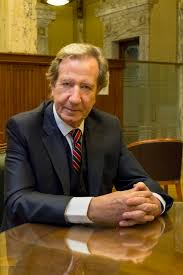
MEA Laureate Mario Joseph dies in accident in Haiti

April 7, 2025

On 4 April, 2025 the Miami Herald reported that Haiti-based human rights lawyer Mario Josep died in a car accident.

In a country where justice is often elusive, Mario Joseph was a fearless crusader who didn’t care whether his opponent was the Haitian government or the international community as he defended political prisoners and poor victims of human rights abuses in his Caribbean homeland. Joseph died Monday night from injuries sustained in a car accident last week as he pulled into his house. His death was confirmed by his longtime friend Brian Concannon and the Boston-based nonprofit Institute for Justice & Democracy in Haiti. He was 62. Concannon said in a statement. “The global human rights movement has lost an inspirational leader when the notion of human rights itself is under broad attack.” 

Since 1996 Joseph had served as the attorney for the Bureau des Avocats Internationaux, or Bureau of International Lawyers, in Port-au-Prince. The organization represented victims of human rights violations, trained Haitian law students and worked with U.S. law schools clinics, while also closely collaborating with the Institute for Justice & Democracy in Haiti. His high-profile cases included championing the rights of 5,000 victims of waterborne-cholera who blamed the United Nations for its introduction into Haiti after the 2010 earthquake.

Among Jospeh’s many accolades over the years was the Judith Lee Stronach Human Rights Award from the Center for Justice & Accountability in San Francisco, the Alexander Human Rights Award from Santa Clara University, and honorary doctorates from the University of San Francisco and Indiana University School of Law. He was also a finalist for the 2013 Martin Ennals Human Rights Defenders Award.
[see: https://humanrightsdefenders.blog/2013/04/24/breaking-news-final-nominees-martin-ennals-award-2013-made-public/]

https://www.trueheroesfilms.org/thedigest/laureates/3bb30bee-dd32-4668-9079-89dd464e5eff

https://www.miamiherald.com/news/nation-world/world/americas/haiti/article303281216.html

https://www.blackagendareport.com/remembering-mario-joseph-bai-managing-attorney

Civil society view of the 55th session of the UN Human Rights Council

April 12, 2024

At the 55th Human Rights Council session, 22 civil society organisations share reflections on key outcomes and highlight gaps in addressing crucial issues and situations [see: https://humanrightsdefenders.blog/2024/02/26/human-rights-defenders-issues-at-the-55th-session-of-the-human-rights-council/]:

The failure of States to pay their membership dues to the United Nations in full and in time, and the practice of conditioning funding on unilateral political goals is causing a financial liquidity crisis for the organisation, the impacts of which are felt by victims and survivors of human rights violations and abuses. … Without the resources needed, the outcomes of this session can’t be implemented. The credibility of HRC is at stake. 

We welcome the adoption of three resolutions calling for the implementation of effective accountability measures to ensure justice for atrocity crimes committed in the context of Israel‘s decades long colonial apartheid imposed over the Palestinian people, and for the realisation of the Palestinian people’s right to self-determination. Special Procedures expressed their profound concern about “the support of certain governments for Israel’s strategy of warfare against the besieged population of Gaza, and the failure of the international system to mobilise to prevent genocide” and called on States to implement an “arms embargo on Israel, heightened by the International Court of Justice’s ruling […] that there is a plausible risk of genocide in Gaza […].”   This session, the Special Rapporteur on the OPT concluded that the actions of Israel in Gaza meet the legal qualifications of genocide. 

We deplore the double standards in applying international law and the failure of certain States to vote in favor of ending impunity. This undermines the integrity of the UN human rights framework, the legitimacy of this institution, and the credibility of those States. From Palestine, to Ukraine, to Myanmar, to Sudan, to Sri Lanka, resolving grave human rights violations requires States to address root causes, applying human rights norms in a principled and consistent way. The Council has a prevention mandate and UN Member States have a legal and moral duty to prevent and ensure accountability and non-recurrence for atrocity crimes, wherever they occur.

We want to highlight and specifically welcome the adoption of the first ever resolution on combating discrimination, violence and harmful practices intersex persons. The resolution builds on growing support in the Council on this topic and responds to several calls by the global coalition of intersex-led organisations. The resolution takes important steps in recognising that discrimination, violence and harmful practices based on innate variations of sex characteristics, such as medically unnecessary interventions, takes place in all regions of the world. We welcome that the resolution calls for States to take measures to protect the human rights of this population and calls for an OHCHR report and a panel discussion to address challenges and discuss good practices in protecting the human rights of intersex persons.

We welcome the renewal of the mandate of the Independent Expert on the enjoyment of human rights by persons with albinism. As attested by human rights defenders with albinism, the mandate played an invaluable role by shedding light on human rights violations against persons with albinism through ground breaking research, country visits, and human rights training, and ensuring that defenders with albinism are consulted and take part in the decision-making. The organisations also welcomed the inclusion of language reflecting the important role played by “organizations of persons with albinism and their families”, and the reference to the role of States in collaboration with the World Health Organization, “to take effective measures to address the health-related effects of climate change on persons with albinism with a view to realizing their right to the enjoyment of the highest attainable standard of physical and mental health, particularly regarding the alarming incidence of skin cancer in this population, and to implement the recommendations of the report of the Independent Expert in this regard”.

We welcome the adoption of the resolution on the renewal of the mandate of the Special Rapporteur on the human right to a clean, healthy and sustainable environment. We also welcome the update of the title of the mandate acknowledging the recognition of this right by the Human Rights Council in its resolution 48/13 on 8 October 2021 and the General Assembly resolution 76/300 on 28 July 2022. We also welcome the inclusion of gender-specific language in the text, and we call on the Special Rapporteur to devote a careful attention to the protection of environmental human rights defenders for their strong contribution to the realisation of the right to a clean, healthy, and sustainable environment, as called for by several States. We also welcome that the Council appointed for the first time a woman from the global south to fulfill this mandate, and we welcome the nomination of another woman as Special Rapporteur on the promotion and protection of human rights in the context of climate change. 

We welcome the resolution on countering disinformation, which addresses new issues whilst once again rejecting censorship and reaffirming the ‘essential role’ that the right to freedom of expression plays in countering disinformation. We welcome the specific focus on girls – besides women – as well as risks associated with artificial intelligence, gender-based violence, and electoral processes. We urge States to follow the approach of the resolution and to combat disinformation through holistic, positive measures, including by ensuring a diverse, free and independent media environment, protecting journalists and media workers, and implementing comprehensive right to information laws. Importantly, we also urge States to ensure that they do not conduct their own disinformation campaigns. At the same time, social media companies have an essential role to play and should take heed of the resolution by reforming their business models which allow disinformation to flourish on their platforms. The resolution also mandates the Advisory Committee to produce a new report on disinformation, and it is absolutely essential that this report mirrors and reinforces existing standards on this topic, especially the various reports of the Special Rapporteur on freedom of opinion and expression.

Whilst we welcome the technical renewal of the resolution on freedom of religion or belief, we regret that the parallel resolution on combating intolerance (widely known by its original name Resolution 16/18) was not tabled at the session. Since 2011, these duel resolutions have been renewed each year, representing a consensual and universal framework to address the root causes of hate based on religion or belief in law, policy, and practice. We call on the OIC to once again renew Resolution 16/18 in a future session, while ensuring no substantive changes are made to this consensual framework. We also urge all States to reaffirm their commitment to Resolution 16/18 and the Rabat Plan of Action and adopt comprehensive and evidence-based national implementation plans, with the full and effective participation of diverse stakeholders.

We welcome the adoption of the resolution on prevention of genocide and its focus on impunity, risks and early warnings, as well as the paragraph reaffirming that starvation of civilians as a method to combat is prohibited under international humanitarian law; however, we regret that the resolution fails to adequately reflect and address serious concerns relating to current political contexts and related risks of genocide. 

We welcome the adoption of the resolution on the rights of the child: realising the rights of the child and inclusive social protection, strengthening the implementation of child rights-compliant inclusive social protection systems that benefit all children. We also welcome the addition of a new section on child rights mainstreaming, enhancing the capacity of OHCHR to advance child rights mainstreaming, particularly in areas such as meaningful and ethical child participation and child safeguarding.  We remain concerned by persisted attempts to weaken the text, especially to shift the focus away from children as individual right-holders, to curtail child participation and remove the inclusion of a gender perspective.

We welcome the adoption of the resolution on torture and other cruel, inhuman or degrading treatment or punishment which addresses effective national legislative, administrative, judicial or other measures to prevent acts of torture. We welcome the new paragraph urging States concerned to comply with binding orders of the International Court of Justice related to their obligations under the Convention Against Torture.

We welcome the adoption of a new resolution on the human rights situation in Belarus. The Belarusian authorities continue their widespread and systematic politically-motivated repression, targeting not only dissent inside the country, but also Belarusians outside the country who were forced to flee for fear of persecution. Today, almost 1,500 prisoners jailed following politically-motivated charges in Belarus face discriminatory treatment, severe restriction of their rights, and ill-treatment including torture. The resolution rightly creates a new standalone independent investigative mechanism, that will inherit the work of the OHCHR Examination, to collect and preserve evidence of potential international crimes beyond the 2020 elections period, with a view to advancing accountability. It also ensures the renewal of the mandate of the Special Rapporteur who remains an essential ‘lifeline’ to Belarusian civil society.

We welcome the resolution on technical assistance and capacity building in regard to the human rights situation in Haiti and emphasis on the role civil society plays in the promotion and protection of human rights and the importance of creating and maintaining an enabling environment in which civil society can operate independently and free from insecurity. We similarly welcome the call on the Haitian authorities to step up their efforts to support national human rights institutions and to pursue an inclusive dialogue between all Haitian actors concerned in order to find a lasting solution to the multidimensional crisis, which severely impacts civil society. We welcome the renewal of the mandate of the designated expert and reference to women and children in regard to the monitoring of human rights situation and abuses developments, as well as encouragement of progress on the question of the establishment of an office of the Office of the High Commissioner in Haiti. We nonetheless regret that the resolution does not address the multifaceted challenges civil society faces amidst escalating violence, fails to further address the link between the circulation of firearms and the human rights violations and abuses, and does not identify concrete avenues for the protection of civilians and solidarity action to ensure the safety, dignity and rights of civilians are upheld.

We welcome the adoption of the resolution on Iran, renewing the mandate of the Special Rapporteur on human rights in Iran and extending for another year the mandate of the Independent International Fact-Finding Mission on Iran. The continuation of these two distinct and complementary mandates is essential for the Council to fulfill its mandate of promotion and protection of human rights in Iran. However, given the severity of the human rights crisis in the country, we regret that this important resolution remains purely procedural and fails to reflect the dire situation of human rights in Iran, including the sharp spike in executions, often following grossly unfair trials. It also fails to address the increased levels of police and judicial harassment against women and girls appearing in public without compulsory headscarves, human rights defenders, lawyers, journalists and families of victims seeking truth and justice, and the continued pervasive discrimination and violence faced by women and girls, LGBTI+ persons and persons belonging to ethnic and religious minorities in the country.  

We welcome the adoption by consensus of the resolution on Myanmar, which is a clear indication of the global concern for the deepening human rights and humanitarian crisis in the country as a result of the military’s over three-year long brutal war against the people resisting its attempted coup. We further welcome the Council’s unreserved support for Myanmar peoples’ aspirations for human rights, democracy, and justice as well as the recognition of serious human rights implications of the continuing sale of arms and jet fuel to Myanmar.

We welcome the resolution on the situation of human rights in Ukraine stemming from the Russian aggression. The latest report of the Independent International Commission of Inquiry (COI) reveals disturbing evidence of war crimes, including civilian targeting, torture, sexual violence, and the unlawful transfer of children. These findings underscore the conflict’s brutality, particularly highlighted by the siege of Mariupol, where indiscriminate attacks led to massive civilian casualties and infrastructure destruction. The report also details the widespread and systematic torture and sexual violence against both civilians and prisoners of war. Moreover, the illegal deportation of children emerges as a significant issue, as part of a broader strategy of terror and cultural erasure. The COI’s mandate extension is crucial for ongoing investigations and ensuring justice for victims. 

By adopting a resolution entitled ‘advancing human rights in South Sudan,’ the Council ensured that international scrutiny of South Sudan’s human rights situation will cover the country’s first-ever national elections, which are set to take place in De­cember 2024. With this resolution, the UN’s top human rights body extended the mandate of its Com­mis­sion on Human Rights in South Sudan.

We welcome the resolution on the human rights situation in Syria and the extension of the mandate of the Independent International Commission of Inquiry (COI), which will continue to report on violations from all sides of the conflict in an impartial and victim-centered manner. Syria continues to commit systematic and widespread attacks against civilians, in detention centers through torture, arbitrary detention and enforced disappearance and through indiscriminate attacks against the population in Idlib. We welcome that the resolution supports the mandate of the Independent Institution of the Missing People and calls for compliance with the recent order on Provisional Measures by the ICJ – both initiatives can play a significant role in fulfilling victims’ rights to truth and justice and should receive support by all UN Member States. In a context of ongoing normalisation, the CoI’s mandate to investigate and report on human rights abuses occurring in Syria is of paramount importance.

We continue to deplore this Council’s exceptionalism towards serious human rights violations committed by the Chinese government. At a time when double-standards are enabling ongoing atrocity crimes to be committed in Palestine, sustained failure by Council Members, in particular OIC countries, to promote accountability for crimes against humanity against Uyghurs and Muslim peoples in China severely undermines the Council’s integrity, and its ability to prevent and put an end to atrocity crimes globally. Findings by the OHCHR, the UN Treaty Bodies, the ILO and over 100 letters by UN Special Procedures since 2018 have provided overwhelming evidence pointing to systematic and widespread human rights violations across the People’s Republic of China. We reiterate our pressing call for all Council Members to support the adoption of a resolution establishing a UN mandate to monitor and report on the human rights situation in China, as repeatedly urged by UN Special Procedures. We further echo Special Procedures’ call for prompt and impartial investigations into the unlawful death of Cao Shunli, and all cases of reprisals for cooperation with the UN.

We regret the Council’s silence on the situation in India despite the clear and compounding early warning signs of further deterioration that necessitate preventive action by the Council based on the objective criteria. The latest of these early warning signals include the recent notification of rules to implement the highly discriminatory Citizenship Amendment Act by the Bharatiya Janata Party-led government just weeks before the election, along with recent intercommunal violence in Manipur and ongoing violence against Muslims in various parts of India amid increasing restrictions on civic space, criminalisation of dissent and erosion of the rule of law with political interference.

We further regret that this Council is increasingly failing to protect victims of human rights violations throughout the Middle East and North Africa, including in Algeria, Bahrain, Egypt, Libya, Saudi Arabia, and Yemen. The people of Yemen and Libya continue to endure massive ‘man-made’ humanitarian catastrophes caused in large part by ongoing impunity for war crimes, crimes against humanity and other grave violations of international law. In Algeria, Egypt, Bahrain, Saudi Arabia and in other MENA countries, citizens are routinely subjected to brutal, wide-spread human rights violations intended to silence dissent, eradicate independent civil society and quash democratic social movements. Countless citizens from the MENA region continue to hope and strive for a more dignified life – often at the cost of their own lives and freedom. We call on this Council and UN member States to rise above narrow political agendas and begin to take steps to address the increasing selectivity that frequently characterises this Council’s approach to human rights protection and promotion. 

We regret that once more, civil society representatives faced numerous obstacles to accessing the Palais and engaging in discussions, both in person and remotely, during this session. The UN human rights system in Geneva has always and continues to rely on the smooth and unhindered access of civil society to carry out its mandate. We remind UN Member States, as well as UNOG, that the Council’s mandate, as set out in HRC Res 5/1, requires that arrangements be made, and practices observed to ensure ‘the most effective contribution’ of NGOs. Undermining civil society access and engagement not only undermines the capacities and effectiveness of civil society but also of the UN itself.

Signatories:

  1. All Human Rights for All in Iran
  2. Asian Forum for Human Rights and Development (FORUM-ASIA)
  3. Association Arc pour la defense des droits de l’homme et des revendication democratique/culturelles du peuple Azerbaidjanais Iran -”ArcDH”
  4. Balochistan Human Rights Group
  5. Cairo Institute for Human Rights Studies
  6. Child Rights Connect (CRCnt)
  7. CIVICUS
  8. Commonwealth Human Rights Initiative (CHRI)
  9. Egyptian initiative for Personal Rights (EIPR)
  10. Ensemble contre la Peine de Mort
  11. Franciscans International
  12. Gulf Center for Human Rights
  13. Impact Iran
  14. International Bar Association’s Human Rights Institute (IBAHRI)
  15. International Federation for Human Rights (FIDH)
  16. International Lesbian and Gay Association (ILGA)
  17. International Service for Human Rights (ISHR)
  18. Kurdistan Human Rights Network
  19. Kurdpa Human Rights Organization
  20. PEN America
  21. The Syrian Legal Development Programme (SLDP)
  22. United 4 Iran

see also: https://www.eeas.europa.eu/delegations/un-geneva/eu-human-rights-council_en

https://www.fidh.org/en/international-advocacy/united-nations/human-rights-council/55th-human-rights-council-session-israel-palestine-belarus-iran

Excerpts from Türk’s global update to the Human Rights Council

March 4, 2024
UN Human Rights Chief Volker Türk at the 55th session of the UN Human Rights Council, OHCHR/Pierre Albouy

At the 55th session of the Human Rights Council, Volker Türk – UN High Commissioner for Human Rights – made his overview statement on 4 march 2024. Here some highlights:

….Around the world, 55 conflicts are flaring. Widespread violations of international humanitarian and human rights law are generating devastating impact on millions of civilians. Displacement and humanitarian crises have already reached an unprecedented scale. And all of these conflicts have regional and global impact.

Overlapping emergencies make the spectre of spillover conflict very real. The war in Gaza has explosive impact across the Middle East. Conflicts in other regions – including in the Horn of Africa, Sudan and the Sahel – could also escalate sharply. Increasing militarisation on the Korean Peninsula raises threat levels. The deteriorating security c risis in the eastern provinces of the Democratic Republic of the Congo, which the Council will address on 3 April, is alarming. In the Red Sea, as well as the Black Sea, attacks are creating shock-waves for the global transport of goods, adding to the economic pain inflicted on less developed countries…..

In Latin America and the Caribbean, the prevalence and violence of gangs and organized crime have severe impact on the lives and rights of millions of people, including in Ecuador, Haiti, Honduras and Mexico. Punitive and militarized responses have in some cases led to grave human rights violations, potentially further fuelling violence. Only policies grounded in human rights can provide effective and sustainable solutions. Corruption, impunity, poor governance and the structural root causes of violence – such as discrimination and failure to uphold economic, social and cultural rights – must be tackled, with the full participation of civil society and affected communities. International cooperation needs to be enhanced, to address the illegal arms trade and ensure accountability for transnational crimes…

Fear is fragmenting societies across the world, unleashing fury and hatred. They are also fuelled by a winner-take-all attitude that frames elections as the spoils of conquest.

..Good governance requires constant oversight and accountability, via independent checks and balances to the exercise of power, meaning that it is strongly underpinned by the rule of law, including independent justice systems. Fundamental freedoms – the rights to freedom of opinion, expression, peaceful assembly and association – are also essential.

I am profoundly concerned by the prospect of intense disinformation campaigns in the context of elections, fuelled by generative artificial intelligence. There is an acute need for robust regulatory frameworks to ensure responsible use of generative AI, and my Office is doing its utmost to advance them…

Autocracy and military coups are the negation of democracy. Every election – even an imperfect one – constitutes an effort to at least formally acknowledge the universal aspiratio n to democracy However, in a so-called ‘illiberal democracy’ – or, as the Prime Minister of Hungary referred to his country, an ‘illiberal State’ – the formal structure of election is maintained, civic freedoms are restricted, the media’s scrutiny of governance is eroded by installing government control over key media outlets, and independent oversight and justice institutions are deeply undermined, concentrating power in the executive branch.

It is important to recognise that in many cases, this year’s electoral processes will ensure a smooth transfer of power, free of hatred; and that the governance structures that result will broadly achieve their main function of representing the many voices of the people, and advancing their rights.

But in other cases, I have serious concerns about the human rights context in which several elections are taking place.

In the Russian Federation, the authorities have further intensified their repression of dissenting voices prior to this month’s Presidential election. Several candidates have been prevented from running, due to alleged administrative irregularities. The death in prison of opposition leader Alexei Navalny adds to my serious concerns about his persecution. Since the onset of Russia’s war on Ukraine, t housands of politicians, journalists, human rights defenders, lawyers and people who have simply spoken their minds on social media have faced administrative and criminal charges, and this trend appears to have worsened in recent months, with many cultural figures targeted. Last month, a new bill passed into law that further punishes people convicted of distributing information deemed to be false about Russia’s armed forces, as well as people who seek to implement decisions by international organizations that the Russian Federation “does not take part in”. I urge a swift and comprehensive review of all cases of deprivation of liberty that result from the exercise of fundamental freedoms; as well as an immediate end to the repression of independent voices and the legal professionals who represent them. The future of the country depends on an open space.

Iran’s legislative election three days ago was Iranians’ first opportunity to vote since the “Women, Life, Freedom” protests of 2022 and 2023. It took place in a country that has been deeply divided by the Government’s repression of the rights of women and girls. People who participated in the protests have been persecuted, imprisoned on long sentences and in some cases, put to death. The draft Bill on “Supporting the Family by Promoting the Culture of Chastity and Hijab”, if adopted, would impose severe punishments for acts that should not be deemed criminal in any country. In my ongoing engagement with the Iranian authorities, I have urged immediate reforms to uphold the rights of all Iranians, including the right of women to make their own choices, and an immediate moratorium on the death penalty….

In the United States of America, in this electoral year, it is particularly important for authorities at all levels to implement recent recommendations by the UN Human Rights Committee to ensure that suffrage is non-discriminatory, equal and universal. A 2021 Presidential executive order acknowledges that disproportionate and discriminatory policies and other obstacles have restricted the right to vote for people of African descent, and emphasises the need to overturn them. Yet according to the Brennan Center for Justice , at least 14 states have passed laws in 2023 that have the effect of making voting more difficult. In a context of intense political polarisation, it is important to emphasise equal rights, and the equal value of every citizen’s vote…

In Afghanistan, I deplore continuing and systematic violations of human rights, particularly the comprehensive violations of the rights of women and girls, which exclude them from every aspect of public life, including secondary and tertiary education; employment; and movement. Advancing the rights of women and girls must be the highest priority for all who work on and in Afghanistan. The civic freedoms and media freedoms of all Afghans are profoundly curtailed, with many women human rights defenders and journalists suffering arbitrary detentions. The resumption of public executions is horrific. I remain concerned about forced expulsion of Afghans from neighbouring countries, particularly for those who face a risk of persecution, torture or other irreparable harm in Afghanistan.

In the United Arab Emirates, another mass trial is underway based on counter-terrorism legislation that contravenes human rights law. In December, new charges were brought against 84 people, including human rights defenders, journalists and others who were already in prison. Several were nearing the end of their sentence or have been arbitrarily held in detention after completion of their sentence. Their joint prosecution constitutes the second-largest mass trial in the UAE’s history, after the so-called “UAE94” case in 2021, and includes many of the same defendants. I remain concerned about broader patterns of suppression of dissent and the civic space in the country, and I urge the Government to review domestic laws in line with international human rights recommendations.

Dialogue between China and my Office continues in areas such as counterterrorism policies, gender equality, minority protection, civic space, and economic, social and cultural rights. As we move forward, it is important that this dialogue yield concrete results, notably in respect of the policy areas raised during the Universal Periodic Review. I recognise China’s advances in alleviating poverty and advancing development, and I have urged that these advances be accompanied by reforms to align relevant laws and policies with international human rights standards. During the UPR, China announced plans to adopt 30 new measures for human rights protection, including amendments to the Criminal Law, and revisions of the Criminal Procedure Law. My Office looks forward to engaging with China on this; I particularly encourage revision of the vague offence of “picking quarrels and making trouble” in Article 293 of the Criminal Law, and I urge the release of human rights defenders, lawyers and others detained under such legislation. I also call on the Government to implement the recommendations made by my Office and other human rights bodies in relation to laws, policies and practises that violate fundamental rights, including in the Xinjiang and Tibet regions. I am engaging with the Hong Kong authorities on continuing concerns about national security laws…

In many countries, including in Europe and North America, I am concerned by the apparently growing influence of so-called “great replacement” conspiracy theories, based on the false notion that Jews, Muslims, non-white people and migrants seek to “replace” or suppress countries’ cultures and peoples. These delusional and deeply racist ideas have directly influenced many perpetrators of violence. Together with the so called “war on woke,” which is really a war on inclusion, these ideas aim to exclude racial minorities – particularly women from racial minorities – and LGBTQ+ people from full equality. Multiculturalism is not a threat: it is the history of humanity, and deeply beneficial to us all.

Peace, like development, is built and nourished through rights. It is by upholding and advancing the full spectrum of human rights, including the right to development and the right to a clean, healthy and sustainable environment, that States can craft solutions that are durable – because they respond to the universal truth of our equality and the inextinguishable desire for freedom and justice.

History is a record of humanity’s capacity to surmount the worst challenges. Among the greatest achievements of humanity over the past 75 years has been the recognition that addressing human rights in every country– all human rights; it is not an à la carte menu – is a matter of international concern.

See also: https://humanrightsdefenders.blog/2024/02/26/human-rights-defenders-issues-at-the-55th-session-of-the-human-rights-council/

For the ful text, see:

https://www.ohchr.org/en/statements-and-speeches/2024/03/turks-global-update-human-rights-council

Nine Afro-Latina and Afro-Caribbean women human rights defenders

August 8, 2023

On 25 July, 2023 – International Afro-Latina, Afro-Caribbean and Diaspora Women’s Day, – Amnesty International highlighted nine defenders and collectives who have devoted their lives to ending inequality and violence, advocating a dignified life for all people because their work deserves the recognition, visibility, protection and resources necessary for it to continue to spread.

Rede Vozes Negras pelo Clima, Brazil

Rede Vozes Negras pelo Clima is an initiative of 11 Black Brazilian women who are working in their respective territories to protect human rights, confront climate racism and promote anti-racist socio-environmental justice. They belong to traditional, riverine quilombola communities. They are also activists and leaders of communities that live on the margins of large urban centres, communities that are being directly affected by the consequences of the climate crisis and development projects that fail to take into account the rights of local populations.

They are thus fighting for anti-racist adaptation policies and an energy transition that will guarantee the promotion of human rights and nature. Mitigation initiatives need to incorporate the ancestral knowledge and wisdom of traditional peoples and communities and ensure the participation of those people affected by extreme weather events when decisions are being made as to the investments that need to be made to repair losses and damage.

Dayana Blanco Acendra, Colombia

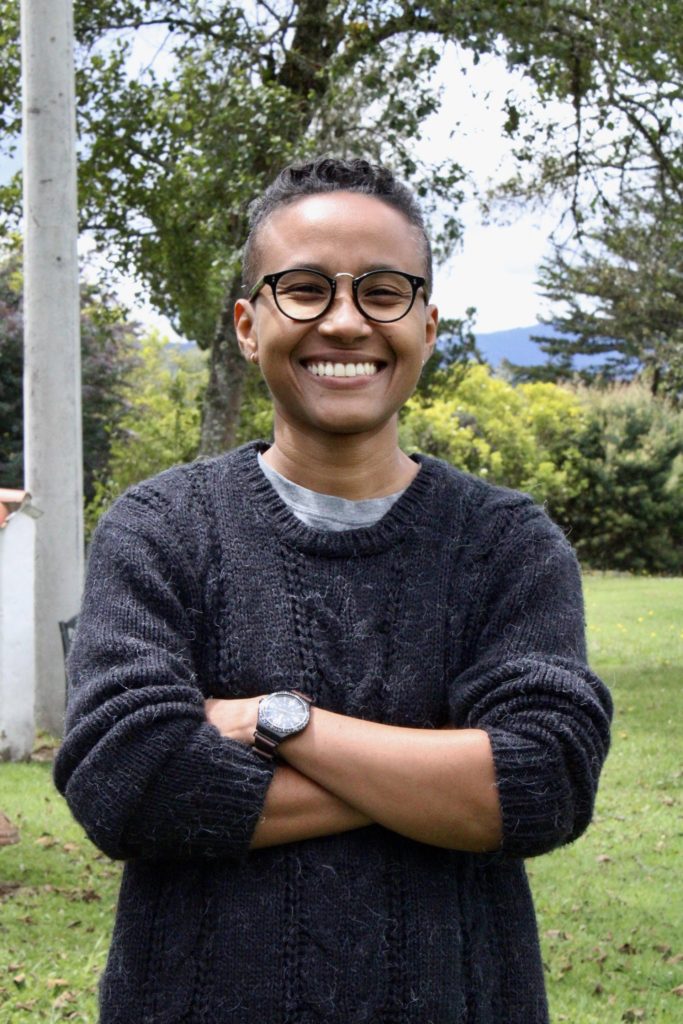
Dayana Blanco is a renowned Colombian lawyer

Dayana Blanco is a renowned Colombian lawyer who heads ILEX Acción Jurídica, an Afro-Colombian and Afro-LGBTQI+ organization committed to racial justice in Colombia, Latin America and the Caribbean. According to Blanco, “Racial justice in Colombia requires all of society to commit to combatting the historical inequality that has affected the Afro-descendant population. This means actions to address social and economic inequality.”

With an outstanding academic background and experience in different sectors, Dayana has promoted innovative research on racist police violence, statistical invisibility in the systematization of violence against Afro-descendant leaders and economic and social rights. In addition, together with her team and in coordination with other civil society organizations, she has obtained notable rulings in defence of Afro-Colombian midwifery, overcoming the statistical invisibility of the Afro-descendant population, among others, and demonstrating her dedication to the struggle for equality and justice.

Under her leadership, ILEX has – through legal mobilization, research and strategic communications – become a reference for promoting the rights of the Afro-descendant population. Dayana and her team highlight the importance of addressing social and economic inequality as a fundamental element of racial justice in Colombia, calling on the whole of society to unite in the struggle and build a more equitable future for all.

Donaida Pérez Paseiro, Cuba

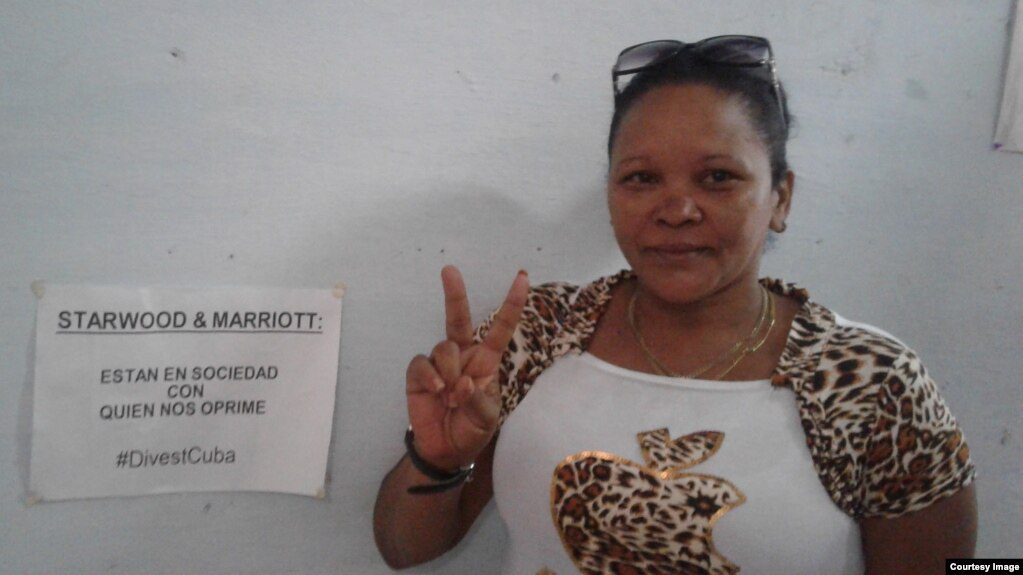
Donaida Pérez Paseiro is a Cuban activist

Donaida Pérez Paseiro is a Black activist, religious leader and president of the Asociación Yorubas Libres de Cuba. Yoruba is a religion of the African diaspora that is practised in many countries, including Cuba. Donaida was arrested on 16 July 2021 and sentenced in February 2022 to eight years’ imprisonment by the Santa Clara Municipal People’s Court for “public disorder”, “contempt” and “attacking” an official. According to the information available to Amnesty International, Donaida should never have been charged with these crimes.

The charges of “contempt” and “public disorder” are frequently used in Cuba to limit the right to freedom of expression and peaceful assembly. Both she and her husband, Loreto Hernández García, were tried along with 14 other protesters in what appears to have been an unfair trial.

Donaida is the wife of Yoruba leader and activist Loreto Hernandez Garcia who was unjustly sentenced to seven years in prison for demanding respect for human rights in Cuba during the 11 July 2021 demonstrations.

Donaida is an example of courage and perseverance in the resistance against repression in Cuba. Her commitment has manifested itself in numerous peaceful marches and protests. According to her family, she was a freelance journalist and founded the Laurel Express press agency, where she gave visibility to the injustices and challenges faced by her community in the city of Placetas. Her activism spans multiple spheres, having been a member of the Orlando Zapata Tamayo resistance front and the central opposition coalition. Donaida’s legacy transcends borders and leaves a profound inspiration for those who seek a Cuba without repression.

Guerline M. Jozef, Haiti

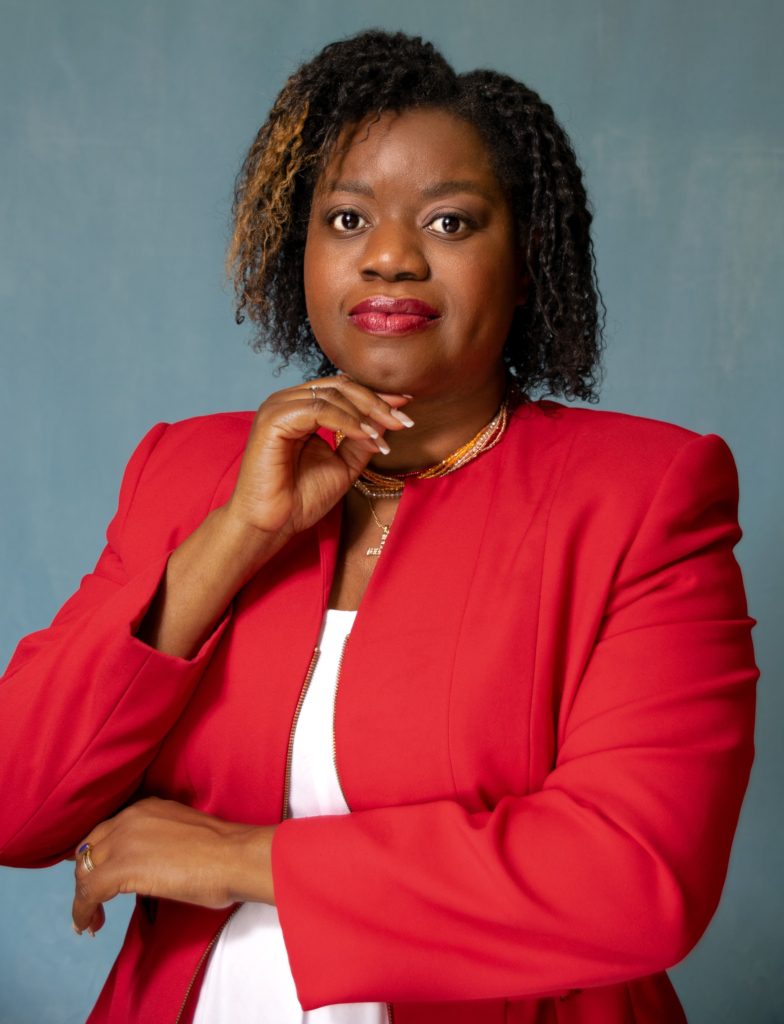
Guerline M. Jozef is the founder and executive director of the Haitian Bride Alliance

Guerline M. Jozef is the founder and executive director of the Haitian Bridge Alliance, the only Black and Haitian women-led organization serving migrants on both sides of the U.S.-Mexico border. Named one of the most influential people in 2021 on racial issues by Politico, she is also co-founder of the Black Immigrants Bail Fund and the Cameroon Advocacy Network.

 The Haitian Bridge Alliance (HBA), also known as “the Bridge,” is a grassroots community-based organization that advocates for just and humane immigration policies and provides migrants and immigrants with humanitarian, legal and social services, with a special focus on Black migrants, the Haitian community, women and girls, LGBTQIA+ people, and survivors of torture and other human rights abuses. HBA also seeks to highlight issues specific to Black migrants and encourages solidarity and collective action to bring about policy changes. Through her work, Guerline reminds us that together, Anpil men, chay pa lou! Many hands lighten the load!

Miriam Miranda, Honduras

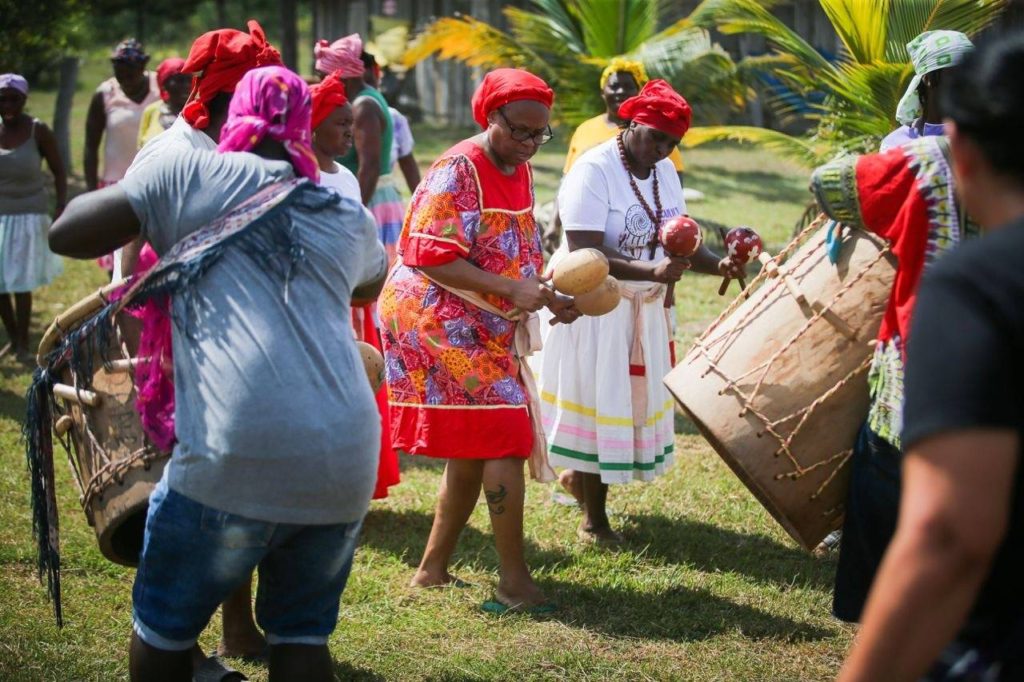
Miriam Miranda is an Afro-indigenous Garífuna leader from Honduras

An Afro-indigenous Garífuna leader from Honduras, Miriam Miranda stands out as a courageous defender of human and environmental rights. As coordinator of the Organización Fraternal Negra Hondureña (OFRANEH), she has carried out invaluable work to protect and defend the rights of the Garífuna people in Honduras. Her tireless work, lucidity and commitment have earned her the recognition of prestigious awards, such as that of the Friedrich Ebert Foundation, as well as the Carlos Escaleras and Oscar Romero awards.

Miriam’s struggle is deeply rooted in the Garífuna territory of Honduras and is manifested through the history of OFRANEH, an organization through which these people are building their dignity and their future. The land and the sea, as an indispensable part of their identity, determine an essential struggle to preserve the natural assets of their territory.

Miriam is a highly respected thinker and leader within the social movement. She has an enormous capacity to devour books and mobilize energies from all sides to defend her people. She is one of those people who make life possible, whose words always point forward and who finds strength in the deep roots of her origin, where her future of freedom was born. As the daughter of Barauda (representing Garífuna female strength, Barauda is an historical character who pushed the Garífuna hero Sathuye to continue the struggle for the liberation of his people), Miriam has turned her critical eye to the source of it all: the predatory civilization of consumerism.

Her tireless work and courage inspire others to keep fighting. Her contribution and leadership have already left an indelible mark on the history of Honduras and global struggles for territory. [see also: https://humanrightsdefenders.blog/tag/miriam-miranda/]

Shackelia Jackson, Jamaica

The Jamaican human rights defender Shackelia Jackson

The extrajudicial killing of her brother, Nakiea Jackson, in 2014 pushed Shackelia Jackson into a life of activism. Since then she has been healing, evolving, learning and gathering the tools with which to reconcile her conflicting realities. A political science scholar and communicator, Shackelia is the mother of an empathetic child, who longs with innocence to experience the world. Despite challenges and setbacks, Shackelia remains dedicated to the wider struggle, supporting causes that prevent the institutionalization and normalization of practices that violate human rights and erode the sanctity of life.

Through her grassroots organizing efforts in Jamaica, she has raised funds to support back-to-school initiatives and education programmes, recognizing the importance of empowering the younger generation. Shackelia’s work has gone far beyond her local community. She has become a global force, lending her voice and expertise to international platforms. As keynote speaker at an Amnesty International event in London, she captivated the audience with her powerful words, urging them to stand up and take action. In 2017, Shackelia also participated in roundtable discussions at Amnesty International events in Brazil and the United States, amplifying the voices of the oppressed and demanding accountability.

It was on this journey that Shackelia realized that change starts with each individual. She has encouraged others to join her in writing for rights, and to use their words as weapons against injustice. “Let us write until we are heard, let us write until justice is done,” she said.

Ivana C. Fred Millán, Puerto Rico

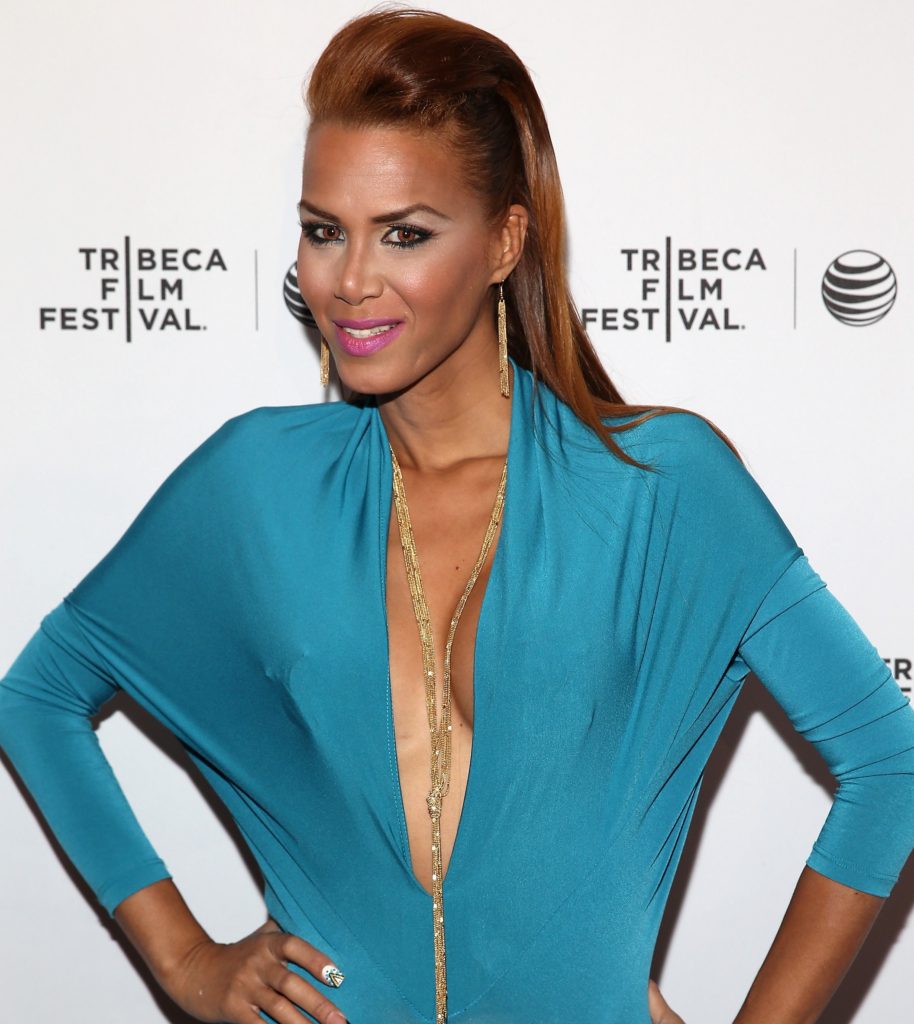
Ivana Fred attends the "Mala Mala" Premiere during the 2014 Tribeca Film Festival at Chelsea Bow Tie Cinemas on April 19, 2014 in New York City.

Ivana Fred is a prominent Black and transgender activist, writer and leader from Puerto Rico. She has dedicated her life to fighting for human rights and equality for transgender people in her country. Her passion for justice has made her an influential figure and a powerful voice in Puerto Rican society.

Since her first steps into activism in 1999, Ivana has formed part of pioneering projects aimed at trans people and has used her voice and pen to amplify the stories and needs of trans people.

As she says: “Life put me in a place where I could develop as a leader, the ‘Ponte el Sombrero’ project gave me the tools to empower and educate socially disadvantaged and discriminated populations. That was how I came to understand that to exist is to resist”.

Ivana has also made her mark in the media, writing for the Metro newspaper and participating in acclaimed documentaries and films such as “Mala Mala” and “Las Muchachas”. Her presence and perspective have helped generate greater visibility and understanding of transgender experiences in Puerto Rico.

Ivana Fred is currently one of the directors of the organization Trans Goofy Games, where she continues to lead and support initiatives that promote transgender inclusion and empowerment. With unwavering commitment, Ivana has remained a visible leader and loyal activist. From her early days of activism to the present day, her voice has been resolute in seeking dignity and respect for all transgender people.

With her courage and determination, Ivana has shown that to exist is to resist and has paved the way for a more inclusive and respectful future in Puerto Rico and beyond. Her legacy as a visible leader and her tireless activism inspire us all to continue fighting for a world where everyone can live with equality and dignity.

Elena Lorac, Dominican Republic

Elena Lorac is a prominent activist and advocate for human rights in the Dominican Republic

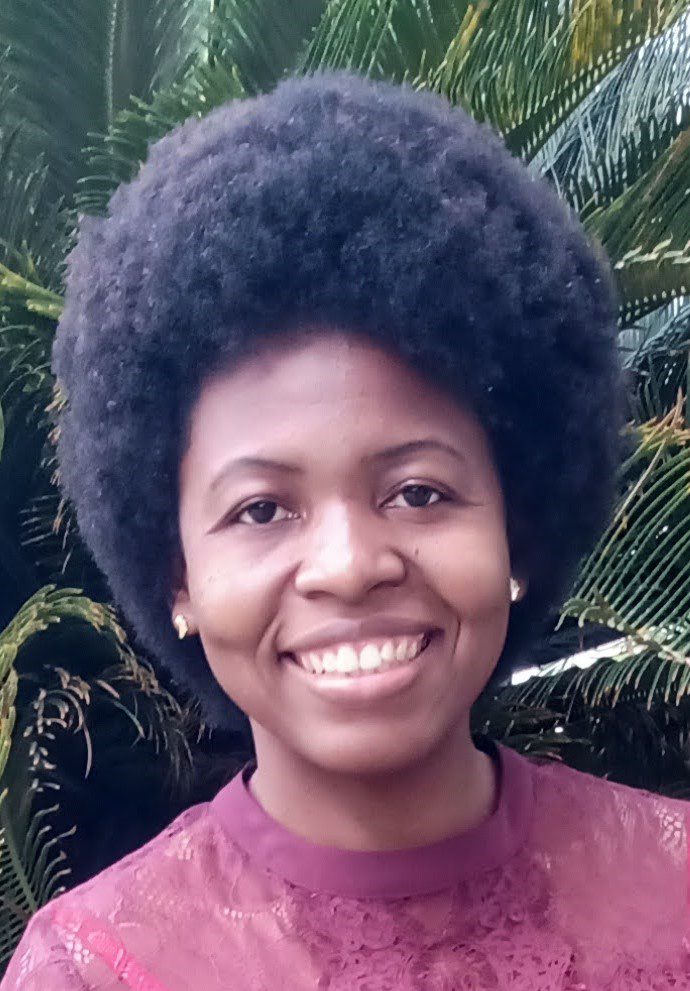
Elena Lorac is a prominent activist and advocate for human rights in the Dominican Republic, especially on the part of Dominicans of Haitian descent. As national coordinator of the Movimiento Reconoci.do, she has led the fight for the right to nationality and full integration of this community into Dominican society.

With more than 12 years’ experience, Elena has worked to strengthen community leadership and empower black women in the country’s bateyes [sugar mill settlements]. She also provides support to Haitian migrants and Venezuelan migrants and refugees, and is known for her community-based approach.

Elena is also a nationally and internationally renowned speaker, speaking on issues such as nationality, discrimination and racism, and raising awareness of policies that affect Dominicans of Haitian descent in the Dominican Republic. Her tireless work has been instrumental in promoting human rights and achieving the real inclusion of this community in Dominican society.

Aracelis Sánchez, Venezuela

Aracelis Sánchez is a human rights defender and the founder of Organización de Familiares de Víctimas de Violación de Derechos Humanos (Orfavideh)

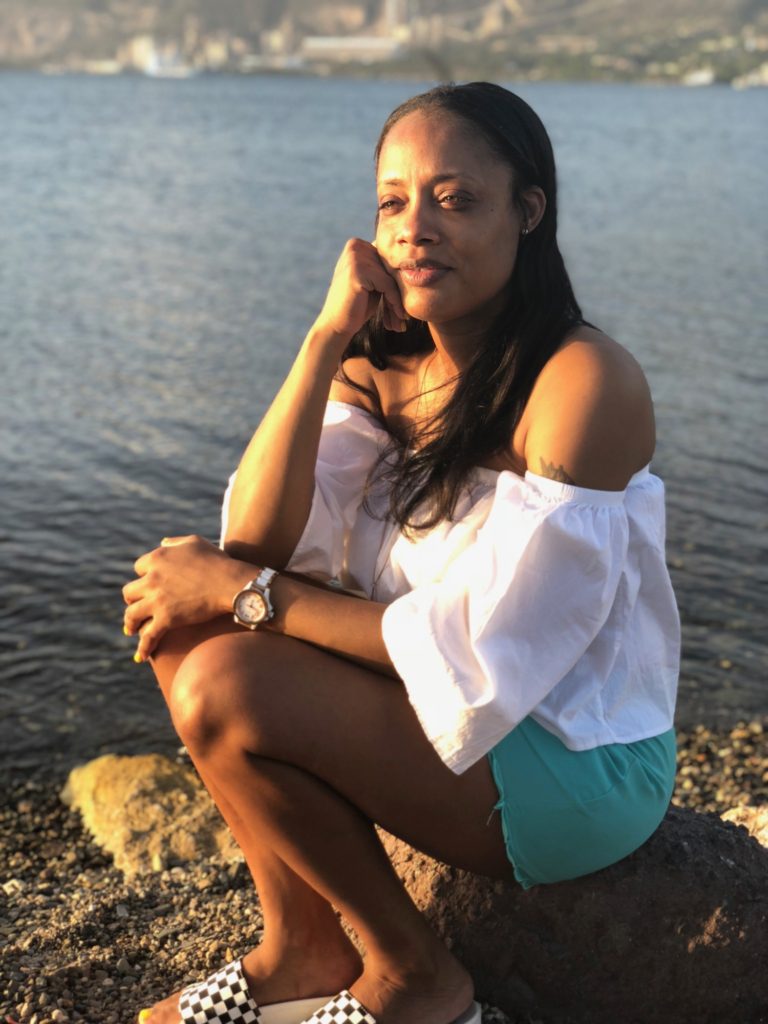
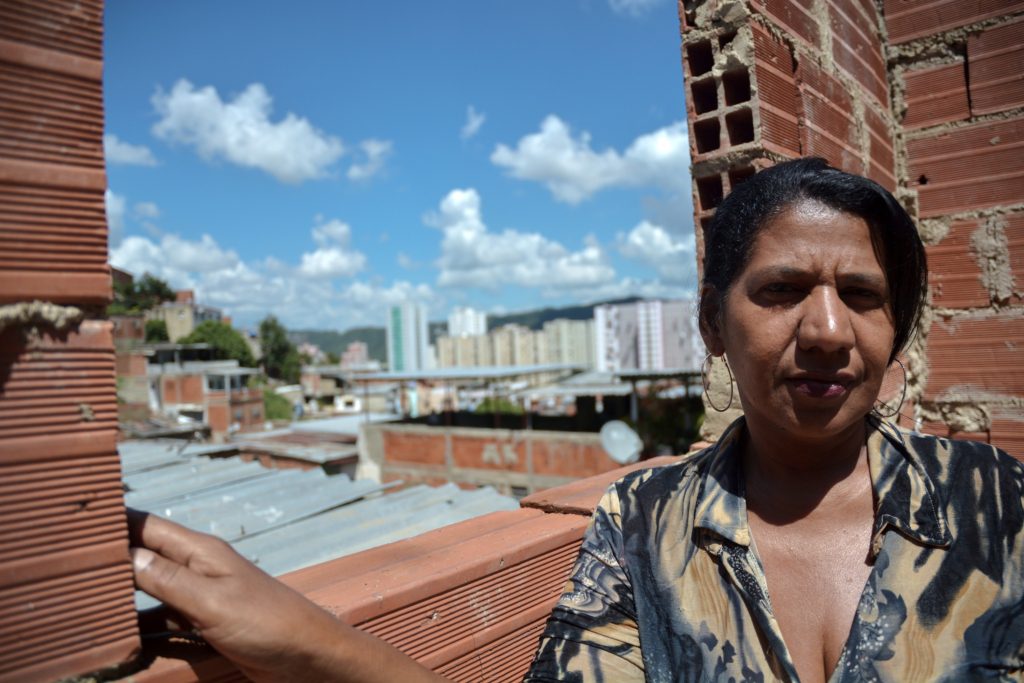
Aracelis Sánchez, a human rights defender and the founder of Organización de Familiares de Víctimas de Violación de Derechos Humanos (Orfavideh), is promoting solidarity and demanding justice together with more than 200 mothers of victims of extrajudicial executions in Venezuela.

Aracelis, who lost her son Darwilson Sequera, has been fighting for more than 10 years to get cases of human rights violations committed by Venezuelan state security forces investigated. Orfavideh provides human rights training workshops for mothers, equipping them with tools with which to demand guarantees and use the mechanisms of justice in Venezuela.

Aracelis stresses that when victims are empowered and able to put pressure on prosecutors, their cases are investigated. She believes that support and empowerment are essential to transform grief into positive action and thus achieve justice for victims and their families.

https://www.amnesty.org/en/latest/news/page/2/

see also: https://www.peacebrigades.org/themes/women-human-rights-defenders

Franco-German Prize for Human Rights 2021

December 17, 2021

Germany and France honoured this year 15 people who have made outstanding contributions to the protection of human rights, campaigning for causes including women’s rights in Afghanistan, the freedom of the press in South Africa and children who are born as a result of rape in wartime.

On 10 December, international Human Rights Day, Foreign Minister Annalena Baerbock and French Foreign Minister Jean‑Yves Le Drian presented fifteen people with the Franco-German Prize for Human Rights. This award recognises the efforts of all those who work tirelessly every day to advance the causes of human rights and the rule of law. It is presented decentralised by the French and German missions in various locations around the world.

Chang Weiping a Chinese human rights lawyer.

Jake Epelle who works to combat the ongoing stigmatisation and discrimination faced by people with albinism in Nigeria.

Noelah Godfrey Msuya who promotes the rights of children and women in Tanzania.

Monika Borgmann who is a German-Lebanese documentary-maker.

Jacques Letang who is a judge and lawyer in Haiti.

Cristina Palabay from the Philippines who leads the national association Karapatan.

Alexandrine Victoire Saizonou who is an advocate for women’s and children’s rights in Benin.

Ajna Jusic from Bosnia discovered at the age of 15 that she was born as a result of rape during wartime, and since then she has advocated for others in the same situation.

Erika Lorena Aifán Dávila is a judge who has been the target of constant attacks from the authorities of Guatemala.

Nebahat Akkoc is the Managing Director of the NGO Kamer in Turkey.

The Venezuelan Education-Action Program on Human Rights or PROVEA.

Narges Mohammadi who is spokesperson and vice chairman of the Iranian organisation Defenders of Human Rights Center.

May Sabai Phyu is a Kachin activist from Myanmar/Burma.

Shaharzad Akbar is an Afghan human rights defender who campaigns in particular for the rights of women in Afghanistan.

Tabelo Timse is an investigative journalist and a member of an independent non‑profit media centre in South Africa.

https://www.auswaertiges-amt.de/en/aussenpolitik/themen/menschenrechte/franco-german-prize/2501086

Haitian Guerline Jozef wins Robert F. Kennedy Human Rights award 2021

October 29, 2021

When Guerline Jozef, co-founder and executive director of the San Diego-based Haitian Bridge Alliance, learned that she had won this year’s RFK award, she wanted to celebrate in another way. She brought the ceremony to the border and led a group, including Robert F. Kennedy Human Rights staff and musician Wyclef Jean, to the Tijuana Immigration Shelter and then to the Otaimesa Detention Center, which houses detainees at the Immigration and Customs Department.

We wanted to bring this award to people on both sides of the border and let them know that it was for them,” Joseph said. “We hear them. We see them. We keep fighting for them.”

We went to the border because we heard there were Haitians,” she said in a speech outside the detention center, recalling the early days of her organization’s activities in Tijuana. “We went for the Haitians, but we stayed for everyone, and we continue to fight for everyone.

Kerry Kennedy, daughter of Robert F. Kennedy and president of Robert F. Kennedy Human Rights, has known Ms Joseph for three years since working together to help Haiti and Cameroon immigrants in Tijuana.

For more on this award and its laureates, see: https://thedigestapp.trueheroesfilms.org/awards/69FD28C0-FE07-4D28-A5E2-2C8077584068/edit

The great thing about Guerline is that she’s tackling a big problem. She works in a crucible of poverty, race and immigrants,” Kennedy said.

According to Joseph, her parents gave up a comfortable life in Haiti to move to the United States after the coup. Back in Haiti, they had a big house and her father was the mayor. In the United States, the father became a taxi driver and the mother became a housekeeper. Both worked long hours to take care of their families.

https://californianewstimes.com/haitian-activist-wins-robert-f-kennedy-human-rights-award-brings-celebration-to-the-border/573950/

https://www.sandiegouniontribune.com/news/immigration/story/2021-10-28/haitian-activist-kennedy-human-rights

Emilio Mignone prize 2020 to Haitian NGO

December 14, 2020

The Argentinian Foreign Ministry on Wednesday 9 December delivered the 2020 edition of the Emilio Mignone International Human Rights Prize to Haiti’s Devoir de Mémoire foundation in a virtual ceremony due to the Covid-19 pandemic.

Founded in 2013, this foundation has pioneered the publication of historic testimony of previous human rights violations in the Caribbean island republic. The prize, awarded since 2007 in recognition of outstanding work abroad to defend human rights, is named after the late Professor Emilio Fermín Mignone, lawyer and founder of CELS (Centro de Estudios Legales y Sociales) human rights organisation. See: https://www.trueheroesfilms.org/thedigest/award/51115C74-AFA5-4D19-BDC1-E31917D770C4

see also: https://humanrightsdefenders.blog/2016/12/06/bringbackourgirls-gets-argentinian-emilio-mignone-award/

https://www.batimes.com.ar/news/argentina/5th-december-12th-december-what-we-learned-this-week.phtml

https://www.devoirdememoire.ht/

In memoriam Leandro Despouy: Argentinean human rights defender at the global level

March 16, 2020

When a good friend and soul mate dies, it is sometimes difficult to write something meaningful. So it was when I learned that Argentine human rights lawyer Leandro Despouy – whom I have known since 1976  – had died on 18 December 2019 in Buenos Aires, after a two-year battle with cancer. He was born on 4 April 1947 in San Luis.

The Argentine media paid quite a bit of attention to his passing but (understandably?) focused on his place in Argentinean politics (in the Radical Party) and his institutional role as Head of the Auditoría General de la Nación from 2002 – 2016.  But Leandro Despouy was of great importance to the international human rights movement as it developed in the last quarter of the 20th century. I hope that this ‘obituary’ does some justice:

He started as a lawyer and university teacher before state terrorism (in the form of the far-right death squad Alianza Anticomunista Argentina, known as Triple A) pushed him into exile in 1975 to France. He stayed a refugee until 1983 when he was able to return to his beloved country where he was appointed Extraordinary and Plenipotentiary Ambassador for Human Rights by President Alfonsin. More about what he was able to do in that capacity follows below but I wanted to give special attention how remarkably active Leandro was during his exile. He did not succumb to porosity and made the best of his chances. Always upbeat and entrepreneurial he had great social skills.

Friends helped him with a part-time job (between 1975-1977) as professor of Political Economy at the Université de Paris VIII. In order to make ends meet he accepted many different part-time jobs, including (his favorite!) driving around fashion models and their clothes. The models were quickly enamored of this elegant Latino and sometimes donated suits making him the best dressed refugee in Paris. His own work situation improved when he became one of the assistants of well-known parliamentarian Nicole Questiaux for the 13th arrondissement in Paris and as from July 1981 for her replacement, Louis Moulinet.

Interestingly enough his first activist attention while in exile went to the repressive situation in Uruguay (he told me it was easier to keep politics out of it than in the case of his own country) and it was in that context that we set up SIJAU (Secretariat Internationale des Juristes pour l’Amnestie en Uruguay). Leandro – with the help of French lawyers like Joinet and Weil – managed to organise in December 1978 in the French Senate (!) an international conference that helped the opposition to unite and put pressure on Uruguay.

He undertook a similar effort on Paraguay with the creation of SIJADEP (Secretariat Internationale des Juristes pour l’Amnestie et Democratie en Paraguay).

Leandro was regularly in Geneva to follow up with the UN (and sleeping on my couch) and when the first UN mandate for disappearances was created he was briefly hired as a consultant by the then Director Theo van Boven. The Argentine Ambassador got wind of it and with ‘terrorist’ accusations this had to be terminated quickly.  In the summer of 1982 he did a short stint as Professor of Human Rights at the Centre International des Droits de l`Homme, in Strasburg, France.

Then comes the return to Argentina with the slow process of normalisation and the question of how to deal with the crimes of the recent past. From 1984-1989  he is General Director of Human Rights at the Ministry for Foreign Affaires and with it comes a series of opportunities at the international level. Here some examples:

President of the First International Conference of States Parties on the Convention against Torture and other Cruel, Inhuman or Degrading Treatment or Punishment (1987).

In 1983 Leandro becomes a Member of the UN Sub-Commission on the Prevention of Discrimination and Protection of Minorities (later reduced to an advisory body for the new Human Rights Council). He plays a very active role, as Chairman and as:

  • Special Rapporteur of the Subcommission on disabled persons and human rights to study the connection between human rights, violations of fundamental human freedoms and disability which resulted in his final report, “Human Rights and Disabled Persons.” Which was adopted by ECOSOC resolution 1992/48 of March 1992
  • Special Rapporteur of the same on extreme poverty and human rights. Interim report adopted on 10 June 1994, E/CN.4/Sub.2/1994/19

In 2000 Leandro heads the Argentine Delegation at the 57th Session of the United Nations Commission on Human Rights and from March 2001 to March 2002 he is President of this Commission (currently the United Nations Human Rights Council).

In 2002 in Argentina he becomes the President of the Auditor General’s office (a function reserved for a member of the opposition under the Argentine constitution) but continues to accept assignments of an international nature:

In 2003: he is appointed as Special Rapporteur on the Independence of Judges and Lawyers, United Nations Human Rights Council (until 2009). In that capacity he and four other special rapporteurs asked in 2005 to be admitted to Guantanamo Bay to visit the prisoners held at the US naval base. He and one other was refused permission (see: https://newsarchive.ohchr.org/EN/NewsEvents/Pages/DisplayNews.aspx?NewsID=608&LangID=E}

He remained a sought-after speaker at courses and conferences, such as those organized by the International Institute of Humanitarian Law of San Remo, the Committee of the International Red Cross, FLACSO Argentina ,Harvard University, the European Society of International Law, and the Université de la Sorbonne Nouvelle.

In 1993 he becomes the Assistant Special Representative of the Secretary Generals of the United Nations and Organization of American States, in the context of the UN and OAS joint mission to Haiti.  Between 1999 and 2006 he regularly carried out Expert tasks mandated by a variety of UN agencies for short jobs in e.g.: Brazil, Paraguay, Equatorial Guinea, Colombia, Russia and Ecuador.

This is of course not a complete biography and any additional information would be most welcome. Leandro certainly deserves a lot more recognition at the international level. When Ben Whitaker died in 2014. Leandro was one of the first to honor his contribution [see: https://humanrightsdefenders.blog/2014/07/16/ben-whitaker-died-one-of-the-early-human-rights-defenders-at-the-international-scene/]. I hope this does the same for Leandro.

Institute for Justice & Democracy in Haiti looks for Executive Director

February 19, 2019


The Institute for Justice & Democracy in Haiti (IJDH) advances the Haitian people’s struggle for justice and democracy on the international stage. In partnership with our Haitian sister-organization, Bureau des Avocats Internationaux (BAI), IJDH advocates, litigates, builds constituencies and nurtures networks to create systemic pathways to justice for marginalized Haitians and to hold international human rights violators accountable. IJDH amplifies Haitian voices in places outside Haiti where decisions about their rights are made and helps to build an accurate, rights-based narrative of Haiti internationally.

IJDH fights for justice with high-quality legal and advocacy strategies, creativity, humility, inspiration, humor, and a compassionate, inclusive and supportive work culture. We are a small but mighty, ambitious and principled organization with a track record of securing unlikely wins for justice for marginalized communities and influencing global public discourse about human rights and justice in Haiti. [see also: https://humanrightsdefenders.blog/2013/10/14/haiti-hrd-mario-joseph-uses-his-appearance-in-the-mea-ceremony-well/]

Position Description:

Reporting to the Board of Directors, the Executive Director has overall strategic and operational responsibility for IJDH’s staff, programs, and execution of its mission. As the public face of the organization and leader of IJDH’s dynamic 6-person team, the Executive Director will prioritize:

• Providing vision and strategic direction for IJDH’s innovative advocacy portfolio in accordance with the organization’s mission;

• Raising funds to meet and grow IJDH and BAI’s combined budget of $1.4 million, including through cultivating and maintaining relationships with donors and foundations and providing financial management oversight;

• Maintaining and building a strong partnership with the BAI and other allies and collaborators, including NGOs, diaspora groups and the media to strengthen IJDH’s impact and achieve organizational goals.

Qualifications include: Substantial knowledge of Haiti; Significant social justice or human rights experience; Ability to speak and write English, and to communicate effectively in Haitian Kreyol and/or French with a commitment to learn Kreyol;

This is a full-time salaried position with health care benefits, four weeks annual paid vacation and paid sick days. The Executive Director will ideally be based in Boston or New York.

How to Apply: Please submit a resume, cover letter and three references to hiring@ijdh.org by March 1, 2019. Please include ‘Executive Director’ in the subject line. References will only be contacted for short-listed candidates.

Two-year fellowship in Haiti

April 1, 2015

This Haitian NGO  announces a two-year fellowship for an emerging lawyer committed to pursuing a career in public interest law, especially interested in candidates who know Haiti and speak Haitian Creole and/or French. The announcement is online.
 They also offer a one-year fellowship (unpaid) for a lawyer passionate about social justice and seeking to participate in their ground-breaking cholera case. That announcement is also online here.
As the deadline is officially passed, hurry, but applications will be reviewed on a rolling basis and the position is open until filled
Contact: Ruth Vaughan (ruth@ijdh.org).