Nominees must be established, nongovernmental, publicly supported charitable organizations. U.S. Internal Revenue Service tax-exempt status—or the equivalent for international organizations—will determine eligibility. (International nominees will be contacted by the Foundation for appropriate documentation.)
Nominees must be legally established for at least five years in order to be considered.
Nominees must have their own audited financial statements for at least five years.
Nominees must have expenditures greater than U.S. $750,000 in their most recent audited fiscal year of operation
The nomination letter should emphasize the organization’s accomplishments rather than future goals. Both historic and recent performance should be addressed. Following are elements to consider in describing your nominee’s work:
Extraordinary contributions toward alleviating human suffering.
Significance of the issue(s) the organization is addressing.
Established record of achievement in significantly contributing to solutions.
Demonstration of a compelling programmatic approach to make a lasting impact.
Organizational capacity and administrative efficiency to address the issue(s) at hand.
Prioritization of diversity, equity and inclusion in strategies, programs and operation.
Demonstration of effective partnerships to leverage further impact.
Prioritization of evaluating programmatic approach for continual improvement.
Impact the Prize would have on the organization and the issue(s) on which the organization focuses.
Currently living in exile in Switzerland, Luon Sovath finds himself in urgent need of financial support to cover his mounting medical bills.
Venerable Luon Sovath, a Buddhist monk since the age of 9, documented land grabs of vulnerable villages by big businesses in Cambodia before joining the movement for democracy, freedom, and governmental accountability in his country. His documentation work won him international recognition, including the Martin Ennals Award for Human rights defenders in 2012.
However, the journey towards justice has taken its toll on Luon Sovath, both physically and emotionally. He was forced to leave Cambodia in 2020 to escape government persecution. Currently living in exile in Switzerland, he finds himself in urgent need of financial support to cover his mounting medical bills. A recent dental procedure left him with a large invoice of 2,000.00 CHF, a burden that he cannot shoulder alone.
Luon Sovath has saved 900.00 CHF towards his medical expenses. However, he still requires further support to bridge the remaining financial gap and ensure that he receives the necessary healthcare to regain his strength.
Luon Sovath’s advocacy empowered marginalized communities and shed light on the injustices they face. His commitment to non-violence and his use of mediums such as videos, poems, and songs inspired thousands of other Cambodians to join the movement for democracy. Luon Sovath’s struggle is not only his own but a collective fight for justice and dignity.
On 21stJune 2023, The Martin Ennals Foundation decided to step in and organised this fundraiser for him.
If each of us makes a small contribution, we can help alleviate the burden of his medical bills and enable him to continue his crucial work in defending the rights of those who have been silenced. Together, we can make a difference in the life of this remarkable individual who has given so much to others.
Give CHF20 and be a founding donor
Your donation is the start of Martin Ennals Foundation’s journey to success. Your early support inspires others to donate.
Volker Türk speaking to journalists after a press briefing at the Palais des Nations in Geneva, 24 May 2023. (Geneva Solutions/Paula Dupraz-Dobias)
Gabriela Galindo on 24 May 2023 in Geneva Solutions reports that Volker Türk said that $800 million are needed yearly, noting rich nations are quick to splurge when it comes to banks or the military, but not ‘when it comes to people’.
Dire humanitarian crises are piling up across the world, yet the United Nations’ human rights watchdog is still strapped for cash, its chief warned Wednesday.
But as these parallel crises continue to flare and some spiral, Türk warned that his organisation was running on empty and chided global leaders for not taking human rights funding more “seriously”.
“The needs have exponentially increased, but there isn’t the commensurate funding available on the humanitarian front – that’s just the reality,” he said. “And, unfortunately, that trend has been there for quite a number of years.”
“We have this combination of protracted conflict situations; we have the increase in new and emerging crises and [in] both non-international armed conflict and international armed conflict,” he said, referring to the Russian invasion of Ukraine.
Responding to a question on their funding needs, the UN rights chief said he “would want to see a doubling, which would be about $800 million per year, for the organisation”s
Türk addressed a grim roster of situations currently followed by the OHCHR, where human rights were being trampled on amid active armed conflicts, including in Sudan and Ukraine, or at the hands of authoritarian governments in Myanmar and Iran.
In Sudan, he said that the “senseless” fighting between two generals vying for power had civilians “besieged” as ceasefires were broken and added that his office had documented at least 25 cases of sexual violence…
Türk added that he was “deeply troubled by the growing phenomenon of anti-rights movements” targeting asylum seekers in the US and Europe as “hateful narratives against migrants and refugees also continue to proliferate”, spurring “anti-migrant” laws and policies that undermine basic human rights and international refugee laws.
“The developments that are unfolding in various countries including the United Kingdom, the US, Italy, Greece and Lebanon are particularly concerning,” he said, as they “appear designed” to hinder the right to seek asylum, to penalise citizens for assisting those in need or to organise returns in “unlawful, undignified and unsustainable ways”.
“We have some [crises] in the headlines all the time, but others are not. Haiti is a good example. There seems to be (…) no sense of urgency when it comes to dealing with a situation like this.”..
“When you look at how quickly billions can be made available when there is a banking crisis or and – I’m sure, rightly so – including military expenditure and so forth… when it comes to people and the plight of people, there doesn’t seem to be the same,” he said.
“Donor countries, they have a budget for peace and security, they have a budget for development (…) but they don’t actually have a budget down for human rights,” he said. “It is actually important to take human rights seriously, not just by (…) coming to the [UN Human Rights] Council and having all these discussions here and working with us, but also by having and increasing the funding for the organisation.”
On 14 February, 2023 Louis Charbonneau, HRW United Nations Director, reported that the UN General Assembly achieved a funding breakthrough by agreeing to fully fund UN human rights mechanisms that China, Russia, and their allies had sought to defund in the 2023 budget. All these efforts failed. The Czech Republic as European Union president countered by proposing full funding for human rights mechanisms at the level proposed by Secretary-General António Guterres. The resolution passed by a sizable majority.
There’s more good news. Not only did the defunding efforts fail, but the highly problematic recommendations put forward by the UN Advisory Committee on Administrative and Budgetary Questions were rejected. The Advisory Committee is supposed to be an independent body of experts, but in recent years, its “experts” from countries like China and Russia have been pushing their governments’ anti-human rights agendas and advocating for sharp cuts in funding for human rights work, with no good reasons. Due to divisions between western countries and developing states, the standard UN funding compromise had become accepting the non-binding Advisory Committee recommendations. For example, if its recommendations had been adopted, the staff and budget for the Iran commission of inquiry would have been cut in half.
This should set a precedent for UN human rights funding in the future.
It seems bold to be so optimistic, but lets not forget that the assertion starts from a very low base: 2022 was probably one of the worst years with the Ukrainian war, further repression in Russia, death sentences for protesters in Iran and no let up in China.
I think we have to start with where we are with the world and we are at a very peculiar moment. We have all lived through these multiple crises. We have seen the geopolitics, the divisions, the fragmentation, and all these things that have preoccupied us at a time when you would hope that the international community would come together and craft something that would respond to the big challenges that we face.
So for me, human rights is the force that comes in and unifies us. Because it brings us back to human dignity and to what makes us all connected with each other. Let’s not forget that the Universal Declaration of Human Rights emerged out of the ashes of the Second World War. It provided the inspiration and the motivation that the world needed at that time. So, I think we need to almost counter intuitively go back to the basics of what this unifying force – this concentration on the human being – was. We need to regain the universality and the indivisibility of the human rights regime.
Secondly, we also need to look at human rights in the 21st century, for example in the digital transformation that we’re seeing. Take the letter I wrote to Twitter’s Elon Musk, for instance. Social media platforms play a very important role. We know the role Facebook played in Myanmar, for example, when the Rohinga crisis happened, in allowing disinformation and hatred to spread. So, human rights needs to look at the type of issues that we face today.
And the third area that I hope we can achieve next year, is we have to look at the human rights ecosystem as a whole. So, what is the role of the treaty bodies, of the special procedures mandate-holders, of the Human Rights Council, Universal Periodic Review process, and of my own office too – and how do we strategically deal with different situations?
Freedom House took the occasion to consider that Political prisoners and the victims of human rights abuses have taken a back seat when global summits and events occur. But it is exactly because of those events that we should be giving the victims of such abuses our full attention...
Symbolic dates like International Human Rights Day offer space to reflect on and advocate for the rights of the brave people who have been imprisoned or experienced retaliation for standing up to repressive, authoritarian rule. But political prisoners and others fighting for freedom deserve our attention for more than one day of the year. We cannot allow their plight to be sidelined because it is inconvenient to think about them during an event like the World Cup.
The World Cup is one of several events in recent months that has drawn criticism for the human rights controversies surrounding it. In what was meant to be a historic summit to discuss the imminent threats posed by climate change, the latest United Nations Climate Change Conference (COP27), held in Egypt in early November, instead became a spotlight on the host country’s abysmal human rights record. The large number of human rights defenders and activists currently detained or imprisoned in Egypt was difficult to ignore, and one case in particular stood out for its perilously high stakes. British-Egyptian democracy activist Alaa Abdel Fattah, imprisoned for his activism, endured a six-month hunger strike, now over, which resulted in the Egyptian authorities denying his family the ability to contact him as the conference took place. They desperately pleaded with the authorities for proof he was alive, and his sister Sanaa took the stage at official summit events to advocate for her brother’s release. She faced threats from Egyptian officials who accused her of calling on foreign entities to intervene in the country’s internal affairs.
Participating governments could have added to this pressure and set the stage for the release of Abdel Fattah and numerous other political prisoners, by conditioning Egypt’s hosting role on freeing political prisoners ahead of COP27. Instead, the conference’s setting appeared hypocritical, as climate justice depends in large part on respect for democracy and human rights.
Similarly, this fall’s G20 summit saw leaders of multiple countries that hold political prisoners convene for strategic discussions. The lives and freedoms of imprisoned human rights defenders, journalists, and prodemocracy activists in Saudi Arabia, China, Turkey, Russia, Mexico, India, and even the host state Indonesia, were superseded by “other priorities.” In Indonesia, human rights defender Victor Yeimo, who has spoken out on the rights abuses occurring in West Papua, was arrested in May 2021, reportedly due to his involvement in antiracism and self-determination protests two years prior. Charged with crimes including treason, he remained in detention while the G20 met. His case and others across the various member states should have been highlighted, as respect for international human rights principles and commitment to strong democracies are key to long-term national and global security and economic stability.
Scott Walker, a Researcher at the Castan Centre for Human Rights Law, a and a Research Assistant within the Faculty of Law, Monash University.decided to draw attention to an important case concerning climate justice; On 10 December 2022 the world marks Human Rights Day commemorating the adoption of the Universal Declaration of Human Rights(UDHR) in 1948. This year’s theme is dignity, freedom, and justice for all, in anticipation of the 75thanniversary of the UDHR in 2023. It gives us cause to reflect on the mobilising force that the UDHR has become in the struggle for human rights across the world. Yet, there is always more work to be done to truly achieve a world in which dignity, freedom, and justice is a lived reality for all. To do so we must utilise human rights both as a guidepost for advocacy and a tool for concrete, on the ground change to address some of the most pressing and ongoing challenges facing our world; including the immediate and catastrophic impacts of climate change.
Here in Australia, the path to domestic enshrinement of human rights has been a meandering one: only two States (Victoria and Queensland) and one Territory (the Australian Capital Territory) have Human Rights Acts. Yet, the capacity of these Human Rights Acts to achieve real and meaningful change in people’s lives is profound. Increasingly, people on the frontline of the climate crisis are also turning towards human rights to achieve justice. The potential impact of human rights-based climate litigation was recently demonstrated in the decision of the Land Court of Queensland in Warratah Coal Pty Ltd v Youth Verdict Ltd. In this case, the Court recommend against the grant of a mining lease and environmental authority to allow Warratah Coal to mine thermal coal in Queensland’s Gallilee Basin. This case deserves closer examination to illustrate the way in which human rights enshrined in law can be mobilised in claims for climate justice.
On 10 December 2022, the Human Rights Campaign Foundation (HRCF), the educational arm of the nation’s largest lesbian, gay, bisexual, transgender and queer (LGBTQ+) civil rights organization, announced this year’s recipients of 20 Global Innovation Small Grants as a part of the organization’s Global Partnerships Program. The grants range from $1,000 to $5,000 and are awarded to organizations around the world working to improve the lives of LGBTQ+ people in these countries. This announcement coincides with International Human Rights Day, which is celebrated annually around the world, marks the December 10 anniversary of the United Nations adoption of the Universal Declaration of Human Rights in 1948. The declaration was the first of its kind and recognized that “every human being is born free and equal in rights and dignity.” The grants support members of of HRC’s growing global alumni network, which now consists of some 200 LGBTQ+ advocates in close to 100 countries. All of them have participated in one of the HRC Foundation’s global programs, including the flagship annual Innovative Advocacy Summit.
The Network of Chinese Human Rights Defenders, December 9, 2022 Ahead of International Human Rights Day on December 10, CHRD celebrated the courage and bravery of human rights advocates and calls on the Chinese government to stop violating its obligations to protect human rights and free those detained for exercising their human rights. We urge the international community to keep hope alive and continue supporting defenders on the forefront.
In recent years. Xi Jinping, the General Secretary of the Chinese Communist Party, has suffocated civil society and space for free expression, jailed COVID whistleblowers, journalists, lawyers, labor organizers and feminists, LGBTQ+ activists and religious practitioners. Yet we are encouraged by the glimmers of hope that have emerged in the recent protests. The protests demanding political changes began with spontaneous gatherings to pay tribute to Uyghur victims in the Urumqi Fire. The rapidly spreading protests, led by youth, likely proved to be the last straw in forcing the Chinese Party-State to reverse course on its draconian “zero-COVID” measures.
Reasons for hope: Young people have brought new vitality to the fight for human rights
The scope of this short-lived wave of protests in cities across China was enormous, comparatively speaking. Thus far, there have been at least 68 protests across 31 cities since November 25, according to the Australia Strategic Policy Institute (ASPI). And it has largely been young people who have led the protests. The Urumqi apartment complex fire, which took the lives of at least ten Uyghur women and children, as rescue was obstructed by barriers thought to be erected for COVID lockdown but likely for “counter-terror” measures, brought people into the streets to mourn the loss of lives, to assemble and speak out against the devastating zero-COVID control and the political system that made such control possible.
IDREAM: Capacity Building for Human Rights Defenders (HRDs) Living in Exile
CVT is accepting applications from Human Rights Defenders (HRDs) living in exile to participate in a dynamic capacity development and mentoring fellowship called “IDREAM.”
IDREAM (Incubator for Defenders Remaining in Exile to Advance Movements) is a collaborative and global capacity development project designed to help address the unique needs of HRDs living in exile. IDREAM will provide training and networking activities with the goals of: advancing advocacy efforts, promoting HRD’s psychosocial resilience and well-being, and improving exiled HRD’s physical and digital security. At the end of the selection process, 10 partner HRDs living in exile around the world will be invited to join IDREAM. The project’s main capacity building activities will take place from approximately April 2023 through November 2024. HRDs selected for IDREAM will receive up to $31,000 in financial assistance to support their work in the project.
The Call for Applications is available in English, French, Mandarin, Arabic, and Spanish. All activities of the IDREAM project will take place in English, and applicants must be proficient in English.
IDREAM invites interested HRDs living in exile outside of their home country or internally displaced within their home country to apply online for this fellowship before the deadline at 11:00 pm CST on 30 November 2022.
The United States Agency for International Development (USAID), Bureau for Development, Democracy, and Innovation, Democracy, Human Rights, and Governance (DDI/DRG) Center is inviting applications for the Justice, Rights, and Security (JRS) Annual Program Statement (APS). Deadline: 11 May 2023
The purpose of the JRS APS is to empower USAID and its Missions to seek solutions to JRS-related challenges, to engage new and underutilized partners, to solve problems not adequately addressed by other USAID investments, and to offer USAID Missions and USAID/Washington Offices a mechanism through which such work can be innovatively accomplished with dedicated support and expertise from USAID Washington DRG Center’s JRS team.
Objectives
Promote Justice, including the following objectives:
To ensure the independent, efficient, and open administration of justice.
To enhance the quality and accessibility of justice.
To guarantee impartial application of the law and due process.
To improve justice seeker experiences and outcomes.
To strengthen effective checks and balances and accountable institutions as foundations of democratic governance.
Protect Rights, including the following objectives:
To improve enabling environments for the protection and advancement of human rights.
To facilitate, develop, and implement effective remedies to address human rights violations and abuses to ensure non-recurrence.
To promote equal and equitable enjoyment of human rights by all.
To empower people to know, use, and shape the law in their daily lives to protect and advance human rights.
To facilitate the work of all types of human rights defenders and activists.
Promote Security, including the following objectives:
To constrain the arbitrary exercise of power and tempering the use of force by civilian law enforcement.
To strengthen the accountability, professionalism, capacity, and integrity of police and other civilian law enforcement actors.
To safeguard all members of society from crime and violence, including gender-based violence, so they may live safely and recognize their full potential.
Both U.S. and Non-U.S. Non-Profit Organizations NGOs) are eligible to apply for this APS
The NHRF stated that 2021 has been another challenging year with numerous obstacles for human rights defenders, such as restrictive legislations, harassment, threats and attacks… Many of our grantee partners risk their wellbeing, their security and their lives for the important work they do. They are on the front line for all of us. We particularly remember those who lost their lives this year in the struggle for human rights. We promise to continue to work in their spirit. For more annual reports 2021, see: https://humanrightsdefenders.blog/tag/annual-report-2021/
In 2021, the NHRF has supported 106 organisations in 11 countries. We hope that this annual report will give you an inspiring insight into their work in 2021. In our new 2021-25 strategy, the three strategic areas are:
1) Fight against impunity and for access to justice,
2) Dismantling discrimination, inequality and marginalization and
3) Protecting human rights defenders and the right to defend rights.
To reach our goals we work through direct financial support to human rights work, networking and capacity building and through communications, advocacy and strategic alliance building.
Voices from the ground must be heard where decisions are made. People sometimes say that they want to be ‘the voice of the voiceless’. We do not see our job as being someone’s voice. We see our task as creating and facilitating the spaces for human rights defenders to use their own voices. Another world is not only possible, she is on her way. On a quiet day, I can hear her breathing.
We want to thank our donors, cooperation partners, the UN special rapporteurs we work with, our board, our advisory board and all our followers and supporters, for the solidarity and encouragement you have provided in 2021!..Together we will prove that another world is indeed possible.
The partnership will span the next four years. From next season, the UNHCR logo will appear on the back of the iconic FC Barcelona jerseys worn by the men’s and women’s first team and the Barça Genuine Foundation team, below each player’s number, with the aim of raising awareness of the plight of refugees and forcibly displaced people around the world.
In addition, the Foundation will make a cash contribution of €400,000 per football season towards four UNHCR projects on four continents (€100,000 per project), plus a separate donation (valued by the club at €100,000 per season) of FC Barcelona sports equipment, as well as the technical expertise of the FC Barcelona Foundation’s sports specialists.
The president of FC Barcelona, Joan Laporta, has stressed the club’s desire to respond to the growing number and complexity of refugee crises. UNHCR has been increasing its focus on the power of sport to help forcibly displaced people – and local communities that host them – to rebuild their lives.
FC Barcelona, through its Foundation, has collaborated with UNHCR since 2009 in various initiatives and programmes for people forced to flee. The Foundation has developed several of its own programmes in refugee settlements in Greece and Lebanon, and for unaccompanied children in Italy and Spain. In 2019, the FC Barcelona Foundation joined the Sport for Refugees Coalition, which was set up at UNHCR’s Global Refugee Forum, where it pledged to increase availability and access to organized sports and sport-based initiatives for refugee and hosting communities.
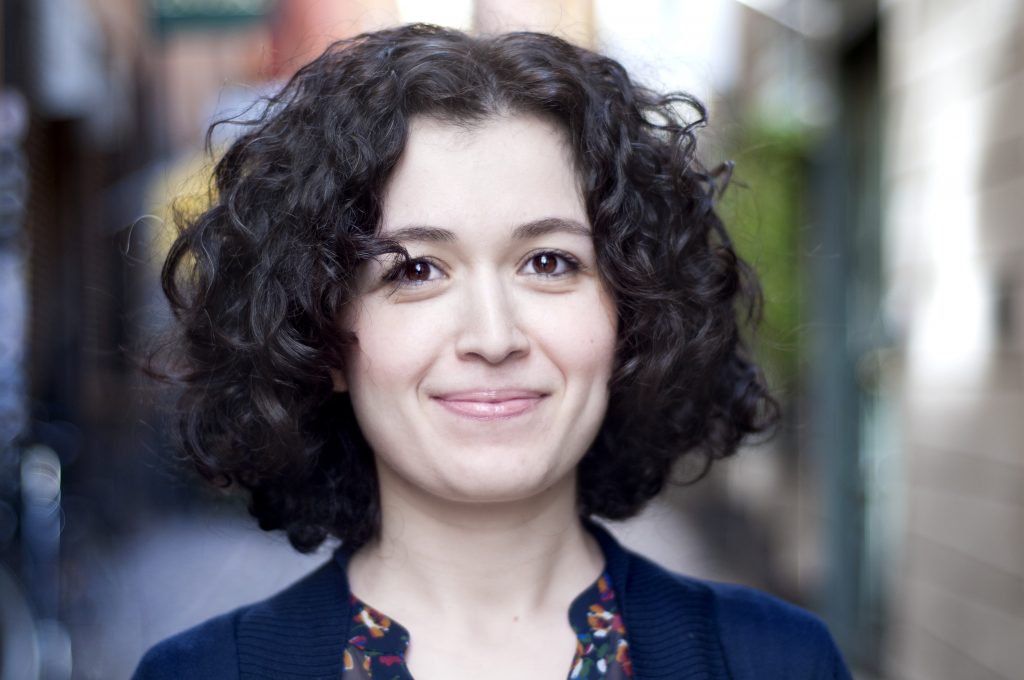
Zinaida Muradova, Head of Rapid Response at Civil Rights Defenders
Defending human rights has become increasingly dangerous in many parts of the world. Many of those who do, face numerous risks and threats on a daily basis. When a threat towards a human rights defender escalates, Civil Rights Defenders’ Emergency Fund provides rapid assistance to strengthen the defender’s security as quickly as possible.
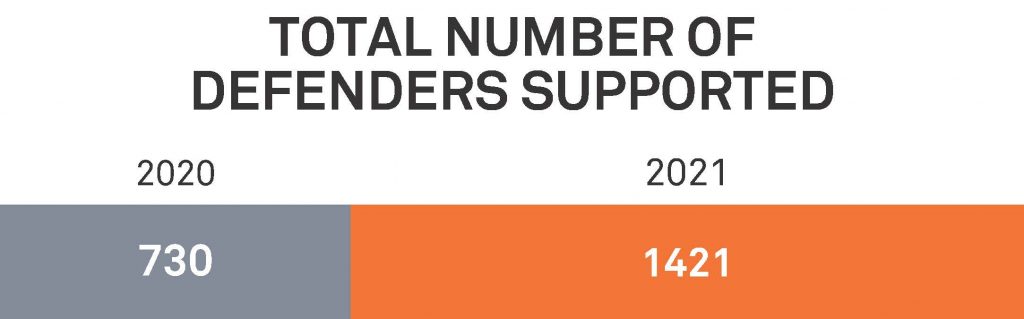
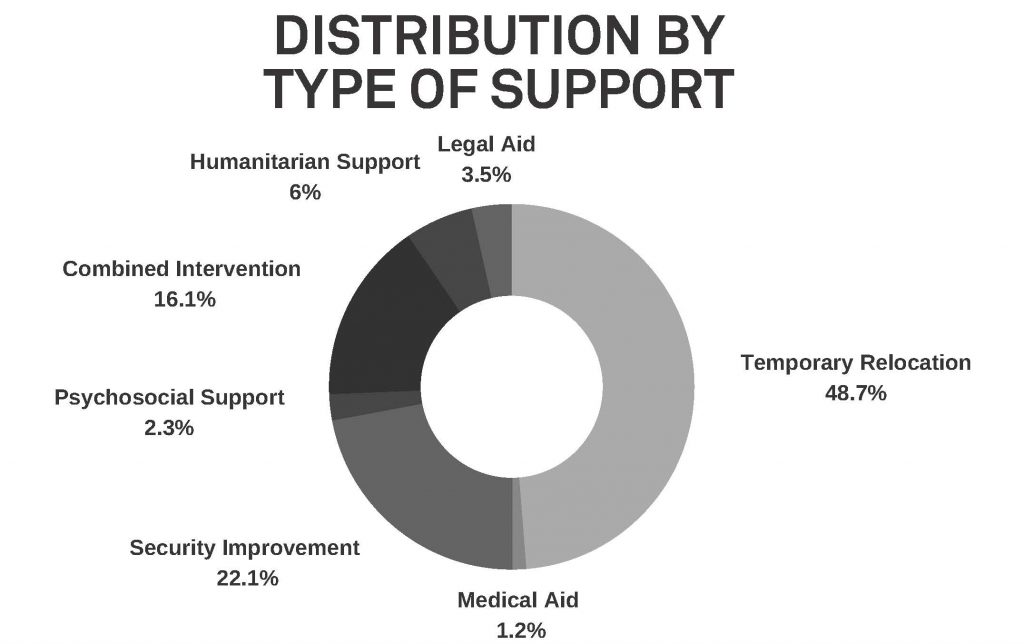
On 7 March 2022 it provided a breakdown of its use. The fund can, for example, provide legal aid or temporarily relocate people who suffer persecution, as well as provide preemptive efforts such as security trainings and digital security solutions. In 2021, the fund supported a total of 1421 human rights defenders in 30 countries.
Emergency support doubled in 2021
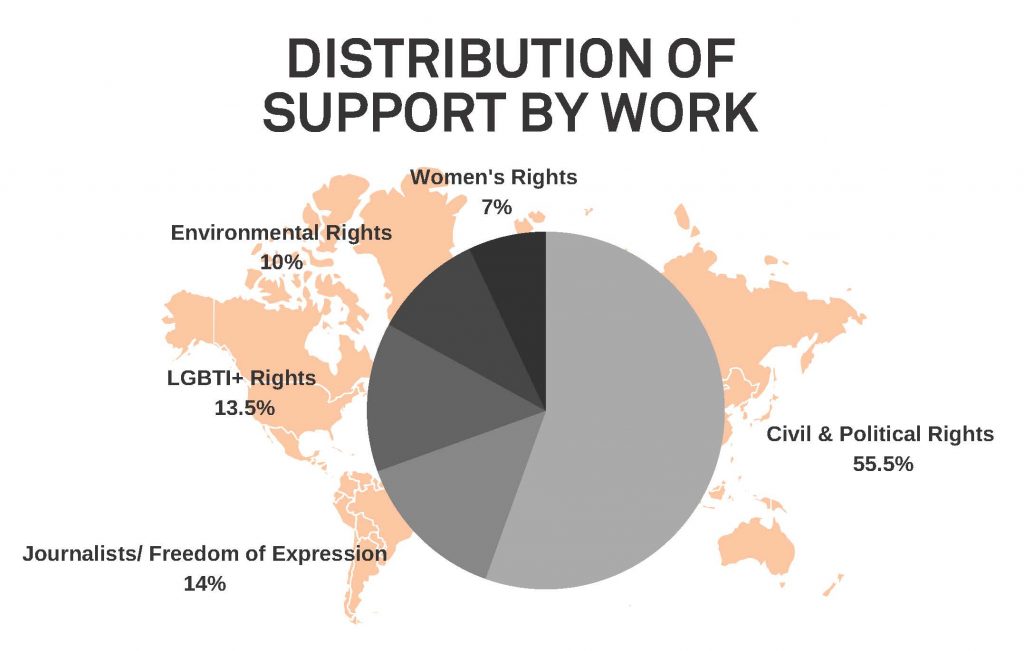
In 2021, Civil Rights Defender’ Emergency Fund has received and processed the largest number of applications since the inception of the fund in 2012. We have supported a total of 1.421 Human Rights Defenders (HRD:s) and/or members of their families at risk through a total of 171 grants in 30 countries. The number of applications and granted support have thus both doubled compared to 2020.
The world is becoming an increasingly dangerous place for human rights defenders, which is a significant explaining factor behind this increase. The CRD Emergency Fund has seen and reacted to the global backsliding of democracy and a number of emerging conflicts in 2021. The aftermath of the war between Armenia and Azerbaijan, the military coup in Burma, the spring protests in Colombia, the witch-hunt on civil society in Belarus, the civil war in Ethiopia and the Taliban’s takeover in Afghanistan are only a few of the conflicts that have deteriorated the security situation for human rights defenders in 2021. Many human rights defenders cannot continue their work for human rights and democracy without the support of the outside world.
Although the number of applications has doubled, so has the number of Emergency Fund applications granted. This increase is much thanks to the additional resources that Civil Rights Defenders has been able to put into processing fund applications.
“We are humbled to have been able to support so many human rights defenders in 2021. The need for emergency support is greater than ever, with the war in Ukraine the number of applicants is likely to keep increasing in the immediate future”, says Zinaida Muradova.
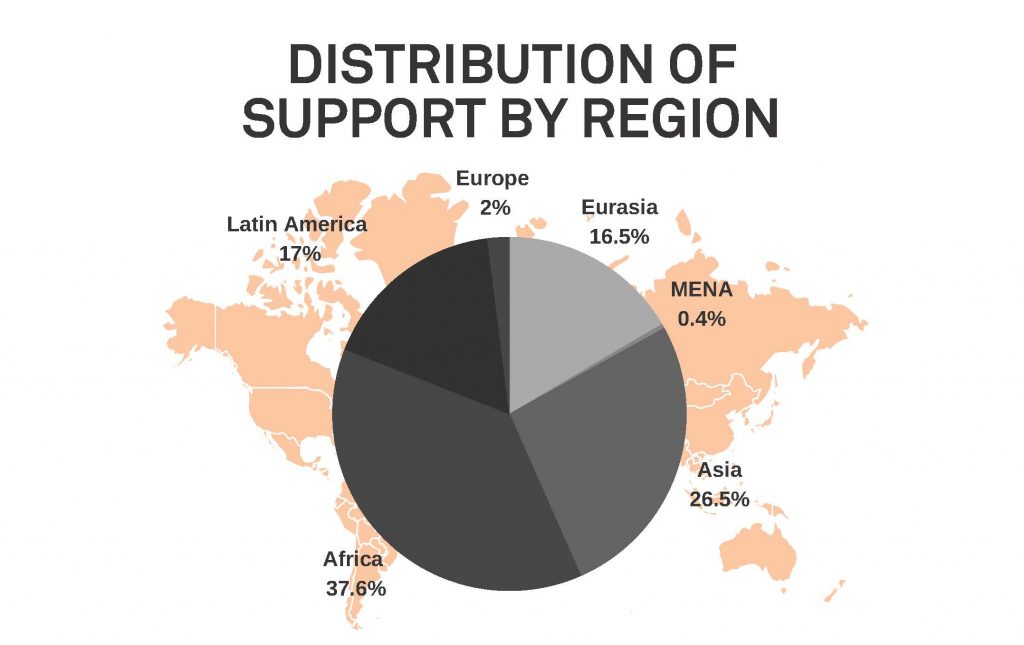
Emergency support to Burma and Asia has significantly increased in 2021, although the majority of human rights defenders who received emergency support continued to be from Africa. Additionally, the Emergency Fund continued to expand its global reach in five more regions – Eurasia, Europe, Africa, Latin America and MENA. In total, support was provided to human rights defenders in 30 countries during the course of 2021.
Further advancing gender sensitivity
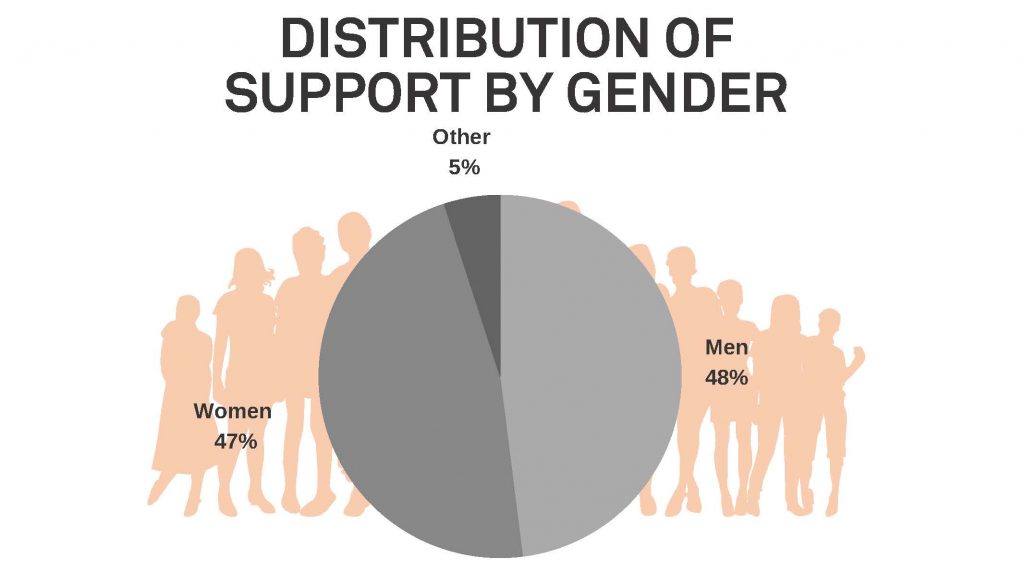
The Emergency Fund continued to build on gender work started in 2019 to ensure a good gender balance and representation amongst the beneficiaries of support. We have been working to increase the accessibility of the mechanism for the most vulnerable groups. We see an improvement in gender balance, for example the percentage of non-conforming people supported doubled compared to 2020.
An increasing demand for legal aid and psychological support
Despite the Covid 19 pandemic and continued strict restrictions on travel around the world, temporary relocations, where human rights defenders can reside safely for a short period, remained by far the most requested type of support in 2021. The majority of relocations were related to the major crises in countries mentioned above. Requests for preventive security measures to improve home, office or digital security, such as installing security cameras or digital security software, remained to be in high demand as well. Many HRD:s needed so called combined interventions, meaning a combination of several of the above mentioned support types.
In 2021 The Emergency Fund has seen a noteworthy increase in requests for humanitarian and psychological support. Many HRDs also request legal aid due to an increasing trend of arbitrary arrests and charges.
“Democracy and human rights cannot be achieved without human rights defenders. Through the Emergency Fund we ensure that they feel safe enough to continue their work which ultimately helps ensure that the fight for democracy can continue worldwide”, says Zinaida Muradova.






 Hans Thoolen on Human Rights Defenders and their awards