Posts Tagged ‘foreign funding’
July 25, 2019
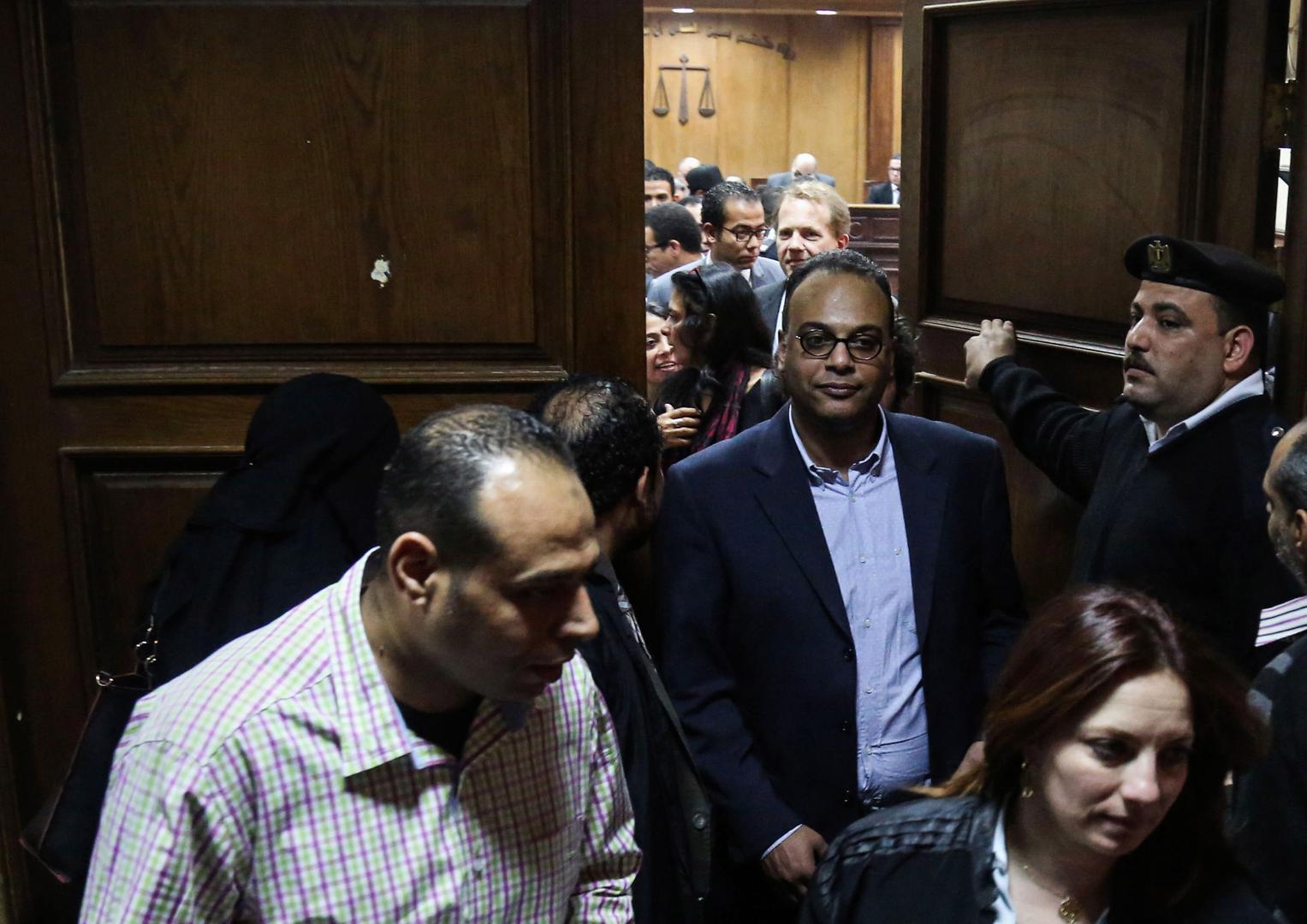
On 23 July 2019 FIDH, the World Organisation Against Torture (OMCT) and the Cairo Institute for Human Rights Studies (CIHRS) denounce the new crackdown and call on the Egyptian authorities to immediately end any act of harassment, including at the judicial level, against all peaceful activists, in particular political opponents and human rights defenders in Egypt, such as former member of Parliament and human rights lawyer Zyad al-Elaimy. At least 83 persons, including political opposition activists, journalists and human rights defenders, have been arrested in Egypt over terrorist charges since June 25 for their alleged implication in a plot against the State.Human Rights Watch published the next day an elaborate report on Egypt’s New NGO Law which renews draconian restrictions and imposes disproportionate fines and bans links with foreign groups. Here some key elements but the ful lreport should be read:
Egypt’s parliament approved a new law governing nongovernment organizations on July 14, 2019 that would maintain many of the existing restrictions on their work, Human Rights Watch said today. President Abdel Fattah al-Sisi should not approve the law and instead should return it to parliament for amendments. Egypt faced intense internal and external pressure to repeal a draconian 2017 law that threatened to crush the independent work of nongovernment organizations, including provisions to imprison their workers for their peaceful work. While lawmakers removed prison penalties from the new law, they have maintained severe restrictions over the groups’ work.
……..
The new law prohibits a wide range of activities, such as to “conduct opinion polls and publish or make their results available or conduct field researches or disclose their results” without government approval. The law states that the government must “ensure the integrity and neutrality of the polls and their relevance to the activity of the Association.” The law completely prohibits other activities under vaguely worded terms such as any “political” work or any work that undermines “national security.” It would also allow the government to dissolve organizations for a wide range of “violations” and would impose fines of up to one million Egyptian pounds (US$60,000) for organizations that operate without a license or send or receive funds without government approval. The law sets fines at up to half a million Egyptian pounds (US$30,000) on organizations that spend their funds in ways the government deems to be “activities other than specified or in violation of laws and regulations” or for refusing to provide any data or information the government requests about the organization’s activities.
The new law will also prohibit cooperation with foreign organizations or experts, impose a strict system of prior approval for foreign organizations to be able to work in the country, and allow for government surveillance and monitoring of organizations’ daily activities. Facing international and local criticism, President al-Sisi promised to amend the draconian 2017 law during a November 2018 speech. He admitted that the 2017 law stemmed from a “[security] phobia.”
Al-Sisi’s government has continued to relentlessly prosecute several leading human rights organizations and their staff for their peaceful work under several charges in the protracted prosecutions of the notorious 2011 “foreign funding case” as well as several other cases. In the foreign funding case, the government froze the assets of at least 7 organizations and 10 human rights defenders. The government has also placed 28 of them on travel ban lists for the past several years. [see also: https://humanrightsdefenders.blog/2018/12/20/acquittals-in-bogus-foreign-funding-case-in-egypt-welcome-but-long-overdue/]
…….
Registration Restrictions……
Severe Restrictions on Funds, Activities Similar to the 2017 law, the new law would prohibit a wide range of peaceful activities that normally fall within the work of nongovernmental groups. For example, the law would prohibit organizations from conducting any surveys or field research without government approval. The law would prohibit all “political” work, as well as any work that undermines “public order, public morals, national unity or national security.” The law would also prohibit cooperation with any “foreign entity inside or outside.” Egyptian organizations would not be allowed to hire or consult or cooperate with foreign volunteers or staff members of foreign organizations without ministerial approval.
In recent years, the Egyptian government has sought to criminalize communication with international organizations and has summoned for interrogations victims who allegedly gave accounts of abuses against them to such organizations. [see also: https://humanrightsdefenders.blog/2018/12/07/egypt-denounced-for-reprisals-against-human-rights-defenders-who-talked-to-visiting-un-delegation/]
Surveillance. …….In recent years, the Egyptian government has increasingly used terrorism accusations and charges against peaceful dissidents and seized the assets of thousands of individuals, businesses, and associations and placed them on terrorism lists without any due process.
Foreign and International Organizations
The law would also impose draconian restrictions on the work of foreign and international organizations. It requires international organizations to obtain a license from the Foreign Ministry, valid for a specific period, before doing any work on Egypt. The license would cost up to 50,000 Egyptian pounds (US$3,000). License applications would have to match “Egyptian society priorities and needs according to the development plans.” International organizations would be required to submit any “reports, data or information” about their activities upon request by the “administrative body.” The law also prohibits international organizations from granting or receiving any funds without ministerial approval. The law would allow the relevant minister to cancel the license of an international organization without due process under the guise that an organization undermined “public safety, national security or public order” or for violating terms of its license.
Posted in CIHRS, FIDH, HRW, Human Rights Defenders, OMCT | 1 Comment »
Tags: Abdel Fattah el-Sisi, Cairo Institute for Human Rights Studies, Egypt, FIDH, foreign funding, freedom of association, HRW, law on NGOs, OMCT, restrictive laws, Zyad al-Elaimy
June 27, 2019
 NHRC said it had made it clear in the past that matters relating to FCRA violations are outside its purview.
The direction came on complaints filed by Henri Tiphagne, a human rights activist associated with Human Rights Defenders’ Alert and Maja Daruwala, Senior Advisor of Commonwealth Human Rights Initiative.
https://thewire.in/media/backstory-shrinking-spaces-need-expanding-of-awareness
Express News Service
Posted in human rights, Human Rights Defenders | 4 Comments »
Tags: Anand Grover, Central Bureau of Investigation (CBI), foreign funding, Human Rights Defenders, human rights lawyers, India, Indira Jaising, joint statement, judicial harasment, Lawyers Collective (NGO India), NGOs, Pamela Philipose, raid
February 22, 2019
Shemin Joy, for DH News Service, New Delhi, reported on 21 February 2019 that a letter addressed by 3 UN Rapporteurs to the Indian government has now been made public as no reply was received. The letter will now be part of the report to be discussed in UN Human Rights Council as India has not responded to the charges. In the letter, the Special Rapporteurs referred to the raids and searches conducted at the offices of Amnesty International India and Greenpeace India as well as the blocking of foreign funding to these NGOs. ….concern is expressed at the alleged smear campaign against Amnesty International India, in what seems to be an attempt to tarnish the organization’s reputation in the absence of formal charges
“We reaffirm our position that the ability to access foreign funding is an integral part of the right to freedom of association, and reiterate our concerns at the highly detrimental impact of the FCRA, which has been increasingly used to obstruct Indi.reiterate our concerns at the highly detrimental impact of the FCRA, which has been increasingly used to obstruct Indian civil society’s access to international funding,” they said. [see also: https://humanrightsdefenders.blog/2013/11/05/india-should-end-funding-restraints-on-human-rights-defenders-says-hrw/]
The seven-page letter was written by Special Rapporteurs David Kaye (promotion and protection of the right to freedom of opinion and expression), Clement Nyaletsossi Voule (rights to freedom of peaceful assembly and of association) and Michel Forst (situation of human rights defenders) on December 20 last year and had said that they would make public the letter after two months with or without the government’s response.
Read more at: https://www.deccanherald.com/national/smear-campaign-against-amnesty-719547.html
Posted in AI, human rights, Human Rights Council, OHCHR | Leave a Comment »
Tags: AI India, Clement Nyaletsossi Voule, David Kaye, foreign funding, freedom of association, Greenpeace, harassment, India, Michel Forst, NGOs, raids, UN Rapporteurs
December 20, 2018
Responding to the news that the South Cairo Criminal Court on 20 December 2018 acquitted all 43 defendants in the retrial of Egypt’s notorious “foreign funding” case – also known as Case 173 – Najia Bounaim, Amnesty International’s North Africa Campaigns Director said: “Today’s acquittal of all 43 NGO workers in the first ‘foreign funding’ case is a step in the right direction for Egyptian justice. This was a bogus case that targeted human rights defenders simply for doing their legitimate work and should never have happened in the first place…However, today’s ruling only relates to the first phase of the case which investigated the funding of international organizations; the investigation into local Egyptian NGOs is ongoing and dozens of staff are still at risk.”
Since the ‘foreign funding’ case was opened Egyptian human rights defenders have been treated as enemies of the state, subjected to an unprecedented crackdown, including asset freezes, travel bans and prosecutions. [see also: https://humanrightsdefenders.blog/2018/04/03/egypt-the-foreign-funding-accusation-against-human-rights-defenders-goes-in-overdrive/]
“The key test now will be whether today’s court decision paves the way for an end to the persecution of all human rights defenders in the country. The Egyptian authorities must lift all travel bans and asset freezes against NGO staff and drop their investigations into Egyptian NGOs and human rights defenders for their legitimate human rights work.”
[In June 2013,the first phase of the investigation into NGO funding (Case 173 of 2011) concluded when 42 foreign and Egyptian NGO workers were sentenced to prison terms of between one and five years and a series of international NGOs were closed. Since 2014, investigative judges have been conducting a criminal investigation into the work and funding of local NGOs and have issued asset freezes against six organizations and 10 human rights defenders. They have banned at least 30 human rights defenders and NGO staff from travel abroad. The judges also summoned at least six directors and 61 civil society organization staff for interrogation and later ordered their release on bail.]
Posted in AI, Human Rights Defenders | 1 Comment »
Tags: acquittal, Amnesty International, Case 173, Egypt, foreign funding, Najia Bounaim, NGOs
May 18, 2018
Here some interesting quotes but the whole article is worth reading:
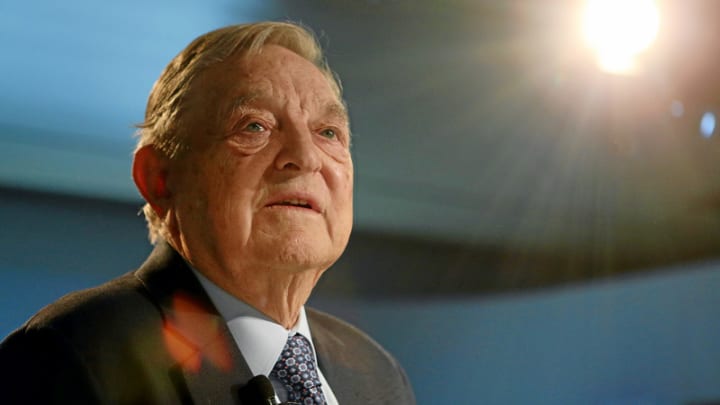
“The risk that Open Society weighs is not the potential for its activities to create controversy, but for that controversy to prevent the foundation from being able to carry out its activities. “We don’t exist to defend ourselves. We exist to make change out there,” .. “If we only existed to protect ourselves, then that would be their victory….That is a classical philanthropic reaction — let’s not go anywhere near that, because that’s controversial. If you do that, if you allow controversy … to stop you from doing things, then an authoritarian government or a reactionary player in society … have a very easy task.” — Jordi Vaquer, Open Society Foundations’ regional director for Europe
..Hungary’s Prime Minister Viktor Orban is not alone in flinging those accusations — Soros is a favorite boogeyman for pro-Brexit voters in the United Kingdom, populists across Eastern Europe, and even Republicans in the United States. But in Hungary, the anti-Soros campaign has moved to the very center of political life. Orban’s party and supporters invoke Soros’ name and image to paint an apocalyptic vision of what might happen if the Hungarian-American financier, his foundation, and the NGOs they support are allowed to carry out their alleged “globalist” agenda.
Devex spoke to Gabor Gyulai, director of the Refugee Programme at the Hungarian Helsinki Committee, and another NGO Power of Humanity.
“In countries where millions of people are actively working in solidarity with refugees, or with LGBTI people, or with victims of domestic violence, civil society organizations have something they can build on to shape a message that will attract broader support. In a society where the vast majority believes that what you are standing up for is not a valid cause, there is much less to build on, said Gyulai, an expert on refugee issues who is also working with the United Nations to build a global network of open access courses on asylum law. The problem gets even more difficult when the state is actively working to prevent that kind of coalition from forming.” Less than a week after Devex met with him, Gyulai’s name appeared on the list of “Soros mercenaries.”
…..
The risk that Open Society weighs is not the potential for its activities to create controversy, but for that controversy to prevent the foundation from being able to carry out its activities. “We don’t exist to defend ourselves. We exist to make change out there,” Vaquer said. “If we only existed to protect ourselves, then that would be their victory….That is a classical philanthropic reaction — let’s not go anywhere near that, because that’s controversial. If you do that, if you allow controversy … to stop you from doing things, then an authoritarian government or a reactionary player in society … have a very easy task.” — Jordi Vaquer, Open Society Foundations’ regional director for Europe
….
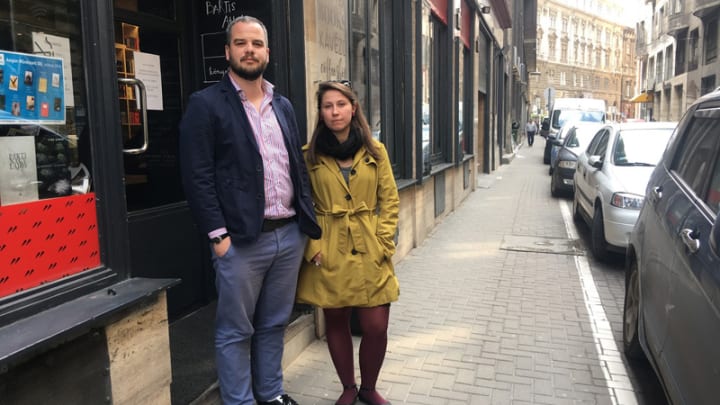 Zoltan Mester (left) and Vilja Arato, employees of the With the Power of Humanity Foundation. Michael Igoe/Devex
Among With the Power of Humanity’s staff, the debate over what is and is not an encroachment into party politics plays out constantly, Mester said. “Every day it’s a big fight … because especially in this time and especially in Hungary, everybody thinks that political is something bad … In Hungary if you say ‘political,’ you think about … party politicians.”…
“George Soros could have done many other things with his fortune, but that was the vision from the start — that those two were going to be the pillars of the ways in which he would then seek to define open society,” Vaquer said. “If you look at our budget 30 years later, that’s still what we are doing overwhelmingly. We’re still supporting civil society organizations and individuals. We haven’t changed that.”
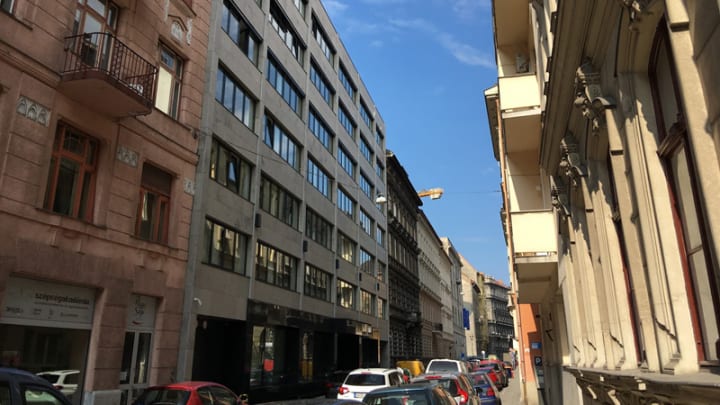 The Open Society Foundations office in Budapest, Hungary. Devex/Michael Igoe
Faced with a constant barrage of accusations that they are part of George Soros’ secret plan to meddle in national politics, some of Open Society’s grantees find themselves responding to the obligatory questions that follow…..In accusing the foundation of orchestrating a global campaign to transform Europe and erode countries’ national sovereignty, OSF’s enemies ascribe much more power and reach to the organization than its employees and grantees would ever claim to have. It is tempting to do the same thing when asking if Open Society has been successful in achieving its goals. The declines in democratic freedom currently underway in many countries where Open Society operates might raise questions about whether the foundation and its benefactor have been operating with the right theory of change.
….
With the erosion of the values and norms it promotes, Open Society is not necessarily thinking differently about how the foundation measures its impact, but its leaders are coming to terms with a more realistic view of what is possible. “I think it has made us extremely aware of the limitations of what can be achieved with cross-border philanthropic activity,” Vaquer said. “It was perhaps a product of the exceptional time that was the 1990s that OSF had such a disproportionate impact on some places, in terms of being part of their political transformation, but that was probably exceptional.”
[Michael Igoe is a Senior Reporter with Devex, based in Washington, D.C. He covers U.S. foreign aid, global health, climate change, and development finance. Prior to joining Devex, Michael researched water management and climate change adaptation in post-Soviet Central Asia, where he also wrote for EurasiaNet. Michael earned his bachelor’s degree from Bowdoin College, where he majored in Russian, and his master’s degree from the University of Montana, where he studied international conservation and development.]
Posted in human rights, Human Rights Defenders | 3 Comments »
Tags: DEVEX, donors, Eastern Europe, foreign funding, Gabor Gyulai, Hungarian Helsinki Committe, Hungary, Michael Igoe, Open Society Foundation, philanthropy, populism, Stop Soros, Victor Orban, Zoltan Mester
April 3, 2018
An Egyptian lawyer, Samir Sabry, has requested the Attorney General to bring human right defender Asmaa Mahfouz to court. The reason? Winning the Sakharov Prize in 2011! If Egypt Today had reported it a day earlier (on 1 April), I would have credited it as a good April 1st spoof, but unfortunately it is not. In his complaint, Sabry called for the Attorney General to transfer Mahfouz to a Criminal Court trial and ban her from travelling outside the country. He stated that the prize, worth €50,000 was given to her suddenly, and he did not know why. He asked whether it is funding, a reward, or for certain service, and what the reason is for this award. The complaint from Sabry also claimed that this is a Jewish award [SIC} and questions the award’s links to Zionism. According to Sabry, the answer is that Mahfouz received the prize money, and accepted the award, in return for betraying Egypt.
Asmaa Mahfouz was one of the founding members of the April 6 Youth Movement, which sparked nation-wide demonstrations in April 2008 and was indeed awarded the Sakharov prize in 2011 (sharing it with four other Arab figures).
The prize in question is the Sakharov Prize for Freedom of Thought [http://trueheroesfilms.org/thedigest/awards/sakharov-prize-for-freedom-of-thought], which is of course is not granted by Israeli but by the European Parliament!
However, the issue of foreign funding is a major one in the Egyptian context as demonstrated by the case of two Egyptian woman human rights defenders in the ‘NGO foreign-funding case” (as ISHR reminds us on 29 March 2018): harassed and targeted Egyptian woman defenders Azza Soliman and Mozn Hassan [https://humanrightsdefenders.blog/2017/02/02/right-livelihood-has-to-go-to-egypt-to-hand-mozn-hassan-her-2016-award/] face life imprisonment if their cases are brought to trial simply for conducting legitimate human rights work.
Read the rest of this entry »
Posted in CIHRS, human rights, Human Rights Defenders, ISHR | 2 Comments »
Tags: Asmaa Mahfouz, Azza Soliman, Cairo Institute for Human Rights Studies, digest of human rights awards, Egypt, foreign funding, human rights award, human rights awards, ISHR, Israel, Mozn Hassan, NGO foreign-funding case, Sakharov Prize for Freedom of Thought, Samir Sabry, travel ban, woman human rights defenders
January 27, 2018
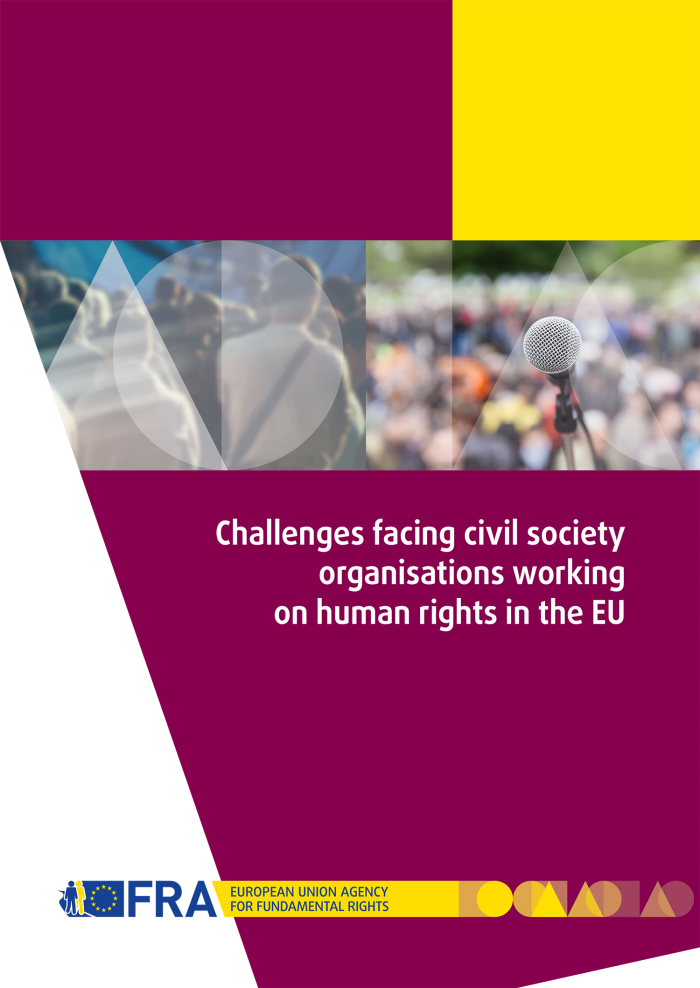
In January 2018 the EU Fundamental Rights Agcncy (FRA) published a Report “Challenges facing civil society organisations working on human rights in the EU“. Its conclusion is that the situation is getting more difficult. Also, on 26 January 2018, the Thomson Reuters Foundation published an interview with Michel Forst, the U.N. Special Rapporteur on human rights defenders said that the EU are setting a bad example by allowing some of its members to stifle human rights groups, which is encouraging crackdowns elsewhere in the world.
In the interview done by Umberto Bacchi, Michel Forst said that the EU has historically done a good job supporting and protecting rights advocates worldwide but the bloc’s authority is now being undermined from within. Officials in Burundi, Democratic Republic of Congo, Israel and other countries pointed at recent laws in Hungary and Poland to justify their own regulations which may curb the independence of non-governmental organisations.
“There is a need for European countries to be more coherent … not to teach human rights outside of Europe and then not respecting human rights inside Europe,” said Forst, the U.N. Special Rapporteur on human rights defenders. Charities in dozens of countries, from Angola to India and Tajikistan have faced restrictions targeting their funding and operations over the past two years, according to an EU report. The trend is part of a global backlash on civil society that has seen rights activists in some parts of the world criminalised or branded as troublemakers, Forst stated.
Last year, Hungary introduced a measure requiring NGOs that get money from abroad to register with the state, a bill that NGOs say stigmatizes them and is intended to stifle independent voices. [see also: https://humanrightsdefenders.blog/2014/06/13/human-rights-defenders-in-hungary-not-yet-foreign-agents-but-getting-close/]. Poland instead introduced legislation to set up a centralised authority controlling charities’ funding. [see also: https://humanrightsdefenders.blog/2017/03/02/backsliding-on-civic-space-in-democracies-important-side-event-on-3-march-in-geneva/%5D. As countermeasure, the EU should boost direct funding of rights groups operating within its borders, Forst said. “What is absurd for me is that the EU is funding organisations in Latin America, in Africa – which is good – but there is no more funding for EU NGOs,” he said. Money should be allocated from a dedicated fund and not channelled through governments, he said.
Besides Europe, Forst also singled out Australia for its treatment of asylum seekers held in offshore camps, adding it was “not a safe place” for human rights defenders due to pressure from the government. A December report by Pro Bono Australia and the Human Rights Law Centre, two rights groups, found Australian NGOs were often pressured into “self-silencing” their advocacy work fearing funding cuts and political retribution.
“(Global civil society) space is shrinking because it is shrinking in Europe, because it is shrinking in the Americas, in Australia,” said Forst.
—-
The FRA’s report finds that civil society organisations in the European Union play a crucial role in promoting fundamental rights, but it has become harder for them to do so – due to both legal and practical restrictions. This report looks at the different types and patterns of challenges faced by civil society organisations working on human rights in the EU. While challenges exist in all EU Member States, their exact nature and extent vary. Data and research on this issue – including comparative research – are generally lacking. The report also highlights promising practices that can counteract these worrying patterns.

Posted in books, EU, human rights, Human Rights Defenders | 1 Comment »
Tags: civil society organisations, EU, Europe, Foreign agent, foreign funding, freedom of association, Fundamental Rights Agcncy (FRA), funding restrictions, Hungary, Michel Forst, NGOs, Poland, thomson reuters foundation, Umberto Bacchi, UN Rapporteur on Human Rights Defenders
October 10, 2017

Martin Ennals Award for Human Rights Defenders
The Jury of the Martin Ennals Award for Human Rights Defenders, the highest accolade in the international human rights moment, has just announced that Mohamed Zaree, a human rights lawyer from Egypt, has been selected as the 2017 Laureate. The announcement was made on 10 October at 18h30, during the annual ceremony in Geneva. You can still follow it through live streaming at this very moment: via: https://www.facebook.com/villegeneve.ch/.
Mohamed Zaree is a human rights activist and legal scholar whose work focuses on human rights advocacy around freedom of expression and association. He is also known for his role as the Egypt Country Director of the Cairo Institute for Human Rights Studies (CIHRS), which works throughout the Arabic speaking world. He assumed this role after government pressure on CIHRS prompted them to relocate their headquarters to Tunis in 2014.
The Egyptian government has been escalating its pressure on the human rights movement. Human rights NGOs and defenders are confronted with a growing wave of threats, harassment, and intimidation, legal and otherwise. Despite this, Zaree continues to lead CIHRS’ research, human rights education, and national advocacy initiatives in Egypt and is shaping the media debate on human rights issues. During this critical period for civil society, he is also leading the Forum of Independent Egyptian Human Rights NGOs, a network aiming to unify human rights groups in advocacy. Zaree’s initiatives have helped NGOs to develop common approaches to human rights issues in Egypt. Within the context of the renewed crackdown on Egyptian human rights organizations, he has become a leading figure in Egypt’s human rights movement. Zaree is currently facing investigation under the “Foreign Funding Case” and is at high risk of prosecution and life imprisonment. The “Foreign Funding Case” highly restricts NGO activities. Despite this, Zaree continues to engage the authorities in dialogue wherever possible, arguing that respect for human rights will increase stability in Egypt. Zaree has been under a travel ban since May 2016.
Martin Ennals Foundation Chair Dick Oosting stated: “Severe restriction of civil society’s space to express itself is what led Mohamed Zaree to advocate for human rights and fight for the freedom of association. He is still paying the price for his courageous acts, and we urge his government to lift the travel ban.”
The unique composition of the Jury of the MEA [a coöperation by 10 global human rights organizations, see www.martinennalsaward.org for more detail] makes this award the most important prize in the human rights world. It is supported by the City of Geneva.
The two other finalists also received Martin Ennals prizes:
Karla Avelar (El Salvador)
FreeThe5KH (Cambodia)
For more on the award see also: https://humanrightsdefenders.blog/2017/09/18/ceremony-of-the-24th-martin-ennals-award-coming-up-on-10-october. and
http://www.trueheroesfilms.org/thedigest/awards/martin-ennals-award-for-human-rights-defenders
Posted in awards, human rights, Human Rights Defenders, MEA | 3 Comments »
Tags: announcement, Cairo Institute for Human Rights, City of Geneva, digest of human rights awards, Egypt, foreign funding, human rights award, Human rights defender, human rights lawyer, Martin Ennals Award for Human Rights Defenders, MEA, MEA laureate 2017, Mohamed Zaree
August 8, 2017
In an intervention to the European Court of Human Rights in a case against Russia, the International Service for Human Rights (ISHR) has called on the Court to explicitly rule that that the rights to freedom of expression and association include the right to unhindered access and communication with international human rights bodies.
A law in Russia requires that an NGO receiving foreign funding and engaging in ‘political activity’ register as a ‘foreign agent‘. ‘Foreign agents’ not only have to comply with cumbersome financial and reporting requirements, but the negative stigma associated with this label have been described as debilitating. [https://humanrightsdefenders.blog/2013/12/16/russian-court-declares-adc-memorial-formally-as-foreign-agent-others-to-follow/]
After submitting a report to the UN Committee Against Torture, Anti-Discrimination Centre (ADC) Memorial – an NGO at that time operating in Russia – was required to register as a foreign agent on the basis that submitting the report constituted ‘political activity’. Following this, ADC Memorial brought a case against Russia in the European Court of Human Rights alleging that the administrative consequences associated with being labeled a foreign agent violate the rights to freedom of expression and association protected by the European Convention of Human Rights. ‘This case raises issues regarding meaningful protection the European Convention on Human Rights provides individuals exercising their right to freedom of expression and association with international human rights bodies and mechanisms’, says ISHR’s Legal Counsel Tess McEvoy. ‘It also demonstrates a serious and systematic human rights problem of reprisals and intimidation against those cooperating with the UN.’
ISHR submitted a third party intervention in the case of ADC Memorial. ‘The intervention is designed to assist the Court by providing an extended analysis of the scope of the rights to freedom of expression and association in international law to inform the interpretation of the European Convention on Human Rights’, McEvoy states. The analysis concluded that accessing and communicating with the UN is protected under the rights to freedom of expression and association enshrined in the European Convention on Human Rights, and that reprisals and intimidation against those cooperating with the UN would violate those rights. ‘It is vital that human rights defenders have the ability to communicate, publish and disseminate information to international human rights institutions to effectively promote and protect human rights. We call on the European Court to ensure that right is protected’.
For more information contact: Tess McEvoy, t.mcevoy@ishr.ch.
Source: Reprisals | ISHR calls on European Court to protect the right to communicate with international bodies | ISHR
Posted in human rights, Human Rights Defenders, ISHR | Leave a Comment »
Tags: ADC Memorial, amicus brief, case law, European Court of Human Rights, foreign agent law, foreign funding, freedom of association, freedom of expression, ISHR, reprisals, Russia
August 1, 2017
 Speaker Dogara
In a blog post on Vanguard News it is explained that the appeal dated 28 July 2017 was sent to Ms Annalisa Ciampi, Special Rapporteur on the rights to freedom of peaceful assembly and of association; Mr Michel Forst, Special Rapporteur on the situation of human rights defenders; and Mr. David Kaye, Special Rapporteur on the promotion and protection of the right to freedom of opinion and expression. The organization said, “.. If adopted, the bill which is copied from repressive countries like Somalia, Ethiopia and Uganda, would have a chilling effect not only on expressions of peaceful dissent by the citizens but also on the legitimate work of NGOs and individual human rights defenders and activists scrutinizing corruption in the National Assembly and exposing human rights violations by the government.”
The urgent appeal signed by SERAP executive director Adetokunbo Mumuni read in part: .”.. the bill is by far the most dangerous piece of legislation in the country in terms of its reach and devastating consequences not only for the work of civil society but also the effective enjoyment of constitutionally and internationally recognized human rights of the citizens. The bill will devastate the country’s civil society for generations to come and turn it into a government puppet.”……
“SERAP is also concerned that the proposed bill is coming at a time the members of the Senate and House of Representatives are proposing amnesty and immunity for themselves against prosecution for corruption and other economic crimes; and the government is proposing a social media policy to restrict and undermine citizens’ access to the social media ahead of the general elections in 2019.”
……
“The provisions of the bill are also not subject to any judicial oversight. SERAP believes that independent groups and activists should have space to carry out their human rights and anticorruption work without fear of reprisals, such as losing their registration or being sent prison.”
[The House of Representatives debated the bill known as ‘An Act to provide for the establishment of Regulatory Commission for the Supervision, Coordination and Monitoring of NGOs, CSOs and Communities Based Organizations in Nigeria’. The bill will establish a commission responsible only to the president and the senate. Under section 7, the commission will monitor and supervise these groups supposedly to “ensure that they accomplish their missions according to law” and under section 26, strictly “in line with the programmes of government.” Section 8 of the bill even goes further by empowering the commission to coordinate the work of all national and international NGOs in the country. All groups must register with the commission and submit their annual reports for discussion and governmental approval. The commission may take any punitive action against civil society and “do all such things incidental to its functions” under the Act. Section 10 establishes ‘a documentation center’ to which all civil society groups must submit the list of their activities and other information that may be required or prescribed. Section 11 then requires submission of all proposed activities by civil society for approval. Section 12 requires registration of all civil society organizations on the payment of unspecified fees and other fees as the commission may require or prescribe. But registration may be turned down, as stated under section 13. Registration is valid for only 24 months and renewable, subject to conditions as may be prescribed. Registration may also be denied if the activities of civil society groups are not in line with “national interest”. Operations of the groups will be terminated without any such registration. Under section 19, workers of the groups must apply for work permits. The groups can only appeal to “a minister” if they are dissatisfied with the application of any of the provisions of the Act, as provided for under section 19. The bill in section 24 criminalizes behaviour that is inherently legitimate by prescribing severe criminal penalties, including fines of N500,000 or 18 months imprisonment or both, for operating without registration under the bill. Under section 26, any such person will be banned for 10 years from doing any civil society work. The combined effect of sections 25 and 26 is that no civil society group will be able to carry out any activity without first seeking and obtaining a ministerial approval.]
Source: SERAP drags Dogara to UN over ‘repressive bill to regulate, crackdown on civil society’ – Gistmaster (It appeared first on Vanguard News)
https://guardian.ng/news/serap-drags-dogara-to-un-over-bill-to-crackdown-on-csos/
Posted in human rights, Human Rights Defenders | Leave a Comment »
Tags: Adetokunbo Mumuni, administrative rules, Civil society, draft law, enabling environment, foreign funding, freedom of association, Michel Forst, Nigeria, Socio-Economic Rights and Accountability Project (SERAP), special rapporteurs