Posts Tagged ‘film makers’

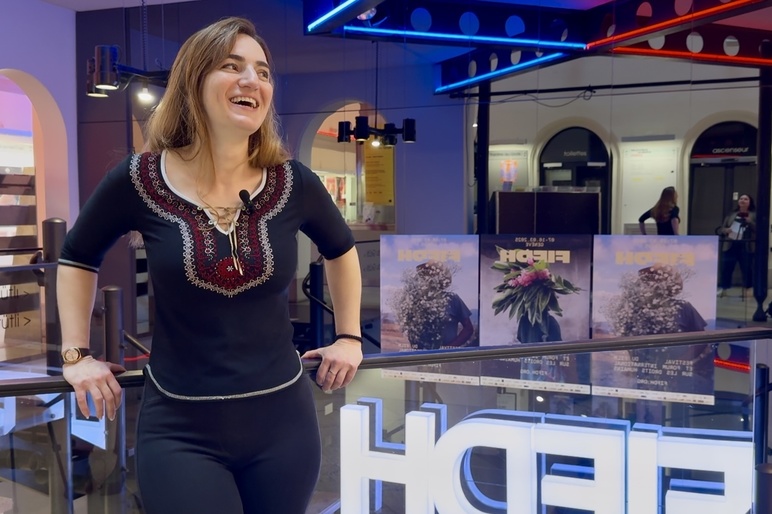
FIFDH and OMCT Spotlight Syrian Film Director Lina

April 3, 2025
IMG 8656

Born in Damascus, Syria, Lina is a filmmaker, journalist, and human rights defender, who in 2011 decided to pick up her camera and start filming, without a plan, but with the knowledge that she has a story to tell. What ensued are five years of conflict, arbitrary arrests, as well as torture and ill-treatment in detention, but also of hope that things would get better, despite a veto. Five Seasons of Revolution was recently screened at the International Film Festival and Forum on Human Rights in Geneva, in an event co-hosted by OMCT, partner of the festival. In this interview, Lina tells us more about her process and the challenges she encountered in the making of the film, as well as her hopes for the future of Syria.

What made you decide to start filming?

We started shooting in the summer of 2011, and a lot was already happening in Syria, but it was not clear how things were going to go. I was optimistic, thinking it would be over in six months, maybe a year, with a release within two years. It took 12 years.

It took more than five years of filming, and then many more to edit, because the country hadn’t stabilised, and the characters’ decision to participate in the film shifted with every new development, for their own safety. We had to go back, take characters out, then put them back in, and make amendments to the storyline. But it wasn’t all negative. During this time, deepfake technology improved and gave us a solution for the anonymity issue of some of the characters who chose to stay in Syria in a way that is safe and does not interfere with the visual narrative.

What was the most challenging part about the filming process?

Not knowing where it’s heading. As a filmmaker, you have, even in documentaries, a rough script, or an idea of where you are heading, but we couldn’t. It was like surfing, we just had to keep up with weird twists and turns. At some point, there were so many arrests in the group that I was filming, the characters just kept going in and out of jail, and at any given moment, we would lose one of them. I was arrested several times and the rest of the film crew had to come up with plan Bs for ‘what if we lose the director, who also happens to be the camera person and the sole contact to all the other characters, how do we finish the film?’ There was even one editing session that was held in my absence because I was detained, and they didn’t know when I would be released. It was really challenging.

What was the most challenging part about having to change your identity several times throughout filming?

It was very confusing, but it was also very necessary. In order to make it work, you have to internalise it to a certain extent, which was challenging. This confuses your relationships with the people you’re working with, with the people you’re socialising with, with the people that trust you, despite only knowing your fake name. Very strong bonds are formed under extremely difficult conditions and something always felt wrong about not being able to be fully honest with people. it also created these compartments of who I am because different parts of me had different names in different places… and they didn’t always get along. Walking out of it was also a challenge. Normalising being one person and only using one name, only answering to one name. It was quite a journey. 

Towards the end of the documentary, you talk about your experience with your arrest. Did what you experienced in custody change your approach to the film, or your activism? 

 I did not encounter anything during my arrest that I did not previously know exists and happens. What was detrimental was the repetition of detentions because you know you might get away with it once, maybe twice, if you’re lucky three times. But when I was released for the third time, I realised I did not know anybody that survived a fourth arrest. I felt like a cat with seven lives and I was really running out of them. I think this affected not only my decision-making in the film, but decision-making in my life in general, which obviously had consequences. 

What are three things you hope people remember after watching your film?

Number one is that simplistic reductionist scenarios of war into black and white, good and bad are never true. Number two is that nobody has a blueprint for what to do in these cases. People improvise, people try to find solutions on the spot under pressure, and these are not always ideal. But also, people can be much braver than they think, because at the end of the day we are survivors, all of us, and there is a lot more to us than we sometimes give ourselves credit for. And number three, friendship is really important. 

You are a filmmaker, but also a human rights defender. What are your hopes now for Syria and its people?

I hope people will be able to recover. I hope people will be given a break, given a chance to process everything they went through, given a bit of time to find a way out of this gigantic mess. It will take generations to rebuild the country. I understand that people have endured so much for so long that they cannot take one more day of it, so there is understandably also a lot of emotions. I just hope that we have the ability to open our hearts a bit more, understand each other a bit more and that people will in return give us the chance to process everything….

https://www.omct.org/en/resources/blog/it-becamefifdh-omct-spotlight-syrian-film-director-lina

Anna Politkovskaya-Arman Soldin Prize for Courage in Journalism 2023 and 2024

November 12, 2024

Established jointly by the Ministry and Nobel Peace Prize laureate Dmitry Muratov in 2023 this prize honors the work of reporters and photojournalists who are continuing their vital mission of spreading free, reliable, quality information in crisis and conflict areas. Journalist Anna Politkovskaya was working in Russia for Novaya Gazeta, whose investigations into corruption, attacks on human rights and the war in Chechnya cost the lives of six of its reporters. Despite the threats she received, she never stopped working to inform the public. Despite the risk to his life, AFP reporter and photojournalist Arman Soldin helped inform the entire world about the reality of the Russian aggression in Ukraine through the photos he took on the front lines of the conflict, starting in February 2022.

PLEASE NOTE: the new award [https://www.trueheroesfilms.org/thedigest/awards/63b130ab-84e4-41c0-aa9c-3bed6254deb3 ] shares in part the name with the older: [https://www.trueheroesfilms.org/thedigest/awards/1599D542-7B24-47EF-8D55-CE248EE07356]

The second Anna Politkovskaya-Arman Soldin Prize in 2024 has been awarded to Israeli journalist Yuval Abraham and Palestinian journalist Basel Adra for their whole body of work on the Israeli occupation and settlement-building in the West Bank and in Palestinian territories.

Yuval Abraham and Basel Adra belong to an Israeli-Palestinian collective that made the documentary, No Other Land, which won an award at the 2024 Berlinale. In it, the Palestinian journalist Basel Adra filmed evictions of Palestinians in the West Bank over five years and meets the Israeli journalist Yuval Abraham. The film tells the story of their friendship that was built over the years of their collaboration.

The first 2023 Anna Politkovskaya-Arman Soldin Prize for Courage in Journalism, was awarded to the Mexican journalist Marcela Turati for her commitment to reporting on violence related to drug trafficking and the social consequences of the war waged against cartels, despite the risks that have often cost Mexican journalists their lives.

https://www.diplomatie.gouv.fr/en/french-foreign-policy/human-rights/freedom-of-expression/article/anna-politkovskaya-arman-soldin-prize-for-courage-in-journalism

Festivals and Human Rights NGOs Call For Release Of Belarus Festival Director Tatsiana Hatsura-Yavorska

April 15, 2021
Tatsiana Hatsura-Yavorska
Tatsiana Hatsura-Yavorska Watch Docs Film Festival

Tom Grater in Deadline.com of 14 April 2021 reports how an unusual collective of human rights organizations, film festivals and industry have called for the release of Tatsiana (Tanya) Hatsura-Yavorska, the director of the Watch Docs Festival in Belarus, who was arrested on April 5 for her role in organizing an underground photo exhibition celebrating health workers.

The Human Rights Film Network and the International Coalition for Filmmakers at Risk have put out a joint open letter calling on authorities to release Hatsura-Yavorska, who is regarded as a political prisoner, as well as others who have been incarcerated in the country. The letter has been signed by a broad selection of film festivals and organizations including Sundance and Berlin.

“We urge the Belarusian authorities to immediately and unconditionally release our colleague Tatsiana Hatsura-Yavorska and other human rights defenders, and to end acts of judicial harassment against them,” the letter reads. You can see it in full here.

Following the event that she jointly organized, which was titled Machine Is Breathing, and I Am Not and was dedicated to the country’s medics and their battle during the pandemic, Hatsura-Yavorska was initially fined 700 Belarusian rubles for “protesting against police” and placed in a detention facility. She has not been released and is now facing trial on charges of ‘raising money for protests’, with her court hearing set to take place 16 April according to those close to her. It is thought she could face several years in prison.

Maciej Nowicki, Director of Poland’s Watch Docs Film Festival, told Deadline that “it is still unclear on what grounds” Hatsura-Yavorska is being prosecuted.

“Numerous reports by the UN, other international organizations and NGOs, unfortunately, have documented various types of violations of law and human rights in Belarus, including the rights of persons deprived of their liberty. This is why we are truly concerned about Tanya,” he continued. “Tanya is an amazing and beautiful person, as well as a very strong one. But now she needs our solidarity.”

A collection of Belarusian organizations and associations also released a statement this weekend, which read: “We consider the persecution of Tatsiana Hatsura-Yavorska by the authorities to be politically motivated, aimed at stopping her public and non-violent activities aimed at protecting human rights and fundamental freedoms.”

See also: https://www.trueheroesfilms.org/thedigest/laureates/b5785052-8efa-42e7-8508-d6de0a8c1b3d

Elsewhere, Filmmaker Mark Cousins penned an article for The Guardian expressing his support for Hatsura-Yavorska, detailing how he interacted with the festival exec though his work with the Belfast Film Festival. “Nonfiction cinema is our lingua franca. Those who speak it to governments should be defended,” Cousins wrote.

https://deadline.com/2021/04/call-for-release-imprisoned-belarus-fest-director-tatsiana-hatsura-yavorska-1234734095/

Sad story continues: Saba Sahar, Afghanistan’s First Female Film Director, shot

August 26, 2020
saba sahar
Saba Sahar facebook

Afghan actress Saba Sahar was reportedly shot in Kabul on Tuesday 25 August. Her husband Emal Zaki told the BBC that three gunmen opened fire on the car she was traveling in on her way to work just five minutes from their house, the outlet reported. Zaki said that Sahar was one of five people in the vehicle, including the driver, two bodyguards and a child, according to the BBC. It was not clear if the child was one of Sahar’s children. Both bodyguards reportedly also sustained injuries from the shooting, according to BBC. In addition to her work as an actress and director, Sahar is a trained police officer and women’s rights advocate.

Afghanistan: The rise in attacks and assassination attempts on human rights defenders, political activists, journalists and film actors is extremely worrying,” Amnesty International South Asia said in a tweet on Tuesday, responding to the news of the attack on Sahar.  See also: https://humanrightsdefenders.blog/2020/06/30/car-bomb-kills-two-human-rights-workers-in-afghanistan/

In an interview with The Guardian in 2012 she said:  “I want to show the conservatives who lock their daughters and wives at home that they should let them out to get an education, earn some money and help rebuild Afghanistan,” she said, adding that she has received death threats from anonymous phone callers. “They told me to say goodbye to my loved ones because I’d soon be dead.” After reporting the threats to authorities, Sahar said the calls only continued. “They called me again and asked why I’d gone to the authorities,” she said. “They said that even if the whole government is behind you, we will still kill you. We will murder you on the street, in public.” “Every morning when I leave the house, I know I might get killed, might never see my family again,” she told The Guardian at the time.

update to Mona’s campaign for her sister

August 7, 2020

Following up on https://humanrightsdefenders.blog/2020/08/06/re-issued-passionate-plea-for-help-in-open-letter-by-mona-seif-from-egypt-about-targeting-of-her-family, here an update to the campaign:.
More than 200 prominent artists, along with nearly two dozen leading human rights groups and film organizations, are calling for the immediate release of activist and film editor Sanaa Seif — who was arrested in Cairo last month and remains behind bars in remand detention. Signatories to the public statement are also calling for the release of all those unjustly detained in Egypt.

Among the signatories are Nobel Prize, Academy Award, Pulitzer Prize, Booker Prize and British Academy Film Awards winners, including: Juliette Binoche, Laurent Cantet, Noam Chomsky, JM Coetzee, Judi Dench, Claire Denis, Dave Eggers, Danny Glover, Paul Greengrass, Maggie Gyllenhaal, Rebecca Hall, Naomie Harris, Khaled Hosseini, Anish Kapoor, Naomi Klein, Mike Leigh, Ken Loach, Paul Mason, Simon McBurney, Ruth Negga, Thandie Newton, Michael Ondaatje, Philip Pullman, Miranda Richardson, Andrea Riseborough, Arundhati Roy, and Stellan Skarsgård.

Leading advocacy groups, including Amnesty International, PEN International, Human Rights Watch and Reprieve have also signed onto the letter, as have prominent film organizations, including Sundance Institute, International Documentary Film Festival Amsterdam, the European Film Academy and Société des Réalisateurs de Films.

The full of signatories is available online at: https://www.freedomfor.network/sanaa


Filmmaker and human rights defender Shady Habash dies in Egyptian pre-trial detention

May 2, 2020
Shady Habash, 24, was a film director and cinematographer (Instagram/@ShadyHabash)

On 2 May 2020 the Middle East Eye reported that Egyptian film director and photographer Shady Habash reportedly passed away in Tora prison in the capital Cairo on Friday, according to human rights organisations.

Continuing Egypt’s revolution from exile: Ramy Essam and Ganzeer

[Habash and his colleague Mustafa Gamal were arrested following the release of Balaha, a song that indirectly poked fun at Sisi, the former defence minister who came to power after a military coup ousted president Mohamed Morsi in 2013. Essam, the singer who performed Balaha, is currently in exile in Sweden. The author of the song, Galal el-Beheiry, is also in jail.  “Balaha” is a derogatory nickname for Sisi, in reference to a character from a classic Egyptian movie known for being a compulsive liar. A statement by Essam after Habash’s arrest said that the director “doesn’t have anything to do with the content and message of the song”. Charges brought against Habash and Gamal include membership of a “terrorist group,” spreading false news, abuse of social media networks, blasphemy, contempt of religion and insulting the military. They have both been in pre-trial detention pending investigations since their arrests.]

Human Rights Watch has estimated that more than 60,000 political prisoners have been languishing in Egyptian jails since Sisi became president in 2014.  The former army general has routinely jailed critics, including secular and Muslim Brotherhood politicians, journalists, and human rights defenders. Hundreds have died in custody through medical negligence or other poor detention conditions.

On 5 May Egypt’s public prosecutor said that alcohol poisoning caused the death in jail of this young video maker after he drank liquid sanitiser he had mistaken for water.  https://news.yahoo.com/egyptian-video-maker-died-alcohol-poisoning-jail-prosecutor-015419633.html

For some older posts on Egypt, see: https://humanrightsdefenders.blog/tag/egypt/

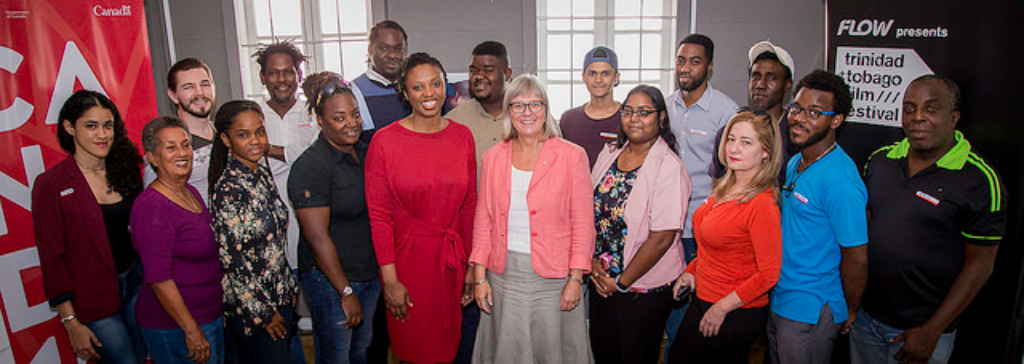
Trinidad and Tobago Film Festival with help of Canada train film makers in human rights

March 1, 2018
 The trinidad+tobago film festival (ttff) and Canadian High Commission are teaming up to encourage the making of local short films on human rights issues, as part of a filmmakers development programme that began in 2017, reports Loop on 27 February 2018.

The ‘Human Rights on Film’ training programme encourages 14 filmmakers and writers who participated in a scriptwriting workshop with Canadian-Jamaican film professional, Annmarie Morais, last year, to put their training into practice. A panel of three judges, including a representative from The National Film Board of Canada and from the Canadian High Commission in Trinidad, will select the best three scripts. Trinidadian-born, National Film Board of Canada producer, Selwyn Jacobs, will then conduct a two-day workshop on how to move from the scriptwriting phase to production and post-production. The completed films will screen at ttff/18.

According to Annabelle Alcazar, Programme Director of the ttff: “This programme marries our interest in developing the skills of local filmmakers and writers, with advancing the conversations on human rights in Trinidad and Tobago.  We are excited about this project and look forward to seeing how filmmakers rise to the challenge of using their artistic knowledge and skill to bring these important issues alive.”

See also: https://humanrightsdefenders.blog/2016/09/04/trinidad-and-tobagos-film-festival-will-have-again-a-human-rights-award/

Amila Sampath: the man behind the video service of “Just Asia”

January 16, 2017

I have on many occasions referred to the admirable initiative of the AHRC to try and bring visual aspects to human right work [https://humanrightsdefenders.blog/2016/01/21/just-asia-just-continues-with-its-human-rights-television/]. So, I was glad to come across the story by Nilantha Ilangamuwa in the Sri Lankan Guardian of 3 November 2016 about the “The Man behind the video service Just Asia”!

amila_sampath_srilanka
Amila Sampath: “I make videos, that’s my tool, I believe this is one of the significant ways to raise the voice of the voiceless

Read the rest of this entry »

Possible funding for training independent journalists exposing human rights abuses

May 19, 2016

Photo_Asset_1

Giselle Portenier (CNW Group/Canadian Journalism Forum on Violence and Trauma)

Independent documentary-makers and freelance journalists working to expose human rights abuses can compete for a bursary to help them obtain hostile environment training, more usually made available to journalists working in war zones. The 2016 Portenier Human Rights Bursary competition, offered by the Canadian Journalism Forum on Violence and Trauma, opened on 16 May and closes on June 30. The annual bursary, introduced last year, is sponsored by the documentary-maker Giselle Portenier. Read the rest of this entry »

500 signatories demand release of Indian filmmaker Sarangi

April 4, 2016

A remarkably large and diversified group of some 500 film makers, writers, professionals in the area of art & culture, academics, activists and social organisations demand the release of Indian filmmaker and human rights defender Deba Rajan Sarangi in an open letter published on 3 April 2016.

They state that they are deeply shocked to hear about his arrest on 18 March, 2016, by plainclothes policemen from the Kucheipadar village of Rayagada District, Odisha. Debaranjan was in Kucheipadar to attend a funeral. He was arrested with a non-bailable warrant issued by the court of JMFC, Kashippur in pursuance of a case registered in Tikri police station of Rayagada district in 2005, when Debaranjan was actively involved in the struggle of the Adivasis in Kashipur to protect their lands from the invasion of the bauxite mining companies…

Deba Ranjan Sarangi has highlighted and critiqued policies of destructive development, unbridled mining practices, displacement, police impunity, atrocities on Dalits, Adivasi issues , growth of communal fascism in Odisha, violence on women and farmers’ suicide in the context of acute agrarian. Deba Ranjan has been put behind bars because he had the courage to show what he witnessed to the world through his expressions of film making, writing and speech. He is neither a Maoist nor a terrorist. We call upon the Odisha government to address the issues raised by the human rights defenders in the State of Odisha rather than imprisoning them and crushing the voices of film makers. We call upon the Odisha government to desist from such disgraceful attempts of violating the Indian Constitution and Indian democracy.
The link below gives a partial list of signatories:

Source: 500 Artists, Activists And Writers Demand Filmmaker Sarangi’s Release